







Toxicidad Ambiental- Es Sólo Una Cadena Alimentaria
Toxicidad ambiental es la bioacumulación de toxinas. Los organismos son los filtros. Pero hay uno más aun peor proceso llamado biomagnificación en la cadena alimentaria.
Milos Pokimica
Escrito por: Milos Pokimica
Revisado Médicamente Por: Dr. Xiùying Wáng, M.D.
Actualizado el 9 de junio de 2023La toxicología ambiental es el estudio científico de los efectos sobre la salud de la exposición a sustancias químicas tóxicas en entornos vivos. El término también hace referencia a la gestión de las toxinas y la toxicidad medioambientales.
La contaminación del aire, el agua o el suelo con sustancias potencialmente peligrosas puede perjudicar a cualquier persona o comunidad. Los contaminantes son sustancias químicas que se encuentran en cantidades superiores a las que se darían de forma natural en el medio ambiente. Estos contaminantes pueden entrar en nuestros cuerpos a través de una variedad de fuentes residenciales, comerciales e industriales. Moho, arsénico y proliferación de algas tóxicas son ejemplos de contaminantes medioambientales nocivos que pueden aparecer biológicamente.
| RANGO | NOMBRE |
|---|---|
| 1 | ARSÉNICO |
| 2 | LÍDER |
| 3 | MERCURIO |
| 4 | CLORURO DE VINILO |
| 5 | BIFENILOS POLICLORADOS |
| 6 | BENCENO |
| 7 | CADMIO |
| 8 | BENZO(A)PIRENO |
| 9 | HIDROCARBUROS AROMÁTICOS POLICÍCLICOS |
| 10 | BENZO(B)FLUORANTENO |
| 11 | CLOROFORM |
| 12 | AROCLOR 1260 |
| 13 | DDT, P,P'- |
| 14 | AROCLOR 1254 |
| 15 | DIBENZO(A,H)ANTRACENO |
| 16 | TRICLOROETILENO |
| 17 | CROMO HEXAVALENTE |
| 18 | DIELDRIN |
| 19 | FÓSFORO, BLANCO |
| 20 | HEXACLOROBUTADIENO |
Cuando las toxinas llegan al medio ambiente, acaban en el agua. Luego, a través de los sistemas fluviales, acabarán en el océano. Se diluirán y no habrá ningún problema. Con el tiempo se disiparán.

La respuesta corta es no.
La toxicidad ambiental es la bioacumulación de toxinas. Los organismos son como filtros. Es cierto que las concentraciones de todos nuestros contaminantes de la industria pesada y los fármacos y otros productos químicos son bajas cuando se miden directamente en el agua del océano, pero ya se ha mencionado el fenómeno llamado bioacumulación.
Si la sustancia química es estable, acabará en el plancton, las algas y otros organismos. Si hay una sustancia en el medio ambiente, el organismo la absorberá, lo que provocará toxicidad ambiental y es un proceso conocido como bioacumulación. Cuando respiramos, si hay humo en el aire lo absorberemos de la misma manera que el plancton o las algas absorben cualquier cosa que haya en el agua. Si el ritmo de absorción es más rápido que el ritmo y la capacidad de excreción del organismo, la sustancia se acumulará con el tiempo. Una sustancia como los metales pesados, por ejemplo, o los pesticidas, que permanecen inalterados en el medio ambiente y son estables durante un largo periodo de tiempo, serán filtrados por los organismos que viven en el agua. Como tienen tendencia a ser solubles en grasa pero no en agua, se acumulan en los organismos vivos. Es decir, se adhieren a la grasa y a otras células del cuerpo y no quieren irse.
Por lo tanto, todos los venenos que están en los océanos y que son fabricados por el hombre y son resistentes al calor y químicamente estables se bioacumularán y alcanzarán una concentración mucho mayor en los organismos que en el agua. Los organismos son como filtros. Filtran todo lo que existe en el agua, bueno o malo. No son buenas noticias para nosotros. La situación no sería ni siquiera tan mala, pero existe un proceso más llamado biomagnificación. Si entendemos la cadena alimentaria, la acumulación de toxinas empeora cientos de veces a medida que ascendemos. La toxicidad ambiental se vuelve horrenda en los tiempos modernos debido a esto. Estas toxinas liposolubles no pueden ser metabolizadas o descompuestas, y al mismo tiempo, no pueden ser excretadas a través de los riñones por la orina porque la grasa y el agua no se mezclan. La única forma que tiene el organismo de deshacerse de ellas es mediante la actividad enzimática, y si un organismo carece de enzimas para degradarlas, se acumularán en los tejidos grasos. La mayoría de estas sustancias químicas, si no todas, son nuevas y fabricadas por el hombre, y los organismos no tienen un mecanismo para desintoxicarlas porque en la evolución nunca tuvieron que hacerlo, hasta ahora. Así que lo que ocurre es que cuando los peces pequeños son devorados por los grandes, todas sus toxinas pasan a los peces más grandes. Las grasas y todas las toxinas que contienen serán digeridas en el intestino y serán absorbidas por el organismo del depredador, donde se acumularán aún más. Dado que en cada nivel de la cadena alimentaria se pierde cierto grado de energía, para compensar un depredador consumirá un número más importante de presas, incluidas todas sus sustancias tóxicas lipofílicas.
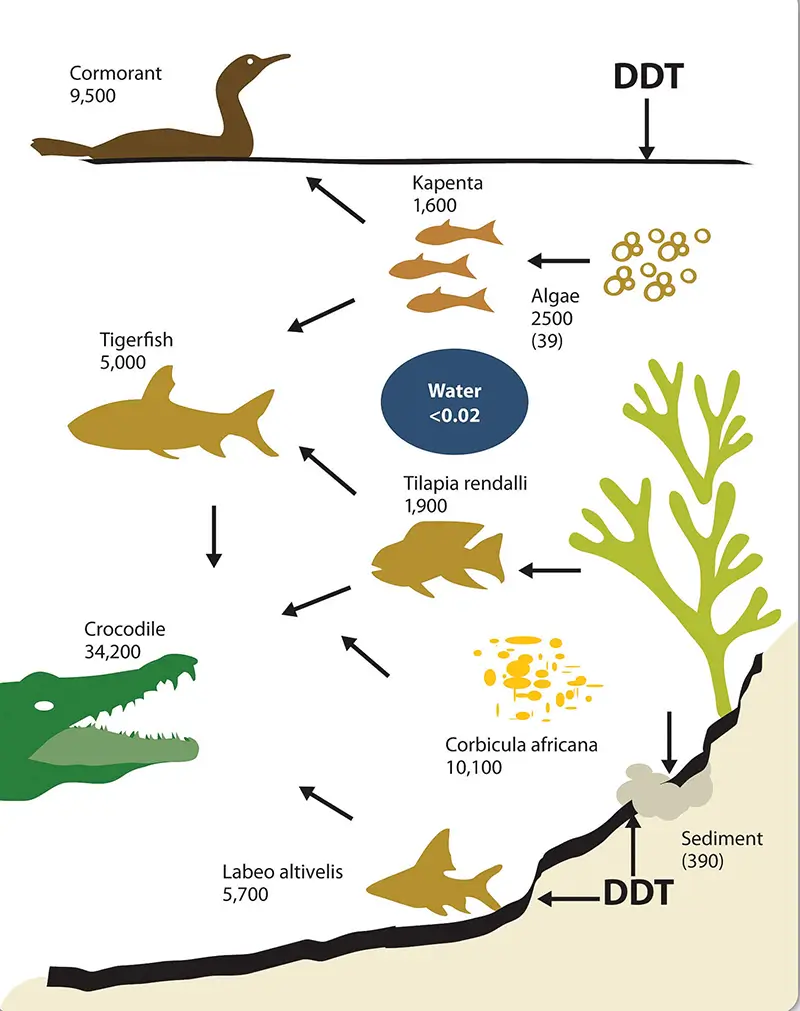
La concentración puede ser insignificante en los océanos, pero entonces el agua empieza a ser filtrada por las algas. Hay dos grupos principales de sustancias que se biomagnifican. Ambos son lipofílicos y no se degradan fácilmente. Una de ellas son estas nuevas sustancias químicas desconocidas para el sistema inmunitario de los animales. Esas sustancias se conocen como "contaminantes orgánicos persistentes" o COP. Se llaman persistentes porque no se degradan en el medio ambiente. Las aguas residuales normales cuando entran en el río o en el océano no tienen ningún impacto a gran escala porque pasan por el proceso natural de degradación y desaparecen. Sólo los productos químicos artificiales no naturales creados por el hombre siguen siendo los persistentes.s
Además de los COP están los metales. Los metales son elementos, lo que significa que no son materia viva, por lo que no son biodegradables. Los organismos que a lo largo de la evolución han estado expuestos a altos niveles de algunos de estos metales tóxicos que pueden encontrarse de forma natural en el medio ambiente desarrollaron con el tiempo mecanismos defensivos para contrarrestar esa exposición. El problema surge cuando se produce un cambio brusco en el medio ambiente que expone a estos organismos a concentraciones superiores a las que están adaptados a soportar. Eso provocará una acumulación de esos metales en el organismo, que será incapaz de desintoxicarlos y excretarlos con la rapidez suficiente para evitar daños.
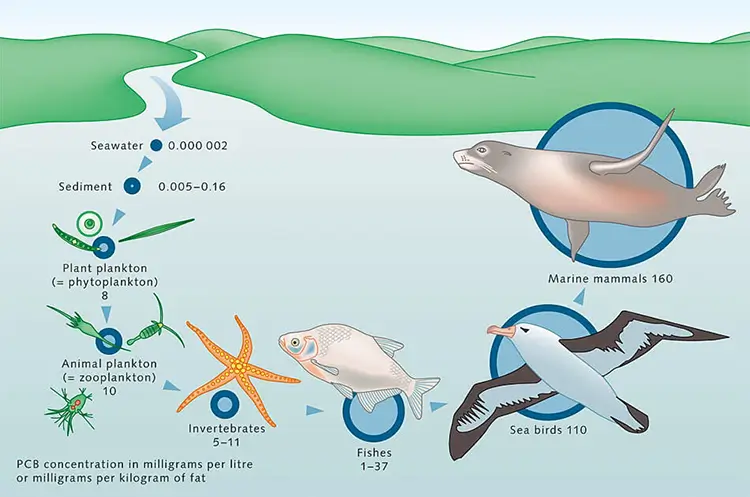
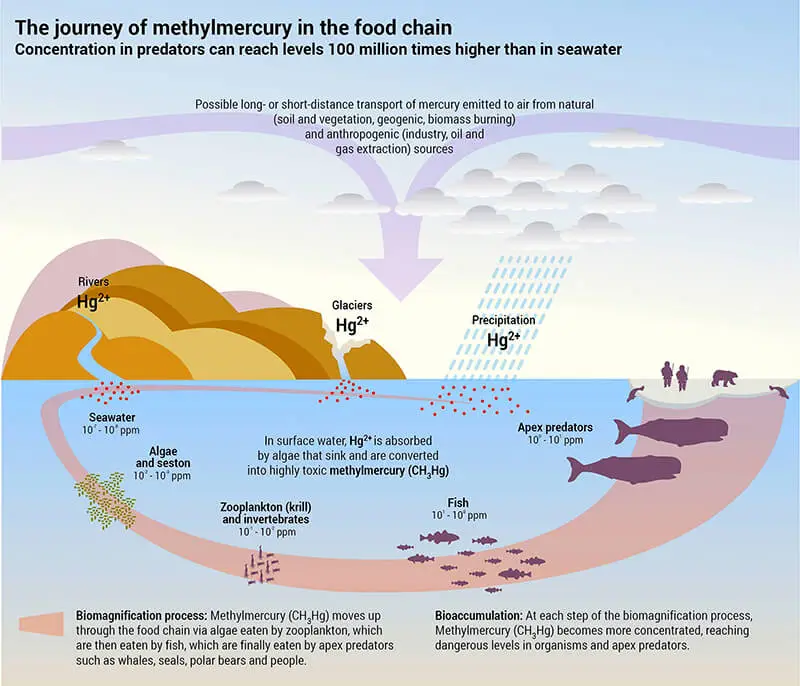
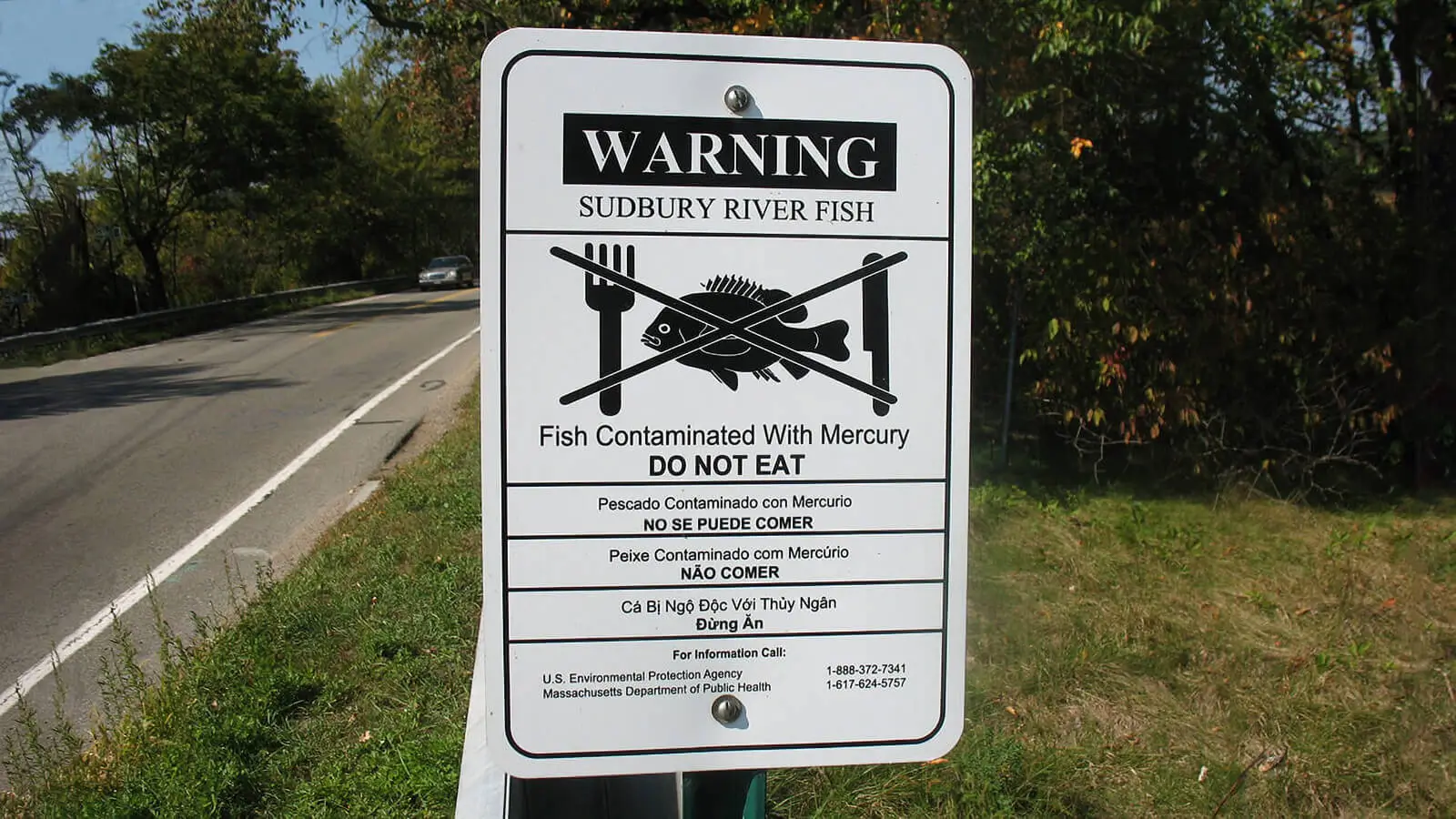
El mercurio, por ejemplo, sólo está presente en cantidades minúsculas en el agua de mar. Cuando las algas absorben agua de mar, todo lo que hay en ella, incluido el mercurio, se adhiere y no sale. En cierto sentido, las algas actúan como un sistema de filtración del agua de mar. El mercurio será absorbido por las algas (generalmente como metilmercurio). Esa filtración iniciará el proceso de bioacumulación. Cualquier especie que se alimente de algas también se comerá todo el mercurio que contengan. El resultado será una concentración y acumulación cada vez mayores en el tejido adiposo de los sucesivos niveles tróficos, con un nivel de toxicidad cada vez mayor hasta llegar a los peces más grandes. Cuando nosotros o cualquier otra especie depredadora nos comamos esos peces grandes, consumiremos también todo el mercurio acumulado. A medida que aumenta la bioacumulación, el nivel de concentración en los peces o aves depredadores será mucho mayor y, en algunos casos, gravemente tóxico. Por ejemplo, el arenque contiene una concentración de mercurio de aproximadamente 0,01 partes por millón (ppm). Los grandes depredadores, como los tiburones, lo tienen incluso por encima de 1 ppm. ¿Cómo llegó el mercurio al agua de mar? El mercurio inorgánico se encuentra en el suelo y se libera en la extracción de oro y en la producción primaria de metales no férreos. La quema de combustibles fósiles es la fuente más importante. Cuando se quema carbón o petróleo, se libera a la atmósfera y luego es arrastrado por la lluvia. A través de las corrientes fluviales, acabará en el océano. Una vez en el océano, nunca se va para la eternidad. No se biodegrada.
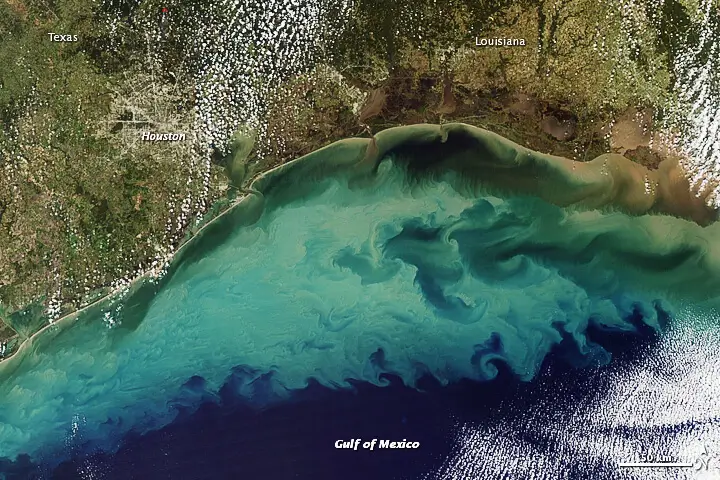
La única solución posible para la toxicidad ambiental es bajar en la cadena alimentaria. Es decir, comer alimentos integrales veganos. La gente no se da cuenta de que los piensos para animales también están llenos de pesticidas y que en los tejidos grasos de los animales de granja también se acumulan toxinas. Alrededor del 70 por ciento de todos los pesticidas que la gente consume en el dieta americana estándar proceden de la grasa de productos animales, no de frutas y verduras fumigadas que hay que lavar para eliminar los residuos. No podemos lavar el pesticida de la carne. Tenemos que bajar en la cadena alimentaria para evitarlo por completo. Por ejemplo, el aceite de krill debería ser más puro que el aceite de pescado completo. El krill tiene una alta tasa de mortalidad y vive poco tiempo, y está en la parte baja de la cadena alimentaria, por lo que no tendría tantos contaminantes. Llegar hasta las verduras del mar es lo mejor sin suplementación sobre todo porque podemos obtener más otros minerales como yodo y fitoquímicos al comer verduras marinas en una ensalada que tomando suplementos de DHA a base de algas o krill. Nuestros océanos están ahora tan contaminados que incluso los organismos de bajo nivel pueden estar contaminados. Especialmente después de las floraciones de algas y todas las neurotoxinas que esta forma de algas puede crear.
Antes me gustaba comer calamares con regularidad. Los consideraba saludables porque tienen un bajo nivel de grasa. Los consideraba la proteína más pura de todos los animales. Me gustaba compararlos con las claras de huevo. Me gustaban las proteínas del gimnasio. Los calamares tienen una alta tasa de reproducción y no deberían estar contaminados, excepto sus órganos internos en realidad lo están y cuanto más viejo es el calamar, más cadmio puede acumular (Kim y otros, 2013). Los casos de envenenamiento por cadmio algo llamado enfermedad de Itai-Itai (itai-itai byo, "duele-duele la enfermedad") fue el nombre dado al envenenamiento masivo por cadmio de la prefectura de Toyama, Japón, a partir de alrededor de 1912. El cadmio es muy tóxico. El descubrimiento de pequeñas cantidades de cadmio en los vasos de McDonald's de "Shrek Forever After" provocó miedo e indignación. Esto llevó a una retirada de productos en todo el país por el peligro de que este metal tóxico pudiera afectar a los niños pequeños. El mayor problema del cadmio es que tiende a acumularse en el organismo. A nuestro organismo le cuesta excretarlo, por lo que se acumula y genera toxicidad y efectos cancerígenos.
La conclusión lógica de todo esto es que incluso las criaturas de los niveles inferiores de la cadena alimentaria que tienen un alto nivel de reproducción pueden acumular en poco tiempo metales pesados y toda una variedad de otras toxinas que desconocemos. La carne de calamar puede estar limpia por ahora si cortamos los órganos internos y los desechamos, pero ¿qué pasa con todo lo demás que no he investigado? ¿Es posible investigar todos los aspectos de los alimentos que consumimos? Yo sólo puedo ir lógicamente y no puedo hacer investigación nutricional para cada cosa. He utilizado el cadmio y el mercurio sólo como ejemplo. Se puede añadir a la lista el viejo envenenamiento por plomo y toda la tabla periódica, y hasta aquí sólo los metales. La gran variedad de otros contaminantes químicos también es preocupante. Incluso los osos polares tienen ahora lesiones renales, densidad mineral ósea reducida, hígado graso e inflamación crónica debido a la intoxicación alimentaria (Sonne et al., 2005). Los delfines también (Vetter et al., 2001).
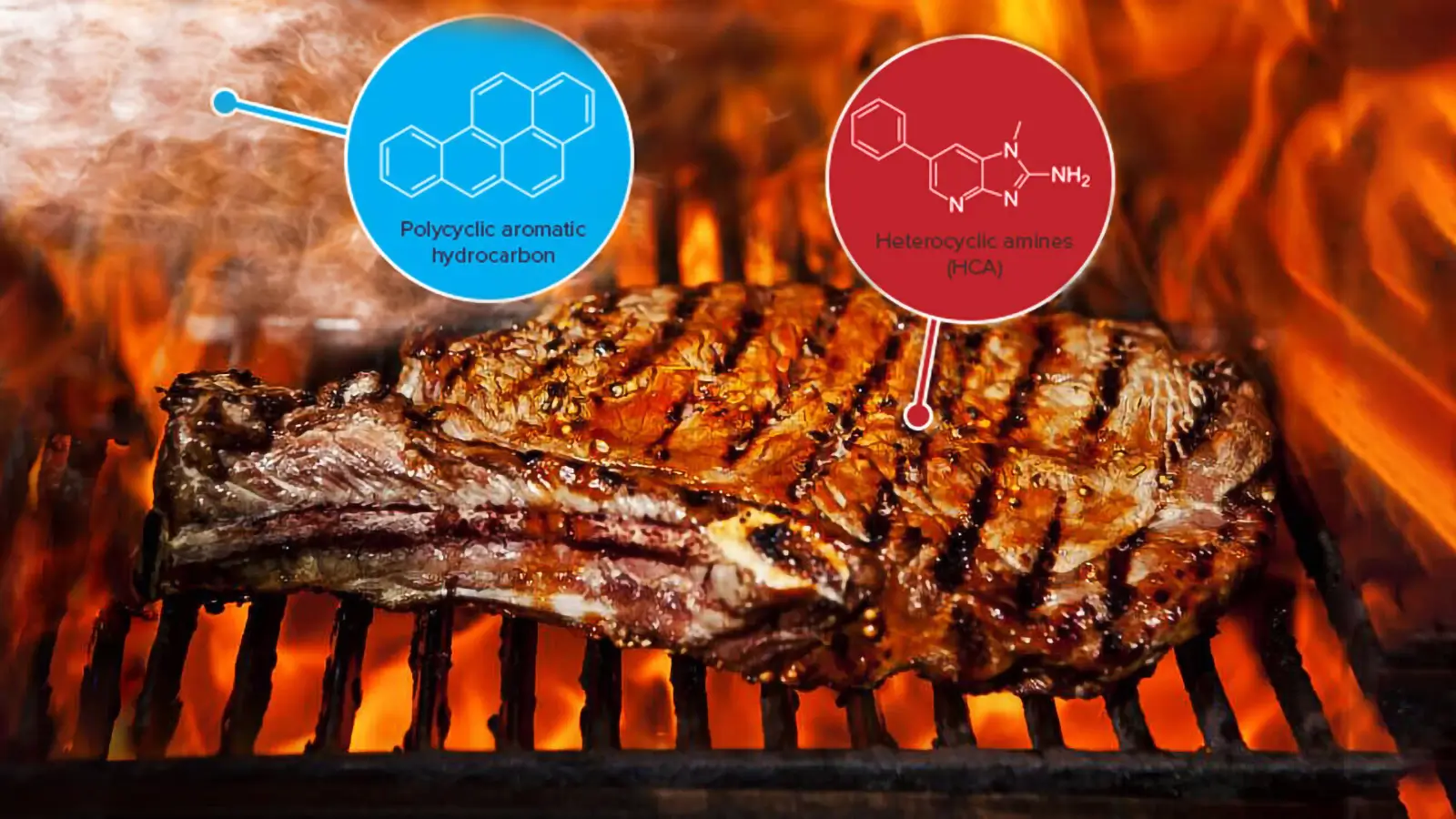
Los compuestos organohalogenados son los congéneres de los PCB, el DDT y sus metabolitos, los compuestos relacionados con el clordano, etc. El efecto de los COP sobre la salud humana y también sobre el medio ambiente es real y aunque pensemos que es algo que podemos ignorar la situación no es tal. La comunidad internacional se propuso restringir la producción en el Convenio de Estocolmo sobre Contaminantes Orgánicos Persistentes de 2001. Sin embargo, la realidad es que no podemos. Son una parte esencial de la agricultura moderna y de diferentes tipos de industrias. No todo se puede reciclar y purificar. Los COP también pueden evaporarse y entrar en la atmósfera. Como resisten las reacciones de descomposición en el aire y son estables, pueden viajar largas distancias. Después caerán y se volverán a depositar. El resultado es una acumulación de COP en zonas alejadas de donde se han utilizado o emitido. Pueden llegar hasta la Antártida y el Círculo Polar Ártico. Ya no tenemos una vida limpia porque no hay forma natural de producir alimentos orgánicamente para miles de millones de personas en el planeta. Algunos de los COP más conocidos son los bifenilos policlorados (PCB), las dioxinas y el diclorodifeniltricloroetano (DDT). Los PCB se utilizan en plásticos, como aditivos en pinturas, en transformadores eléctricos y condensadores, en papel autocopiativo y como fluidos de intercambio térmico. Así que no hay plástico ni electrónica sin ellos. Los PCB son venenosos para los peces en dosis altas, y se correlacionan con fallos en el desove en dosis bajas. En los seres humanos, los PCB están asociados a la inmunosupresión y la esterilidad, y la mayor parte de la exposición proviene de los alimentos. En la actualidad, una de cada seis parejas tiene problemas para concebir un bebé. El número de parejas que intentan métodos terapéuticos debido al problema de concebir de forma natural ha aumentado drásticamente en el periodo posterior a la Segunda Guerra Mundial. El 15% de las parejas estériles son más numerosas que en el pasado, por ejemplo hace 100 años. El recuento de espermatozoides en el varón medio se ha reducido casi a la mitad en los últimos 60 años. La fertilidad es menor en todos los hombres y mujeres y, como consecuencia, 1 de cada 6 parejas es estéril. Muchos expertos achacan este descenso al aumento de sustancias químicas ambientales que tienen efectos estrogénicos débiles, como el DDT y el PCB. También se ha implicado un aumento de los niveles de estrógenos en el suministro general de agua, debido al uso de píldoras anticonceptivas orales. Hoy en día hay muchas sustancias químicas en el mundo.

En este estudio (Rozati et al., 2002) midieron la correlación entre el recuento de espermatozoides y los estrógenos ambientales. Cuando hablan de estrógenos de toxicidad ambiental, no se refieren a los fitoestrógenos producidos por las plantas, sino a los xenoestrógenos, pesticidas como el PCP, el DDT o el BPA del plástico, entre otros. La mayoría de ellos se encontraron en el pescado. Los consumidores urbanos de pescado presentan los niveles medios más elevados de PE y PCB. En los hombres infértiles, el recuento total de espermatozoides móviles está correlacionado con su exposición a los xenoestrógenos. También encontraron correlaciones sustanciales entre los niveles de PCB y el volumen de eyaculación, la motilidad, la vitalidad y la capacidad osmorreguladora. Los niveles más altos de PCB se asociaron con daños en los espermatozoides (p < 0,05). Los ftalatos también eran significativamente más elevados en los hombres infértiles, y los niveles más elevados de ftalatos se correlacionaban con daños en el ADN espermático. Tanto las concentraciones de PCB como las de ftalatos se correlacionaron también con una disminución del recuento total de espermatozoides móviles. La conclusión fue que los PCB y los PE (ésteres de ftalato) podrían influir en el deterioro de la calidad del semen en la población general, con especial atención como factor que contribuye a la infertilidad en los hombres. El recuento de espermatozoides fue algo en la línea de 10 (media móvil) recuento de móviles vivos en millones para los consumidores de pescado y por encima de 80 para los vegetarianos. Alrededor de ocho veces la diferencia. Si el pescado no te hace estéril bajando el recuento de esperma, causará testosterona reducida y otras enfermedades pro-estrógeno tanto en hombres como en una mujer también como cáncer de mama, menopausia precoz, endometriosis y problemas de hormona tiroidea. Muchos de los pesticidas actúan de forma similar y tienen potencial de alteración endocrina. Por ejemplo, sabemos que el fungicida Vinclozolin (Vilela et al., 2007). ¿Sigue pensando que comer salmón salvaje es beneficioso para la salud?
El verdadero problema es que una serie de sustancias químicas crecen y crecen. La mayoría de ellos son secretos. No disponemos de investigaciones sobre lo que hacen, y nadie habla de ello. A partir de 2001, la lista del Convenio de Estocolmo se ha ampliado para incluir los hidrocarburos aromáticos policíclicos (HAP), o al menos algunos de los más peligrosos, y también los retardantes de llama bromados y algunos otros compuestos. Además, todo esto es sólo lo que se prueba. Tenemos que entender que nadie financiará la investigación sobre la toxicidad de los diferentes productos químicos industriales que se encuentran en el medio ambiente principalmente a largo plazo porque eso no es lo que va a aumentar los beneficios. Más bien al contrario, sólo encarecerá el negocio. Hay muchos países subdesarrollados a los que no les importa la destrucción a largo plazo. La mayoría de las naciones empobrecidas van a hacer cualquier cosa con tal de sobrevivir, y eso es un caldo de cultivo para la corrupción, y a las empresas les encanta.
La mayoría de las industrias pesadas vierten sus residuos tóxicos en países del tercer mundo sin regulación y dan algo de dinero a cambio a algunos políticos corruptos, incluso hoy en día. Algunos de los residuos se transportan desde países occidentales y se vierten allí también. Hay un mercado para esto. Si usted tiene algo que es demasiado caro para deshacerse de en los EE.UU., el transporte a los países del tercer mundo y tirarlo. No hay normas. Además del dumping, hay una tendencia aún peor. Las empresas que deciden invertir en el extranjero, y con ello me refiero a formas de inversión sustancial en nuevas instalaciones, tienden a trasladarse a países donde podrían tener el menor coste de fabricación, y eso significa las normas medioambientales más bajas o la aplicación más débil. El cielo de la contaminación, por así decirlo. Sólo se transportan y vierten los residuos de las industrias que no pueden asignarse. O me gustaría preguntar lo siguiente: ¿qué ocurre a nivel personal? ¿Cuánta gente normal tirará sus bombillas de bajo consumo de mercurio al contenedor normal? No sólo en Estados Unidos, sino en todo el mundo. El mercurio de las bombillas acabará liberándose en el medio ambiente. Por otra parte, la gente también está tirando residuos peligrosos en los vertederos urbanos para evitar pagar las tasas que cobran los transportistas de residuos. Todo el mundo lo hace, especialmente las personas con grandes deudas crediticias. La EPA empezó a regular los residuos peligrosos en 1976. Los vertederos de residuos tóxicos que son vestigios de la época anterior a 1976 siguen aquí y suponen una amenaza. Además, existe la práctica del vertido ilegal que ha creado un gran número de vertederos.
La única solución posible para evitar la toxicidad es descender en la cadena alimentaria.
Referencias:
- Kim, B. M., Lee, S. Y., & Jeong, I. H. (2013). Influence of squid liver powder on accumulation of cadmium in serum, kidney and liver of mice. Nutrición preventiva y ciencia de los alimentos, 18(1), 1-10. https://doi.org/10.3746/pnf.2013.18.1.001
- Sonne, C., Dietz, R., Leifsson, P. S., Born, E. W., Letcher, R. J., Kirkegaard, M., Muir, D. C., Riget, F. F., & Hyldstrup, L. (2005). Do organohalogen contaminants contribute to histopathology in liver from East Greenland polar bears (Ursus maritimus)?. Perspectivas de salud medioambiental, 113(11), 1569-1574. https://doi.org/10.1289/ehp.8038
- Vetter, W., Scholz, E., Gaus, C., Müller, J., & Haynes, D. R. (2001b). Anthropogenic and Natural Organohalogen Compounds in Blubber of Dolphins and Dugongs ( Dugong dugon ) from Northeastern Australia. Archivos de Contaminación Ambiental y Toxicología, 41(2), 221-231. https://doi.org/10.1007/s002440010241
- Rozati, R., Reddy, P. P., Reddanna, P., & Mujtaba, R. (2002). Role of environmental estrogens in the deterioration of male factor fertility. Fertilidad y esterilidad, 78(6), 1187-1194. https://doi.org/10.1016/s0015-0282(02)04389-3
- Vilela, M. L., Willingham, E., Buckley, J., Liu, B. C., Agras, K., Shiroyanagi, Y., & Baskin, L. S. (2007). Endocrine disruptors and hypospadias: role of genistein and the fungicide vinclozolin. Urología, 70(3), 618-621. https://doi.org/10.1016/j.urology.2007.05.004
- Zennegg M. (2018). Dioxinas y PCB en la carne: ¿siguen siendo motivo de preocupación? Chimia, 72(10), 690-696. https://doi.org/10.2533/chimia.2018.690
Contenidos Relacionados






¿Tienes alguna duda acerca de la nutrición y la salud?
Me encantaría saber de usted y responderlas en mi próxima publicación. Agradezco sus aportes y opiniones y espero tener noticias suyas pronto. También te invito a síguenos en Facebook, Instagram y Pinterest para más contenidos sobre dieta, nutrición y salud. Puedes dejar un comentario allí y conectar con otros entusiastas de la salud, compartir tus consejos y experiencias, y recibir apoyo y ánimo de nuestro equipo y nuestra comunidad.
Espero que este post le haya resultado informativo y ameno y que esté preparado para aplicar los conocimientos adquiridos. Si le ha resultado útil, por favor compártelo con tus amigos y familiares que también podrían beneficiarse de ella. Nunca se sabe quién puede necesitar orientación y apoyo en su camino hacia la salud.
– También Te Puede Interesar –

Longevidad: La Teoría del Ritmo de Vida
Poder Antioxidante de las Especias: Resultados in Vivo con Dosis Realistas

Coca-Cola Company - Reseña Histórica

La deficiencia de vitamina D - Factores de Riesgo

Extracción Casera de Aceite: La Técnica Secreta de la Densidad de Nutrientes

Astaxantina Beneficios: Antioxidante Natural Más Potente del Mundo

Deficiencia de B12 y Deterioro Cognitivo: Estrategias de Optimización de la Homocisteína
La Carne cocida - El Mutágeno en un Bocado, Aminas Heterocíclicas Exposición

Aprenda Sobre Nutricion

Milos Pokimica es doctor en medicina natural, nutricionista clínico, escritor sobre salud médica y nutrición y asesor en ciencias de la nutrición. Autor de la serie de libros Go Vegan? Revisión de la Ciencia, también dirige el sitio web sobre salud natural GoVeganWay.com.
Descargo De Responsabilidad Médica
GoVeganWay.com le ofrece reseñas de las últimas investigaciones relacionadas con la nutrición y la salud. La información proporcionada representa la opinión personal del autor y no pretende ni implica sustituir el asesoramiento, diagnóstico o tratamiento médico profesional. La información proporcionada tiene fines informativos únicamente y no pretende sustituir la consulta, el diagnóstico y/o el tratamiento médico de un médico o proveedor de atención médica calificado.NUNCA ignore el CONSEJO MÉDICO PROFESIONAL O RETRASAR la BÚSQUEDA de TRATAMIENTO MÉDICO a CAUSA DE ALGO QUE HAYA LEÍDO EN O accesibles a TRAVÉS de GoVeganWay.com
NUNCA APLICAR CUALQUIER cambio de ESTILO de vida O CAMBIOS EN su totalidad COMO UNA CONSECUENCIA DE ALGO QUE HA LEÍDO EN GoVeganWay.com ANTES de CONSULTAR con LICENCIA PROFESIONAL MÉDICO.
En el caso de una emergencia médica, llame a un médico o al 911 inmediatamente. GoVeganWay.com no se recomienda ni aprueba ninguna de los grupos, las organizaciones, las pruebas, los médicos, productos, procedimientos, opiniones u otra información que pueda ser mencionado en el interior.
Selecciones del editor –

El cáncer Editor De Selecciones Fitoquímicos
Poder Anticancerígeno de Frutas y Verduras: Pruebas Clínicas e in Vivo
Algunos extractos vegetales rivalizan con los principales fármacos quimioterapéuticos y, al mismo tiempo, atacan varios tipos diferentes de células cancerosas.

Antioxidantes Editor De Selecciones ORAC
Aceites Esenciales Como Suplementos Antioxidantes: Reglas y Estrategias
Los aceites esenciales de calidad alimentaria pueden ser una estrategia cómoda y de fácil consumo para optimizar el valor antioxidante y las puntuaciones ORAC de nuestra dieta.
Antioxidantes Editor De Selecciones ORAC
Dieta Rica en Antioxidantes: Reglas y Estrategias Generales
Existen estrategias fáciles y rentables para optimizar el valor antioxidante de nuestra dieta.

Antioxidantes Editor De Selecciones ORAC
Comprender los Valores ORAC: Niveles de Antioxidantes en los Alimentos
Cuando tu principal fuente de antioxidantes es el café, sabes que tienes un grave problema.

Antioxidantes Editor De Selecciones ORAC
Astaxantina Beneficios: Antioxidante Natural Más Potente del Mundo
La astaxantina es el más potente y natural antioxidante universal (petróleo y agua-soluble) que conoce la ciencia. Se acumula en los tejidos y nunca puede convertirse en un pro-oxidante.

Antioxidantes Editor De Selecciones ORAC Fitoquímicos
Antioxidantes: Conceptos Básicos
Los productos de origen animal no contienen fitoquímicos ni antioxidantes. Por término medio, los alimentos vegetales contienen más de 60 veces más antioxidantes que los de origen animal.
Editor De Selecciones Dieta Vegana
Deficiencias Nutricionales en la Dieta Vegana: Estrategias de Prevención
Existen nueve deficiencias nutricionales comunes a escala poblacional que afectan a las personas que siguen una dieta basada en plantas. Si no se corrigen a tiempo, algunas deficiencias tienen consecuencias terribles y no tratables.
Editor De Selecciones Dieta Óptima
Deficiencia de Micronutrientes en la Dieta Americana Estándar: Estrategias de Optimización
El perfil nutricional de nuestra dieta moderna a base de carne, azúcar y alimentos procesados es totalmente incongruente con nuestra evolución, lo que provoca una grave carencia de micronutrientes.
Editor De Selecciones Fitoquímicos
Fitoquímicos: Conceptos Básicos
Todos y cada uno de los fitoquímicos que existen tienen una acción biológica en el cuerpo humano. Cada uno de los millones de fitoquímicos diferentes.
Editor De Selecciones La leche Dieta Óptima
Leche y Productos Lácteos: Correlaciones de Riesgo Para la Salud
Las asociaciones conocidas con la leche y el consumo de lácteos son infertilidad, cáncer de ovario y de mama, leucemia, diabetes tipo 1, autismo, arteriosclerosis, cataratas, artritis reumatoide, esclerosis múltiple, hiperactividad, congestión, granos y más...
El cáncer Editor De Selecciones La proteína
Proteína Completa: Señalización del IGF-1 en la Formación del Cáncer
Cuando usted come proteínas animales que tienen cuatro veces más probabilidad de desarrollar todos los tipos de cáncer. Cuando usted fuma, usted tiene cuatro veces la posibilidad de desarrollar cáncer de pulmón.

El cáncer Editor De Selecciones La proteína
La Anatomía de Cáncer de riesgo para la Salud de las correlaciones
Según los medicamentos, alrededor del 2% de los cánceres se consideran puramente causados por factores genéticos. El mismo rango que dentro del reino animal. No te han dicho toda la verdad.
Milos Pokimica es escritor especializado en salud y nutrición y asesor en ciencias nutricionales. Autor de la serie de libros Go Vegan? Revisión de la Ciencia, también dirige el sitio web sobre salud natural GoVeganWay.com.
Últimos artículos -

La Restricción De Calorías La longevidad
Cómo Ayunar: Alimentos en Ayunas Que No Rompen la Autofagia
Autofagia. ¿Alguna vez te has preguntado qué les sucede a las células de tu cuerpo cuando mueren o se dañan? ¿Simplemente se acumulan y crean problemas, o se eliminan de alguna manera? La respuesta es que tu cuerpo...
Salud Dental Prevención
Dolor y Sensibilidad a los Dulces: Solución Rápida y Duradera
Una solución rápida y fácil para aliviar el dolor es el aceite esencial de clavo, un potente antioxidante y analgésico que puede ayudar con las enfermedades de las encías y el dolor de muelas.

Los frijoles
Judías Verdes: Nutrición y Beneficios Para la Salud
Los frijoles verdes son bajos en calorías y ricos en compuestos naturales que pueden ayudar a controlar su azúcar en la sangre, reducir el colesterol y combatir los radicales libres.
Dieta de alimentos crudos Dieta Vegana
Se Pueden Comer Setas Crudas: Riesgos Para La Salud, Nutrición Y Seguridad
Las setas tienen toxinas sensibles al calor, como la hidracina o la agaritina, y paredes celulares compuestas de quitina que el ser humano no puede digerir bien.
Dieta Vegana
¿Son Los Peces Animales? Una Perspectiva Cultural
En algunas culturas, la carne de pescado no se considera carne, y el pescado está permitido incluso durante el ayuno.

Salud Dental Prevención
Enjuague bucal natural casero: probado, más fuerte y menos tóxico
El enjuague bucal natural hecho en casa es más fuerte que la clorhexidina, menos tóxico y si se ingiere puede dar un poco de náuseas, pero también un alto estallido en el valor ORAC.
Salud Dental Prevención
Cómo Detener la Caries Dental: Síntomas, Causas y Prevención
El consumo de azúcar es la principal causa de caries y deterioro dental, combinado con carencias de minerales, especialmente magnesio, zinc, cobre y oligoelementos.
Antioxidantes Superalimentos
Amla: Beneficios Probados, Nutrición e Importancia Clínica
El amla es uno de los antioxidantes más potentes del mundo, con una puntuación ORAC de 261.530. Es una rica fuente de fitoquímicos que tienen diversos beneficios para la salud. Es una rica fuente de fitoquímicos que tienen diversos beneficios para la salud.
Top Noticias De Salud — ScienceDaily
- Women over 50 lost 35% more weight with this surprising comboen marzo 24, 2026
Postmenopausal women may have a powerful new edge in the battle against weight gain. A Mayo Clinic study found that those using menopausal hormone therapy while taking the obesity drug tirzepatide lost about 35% more weight than those on the drug alone. The findings hint at a surprising synergy between hormones and cutting-edge weight-loss medications, potentially opening the door to more effective, personalized treatments for millions of women facing increased cardiometabolic risks after […]
- This new tooth powder whitens teeth without damageen marzo 24, 2026
Researchers have developed a teeth-whitening powder that works with the vibrations of an electric toothbrush to safely remove stains. Unlike traditional whiteners, it not only brightens teeth but also repairs enamel and supports healthy oral bacteria. Lab tests showed dramatic whitening effects, while animal studies revealed reduced harmful microbes and inflammation. This could pave the way for a new generation of at-home dental care.
- Scientists discover Alzheimer’s hidden “death switch” in the brainen marzo 23, 2026
Scientists have uncovered a hidden “death switch” in the brain that may be driving Alzheimer’s disease—and even found a way to turn it off in mice. The culprit is a toxic pairing of two proteins that, when combined, triggers the destruction of brain cells and fuels memory loss. By using a new compound to break apart this deadly duo, researchers were able to slow disease progression, protect brain cells, and even reduce hallmark amyloid buildup.
- New blood test could catch pancreatic cancer before it’s too lateen marzo 23, 2026
A new blood test could change the outlook for one of the deadliest cancers—pancreatic cancer—by catching it much earlier than ever before. Researchers identified two previously unknown proteins in the blood that, when combined with existing markers, dramatically improved detection accuracy. The four-marker test was able to spot pancreatic cancer in over 90% of cases and performed especially well even in early stages, when treatment has the best chance of success.
- A promising fatty liver treatment may raise cancer risken marzo 23, 2026
A surprising new study reveals that blocking a supposedly protective enzyme, Caspase-2, could actually backfire—raising the risk of chronic liver damage and cancer over time. Researchers found that without this enzyme, liver cells grow abnormally large and accumulate genetic damage, leading to inflammation, scarring, and eventually tumors, especially with age. While inhibiting Caspase-2 may offer short-term benefits, such as reducing fatty liver disease, the long-term consequences appear […]
- Scientists discover surprising brain trigger behind high blood pressureen marzo 23, 2026
Scientists have uncovered a surprising brain-based trigger for high blood pressure, tracing it to a small region in the brainstem that normally controls breathing. This area, which kicks in during forceful exhalations like coughing, laughing, or exercise, also appears to activate nerves that tighten blood vessels—raising blood pressure. When researchers switched off this region in experiments, blood pressure dropped back to normal, suggesting it plays a direct role in hypertension.
- Weight loss drug Ozempic cuts depression, anxiety, and addiction risken marzo 22, 2026
GLP-1 medications like semaglutide (Ozempic) may offer unexpected mental health benefits alongside weight loss. A large study found major drops in depression, anxiety, and psychiatric-related hospital visits among users. Even substance use disorders were significantly lower during treatment. Researchers suspect both lifestyle improvements and direct brain effects could be at play.
PubMed, #Dieta vegana –
- Plant-Based Dietary Patterns and Neuroimaging Biomarkers of Brain Health: A Scoping Review of Observational and Interventional Evidenceen marzo 23, 2026
Healthy dietary interventions are well established in cardiovascular disease prevention, but their effects on the brain remain underexplored. This scoping review aims to investigate how adherence to core components of a whole-food plant-based diet (WFPBD) may impact neuroimaging outcomes across different brain conditions. We searched PubMed and MEDLINE for studies published in the past 20 years evaluating the effects of a predominantly or exclusively WFPBD, alone or combined with other […]
- Environmental and economic impact of a vegan versus traditional mediterranean diet: OMNIVEG studyen marzo 17, 2026
CONCLUSIONS: Replacing animal products with plant-based foods in a Mediterranean dietary framework can enhance environmental sustainability and reduce food costs. These findings support the promotion of whole plant-based diets as a viable strategy for sustainable and affordable nutrition.
- Consumption Habits and Perception of Plant-Based Milk and Dairy Alternatives Among Vegetarians and Omnivores: A Case Study of Consumers in Sloveniaen marzo 14, 2026
CONCLUSIONS: PBMDA perceptions in Slovenia are strongly segmented by dietary pattern and socio-demographics, supporting the need for clearer nutrition communication.
- Culinary Nutrition Programming for Members of a Community-Based Cancer Programen marzo 14, 2026
(1) Background: Nutrition research in cancer care has largely focused on disease prevention and management, overlooking the importance of food literacy. Culinary cancer care programs may address this gap by facilitating the practical application of nutrition through culinary skills, fostering social connections over nutrient-dense meals, and supporting individuals during periods of physical and social vulnerability. The Not-Just-Supper Club (NJSC) at Gilda’s Club Toronto (GT) is a…
- Fatty acid composition of ground-beef products and their plant-based meat substitutes available in Hungaryen marzo 13, 2026
CONCLUSION: The findings indicate that plant-based meat alternatives (except those containing coconut oil) have lower saturated and higher polyunsaturated fatty acid compositions than beef-based products, leading to more beneficial nutritional value. Further analytical and clinical studies are necessary to provide a more comprehensive understanding of the long-term health effects of these foods.
Publicaciones aleatorias –

Editor De Selecciones La Obesidad
El trastorno de atracones compulsivos - La psicología de hambre
En la naturaleza, no hay refinado de azúcar o grasa. Nuestro cerebro nunca había sido expuesto a una combinación de los dos a la vez nos obliga a ir de borrachera comiendo desorden.
El cáncer Editor De Selecciones La proteína
La Anatomía de Cáncer de riesgo para la Salud de las correlaciones
Según los medicamentos, alrededor del 2% de los cánceres se consideran puramente causados por factores genéticos. El mismo rango que dentro del reino animal. No te han dicho toda la verdad.
El cáncer Desintoxicación La inflamación
Beneficios del Sulforafano: El Superpoder Desintoxicante del Brócoli
El sulforafano es el inductor enzimático natural de fase 2 más potente conocido por la ciencia. También está demostrado que el sulforafano es un inhibidor dosis-dependiente de la tumorigénesis inducida por carcinógenos.
Desintoxicación Toxicidad
Desintoxicación: una revisión científica
Hay programas de dietas diseñados para ayudar a reducir la inflamación y la toxicidad general del cuerpo y aumentar la desintoxicación que están respaldados por la ciencia.

Editor De Selecciones Dieta Óptima La proteína
Necesidades de Proteínas: Una Verdad Incómoda
Cuando los estudios antropólogos demostraron que los homínidos vivían una media de 15 a 20 gramos de proteína al día, se produjo lo que se llamó el "gran fiasco de las proteínas" en los años 1970.

El cáncer Prevención La radiación
La FEM de la radiación (radiación electromagnética) de la exposición - No 5G presentan riesgos para la salud?
Las fuentes artificiales de radiación CEM proporcionan una radiación continua de bajo nivel. La situación sólo puede empeorar.
El cáncer La inflamación Toxicidad
Peces de piscifactoría: el paraíso de los “pozos negros”
Los peces de piscifactoría tienen hasta diez veces más contaminantes. Después de la vacunación, los peces siempre reciben antibióticos y pesticidas.
El cáncer La inflamación Toxicidad
Toxicidad en Peces- El Más Tóxico de la Carne
La contaminación es arrastrada por el agua y acabará en el océano, y las algas filtran el agua iniciando el proceso de bioacumulación. La toxicidad para los peces es una gran preocupación.
Editor De Selecciones Dieta Óptima
Alimentos Procesados: Comprender los Riesgos
Los alimentos procesados significan que se elimina algo de los alimentos enteros, normalmente fibra, y se añade algo, normalmente grasa, azúcar, sal y msg.
Editor De Selecciones La inflamación
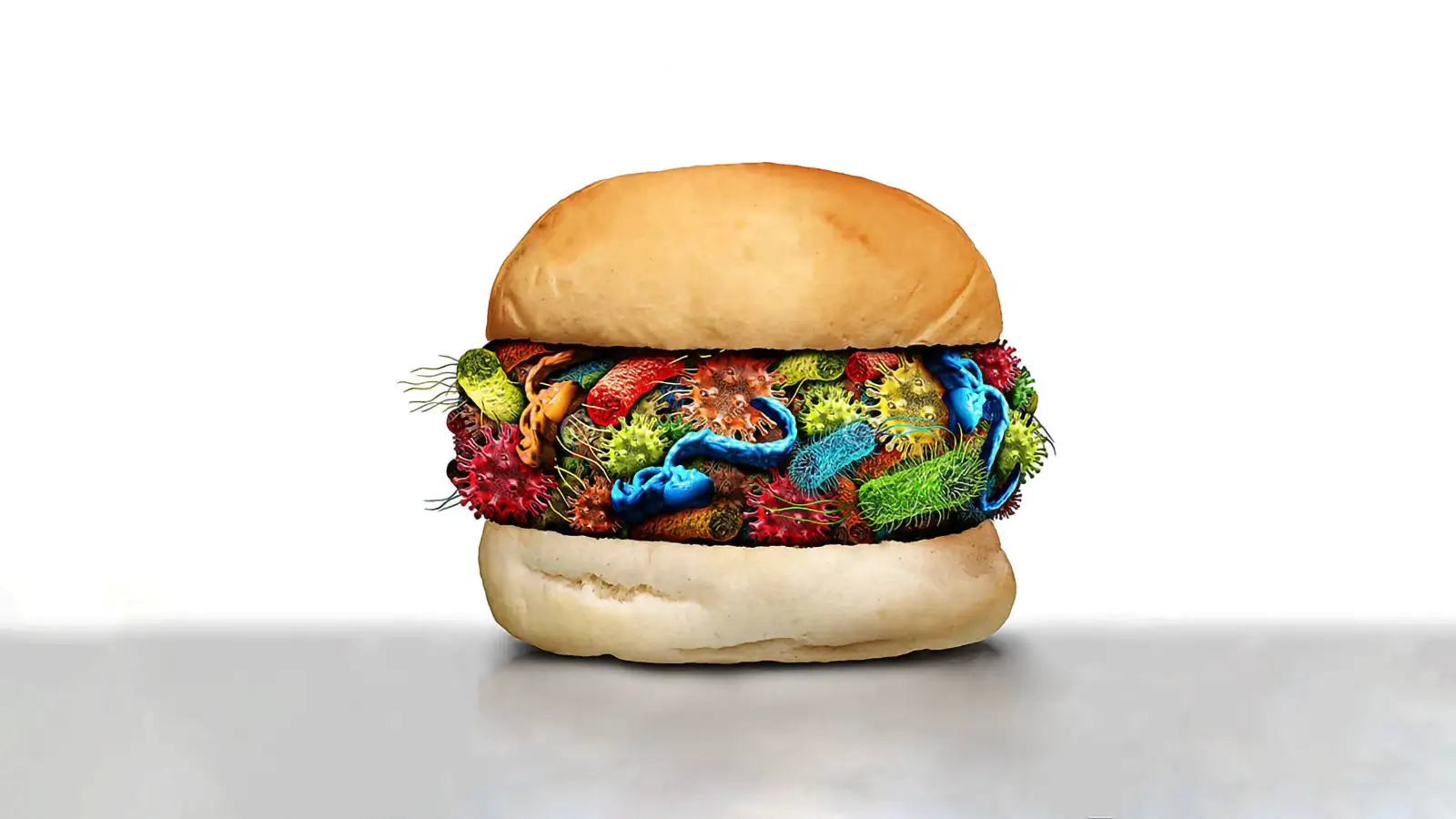
Los seres humanos omnívoros dilema - el consumo de Carne, las bacterias probióticas, la inflamación y el intestino
Son los seres humanos omnívoros en un verdadero anatómica sentido? Hay una diferencia fundamental en la forma en que el tracto digestivo trabaja en plantas vs consumo de carne de las especies.

Publicaciones destacadas -
El cáncer Editor De Selecciones Fitoquímicos
Poder Anticancerígeno de Frutas y Verduras: Pruebas Clínicas e in Vivo
Algunos extractos vegetales rivalizan con los principales fármacos quimioterapéuticos y, al mismo tiempo, atacan varios tipos diferentes de células cancerosas.
La Diabetes Editor De Selecciones
La Diabetes causa y grasas saturadas - Los veganos argumento
A medida que aumenta el nivel de grasa en el torrente sanguíneo, disminuye la capacidad del organismo para eliminar el azúcar. Una de las causas de la diabetes es nuestra inadaptación a una gran ingesta de grasas

La Medicina Alopática El cáncer Editor De Selecciones
El cáncer, La Prohibida Curas-máquina de Rife, reseña Histórica
La tasa de recuperación de pacientes con cáncer no tratable y declarados enfermos terminales mediante la utilización de la tecnología resonante de la máquina Rife fue del 100%.

La Medicina Alopática Editor De Selecciones
La historia de Big Pharma - IG Farben
La parte de Rockefeller monopolio de la química y de la medicina de las industrias de vino en cumplimiento después de la 2 ª guerra mundial. La Standard Oil y la IG Farben cooperación con esta realidad.
Editor De Selecciones La Obesidad
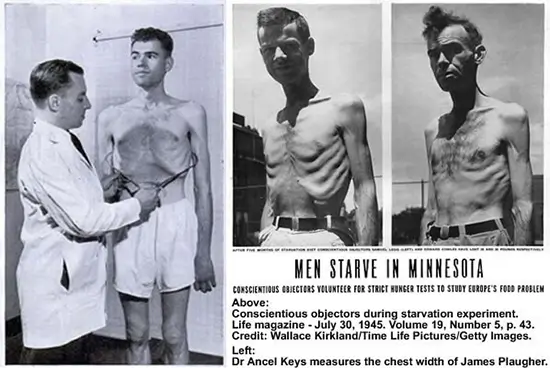
Experimento de Inanición de Minnesota: Por qué las Dietas Nos Hacen Engordar. La Psicología del Hambre.
Uno de los primeros estudios científicos sobre lo que es el hambre hace a la mente fue observado en un estudio recordado como el Minnesota Hambre Experimento realizado por la Universidad de Minnesota, ya en 1944.
Editor De Selecciones Dieta Óptima
Alimentos Procesados: Comprender los Riesgos
Los alimentos procesados significan que se elimina algo de los alimentos enteros, normalmente fibra, y se añade algo, normalmente grasa, azúcar, sal y msg.
El cáncer Editor De Selecciones La proteína
La Anatomía de Cáncer de riesgo para la Salud de las correlaciones
Según los medicamentos, alrededor del 2% de los cánceres se consideran puramente causados por factores genéticos. El mismo rango que dentro del reino animal. No te han dicho toda la verdad.
Editor De Selecciones Dieta Óptima
Deficiencia de Micronutrientes en la Dieta Americana Estándar: Estrategias de Optimización
El perfil nutricional de nuestra dieta moderna a base de carne, azúcar y alimentos procesados es totalmente incongruente con nuestra evolución, lo que provoca una grave carencia de micronutrientes.

Editor De Selecciones Dieta Óptima
Dieta Humana Optima- Enfermedades Crónicas, Guerras de Dietas y el Argumento Vegano
Nuestra dieta humana óptima natural es la dieta que comieron nuestros ancestros homínidos durante los últimos 30 millones de años, no los humanos anatómicamente modernos de la Edad de Piedra.
Editor De Selecciones Dieta Óptima La proteína
Dieta Alta En Proteínas - Riesgo Para La Salud De Las Correlaciones
La escasez es la regla de las proteínas en la naturaleza. En términos evolutivos, los antropólogos han demostrado que los homínidos vivían una media de 15 a 25 gramos de proteína al día. En el tipo occidental moderno de dieta alta en proteínas consumiríamos eso...
La última versión desde PubMed, #Dieta basada en plantas –
- From cow to crop: motives and barriers for plant-based dairy alternative consumption across three European countriespor Dominika Maison en marzo 23, 2026
Currently, alternative sources of protein are being sought to replace not only meat but also dairy products in the diet. From this perspective, it is worth examining how consumers perceive these products, what motivates them to choose them and what barriers they encounter, especially with regard to attitudes towards dairy products. The present study aimed to compare attitudes towards plant-based dairy alternatives (PBDAs) in three European countries – Poland, Germany and the UK. Furthermore, […]
- Energy and macronutrient intakes of Montenegrin adults: insights from the EFSA EU Menu National Survey (2017-2022)por Amil Orahovac en marzo 23, 2026
INTRODUCTION: Understanding population-level dietary intakes is essential for preventing diet-related non-communicable diseases (NCDs) and informing evidence-based nutrition policies. Until recently, Montenegro lacked nationally representative data on food and nutrient intake aligned with European Food Safety Authority (EFSA) standards. This study provides the first comprehensive analysis of energy and macronutrient intake among Montenegrin adults within the EFSA EU Menu framework.
- Plant-Based Dietary Patterns and Neuroimaging Biomarkers of Brain Health: A Scoping Review of Observational and Interventional Evidencepor Lydia Viviana Falsitta en marzo 23, 2026
Healthy dietary interventions are well established in cardiovascular disease prevention, but their effects on the brain remain underexplored. This scoping review aims to investigate how adherence to core components of a whole-food plant-based diet (WFPBD) may impact neuroimaging outcomes across different brain conditions. We searched PubMed and MEDLINE for studies published in the past 20 years evaluating the effects of a predominantly or exclusively WFPBD, alone or combined with other […]
- Performance of Amblyseius swirskii (Acari: Phytoseiidae) on different astigmatid prey: life history traits and multi-generational stabilitypor Marziye Jahanbazi en marzo 22, 2026
Optimizing trophic interactions within factitious prey chains is critical for the sustainable mass production of biological control agents. We investigated the developmental and demographic performance of Amblyseius swirskii (Athias-Henriot) (Acari: Phytoseiidae) when fed on four storage mite species, Tyrophagus putrescentiae (Schrank) (Acari: Acaridae), Carpoglyphus lactis L. (Acari: Carpoglyphidae), Lepidoglyphus destructor (Schrank) (Acari: Glycyphagidae), Rhizoglyphus robini Claparede…
- Association Between Healthy Eating Patterns and Prevalence of Suspected Polycystic Ovary Syndrome: A Cross Sectional Studypor Lingling Huang en marzo 20, 2026
The diet-PCOS relationship remains complex and requires further investigation. Among 1424 participants (12.3% suspected PCOS), dietary patterns were evaluated using NIH criteria via FFQ: exploratory factor analysis (EFA), EAT-Lancet dietary pattern (EAT-LDP), Mediterranean, plant-based indices. EFA identified four patterns: plant-forward (PFD), animal-protein (APD), red and organ meat (ROM), and fast-food (FFD). Multivariable logistic regression, adjusted for age, BMI, education attainment,…
- A systematic evaluation of online guidance for managing hyperkalemia through dietary approaches in individuals with chronic kidney diseasepor Masuda Akter en marzo 20, 2026
CONCLUSION: Dietary guidance online for managing hyperkalemia risk did not reflect recent shifts in the literature, and primarily consisted of complicated food lists that lacked consistency. Research is needed to standardize, and evaluate the efficacy of the food list based approach to practice.