







Proteína Completa: Señalización del IGF-1 en la Formación del Cáncer
Cuando usted come proteínas animales que tienen cuatro veces más probabilidad de desarrollar todos los tipos de cáncer. Cuando usted fuma, usted tiene cuatro veces la posibilidad de desarrollar cáncer de pulmón.
Milos Pokimica
Escrito por: Milos Pokimica
Revisado Médicamente Por: Dr. Xiùying Wáng, M.D.
Actualizado el 27 de mayo de 2023Principales Conclusiones:
- Consumir cantidades excesivas de proteína completa puede aumentar los niveles de la hormona factor de crecimiento similar a la insulina (IGF-1), que se ha relacionado con el crecimiento y la metástasis del cáncer.
- Se ha demostrado que las dietas vegetales reducen significativamente los niveles de la hormona IGF-1 en el torrente sanguíneo a lo largo del tiempo, en comparación con las dietas ricas en carne.
- Reducir o eliminar el consumo de proteínas de origen animal puede tener efectos positivos sobre la salud a lo largo del tiempo.
- Las alubias son una de las mejores fuentes de proteínas de origen vegetal, ya que aportan un alto contenido en proteínas con cero colesterol y grasas saturadas, y están repletas de fibra y antioxidantes.
- Es posible aumentar la masa muscular sin un consumo excesivo de proteínas.
Algunos productos alimenticios contienen altos niveles de todos los aminoácidos esenciales. Se trata de todas las proteínas del reino animal. Todas las proteínas que proceden de huevos, carne y lácteos son "completas".
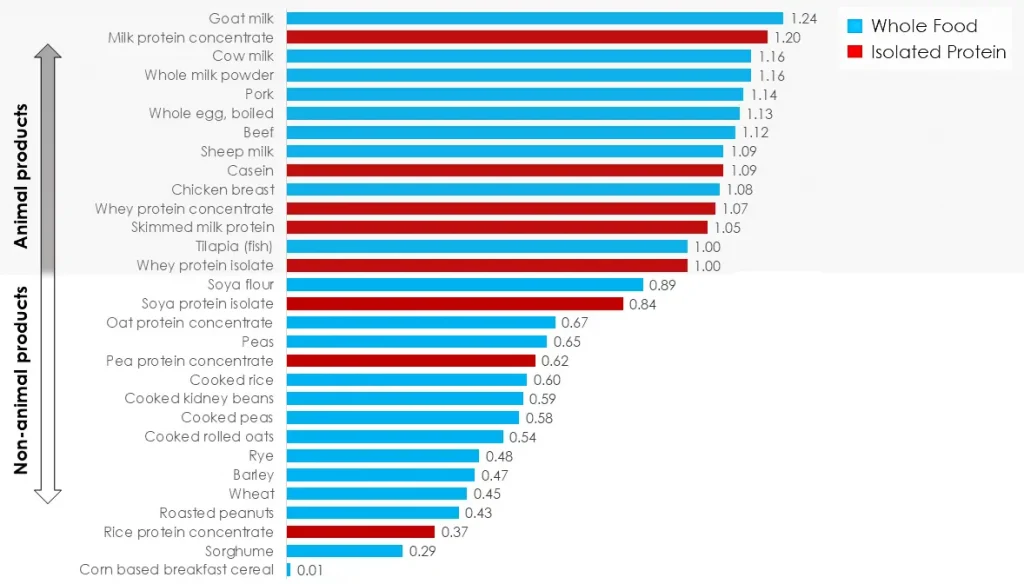
La carne es carne en cierto modo y la proteína es similar en las proporciones de aminoácidos que contiene. Algunas fuentes vegetales también tienen proteínas "completas", como la soja, por ejemplo.
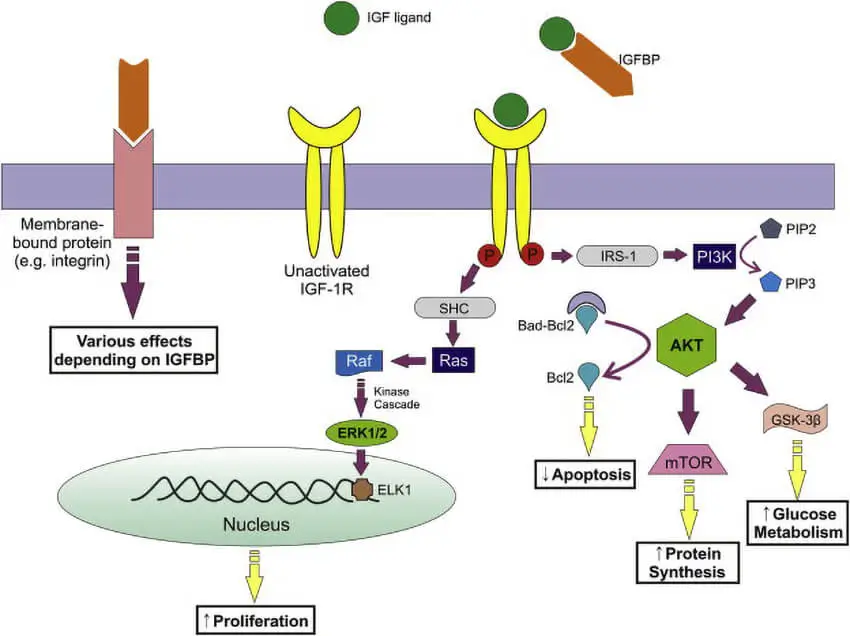
Comer proteína completa no es una buena idea porque elevará los niveles del Factor de crecimiento similar a la insulina (IGF-1) hormona y eso no es algo que usted quiera. IGF 1 es un promotor del cáncer hormonal.
Existe una mayor relación entre el nivel de IGF 1 y el cáncer general que entre fumar y el cáncer de pulmón, por ejemplo. Se trata de una hormona que básicamente recorre tu cuerpo y digámoslo así llama a la puerta de la celda. Cuando la señora de la casa abre la puerta IGF 1 dirá:
"Hola, qué tal, sólo vengo a decirte que si necesitas dividir o reparar algo en tu casa ahora mismo tenemos todos los aminoácidos esenciales en la calle".
La respuesta de una célula normal será: "No, gracias, estamos bien y todo va bien", pero una célula cancerosa se limitará a decir:
"Gracias, señor, hagamos una fiesta de división".
Niveles crónicamente elevados de IGF 1 no es algo que nadie como persona adulta debería desear, incluidos los culturistas. La mayoría de los estudios no encuentran ninguna correlación entre la ingesta de proteínas y el IGF 1 y esa será una respuesta de su médico y de la industria.
Sin embargo, adivina qué, es una mentira más.
Estos estudios no tuvieron en cuenta las proteínas animales frente a las vegetales. En este estudio (Allen et al., 2002) hicieron exactamente eso.
Cuanto mayor es el metabolismo, mayor es el daño oxidativo y mayor es la división celular. Cada vez que la célula se divide, corta el telómero por la mitad y nuestra longevidad
En realidad, la proteína vegetal regular parece disminuir los niveles de IGF 1. La conclusión fue que no es el exceso de proteína en general lo que eleva el nivel de IGF 1 promotor del cáncer, sino sólo la proteína "completa". El IGF 1 es tan malo que no sólo ayuda a crecer a todos los tipos de cáncer, sino que también les ayuda a desprenderse del tumor principal y migrar al torrente sanguíneo y a otras partes del cuerpo creando células tumorales metastásicas (Kleinberg et al., 2009). No se trata de un tumor que te mate en el 95% de los casos, sino de un tumor metastásico en todo el cuerpo. ¿Qué ayuda a las células del cáncer de mama a migrar al hígado, los huesos, el cerebro y los pulmones? Es el IGF 1(Yang et al., 2011).
Hay una mutación genética rara un síndrome que tienen algunas personas que conducen al enanismo como consecuencia del bajo nivel de creación de IGF 1. Se llama El síndrome de Laron (un tipo de enanismo).

Ellos nunca, déjame escribir esto de nuevo, nunca tienen cáncer (Guevara-Aguirre et al., 2011).
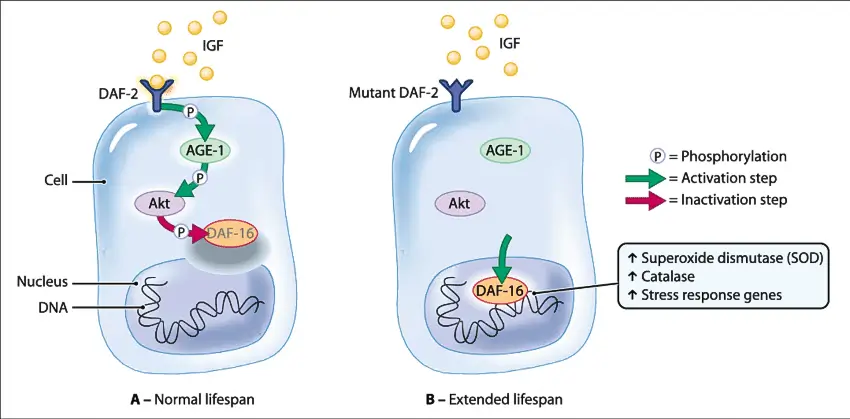
En este estudio la tasa de mortalidad por cáncer en estas personas fue cero. No sólo tienden a vivir mucho más. Los veganos también tienden a vivir más tiempo que los carnívoros e incluso cuando nos fijamos en el reino animal. Las especies que comen plantas tienden a vivir más que los carnívoros. En 1993 se produjo un gran avance en la ciencia de la longevidad. Se trataba de un estudio que consiguió prolongar al doble la vida de determinadas especies de lombrices intestinales. Era hasta la fecha la prolongación de vida más larga registrada en cualquier estudio.
Se descubrió una mutación que duplicaba la esperanza de vida de los ascáridos de 30 a 60 días (Kenyon et al., 1993).
Era lo mismo que la gente viviera 160 años y estuviera sana. Y fue una sola mutación la que hizo tanto. Cuando consideramos el tema del envejecimiento, pensamos en longitud de los telómeros, Daño por radicales libres en el ADN...otros múltiples procesos, y así sucesivamente. Pero no, era una sola mutación que hacía una sola cosa. Ese gen que los científicos llamaron el Gen de la Parca era sólo un mal funcionamiento en el gen receptor de IGF 1. Si comes proteínas animales, no sólo te expones al riesgo de cáncer, sino que también aceleras el proceso de envejecimiento. Hoy en día, la ciencia puede crear retrovirus artificiales capaces de provocar mutaciones. En el futuro, podría ser creíble tener una vacuna que desactivará el receptor IGF 1 en humanos adultos también hasta cierto punto y prolongar nuestra vida por el doble pero por ahora sólo evita la proteína animal.
Cuando cambiamos a las personas a una alimentación basada en plantas, podemos reducir significativamente los niveles de IGF 1 en el torrente sanguíneo.
En un estudio se observó que las personas que habían seguido durante 14 años una dieta basada en plantas tenían la mitad de niveles de IGF 1 en sangre que los consumidores de carne (Ngo et al., 2002). Y hay que ser vegano no vegetariano. En este estudio, compararon los niveles de IGF 1 de veganos, lacto ovo vegetarianos y consumidores de carne, y sólo los veganos tenían niveles más bajos de IGF1 en circulación (Allen et al., 2002). La leche y los huevos siguen siendo proteínas animales completas, por lo que el resultado es comprensible. Se trataba de un estudio sobre una mujer, pero estudios posteriores sobre hombres y mujeres mostraron lo mismo.
En un estudio compararon la correlación estadística entre el tabaquismo y el cáncer de pulmón y el consumo elevado de proteínas animales y el riesgo de cáncer en general y la correlación era aún peor para la proteína (Levine y otros, 2014).
Se trata de un estudio reciente realizado en 2014 con la conclusión:
" Los ratones y los seres humanos con deficiencias del receptor de la hormona del crecimiento/IGF-1 muestran importantes reducciones en las enfermedades relacionadas con la edad. Dado que la restricción de proteínas reduce la actividad de GHR-IGF-1, examinamos los vínculos entre la ingesta de proteínas y la mortalidad. Los encuestados de 50-65 años que informaron de una alta ingesta de proteínas tuvieron un aumento de 75% en la mortalidad general y un aumento de 4 veces en el riesgo de muerte por cáncer durante los siguientes 18 años."
(Levine y otros, 2014)
Comer proteínas animales multiplica por cuatro las posibilidades de desarrollar cualquier tipo de cáncer. Cuando fumas tienes cuatro veces más posibilidades de desarrollar cáncer de pulmón.
Parte de la prensa escribió sobre este estudio creando un enfado generalizado entre la práctica médica y también entre la población en general. ¿Cuál fue la respuesta de la comunidad médica? Gunter Kuhnle, científico especializado en nutrición alimentaria, no uno cualquiera, sino específicamente en nutrición, de la Universidad de Reading:
"Fue erróneo y potencialmente incluso peligroso comparar los efectos del tabaco con los de la carne y el queso, como hace el estudio. El envío de comunicados [de prensa] como éste puede perjudicar la eficacia de importantes mensajes de salud pública. Pueden contribuir a impedir que el público en general reciba buenos consejos de salud". El fumador piensa: Por qué molestarse en dejar de fumar si mi bocadillo de queso y jamón es igual de malo para mí"
Gunter Kuhnle
El mensaje real es que la epidemia de cáncer está causada por la proteína animal.
O seamos precisos aquí proteína completa en general. No comas proteína animal, hay suficiente proteína en las plantas. En realidad, toda la proteína que se ha creado en el planeta Tierra la crean las plantas. Todas las proteínas esenciales están primero en las plantas, y los animales las obtienen después de comer plantas. Los animales sólo crecen comiendo plantas que han creado todas las proteínas esenciales. Luego algunos depredadores se comen a otros animales y así sucesivamente. Recuerda que todos los aminoácidos esenciales y todas las proteínas de todo el planeta fueron hechos por y sólo por plantas.
La única proteína realmente incompleta en todo el suministro de alimentos es gelatinaasí que la única fuente de proteínas con la que no podríamos vivir es la gelatina.
Por otra parte, sólo hay una proteína verdaderamente perfecta para nosotros, sin contar la leche materna. La proteína de mayor calidad del planeta para nosotros es nuestra propia carne humana.

Aunque ya no practicamos el canibalismo, hay pruebas de que comimos neandertales y otros primates, por lo que practicamos una forma de canibalismo entre mamíferos. No nos gusta demasiado nada que no pertenezca al reino de los mamíferos, como los insectos o los reptiles. Preferimos los nuestros. Todo se debe a que necesitamos esas proteínas. ¿O qué te parece esto? ¿Sabía usted que los frijoles tienen tanta proteína como la carne regular con cero colesterol, grasas saturadas, bacterias muertas endotoxinas, lleno de fibra antioxidantes, y almidón resistente?
| Tipo de judía | Proteína (g) | Carbohidratos (g) | Calorías |
|---|---|---|---|
| Alubias pintas | 8 | 22 | 122 |
| Adzuki | 9 | 29 | 147 |
| Anasazi | 7 | 23 | 115 |
| Canelones | 10 | 32 | 179 |
| Garbanzos | 7 | 22 | 134 |
| Edamame | 11 | 10 | 120 |
| Habas | 10 | 26 | 187 |
| Garbanzos | 7 | 22 | 134 |
| Alubia roja | 8 | 20 | 112 |
| Lentejas | 9 | 20 | 115 |
| Lima | 7 | 21 | 108 |
| Mung | 14.2 | 39 | 212 |
| Guisante | 4.3 | 12.5 | 67 |
| Soja | 14.3 | 10 | 149 |
| Guisantes partidos | 8 | 21 | 116 |
Todo este concepto de que de alguna manera hay proteína incompleta y que la proteína vegetal es inferior a la animal es sólo otra mentira diseñada y producida por las mismas personas que utilizan la ciencia como una herramienta para la comercialización. La mentira que aceptamos y usamos como justificación de nuestro propio deseo de carne animal.

Todo el mito de la calidad de la proteína se creó a partir de un estudio con roedores realizado hace más de cien años que descubrió que las ratas bebés no crecen tan bien con plantas como con proteína animal. Sí, no estoy bromeando, ese fue un estudio que se convirtió en un mito sobre la integridad de las proteínas. Más tarde fue empujado a la corriente principal por primera vez por algunos científicos pagados en el número 75 de la revista Vogue.

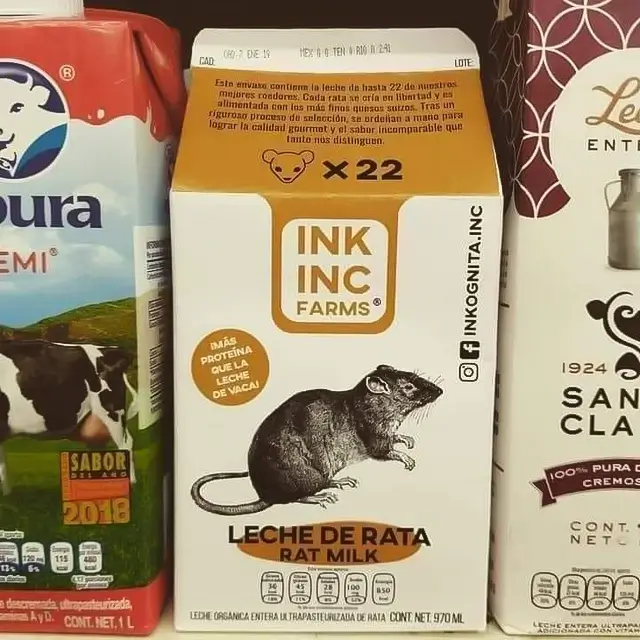
Las ratas bebés, por cierto, no crecen bien en leche humana o bien porque la leche humana tiene diez veces menos proteínas que la leche de rata. La leche de rata tiene tanta proteína porque las ratas crecen rápido y los bebés humanos no. Cuanta más proteína contiene la leche, más rápido crece la especie. Cuánta proteínas cree que tiene la leche materna humana?
La leche humana tiene 9,5 gramos de proteínas por litro. La leche de rata tiene 86,9 gramos de proteínas por litro. La leche materna humana tiene el porcentaje de proteínas más bajo de todas las leches de mamíferos existentes. Menos del 1% de proteínas en peso.
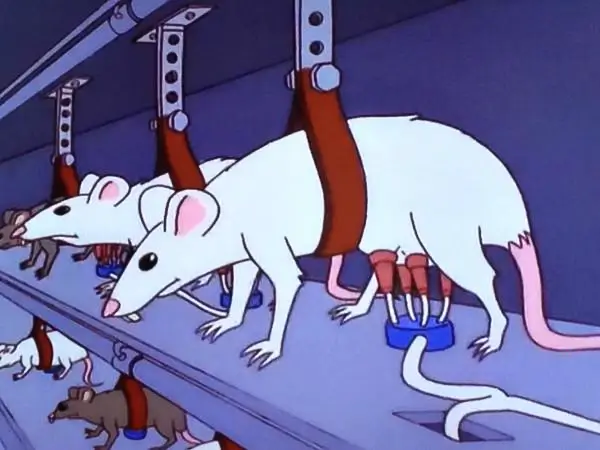
Lo que los culturistas deberían hacer es encontrar y beber leche de rata. Eso hará crecer el músculo sin necesidad de un suplemento de proteína de suero. ¿Qué pasa con el culturismo vegano, o con el vegetariano, o con todos? ¿Cuánta proteína, en realidad, tienen los diferentes tipos de dietas?
En este estudio (Rizzo y otros, 2013) analizaron la ingesta media de proteínas comparando diferentes dietas. Fue el mayor estudio de este tipo realizado hasta la fecha. Compararon perfiles nutricionales de la dieta de unos 5.000 veganos, 30.000 consumidores estándar de carne, flexitarianos y 20.000 vegetarianos, y luego los dividió en grupos desde lacto-ovo, pesco hasta estricto y semi, y así sucesivamente. El resultado es que todos los grupos promedian más o menos lo mismo, alrededor de 60 para los vegetarianos estrictos a 90 gramos para los consumidores de carne estándar de proteínas al día. Excepto que los no vegetarianos tenían la menor ingesta de fitoquímicos y antioxidantes y fibra, betacaroteno y magnesio con las ingestas más altas de colesterol, toxinas de todo tipo,s y ácidos grasos saturados, trans, araquidónico y docosahexaenoico. Si preguntamos a la ciencia natural de hoy en día, el consenso es que como mucho se necesitan de 0,8 a 0,9 gramos de proteína por kilo y sin contar todo el exceso de grasa de las personas obesas. Sólo el peso corporal libre de grasa (Millward, 2012).
Esto es extremadamente excesivo y se correlaciona con una amplia gama de complicaciones de salud y enfermedades. Más información en este artículo (Dieta rica en proteínas - Correlaciones de riesgo para la salud).
La otra cara de la moneda es que IGF y mTOR son los antagonistas más potentes de la autofagia.
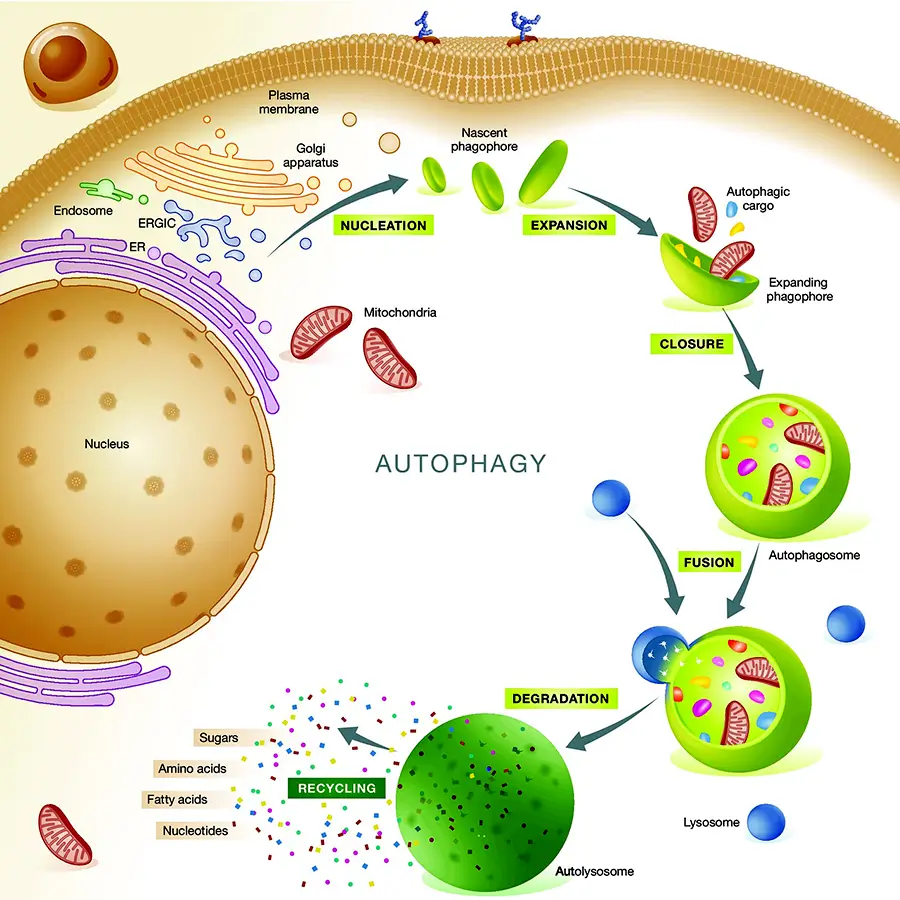
Niveles inadecuados de autofagia o, en la mayoría de los casos, la falta total de la misma, incluso en pequeñas cantidades, aumentará la mutación y la acumulación de daños en el ADN con el tiempo y aumentará el riesgo de cáncer independientemente de la promoción de IGF de la proliferación de células cancerosas.
La verdad que la industria no quiere mencionar es exactamente ésta. Cuando comes proteína completa es completa y el carcinógeno más poderoso conocido. No es sólo la carne roja sino la proteína completa en general además de toda la inflamación y bioacumulación de toxinas en la carne. Si esta verdad tiene alguna repercusión en las elecciones dietéticas de la gente es tema de debate. Pero la ciencia es la ciencia y eludir el tema sólo redunda en interés del de alimentos muy apetecibles. como fuente de gratificación.
Los culturistas, por ejemplo, comen una media de más de 200 gramos de proteínas al día. Fisiológicamente no es posible crecer más de 10 gramos de proteína al día (lo que equivale a unos 50 gramos de tejido) si no tomas esteroides, independientemente de la cantidad de proteína que comas o de cuánto ejercicio hagas. Incluso los veganos estrictos pueden hacer culturismo si la proteína es un problema. Otros tipos de atletas también suelen comer cantidades muy superiores a la media. Algunos defensores de la salud keto paleo comen 10 huevos en el desayuno. Para algunas personas, son gurús de la salud.
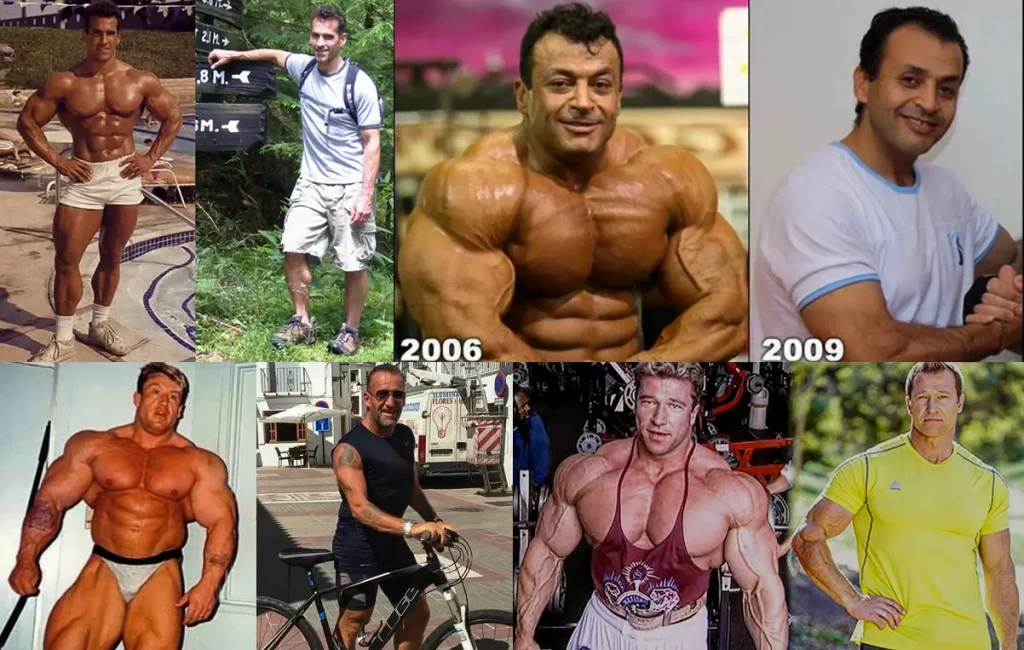
Hay una tendencia a comer grandes cantidades de proteína completa para perder peso. La lógica detrás de esto es que una gran cantidad de proteína completa estimulará una mayor liberación de la hormona IGF 1 que detendrá la autofagia de la masa muscular y sólo centrará la pérdida de peso en el tejido graso. Y ese argumento es correcto.
Está científicamente demostrado, que se puede comer una gran cantidad de proteína completa en la dieta para dejar de autofagia muscular tejido hasta cierto punto.
Sin embargo, ¿quieres tener cáncer por tener buen aspecto?
Este estudio se publicó en Cancer Research (Knuppel et al., 2020). Es un estudio gratuito y puede ir a leerlo. Este estudio analizó casi 400.000 muestras y confirmó que los niveles sanguíneos más altos de IGF-1 son un factor de riesgo para el cáncer. Esto no es algo que se pueda desacreditar de ninguna forma y de ninguna manera. Es sólo una verdad incómoda que no irá más allá en lo que respecta a las directrices dietéticas de ninguna forma. Especialmente porque tenemos gurús de la salud que predican las dietas altas en proteínas de alta calidad como una respuesta a la obesidad, el rendimiento deportivo, la diabetes y especialmente la construcción de tejido muscular y toda la gente de ceto paleo y la investigación financiada por la industria....
Si quieres detener el catabolismo durante la dieta porque eres un atleta profesional puedes simplemente tomar 1000mg de Metformina al día. Disminuirá la capacidad del hígado para gluconeogénesis y se ha demostrado que la metformina como suplemento alarga la vida y reduce el IGF-1 al mismo tiempo. Se prescribe comúnmente de la misma manera que la aspirina como medicamento para la longevidad. Este sería un tema para otros artículos.
La verdadera cuestión para los veganos no es de dónde sacar las proteínas, sino cómo evitar el exceso. Especialmente cómo evitar un exceso de proteínas animales en la dieta americana estándar.
En mi opinión, el enfoque correcto es decir la verdad a la gente y, si siguen queriendo consumir la dieta estadounidense estándar, todavía hay algunas intervenciones que pueden reducir potencialmente los riesgos de cáncer aunque no se quieran cambiar los hábitos alimentarios. Por ejemplo, puede intentar reducir la inflamación crónica con alimentos ricos en antioxidantes, puede intentar evitar la toxicidad, puede rápido periódicamente, puede evitar carencias de micronutrientes, puede utilizar algunos de hierbas y suplementos contra el cáncer que tienen hornadas científicas como curcumina etc.
Los factores de crecimiento similares a la insulina (IGF) 1 y 2 estimulan el desarrollo y la progresión de distintos tipos de cáncer. Esta animación ayuda a educar e informar sobre las diversas vías asociadas a los IGF 1 y 2, destacando el mecanismo que subyace a un anticuerpo monoclonal desarrollado por Boehringer Ingelheim, que se une a estos ligandos y los neutraliza.
La hormona del crecimiento y el IGF-1 suponen un compromiso. La hormona del crecimiento y el IGF-1 mejoran el rendimiento muscular y cognitivo, pero esto tiene un coste: la longevidad. La reducción de la hormona del crecimiento y del IGF-1 aumenta la longevidad al incrementar la expresión de los genes implicados en la resistencia al estrés, pero a un alto coste para los músculos y el cerebro. Infórmese sobre las compensaciones y las formas de evitarlas.
Preguntas Frecuentes
Referencias:
- Allen, N. E., Appleby, P. N., Davey, G. K., Kaaks, R., Rinaldi, S., & Key, T. J. (2002). The associations of diet with serum insulin-like growth factor I and its main binding proteins in 292 women meat-eaters, vegetarians, and vegans. Epidemiología, biomarcadores y prevención del cáncer : una publicación de la Asociación Americana para la Investigación del Cáncer, copatrocinada por la Sociedad Americana de Oncología Preventiva., 11(11), 1441-1448. [PubMed]
- Kleinberg, D. L., Wood, T. L., Furth, P. A., & Lee, A. V. (2009). Growth hormone and insulin-like growth factor-I in the transition from normal mammary development to preneoplastic mammary lesions. Revisiones endocrinas, 30(1), 51-74. https://doi.org/10.1210/er.2008-0022
- Yang, S. Y., Miah, A., Pabari, A., & Winslet, M. (2011). Factores de crecimiento y sus receptores en las metástasis del cáncer. Fronteras de la biociencia (edición de referencia), 16(2), 531-538. https://doi.org/10.2741/3703
- Guevara-Aguirre, J., Balasubramanian, P., Guevara-Aguirre, M., Wei, M., Madia, F., Cheng, C. W., Hwang, D., Martin-Montalvo, A., Saavedra, J., Ingles, S., de Cabo, R., Cohen, P., & Longo, V. D. (2011). La deficiencia del receptor de la hormona del crecimiento se asocia con una reducción importante de la señalización pro-envejecimiento, el cáncer y la diabetes en los seres humanos. Ciencia y medicina traslacional, 3(70), 70ra13. https://doi.org/10.1126/scitranslmed.3001845
- Kenyon, C., Chang, J., Gensch, E., Rudner, A., & Tabtiang, R. (1993). A C. elegans mutant that lives twice as long as wild type. Naturaleza, 366(6454), 461-464. https://doi.org/10.1038/366461a0
- Ngo, T. H., Barnard, R. J., Tymchuk, C. N., Cohen, P., & Aronson, W. J. (2002). Effect of diet and exercise on serum insulin, IGF-I, and IGFBP-1 levels and growth of LNCaP cells in vitro (Estados Unidos). Causas y control del cáncer : CCC, 13(10), 929-935. https://doi.org/10.1023/a:1021911517010
- Allen, N. E., Appleby, P. N., Davey, G. K., Kaaks, R., Rinaldi, S., & Key, T. J. (2002). The associations of diet with serum insulin-like growth factor I and its main binding proteins in 292 women meat-eaters, vegetarians, and vegans. Epidemiología, biomarcadores y prevención del cáncer : una publicación de la Asociación Americana para la Investigación del Cáncer, copatrocinada por la Sociedad Americana de Oncología Preventiva., 11(11), 1441-1448. [PubMed]
- Levine, M. E., Suárez, J. A., Brandhorst, S., Balasubramanian, P., Cheng, C. W., Madia, F., Fontana, L., Mirisola, M. G., Guevara-Aguirre, J., Wan, J., Passarino, G., Kennedy, B. K., Wei, M., Cohen, P., Crimmins, E. M., & Longo, V. D. (2014). La baja ingesta de proteínas se asocia con una reducción importante de IGF-1, cáncer y mortalidad general en la población de 65 años o menos, pero no en la de más edad. Metabolismo celular, 19(3), 407-417. https://doi.org/10.1016/j.cmet.2014.02.006
- Rizzo, N. S., Jaceldo-Siegl, K., Sabate, J., & Fraser, G. E. (2013). Nutrient profiles of vegetarian and nonvegetarian dietary patterns. Revista de la Academia de Nutrición y Dietética, 113(12), 1610-1619. https://doi.org/10.1016/j.jand.2013.06.349
- Millward D. J. (2012). Identificación de las raciones dietéticas recomendadas de proteínas y aminoácidos: crítica del informe OMS/FAO/UNU de 2007. El British journal of nutrition, 108 Suppl 2S3-S21. https://doi.org/10.1017/S0007114512002450
- Knuppel, A., Fensom, G. K., Watts, E. L., Gunter, M. J., Murphy, N., Papier, K., Perez-Cornago, A., Schmidt, J. A., Smith Byrne, K., Travis, R. C., & Key, T. J. (2020). Circulating Insulin-like Growth Factor-I Concentrations and Risk of 30 Cancers: Prospective Analyses in UK Biobank. Investigación sobre el cáncer, 80(18), 4014-4021. https://doi.org/10.1158/0008-5472.CAN-20-1281
Contenidos Relacionados

¿Tienes alguna duda acerca de la nutrición y la salud?
Me encantaría saber de usted y responderlas en mi próxima publicación. Agradezco sus aportes y opiniones y espero tener noticias suyas pronto. También te invito a síguenos en Facebook, Instagram y Pinterest para más contenidos sobre dieta, nutrición y salud. Puedes dejar un comentario allí y conectar con otros entusiastas de la salud, compartir tus consejos y experiencias, y recibir apoyo y ánimo de nuestro equipo y nuestra comunidad.
Espero que este post le haya resultado informativo y ameno y que esté preparado para aplicar los conocimientos adquiridos. Si le ha resultado útil, por favor compártelo con tus amigos y familiares que también podrían beneficiarse de ella. Nunca se sabe quién puede necesitar orientación y apoyo en su camino hacia la salud.
– También Te Puede Interesar –
Deficiencias Nutricionales en la Dieta Vegana: Estrategias de Prevención

Atracones y Regulación Hormonal: Hambre Emocional
Beneficios de la Teobromina: Estimula el Cerebro sin Ansiedad

Ayuno intermitente frente a restricción calórica: ¿hay alguna diferencia?
Alimentos Procesados: Comprender los Riesgos
Necesidades de Proteínas: Una Verdad Incómoda
Edulcorantes artificiales- Conceptos básicos
Cómo Detener la Caries Dental: Síntomas, Causas y Prevención

Aprenda Sobre Nutricion

Milos Pokimica es doctor en medicina natural, nutricionista clínico, escritor sobre salud médica y nutrición y asesor en ciencias de la nutrición. Autor de la serie de libros Go Vegan? Revisión de la Ciencia, también dirige el sitio web sobre salud natural GoVeganWay.com.
Descargo De Responsabilidad Médica
GoVeganWay.com le ofrece reseñas de las últimas investigaciones relacionadas con la nutrición y la salud. La información proporcionada representa la opinión personal del autor y no pretende ni implica sustituir el asesoramiento, diagnóstico o tratamiento médico profesional. La información proporcionada tiene fines informativos únicamente y no pretende sustituir la consulta, el diagnóstico y/o el tratamiento médico de un médico o proveedor de atención médica calificado.NUNCA ignore el CONSEJO MÉDICO PROFESIONAL O RETRASAR la BÚSQUEDA de TRATAMIENTO MÉDICO a CAUSA DE ALGO QUE HAYA LEÍDO EN O accesibles a TRAVÉS de GoVeganWay.com
NUNCA APLICAR CUALQUIER cambio de ESTILO de vida O CAMBIOS EN su totalidad COMO UNA CONSECUENCIA DE ALGO QUE HA LEÍDO EN GoVeganWay.com ANTES de CONSULTAR con LICENCIA PROFESIONAL MÉDICO.
En el caso de una emergencia médica, llame a un médico o al 911 inmediatamente. GoVeganWay.com no se recomienda ni aprueba ninguna de los grupos, las organizaciones, las pruebas, los médicos, productos, procedimientos, opiniones u otra información que pueda ser mencionado en el interior.
Selecciones del editor –
El cáncer Editor De Selecciones Fitoquímicos
Poder Anticancerígeno de Frutas y Verduras: Pruebas Clínicas e in Vivo
Algunos extractos vegetales rivalizan con los principales fármacos quimioterapéuticos y, al mismo tiempo, atacan varios tipos diferentes de células cancerosas.
Antioxidantes Editor De Selecciones ORAC
Aceites Esenciales Como Suplementos Antioxidantes: Reglas y Estrategias
Los aceites esenciales de calidad alimentaria pueden ser una estrategia cómoda y de fácil consumo para optimizar el valor antioxidante y las puntuaciones ORAC de nuestra dieta.
Antioxidantes Editor De Selecciones ORAC
Dieta Rica en Antioxidantes: Reglas y Estrategias Generales
Existen estrategias fáciles y rentables para optimizar el valor antioxidante de nuestra dieta.
Antioxidantes Editor De Selecciones ORAC
Comprender los Valores ORAC: Niveles de Antioxidantes en los Alimentos
Cuando tu principal fuente de antioxidantes es el café, sabes que tienes un grave problema.

Antioxidantes Editor De Selecciones ORAC
Astaxantina Beneficios: Antioxidante Natural Más Potente del Mundo
La astaxantina es el más potente y natural antioxidante universal (petróleo y agua-soluble) que conoce la ciencia. Se acumula en los tejidos y nunca puede convertirse en un pro-oxidante.
Antioxidantes Editor De Selecciones ORAC Fitoquímicos
Antioxidantes: Conceptos Básicos
Los productos de origen animal no contienen fitoquímicos ni antioxidantes. Por término medio, los alimentos vegetales contienen más de 60 veces más antioxidantes que los de origen animal.
Editor De Selecciones Dieta Vegana
Deficiencias Nutricionales en la Dieta Vegana: Estrategias de Prevención
Existen nueve deficiencias nutricionales comunes a escala poblacional que afectan a las personas que siguen una dieta basada en plantas. Si no se corrigen a tiempo, algunas deficiencias tienen consecuencias terribles y no tratables.
Editor De Selecciones Dieta Óptima
Deficiencia de Micronutrientes en la Dieta Americana Estándar: Estrategias de Optimización
El perfil nutricional de nuestra dieta moderna a base de carne, azúcar y alimentos procesados es totalmente incongruente con nuestra evolución, lo que provoca una grave carencia de micronutrientes.
Editor De Selecciones Fitoquímicos
Fitoquímicos: Conceptos Básicos
Todos y cada uno de los fitoquímicos que existen tienen una acción biológica en el cuerpo humano. Cada uno de los millones de fitoquímicos diferentes.

Editor De Selecciones La leche Dieta Óptima
Leche y Productos Lácteos: Correlaciones de Riesgo Para la Salud
Las asociaciones conocidas con la leche y el consumo de lácteos son infertilidad, cáncer de ovario y de mama, leucemia, diabetes tipo 1, autismo, arteriosclerosis, cataratas, artritis reumatoide, esclerosis múltiple, hiperactividad, congestión, granos y más...

El cáncer Editor De Selecciones La proteína
Proteína Completa: Señalización del IGF-1 en la Formación del Cáncer
Cuando usted come proteínas animales que tienen cuatro veces más probabilidad de desarrollar todos los tipos de cáncer. Cuando usted fuma, usted tiene cuatro veces la posibilidad de desarrollar cáncer de pulmón.

El cáncer Editor De Selecciones La proteína
La Anatomía de Cáncer de riesgo para la Salud de las correlaciones
Según los medicamentos, alrededor del 2% de los cánceres se consideran puramente causados por factores genéticos. El mismo rango que dentro del reino animal. No te han dicho toda la verdad.
Milos Pokimica es escritor especializado en salud y nutrición y asesor en ciencias nutricionales. Autor de la serie de libros Go Vegan? Revisión de la Ciencia, también dirige el sitio web sobre salud natural GoVeganWay.com.
Últimos artículos -

La Restricción De Calorías La longevidad
Cómo Ayunar: Alimentos en Ayunas Que No Rompen la Autofagia
Autofagia. ¿Alguna vez te has preguntado qué les sucede a las células de tu cuerpo cuando mueren o se dañan? ¿Simplemente se acumulan y crean problemas, o se eliminan de alguna manera? La respuesta es que tu cuerpo...

Salud Dental Prevención
Dolor y Sensibilidad a los Dulces: Solución Rápida y Duradera
Una solución rápida y fácil para aliviar el dolor es el aceite esencial de clavo, un potente antioxidante y analgésico que puede ayudar con las enfermedades de las encías y el dolor de muelas.
Los frijoles
Judías Verdes: Nutrición y Beneficios Para la Salud
Los frijoles verdes son bajos en calorías y ricos en compuestos naturales que pueden ayudar a controlar su azúcar en la sangre, reducir el colesterol y combatir los radicales libres.
Dieta de alimentos crudos Dieta Vegana
Se Pueden Comer Setas Crudas: Riesgos Para La Salud, Nutrición Y Seguridad
Las setas tienen toxinas sensibles al calor, como la hidracina o la agaritina, y paredes celulares compuestas de quitina que el ser humano no puede digerir bien.
Dieta Vegana
¿Son Los Peces Animales? Una Perspectiva Cultural
En algunas culturas, la carne de pescado no se considera carne, y el pescado está permitido incluso durante el ayuno.

Salud Dental Prevención
Enjuague bucal natural casero: probado, más fuerte y menos tóxico
El enjuague bucal natural hecho en casa es más fuerte que la clorhexidina, menos tóxico y si se ingiere puede dar un poco de náuseas, pero también un alto estallido en el valor ORAC.
Salud Dental Prevención
Cómo Detener la Caries Dental: Síntomas, Causas y Prevención
El consumo de azúcar es la principal causa de caries y deterioro dental, combinado con carencias de minerales, especialmente magnesio, zinc, cobre y oligoelementos.
Antioxidantes Superalimentos
Amla: Beneficios Probados, Nutrición e Importancia Clínica
El amla es uno de los antioxidantes más potentes del mundo, con una puntuación ORAC de 261.530. Es una rica fuente de fitoquímicos que tienen diversos beneficios para la salud. Es una rica fuente de fitoquímicos que tienen diversos beneficios para la salud.
Top Noticias De Salud — ScienceDaily
- Fathers face rising depression risk a year after baby arrivesen marzo 25, 2026
New fathers appear to have fewer mental health diagnoses during pregnancy and the early months after birth. But that early stability does not last. About a year later, depression and stress-related disorders increase significantly, surprising researchers. The findings suggest that the emotional toll of fatherhood builds over time rather than hitting immediately.
- This tiny implant, smaller than a grain of salt, can read your brainen marzo 25, 2026
A new neural implant is so small it can rest on a grain of salt, yet it can track and wirelessly transmit brain activity for over a year. It’s powered by laser light that safely passes through tissue and communicates using tiny infrared signals. This ultra-miniature device could transform how scientists study the brain without invasive wiring.
- Scientists just solved a major mystery about how your brain stores memoriesen marzo 25, 2026
Scientists have found that your brain separates memories into “what” and “where/when” using two different groups of neurons. One set responds to specific objects or people, while another tracks the context or situation. When you remember something correctly, these groups briefly connect and reconstruct the full memory. This system may be the secret behind how we recognize the same things across totally different experiences.
- Fatty liver breakthrough: A common vitamin shows promiseen marzo 24, 2026
Researchers have identified microRNA-93 as a key genetic driver of fatty liver disease and discovered that vitamin B3 can effectively shut it down. This finding suggests a safe, widely available vitamin could become a powerful new treatment.
- Scientists say NAD+ could slow aging and fight Alzheimer’s and Parkinson’sen marzo 24, 2026
A global team of leading scientists is zeroing in on a tiny but powerful molecule that could reshape how we age. Known as NAD⁺, it plays a crucial role in keeping our cells energized, repairing DNA, and maintaining overall health—but its levels steadily decline over time, potentially fueling diseases like Alzheimer’s and Parkinson’s. Researchers are now exploring ways to boost NAD⁺ using compounds like NR and NMN, with early studies hinting at improvements in memory, metabolism, and […]
- Insulin pills may soon replace daily injectionsen marzo 24, 2026
For over a century, scientists have chased the dream of insulin pills, but the digestive system kept destroying the drug before it could work—forcing millions of patients to rely on daily injections. Now, researchers at Kumamoto University have developed a clever workaround using a tiny peptide that helps insulin slip through the intestinal wall.
- Scientists discover hormone that may stop chronic back pain at its sourceen marzo 24, 2026
A new study suggests a widely used bone hormone could help relieve chronic back pain in an unexpected way. Instead of just strengthening bone, it appears to stop pain-sensing nerves from growing into damaged spinal areas. In animal models, this led to stronger spinal tissue and reduced pain sensitivity. The findings hint at a future treatment that tackles back pain at its biological roots.
PubMed, #Dieta vegana –
- Plant-Based Dietary Patterns and Neuroimaging Biomarkers of Brain Health: A Scoping Review of Observational and Interventional Evidenceen marzo 23, 2026
Healthy dietary interventions are well established in cardiovascular disease prevention, but their effects on the brain remain underexplored. This scoping review aims to investigate how adherence to core components of a whole-food plant-based diet (WFPBD) may impact neuroimaging outcomes across different brain conditions. We searched PubMed and MEDLINE for studies published in the past 20 years evaluating the effects of a predominantly or exclusively WFPBD, alone or combined with other […]
- Environmental and economic impact of a vegan versus traditional mediterranean diet: OMNIVEG studyen marzo 17, 2026
CONCLUSIONS: Replacing animal products with plant-based foods in a Mediterranean dietary framework can enhance environmental sustainability and reduce food costs. These findings support the promotion of whole plant-based diets as a viable strategy for sustainable and affordable nutrition.
- Consumption Habits and Perception of Plant-Based Milk and Dairy Alternatives Among Vegetarians and Omnivores: A Case Study of Consumers in Sloveniaen marzo 14, 2026
CONCLUSIONS: PBMDA perceptions in Slovenia are strongly segmented by dietary pattern and socio-demographics, supporting the need for clearer nutrition communication.
- Culinary Nutrition Programming for Members of a Community-Based Cancer Programen marzo 14, 2026
(1) Background: Nutrition research in cancer care has largely focused on disease prevention and management, overlooking the importance of food literacy. Culinary cancer care programs may address this gap by facilitating the practical application of nutrition through culinary skills, fostering social connections over nutrient-dense meals, and supporting individuals during periods of physical and social vulnerability. The Not-Just-Supper Club (NJSC) at Gilda’s Club Toronto (GT) is a…
- Fatty acid composition of ground-beef products and their plant-based meat substitutes available in Hungaryen marzo 13, 2026
CONCLUSION: The findings indicate that plant-based meat alternatives (except those containing coconut oil) have lower saturated and higher polyunsaturated fatty acid compositions than beef-based products, leading to more beneficial nutritional value. Further analytical and clinical studies are necessary to provide a more comprehensive understanding of the long-term health effects of these foods.
Publicaciones aleatorias –
El cáncer Editor De Selecciones Toxicidad
La fluoración del agua - revisión Científica
El fluoruro inactiva 62 enzimas en el cuerpo, inactiva el ADN y el ARN de las enzimas de reparación de la actividad, es mutagénico, causa daño en el ADN, los aumentos de los tipos de cáncer y todas las demás enfermedades correlacionadas con las mutaciones, altera el sistema inmunológico.
El cáncer El embarazo Toxicidad
Aspartamo: La Verdad Sobre Sus Riesgos Y Peligros
Una de las excitotoxinas que han hecho tan feliz a la industria es la sustancia química que hace todas las cosas que hacen las excitotoxinas pero que, a diferencia del glutamato monosódico, es dulce al gusto. Se conoce químicamente como aspartamo (Nutra Sweet).
Antioxidantes Nootrópicos
Azul de Metileno: Usos Terapéuticos e Importancia Clínica
El Azul de metileno es un potente antioxidante sintético. Mejora la función mitocondrial y la capacidad de nuestras células para producir energía.
Dieta de alimentos crudos
Dieta de alimentos crudos - La perspectiva evolutiva
La creencia básica en la comunidad de los alimentos crudos es que una dieta de alimentos crudos es la forma más natural y saludable de vivir. ¿Qué nos dice la biología evolutiva?

El cáncer Editor De Selecciones Toxicidad
Plaguicidas en Los Alimentos, Exposición en la Dieta Estadounidense Estándar - 80% Procedente de la Carne
La mayoría de los plaguicidas y, especialmente, metales pesados y otros residuos tóxicos contaminantes que tenemos, nos obtiene de la carne. Más de 80 por ciento de la exposición a pesticidas en la dieta Americana estándar proviene de productos de origen animal, no a partir de frutas o verduras.

La Restricción De Calorías La longevidad
Ayuno intermitente frente a restricción calórica: ¿hay alguna diferencia?
Hay una forma de dieta que está diseñada principalmente para utilizar la autofagia llamada ayuno intermitente. Hacer una dieta de restricción calórica total es una elección difícil.
El cáncer La inflamación Toxicidad
Toxicidad en Peces- El Más Tóxico de la Carne
La contaminación es arrastrada por el agua y acabará en el océano, y las algas filtran el agua iniciando el proceso de bioacumulación. La toxicidad para los peces es una gran preocupación.
El cáncer Desintoxicación La inflamación
Beneficios del Sulforafano: El Superpoder Desintoxicante del Brócoli
El sulforafano es el inductor enzimático natural de fase 2 más potente conocido por la ciencia. También está demostrado que el sulforafano es un inhibidor dosis-dependiente de la tumorigénesis inducida por carcinógenos.
Editor De Selecciones Fitoquímicos
Fitoquímicos: Conceptos Básicos
Todos y cada uno de los fitoquímicos que existen tienen una acción biológica en el cuerpo humano. Cada uno de los millones de fitoquímicos diferentes.
Salud Dental Prevención
Cómo Detener la Caries Dental: Síntomas, Causas y Prevención
El consumo de azúcar es la principal causa de caries y deterioro dental, combinado con carencias de minerales, especialmente magnesio, zinc, cobre y oligoelementos.

Publicaciones destacadas -

El cáncer Editor De Selecciones Toxicidad
Exposición a Plaguicidas en Niños: Pruebas de Exposición en la Vida Real
Los niños y especialmente las mujeres embarazadas son más vulnerables a la exposición a los pesticidas. Si analizamos el mundo real de los niveles de exposición en situaciones de la vida real, lo que podría ser el resultado?

La Medicina Alopática Editor De Selecciones Dieta Óptima
El Informe McGovern - Intereses especiales y supresión de la ciencia
En 1977 el empuje para un cambio de Pautas Dietéticas (McGovern Informe) a más a base de plantas vegana uno se había introducido en el Congreso de los estados UNIDOS.

La Medicina Alopática El cáncer Editor De Selecciones
El cáncer, La Prohibida Curas-máquina de Rife, reseña Histórica
La tasa de recuperación de pacientes con cáncer no tratable y declarados enfermos terminales mediante la utilización de la tecnología resonante de la máquina Rife fue del 100%.
Antioxidantes Editor De Selecciones ORAC Fitoquímicos
Antioxidantes: Conceptos Básicos
Los productos de origen animal no contienen fitoquímicos ni antioxidantes. Por término medio, los alimentos vegetales contienen más de 60 veces más antioxidantes que los de origen animal.
Editor De Selecciones Dieta Óptima
Alimentos Procesados: Comprender los Riesgos
Los alimentos procesados significan que se elimina algo de los alimentos enteros, normalmente fibra, y se añade algo, normalmente grasa, azúcar, sal y msg.
Editor De Selecciones Dieta Óptima
Deficiencia de Micronutrientes en la Dieta Americana Estándar: Estrategias de Optimización
El perfil nutricional de nuestra dieta moderna a base de carne, azúcar y alimentos procesados es totalmente incongruente con nuestra evolución, lo que provoca una grave carencia de micronutrientes.

Editor De Selecciones Dieta Óptima La proteína
Dieta Alta En Proteínas - Riesgo Para La Salud De Las Correlaciones
La escasez es la regla de las proteínas en la naturaleza. En términos evolutivos, los antropólogos han demostrado que los homínidos vivían una media de 15 a 25 gramos de proteína al día. En el tipo occidental moderno de dieta alta en proteínas consumiríamos eso...
Editor De Selecciones La inflamación
Los seres humanos omnívoros dilema - el consumo de Carne, las bacterias probióticas, la inflamación y el intestino
Son los seres humanos omnívoros en un verdadero anatómica sentido? Hay una diferencia fundamental en la forma en que el tracto digestivo trabaja en plantas vs consumo de carne de las especies.
Editor De Selecciones Fitoquímicos
Fitoquímicos: Conceptos Básicos
Todos y cada uno de los fitoquímicos que existen tienen una acción biológica en el cuerpo humano. Cada uno de los millones de fitoquímicos diferentes.
Editor De Selecciones La Obesidad
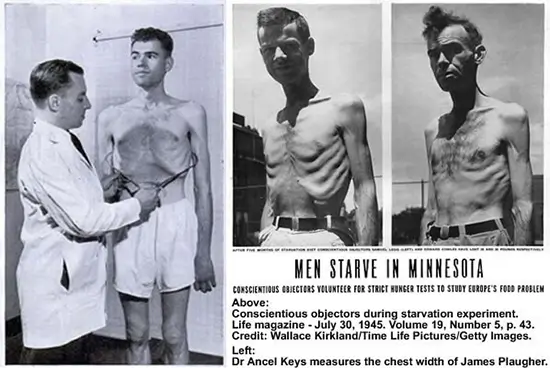
Experimento de Inanición de Minnesota: Por qué las Dietas Nos Hacen Engordar. La Psicología del Hambre.
Uno de los primeros estudios científicos sobre lo que es el hambre hace a la mente fue observado en un estudio recordado como el Minnesota Hambre Experimento realizado por la Universidad de Minnesota, ya en 1944.
La última versión desde PubMed, #Dieta basada en plantas –
- Comment on “Plant-based diet and risk of arthritis: a nationwide cohort study of the Chinese elderly population” by H. Zhang, J. Liang, Y. Han, J. Tian, Y. Tu, R. Fan, W. Zhu, Z. Zhang and H. Zhao,…por Tong Xin en marzo 24, 2026
A stratified perspective is essential to understand the divergent impacts of plant-based diets on osteoarthritis risk in older populations.
- A Mediterranean lifestyle obesity prevention intervention in preschoolers at risk: MELI-POP Study-a randomized controlled trialpor A Larruy-García en marzo 24, 2026
CONCLUSION: A Mediterranean lifestyle intervention may benefit body composition changes in preschool girls at risk of obesity; larger studies are needed to confirm these sex-specific results.
- From cow to crop: motives and barriers for plant-based dairy alternative consumption across three European countriespor Dominika Maison en marzo 23, 2026
Currently, alternative sources of protein are being sought to replace not only meat but also dairy products in the diet. From this perspective, it is worth examining how consumers perceive these products, what motivates them to choose them and what barriers they encounter, especially with regard to attitudes towards dairy products. The present study aimed to compare attitudes towards plant-based dairy alternatives (PBDAs) in three European countries – Poland, Germany and the UK. Furthermore, […]
- Energy and macronutrient intakes of Montenegrin adults: insights from the EFSA EU Menu National Survey (2017-2022)por Amil Orahovac en marzo 23, 2026
INTRODUCTION: Understanding population-level dietary intakes is essential for preventing diet-related non-communicable diseases (NCDs) and informing evidence-based nutrition policies. Until recently, Montenegro lacked nationally representative data on food and nutrient intake aligned with European Food Safety Authority (EFSA) standards. This study provides the first comprehensive analysis of energy and macronutrient intake among Montenegrin adults within the EFSA EU Menu framework.
- Plant-Based Dietary Patterns and Neuroimaging Biomarkers of Brain Health: A Scoping Review of Observational and Interventional Evidencepor Lydia Viviana Falsitta en marzo 23, 2026
Healthy dietary interventions are well established in cardiovascular disease prevention, but their effects on the brain remain underexplored. This scoping review aims to investigate how adherence to core components of a whole-food plant-based diet (WFPBD) may impact neuroimaging outcomes across different brain conditions. We searched PubMed and MEDLINE for studies published in the past 20 years evaluating the effects of a predominantly or exclusively WFPBD, alone or combined with other […]
- Metabolic pathway analysis reveals hierarchical pentose sugar utilization and metabolic flexibility of Bifidobacterium longumpor Lisa Friess en marzo 23, 2026
Plant-derived pentose sugars represent a major nutrient source in the gut, yet their metabolism remains incompletely defined. Strains of the human gut commensal Bifidobacterium longum subsp. longum utilise arabinose- and xylose-containing glycans, which are found in the pectin and hemicellulose layers of plant cell walls. To gain insight into the metabolism of these two pentoses as well as ribose, a naturally occurring sugar and a component of RNA and ATP, we identified and analysed the genes…