







Toxicidade Ambiental- É Apenas Uma Cadeia Alimentar
Toxicidade ambiental é a bioacumulação de toxinas. Organismos são filtros. Mas há mais ainda piores processo chamado de biomagnificação na cadeia alimentar.
Milos Pokimica
Escrito por: Milos Pokimica
Revisto Clinicamente Por: Dr. Xiùying Wáng, M.D.
Actualizado em 9 de Junho de 2023A toxicologia ambiental é o estudo científico dos efeitos na saúde da exposição a substâncias químicas tóxicas em ambientes vivos. O termo também se refere à gestão das toxinas ambientais e da toxicidade.
A contaminação do ar, água, ou solo com substâncias potencialmente perigosas pode prejudicar qualquer indivíduo ou comunidade. Os contaminantes são substâncias químicas encontradas em maiores quantidades do que as que ocorrem naturalmente no ambiente. Estes contaminantes podem entrar nos nossos corpos através de uma variedade de fontes residenciais, comerciais, e industriais. Mofo, arsénico, e flores de algas tóxicas são exemplos de contaminantes ambientais nocivos que podem ocorrer biologicamente.
| POSICAO | NOME |
|---|---|
| 1 | ARSÊNICO |
| 2 | CHUMBO |
| 3 | MERCÚRIO |
| 4 | CLORETO DE VINIL |
| 5 | BIFENILOS POLICLORADOS |
| 6 | BENZENE |
| 7 | CADMIO |
| 8 | BENZO(A)PIRENE |
| 9 | HIDROCARBONETOS POLICÍCLICOS AROMÁTICOS |
| 10 | BENZO(B)FLUORANTENO |
| 11 | CLOROFORME |
| 12 | AROCLOR 1260 |
| 13 | DDT, P,P'- |
| 14 | AROCLOR 1254 |
| 15 | DIBENZO(A,H)ANTRACENO |
| 16 | TRICLOROETILENO |
| 17 | CRÓMIO, HEXAVALENTE |
| 18 | DIELDRIN |
| 19 | FÓSFORO, BRANCO |
| 20 | HEXACLOROBUTADIENO |
Quando as toxinas entram no ambiente, vão parar à água. Depois, através dos sistemas fluviais, acabarão por ir parar ao oceano. Elas serão diluídas, e não haverá problemas. Com o tempo, elas dissipar-se-ão.

A resposta curta é não.
A toxicidade ambiental é a bioacumulação de toxinas. Os organismos são como filtros. É correcto que as concentrações de todos os poluentes e drogas e outros produtos químicos da nossa indústria pesada são baixas quando medidas directamente na água dos oceanos, mas já existe um fenómeno chamado bioacumulação.
Se o produto químico for estável, acabará em plâncton, algas, e outros organismos. Se houver uma substância no ambiente, o organismo irá absorvê-la, conduzindo à toxicidade ambiental e isso é um processo conhecido como bioacumulação. Quando respiramos, se houver fumo no ar, absorvemo-lo da mesma forma que o plâncton ou as algas absorvem tudo o que se encontra na água. Se a taxa de absorção for mais rápida do que a taxa e a capacidade de excreção do organismo, a substância acumular-se-á com o tempo. Uma substância como os metais pesados, por exemplo, ou os pesticidas, que permanecem inalterados no ambiente e são estáveis durante um longo período de tempo, serão filtrados pelos organismos que vivem nessa água. Como têm tendência para serem solúveis na gordura mas não na água, acumulam-se nos organismos vivos. Ou seja, aderem à gordura e a outras células do corpo e não querem sair.
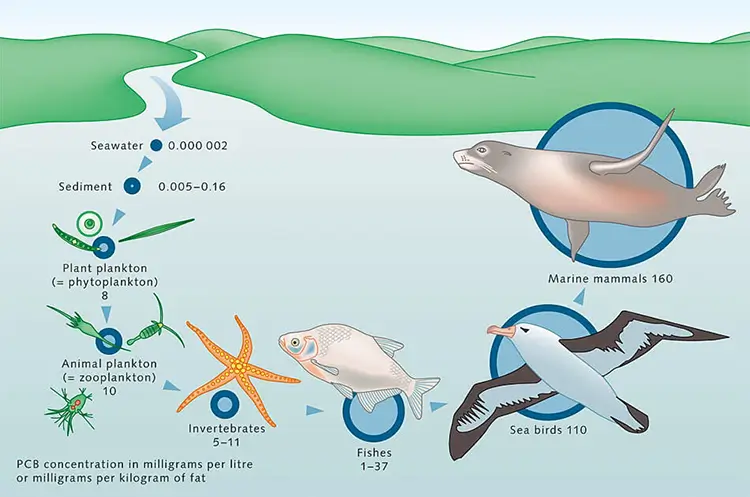
Portanto, todos os venenos que se encontram nos oceanos e que são de origem humana e resistentes ao calor e quimicamente estáveis bioacumularão e atingirão uma concentração muito mais elevada em organismos do que na água. Os organismos são como filtros. Filtram tudo o que existe na água, bom ou mau. Isto não é uma boa notícia para nós. A situação nem sequer seria tão má, mas há mais um processo chamado biomagnificação. Se compreendermos a cadeia alimentar, a acumulação de toxinas fica centenas de vezes pior à medida que avançamos. A toxicidade ambiental torna-se horrenda nos tempos modernos devido a isto. Estas toxinas lipossolúveis não podem ser metabolizadas ou decompostas, e ao mesmo tempo, não podem ser excretadas através dos rins pela urina, porque a gordura e a água não se misturam. A única forma de o organismo se livrar delas é por actividade enzimática, e se um organismo não tiver enzimas para as degradar, estas acumular-se-ão nos tecidos gordos. A maioria se não todas estas substâncias químicas são novas e de origem humana e os organismos não têm um mecanismo para as desintoxicar porque, em evolução, nunca tiveram de o fazer, até agora. Assim, o que acontece é que quando os peixes pequenos são comidos por peixes grandes, todas as suas toxinas são passadas para os peixes maiores. As gorduras e todas as toxinas neles presentes serão digeridas no intestino e serão absorvidas pelo organismo do predador onde serão acumuladas ainda mais. Uma vez que em cada nível da cadeia alimentar há algum grau de energia que se perde, para compensar um predador irá consumir um número mais significativo de presas, incluindo todas as suas substâncias tóxicas lipofílicas.
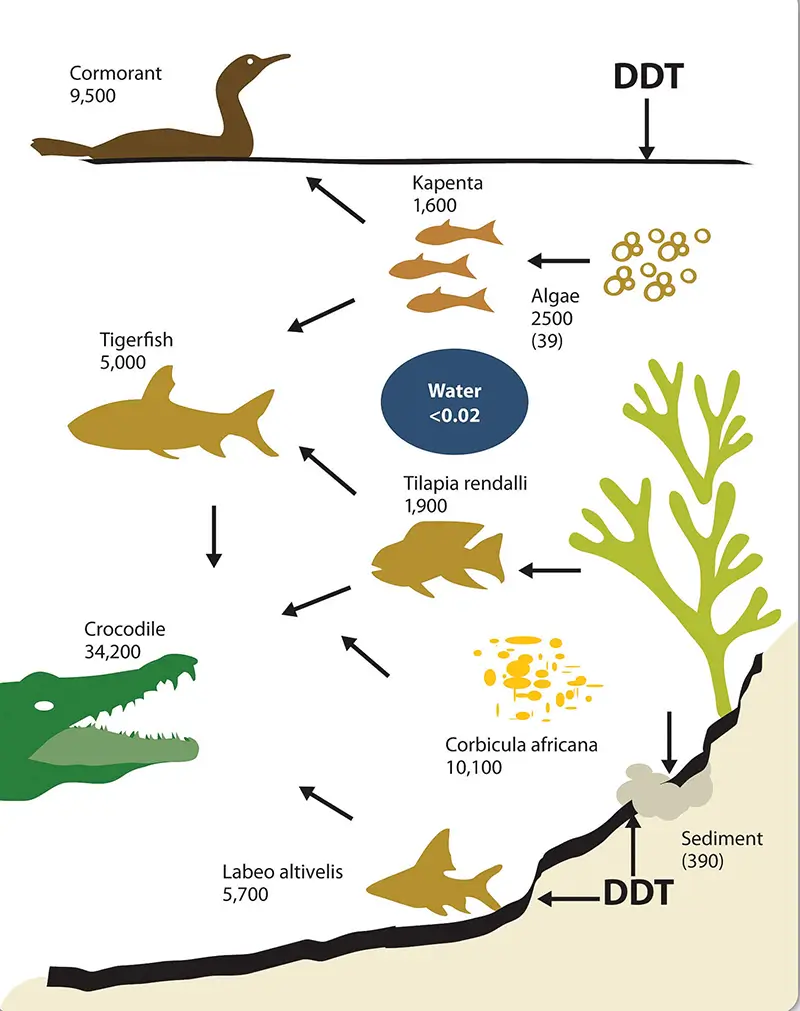
A concentração pode ser insignificante nos oceanos, mas depois a água começa a ser filtrada por algas. Dois grupos principais de substâncias biomagnificam. Ambos são lipofílicos e não são facilmente degradados. Um deles são estes novos químicos que são desconhecidos dos sistemas imunitários dos animais. Estas substâncias são conhecidas como "poluentes orgânicos persistentes" ou POP. São chamados persistentes porque não se degradam no ambiente. A água de esgoto regular ao entrar no rio ou no oceano não tem qualquer impacto em grande escala, porque passa pelo processo natural de degradação e desaparece. Apenas as substâncias químicas artificiais não naturais criadas pelo homem permanecem as persistentes.
Além do POP, existem metais. Os metais são elementos, o que significa que não são matéria viva, pelo que não são biodegradáveis. Os organismos que através da evolução foram expostos a níveis elevados de alguns destes metais tóxicos que podem ser encontrados naturalmente no ambiente, desenvolveram com o tempo mecanismos defensivos para contrariar essa exposição. O problema surge quando há uma mudança abrupta num ambiente que está a expor estes organismos a concentrações mais elevadas do que aquelas a que estão adaptados para fazer face. Isso provocará uma acumulação destes metais no organismo que não é capaz de os desintoxicar e excretar com rapidez suficiente para evitar danos.
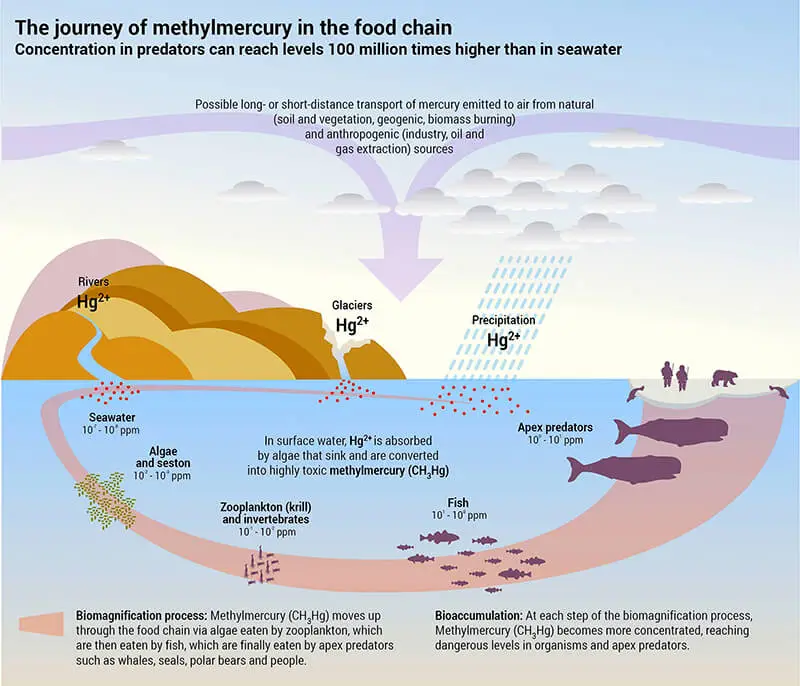
O mercúrio, por exemplo, só está presente em quantidades minúsculas na água do mar. Quando as algas absorvem a água do mar, tudo o que nela se encontra, incluindo o mercúrio, adere e não sai. De certa forma, as algas actuam como um sistema de filtragem da água do mar. O mercúrio é absorvido pelas algas (geralmente sob a forma de metilmercúrio). Esta filtragem inicia o processo de bioacumulação. Qualquer espécie que coma algas comerá também todo o mercúrio nelas contido. O resultado será uma concentração cada vez maior e uma acumulação no tecido adiposo dos sucessivos níveis tróficos, com um nível de toxicidade cada vez maior até aos peixes maiores. Quando nós ou qualquer outra espécie predadora comermos esses peixes grandes, estaremos também a consumir todo o mercúrio acumulado. À medida que a bioacumulação aumenta, o nível de concentração nos peixes ou aves predadores será muito mais elevado e, nalguns casos, gravemente tóxico. Por exemplo, o arenque contém uma concentração de mercúrio de aproximadamente 0,01 partes por milhão (ppm). Os predadores de topo, como os tubarões, têm-no a mais de 1 ppm. Como é que o mercúrio foi parar à água do mar? O mercúrio inorgânico encontra-se no solo e é libertado pela extração de ouro e pela produção primária de metais não ferrosos. O maior contribuinte é a queima de combustíveis fósseis. Quando se queima carvão ou petróleo, o mercúrio é libertado para a atmosfera e depois é arrastado pela chuva. Através das correntes dos rios, acaba por ir parar ao oceano. Uma vez no oceano, nunca mais sai para a eternidade. Não se biodegrada.
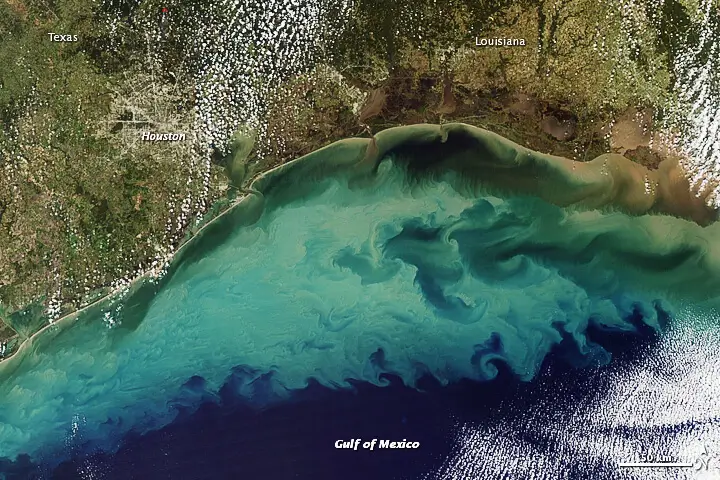
A única solução possível para a toxicidade ambiental é descer na cadeia alimentar. Ou seja, comer alimentos vegetais integrais veganos. As pessoas não se apercebem que a alimentação animal também está cheia de pesticidas e que nos tecidos gordos dos animais de criação também há uma acumulação de toxinas. Cerca de 70 por cento de todos os pesticidas que as pessoas consomem na dieta americana padrão provêm de gordura de produtos animais, não de frutas e vegetais pulverizados que é necessário lavar para remover o resíduo. Não podemos lavar o pesticida da carne. Precisamos de descer na cadeia alimentar para o evitar por completo. Por exemplo, o óleo de krill deve ser mais puro do que o óleo de peixe puro. O krill tem uma elevada taxa de mortalidade e vive pouco e é baixo na cadeia alimentar, pelo que não teria tantos poluentes. Ir até aos vegetais marinhos é o melhor caminho sem suplemento, especialmente porque podemos obter mais outros minerais como iodo e fitoquímicos ao comer legumes do mar numa salada do que apenas tomar suplementos de DHA à base de algas ou de krill. Os nossos oceanos estão agora tão poluídos que mesmo organismos de baixo nível podem ser contaminados. Especialmente depois das algas florescerem e de todas as neurotoxinas que esta forma de algas pode criar.
Eu gostava de comer lulas regularmente. Considerava-as saudáveis porque têm um baixo nível de gordura. Considerava-as a proteína mais pura de todos os animais. Gostava de as comparar às claras de ovo. Eu era um miúdo das proteínas do ginásio. As lulas têm uma taxa de reprodução elevada e não devem ser contaminadas, excepto no que se refere aos seus órgãos internos e quanto mais velha for a lula, mais cádmio pode acumular-se (Kim et al., 2013). Casos de envenenamento por cádmio algo chamado de doença Itai-Itai (itai-itai byo, "it hurts-it hurts disease") foi o nome dado ao envenenamento em massa por cádmio na província de Toyama, no Japão, que começou por volta de 1912. O cádmio é muito tóxico. A descoberta de pequenas quantidades de cádmio nos copos do McDonald's "Shrek Para Sempre" provocou medo e raiva. Isto levou a uma recolha a nível nacional devido aos perigos que este metal tóxico poderia afetar as crianças pequenas. O maior problema do cádmio é que tem tendência para se acumular no corpo. O nosso corpo tem dificuldade em excretá-lo e é por isso que se acumula e gera toxicidade e efeitos cancerígenos.
A conclusão lógica de tudo isto é que mesmo as criaturas dos níveis mais baixos da cadeia alimentar que têm um elevado nível de reprodução podem, num curto período de tempo, acumular metais pesados e toda uma variedade de outras toxinas que desconhecemos. A carne de lula pode estar limpa por enquanto se cortarmos os órgãos internos e os deitarmos fora, mas e todas as outras coisas que não pesquisei? Será possível investigar todos os aspectos dos alimentos que consumimos? Eu só posso seguir a lógica e não posso fazer investigação nutricional para cada coisa. Utilizei aqui o cádmio e o mercúrio apenas como exemplo. O bom e velho envenenamento por chumbo e toda a tabela periódica podem ser acrescentados à lista, e até agora isto são apenas metais. A grande variedade de outros poluentes químicos é também uma preocupação. Até os ursos polares têm agora lesões renais, densidade mineral óssea reduzida, fígado gordo e inflamação crónica devido a envenenamento alimentar (Sonne et al., 2005). Os golfinhos também (Vetter et al., 2001).
Os compostos organo-halogenados são congéneres PCB, DDT e metabolitos, compostos relacionados com clordano, e assim por diante. O efeito do POP na saúde humana e também no ambiente é real e mesmo que pensemos que é algo que podemos ignorar, a situação não é como tal. A comunidade internacional fez a intenção de restringir a produção na Convenção de Estocolmo sobre Poluentes Orgânicos Persistentes, em 2001. No entanto, a verdadeira história é que não podemos. Eles são uma parte essencial da agricultura moderna e de diferentes tipos de indústrias. Nem tudo pode ser reciclado e purificado. Os POP também podem evaporar-se e entrar na atmosfera. Como resistem a reacções de ruptura no ar e são estáveis, podem percorrer longas distâncias. Depois cairão e serão depositados de novo. Isto resulta numa acumulação de POP em áreas distantes do local onde foram utilizados ou emitidos. Podem chegar até à Antárctida e ao Círculo Polar Árctico. Já não temos uma vida limpa porque não existe uma forma natural de produzir organicamente alimentos para milhares de milhões de pessoas no planeta. Alguns dos POP mais conhecidos, por exemplo, bifenilos policlorados (PCB), dioxinas, e diclorodifeniltricloroetano (DDT). Os PCB são utilizados em plásticos, como aditivos em tintas, em transformadores eléctricos, e condensadores, em papel autocopiador, e como fluidos de troca de calor. Portanto, não há plástico e electrónica sem eles. Os PCB são venenosos para os peixes em altas dosagens, e correlacionados com falhas de desova em baixas doses. Nos seres humanos, os PCB estão associados à supressão imunitária e esterilidade, e a maior parte da exposição provém dos alimentos. Hoje em dia, um em cada seis casais tem dificuldade em conceber um bebé. O número de casais que tentam métodos terapêuticos devido ao problema da concepção natural tem aumentado drasticamente no período pósWW2. Um número de 15% dos casais que são estéreis é mais substancial do que no passado, por exemplo, há 100 anos atrás. A contagem de esperma no homem médio diminuiu quase para metade nos últimos 60 anos. A fertilidade é menor em todos os homens e mulheres, e como resultado 1 em cada 6 casais é estéril. Muitos especialistas atribuem esta queda ao aumento de químicos ambientais que têm efeitos estrogénicos fracos, tais como o DDT e o PCB. Um aumento dos níveis de estrogénio no abastecimento geral de água, devido à utilização de pílulas contraceptivas orais, também tem sido implicado. Existem hoje muitos produtos químicos neste mundo.

No presente estudo (Rozati et al., 2002) mediram a correlação entre a contagem de espermatozóides e os estrogénios ambientais. Quando falam de estrogénios de toxicidade ambiental, não se referem a fitoestrogénios produzidos por plantas, mas a xenoestrogénios, pesticidas como o PCP, o DDT ou o BPA do plástico, etc. A maioria destes estrogénios foi encontrada no peixe. Os consumidores urbanos de peixe têm os níveis médios mais elevados de PE e PCB. Nos homens inférteis, a contagem total de espermatozóides móveis está correlacionada com a sua exposição aos xenoestrogénios. Encontraram também correlações substanciais entre os níveis de PCB e o volume do ejaculado, a motilidade, a vitalidade e a capacidade osmorreguladora. Níveis mais elevados de PCB foram associados a danos nos espermatozóides (p < 0,05). Os ftalatos também foram significativamente mais altos em homens inférteis, com níveis mais altos de ftalatos sendo correlacionados com danos ao DNA do esperma. Tanto as concentrações de PCB como de ftalatos estavam também correlacionadas com uma diminuição da contagem total de espermatozóides móveis. Concluiu-se que os PCB e os PE (ésteres de ftalato) podem influenciar a deterioração da qualidade do sémen na população em geral, com especial atenção como factor contribuinte para a infertilidade nos homens. A contagem de espermatozóides era algo na ordem dos 10 (média móvel), a contagem de espermatozóides vivos móveis em milhões para os comedores de peixe e acima de 80 para os vegetarianos. A diferença é cerca de oito vezes maior. Se o peixe não o tornar estéril ao diminuir a contagem de espermatozóides, provocará uma redução da testosterona e outras doenças pró-estrogénicas, tanto nos homens como nas mulheres, como o cancro da mama, a menopausa precoce, a endometriose e problemas com as hormonas da tiróide. Muitos dos pesticidas actuam de forma semelhante e têm potencial de desregulação endócrina. Por exemplo, sabemos que a hipospádia, um defeito congénito do pénis em que a abertura não se encontra na ponta mas no outro lado do pénis, é causada pelo fungicida Vinclozolin (Vilela et al., 2007). Continua a pensar que comer salmão selvagem é benéfico para a saúde?
O verdadeiro problema é que há uma série de produtos químicos que não param de crescer. A maior parte deles são secretos. Não dispomos de investigação sobre o que fazem e ninguém fala. A partir de 2001, a lista da Convenção de Estocolmo foi alargada de modo a incluir os hidrocarbonetos aromáticos policíclicos (HAP) ou, pelo menos, alguns dos mais perigosos, bem como os retardadores de chama bromados e alguns outros compostos. Além disso, tudo isto é apenas o que é testado. Temos de compreender que ninguém vai financiar a investigação sobre a toxicidade de diferentes produtos químicos industriais que se encontram no ambiente, principalmente a longo prazo, porque não é isso que vai aumentar os lucros. Muito pelo contrário, só vai encarecer o negócio. Há muitos países subdesenvolvidos que não se preocupam com a destruição a longo prazo. A maior parte das nações empobrecidas fará tudo para sobreviver, o que constitui um terreno fértil para a corrupção, e as empresas adoram isso.
A maior parte das indústrias pesadas despeja os seus resíduos tóxicos em países do terceiro mundo sem regulamentação e dá algum dinheiro a alguns políticos corruptos, ainda hoje. Alguns dos resíduos são transportados de países ocidentais e aí também são despejados. Há um mercado para isso. Se há algo que é demasiado caro para ser eliminado nos Estados Unidos, transportam-no para países do terceiro mundo e despejam-no. Não há regulamentação. Para além do dumping, há uma tendência ainda pior. As empresas que optam por investir em países estrangeiros e, com isto, refiro-me a formas de investimento substancial de raiz, tendem a deslocalizar-se para países onde podem ter os custos de produção mais baixos, o que significa as normas ambientais mais baixas ou a aplicação mais fraca. É uma espécie de paraíso da poluição. Só os resíduos das indústrias que não podem ser atribuídos são transportados e despejados. Ou eu perguntaria apenas o seguinte: o que é que acontece a nível individual? Quantas pessoas comuns vão deitar as suas lâmpadas eléctricas de mercúrio no contentor do lixo comum? Não apenas nos Estados Unidos, mas em todo o mundo. O mercúrio das lâmpadas eléctricas acabará por ser libertado no ambiente. Por outro lado, as pessoas também estão a depositar resíduos perigosos nas lixeiras municipais para evitar pagar as taxas cobradas pelos transportadores de resíduos. Toda a gente o faz, especialmente as pessoas com grandes dívidas de crédito. A EPA começou a regulamentar os resíduos perigosos em 1976. As lixeiras de resíduos tóxicos, que são remanescentes da era anterior a 1976, ainda cá estão e representam uma ameaça. Além disso, existe a prática de descargas ilegais que criou um grande número de lixeiras.
A única solução possível para evitar a toxicidade é descer na cadeia alimentar.
Referências:
- Kim, B. M., Lee, S. Y., & Jeong, I. H. (2013). Influência do pó de fígado de lula na acumulação de cádmio no soro, rim e fígado de ratos. Nutrição preventiva e ciência alimentar, 18(1), 1-10. https://doi.org/10.3746/pnf.2013.18.1.001
- Sonne, C., Dietz, R., Leifsson, P. S., Born, E. W., Letcher, R. J., Kirkegaard, M., Muir, D. C., Riget, F. F., & Hyldstrup, L. (2005). Do organohalogen contaminants contribute to histopathology in liver from East Greenland polar bears (Ursus maritimus)? Perspectivas da saúde ambiental, 113(11), 1569-1574. https://doi.org/10.1289/ehp.8038
- Vetter, W., Scholz, E., Gaus, C., Müller, J., & Haynes, D. R. (2001b). Anthropogenic and Natural Organohalogen Compounds in Blubber of Dolphins and Dugongs ( Dugong dugon ) from Northeastern Australia. Arquivos de Contaminação Ambiental e Toxicologia, 41(2), 221-231. https://doi.org/10.1007/s002440010241
- Rozati, R., Reddy, P. P., Reddanna, P., & Mujtaba, R. (2002). Papel dos estrogénios ambientais na deterioração da fertilidade do fator masculino. Fertilidade e esterilidade, 78(6), 1187-1194. https://doi.org/10.1016/s0015-0282(02)04389-3
- Vilela, M. L., Willingham, E., Buckley, J., Liu, B. C., Agras, K., Shiroyanagi, Y., & Baskin, L. S. (2007). Desreguladores endócrinos e hipospádia: papel da genisteína e do fungicida vinclozolina. Urologia, 70(3), 618-621. https://doi.org/10.1016/j.urology.2007.05.004
- Zennegg M. (2018). Dioxinas e PCBs na carne - ainda uma questão de preocupação? Chimia, 72(10), 690-696. https://doi.org/10.2533/chimia.2018.690
Publicações Relacionadas




Você tem alguma dúvida sobre saúde e nutrição?
Eu adoraria ouvir de você e respondê-las em meu próximo post. Agradeço sua contribuição e opinião e espero ouvir de você em breve. Eu também convido você a siga-nos no Facebook, Instagram e Pinterest para mais conteúdos sobre dieta, nutrição e saúde. Pode deixar um comentário e ligar-se a outros entusiastas da saúde, partilhar as suas dicas e experiências e obter apoio e encorajamento da nossa equipa e comunidade.
Espero que este post tenha sido informativo e agradável para si e que esteja preparado para aplicar os conhecimentos que aprendeu. Se achou este post útil, por favor partilhá-lo com os seus amigos e familiares que também possam beneficiar com isso. Nunca se sabe quem poderá precisar de alguma orientação e apoio no seu percurso de saúde.
– Você Também Pode Gostar –
Arsénio de Exposição e Consumo de Arroz- O Mais Tóxico de Grãos de Todos Eles
Exercício - Por que exatamente o que é necessário?

Causa da Obesidade - Desadaptação ou vício
Café benefícios– Não sem riscos
Dieta Rica em Antioxidantes: Regras e Estratégias Gerais
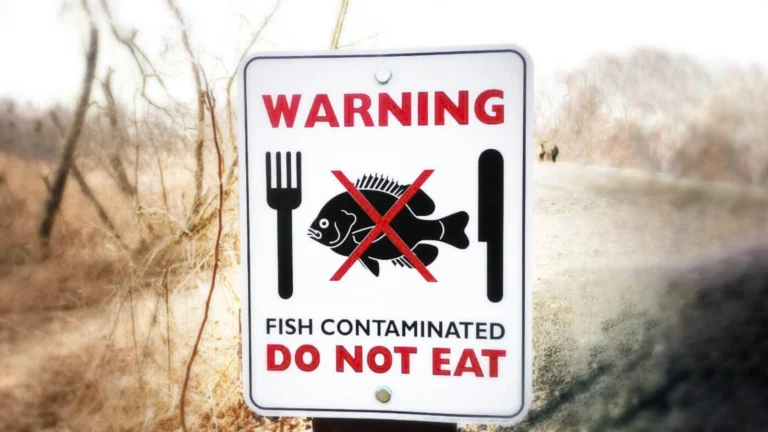
Toxicidade Ambiental- É Apenas Uma Cadeia Alimentar
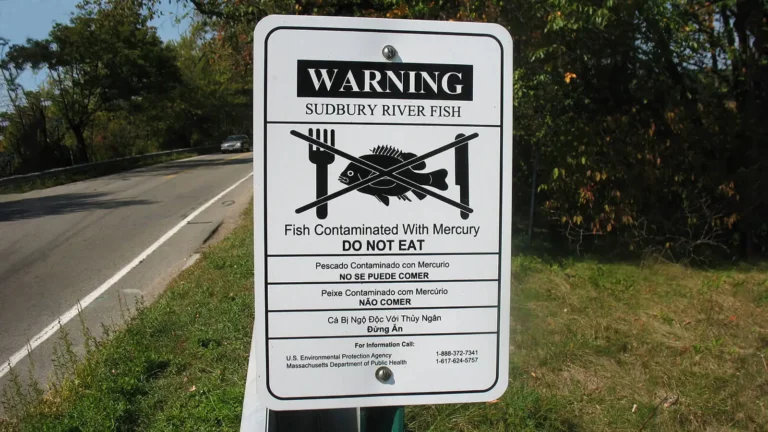
Mercúrio- Neurotoxina do Peixe

Esclerose Lateral Amiotrófica- Proliferação de Algas Cianobactérias e Exposição a BMAA na Dieta

Aprender Sobre Nutrição

Milos Pokimica é médico de medicina natural, nutricionista clínico, escritor de saúde e nutrição médica, e conselheiro em ciências nutricionais. Autor da série de livros Go Vegan? Revisão de Ciênciaopera também o website de saúde natural GoVeganWay.com
Medical Disclaimer
GoVeganWay.com traz análises das pesquisas mais recentes sobre nutrição e saúde. As informações fornecidas representam a opinião pessoal do autor e não pretendem nem implicam substituir aconselhamento, diagnóstico ou tratamento médico profissional. As informações fornecidas são apenas para fins informativos e não se destinam a servir como substituto para consulta, diagnóstico e/ou tratamento médico de um médico ou profissional de saúde qualificado.NUNCA DESCONSIDERE o CONSELHO MÉDICO PROFISSIONAL OU adiar a BUSCA de TRATAMENTO MÉDICO por causa DE ALGO QUE TENHA LIDO OU ACESSADO por MEIO de GoVeganWay.com
NUNCA APLIQUE QUAISQUER MUDANÇAS de estilo de VIDA OU QUALQUER MUDANÇA COMO UMA CONSEQUÊNCIA DE ALGO QUE TENHA LIDO NO GoVeganWay.com ANTES de CONSULTORIA de LICENÇA MÉDICA.
No caso de uma emergência médica, ligue para o médico ou para o 911 imediatamente. GoVeganWay.com não recomenda ou endossa qualquer específicos, grupos, organizações, exames, médicos, produtos, procedimentos, opiniões ou outras informações que podem ser mencionadas dentro.
Sugestões do Editor –
Câncer Editor De Picaretas Fitoquímicos
Poder Anticancerígeno das Frutas e Legumes: Evidências Clínicas e in Vivo
Alguns extractos vegetais rivalizam com os principais medicamentos de quimioterapia e, ao mesmo tempo, visam vários tipos diferentes de células cancerígenas.
Antioxidantes Editor De Picaretas ORAC
Óleos Essenciais Como Suplementos Antioxidantes: Regras e Estratégias
Os óleos essenciais de qualidade alimentar podem ser uma estratégia conveniente e amiga do consumidor para optimizar o valor antioxidante e a pontuação ORAC da nossa dieta.
Antioxidantes Editor De Picaretas ORAC
Dieta Rica em Antioxidantes: Regras e Estratégias Gerais
Existem estratégias fáceis e económicas para optimizar o valor antioxidante da nossa dieta.
Antioxidantes Editor De Picaretas ORAC
Compreender os Valores ORAC: Níveis de Antioxidantes nos Alimentos
Quando a sua principal fonte de antioxidantes é o café, sabe que tem um problema grave.
Antioxidantes Editor De Picaretas ORAC
Astaxantina Benefícios: Antioxidante Natural Mais Poderoso do Mundo
A astaxantina é o mais poderoso e natural antioxidante universal (tanto o petróleo e a água-solúvel) desconhecido para a ciência. Ele se acumula nos tecidos e Ele nunca pode transformar-se em um pró-oxidante.
Antioxidantes Editor De Picaretas ORAC Fitoquímicos
Antioxidantes: Compreender os Princípios Básicos
Los productos de origen animal no contienen fitoquímicos ni antioxidantes. Por término medio, los alimentos vegetales contienen más de 60 veces más antioxidantes que los de origen animal.
Editor De Picaretas A Dieta Vegetariana
Deficiências de Nutrientes na Dieta Vegana: Estratégias de Prevenção
Existem nove deficiências comuns de nutrientes na escala populacional que afectam as pessoas que se alimentam de uma dieta à base de plantas. Se não forem corrigidas a tempo, algumas deficiências têm consequências terríveis e não tratáveis.
Editor De Picaretas Alimentação Ideal
Deficiência de Micronutrientes na Dieta Americana Padrão: Estratégias de Otimização
O perfil nutricional da nossa dieta moderna à base de carne, açúcar e alimentos processados é completamente incongruente com a nossa evolução, resultando numa grave deficiência de micronutrientes.
Editor De Picaretas Fitoquímicos
Fitoquímicos: Conceitos Básicos
Cada fitoquímico que existe tem uma acção biológica no corpo humano. Cada um de milhões de diferentes fitoquímicos.
Editor De Picaretas Leite Alimentação Ideal
Leite e Lacticínios: Correlações de Risco Para a Saúde
As associações conhecidas com o consumo de leite e laticínios são infertilidade, câncer de ovário e de mama, leucemia, diabetes tipo 1, autismo, arteriosclerose, catarata, artrite reumatóide, esclerose múltipla, hiperatividade, congestão, espinhas e muito mais…
Câncer Editor De Picaretas Proteína
Proteína Completa: Sinalização do IGF-1 na Formação do Cancro
Quando você comer proteína animal que tem quatro vezes a chance de desenvolver todos os tipos de câncer. Quando você fuma tem quatro vezes a chance de desenvolver câncer de pulmão.
Câncer Editor De Picaretas Proteína
A Anatomia do Câncer de risco para a Saúde correlações
Cerca de 2% dos cânceres são, pela medicina, considerados puramente causados por fatores genéticos. A mesma faixa do reino animal. Você não foi informado de toda a verdade.
Milos Pokimica é escritor especializado em saúde e nutrição e consultor em ciências nutricionais. Autor da série de livros Go Vegan? Revisão de Ciênciaopera também o website de saúde natural GoVeganWay.com
Artigos Mais Recentes -

Restrição De Calorias Longevidade
Como Fazer Jejum: Alimentos em Jejum que Não Quebram a Autofagia
Autofagia. Você já se perguntou o que acontece com as células do seu corpo quando elas morrem ou são danificadas? Eles simplesmente se acumulam e criam problemas ou são eliminados de alguma forma? A resposta é que seu corpo…
Saúde Dentária Prevenção
Dentes Sensíveis a Doces e Dor: Solução Rápida e Duradoura
Uma solução rápida e fácil para o alívio da dor é o óleo essencial de cravinho, um poderoso antioxidante e analgésico que pode ajudar com doenças das gengivas e dores de dentes.
Feijão
Feijão Verde: Benefícios Nutricionais e Para a Saúde
O feijão verde tem poucas calorias e é rico em compostos naturais que podem ajudá-lo a controlar o açúcar no sangue, a reduzir o colesterol e a combater os radicais livres.
Dieta de alimentos crus A Dieta Vegetariana
Pode-se Comer Cogumelos Crus: Riscos Para a Saúde, Nutrição e Segurança
Os cogumelos têm toxinas sensíveis ao calor, como a hidrazina ou a agaritina, e paredes celulares feitas de quitina que não podem ser bem digeridas pelos seres humanos.
A Dieta Vegetariana
Os Peixes São Animais? Uma Perspetiva Cultural
Em algumas culturas, a carne de peixe não é considerada carne e o peixe é permitido mesmo durante o jejum.

Saúde Dentária Prevenção
Enxaguante bucal natural caseiro: comprovado, mais forte e menos tóxico
O elixir bucal natural caseiro é mais forte do que a clorexidina, menos tóxico e, se ingerido, pode provocar algumas náuseas, mas também tem um elevado valor ORAC.
Saúde Dentária Prevenção
Como Parar a Cárie Dentária: Sintomas, Causas e Prevenção
Consumo de açúcar é a principal causa de cáries e a cárie dentária, combinado com deficiência de minerais, especialmente o magnésio, o zinco, o cobre e elementos-traço.
Antioxidantes Superalimentos
Amla: Benefícios Comprovados, Nutrição e Significado Clínico
O amla é um dos antioxidantes mais poderosos do mundo, com uma pontuação ORAC de 261.530. É uma fonte rica de fitoquímicos que têm vários benefícios para a saúde.
Superior De Saúde De Notícias — ScienceDaily
- Most Americans don’t know this food raises colon cancer riskon Março 25, 2026
Nearly half of Americans don’t know that processed meat increases colorectal cancer risk, according to a new poll. But once they learn the connection, most support warning labels—suggesting people want clearer information. Experts warn that awareness is lagging even among healthcare providers. The good news: diets rich in plant foods and fiber, along with healthy habits, can dramatically lower risk.
- Why your brain may be sabotaging your balance as you ageon Março 25, 2026
Balance problems in aging and Parkinson’s may come from the body working too hard, not too little. Scientists found that the brain and muscles become overactive during even minor disturbances, yet this actually weakens balance recovery. At the same time, muscles can stiffen against each other, making movement less stable. This unexpected pattern could help predict who is more likely to fall.
- First ever atomic movie reveals hidden driver of radiation damageon Março 25, 2026
Researchers have visualized atoms in motion just before a radiation-driven decay process occurs, revealing a surprisingly dynamic scene. Instead of remaining fixed, the atoms roam and rearrange, directly influencing how and when the decay unfolds. This “atomic movie” shows that structure and motion play a central role in radiation damage mechanisms. The findings could improve our understanding of how harmful radiation affects biological matter.
- Fathers face rising depression risk a year after baby arriveson Março 25, 2026
New fathers appear to have fewer mental health diagnoses during pregnancy and the early months after birth. But that early stability does not last. About a year later, depression and stress-related disorders increase significantly, surprising researchers. The findings suggest that the emotional toll of fatherhood builds over time rather than hitting immediately.
- This tiny implant, smaller than a grain of salt, can read your brainon Março 25, 2026
A new neural implant is so small it can rest on a grain of salt, yet it can track and wirelessly transmit brain activity for over a year. It’s powered by laser light that safely passes through tissue and communicates using tiny infrared signals. This ultra-miniature device could transform how scientists study the brain without invasive wiring.
- Scientists just solved a major mystery about how your brain stores memorieson Março 25, 2026
Scientists have found that your brain separates memories into “what” and “where/when” using two different groups of neurons. One set responds to specific objects or people, while another tracks the context or situation. When you remember something correctly, these groups briefly connect and reconstruct the full memory. This system may be the secret behind how we recognize the same things across totally different experiences.
- Fatty liver breakthrough: A common vitamin shows promiseon Março 24, 2026
Researchers have identified microRNA-93 as a key genetic driver of fatty liver disease and discovered that vitamin B3 can effectively shut it down. This finding suggests a safe, widely available vitamin could become a powerful new treatment.
PubMed, #vegan-dieta –
- Plant-Based Dietary Patterns and Neuroimaging Biomarkers of Brain Health: A Scoping Review of Observational and Interventional Evidenceon Março 23, 2026
Healthy dietary interventions are well established in cardiovascular disease prevention, but their effects on the brain remain underexplored. This scoping review aims to investigate how adherence to core components of a whole-food plant-based diet (WFPBD) may impact neuroimaging outcomes across different brain conditions. We searched PubMed and MEDLINE for studies published in the past 20 years evaluating the effects of a predominantly or exclusively WFPBD, alone or combined with other […]
- Environmental and economic impact of a vegan versus traditional mediterranean diet: OMNIVEG studyon Março 17, 2026
CONCLUSIONS: Replacing animal products with plant-based foods in a Mediterranean dietary framework can enhance environmental sustainability and reduce food costs. These findings support the promotion of whole plant-based diets as a viable strategy for sustainable and affordable nutrition.
- Consumption Habits and Perception of Plant-Based Milk and Dairy Alternatives Among Vegetarians and Omnivores: A Case Study of Consumers in Sloveniaon Março 14, 2026
CONCLUSIONS: PBMDA perceptions in Slovenia are strongly segmented by dietary pattern and socio-demographics, supporting the need for clearer nutrition communication.
- Culinary Nutrition Programming for Members of a Community-Based Cancer Programon Março 14, 2026
(1) Background: Nutrition research in cancer care has largely focused on disease prevention and management, overlooking the importance of food literacy. Culinary cancer care programs may address this gap by facilitating the practical application of nutrition through culinary skills, fostering social connections over nutrient-dense meals, and supporting individuals during periods of physical and social vulnerability. The Not-Just-Supper Club (NJSC) at Gilda’s Club Toronto (GT) is a…
- Fatty acid composition of ground-beef products and their plant-based meat substitutes available in Hungaryon Março 13, 2026
CONCLUSION: The findings indicate that plant-based meat alternatives (except those containing coconut oil) have lower saturated and higher polyunsaturated fatty acid compositions than beef-based products, leading to more beneficial nutritional value. Further analytical and clinical studies are necessary to provide a more comprehensive understanding of the long-term health effects of these foods.
Postagens aleatórias –
Antioxidantes Atividade Física
Adaptações de Treino Antioxidantes Deficientes - Prevenir Danos Oxidativos no Músculo
Os antioxidantes suplementares podem bloquear o principal benefício do exercício e isso é um aumento da nossa própria produção de antioxidantes endógenos.
Câncer
Cozido de Carne - O agente Mutagênico em uma Mordida, Aminas Heterocíclicas Exposição
Aquecimento de aminoácidos na presença de creatina (cozido de carne) cria mutagénicas conhecidos como Aminas Heterocíclicas (HCA).
Antioxidantes Editor De Picaretas ORAC
Óleos Essenciais Como Suplementos Antioxidantes: Regras e Estratégias
Os óleos essenciais de qualidade alimentar podem ser uma estratégia conveniente e amiga do consumidor para optimizar o valor antioxidante e a pontuação ORAC da nossa dieta.

A Inflamação Dieta de alimentos crus Toxicidade
Lectins - o Paradoxo da "Planta Paradox"
O paradoxo da "Planta Paradoxo" é que as pessoas que comem mais lectins (feijões e cereais integrais) têm menos câncer.
Editor De Picaretas Dieta Paleo A Dieta Vegetariana
Tamanho do cérebro, inteligência e consumo de carne – O argumento vegano
A combinação de alguma quantidade de carne colhida à dieta predominantemente vegana não se tornou uma força crucial no surgimento da inteligência humana e do tamanho do cérebro.
Câncer Editor De Picaretas Proteína
A Anatomia do Câncer de risco para a Saúde correlações
Cerca de 2% dos cânceres são, pela medicina, considerados puramente causados por fatores genéticos. A mesma faixa do reino animal. Você não foi informado de toda a verdade.
Toxicidade
Mercúrio- Neurotoxina do Peixe
O mercúrio é um industrial a toxina e o mais neurotóxicos substância conhecida. Plâncton vai absorbe-lo a partir de água do mar e iniciar bioacumulação na cadeia alimentar.
Superalimentos Toxicidade
Benefícios da Clorela: B12 à base de plantas, ferro, zinco e desintoxicação
A Chlorella é uma fonte vegana de B12, ferro e zinco, tem fortes propriedades de quelação de metais pesados, potencial para baixar o colesterol, reduzir a anemia e reforçar o sistema imunitário.
Nootrópicos Fitoquímicos
Benefícios da Teobromina: Impulsionar o Cérebro Sem Ansiedade
A teobromina é o segredo por detrás dos efeitos do chocolate na sua mente e nas suas emoções. Pode melhorar a sua cognição e, ao contrário da cafeína, reduz os seus níveis de stress.
Antioxidantes ORAC
Poder Antioxidante das Especiarias: Resultados in Vivo com Dosagens Realistas
Cravo-da-índia, gengibre, alecrim e açafrão-da-índia significativamente sufocar a inflamação, enquanto a pimenta-do-reino, pimenta de caiena, canela, cominho, o orégano, a páprica, a sage e aquecido, açafrão-da-índia não fazer nada.

Postagens em destaque –

Editor De Picaretas Prevenção A Dieta Vegetariana
China estudo - vegan argumento
China estudo mostrou que não há nenhuma doença cardíaca ou câncer ou diabetes em subdesenvolvido comunidades rurais em todo o mundo com base de amido de dietas veganas.

Diabetes Editor De Picaretas Alimentação Ideal
Açúcar Refinado: Compreender os Riscos
As crianças consomem cerca de um quinto do total de suas necessidades energéticas a partir de apenas o açúcar refinado. Se somarmos a gordura e o resto da nutrição privação de alimentos processados para a lista torna-se uma nutrição completa pesadelo.
Diabetes Editor De Picaretas
A Diabetes provoca e carboidratos refinados - vegan argumento
As pessoas acreditam que os carboidratos refinados estão associadas com picos de insulina e o diabetes provoca. Eles estão certos. No entanto, eles também estão errados.

Câncer Editor De Picaretas Toxicidade
Pesticidas nos Alimentos, Exposição na Dieta Americana Padrão - 80 Por Cento da Carne
A maioria dos pesticidas e, especialmente, metais pesados e outros resíduos tóxicos poluentes temos, temos de carne. Mais de 80% da exposição aos pesticidas na dieta Americana padrão vem de produtos de origem animal, não a partir de frutas ou de produtos hortícolas.
Editor De Picaretas Alimentação Ideal
Deficiência de Micronutrientes na Dieta Americana Padrão: Estratégias de Otimização
O perfil nutricional da nossa dieta moderna à base de carne, açúcar e alimentos processados é completamente incongruente com a nossa evolução, resultando numa grave deficiência de micronutrientes.

Editor De Picaretas A Obesidade
Binge eating disorder - A psicologia da fome
Na natureza, não é refinado, açúcar ou gordura. O nosso cérebro nunca havia sido exposta a uma combinação dos dois de uma vez, forçando-nos em binge eating disorder.
Câncer Editor De Picaretas Toxicidade
Exposição a Pesticidas em Crianças: Testes de Exposição na Vida Real
Crianças e, principalmente, as mulheres grávidas são mais vulneráveis à exposição aos pesticidas. Se analisarmos do mundo real, os níveis de exposição em cenários da vida real, qual seria o resultado?

A Medicina Alopática Editor De Picaretas
A História da Grande Farmácia - IG Farben
A parte de Rockefeller, o monopólio da química e indústrias de medicamentos veio em cumprimento após a 2ª guerra mundial. A Standard Oil e a IG Farben cooperação fez isso em realidade.
Antioxidantes Editor De Picaretas ORAC
Compreender os Valores ORAC: Níveis de Antioxidantes nos Alimentos
Quando a sua principal fonte de antioxidantes é o café, sabe que tem um problema grave.
Editor De Picaretas Alimentação Ideal
Alimentos Processados: Compreender os Riscos
Os alimentos processados significam que algo dos alimentos integrais é removido, normalmente a fibra, e algo é adicionado, normalmente a gordura, o açúcar, o sal e o MSG.
Últimas do PubMed, #dieta baseada em vegetais –
- Comment on “Plant-based diet and risk of arthritis: a nationwide cohort study of the Chinese elderly population” by H. Zhang, J. Liang, Y. Han, J. Tian, Y. Tu, R. Fan, W. Zhu, Z. Zhang and H. Zhao,…por Tong Xin on Março 24, 2026
A stratified perspective is essential to understand the divergent impacts of plant-based diets on osteoarthritis risk in older populations.
- A Mediterranean lifestyle obesity prevention intervention in preschoolers at risk: MELI-POP Study-a randomized controlled trialpor A Larruy-García on Março 24, 2026
CONCLUSION: A Mediterranean lifestyle intervention may benefit body composition changes in preschool girls at risk of obesity; larger studies are needed to confirm these sex-specific results.
- From cow to crop: motives and barriers for plant-based dairy alternative consumption across three European countriespor Dominika Maison on Março 23, 2026
Currently, alternative sources of protein are being sought to replace not only meat but also dairy products in the diet. From this perspective, it is worth examining how consumers perceive these products, what motivates them to choose them and what barriers they encounter, especially with regard to attitudes towards dairy products. The present study aimed to compare attitudes towards plant-based dairy alternatives (PBDAs) in three European countries – Poland, Germany and the UK. Furthermore, […]
- Energy and macronutrient intakes of Montenegrin adults: insights from the EFSA EU Menu National Survey (2017-2022)por Amil Orahovac on Março 23, 2026
INTRODUCTION: Understanding population-level dietary intakes is essential for preventing diet-related non-communicable diseases (NCDs) and informing evidence-based nutrition policies. Until recently, Montenegro lacked nationally representative data on food and nutrient intake aligned with European Food Safety Authority (EFSA) standards. This study provides the first comprehensive analysis of energy and macronutrient intake among Montenegrin adults within the EFSA EU Menu framework.
- Plant-Based Dietary Patterns and Neuroimaging Biomarkers of Brain Health: A Scoping Review of Observational and Interventional Evidencepor Lydia Viviana Falsitta on Março 23, 2026
Healthy dietary interventions are well established in cardiovascular disease prevention, but their effects on the brain remain underexplored. This scoping review aims to investigate how adherence to core components of a whole-food plant-based diet (WFPBD) may impact neuroimaging outcomes across different brain conditions. We searched PubMed and MEDLINE for studies published in the past 20 years evaluating the effects of a predominantly or exclusively WFPBD, alone or combined with other […]
- Metabolic pathway analysis reveals hierarchical pentose sugar utilization and metabolic flexibility of Bifidobacterium longumpor Lisa Friess on Março 23, 2026
Plant-derived pentose sugars represent a major nutrient source in the gut, yet their metabolism remains incompletely defined. Strains of the human gut commensal Bifidobacterium longum subsp. longum utilise arabinose- and xylose-containing glycans, which are found in the pectin and hemicellulose layers of plant cell walls. To gain insight into the metabolism of these two pentoses as well as ribose, a naturally occurring sugar and a component of RNA and ATP, we identified and analysed the genes…