







Carne cozida bactérias endotoxemia - Inflamação e dieta
Seres humanos são onívoros, em um verdadeiro anatômica sentido? Há uma diferença fundamental na maneira como as trato digestivo trabalha em plantas vs comer carne de espécie.
Milos Pokimica
Escrito por: Milos Pokimica
Revisto Clinicamente Por: Dr. Xiùying Wáng, M.D.
Actualizado em 9 de Junho de 2023O papel emergente da inflamação crónica nas principais doenças crónicas da sociedade moderna desencadeou a investigação sobre o impacto da nutrição e dos padrões dietéticos no estado inflamatório. A maioria dos estudos humanos relacionou a ingestão dietética com marcadores de inflamação sistémicos tais como a proteína C-reativa de alta sensibilidade (HS-CRP), a interleucina-6 (IL-6), e o factor de necrose tumoral alfa (TNF-).
Foram estabelecidas influências dietéticas significativas para o índice glicémico (IG) e carga (GL), fibra, composição de ácidos gordos, magnésio, carotenóides, e flavonóides. A dieta alimentar integral à base de plantas ou mesmo um padrão alimentar mediterrânico tradicional, que tem tipicamente uma elevada proporção de gorduras monoinsaturadas (MUFA) a gorduras saturadas (SFA) e ω-3 a ω-6 ácido gordo polinsaturado (PUFAs) e fornece uma abundância de frutas, legumes, leguminosas e grãos, tem demonstrado efeitos anti-inflamatórios quando comparados com padrões alimentares típicos da América do Norte e do Norte da Europa na maioria dos estudos observacionais e intervencionais. Há uma vasta gama de factores que influenciam a inflamação causada pela dieta, mas uma dieta alimentar completa rica em antioxidantes e nutrientes pode tornar-se a dieta de escolha para diminuir a inflamação crónica na prática clínica.
A inflamação prolongada de baixo grau está ligada ao aumento do stress oxidativo e à alteração da glicose e do metabolismo lipídico nas células adiposas, musculares e hepáticas. Como resultado, a investigação indica que certos componentes dietéticos podem influenciar estas vias inflamatórias chave.
Um dos factores que cria picos de inflamação após o consumo de produtos animais é um processo conhecido como endotoxemia. A endotoxemia metabólica induzida poriet foi proposta como uma das principais causas de inflamação, e estas vias parecem ser prejudiciais para um envelhecimento saudável.
Nós, enquanto humanos, ao contrário das espécies carnívoras, temos filtros de muito baixa resistência, o que significa que qualquer bactéria viva que comemos estará a criar inflamação, e a dieta pode matar-nos se as bactérias forem perigosas. Não podemos comer carne não cozinhada. Os animais carnívoros têm ácidos biliares extremamente corrosivos que são capazes de matar qualquer microorganismo vivo e o seu sistema digestivo é praticamente estéril. Nós, como qualquer outro comedor de plantas, temos ácido biliar suave e filtros de baixa resistência e temos de cozinhar carne e qualquer outro item alimentar que tenha o potencial de espalhar uma doença infecciosa. Por exemplo, a pasteurização é obrigatória.
O que as pessoas não compreendem é que mesmo que cozinhemos carne, não desmaterializamos magicamente todas as bactérias que lá estavam presentes. Só as matamos pelo calor, mas elas continuam lá dentro. Os microrganismos ainda estão na carne apenas mortos. Eles já não representam qualquer risco de infecção.
Mas isso não significa que já não representem um risco.
Mesmo as bactérias não bióticas mortas contam como toxinas.
Algumas das substâncias mais tóxicas do mundo são estas endotoxinas de bactérias mortas da carne.
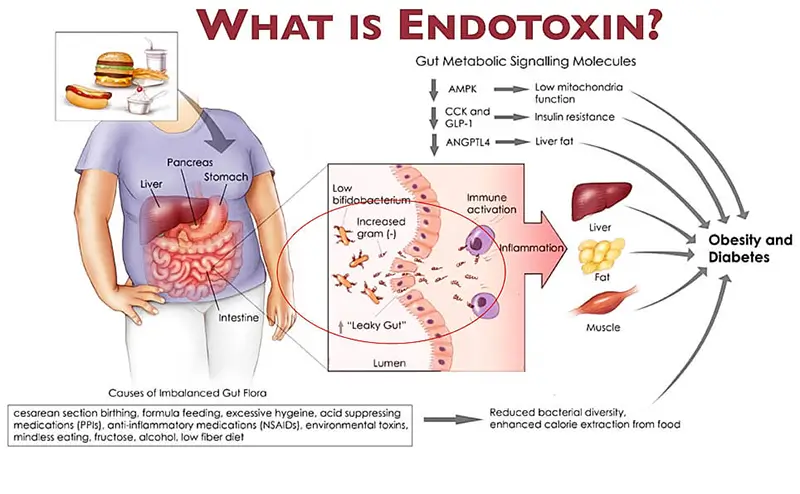
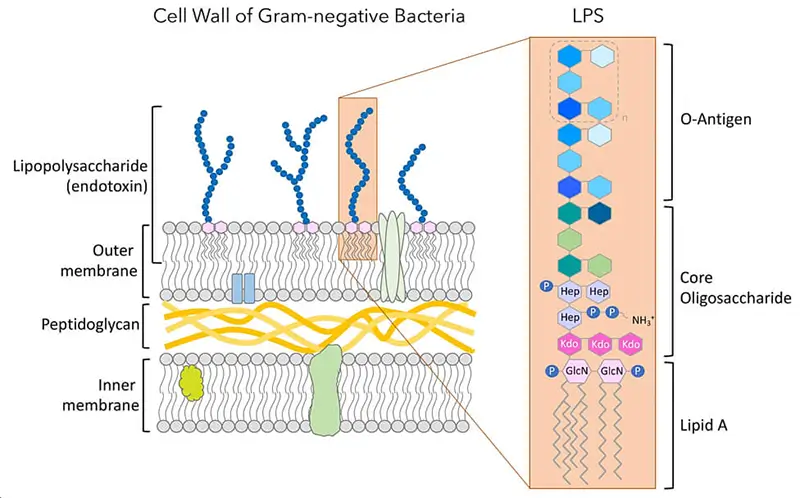
Estas substâncias conhecidas como endotoxinas (éndon grego dentro; cognato com o antigo ind- irlandês) são termicamente (250C) e quimicamente estáveis e extremamente tóxicas. Endotoxina é um lipopolissacarídeo complexo (LPS) encontrado na membrana celular externa de bactérias gram-negativas (E.coli, Salmonella typhi, Shigella).
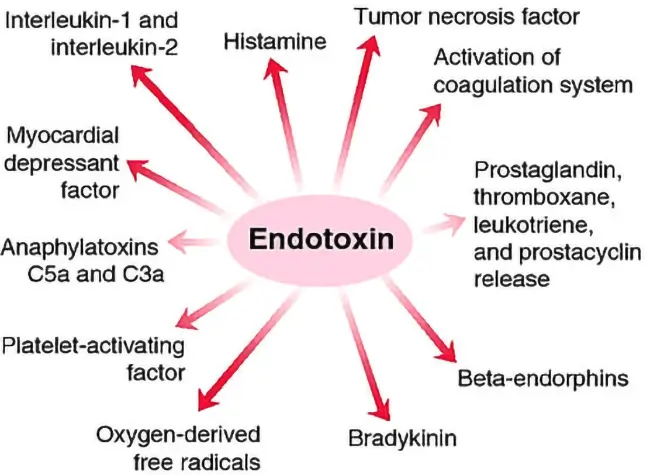
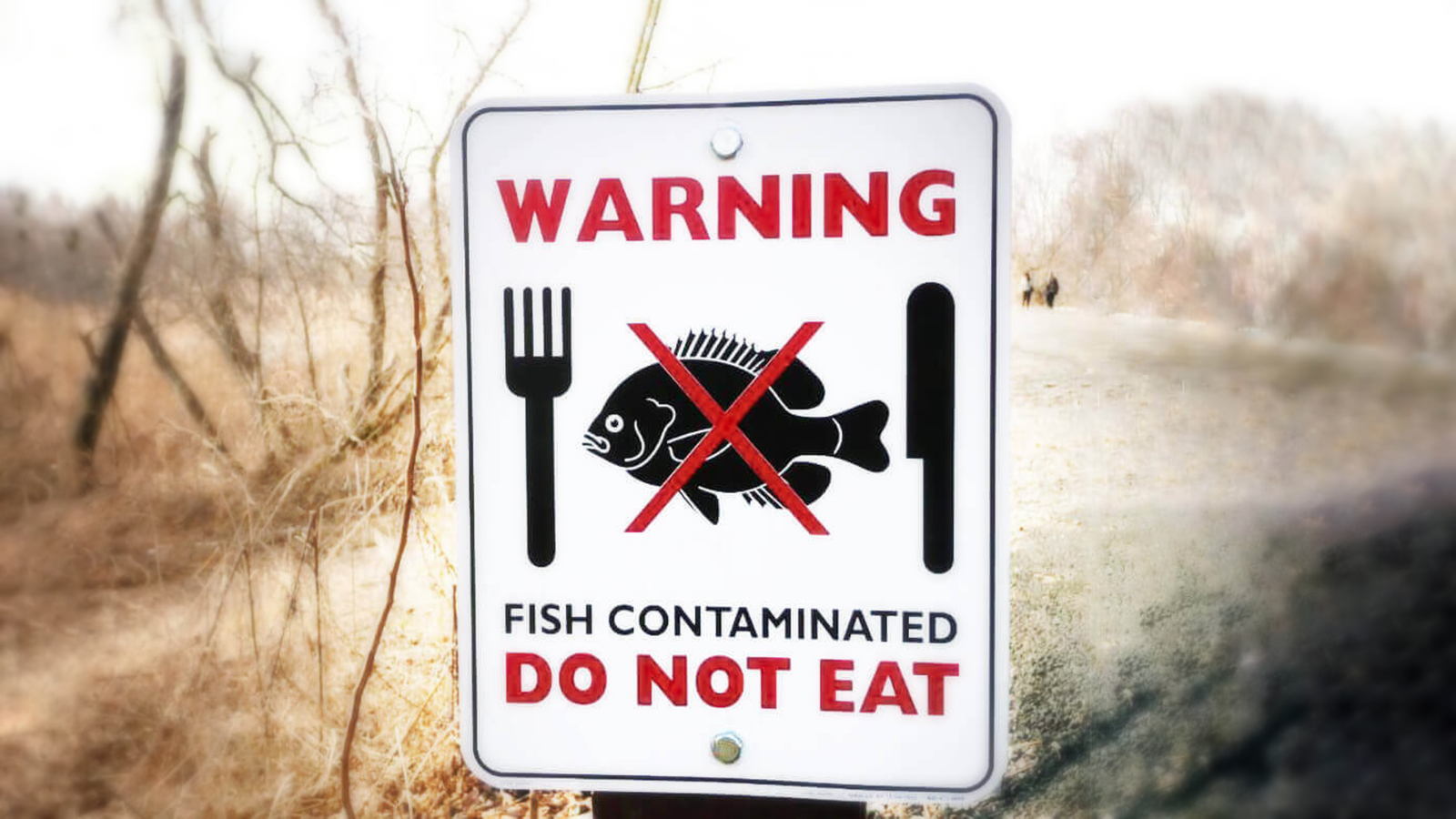
As bactérias libertam endotoxinas em grandes quantidades após a morte celular, criando um estado de endotoxemia no corpo. Ou seja, as bactérias podem estar mortas ou cozinhadas durante muito tempo, mas as suas endotoxinas ainda lá estão. As endotoxinas são quimicamente muito estáveis e podem resistir às melhores tentativas de degradação ácida e enzimática do nosso corpo. Uma das principais causas de centenas de estudos que mostram um aumento da inflamação dos alimentos animais, mas não da maioria dos alimentos vegetais, talvez seja uma consequência de uma carga tóxica de endotoxinas de bactérias mortas em produtos animais. Estas bactérias libertam endotoxinas após a morte e, quando as ingerimos, são absorvidas pelo nosso sistema, levando à inflamação por endotoxemia que vemos após o consumo de ovos, carne e lacticínios, também.
Isto causaria danos aos nossos órgãos internos e a todo o corpo e aumentaria as probabilidades de doenças crónicas (Ghosh et al., 1993).
Se já tivermos uma doença autoimune como a aterosclerose, por exemplo, isto só vai agitar ainda mais o nosso sistema imunitário e criar uma resposta imunitária ainda maior (Stoll et al., 2004).
Aqui está um estudo que descobriu uma ligação entre a exposição à endotoxina e a diabetes tipo 2 (Harte et al., 2012).
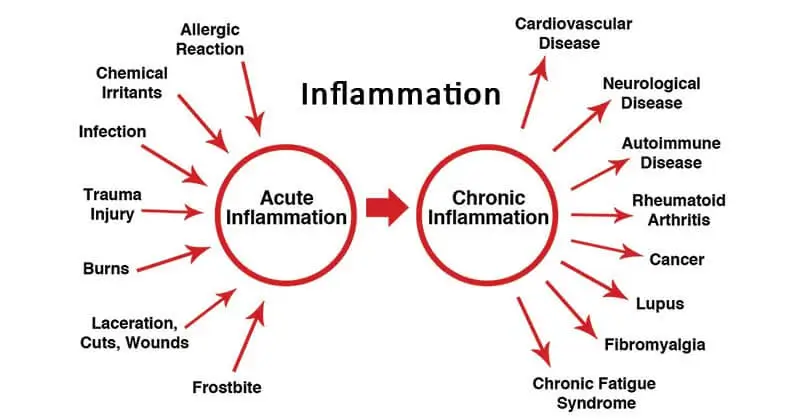
O que um baixo nível de inflamação crónica de endotoxemia faz é que causa danos como qualquer outra inflamação apenas num período prolongado. O que isso se traduz em danos de ADN mais rápidos e visíveis, uma taxa de mortalidade mais elevada por doenças crónicas, e uma diminuição da longevidade.
Em contraste, os alimentos vegetais não mostram esta característica, e o consumo real está correlacionado com a reacção anti-inflamatória após uma refeição devido aos antioxidantes e outros anti-inflamatórios fitoquímicos. Seria interessante ver a quantidade de inflamação que o consumo de carne causa nas espécies carnívoras. Até agora, não fui capaz de encontrar pesquisa que investigasse a exposição à endotoxemia de bactérias mortas da carne em espécies carnívoras. Isto poderia ser potencialmente interessante porque, se a carne não causar inflamação em animais carnívoros, poderíamos procurar uma forma de reduzir a mesma inflamação no nosso próprio corpo.
O consumo de carne, portanto, está associado a um aumento da inflamação, mesmo se não tivermos em conta o risco de bactérias infecciosas vivas. Este mecanismo é natural e normal, e todas as espécies carnívoras tinham-no em certa medida, mas são mais aptas a lidar com ele.
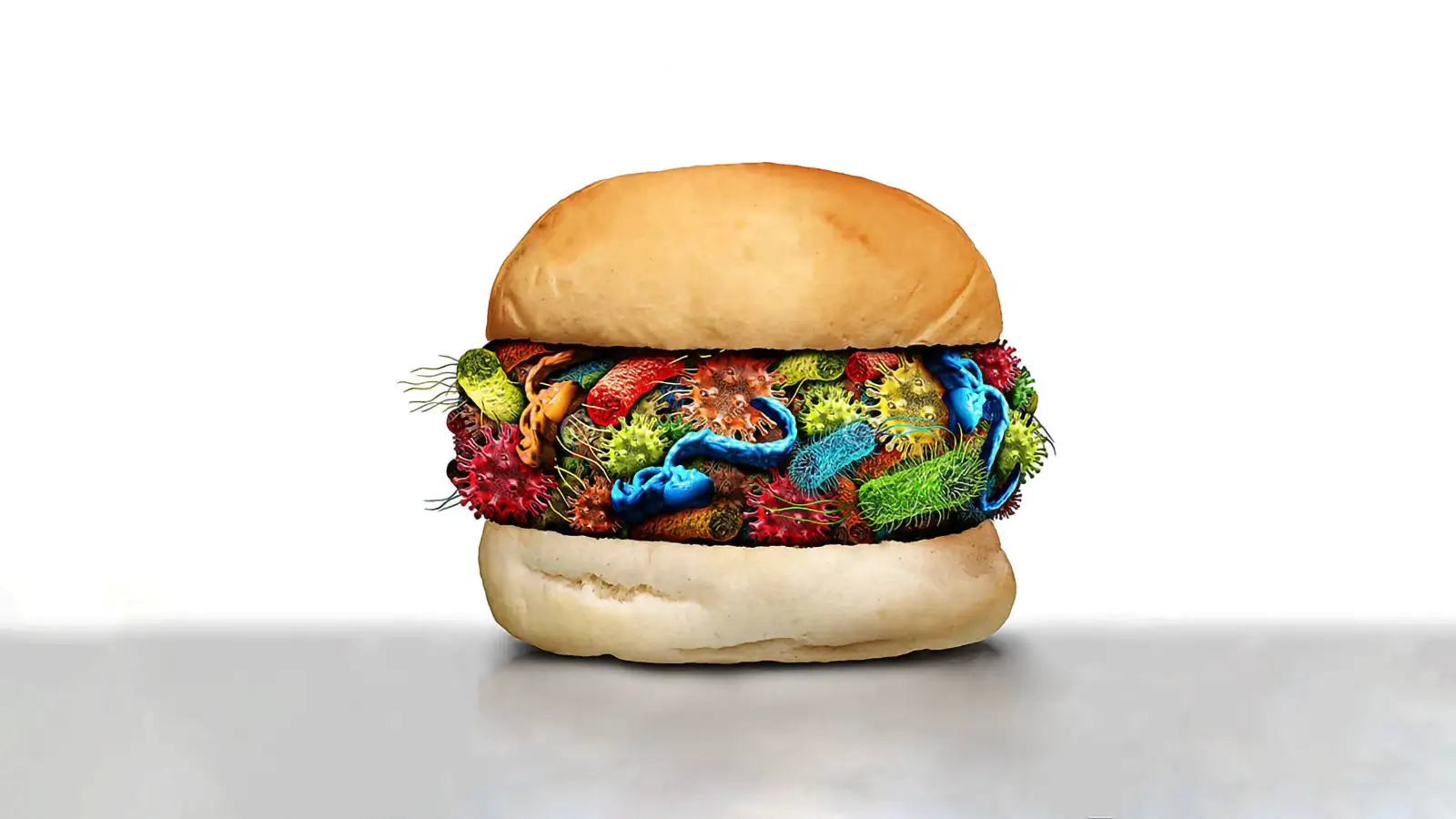
Um hambúrguer fresco contém aproximadamente cem milhões de bactérias por quarto de libra. Comer refeições ricas em endotoxinas bacterianas pode desenvolver episódios inflamatórios ligeiros mas sistémicos que predispõem os sujeitos ao desenvolvimento de doenças crónicas.
A gordura animal que vem na mesma embalagem pode desempenhar um papel na patogénese desta inflamação após as refeições. As endotoxinas exercem uma poderosa atracção pela gordura saturada, pelo que se colam a ela e são depois absorvidas através da parede intestinal e pela corrente sanguínea (Erridge, 2011).
Isto aconteceria se comêssemos alimentos ricos em gordura saturada de origem vegetal? Aconteceria, mas a diferença é que não existem níveis elevados destas toxinas nos alimentos de origem vegetal. Por exemplo, o cacau tem um elevado teor de gordura. É uma das plantas que tem a energia armazenada numa forma de gordura saturada, a mesma gordura que se encontra no reino animal. Mas o cacau também tem um grande número de antioxidantes e, em estudos, diminui sempre o nível de proteína C-reactiva nos indivíduos (um marcador de inflamação) (Erridge et al., 2007), (Herieka et al., 2014).
A alta conteúdo antioxidante do cacau prevalece e é capaz de neutralizar os efeitos pró-inflamatórios das endotoxinas que não estão presentes nas plantas em grande quantidade, para começar (Gu et al., 2014).
O problema com a carne é uma alta concentração de bactérias. Isto significa que comer uma dieta ocidental padrão rica em proteínas animais e açúcar refinado e gordura exigirá um nível muito mais elevado de antioxidantes para negar os maus efeitos pró-inflamatórios.
A questão será saber onde podemos utilizar estes resultados e se podemos diminuir os efeitos pró-inflamatórios das refeições ricas em proteínas animais com alimentos ricos em antioxidantes. Por outras palavras, será que podemos continuar a comer carne, mas também adicionar alguns vegetais ou frutos ricos em antioxidantes à mesma refeição para evitar o risco (Burton-Freeman, 2010).
Houve um grande número de estudos feitos sobre um tema e a conclusão é sim, nós podemos, mas apenas em certa medida. A prevenção da exposição a toxinas é o nosso objectivo principal. Se tiver realmente de comer produtos de origem animal, então pelo menos incorporar uma quantidade adequada de fontes de alimentos anti-inflamatórios e calcular a sua ingestão óptima de ORAC (capacidade de absorção de radicais de oxigénio). Pode encontrar valores ORAC aqui (Valores de ORAC). Isto não iria negar completamente a toxicidade da exposição à endotoxemia das bactérias da carne morta. Estas toxinas são muito potentes e difíceis de desintoxicar. Existem indivíduos geneticamente susceptíveis que têm mais dificuldade em desintoxicar estes compostos. Os alimentos ricos em antioxidantes reduzirão o risco a um grau relevante e o meu conselho é que se optimize a ingestão de antioxidantes.
A melhor linha de acção seria ter uma dieta alimentar completa baseada em plantas que tem um nível óptimo de unidades ORAC e uma vasta gama de fontes alimentares pró-inflamatórias com um nível adequado de todos os micronutrientes essenciais.
Isto é o que o British Journal of Nutrition tem a dizer sobre o assunto.
"Estado pós-prandial (alimentado) é um estado pró-oxidante. O período pós-prandial é um período de metabolismo oxidativo activo e de formação de ROS (radicais livres). Há cada vez mais provas de que o estado pós-prandial é um importante factor de contribuição para a doença crónica. Duas questões principais são colocadas: primeiro, qual é o papel dos alimentos vegetais, especificamente frutos ricos em compostos fenólicos complexos e simples na gestão metabólica pós-prandial; e segundo, será que as evidências apoiam o consumo destes frutos com refeições como uma estratégia prática para preservar a saúde e reduzir o risco de doença? Os dados recolhidos sugerem que o consumo de frutos ricos em fenólicos aumenta a capacidade antioxidante do sangue, e quando são consumidos com refeições "pró-oxidantes e pró-inflamatórias" com elevado teor de gordura e hidratos de carbono, podem contrabalançar os seus efeitos negativos. Dado o conteúdo e disponibilidade de gordura e hidratos de carbono na dieta ocidental, o consumo regular de alimentos ricos em fenólicos, particularmente em conjunto com as refeições, parece ser uma estratégia prudente para manter o equilíbrio oxidativo e a saúde".
Referências:
- Ghosh, S., Latimer, R. D., Gray, B. M., Harwood, R. J., & Oduro, A. (1993). Lesão de órgãos induzida por endotoxina. Medicina intensiva, 21(2 Suplemento), S19-S24. https://doi.org/10.1097/00003246-199302001-00005
- Stoll, L. L., Denning, G. M., & Weintraub, N. L. (2004). Papel potencial da endotoxina como mediador pró-inflamatório da aterosclerose. Arteriosclerose, trombose e biologia vascular, 24(12), 2227-2236. https://doi.org/10.1161/01.ATV.0000147534.69062.dc
- Harte, A. L., Varma, M. C., Tripathi, G., McGee, K. C., Al-Daghri, N. M., Al-Attas, O. S., Sabico, S., O'Hare, J. P., Ceriello, A., Saravanan, P., Kumar, S., & McTernan, P. G. (2012). A alta ingestão de gordura leva à exposição pós-prandial aguda à endotoxina circulante em indivíduos diabéticos tipo 2. Cuidados com a diabetes, 35(2), 375-382. https://doi.org/10.2337/dc11-1593
- Erridge C. (2011). A capacidade dos alimentos para induzir a ativação imune inata de monócitos humanos in vitro depende do conteúdo alimentar de estimulantes dos receptores Toll-like 2 e 4. O British journal of nutrition, 105(1), 15-23. https://doi.org/10.1017/S0007114510003004
- Erridge, C., Attina, T., Spickett, C. M., & Webb, D. J. (2007). Uma refeição rica em gordura induz endotoxemia de baixo grau: evidência de um novo mecanismo de inflamação pós-prandial. O American journal of clinical nutrition, 86(5), 1286-1292. https://doi.org/10.1093/ajcn/86.5.1286
- Herieka, M., & Erridge, C. (2014). Inflamação pós-prandial induzida por refeição rica em gordura. Nutrição molecular e investigação alimentar, 58(1), 136-146. https://doi.org/10.1002/mnfr.201300104
- Gu, Y., Yu, S., Park, J. Y., Harvatine, K., & Lambert, J. D. (2014). O cacau dietético reduz a endotoxemia metabólica e a inflamação do tecido adiposo em ratos alimentados com alto teor de gordura. Jornal de bioquímica nutricional, 25(4), 439-445. https://doi.org/10.1016/j.jnutbio.2013.12.004
- Burton-Freeman B. (2010). Eventos metabólicos pós-prandiais e fenólicos derivados de frutas: uma revisão da ciência. O British journal of nutrition, 104 Suplemento 3, S1–S14. https://doi.org/10.1017/S0007114510003909
Publicações Relacionadas


Você tem alguma dúvida sobre saúde e nutrição?
Gostaria muito de ouvir a sua opinião e responder-lhes no meu próximo post. Agradeço o vosso contributo e a vossa opinião e aguardo com expetativa a vossa resposta em breve. Convido-vos também a siga-nos no Facebook, Instagram e Pinterest para mais conteúdos sobre dieta, nutrição e saúde. Pode deixar um comentário e ligar-se a outros entusiastas da saúde, partilhar as suas dicas e experiências e obter apoio e encorajamento da nossa equipa e comunidade.
Espero que este post tenha sido informativo e agradável para si e que esteja preparado para aplicar os conhecimentos que aprendeu. Se achou este post útil, por favor partilhá-lo com os seus amigos e familiares que também possam beneficiar com isso. Nunca se sabe quem poderá precisar de alguma orientação e apoio no seu percurso de saúde.
– Você Também Pode Gostar –
Peixe Cultivado- 'Fossa Séptica' Paraíso

Câncer, O que é Proibido Curas - ESSIAC
Adaptações de Treino Antioxidantes Deficientes - Prevenir Danos Oxidativos no Músculo

A Anatomia do Câncer de risco para a Saúde correlações

Dieta Paleo - Sem carne em vista

Açúcar Refinado: Compreender os Riscos
Toxicidade do Peixe- A Carne Mais Tóxica

EMF radiação (radiação eletromagnética) de exposição - Não 5G representar riscos para a saúde?

Aprender Sobre Nutrição

Milos Pokimica é médico de medicina natural, nutricionista clínico, escritor de saúde e nutrição médica, e conselheiro em ciências nutricionais. Autor da série de livros Go Vegan? Revisão de Ciênciaopera também o website de saúde natural GoVeganWay.com
Medical Disclaimer
GoVeganWay.com traz comentários dos mais recentes a nutrição e a saúde relacionados com a pesquisa. As informações fornecidas representa a opinião pessoal do autor e não pretende nem implícita para ser um substituto para aconselhamento médico profissional, diagnóstico ou tratamento. As informações fornecidas são apenas para fins informativos e não se destina a servir como um substituto para a consulta, o diagnóstico e/ou tratamento médico de um médico qualificado ou prestador de cuidados de saúde.NUNCA DESCONSIDERE o CONSELHO MÉDICO PROFISSIONAL OU adiar a BUSCA de TRATAMENTO MÉDICO por causa DE ALGO QUE TENHA LIDO OU ACESSADO por MEIO de GoVeganWay.com
NUNCA APLIQUE QUAISQUER MUDANÇAS de estilo de VIDA OU QUALQUER MUDANÇA COMO UMA CONSEQUÊNCIA DE ALGO QUE TENHA LIDO NO GoVeganWay.com ANTES de CONSULTORIA de LICENÇA MÉDICA.
No caso de uma emergência médica, ligue para o médico ou para o 911 imediatamente. GoVeganWay.com não recomenda ou endossa qualquer específicos, grupos, organizações, exames, médicos, produtos, procedimentos, opiniões ou outras informações que podem ser mencionadas dentro.
Escolhas do Editor -
Câncer Editor De Picaretas Fitoquímicos
Poder Anticancerígeno das Frutas e Legumes: Evidências Clínicas e in Vivo
Alguns extractos vegetais rivalizam com os principais medicamentos de quimioterapia e, ao mesmo tempo, visam vários tipos diferentes de células cancerígenas.
Antioxidantes Editor De Picaretas ORAC
Óleos Essenciais Como Suplementos Antioxidantes: Regras e Estratégias
Os óleos essenciais de qualidade alimentar podem ser uma estratégia conveniente e amiga do consumidor para optimizar o valor antioxidante e a pontuação ORAC da nossa dieta.
Antioxidantes Editor De Picaretas ORAC
Dieta Rica em Antioxidantes: Regras e Estratégias Gerais
Existem estratégias fáceis e económicas para optimizar o valor antioxidante da nossa dieta.
Antioxidantes Editor De Picaretas ORAC
Compreender os Valores ORAC: Níveis de Antioxidantes nos Alimentos
Quando a sua principal fonte de antioxidantes é o café, sabe que tem um problema grave.

Antioxidantes Editor De Picaretas ORAC
Astaxantina Benefícios: Antioxidante Natural Mais Poderoso do Mundo
A astaxantina é o mais poderoso e natural antioxidante universal (tanto o petróleo e a água-solúvel) desconhecido para a ciência. Ele se acumula nos tecidos e Ele nunca pode transformar-se em um pró-oxidante.
Antioxidantes Editor De Picaretas ORAC Fitoquímicos
Antioxidantes: Compreender os Princípios Básicos
Los productos de origen animal no contienen fitoquímicos ni antioxidantes. Por término medio, los alimentos vegetales contienen más de 60 veces más antioxidantes que los de origen animal.
Editor De Picaretas A Dieta Vegetariana
Deficiências de Nutrientes na Dieta Vegana: Estratégias de Prevenção
Existem nove deficiências comuns de nutrientes na escala populacional que afectam as pessoas que se alimentam de uma dieta à base de plantas. Se não forem corrigidas a tempo, algumas deficiências têm consequências terríveis e não tratáveis.
Editor De Picaretas Alimentação Ideal
Deficiência de Micronutrientes na Dieta Americana Padrão: Estratégias de Otimização
O perfil nutricional da nossa dieta moderna à base de carne, açúcar e alimentos processados é completamente incongruente com a nossa evolução, resultando numa grave deficiência de micronutrientes.
Editor De Picaretas Fitoquímicos
Fitoquímicos: Conceitos Básicos
Cada fitoquímico que existe tem uma acção biológica no corpo humano. Cada um de milhões de diferentes fitoquímicos.
Editor De Picaretas Leite Alimentação Ideal
Leite e Lacticínios: Correlações de Risco Para a Saúde
As associações conhecidas com o consumo de leite e lacticínios são infertilidade, cancro dos ovários e da mama, leucemia, diabetes tipo 1, autismo, arteriosclerose, catarata, artrite reumatóide, esclerose múltipla, hiperactividade, congestão, espinhas, e muito mais...As associações conhecidas com o consumo de leite e lacticínios são infertilidade, cancro dos ovários e da mama, leucemia, diabetes tipo 1, autismo, arteriosclerose, catarata, artrite reumatóide, esclerose múltipla, hiperactividade, congestão, espinhas, e muito mais...
Câncer Editor De Picaretas Proteína
Proteína Completa: Sinalização do IGF-1 na Formação do Cancro
Quando você comer proteína animal que tem quatro vezes a chance de desenvolver todos os tipos de câncer. Quando você fuma tem quatro vezes a chance de desenvolver câncer de pulmão.

Câncer Editor De Picaretas Proteína
A Anatomia do Câncer de risco para a Saúde correlações
Cerca de 2% dos casos de câncer estão por medicamento considerado puramente causada por fatores genéticos. O mesmo intervalo de dentro do reino animal. Você ainda não foi informado de toda a verdade.
Milos Pokimica é escritor especializado em saúde e nutrição e consultor em ciências nutricionais. Autor da série de livros Go Vegan? Revisão de Ciênciaopera também o website de saúde natural GoVeganWay.com
Artigos Mais Recentes –
Restrição De Calorias Longevidade
Como Fazer Jejum: Alimentos em Jejum que Não Quebram a Autofagia
Autofagia. Já alguma vez se interrogou sobre o que acontece às células do seu corpo quando morrem ou se danificam? Será que se acumulam e criam problemas ou são eliminadas de alguma forma? A resposta é que o seu corpo...

Saúde Dentária Prevenção
Dentes Sensíveis a Doces e Dor: Solução Rápida e Duradoura
Uma solução rápida e fácil para o alívio da dor é o óleo essencial de cravinho, um poderoso antioxidante e analgésico que pode ajudar com doenças das gengivas e dores de dentes.
Feijão
Feijão Verde: Benefícios Nutricionais e Para a Saúde
O feijão verde tem poucas calorias e é rico em compostos naturais que podem ajudá-lo a controlar o açúcar no sangue, a reduzir o colesterol e a combater os radicais livres.
Dieta de alimentos crus A Dieta Vegetariana
Pode-se Comer Cogumelos Crus: Riscos Para a Saúde, Nutrição e Segurança
Os cogumelos têm toxinas sensíveis ao calor, como a hidrazina ou a agaritina, e paredes celulares feitas de quitina que não podem ser bem digeridas pelos seres humanos.
A Dieta Vegetariana
Os Peixes São Animais? Uma Perspetiva Cultural
Em algumas culturas, a carne de peixe não é considerada carne e o peixe é permitido mesmo durante o jejum.

Saúde Dentária Prevenção
Elixir Bucal Natural Caseiro: Comprovado, Mais Forte e Menos Tóxico
O elixir bucal natural caseiro é mais forte do que a clorexidina, menos tóxico e, se ingerido, pode provocar algumas náuseas, mas também tem um elevado valor ORAC.
Saúde Dentária Prevenção
Como Parar a Cárie Dentária: Sintomas, Causas e Prevenção
Consumo de açúcar é a principal causa de cáries e a cárie dentária, combinado com deficiência de minerais, especialmente o magnésio, o zinco, o cobre e elementos-traço.
Antioxidantes Superalimentos
Amla: Benefícios Comprovados, Nutrição e Significado Clínico
O amla é um dos antioxidantes mais poderosos do mundo, com uma pontuação ORAC de 261.530. É uma fonte rica de fitoquímicos que têm vários benefícios para a saúde.
Superior De Saúde De Notícias — ScienceDaily
- Why some people escape Alzheimer’s despite carrying a high-risk geneon Outubro 19, 2026
Scientists have discovered why some people with a high genetic risk of Alzheimer’s remain mentally sharp into their 80s, uncovering a rare mutation that protects the brain from harmful protein buildup. The findings reveal a potential new way to prevent early brain damage and could pave the way for treatments that mimic this natural defense.
- Scientists discover why some people still can’t taste food after COVID-19on Outubro 19, 2026
Scientists have uncovered a possible explanation for why some people struggle to taste food more than a year after recovering from COVID-19. By examining taste buds from patients with lingering symptoms, researchers discovered molecular abnormalities that weaken the signals responsible for detecting sweet, bitter, and savory flavors.
- Just 3,000 steps a day may help slow Alzheimer’s, scientists findon Outubro 19, 2026
Walking just 3,000 steps a day could help slow Alzheimer’s-related brain changes, according to new research. Scientists discovered that physical activity was linked to less buildup of harmful tau proteins and nearly half the cognitive and functional decline, even in people already showing early signs of the disease. The strongest benefits appeared at 5,000 to 7,500 daily steps, suggesting that the popular 10,000-step goal may not be necessary.
- Scientists win 2026 Nobel Prize for controlling brain cells with lighton Outubro 19, 2026
A discovery in tiny algae led to a Nobel Prize-winning breakthrough that allows scientists to switch brain cells on and off using light. The revolutionary technique has already helped researchers activate memories and is opening new possibilities for restoring vision and treating brain disorders.
- “Mind-blowing” Alzheimer’s breakthrough: Two hours of sleep restored without clearing brain plaqueson Outubro 19, 2026
Scientists have uncovered an unexpected culprit behind sleep loss in Alzheimer’s disease: overactive immune cells in the brain. By temporarily removing these cells, researchers restored more than two hours of sleep per day in mice, revealing a promising new target for treatment.
- Fatty liver disease is actually five different conditions, scientists discoveron Outubro 19, 2026
A common liver disease affecting nearly 30% of adults worldwide may be far more complicated than scientists previously realized. Mayo Clinic researchers have discovered that fatty liver disease actually consists of five distinct biological subtypes, each carrying different risks for liver failure, cancer, heart disease, and other serious complications.
- Modern neuroscience is rediscovering a surprising idea freud had 130 years agoon Outubro 19, 2026
Researchers have identified striking parallels between Sigmund Freud’s century-old theories and modern neuroscience, suggesting that the brain’s constant predictions shape how we experience reality. The findings could help explain why harmful thought patterns are so difficult to break and offer new insights into treating mental disorders.
PubMed, #vegan-dieta –
- Common questions and misconceptions about diets: what does the scientific evidence really show?on Outubro 15, 2026
The study of diet and nutrition is often filled with numerous myths and misconceptions. A Google Scholar search of “diets health” yields over 4 million results. This review examines frequently asked questions about diets and dietary habits. These questions include the following: 1) Is a caloric surplus necessary for building skeletal muscle? 2) Is it possible to lose body mass or fat mass without caloric restriction? 3) Is intermittent fasting better than chronic caloric restriction for […]
- Toward consensus on complementary feeding recommendations: findings from a national evidence-informed modified Delphi study in Türkiyeon Outubro 12, 2026
CONCLUSIONS: Integration of quantitative Delphi findings with qualitative thematic analysis revealed that non-consensus primarily stemmed from the practical nuances of clinical execution and contextual adaptation, rather than a fundamental skepticism toward the underlying scientific data. These findings provide an evidence-informed foundation for developing context-sensitive CF recommendations for clinical practice.
- Characterization of nutritional intake in vegan pregnant women and its association on birth weighton Outubro 8, 2026
CONCLUSIONS: Vegan women had a higher rate of SGA than non-vegan women, and this increased risk may be partly related to differences in maternal protein intake and composition. In addition, vegan women had lower dietary intakes of calcium, vitamin B12, vitamin D, DHA, and choline, highlighting these nutrients as important considerations in the nutritional assessment and counseling of pregnant women adhering to a strictly vegan diet.
- Changes in ectopic lipids, insulin sensitivity, and beta cell function after a low-fat vegan diet in adults with type 2 diabetes: a 16-week single-arm clinical trialon Outubro 8, 2026
CONCLUSIONS: On an ad libitum low-fat plant-based (vegan) dietary intervention, the participants with type 2 diabetes experienced reductions in ectopic fat, particularly visceral and hepatocellular fat, improvements in insulin sensitivity, reductions in AGEs, and improvements in beta-cell function.
Publicações Aleatórias -
Indústria De Alimentos Gravidez Toxicidade
Excitotoxicity de MSG (glutamato Monossódico)-Revisão Científica
A descoberta mais significativa em toda a história da indústria alimentar é um ramo particular das neurotoxinas que são chamadas excitotoxinas.

Longevidade Alimentação Ideal A Dieta Vegetariana
Deficiência de B12 e Declínio Cognitivo: Estratégias de Optimização da Homocisteína
As vitaminas que regulam os níveis de homocisteína são B12, folato, e B6. A maioria dos não-vegetanos recebe B12 suficiente mas não folato suficiente enquanto os veganos recebem mais folato mas não têm nenhum B12 se não forem suplementados.
Desintoxicação Gravidez Toxicidade
Desintoxicação e Risco de Exposição à Toxicidade na Gravidez- O Argumento Vegan
Em média, uma mulher grávida está poluída com cerca de 35 produtos químicos diferentes, incluindo contaminantes proibidos e contemporâneos. Os níveis do coquetel químico de muitos desses produtos químicos foram comparáveis aos níveis que podem ter efeitos adversos fetais.

A Medicina Alopática Câncer
Câncer, O que é Proibido Curas - ESSIAC
Em uma pequena cidade no Norte de Ontário, em 1922, rumores começaram a circular de um câncer-a cura de chá que era proveniente de florestas de Ontário. Índios chamados esta mistura de chá de vida."

Dieta de alimentos crus
Dieta de alimentos crus - uma perspectiva evolutiva
A base de crença nas matérias comunidade do alimento de que uma dieta de alimentos crus é mais natural e de promoção da saúde maneira de viver. O que a biologia evolutiva nos dizer?

A Esclerose Lateral Amiotrófica Prevenção Toxicidade
Esclerose Lateral Amiotrófica- Proliferação de Algas Cianobactérias e Exposição a BMAA na Dieta
Uma abundância de nutrientes em áreas costeiras criadas pelo escoamento superficial, cheio de fertilizantes sintéticos de terras agrícolas leva à excessiva proliferação de algas. Blooms de algas são perigosos. Microalgas criar e excretar alguns dos mais potentes neurotoxins conhecida para o homem.
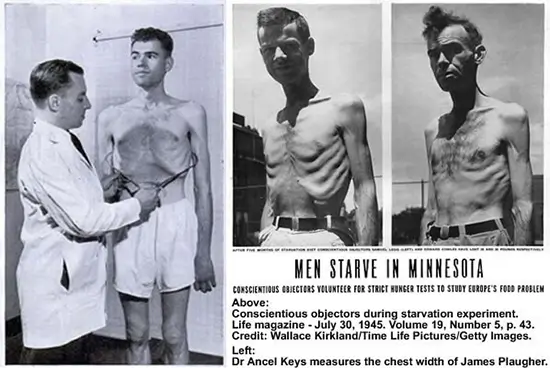
Editor De Picaretas A Obesidade
Experiência de Fome no Minnesota: Porque é Que Fazer Dieta Nos Faz Engordar. A Psicologia da Fome.
Um dos primeiros estudos científicos sobre o que a fome não faz para a mente foi observado em um estudo lembrado como o Minnesota Fome Experimento realizado pela Universidade de Minnesota de volta em 1944.

Editor De Picaretas A Obesidade
Binge eating disorder - A psicologia da fome
Na natureza, não é refinado, açúcar ou gordura. O nosso cérebro nunca havia sido exposta a uma combinação dos dois de uma vez, forçando-nos em binge eating disorder.
Editor De Picaretas Alimentação Ideal A Dieta Vegetariana
QUE orientações dietéticas - Nova pirâmide alimentar e a supressão da ciência
As directrizes dietéticas da OMS recomendam uma dieta pobre em gordura saturada (proteína animal), açúcar e sal e rica em frutas e vegetais como um requisito para combater o aumento epidémico de doenças crónicas em todo o mundo.
Câncer A Inflamação Toxicidade
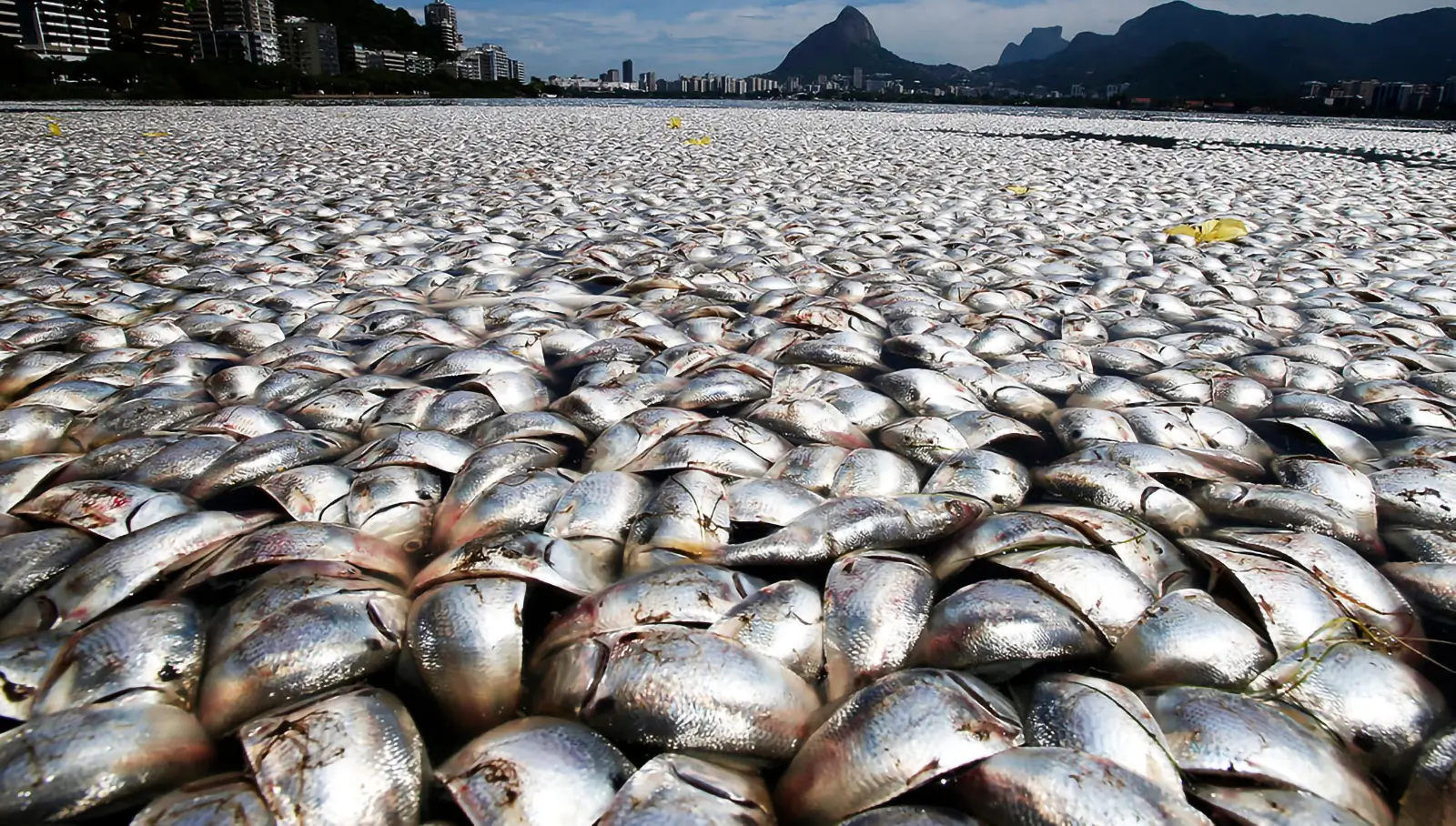
Toxicidade do Peixe- A Carne Mais Tóxica
A poluição é lavado e irá terminar no mar, eventualmente, e de algas, filtrar a água de iniciar o processo de bioacumulação. Toxicidade nos peixes é uma grande preocupação.

Posts Em Destaque –
Editor De Picaretas A Dieta Vegetariana
Deficiências de Nutrientes na Dieta Vegana: Estratégias de Prevenção
Existem nove deficiências comuns de nutrientes na escala populacional que afectam as pessoas que se alimentam de uma dieta à base de plantas. Se não forem corrigidas a tempo, algumas deficiências têm consequências terríveis e não tratáveis.
Câncer Editor De Picaretas Fitoquímicos
Poder Anticancerígeno das Frutas e Legumes: Evidências Clínicas e in Vivo
Alguns extractos vegetais rivalizam com os principais medicamentos de quimioterapia e, ao mesmo tempo, visam vários tipos diferentes de células cancerígenas.

Diabetes Editor De Picaretas Alimentação Ideal
Açúcar Refinado: Compreender os Riscos
As crianças consomem cerca de um quinto do total de suas necessidades energéticas a partir de apenas o açúcar refinado. Se somarmos a gordura e o resto da nutrição privação de alimentos processados para a lista torna-se uma nutrição completa pesadelo.

Editor De Picaretas Prevenção A Dieta Vegetariana
China estudo - vegan argumento
China estudo mostrou que não há nenhuma doença cardíaca ou câncer ou diabetes em subdesenvolvido comunidades rurais em todo o mundo com base de amido de dietas veganas.

A Medicina Alopática Câncer Editor De Picaretas
Câncer, O que é Proibido Curas-máquina de Rife, análise de Histórico
A taxa de recuperação para pacientes que têm não-tratáveis câncer e foram declarou doente terminal, utilizando Repleto de Máquina de ressonância tecnologia foi de 100%.
Diabetes Editor De Picaretas
A Diabetes provoca e carboidratos refinados - vegan argumento
As pessoas acreditam que os carboidratos refinados estão associadas com picos de insulina e o diabetes provoca. Eles estão certos. No entanto, eles também estão errados.
Diabetes Editor De Picaretas
A Diabetes provoca e gordura saturada - vegan argumento
Como o nível de gordura no sangue, aumenta a capacidade do corpo para limpar açúcar cai. Um dos diabetes provoca é o nosso desadaptação para uma grande ingestão de gordura

Editor De Picaretas A Obesidade Alimentação Ideal
Causa da Obesidade - Desadaptação ou vício
Qual é a causa da epidemia de obesidade? Para toda a vida na Terra, a comida não é uma escolha. A coisa mais difícil para o animal no deserto é o ganho de peso.
Editor De Picaretas A Inflamação
Os seres humanos onívoros dilema - o consumo de Carne, bactérias probióticas, a inflamação, e com o intestino
Seres humanos são onívoros, em um verdadeiro anatômica sentido? Há uma diferença fundamental na maneira como as trato digestivo trabalha em plantas vs comer carne de espécie.

Câncer Editor De Picaretas Toxicidade
Exposição a Pesticidas em Crianças: Testes de Exposição na Vida Real
Crianças e, principalmente, as mulheres grávidas são mais vulneráveis à exposição aos pesticidas. Se analisarmos do mundo real, os níveis de exposição em cenários da vida real, qual seria o resultado?
Últimas do PubMed, #dieta baseada em vegetais –
- Effects of dietary barberry root powder on growth performance, immune responses, antioxidant status, and antioxidant-related gene expression in grass carp (Ctenopharyngodon idella)por Rakhshanifar Khalil on Outubro 18, 2026
Due to having positive effects on aquaculture, plant-based dietary is very important. Therefore, this research examined the barberry root powder (BRP) supplementation on various parameters including growth performance, blood characteristics, antioxidant activity, gene expression related to antioxidant activity, and antibacterial properties in juvenile grass carp. The carps (mean weight 9 ± 0.58 g) were divided into 4 groups (a control group and three treatment groups receiving 0.5%, 1%, and […]
- Habitual Diet, Gut Microbiome Dysbiosis, and alpha-Synucleinopathy Conversion in Isolated Rapid Eye Movement (REM) Sleep Behavior Disorderpor Suyi Xie on Outubro 17, 2026
CONCLUSIONS: Habitual diet in iRBD is associated with gut microbiome dysbiosis and predicts neurodegenerative progression. These findings highlight diet-microbiome interactions as modifiable targets for intervention in prodromal α-synucleinopathy. © 2026 The Author(s). Movement Disorders published by Wiley Periodicals LLC on behalf of International Parkinson and Movement Disorder Society.
- Adherence to the planetary health diet index and urinary phytoestrogen excretion: a nationally representative cross-sectional study of US adultspor Kyoung-Bok Min on Outubro 17, 2026
CONCLUSION: Higher PHDI adherence was associated with higher urinary concentrations of selected plant-derived phytoestrogens among U.S. adults. These findings support biological coherence between planetary health-oriented dietary patterns and systemic exposure to plant-derived bioactive compounds. However, urinary phytoestrogens should be interpreted as complementary population-level exposure indicators of plant-forward dietary patterns rather than validated or specific biomarkers of PHDI…
- Developing a sustainable dietary pattern for Korean adults using quadratic programmingpor So-Yoon Yun on Outubro 17, 2026
CONCLUSION: A sustainable dietary pattern satisfying the cultural acceptability, nutritional adequacy, and environmental sustainability constraints was identified. This pattern provides a scientific basis for developing Korean-style sustainable dietary guidelines and may inform future nutrition policies and food service practices.
- Promoting the Mediterranean Diet in the Workplace: An Observational Cross-Sectional Studypor Nicola Magnavita on Outubro 16, 2026
Background/Objectives: The Mediterranean diet (MD) is a set of customs and eating habits developed in countries bordering the Mediterranean Sea thousands of years ago. These habits are frequently proposed as a complement to pharmacological therapies for chronic diseases and could also counteract their onset. This study aimed to investigate adherence to the MD in workers from 22 companies in Latium (Italy) and to evaluate the association of diet with workers’ health. Methods: Workers […]
- Trendy, but Are They Safe? Current Popular Diets and Their Use in Inflammatory Bowel Diseases: Narrative Reviewpor Klara Szwarc on Outubro 16, 2026
Inflammatory bowel disease (IBD) arises from the interplay between genetic susceptibility, immune dysregulation, microbiota, and environmental exposures, with diet potentially contributing to both pathogenesis and management. Patients frequently modify their diet independently, often using different strategies during remission and active symptoms. This narrative review synthesises evidence on patient-accessible dietary patterns and selected structured nutritional therapies across five […]