







En EE.UU., más de las tres cuartas partes de la exposición al arsénico procede de productos animales y, sobre todo, del pollo, más que de la ternera, el cerdo, los perritos calientes, los huevos y la leche.
Milos Pokimica
Escrito por: Milos Pokimica
Revisado Médicamente Por: Dr. Xiùying Wáng, M.D.
Actualizado el 9 de junio de 2023La mayor parte de la exposición al arsénico en la dieta estadounidense no procede del arroz, porque en la dieta estadounidense el arroz no es un alimento básico como en Asia oriental. En EE.UU., más de las tres cuartas partes de la exposición al arsénico procede de productos animales y, sobre todo, del pollo.
La primera mención del arsénico en la historia fue en la corte del emperador romano Nerón por el médico griego Dioscórides en el siglo I. El arsénico es una sustancia peligrosa porque carece de color, sabor u olor. Es abundante en la naturaleza y está al alcance de todas las clases sociales. Como se puede mezclar con bebidas o alimentos y no deja sabor ni olor, es una sustancia ideal para usos siniestros. Los síntomas de la intoxicación por arsénico también son difíciles de detectar porque imitan los de la intoxicación alimentaria habitual y otros trastornos comunes. En grandes dosis, provoca vómitos, diarrea, calambres abdominales violentos y la muerte. En caso de intoxicación crónica en pequeñas dosis, se produciría confusión, pérdida de fuerza y parálisis. Con el tiempo, el trióxido de arsénico (As2O3), conocido como arsénico blanco, se utilizó comúnmente para envenenar a la gente con una dosis letal del tamaño de un guisante. El Papa Alejandro VI y su hijo César eran, por ejemplo, conocidos envenenadores de arsénico. El Papa Alejandro VI nombraba cardenales y, con los privilegios y el poder que les otorgaba la Iglesia, se les animaba a hacer lo que fuera para aumentar su riqueza personal. Luego, en algún momento, fueron invitados a comer con los Borgia, lo que resultó en la muerte del cardenal. En ese caso, según la ley eclesiástica, la propiedad de los bienes del cardenal volvía a la Iglesia o, en otras palabras, al Papa Alejandro VI, su verdugo. Con su colorida y larga historia, el arsénico no es una sustancia que la gente quiera en su comida.
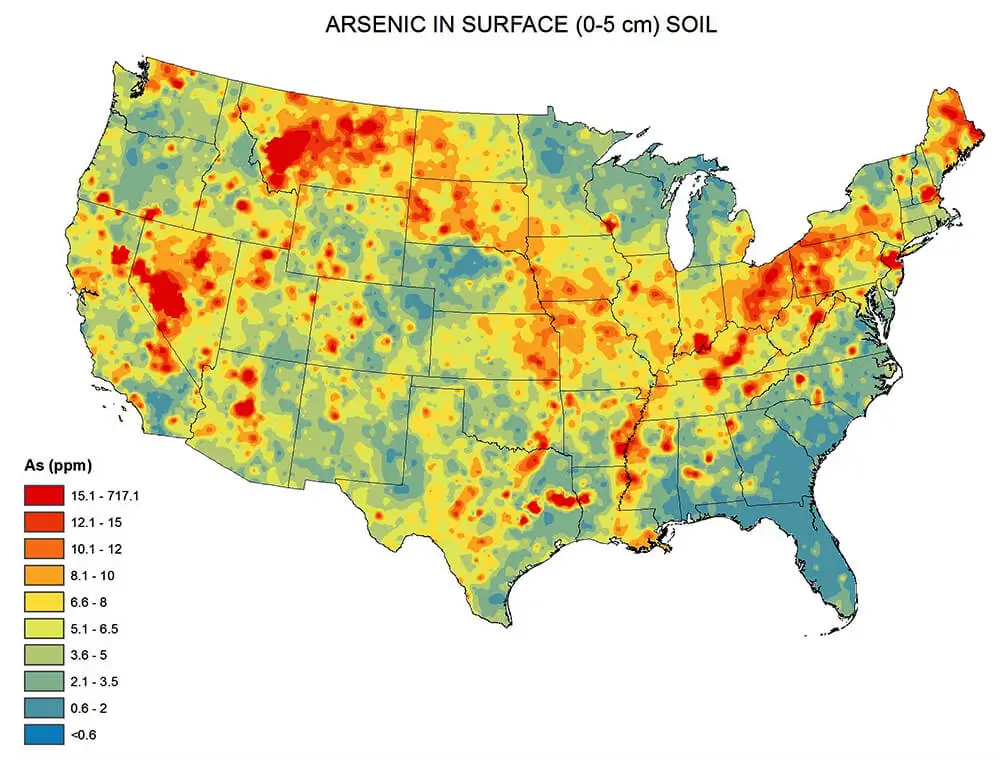
Si analizamos la contaminación por arsénico desde el punto de vista geográfico, Estados Unidos es el lugar más contaminado del mundo. Esto se debe a que el arsénico se utiliza en la industria agrícola desde hace décadas.
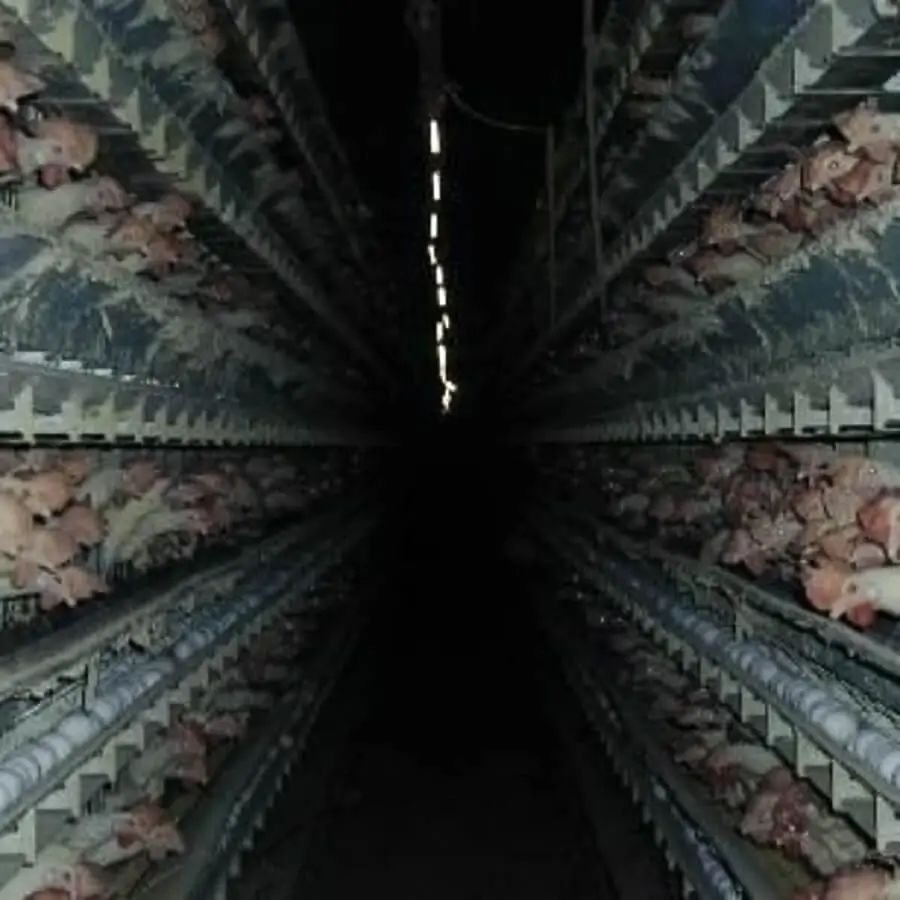
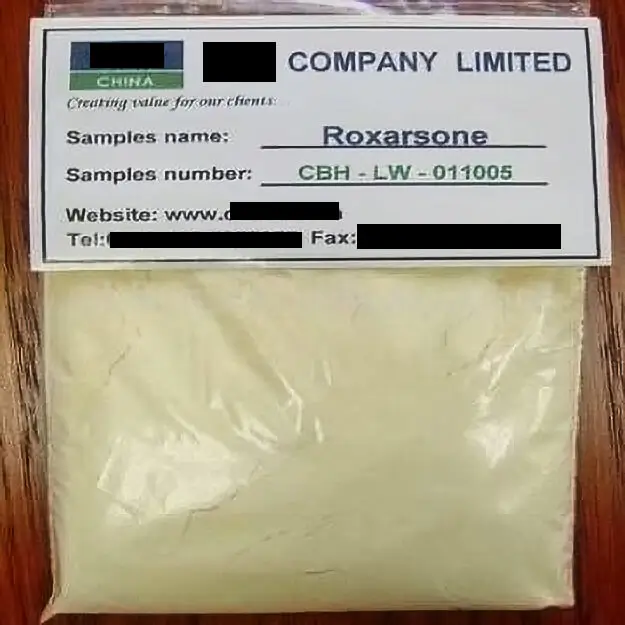
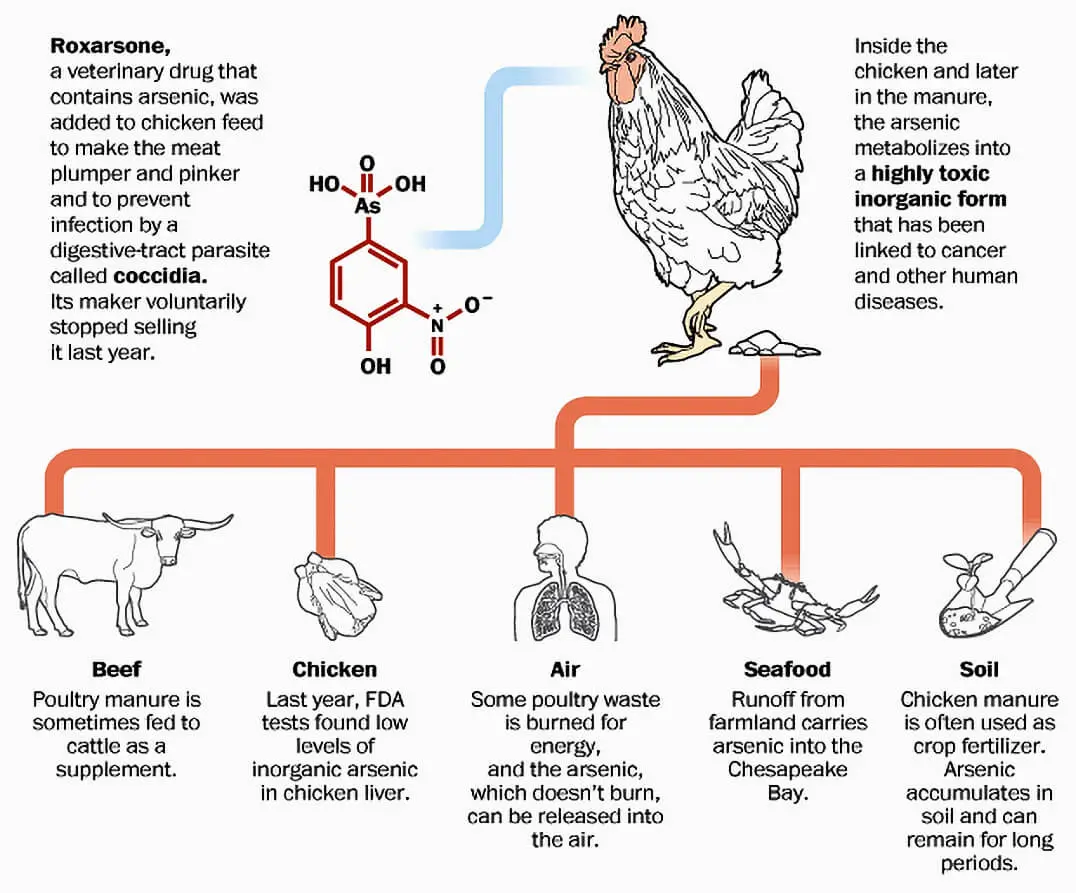
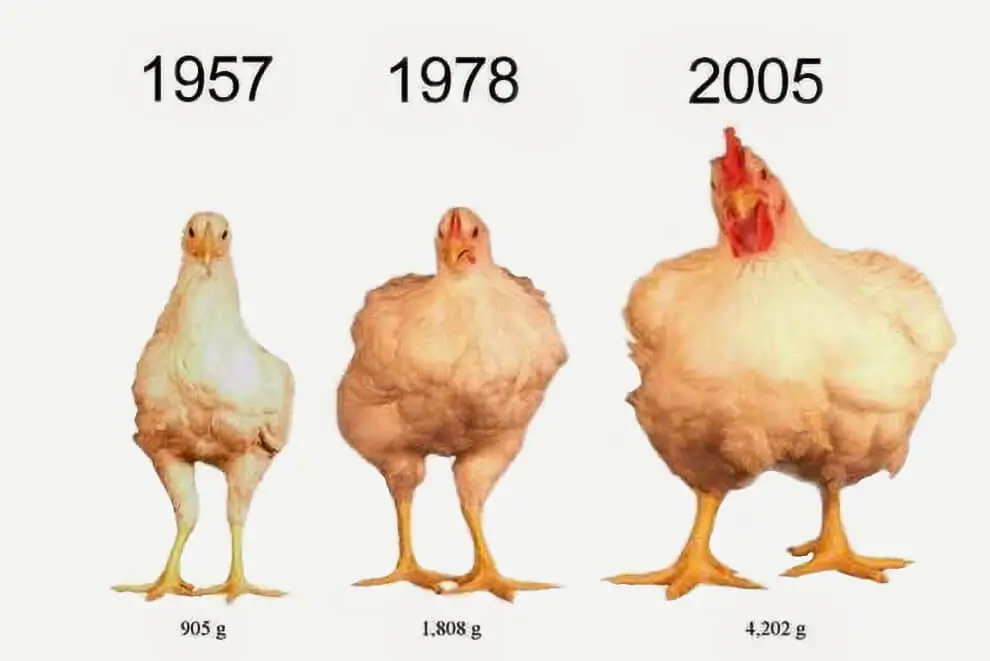
En las granjas avícolas modernas hay demasiados pollos concentrados en poco espacio. La mayoría de ellos pasan toda su vida sin apenas moverse. En este tipo de condiciones, el estiércol de los pollos es un problema para la creación de brotes de enfermedades infecciosas. La gallina típica produce aproximadamente 90 libras de estiércol. En las grandes granjas, puede haber cientos de miles de pollos en una sola instalación. El suelo de estas naves está cubierto de heces, cáscaras de soja, éteres, cacahuetes y arroz. Para detener las infecciones y prevenir enfermedades y promover el crecimiento, la industria avícola ha utilizado organoarsénicos, como el ácido 3-nitro-4-hidroxifenilarsónico (RoxarsoneROX).
Debido a la acumulación continuada en el suelo, las concentraciones de arsénico en el suelo procedentes de aplicaciones a largo plazo de camas de aves de corral pueden superar las normas de nivel de seguridad.. Estos compuestos se filtrarían y contaminarían las aguas subterráneas que, en algunos casos, se utilizan incluso para el consumo humano. Lo que es mucho peor es que la gallinaza se utiliza para su aplicación en terrenos agrícolas y para fertilizar estanques piscícolas.
En EE.UU., alrededor del 90% de las camas de aves de corral llenas de arsénico se utilizan en campos agrícolas como fertilizante.
Luego, parte de ese arsénico será absorbido por los cultivos que crezcan en ese campo envenenado con arsénico. La yacija de las aves de corral también se ha utilizado como pienso para el ganado vacuno. Se utiliza como material de partida en la creación de compost para hongos. Durante años, la concentración de arsénico en los champiñones ha rivalizado con la del arroz. El último estudio mostró que ahora los champiñones tienen una media de alrededor de la mitad que el arroz. Se calcula que en EE.UU. se vierten al medio ambiente alrededor de medio millón de libras de arsénico puro al año.
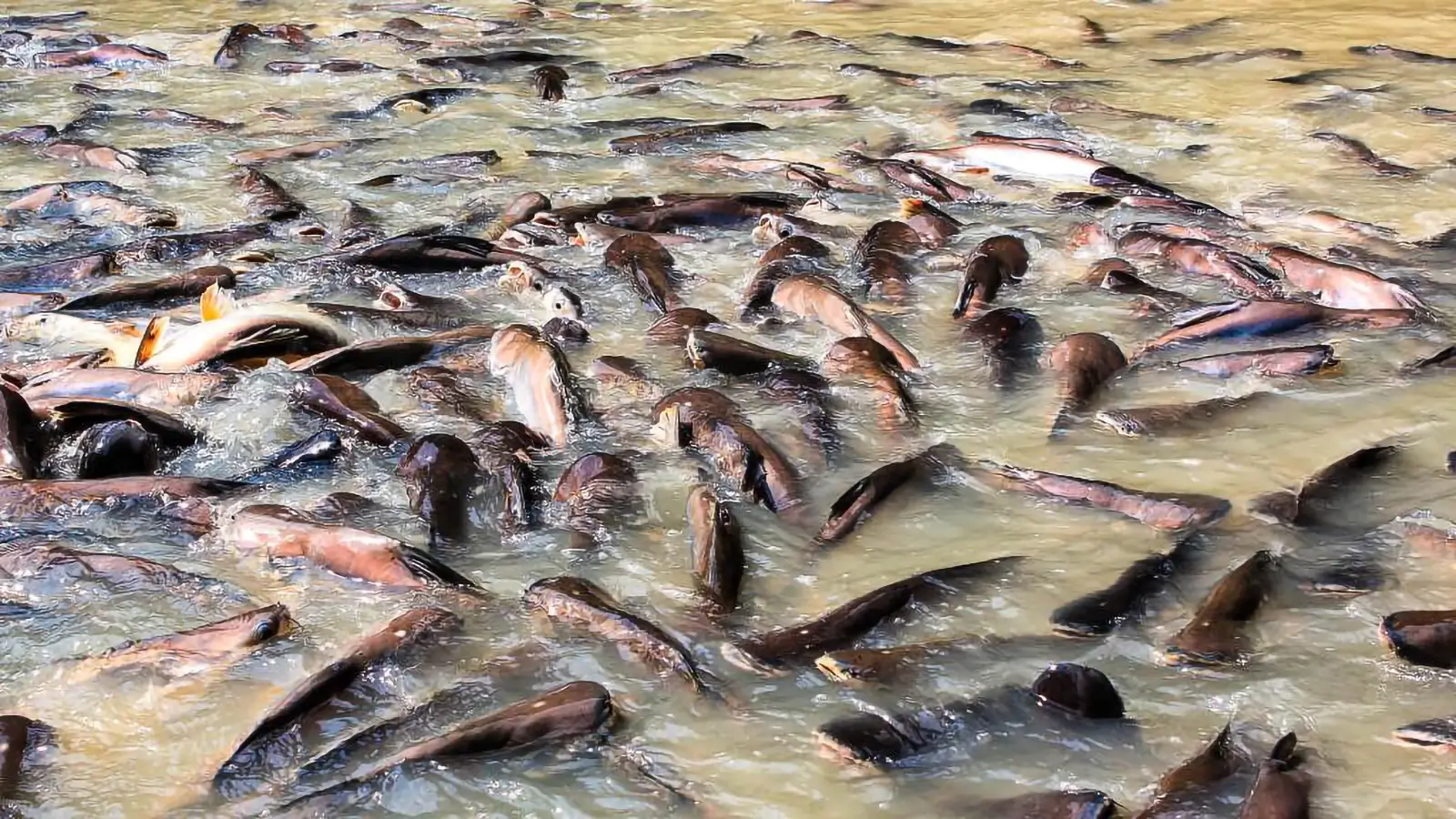
La FDA vigila desde hace décadas el contenido de arsénico en la dieta de los estadounidenses. La mayor concentración se encuentra en el pescado de piscifactoría, con 1,14 ppm. Los peces se alimentan con estiércol de pollo. Incluso si evita el pescado, se encontraron concentraciones más bajas en la mayoría de los alimentos analizados. El pollo tiene 0,08 ppm y el arroz 0,16 ppm. El arroz es la principal fuente de exposición al arsénico en la dieta no marinera. Los toxicólogos de la FDA sostienen que la ingesta diaria media de arsénico no supone ningún peligro para el consumidor. Yo no estoy de acuerdo.
El uso de pesticidas con arsénico en EE.UU. también ha sido una práctica común en el cultivo del algodón, por lo que estados como Mississippi y Arkansas tienen un mayor nivel de contaminación. Los pesticidas con arsénico están ahora prohibidos, pero toda esa contaminación sigue ahí, de modo que el arroz californiano, por ejemplo, tiene niveles de arsénico un 41% más bajos que el de Misisipi. La concentración de arsénico en el suelo puede llegar a afectar a la propia planta de arroz. Existe un trastorno por toxicidad del arsénico en el arroz llamado cabeza recta. Los síntomas van desde un aumento de los flósculos en blanco hasta la pérdida total del grano. Para combatirlo, la industria creó variedades resistentes al arsénico. Ahora el arroz puede tomar mucho más de lo que antes era naturalmente posible sin tener ningún problema. Lo único que queda para hacer frente a esta situación es que la industria cree ahora seres humanos resistentes al arsénico. La misma historia que con el vino. Décadas de uso de pesticidas con arsénico acumularon arsénico en el suelo, por lo que también hay una presencia constante y omnipresente en el vino estadounidense.
La situación hoy sería mucho peor si no fuera por un estudiante de bioestadística. Todo comenzó en el año 2000, cuando un estudiante de bioestadística acudió al Departamento de Agricultura de los Estados Unidos (USDA) en busca de un proyecto para su tesis de máster. Lo que descubrió fue que el nivel de arsénico en el pollo era tres veces superior al de otras carnes. Aunque se trataba de un hallazgo inesperado, pronto le explicaron que en Estados Unidos se alimenta a las aves de corral con antibióticos que contienen arsénico para favorecer su crecimiento, mejorar su pigmentación y prevenir enfermedades. La FDA aprobó el primer fármaco, Roxarsone, en 1944.
Así que, aunque los medicamentos que contenían arsénico se utilizaban ampliamente desde la década de 1940, el reconocimiento de la exposición solo se produjo tras el análisis estadístico de los datos. En otras palabras, la FDA no hizo nada deliberadamente. El estudiante realizó su publicación de máster. Posteriormente, el estudio se publicó en 2004 y se amplió en 2006.
Debido a que el tipo de arsénico utilizado es en forma orgánica, y no en la forma inorgánica tóxica que se hizo tristemente célebre en Arsenic and Old Lace, la FDA aprobó estos medicamentos como seguros. Esto puede parecerle lógico, y me gustaría que dejara de leer y reflexionara sobre ello. ¿Cómo es posible que la FDA apruebe durante 70 años medicamentos que no son seguros? Si el arsénico utilizado se encuentra en su forma orgánica no tóxica, ¿cuál es el problema? ¿por qué la FDA pondría en peligro al pueblo americano? ¿Saben lo que hacen y quién manipula a quién aquí? Envenenar a los niños con concentraciones de arsénico 300 veces superiores a las permitidas, ¿para qué? Beneficios. Sin la aprobación del gobierno, no puede pasar nada.
Lo que ocurre, en este caso, es lo siguiente. Cuando se cocina el arsénico orgánico, la cocción altera el perfil del arsénico en arsenito y arseniato. Además, los microbios del estiércol de pollo también alteran el arsénico en forma inorgánica (Huang y otros, 2014). Se demostró que más de 96% de Roxarsona añadida a los piensos para pollos se degradaba y se convertía en arsenito y otras especies de As desconocidas. Las raíces de los vegetales podían absorber ambas formas de arseniato y arsenito, pero sólo el arsenito era transportado hasta los brotes. Este estudio demostró que las plantas absorben el As inorgánico tóxico. El transporte de arsénico es el siguiente Roxarsona en piensos ' animales ' estiércol animal ' suelo ' cultivo.
Por todo ello "conocimiento"se presentó en el Congreso la Ley de Aves de Corral Libres de Veneno de 2009. Luego otra vez la Ley de Aves de Corral Libres de Veneno de 2011, luego otra vez todo esto era sólo una mentira gubernamental. Como resultado, en 2013 diferentes grupos del movimiento ecologista, la agricultura, la seguridad alimentaria y la salud pública se unieron y presentaron una demanda conjunta contra la FDA obligándola a responder.
En 2015, para evitar el conocimiento público de todo el sistema corrupto de la FDA, se vio obligada a retirar la aprobación del último de los medicamentos que contenían arsénico manteniendo esta historia lo más silenciosa posible. La mala noticia para la industria es que sin la Roxarsona la carne de pollo perderá su atractivo color rosa. Otra cosa importante que mencionar. El estiércol de pollo se utiliza para la producción de abono orgánico. Se puede compostar y convertir en oro negro. El arsénico seguía ahí hasta 2016.
Referencias:
- Huang, L., Yao, L., He, Z., Zhou, C., Li, G., Yang, B., & Deng, X. (2014). Roxarsone and its metabolites in chicken manure significantly enhance the uptake of As species by vegetables. Chemosphere, 100, 57-62. https://doi.org/10.1016/j.chemosphere.2013.12.074
Contenidos Relacionados



¿Tienes alguna duda acerca de la nutrición y la salud?
Me encantaría saber de usted y responderlas en mi próxima publicación. Agradezco sus aportes y opiniones y espero tener noticias suyas pronto. También te invito a síguenos en Facebook, Instagram y Pinterest para más contenidos sobre dieta, nutrición y salud. Puedes dejar un comentario allí y conectar con otros entusiastas de la salud, compartir tus consejos y experiencias, y recibir apoyo y ánimo de nuestro equipo y nuestra comunidad.
Espero que este post le haya resultado informativo y ameno y que esté preparado para aplicar los conocimientos adquiridos. Si le ha resultado útil, por favor compártelo con tus amigos y familiares que también podrían beneficiarse de ella. Nunca se sabe quién puede necesitar orientación y apoyo en su camino hacia la salud.
– También Te Puede Interesar –
Experimento de Inanición de Minnesota: Por qué las Dietas Nos Hacen Engordar. La Psicología del Hambre.
Beneficios de la Espirulina: Superalimento Rico en Ficocianinas

Vegano Neandertales? La verdad acerca de la dieta de los Neandertales
La Medicina alopática - El Surgimiento de una Industria

La Anatomía de Cáncer de riesgo para la Salud de las correlaciones
El Alcohol riesgos para la salud - La "paradoja francesa", "el vino", y "en moderación"
Leche A1: Diabetes, Autismo y Cardiopatías

Astaxantina Beneficios: Antioxidante Natural Más Potente del Mundo

Aprenda Sobre Nutricion

Milos Pokimica es doctor en medicina natural, nutricionista clínico, escritor sobre salud médica y nutrición y asesor en ciencias de la nutrición. Autor de la serie de libros Go Vegan? Revisión de la Ciencia, también dirige el sitio web sobre salud natural GoVeganWay.com.
Descargo De Responsabilidad Médica
GoVeganWay.com le ofrece reseñas de las últimas investigaciones relacionadas con la nutrición y la salud. La información proporcionada representa la opinión personal del autor y no pretende ni implica sustituir el asesoramiento, diagnóstico o tratamiento médico profesional. La información proporcionada tiene fines informativos únicamente y no pretende sustituir la consulta, el diagnóstico y/o el tratamiento médico de un médico o proveedor de atención médica calificado.NUNCA ignore el CONSEJO MÉDICO PROFESIONAL O RETRASAR la BÚSQUEDA de TRATAMIENTO MÉDICO a CAUSA DE ALGO QUE HAYA LEÍDO EN O accesibles a TRAVÉS de GoVeganWay.com
NUNCA APLICAR CUALQUIER cambio de ESTILO de vida O CAMBIOS EN su totalidad COMO UNA CONSECUENCIA DE ALGO QUE HA LEÍDO EN GoVeganWay.com ANTES de CONSULTAR con LICENCIA PROFESIONAL MÉDICO.
En el caso de una emergencia médica, llame a un médico o al 911 inmediatamente. GoVeganWay.com no se recomienda ni aprueba ninguna de los grupos, las organizaciones, las pruebas, los médicos, productos, procedimientos, opiniones u otra información que pueda ser mencionado en el interior.
Selecciones del editor –
El cáncer Editor De Selecciones Fitoquímicos
Poder Anticancerígeno de Frutas y Verduras: Pruebas Clínicas e in Vivo
Algunos extractos vegetales rivalizan con los principales fármacos quimioterapéuticos y, al mismo tiempo, atacan varios tipos diferentes de células cancerosas.
Antioxidantes Editor De Selecciones ORAC
Aceites Esenciales Como Suplementos Antioxidantes: Reglas y Estrategias
Los aceites esenciales de calidad alimentaria pueden ser una estrategia cómoda y de fácil consumo para optimizar el valor antioxidante y las puntuaciones ORAC de nuestra dieta.
Antioxidantes Editor De Selecciones ORAC
Dieta Rica en Antioxidantes: Reglas y Estrategias Generales
Existen estrategias fáciles y rentables para optimizar el valor antioxidante de nuestra dieta.
Antioxidantes Editor De Selecciones ORAC
Comprender los Valores ORAC: Niveles de Antioxidantes en los Alimentos
Cuando tu principal fuente de antioxidantes es el café, sabes que tienes un grave problema.

Antioxidantes Editor De Selecciones ORAC
Astaxantina Beneficios: Antioxidante Natural Más Potente del Mundo
La astaxantina es el más potente y natural antioxidante universal (petróleo y agua-soluble) que conoce la ciencia. Se acumula en los tejidos y nunca puede convertirse en un pro-oxidante.
Antioxidantes Editor De Selecciones ORAC Fitoquímicos
Antioxidantes: Conceptos Básicos
Los productos de origen animal no contienen fitoquímicos ni antioxidantes. Por término medio, los alimentos vegetales contienen más de 60 veces más antioxidantes que los de origen animal.
Editor De Selecciones Dieta Vegana
Deficiencias Nutricionales en la Dieta Vegana: Estrategias de Prevención
Existen nueve deficiencias nutricionales comunes a escala poblacional que afectan a las personas que siguen una dieta basada en plantas. Si no se corrigen a tiempo, algunas deficiencias tienen consecuencias terribles y no tratables.
Editor De Selecciones Dieta Óptima
Deficiencia de Micronutrientes en la Dieta Americana Estándar: Estrategias de Optimización
El perfil nutricional de nuestra dieta moderna a base de carne, azúcar y alimentos procesados es totalmente incongruente con nuestra evolución, lo que provoca una grave carencia de micronutrientes.
Editor De Selecciones Fitoquímicos
Fitoquímicos: Conceptos Básicos
Todos y cada uno de los fitoquímicos que existen tienen una acción biológica en el cuerpo humano. Cada uno de los millones de fitoquímicos diferentes.
Editor De Selecciones La leche Dieta Óptima
Leche y Productos Lácteos: Correlaciones de Riesgo Para la Salud
Las asociaciones conocidas con la leche y el consumo de lácteos son infertilidad, cáncer de ovario y de mama, leucemia, diabetes tipo 1, autismo, arteriosclerosis, cataratas, artritis reumatoide, esclerosis múltiple, hiperactividad, congestión, granos y más...
El cáncer Editor De Selecciones La proteína
Proteína Completa: Señalización del IGF-1 en la Formación del Cáncer
Cuando usted come proteínas animales que tienen cuatro veces más probabilidad de desarrollar todos los tipos de cáncer. Cuando usted fuma, usted tiene cuatro veces la posibilidad de desarrollar cáncer de pulmón.

El cáncer Editor De Selecciones La proteína
La Anatomía de Cáncer de riesgo para la Salud de las correlaciones
Según los medicamentos, alrededor del 2% de los cánceres se consideran puramente causados por factores genéticos. El mismo rango que dentro del reino animal. No te han dicho toda la verdad.
Milos Pokimica es escritor especializado en salud y nutrición y asesor en ciencias nutricionales. Autor de la serie de libros Go Vegan? Revisión de la Ciencia, también dirige el sitio web sobre salud natural GoVeganWay.com.
Últimos artículos -

La Restricción De Calorías La longevidad
Cómo Ayunar: Alimentos en Ayunas Que No Rompen la Autofagia
Autofagia. ¿Alguna vez te has preguntado qué les sucede a las células de tu cuerpo cuando mueren o se dañan? ¿Simplemente se acumulan y crean problemas, o se eliminan de alguna manera? La respuesta es que tu cuerpo...
Salud Dental Prevención
Dolor y Sensibilidad a los Dulces: Solución Rápida y Duradera
Una solución rápida y fácil para aliviar el dolor es el aceite esencial de clavo, un potente antioxidante y analgésico que puede ayudar con las enfermedades de las encías y el dolor de muelas.
Los frijoles
Judías Verdes: Nutrición y Beneficios Para la Salud
Los frijoles verdes son bajos en calorías y ricos en compuestos naturales que pueden ayudar a controlar su azúcar en la sangre, reducir el colesterol y combatir los radicales libres.
Dieta de alimentos crudos Dieta Vegana
Se Pueden Comer Setas Crudas: Riesgos Para La Salud, Nutrición Y Seguridad
Las setas tienen toxinas sensibles al calor, como la hidracina o la agaritina, y paredes celulares compuestas de quitina que el ser humano no puede digerir bien.
Dieta Vegana
¿Son Los Peces Animales? Una Perspectiva Cultural
En algunas culturas, la carne de pescado no se considera carne, y el pescado está permitido incluso durante el ayuno.
Salud Dental Prevención
Enjuague bucal natural casero: probado, más fuerte y menos tóxico
El enjuague bucal natural hecho en casa es más fuerte que la clorhexidina, menos tóxico y si se ingiere puede dar un poco de náuseas, pero también un alto estallido en el valor ORAC.
Salud Dental Prevención
Cómo Detener la Caries Dental: Síntomas, Causas y Prevención
El consumo de azúcar es la principal causa de caries y deterioro dental, combinado con carencias de minerales, especialmente magnesio, zinc, cobre y oligoelementos.
Antioxidantes Superalimentos
Amla: Beneficios Probados, Nutrición e Importancia Clínica
El amla es uno de los antioxidantes más potentes del mundo, con una puntuación ORAC de 261.530. Es una rica fuente de fitoquímicos que tienen diversos beneficios para la salud. Es una rica fuente de fitoquímicos que tienen diversos beneficios para la salud.
Top Noticias De Salud — ScienceDaily
- Alzheimer’s may begin with a silent drop in brain blood flowen febrero 24, 2026
Subtle changes in brain blood flow and oxygen use are closely linked to hallmark signs of Alzheimer’s, including amyloid plaques and memory-related brain shrinkage. Simple, noninvasive scans may one day help spot risk earlier—by looking at the brain’s vascular health, not just its plaques.
- Scientists engineer bacteria to eat cancer tumors from the inside outen febrero 24, 2026
Researchers are engineering bacteria to invade tumors and consume them from the inside. Because tumor cores lack oxygen, they’re the perfect breeding ground for these microbes. The team added a genetic tweak that helps the bacteria survive longer near oxygen-exposed edges — but only once enough of them are present to trigger the change. It’s a carefully programmed biological attack that could one day offer a new way to destroy cancer.
- Massive US study finds higher cancer death rates near nuclear power plantsen febrero 24, 2026
A sweeping nationwide study has found that U.S. counties located closer to operating nuclear power plants have higher cancer death rates than those farther away. Researchers analyzed data from every nuclear facility and all U.S. counties between 2000 and 2018, adjusting for income, education, smoking, obesity, environmental conditions, and access to health care. Even after accounting for those factors, cancer mortality was higher in communities nearer to nuclear plants, particularly among older […]
- Training harder could be rewiring your gut bacteriaen febrero 24, 2026
Training harder may do more than build muscle—it could transform your gut. Researchers found that intense workouts change the balance of bacteria and important compounds in athletes’ digestive systems. When training loads dropped, diet quality slipped and digestion slowed, triggering different microbial shifts. These hidden changes might influence performance in ways scientists are only beginning to understand.
- Scientists reverse muscle aging in mice and discover a surprising catchen febrero 24, 2026
A UCLA study in mice reveals that aging muscle stem cells accumulate a protein that slows repair but boosts survival. This protein, NDRG1, acts like a brake, preventing cells from activating quickly after injury. When researchers blocked it in older mice, muscle healing sped up dramatically — but stem cells became less resilient over time. The work suggests aging may reflect a survival trade-off rather than straightforward decline.
- Less sugar as a baby, fewer heart attacks as an adulten febrero 23, 2026
People whose sugar intake was restricted before birth and in early childhood had markedly lower rates of heart disease later in life. Compared to those never exposed to rationing, their risks of heart attack, stroke, heart failure, and cardiovascular death were cut by roughly 20–30%.
- Scientists create universal nasal spray vaccine that protects against COVID, flu, and pneumoniaen febrero 23, 2026
Scientists at Stanford Medicine have unveiled a bold new kind of “universal” vaccine that could one day protect against everything from COVID-19 and the flu to bacterial pneumonia and even common allergens. Instead of targeting a specific virus or bacterium, the nasal spray vaccine supercharges the lungs’ own immune defenses, keeping them on high alert for months. In mice, it slashed viral levels, prevented severe illness, and even blocked allergic reactions.
PubMed, #Dieta vegana –
- Veganism: an extended theory of planned behavior framework incorporating ethical, environmental, and sociodemographic determinantsen febrero 20, 2026
CONCLUSION: This study broadens the TPB by integrating ethical, normative, and psychosocial dimensions that explain vegan intentions beyond traditional predictors. Findings underscore the importance of moral identity, perceived social expectations, and contextual factors in shaping sustainable dietary behaviors.
- Association Between Diet and Metabolome in Childhood and Adolescence: A Systematic Reviewen febrero 11, 2026
CONCLUSION: This review identifies several metabolites consistently associated with specific dietary components across different studies in children and adolescents. These findings support the potential of metabolomics for validating dietary biomarkers and improving the accuracy of dietary assessment in pediatric populations. Although metabolomic markers reflect actual dietary intake, their implications for health outcomes remain to be explored.
- Growth Trajectories in Infants From Families With Plant-Based or Omnivorous Dietary Patternsen febrero 5, 2026
CONCLUSIONS AND RELEVANCE: In this cohort study, infants from vegan households had growth patterns similar to those from omnivorous households, with a higher odds of early underweight that decreased by age 24 months. In the context of developed countries, these findings seem reassuring. Further research should examine vegan diet quality and the impact of nutritional counseling during pregnancy and infancy in supporting optimal infant development.
- Influences of vegan status on protein intake, lean body mass, and strength in lightly active, young women: A cross-sectional studyen febrero 5, 2026
CONCLUSION: These data suggest that functional indicators of body protein status may be adversely impacted by long-term adherence to vegan diets in young adult women.
- Iodineen enero 1, 2006
Iodine is an essential trace nutrient for all infants that is a normal component of breastmilk. Infant requirements are estimated to be 15 mcg/kg daily in full-term infants and 30 mcg/kg daily in preterm infants.[1] Breastmilk iodine concentration correlates well with maternal urinary iodine concentration and may be a useful index of iodine sufficiency in infants under 2 years of age, but there is no clear agreement on a value that indicates iodine sufficiency, and may not correlate with […]
Publicaciones aleatorias –

La leche
La intolerancia a la lactosa - el 65% de probabilidad de tener
Las personas de ascendencia Europea puede beber la leche y el resto del mundo no. Hay, sin embargo, una gran cantidad de sustancias en la leche, además de la lactosa que ninguno de nosotros puede tolerar.
Antioxidantes Nootrópicos
Azul de Metileno: Usos Terapéuticos e Importancia Clínica
El Azul de metileno es un potente antioxidante sintético. Mejora la función mitocondrial y la capacidad de nuestras células para producir energía.

Editor De Selecciones Prevención Dieta Vegana
El estudio de China - Los veganos argumento
El estudio de China mostró que no hay ninguna enfermedad del corazón o el cáncer o la diabetes en las comunidades rurales subdesarrolladas en el mundo con base de almidón de las dietas veganas.
La Diabetes Dieta Óptima
Edulcorantes artificiales- Conceptos básicos
Los edulcorantes artificiales son sustancias químicas sintéticas no naturales, por lo que tenemos que estudiar la ciencia disponible para comprender los posibles efectos que estas sustancias químicas pueden tener sobre la salud.
Editor De Selecciones La inflamación Dieta Vegana
La Inflamación y la Dieta- Argumento Vegana
Hemos evolucionado para recibir una ráfaga de antioxidantes protectoras cuando comemos pero no están presentes en la carne. La inflamación y la dieta tienen un alto nivel de correlación.
Antioxidantes La Actividad Física
Adaptaciones al Entrenamiento Dañadas por Antioxidantes: Prevención del Daño Oxidativo en el Músculo
Los antioxidantes suplementarios pueden bloquear el principal beneficio del ejercicio, que es el aumento de nuestra propia producción endógena de antioxidantes.

Antioxidantes
Poder Antioxidante de la Vitamina C: Mejorar la Salud y la Longevidad
La vitamina C no requiere actividad enzimática para ser eliminada del organismo y no se convierte en prooxidante, sino en una forma reducida de antioxidante más débil.

La Actividad Física
El agotamiento de glucógeno - Cómo no hacer ejercicio
¿Qué sucede cuando hacemos ejercicio o ir en una dieta restrictiva?

La Medicina Alopática Editor De Selecciones Dieta Óptima
El Informe McGovern - Intereses especiales y supresión de la ciencia
En 1977 el empuje para un cambio de Pautas Dietéticas (McGovern Informe) a más a base de plantas vegana uno se había introducido en el Congreso de los estados UNIDOS.
El cáncer Desintoxicación La inflamación
Beneficios del Sulforafano: El Superpoder Desintoxicante del Brócoli
El sulforafano es el inductor enzimático natural de fase 2 más potente conocido por la ciencia. También está demostrado que el sulforafano es un inhibidor dosis-dependiente de la tumorigénesis inducida por carcinógenos.

Publicaciones destacadas -
El cáncer Editor De Selecciones La proteína
La Anatomía de Cáncer de riesgo para la Salud de las correlaciones
Según los medicamentos, alrededor del 2% de los cánceres se consideran puramente causados por factores genéticos. El mismo rango que dentro del reino animal. No te han dicho toda la verdad.
Editor De Selecciones Dieta Vegana
Deficiencias Nutricionales en la Dieta Vegana: Estrategias de Prevención
Existen nueve deficiencias nutricionales comunes a escala poblacional que afectan a las personas que siguen una dieta basada en plantas. Si no se corrigen a tiempo, algunas deficiencias tienen consecuencias terribles y no tratables.

Editor De Selecciones Dieta Óptima La proteína
Dieta Alta En Proteínas - Riesgo Para La Salud De Las Correlaciones
La escasez es la regla de las proteínas en la naturaleza. En términos evolutivos, los antropólogos han demostrado que los homínidos vivían una media de 15 a 25 gramos de proteína al día. En el tipo occidental moderno de dieta alta en proteínas consumiríamos eso...
Editor De Selecciones Dieta Óptima Dieta Vegana
QUE la dieta de las directrices de la Nueva pirámide de los alimentos y la supresión de la ciencia
QUE las pautas dietéticas recomiendan una dieta baja en grasas saturadas (proteína animal), el azúcar, la sal y alta en frutas y verduras, como un requisito para hacer frente a la epidemia aumento de las enfermedades crónicas en todo el mundo.
Editor De Selecciones Prevención Dieta Vegana
El estudio de China - Los veganos argumento
El estudio de China mostró que no hay ninguna enfermedad del corazón o el cáncer o la diabetes en las comunidades rurales subdesarrolladas en el mundo con base de almidón de las dietas veganas.

Editor De Selecciones La Obesidad
El trastorno de atracones compulsivos - La psicología de hambre
En la naturaleza, no hay refinado de azúcar o grasa. Nuestro cerebro nunca había sido expuesto a una combinación de los dos a la vez nos obliga a ir de borrachera comiendo desorden.
Antioxidantes Editor De Selecciones ORAC
Comprender los Valores ORAC: Niveles de Antioxidantes en los Alimentos
Cuando tu principal fuente de antioxidantes es el café, sabes que tienes un grave problema.
Editor De Selecciones Dieta Óptima
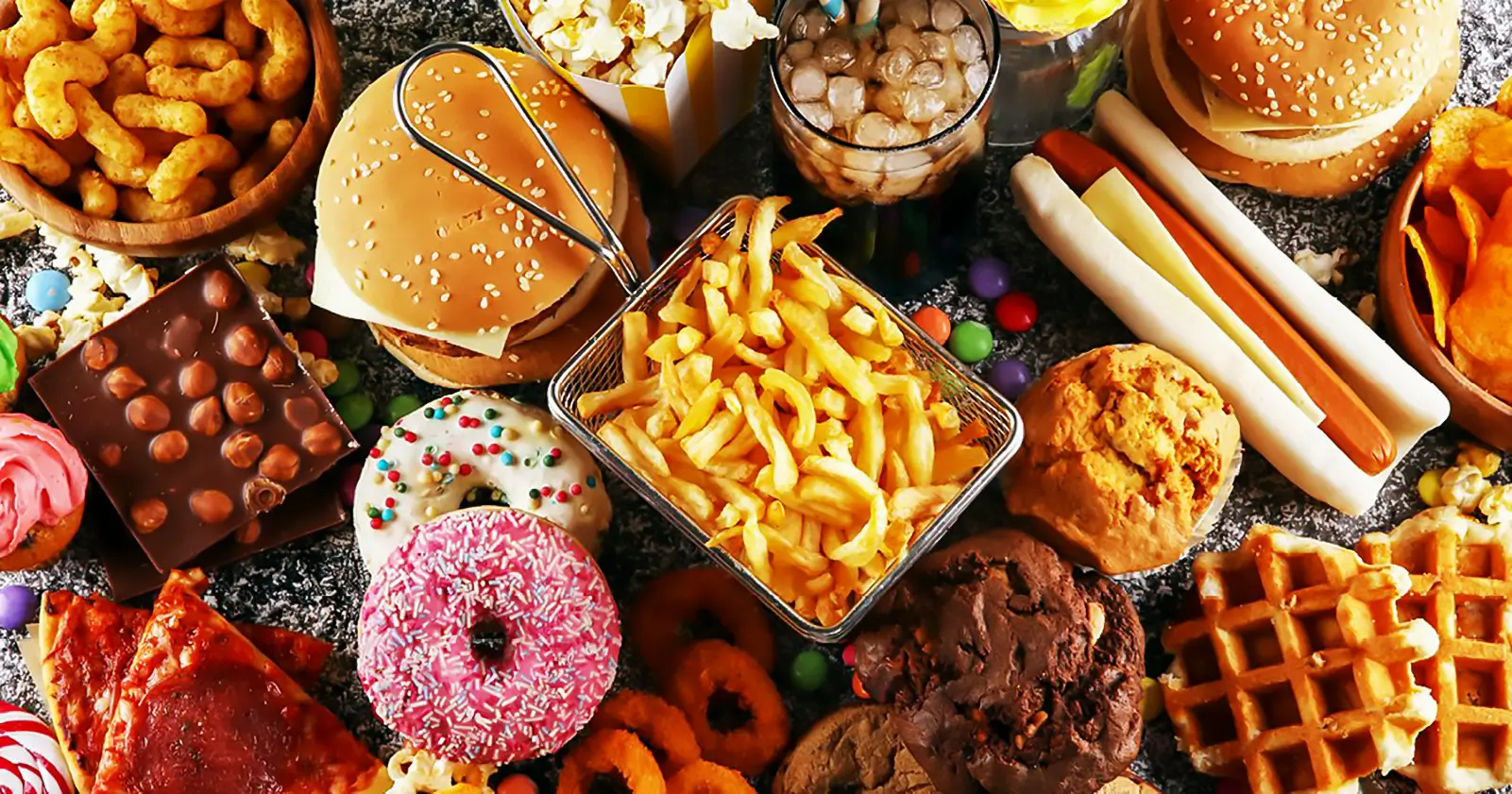
Alimentos Procesados: Comprender los Riesgos
Los alimentos procesados significan que se elimina algo de los alimentos enteros, normalmente fibra, y se añade algo, normalmente grasa, azúcar, sal y msg.
La Diabetes Editor De Selecciones
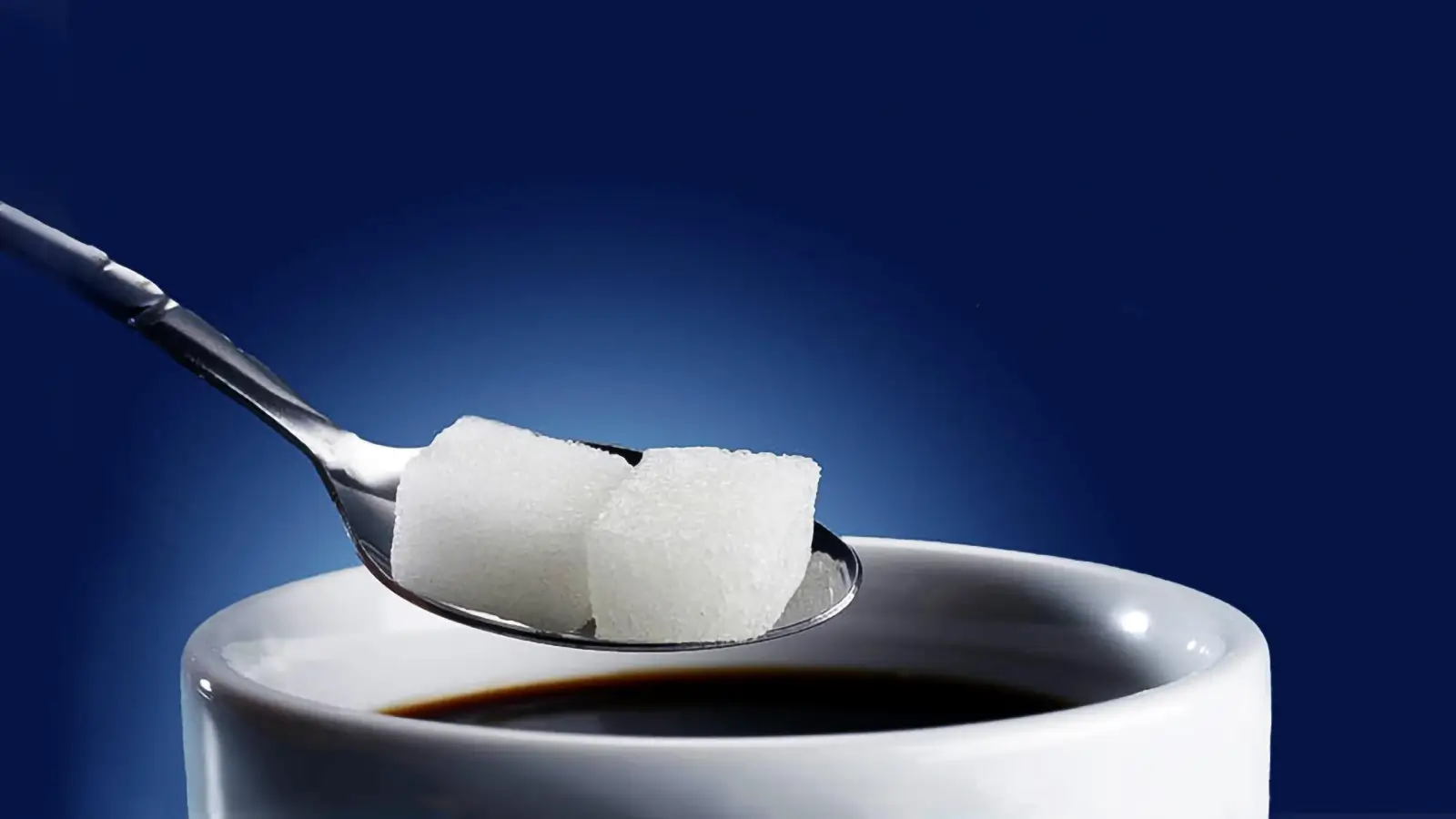
La Diabetes causa y los hidratos de carbono refinados - Los veganos argumento
La gente cree que los carbohidratos refinados se asocian a picos de insulina y son una de las causas de la diabetes. Y tienen razón. Sin embargo, también se equivocan.
Editor De Selecciones Fitoquímicos
Fitoquímicos: Conceptos Básicos
Todos y cada uno de los fitoquímicos que existen tienen una acción biológica en el cuerpo humano. Cada uno de los millones de fitoquímicos diferentes.
La última versión desde PubMed, #Dieta basada en plantas –
- Differences in Protein Quantity and Quality Across a Spectrum of Plant-Based Meals: Analysis of a Large National Dietary Surveypor Sophie L van Oppenraaij en febrero 24, 2026
CONCLUSIONS: This study shows that only a small proportion of Dutch adults met both protein-related recommendations and sustainability goals, due to lower protein quantity and quality in more plant-based diets. This study emphasizes the need for professional guidance, especially in individuals with higher protein requirements, to facilitate a successful transition to a more plant-based diet.
- Dietary animal fat disrupts gut microbiota and aggravates Scl-cGVHD after allogeneic hematopoietic stem cell transferpor Danielle D Millick en febrero 24, 2026
Allogeneic hematopoietic stem cell transplant (allo-HSCT) is an effective treatment for high-risk or relapsed acute leukemia. However, the frequent occurrence of graft-versus-host disease (GVHD) poses significant complications. Modifiable factors such as the gut microbiome and dietary regimen have the potential to influence the frequency and severity of GVHD. Previous studies in mouse models have shown a direct link between obesity and increased severity of GVHD; however, analysis of human […]
- Evaluation of biochemical, histopathological, hematological, and genotoxic effects of some indigenous weed plant extracts in albino rats toward a natural and safe alternative to synthetic insecticidespor Muhammad Asif Zahoor en febrero 23, 2026
CONCLUSION: These findings suggest that these weed plants have the potential to be used as biopesticides for future integrated pest management (IPM) programs.
- Comparative life cycle assessment of conventional dairy products and plant-based analog and hybrid alternatives: current status and future perspectivespor Muhammed Fidan en febrero 23, 2026
Conventional dairy products are associated with relatively high environmental burdens, largely driven by farm-level processes such as enteric methane emissions, feed production, and land use. These concerns have intensified interest in plant-based analog and hybrid dairy products as potential alternatives. However, environmental comparisons among these product categories remain inconsistent due to differences in functional units, methodological choices, and nutritional characteristics. This…
- Dietary Patterns and Indicators of Cognitive Functionpor Hui Chen en febrero 23, 2026
CONCLUSIONS AND RELEVANCE: Results reveal that healthy diets, exemplified by the DASH diet for blood pressure control and diets with lower hyperinsulinemia and inflammation potentials, were associated with a lower SCD risk and better cognitive function. These findings underscore the importance of a healthy diet for maintaining long-term cognitive health.
- Adherence to the EAT-Lancet Planetary Health Diet during Pregnancy and Associations with Preterm Birth and Infant Size: a prospective analysis from the New Hampshire Birth Cohortpor Leyre Notario Barandiaran en febrero 21, 2026
CONCLUSION: Originally proposed for chronic disease prevention and planetary sustainability, higher adherence to the PHD during pregnancy may also benefit birth outcomes, particularly lower odds of preterm birth.