







Dieta de alimentos crudos - La perspectiva evolutiva
La creencia básica en la comunidad de los alimentos crudos es que una dieta de alimentos crudos es la forma más natural y saludable de vivir. ¿Qué nos dice la biología evolutiva?
Milos Pokimica
Escrito por: Milos Pokimica
Revisado Médicamente Por: Dr. Xiùying Wáng, M.D.
Actualizado el 9 de junio de 2023Una de las dietas más extremas en la comunidad vegana es la dieta de alimentos crudos. En la comunidad vegana se considera que la dieta de alimentos crudos es la más saludable que se puede crear. La creencia es que ser vegano es sólo el primer paso hacia la dieta de alimentos crudos. La mayoría de los veganos no serían capaces de hacerlo, pero aún así, el mensaje subyacente es que la dieta de alimentos crudos es la dieta más óptima y saludable que existe. También es una de las más caras.
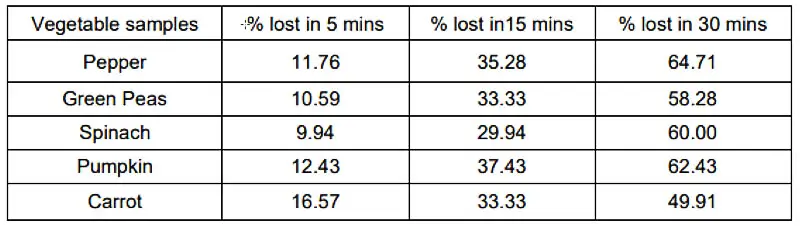
Los practicantes de la dieta de alimentos crudos argumentarán que es la dieta más óptima porque la dieta de alimentos crudos es un tipo de dieta que estuvo presente durante la mayor parte de nuestra evolución y que es un tipo de dieta que los primates están comiendo hoy en día. Argumentarán que el calor destruye un gran número de nutrientes, como los fitoquímicos, las vitaminas, las enzimas y las proteínas. antioxidantes. Cualquier nutriente que no sea estable al calor se destruye, creando un producto alimenticio rico en calorías pero pobre en nutrientes, de forma similar a lo que ocurre con los alimentos que no son estables al calor. refinar azúcar o el aceite. Un gran número de sustancias químicas protectoras y vitaminas como la vitamina C no son estables a temperaturas superiores a 50C. Al mismo tiempo, la cocción crearía mutágenos. Por otro lado, algunos alimentos como las judías crudas o las setas pueden ser letales, pero son muy beneficiosos para la salud cuando se cocinan.
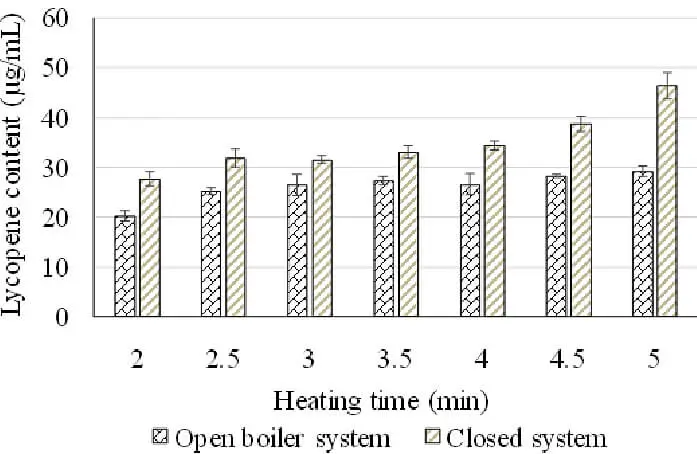
En algunos casos, los nutrientes sólo se liberan tras la cocción y no podríamos absorberlos a un nivel adecuado si no fuera por un proceso de cocción. Por ejemplo, el licopeno. El pigmento rojo de los tomates se libera tras la cocción cuando el calor destruye las paredes celulares de la planta y es liposoluble. En el caso de los tomates, añadir poco aceite y cocinarlos es beneficioso para la salud.
Si tostáramos los frutos secos aumentaríamos la absorción de minerales, pero destruiríamos parte de los fitoquímicos. Los zumos de fruta cocidos o, en otras palabras, pasteurizados son poco más que calorías extraídas y concentradas en forma de fructosa.
En la mayoría de los casos, la cocción de las frutas disminuiría drásticamente su poder antioxidante porque la mayor parte de la antioxidantes en la fruta no son estables a temperaturas más altas.
Hay varios estudios que también comparan distintos métodos de cocción, desde la cocción al vapor hasta la fritura. La ciencia de la nutrición tiene ahora todas las respuestas, pero la respuesta no es tan sencilla como a la gente le gustaría.
Como consecuencia de esta confusión, hay una serie de mitos seriamente erróneos que circulan dentro de la comunidad de la dieta de alimentos crudos.
Por ejemplo, existe la creencia de que sólo tenemos un número limitado de enzimas en nuestro cuerpo que no sería suficiente para la absorción de nutrientes. Esto es cierto si nos ocupamos de la leche proteína. La caseína es una proteína compleja que necesita tipos específicos de enzimas para ser digerida y, dado que los mamíferos sólo beben leche cuando son cachorros, estas enzimas se desactivarán más adelante. La proteína de la leche no puede digerirse fácilmente aunque no estemos intolerante a la lactosa. A los culturistas les gusta tener un suministro constante de proteínas incluso durante el sueño y beberían proteína de leche antes de acostarse por esta razón específica.
Por otro lado, la mayoría de las enzimas vegetales serán destruidas por nuestro ácido biliar aunque no se destruyan al cocinarlas. Es un tema más complejo.
La creencia básica en la comunidad de la dieta de alimentos crudos es que los seres humanos deben vivir en equilibrio con la naturaleza. Creen que es la forma más natural y saludable de vivir.
Uno de los principales problemas del veganismo de dieta cruda es que nuestro cerebro consume mucha energía. Si evitamos el almidón y otros alimentos ricos en calorías y comemos alimentos más densos en nutrientes, tendríamos que consumir mucha más comida si queremos vivir. Otra opción sería tomar azúcar concentrado en forma de zumo de fruta o comer fruta en general y fuentes ricas en grasa como frutos secos y semillas.
¿Sería esto beneficioso para la salud?
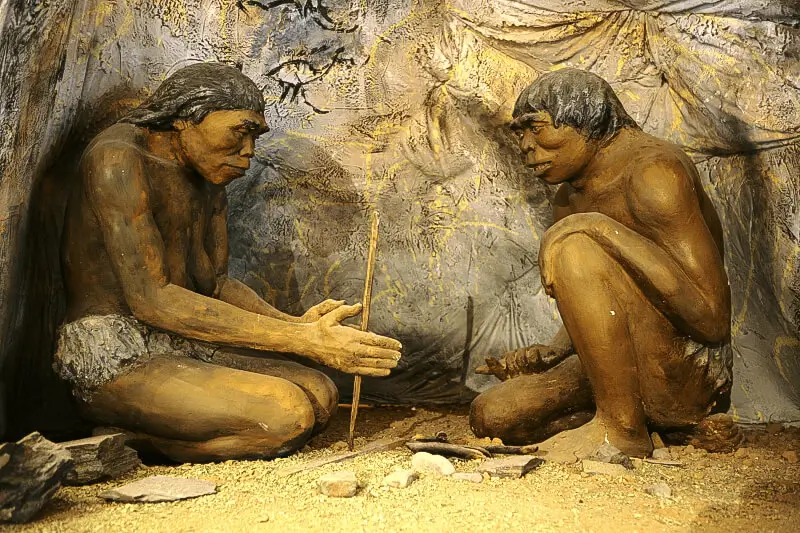
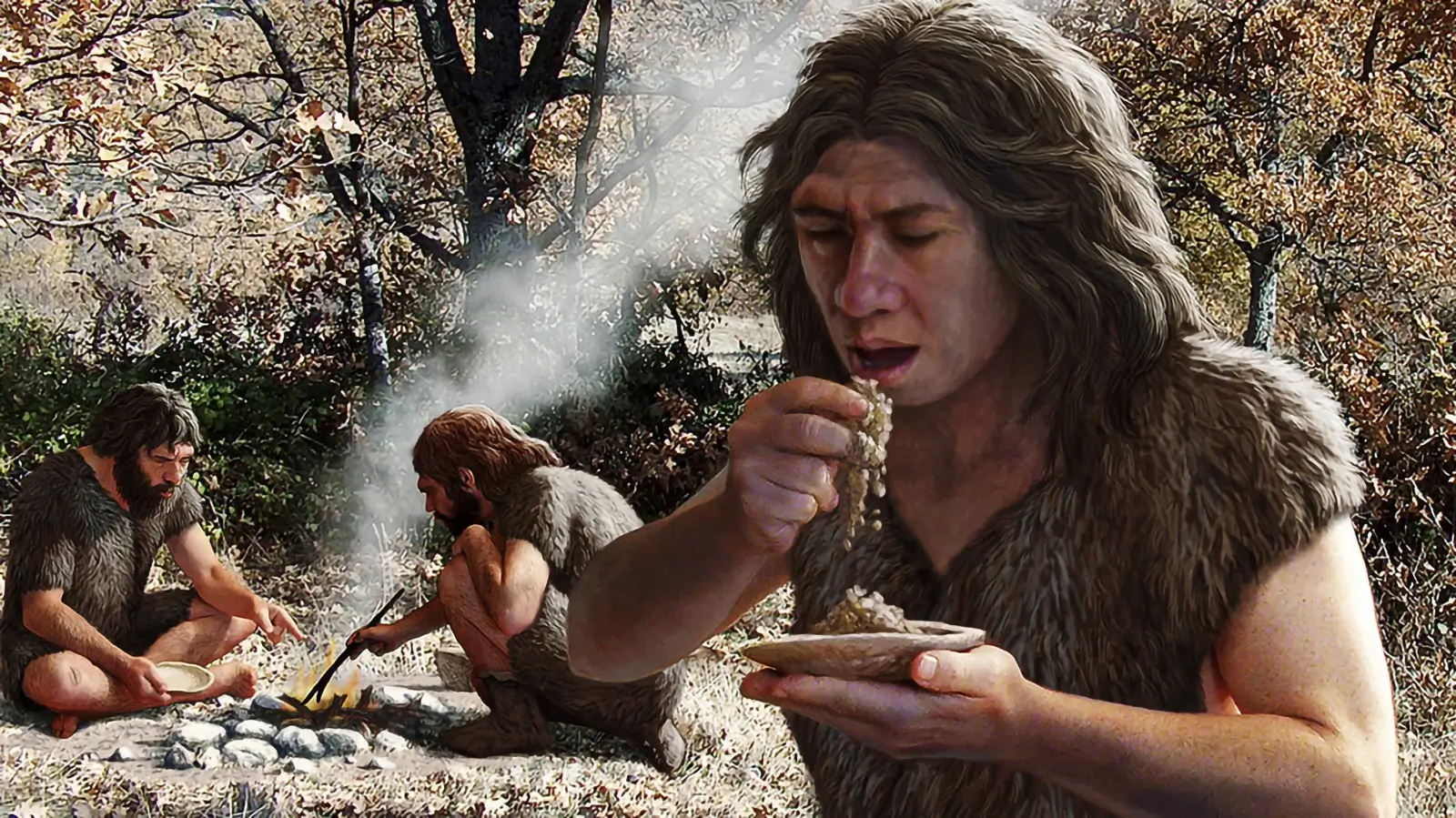
Las pruebas sugieren que cocinar los alimentos puede haber formado parte de la cultura de los homínidos ya en 1,9 Mya. En este periodo se produjo una reducción significativa de la talla del Homo erectus. Esto sólo es posible si empezó a adoptar dietas más blandas. Esto podría deberse al uso de la cocina.
La cocción no sólo hace que los alimentos viejos sean más apetecibles. También convierte alimentos que antes no lo eran en una nueva fuente de calorías. Por ejemplo, comer carne cruda y otros productos animales es para nosotros una sentencia de muerte. Hay informes de algunos casos de personas que practicaban una dieta de alimentos crudos que incluía productos animales como la leche. Varias enfermedades como la tuberculosis, la brucelosis, la difteria, la escarlatina, la fiebre Q y la gastroenteritis se transmiten a través de los productos lácteos crudos.
Lo cierto es también que, sin la cocción, muchos tubérculos por lo demás nutritivos serían demasiado duros para el consumo.
Debido a la dieta de mayor calidad que permitió la cocción, el tamaño de los intestinos disminuyó significativamente. Esto es lo que podemos ver en los registros fósiles y por sí mismo demuestra el aumento de la calidad de la dieta. Más calorías y tractos digestivos más pequeños significan que hay más calorías libres disponibles y eso significa más para el cerebro y el tamaño del cerebro aumentó aún más.
La cocción de fuentes vegetales difíciles de digerir fue una parte importante de la adaptación que nos permitió convertirnos en humanos.
Edward O. Wilson, de la Universidad de Harvard, había hecho algunos cálculos sobre la expansión del cerebro humano. La conclusión fue que, durante dos millones de años, el tamaño del cerebro crece aproximadamente una cucharada cada 100.000 años, hasta la aparición del Homo sapiens, y entonces el crecimiento cerebral se detuvo.
La línea de pensamiento clásica es que los primeros homínidos se vieron obligados a pasar de un entorno boscoso a uno de sabana y tuvieron que adaptarse cambiando a los alimentos más duros y resistentes más comunes en el nuevo entorno. La apertura también explica las ventajas selectivas del bipedismo, ya que es la forma más eficaz de caminar si no se es un animal arborícola.
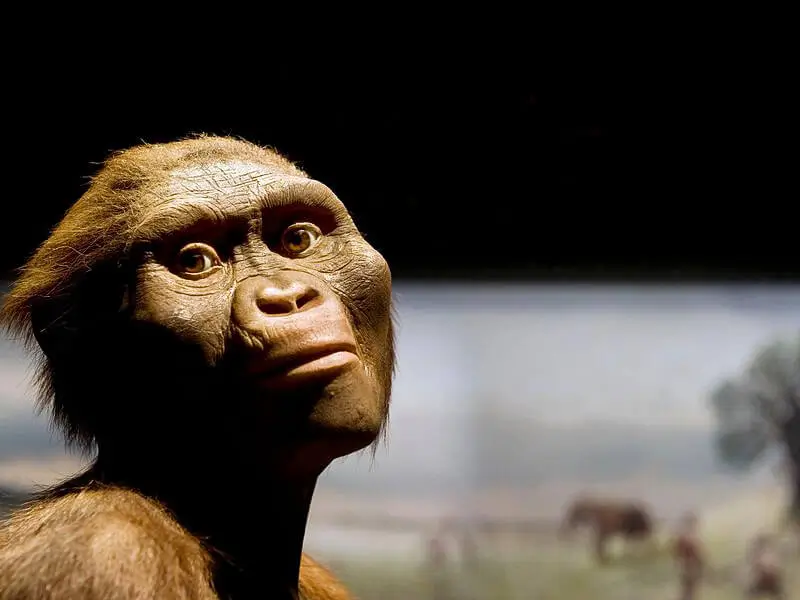
Si nos fijamos en el Australopithecus, tenía mandíbulas y molares realmente enormes. Los dientes grandes y de esmalte grueso de los australopitecinos sugieren dietas que incluían alimentos duros. Sólo hay dos escenarios posibles en ese caso. Podría haber utilizado sus dientes para abrir cáscaras resistentes de semillas relativamente grandes. Otra hipótesis más plausible es que utilizara sus dientes para concentrarse en alimentos ricos en almidón. Muchas especies vegetales han reservado energía en sus partes subterráneas, los llamados órganos de almacenamiento subterráneo (USO), como bulbos y cormos. Como las plantas quieren vivir y no quieren que se las coman, disponen de mecanismos defensivos. Algunos de esos mecanismos incluyen toxinas, barreras físicas como caparazones y material fibroso difícil de digerir. La cocción destruye básicamente todas las capas protectoras que puedan tener las plantas. En términos evolutivos, no había adaptación al fuego, por lo que la invención de la cocina cambió el equilibrio.
En las plantas, los hidratos de carbono sirven como reservas de energía o para funciones estructurales, igual que el petróleo. Se trata de energía almacenada que las plantas crean a partir de la luz solar y que nosotros queremos consumir. La energía de reserva puede almacenarse en diferentes partes de la planta, normalmente las semillas y los frutos secos, y especialmente las judías, la tienen para servir de energía para la germinación. Ciertos frutos la tienen, y también órganos subterráneos de almacenamiento como tubérculos, raíces y rizomas.
Las raíces y tubérculos comestibles son muy densos en energía porque pueden constituir hasta el 80% del peso seco de almidón puro. Otra ventaja es que permanecen estables y no se pudren si no se los altera porque crecen de forma natural en el suelo, por lo que pueden recolectarse a medida que se necesiten a lo largo de un periodo de tiempo. Los USO también pueden secarse, pero es dudoso que los primeros homínidos tuvieran el nivel de inteligencia necesario para aplicar esta técnica. Debido a su disponibilidad y densidad energética, se ha propuesto que los USO se convirtieron en una de las fuentes de alimento más esenciales para los primeros homínidos. La incorporación de USO ricos en almidón fue un paso crucial en la evolución de los homínidos y su expansión a nuevos hábitats. Los hábitats acuáticos ricos en USO, como los deltas, se han propuesto como un nicho intermedio en la adaptación de los primeros homínidos a los hábitats de sabana. Estas dos teorías (grandes semillas frente a USO como fuentes esenciales de alimento) no son necesariamente incompatibles. Es muy dudoso que alguna especie de homínido consumiera sólo un tipo de alimento. Algunos estudios de morfología craniodental sugieren una importante variabilidad dietética interindividual incluso en los australopitecinos. También es importante tener en cuenta la posibilidad de que incluso alimentos consumidos con relativa poca frecuencia pudieran haber sido fundamentales para la supervivencia en ciertos periodos en los que no se disponía de los alimentos preferidos.
La prueba auténtica más antigua de fuego controlado por el hombre data de hace 400.000 años en Israel. Otros yacimientos no probados datan de hace 1,5 Mya. Algunos científicos sugieren que la cocción de los alimentos pudo formar parte de la cultura de los homínidos ya en 1,9 Mya, porque en este periodo se produjo una reducción significativa del tamaño de los dientes del Homo erectus. Esto sólo es posible si empezó a adoptar dietas más blandas.
Si el Homo erectus dominaba el uso del fuego, como parece confirmar el registro arqueológico, el origen del Homo erectus, hace unos 1,9 millones de años, debería utilizarse como un momento de transición significativo. El H. Erectus tenía caras más pequeñas, dientes y mandíbulas más pequeños, cerebros más grandes y tractos intestinales más cortos. Todo ello gracias a una dieta de mayor calidad elaborada mediante el tostado de tubérculos. El tamaño del cerebro del H. Erectus empezó a ampliarse, y el cuerpo de los homínidos se hizo más alto y moderno. La cocción de USO ricos en almidón es lo que influyó en nuestra fisiología y, combinada con la búsqueda de comida basada en adaptaciones conductuales, impulsó un desarrollo cerebral aún mayor. Lo que hace el fuego es que frena la estructura molecular de los alimentos y, en cierto sentido, simula el proceso de digestión. Por lo tanto, lo que hace es que no sólo hace digeribles los alimentos inutilizables, sino que también hace que los alimentos digeribles sean más nutritivos porque libera las calorías que contienen. El fuego las hace más disponibles, por lo que obtendríamos más calorías del mismo alimento que habíamos estado comiendo antes. El almidón se digiere lenta e incompletamente si está en forma cristalina cruda, pero de forma más eficiente después de cocinarlo. Comer patatas crudas, por ejemplo, nunca es una buena idea.
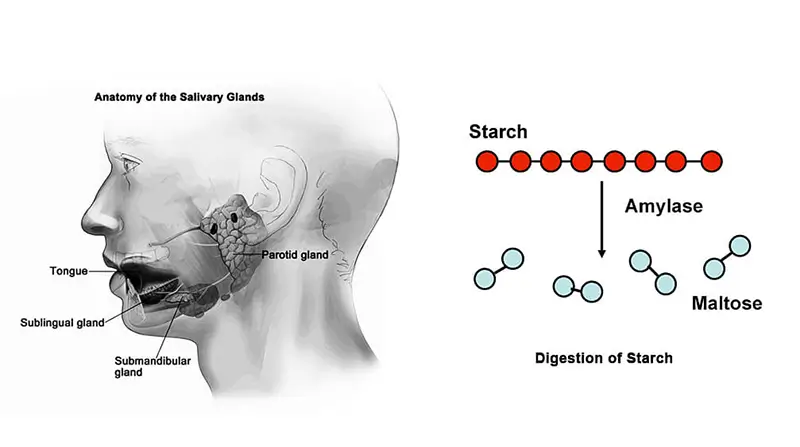
La cocción de alimentos vegetales ricos en almidón coevolucionó con una mayor actividad de la amilasa salival en el linaje humano. Los seres humanos son poco comunes, ya que tienen niveles muy altos de α-amilasa salival. En un sentido genético, se debe a múltiples copias de los genes AMY1. Entre los primates, el número de copias múltiples de los genes AMY1 sólo se ha identificado en H. sapiens. Los humanos tienen dos tipos de - α amilasas, una se expresa en las glándulas salivales y la otra en el páncreas. La amilasa salival inicia la hidrólisis del almidón inmediatamente durante la masticación en la cavidad oral. Los lactantes pequeños tienen una actividad mínima de amilasa pancreática. Cuando se introducen alimentos no lácteos en la dieta tras el destete, una gran parte de la digestión del almidón, posiblemente el 50%, se realiza mediante amilasas salivales.
En cambio, en los adultos, el almidón se digiere principalmente en el duodeno. Esto parece ser el resultado de múltiples inserciones retrovirales de ADN. Primero en 43 Mya, y después de eso, experimentamos una segunda inserción retroviral aguas arriba alrededor de 39 Mya. Se trataba de una adaptación necesaria debido al cambio en la dieta, que se alejaba del predominio de la fructosa de las frutas y las grasas de los frutos secos y las semillas para pasar a una dieta más basada en el almidón. El rápido crecimiento del tamaño del cerebro de los homínidos durante el Pleistoceno medio también requería un mayor suministro de glucosa preformada. La cocción de alimentos vegetales ricos en almidón impulsó aún más esta adaptación y coevolucionó con una mayor actividad de la amilasa salival. Sin la cocción de los alimentos vegetales ricos en almidón, que permitía una mejor absorción y nos permitía comer plantas que de otro modo serían incomestibles, es poco probable que se satisfaga la elevada demanda de calorías de los humanos modernos. El consumo regular de alimentos vegetales ricos en almidón nos da una solución sólida para la necesidad de fuentes de energía adicionales para explicar el crecimiento del cerebro durante el Plioceno tardío y el Pleistoceno temprano.
La mayoría de las personas que no están familiarizadas con esta ciencia de alguna manera desarrollaron la línea de base de pensar que los humanos modernos descubrieron el fuego en la Edad de Piedra y que el aumento del tamaño del cerebro de los humanos modernos es una consecuencia de comer carne en nuestros antepasados homínidos.
La realidad es que el Homo erectus descubrió el fuego y que la cocción de los almidones y la dificultad para pensar en soluciones óptimas de forrajeo dan origen a nuestra inteligencia.
Asar USOs es lo que nos hizo humanos no la médula ósea. Y no hay necesidad de dieta de alimentos crudos que no es una dieta humana, la dieta de alimentos crudos es una dieta de primates y la dieta de los homínidos antes de Homo erectus. La dieta humana óptima puede ser de 30 a 60 por ciento cruda. Cocinar es literalmente lo que nos hizo humanos. Bueno, al menos ese 0,5 a 1 por ciento en la diferencia genética entre el H. Erectus y nosotros.
Referencias:
Pasajes seleccionados de un libro: Pokimica, Milos. Go Vegan? Examen de Ciencias de la Parte 1. Kindle ed., Amazon, 2018.
- Palermo, Mariantonella et al. "El efecto de la cocción en el contenido fitoquímico de las verduras". Revista de ciencia de la alimentación y la agricultura. vol. 94,6 (2014): 1057-70. doi:10.1002/jsfa.6478
- Perdomo, F et al. "Influencia del procedimiento culinario sobre la biodisponibilidad del licopeno en el tomate" [Influence of cooking procedure on the bioavailability of lycopene in tomatoes]. Nutrición hospitalaria vol. 27,5 (2012): 1542-6. doi:10.3305/nh.2012.27.5.5908
- Yadav, S K, y S Sehgal. "Efecto del procesado casero en el contenido de ácido ascórbico y betacaroteno de las hojas de espinaca (Spinacia oleracia) y amaranto (Amaranthus tricolor)". Plant foods for human nutrition (Dordrecht, Países Bajos) vol. 47,2 (1995): 125-31. doi:10.1007/BF01089261
- Jiménez-Monreal, A M et al. "Influencia de los métodos de cocción en la actividad antioxidante de los vegetales". Revista de ciencia alimentaria vol. 74,3 (2009): H97-H103. doi:10.1111/j.1750-3841.2009.01091.x
- Natella, Fausta, et al. "MICROWAVE AND TRADITIONAL COOKING METHODS: EFFECT OF COOKING ON ANTIOXIDANT CAPACITY AND PHENOLIC COMPOUNDS CONTENT OF SEVEN VEGETABLES". Revista de Bioquímica AlimentariaWiley-Blackwell, agosto de 2010, p. no. https://doi.org/10.1111/j.1745-4514.2009.00316.x.
- Nguyen, Thuy y Ngo, Tai. (2018). Effect of thermal processing on quality and antioxidant activity of mixed gac (Momordica cochinchinensis) - papaya (Carica papaya) juice. 1. 41-45.
Contenidos Relacionados

¿Tienes alguna duda acerca de la nutrición y la salud?
Me encantaría conocer tu opinión y responderlas en mi próximo post. Agradezco su aportación y opinión y espero tener noticias suyas pronto. También le invito a síguenos en Facebook, Instagram y Pinterest para más contenidos sobre dieta, nutrición y salud. Puedes dejar un comentario allí y conectar con otros entusiastas de la salud, compartir tus consejos y experiencias, y recibir apoyo y ánimo de nuestro equipo y nuestra comunidad.
Espero que este post le haya resultado informativo y ameno y que esté preparado para aplicar los conocimientos adquiridos. Si le ha resultado útil, por favor compártelo con tus amigos y familiares que también podrían beneficiarse de ella. Nunca se sabe quién puede necesitar orientación y apoyo en su camino hacia la salud.
– También Te Puede Interesar –
Causa de la Obesidad - la falta de adaptación o adicción
Obesidad Factores De Riesgo

Plaguicidas en Los Alimentos, Exposición en la Dieta Estadounidense Estándar - 80% Procedente de la Carne
Los seres humanos omnívoros dilema - el consumo de Carne, las bacterias probióticas, la inflamación y el intestino

Enjuague Bucal Natural Casero: Probado, Más Fuerte y Menos Tóxico
Toxicidad en Peces- El Más Tóxico de la Carne
Dieta mediterránea- "Maravilla" de aceite de oliva
Beneficios de la Espirulina: Superalimento Rico en Ficocianinas

Aprenda Sobre Nutricion

Milos Pokimica es doctor en medicina natural, nutricionista clínico, escritor sobre salud médica y nutrición y asesor en ciencias de la nutrición. Autor de la serie de libros Go Vegan? Revisión de la Ciencia, también dirige el sitio web sobre salud natural GoVeganWay.com.
Descargo De Responsabilidad Médica
GoVeganWay.com trae los comentarios de la última de la nutrición y la salud relacionados con la investigación. La información proporcionada representa la opinión personal del autor y no pretende ni implica ser un sustituto de consejo médico profesional, diagnóstico o tratamiento. La información proporcionada es sólo para fines informativos y no pretende servir como un sustituto de la consulta, el diagnóstico y/o tratamiento médico de un médico calificado o profesional de la salud.NUNCA ignore el CONSEJO MÉDICO PROFESIONAL O RETRASAR la BÚSQUEDA de TRATAMIENTO MÉDICO a CAUSA DE ALGO QUE HAYA LEÍDO EN O accesibles a TRAVÉS de GoVeganWay.com
NUNCA APLICAR CUALQUIER cambio de ESTILO de vida O CAMBIOS EN su totalidad COMO UNA CONSECUENCIA DE ALGO QUE HA LEÍDO EN GoVeganWay.com ANTES de CONSULTAR con LICENCIA PROFESIONAL MÉDICO.
En el caso de una emergencia médica, llame a un médico o al 911 inmediatamente. GoVeganWay.com no se recomienda ni aprueba ninguna de los grupos, las organizaciones, las pruebas, los médicos, productos, procedimientos, opiniones u otra información que pueda ser mencionado en el interior.
Selecciones del Editor -
El cáncer Editor De Selecciones Fitoquímicos
Poder Anticancerígeno de Frutas y Verduras: Pruebas Clínicas e in Vivo
Algunos extractos vegetales rivalizan con los principales fármacos quimioterapéuticos y, al mismo tiempo, atacan varios tipos diferentes de células cancerosas.
Antioxidantes Editor De Selecciones ORAC
Aceites Esenciales Como Suplementos Antioxidantes: Reglas y Estrategias
Los aceites esenciales de calidad alimentaria pueden ser una estrategia cómoda y de fácil consumo para optimizar el valor antioxidante y las puntuaciones ORAC de nuestra dieta.
Antioxidantes Editor De Selecciones ORAC
Dieta Rica en Antioxidantes: Reglas y Estrategias Generales
Existen estrategias fáciles y rentables para optimizar el valor antioxidante de nuestra dieta.
Antioxidantes Editor De Selecciones ORAC
Comprender los Valores ORAC: Niveles de Antioxidantes en los Alimentos
Cuando tu principal fuente de antioxidantes es el café, sabes que tienes un grave problema.

Antioxidantes Editor De Selecciones ORAC
Astaxantina Beneficios: Antioxidante Natural Más Potente del Mundo
La astaxantina es el más potente y natural antioxidante universal (petróleo y agua-soluble) que conoce la ciencia. Se acumula en los tejidos y nunca puede convertirse en un pro-oxidante.
Antioxidantes Editor De Selecciones ORAC Fitoquímicos
Antioxidantes: Conceptos Básicos
Los productos de origen animal no contienen fitoquímicos ni antioxidantes. Por término medio, los alimentos vegetales contienen más de 60 veces más antioxidantes que los de origen animal.
Editor De Selecciones Dieta Vegana
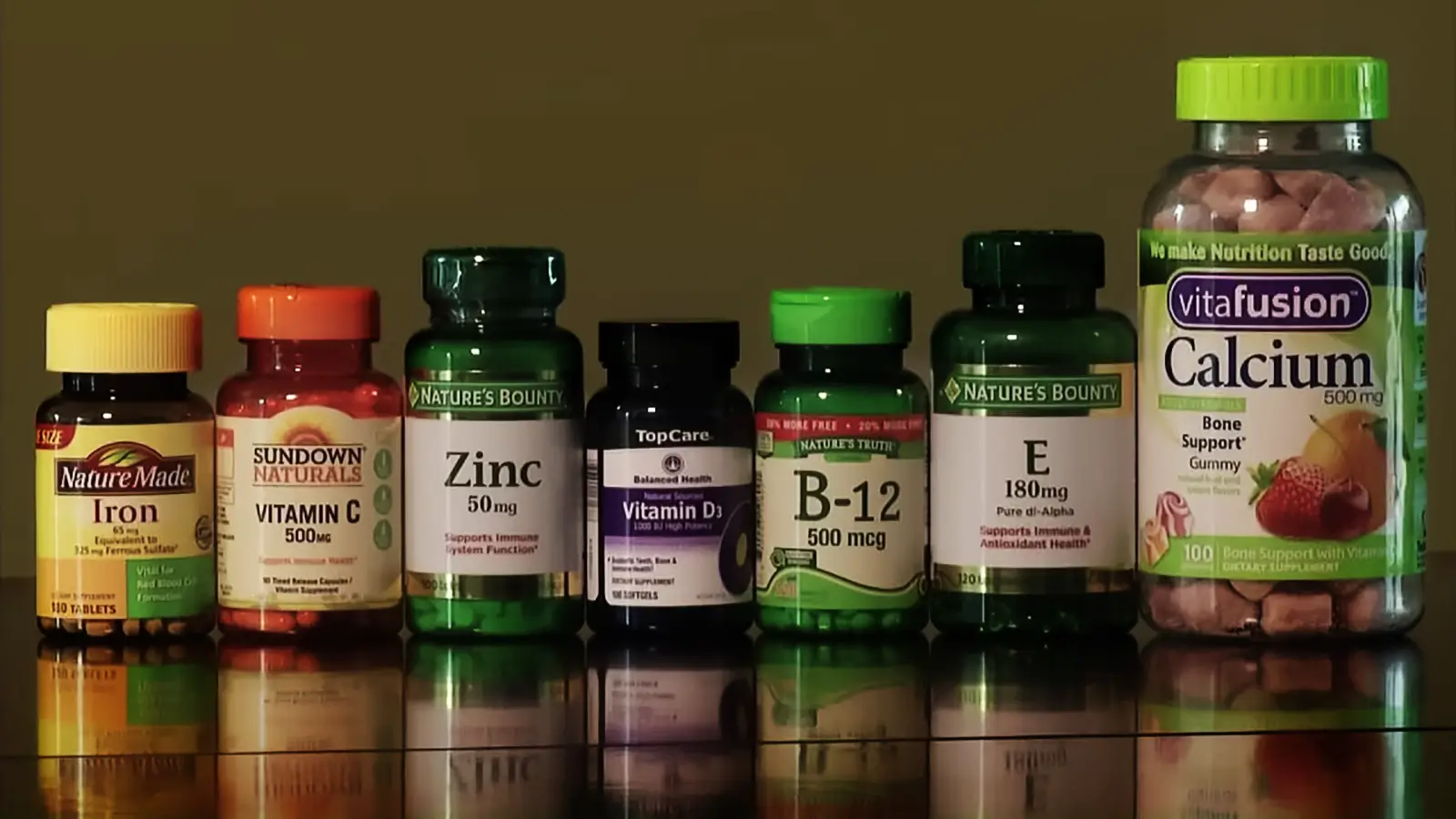
Deficiencias Nutricionales en la Dieta Vegana: Estrategias de Prevención
Existen nueve deficiencias nutricionales comunes a escala poblacional que afectan a las personas que siguen una dieta basada en plantas. Si no se corrigen a tiempo, algunas deficiencias tienen consecuencias terribles y no tratables.
Editor De Selecciones Dieta Óptima
Deficiencia de Micronutrientes en la Dieta Americana Estándar: Estrategias de Optimización
El perfil nutricional de nuestra dieta moderna a base de carne, azúcar y alimentos procesados es totalmente incongruente con nuestra evolución, lo que provoca una grave carencia de micronutrientes.
Editor De Selecciones Fitoquímicos
Fitoquímicos: Conceptos Básicos
Todos y cada uno de los fitoquímicos que existen tienen una acción biológica en el cuerpo humano. Cada uno de los millones de fitoquímicos diferentes.
Editor De Selecciones La leche Dieta Óptima
Leche y Productos Lácteos: Correlaciones de Riesgo Para la Salud
Las asociaciones conocidas con el consumo de leche y productos lácteos son infertilidad, cáncer de ovario y de mama, leucemia, diabetes de tipo 1, autismo, arteriosclerosis, cataratas, artritis reumatoide, esclerosis múltiple, hiperactividad, congestión, granos...
El cáncer Editor De Selecciones La proteína
Proteína Completa: Señalización del IGF-1 en la Formación del Cáncer
Cuando usted come proteínas animales que tienen cuatro veces más probabilidad de desarrollar todos los tipos de cáncer. Cuando usted fuma, usted tiene cuatro veces la posibilidad de desarrollar cáncer de pulmón.

El cáncer Editor De Selecciones La proteína
La Anatomía de Cáncer de riesgo para la Salud de las correlaciones
Aproximadamente el 2% de los cánceres son por la medicina considera puramente causada por factores genéticos. De la misma gama como dentro del reino animal. No le han dicho toda la verdad.
Milos Pokimica es escritor especializado en salud y nutrición y asesor en ciencias nutricionales. Autor de la serie de libros Go Vegan? Revisión de la Ciencia, también dirige el sitio web sobre salud natural GoVeganWay.com.
Últimos Artículos –
La Restricción De Calorías La longevidad
Cómo Ayunar: Alimentos en Ayunas Que No Rompen la Autofagia
Autofagia. ¿Se ha preguntado alguna vez qué ocurre con las células de su cuerpo cuando mueren o se dañan? ¿Se amontonan y crean problemas, o se eliminan de alguna manera? La respuesta es que su cuerpo...
Salud Dental Prevención
Dolor y Sensibilidad a los Dulces: Solución Rápida y Duradera
Una solución rápida y fácil para aliviar el dolor es el aceite esencial de clavo, un potente antioxidante y analgésico que puede ayudar con las enfermedades de las encías y el dolor de muelas.
Los frijoles
Judías Verdes: Nutrición y Beneficios Para la Salud
Los frijoles verdes son bajos en calorías y ricos en compuestos naturales que pueden ayudar a controlar su azúcar en la sangre, reducir el colesterol y combatir los radicales libres.
Dieta de alimentos crudos Dieta Vegana
Se Pueden Comer Setas Crudas: Riesgos Para La Salud, Nutrición Y Seguridad
Las setas tienen toxinas sensibles al calor, como la hidracina o la agaritina, y paredes celulares compuestas de quitina que el ser humano no puede digerir bien.
Dieta Vegana
¿Son Los Peces Animales? Una Perspectiva Cultural
En algunas culturas, la carne de pescado no se considera carne, y el pescado está permitido incluso durante el ayuno.

Salud Dental Prevención
Enjuague Bucal Natural Casero: Probado, Más Fuerte y Menos Tóxico
El enjuague bucal natural hecho en casa es más fuerte que la clorhexidina, menos tóxico y si se ingiere puede dar un poco de náuseas, pero también un alto estallido en el valor ORAC.
Salud Dental Prevención
Cómo Detener la Caries Dental: Síntomas, Causas y Prevención
El consumo de azúcar es la principal causa de caries y deterioro dental, combinado con carencias de minerales, especialmente magnesio, zinc, cobre y oligoelementos.
Antioxidantes Superalimentos
Amla: Beneficios Probados, Nutrición e Importancia Clínica
El amla es uno de los antioxidantes más potentes del mundo, con una puntuación ORAC de 261.530. Es una rica fuente de fitoquímicos que tienen diversos beneficios para la salud. Es una rica fuente de fitoquímicos que tienen diversos beneficios para la salud.
Top Noticias De Salud — ScienceDaily
- USC scientists discover how to create a never-ending supply of cancer-fighting cellsen octubre 16, 2026
USC scientists have discovered a way to create a potentially renewable supply of genetically engineered immune cells that can attack cancer and strengthen the body’s natural defenses. By growing and modifying immature immune cells rather than mature ones, researchers developed a system that can continuously produce tumor-fighting cells inside the body.
- Yale scientists discover how stress changes the brain to make memories strongeren octubre 16, 2026
Yale scientists have uncovered how the stress hormone cortisol helps the brain turn emotional experiences into stronger, longer-lasting memories. The discovery reveals that stress can reshape communication between brain networks involved in emotion and memory, potentially explaining why certain moments are so difficult to forget.
- A protein that fuels cancer could also be the key to fighting iten octubre 16, 2026
Scientists have discovered how to turn a protein that normally fuels cancer growth into a weapon against it. By activating PPARD in immune cells, researchers made them better at burning fat and attacking tumors, slowing or stopping cancer growth in laboratory experiments. The approach showed promise against colorectal, breast, and ovarian cancers, as well as melanoma.
- Scientists discover how exercise reverses muscle agingen octubre 16, 2026
Scientists have uncovered a hidden biological mechanism that helps explain how exercise can reverse some of the damage caused by muscle aging. The key is a gene called DEAF1, which becomes overactive with age and interferes with the muscles’ ability to clear damaged proteins and repair themselves. Exercise can help restore this balance, allowing older muscles to rebuild and regain strength, although the benefits may diminish when the system becomes too disrupted.
- Mysterious brain activity under anesthesia challenges what we know about consciousnessen octubre 15, 2026
Even under general anesthesia, the human brain can analyze language, recognize different types of words, and predict what comes next in a story, according to a surprising discovery by Baylor researchers. The findings challenge our understanding of consciousness and suggest that the unconscious brain is far more capable than scientists previously realized.
- Eating late at night linked to up to 30% higher risk of liver diseaseen octubre 15, 2026
Eating late at night could be putting your liver at risk, according to a large study led by Oregon Health & Science University. Researchers analyzed data from nearly 200,000 people and found that those who regularly ate after dinner or around bedtime had a 20% to 30% higher risk of liver disease, including fatty liver disease and cirrhosis.
- Scientists discover a surprising danger in smaller cancer cellsen octubre 15, 2026
Scientists have discovered that unusually small cancer cells carrying extra chromosomes can be far more aggressive than larger ones, growing faster, spreading more readily, and resisting common treatments. The surprising finding could help explain why some tumors are especially dangerous and provide a new way to predict cancer outcomes.
PubMed, #Dieta vegana –
- Common questions and misconceptions about diets: what does the scientific evidence really show?en octubre 15, 2026
The study of diet and nutrition is often filled with numerous myths and misconceptions. A Google Scholar search of “diets health” yields over 4 million results. This review examines frequently asked questions about diets and dietary habits. These questions include the following: 1) Is a caloric surplus necessary for building skeletal muscle? 2) Is it possible to lose body mass or fat mass without caloric restriction? 3) Is intermittent fasting better than chronic caloric restriction for […]
- Toward consensus on complementary feeding recommendations: findings from a national evidence-informed modified Delphi study in Türkiyeen octubre 12, 2026
CONCLUSIONS: Integration of quantitative Delphi findings with qualitative thematic analysis revealed that non-consensus primarily stemmed from the practical nuances of clinical execution and contextual adaptation, rather than a fundamental skepticism toward the underlying scientific data. These findings provide an evidence-informed foundation for developing context-sensitive CF recommendations for clinical practice.
- Characterization of nutritional intake in vegan pregnant women and its association on birth weighten octubre 8, 2026
CONCLUSIONS: Vegan women had a higher rate of SGA than non-vegan women, and this increased risk may be partly related to differences in maternal protein intake and composition. In addition, vegan women had lower dietary intakes of calcium, vitamin B12, vitamin D, DHA, and choline, highlighting these nutrients as important considerations in the nutritional assessment and counseling of pregnant women adhering to a strictly vegan diet.
- Changes in ectopic lipids, insulin sensitivity, and beta cell function after a low-fat vegan diet in adults with type 2 diabetes: a 16-week single-arm clinical trialen octubre 8, 2026
CONCLUSIONS: On an ad libitum low-fat plant-based (vegan) dietary intervention, the participants with type 2 diabetes experienced reductions in ectopic fat, particularly visceral and hepatocellular fat, improvements in insulin sensitivity, reductions in AGEs, and improvements in beta-cell function.
Random Posts –
El cáncer Desintoxicación La inflamación
Beneficios del Sulforafano: El Superpoder Desintoxicante del Brócoli
El sulforafano es el inductor enzimático natural de fase 2 más potente conocido por la ciencia. También está demostrado que el sulforafano es un inhibidor dosis-dependiente de la tumorigénesis inducida por carcinógenos.
La Medicina Alopática El cáncer
El cáncer, La Prohibida Curas - ESSIAC
En un pequeño pueblo en el Norte de Ontario, en 1922, los rumores comenzaron a circular de algunos cura para el cáncer té que era originario de los bosques de Ontario. Indios llamaron a esta mezcla de té "de la vida".
Antioxidantes Editor De Selecciones ORAC
Dieta Rica en Antioxidantes: Reglas y Estrategias Generales
Existen estrategias fáciles y rentables para optimizar el valor antioxidante de nuestra dieta.
La Vitamina D
La deficiencia de vitamina D - La optimización de las estrategias de
Con la deficiencia de vitamina D vamos a sufrir de una amplia gama de problemas de salud, incluso si no tenemos directamente visibles de la enfermedad ósea.
Antioxidantes ORAC Fitoquímicos
Suplementos Antioxidantes Frente a Alimentos Integrales: Pagar para Vivir Menos
Los suplementos antioxidantes no muestran el observado beneficios para la salud de las dietas ricas en frutas y verduras, mientras que la vitamina E, el selenio, beta caroteno, el licopeno muestran un aumento del riesgo de cáncer.
Salud Dental Prevención
Dolor y Sensibilidad a los Dulces: Solución Rápida y Duradera
Una solución rápida y fácil para aliviar el dolor es el aceite esencial de clavo, un potente antioxidante y analgésico que puede ayudar con las enfermedades de las encías y el dolor de muelas.
La Restricción De Calorías La longevidad
Cómo Ayunar: Alimentos en Ayunas Que No Rompen la Autofagia
Autofagia. ¿Se ha preguntado alguna vez qué ocurre con las células de su cuerpo cuando mueren o se dañan? ¿Se amontonan y crean problemas, o se eliminan de alguna manera? La respuesta es que su cuerpo...
El cáncer El embarazo Toxicidad
Aspartamo: La Verdad Sobre Sus Riesgos Y Peligros
Una de las excitotoxinas que han hecho tan feliz a la industria es la sustancia química que hace todas las cosas que hacen las excitotoxinas pero que, a diferencia del glutamato monosódico, es dulce al gusto. Se conoce químicamente como aspartamo (Nutra Sweet).
El cáncer Dieta de alimentos crudos
La exposición a la acrilamida - Chips, papas fritas, y el cáncer
La acrilamida está clasificada como carcinógeno humano del Grupo 2A. En 2002 se descubrió en concentraciones extremadamente altas en patatas fritas y patatas fritas.
Salud Dental Prevención
Enjuague Bucal Natural Casero: Probado, Más Fuerte y Menos Tóxico
El enjuague bucal natural hecho en casa es más fuerte que la clorhexidina, menos tóxico y si se ingiere puede dar un poco de náuseas, pero también un alto estallido en el valor ORAC.

Puestos Destacados –
Antioxidantes Editor De Selecciones ORAC
Dieta Rica en Antioxidantes: Reglas y Estrategias Generales
Existen estrategias fáciles y rentables para optimizar el valor antioxidante de nuestra dieta.
Editor De Selecciones Prevención Toxicidad
Toxicidad Ambiental- Es Sólo Una Cadena Alimentaria
Toxicidad ambiental es la bioacumulación de toxinas. Los organismos son los filtros. Pero hay uno más aun peor proceso llamado biomagnificación en la cadena alimentaria.

La Medicina Alopática Editor De Selecciones
La historia de Big Pharma - IG Farben
La parte de Rockefeller monopolio de la química y de la medicina de las industrias de vino en cumplimiento después de la 2 ª guerra mundial. La Standard Oil y la IG Farben cooperación con esta realidad.
La Diabetes Editor De Selecciones
La Diabetes causa y grasas saturadas - Los veganos argumento
A medida que aumenta el nivel de grasa en el torrente sanguíneo, disminuye la capacidad del organismo para eliminar el azúcar. Una de las causas de la diabetes es nuestra inadaptación a una gran ingesta de grasas
Editor De Selecciones Dieta Óptima La proteína
Dieta Alta En Proteínas - Riesgo Para La Salud De Las Correlaciones
La escasez es la regla de la proteína en la naturaleza. En términos evolutivos, los antropólogos han demostrado que los propios homínidos vivieron un promedio de 15 a 25 gramos de proteína al día. En la occidental moderna, que tipo de dieta alta en proteínas nos consumiría que...

Editor De Selecciones Prevención Dieta Vegana
El estudio de China - Los veganos argumento
El estudio de China mostró que no hay ninguna enfermedad del corazón o el cáncer o la diabetes en las comunidades rurales subdesarrolladas en el mundo con base de almidón de las dietas veganas.
El cáncer Editor De Selecciones La proteína
La Anatomía de Cáncer de riesgo para la Salud de las correlaciones
Aproximadamente el 2% de los cánceres son por la medicina considera puramente causada por factores genéticos. De la misma gama como dentro del reino animal. No le han dicho toda la verdad.
Editor De Selecciones La inflamación
Los seres humanos omnívoros dilema - el consumo de Carne, las bacterias probióticas, la inflamación y el intestino
Son los seres humanos omnívoros en un verdadero anatómica sentido? Hay una diferencia fundamental en la forma en que el tracto digestivo trabaja en plantas vs consumo de carne de las especies.
Editor De Selecciones Fitoquímicos
Fitoquímicos: Conceptos Básicos
Todos y cada uno de los fitoquímicos que existen tienen una acción biológica en el cuerpo humano. Cada uno de los millones de fitoquímicos diferentes.

El cáncer Editor De Selecciones Toxicidad
Plaguicidas en Los Alimentos, Exposición en la Dieta Estadounidense Estándar - 80% Procedente de la Carne
La mayoría de los plaguicidas y, especialmente, metales pesados y otros residuos tóxicos contaminantes que tenemos, nos obtiene de la carne. Más de 80 por ciento de la exposición a pesticidas en la dieta Americana estándar proviene de productos de origen animal, no a partir de frutas o verduras.
La última versión desde PubMed, #Dieta basada en plantas –
- Plant-Based Functional Formulae Mitigate Western Diet-Induced MASLD by Modulating Hepatic Oxidative Stress, Inflammation as Well as Nrf-2/HO-1 and NF-kappaB Gene Expressionpor Rasha S Mohamed en octubre 16, 2026
Psyllium has long been used to improve satiety and control weight. Leek and dill leaves are abundant in bioactive substances that have been confirmed to have anti-inflammatory and antioxidant properties. Our goal was to assess the hepatoprotective effects of two formulae (dill and psyllium or leek and psyllium) against oxidative stress and inflammatory markers in a metabolic dysfunction-associated steatotic liver disease (MASLD) rat model. Twenty four rats were used in this study. Rats were…
- Bioactive Ingredients in the Mediterranean Diet for Hepatic Health: In Vitro Evaluation of Selected Extracts Against Non-Alcoholic Steatosispor Valentina Vassallo en octubre 16, 2026
Natural products derived from the Mediterranean diet have attracted considerable interest as potential drug leads owing to their antioxidant and anti-inflammatory properties, as well as their beneficial effects on metabolic disorders such as non-alcoholic fatty liver disease (NAFLD). This study investigated the individual and combined effects of carvacrol, thymol, basil essential oil, and lycopene in an in vitro HepG2 model of hepatic steatosis. Their antioxidant activity was first confirmed […]
- Dietary Phytochemical Index and Fasting Plasma Glucose in Adults with Type 2 Diabetes: A Cross-Sectional Studypor Stavroula Maria Konstantopoulou en octubre 16, 2026
Background/Objectives: Type 2 diabetes mellitus (T2D) is a major public health challenge. Phytochemicals have gained attention for their potential role in glucose regulation. This study aimed to investigate the association between dietary phytochemical intake, assessed using the Dietary Phytochemical Index (DPI), and fasting plasma glucose in adults with established T2D. Methods: A cross-sectional study was conducted among 340 adults with T2D attending the Diabetes Clinic of the General […]
- Toxicological Evaluation of Zingiber purpureum Extract and Its Effects on Gut Microbiota in Zebrafishpor Nisamanee Charoenchon en octubre 16, 2026
Zingiber purpureum Roscoe (Phlai) is renowned in Southeast Asia for its anti-inflammatory, antioxidant, and antibacterial activities, yet its safety and effects on gut health in vivo are not well characterized. This study investigated the biological effects of ethanolic-soluble Phlai extract (ESPE) in zebrafish (Danio rerio), focusing on chemical marker standardization in phenylbutanoids and cucurminoids, developmental toxicity, gut microbiota investigation, and tissue histopathology. […]
- Trendy, but Are They Safe? Current Popular Diets and Their Use in Inflammatory Bowel Diseases: Narrative Reviewpor Klara Szwarc en octubre 16, 2026
Inflammatory bowel disease (IBD) arises from the interplay between genetic susceptibility, immune dysregulation, microbiota, and environmental exposures, with diet potentially contributing to both pathogenesis and management. Patients frequently modify their diet independently, often using different strategies during remission and active symptoms. This narrative review synthesises evidence on patient-accessible dietary patterns and selected structured nutritional therapies across five […]
- Promoting the Mediterranean Diet in the Workplace: An Observational Cross-Sectional Studypor Nicola Magnavita en octubre 16, 2026
Background/Objectives: The Mediterranean diet (MD) is a set of customs and eating habits developed in countries bordering the Mediterranean Sea thousands of years ago. These habits are frequently proposed as a complement to pharmacological therapies for chronic diseases and could also counteract their onset. This study aimed to investigate adherence to the MD in workers from 22 companies in Latium (Italy) and to evaluate the association of diet with workers’ health. Methods: Workers […]