







Antioxidantes: Compreender os Princípios Básicos
Los productos de origen animal no contienen fitoquímicos ni antioxidantes. Por término medio, los alimentos vegetales contienen más de 60 veces más antioxidantes que los de origen animal.
Milos Pokimica
Escrito por: Milos Pokimica
Revisto Clinicamente Por: Dr. Xiùying Wáng, M.D.
Updated Dezembro 21, 2025Principais Conclusões:
- Não existem fitoquímicos e quantidades adequadas de antioxidantes nos produtos de origem animal.
- Para além das vitaminas, os pigmentos naturais são os fitoquímicos mais importantes para nós. Estes pigmentos são criados pelas plantas como um mecanismo de defesa contra os danos causados pelo oxigénio livre (antioxidantes) ou como uma defesa contra a radiação UV.
- Os antioxidantes são importantes porque previnem a inflamação, os danos no ADN e também influenciam a taxa de envelhecimento.
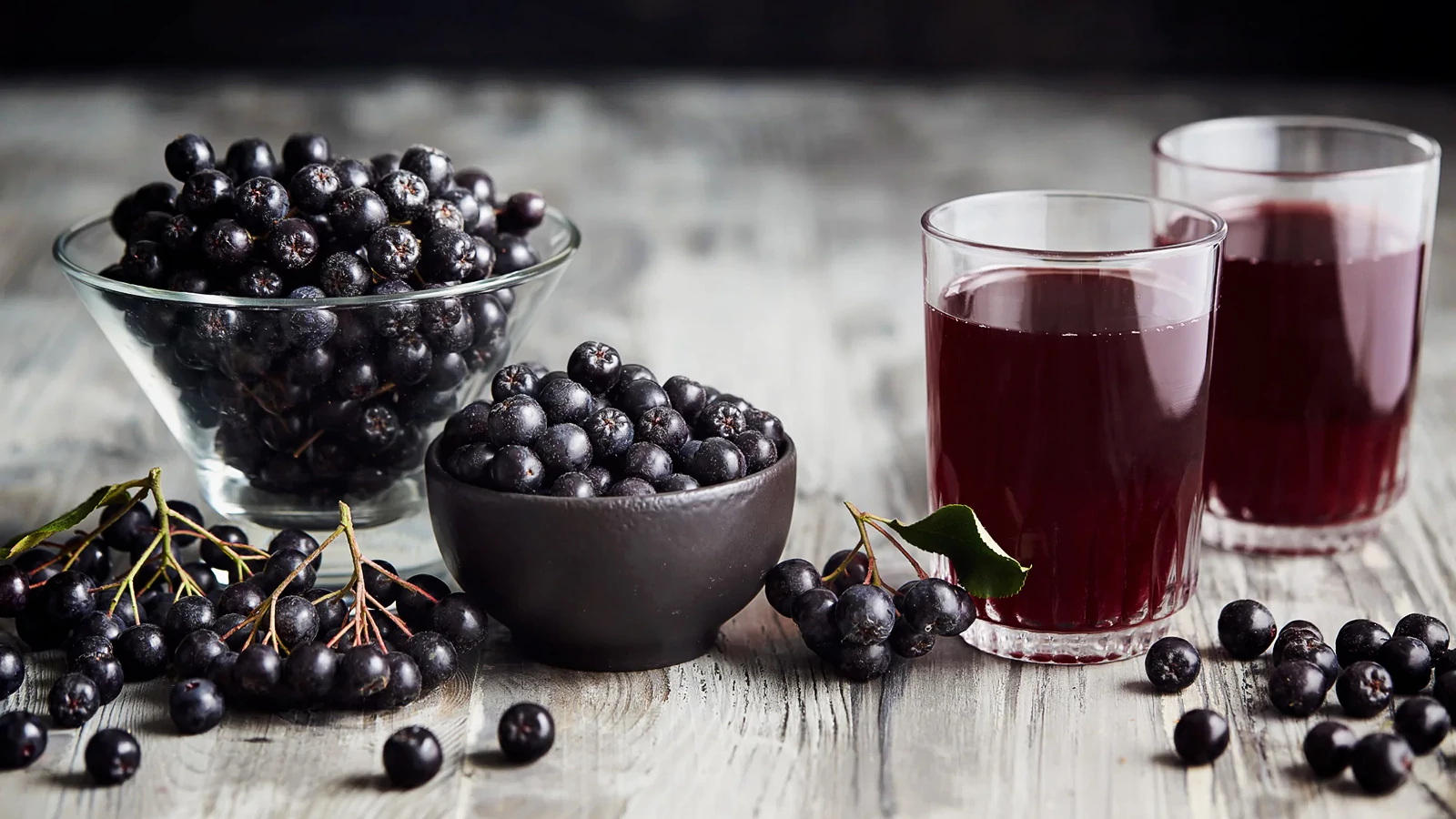
- Não existe uma cura milagrosa ou um substituto para uma má alimentação, existem apenas fontes alimentares de antioxidantes suplementares mais potentes como o amla, a curcuma, o cacau, o hibisco, a astaxantina ou as bagas...
- Nunca tome antioxidantes suplementares que se transformem em pró-oxidantes dentro do corpo, ou que necessitem de vias enzimáticas para serem removidos do corpo, pois podem ultrapassar o mecanismo de defesa natural do corpo.
Antioxidantes
Fitoquímicos (todas as substâncias químicas que as plantas produzem) são essenciais para a vida. As substâncias químicas mais importantes são definidas como vitaminas (vita significa vida) e são essenciais para o nosso organismo. Há 50 milhões de anos que evoluímos comendo alimentos integrais à base de plantas e, na natureza, a comida é um pacote. Para obtermos as calorias sob a forma de macronutrientes, como o açúcar e a gordura, tivemos de consumir também todos os outros fitoquímicos da planta. Com o tempo, o nosso corpo adaptou-se. Alguns desses fitoquímicos tornaram-se tão importantes que, se não os consumirmos, morreremos da mesma forma que se não ingerirmos calorias. Existem apenas duas vitaminas que as plantas não produzem vitamina B12 e vitamina D.
Além das vitaminas, a seguir na linha dos fitoquímicos mais importantes para nós são pigmentos naturais.
Estes pigmentos são criados pelas plantas como um mecanismo defensivo dos danos causados pelo oxigénio livre (antioxidantes) ou como uma defesa contra a radiação UV.
Na história da ciência nutricional moderna, a compreensão dos antioxidantes é um dos temas principais. Em muitos casos, os antioxidantes derivados de alimentos têm recebido muita atenção devido à sua capacidade de procurar radicais livres, proteger contra a radiação, proteger contra danos no ADN, quelatar as toxinas ambientais, inibir a peroxidação lipídica, quelatar iões metálicos de transição, bem como o seu valor nutricional adicional. Na medicina tradicional, são mesmo utilizados como antídoto para o veneno da cobra.
O pigmento natural mais importante para nós é um pigmento laranja de cenouras e outros vegetais conhecido como beta-caroteno. O nosso corpo irá converter o beta-caroteno em vitamina A. Somos na realidade uma das espécies deste planeta que depende de uma dieta baseada em plantas e fitoquímicos e morreremos se não os consumirmos. Se não consumirmos carne, teremos vitamina deficiência de B12 Na era moderna, porque começámos a lavar as mãos e a usar saneamento, mas se não comermos plantas, morreremos de escorbuto. A maioria dos outros animais e todos os omnívoros e carnívoros produzem a sua própria vitamina C. Se olharmos para o registo fóssil, os humanos na idade da pedra, com algum consumo de carne, ainda tinham cerca de 130 gramas de fibra por dia e cerca de 10 vezes mais vitamina C.
Il est également logique de conclure que si nous dépendons des vitamines antioxydantes, deux d'entre elles sont des vitamines pour nous, vitamina C e da vitamina E, dependemos também, em certa medida, de todos os outros antioxidantes.
Podem não ser vitaminas em si, mas mesmo assim, não dispomos de um mecanismo de defesa interno adequado contra os danos radicais livres. Precisamos de as consumir também. Fizemo-lo por toda a nossa evolução. Todos os outros antioxidantes e pigmentos que não são vitaminas continuam a ser antioxidantes e ainda precisamos deles em menor escala.
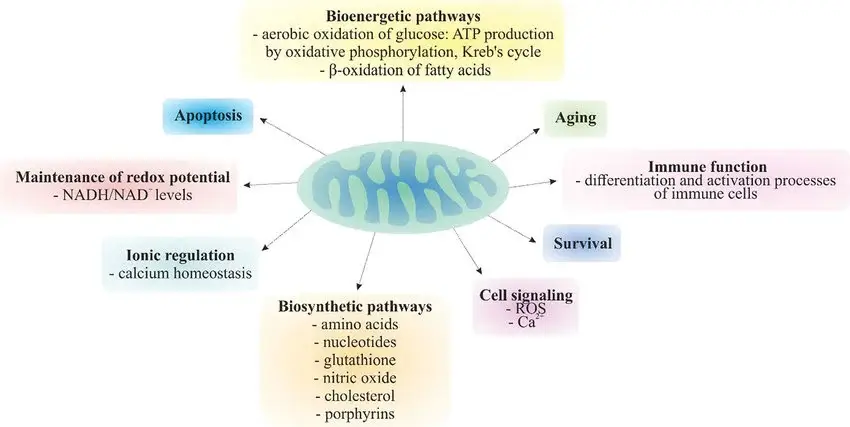
Sin oxígeno no hay vida. Es utilizado por las mitocondrias, a través de la cadena de transporte de electrones, para oxidar algunas moléculas específicas y crear energía en forma de ATP (trifosfato de adenosina). Mitocôndrias era um organismo separado em tempos em que não havia organismos multicelulares neste planeta. Apenas mais uma bactéria.
Stress oxidativo
A forma como os organismos multicelulares se desenvolveram a partir de um organismo unicelular é através da simbiose com as mitocôndrias. Tem um ADN diferente do nosso, que herdámos das nossas mães. Nós damos-lhes nutrientes e as mitocôndrias dão-nos energia. Durante este processo, o oxigénio é reduzido a água, produzindo vários radicais livres derivados do oxigénio ou espécies reactivas de oxigénio (ROS), que desempenham um papel importante em várias doenças.
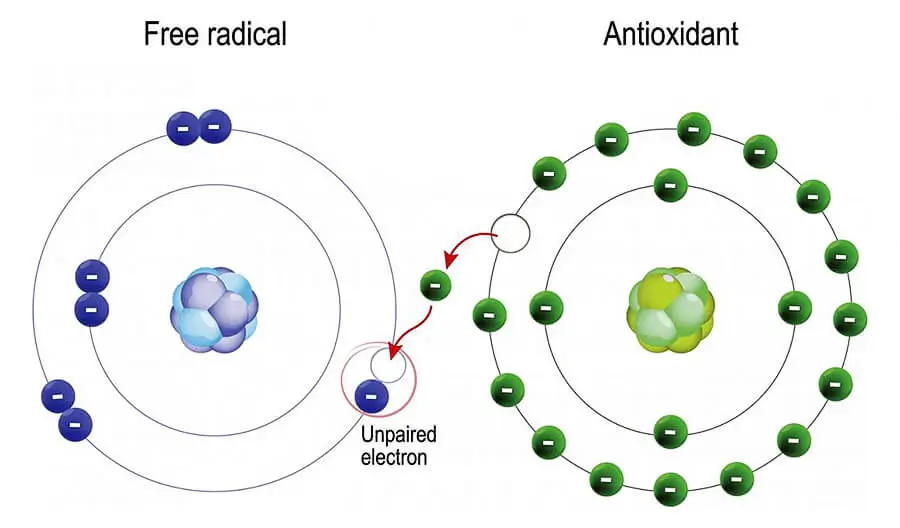
O stress oxidativo acontece quando uma molécula de oxigénio se divide em átomos únicos com electrões não reparados. Estas moléculas agressivas são chamadas radicais livres. São tão agressivas que atacam a molécula estável mais próxima, tentando roubar a sua partícula de electrões. Quando a partícula atacada é deixada sem electrão, tornar-se-á o próprio radical livre. O processo vai criar uma reacção em cadeia. Uma vez iniciado o processo, o resultado final é a ruptura de uma célula viva.
Os radicais livres são criados como parte de um metabolismo normal.
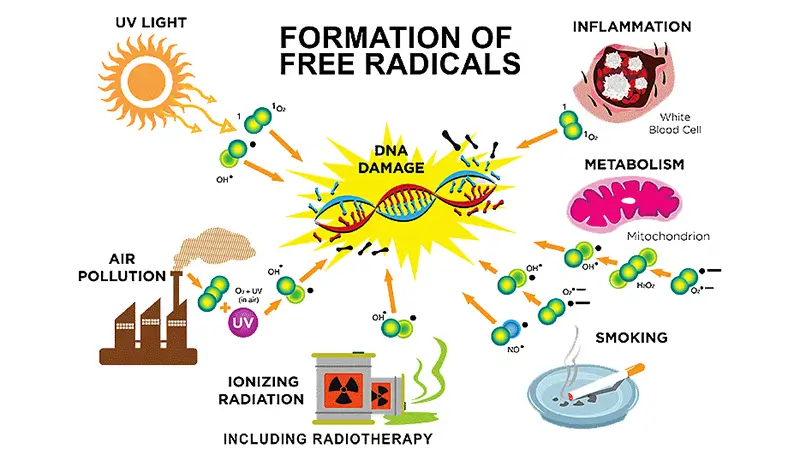
Quatro mecanismos diferentes produzem radicais livres endógenos (o seu corpo cria-os). A produção de radicais livres não pode ser totalmente interrompida. É surpreendentemente divertido para mim que o oxigénio, elemento indispensável à vida, seja também responsável pela nossa morte.
Não é plausível medir directamente o número de radicais livres no corpo. Quanto mais combustível queimarmos, mais depressa nos queimamos.
Normalmente, os radicais livres de oxigénio são neutralizados por antioxidantes naturais, como a vitamina E, ou por enzimas como superóxido dismutase. No entanto, os ERO tornam-se um problema quando ocorre uma diminuição da sua remoção ou a sua produção excessiva, resultando em stress oxidativo.
Este stress, e os danos daí resultantes, têm sido implicados em muitas doenças.
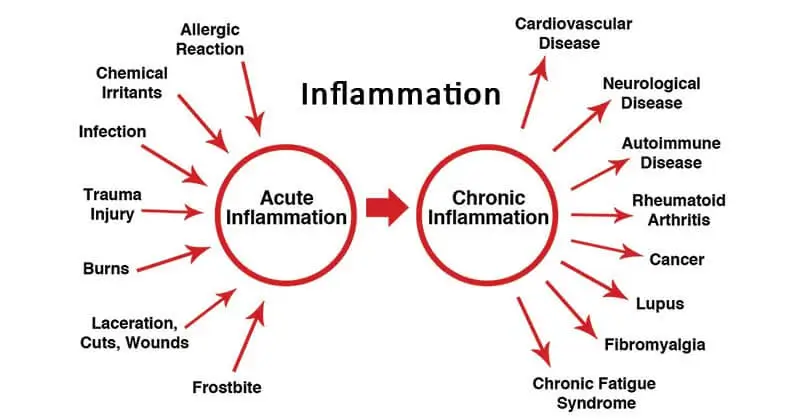
Temos um mecanismo para a nossa própria defesa contra a inflamação e os danos dos radicais livres, mas como temos comido uma enorme quantidade de antioxidantes vegetais na nossa evolução, temos de concluir que ainda dependemos dos antioxidantes vegetais para nos defendermos da oxidação e dos danos do ADN. Se dependemos da ingestão de vitamina C, também dependemos da ingestão de outros antioxidantes. A medicina não impõe o RDA para antioxidantes em geral e não os considera essenciais. Eu e muitos outros médicos apoiados por uma vasta gama de estudos científicos, tendemos a discordar.
É verdade que não morreremos se não ingerirmos grandes quantidades de antioxidantes, isto é, imediatamente. Mas ainda assim morreremos prematuramente.
Teremos uma inflamação e uma oxidação mais elevadas e isso, a longo prazo, levará ao cancro e a uma vasta gama de outras doenças e diminuirá a saúde e o bem-estar em geral, e encurtará a nossa esperança de vida. Os antioxidantes continuam a ser essenciais.
A Vitamina C
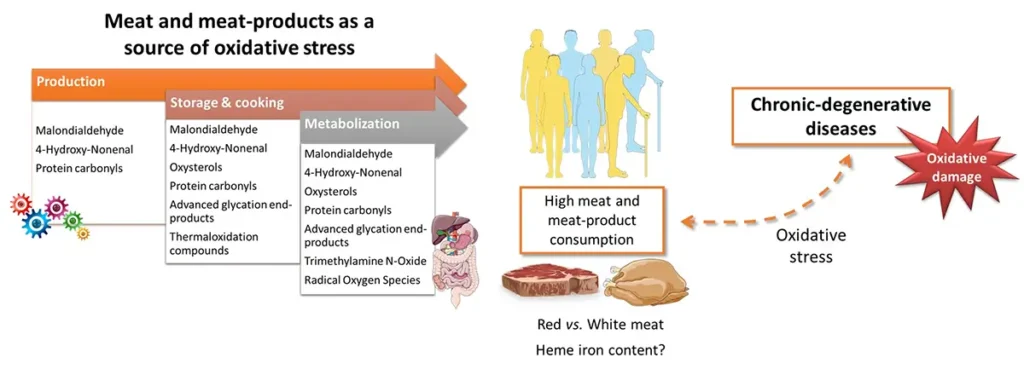
Não existem fitoquímicos e quantidades adequadas de antioxidantes em produtos animais. Em média, os alimentos vegetais contêm mais de 60 vezes mais antioxidantes do que os alimentos de origem animal. Além disso, a carne, por si só, é pró-inflamatória e a cozedura, por si só, é mutagénica e pró-inflamatória, além de todos os toxinas da biomagnificação na cadeia alimentar mais o excesso de ferro heme.
Há uma razão pela qual os carnívoros criam a sua própria vitamina C. Na verdade, a maioria dos animais sintetiza a sua própria vitamina C. Uma cabra típica de 155 libras é capaz de produzir mais de 13 gramas de ácido ascorbato (vitamina C) diariamente. As cabras têm uma média de 155 libras e vivem na natureza e comem verduras durante todo o dia. Quando estão sob stress, as cabras são capazes de aumentar drasticamente a produção de ácido ascórbico (vitamina C) até 13 vezes os níveis normais do que quando não estão sob stress (Stone, 1979). Quando confrontados com stress significativo para a saúde, como mecanismo de defesa biológica, o ácido ascórbico seria criado em grandes quantidades. Isto poderia explicar porque é que os animais selvagens tendem a manter-se vibrantemente saudáveis até sucumbirem à velhice (Marshall et al., 2011). A título de comparação, a dose dietética recomendada de vitamina C para os seres humanos, proposta e utilizada pelos nutricionistas, é de 90 miligramas. E isso porque dependemos de outros tipos de antioxidantes provenientes de frutas e legumes e porque isso fazia parte da nossa dieta normal. Se compararmos a cabra média com o ser humano médio, podemos facilmente ver que estamos muito mais expostos a toxinas e poluição do que no passado.
A palestra é sobre o papel da vitamina C (ácido ascórbico) numa variedade de funções no corpo e sobre o facto de haver investigação nos cuidados de saúde muitas vezes esquecida, negada e posta em dúvida. O Dr. Humphries tem uma perspectiva histórica sobre a vitamina C e a sua importância em várias doenças, mas também descreve o seu papel na saúde em geral.
Longevity Essentials, Jun 25, 2021,
Deveríamos estar a tomar mais antioxidantes hoje do que no período Paleo e não os tomamos de todo. O A dieta americana padrão (SAD) é tão triste que o antioxidante número um nela contido é o café. Se soubermos isto, podemos ver que estamos em sérios problemas. A maior parte das calorias provém da gordura, do açúcar, da farinha refinada, da carne, dos ovos e dos lacticínios e onde estão os antioxidantes? Em lado nenhum. E onde estão a inflamação e o cancro? Em todo o lado.
Os alimentos vegetais têm sido uma parte tão grande da nossa dieta que não tivemos de desenvolver um mecanismo de defesa tão forte contra a oxidação, mas é exactamente isso que nos está a causar um problema grave hoje em dia, quando mudámos completamente a nossa dieta. Além disso, actualmente, estamos expostos a sobrecarga tóxica tanto da alimentação como do ambiente. Por um lado, temos falta de antioxidantes e, por outro, estamos demasiado expostos a mutagénicos e toxinas. Mesmo as pessoas que seguem uma dieta keto Paleo mal orientada continuam a comer mais vegetais e a ingerir mais antioxidantes do que as pessoas que seguem uma dieta americana normal.
Danos no ADN
Os antioxidantes são importantes porque evitam danos no ADN e também influenciam a taxa de envelhecimento. O envelhecimento é apenas oxidação e as pessoas não sabem disto. O elemento que nos dá vida, oxigénio, é também o elemento que nos dá a morte. É um pouco irónico. O oxigénio é uma substância extremamente reactiva. O fogo não pode arder sem ele. Reage a cada molécula que pode tentar combinar com ela ou roubar o seu electrão. Mesmo metais como o ferro não são imunes a ele. Eventualmente, o ferro transformar-se-á em óxido de ferro ou, por outras palavras, em ferrugem. Na respiração celular normal, as reacções metabólicas irão converter a energia bioquímica dos nutrientes em trifosfato de adenosina (ATP) com a utilização de oxigénio. Em 6 minutos de ser privado de oxigénio, o nosso cérebro morre. Mesmo as plantas que libertam oxigénio durante a fotossíntese quando não há Sol, começam a absorver oxigénio do ar e do solo para quebrar os açúcares a utilizar para a energia, tal como os seres humanos. A respiração é uma das principais formas de uma célula libertar energia química para alimentar a actividade celular.
Mas não existe tal coisa como a perfeição na natureza.
Parte desse oxigénio "escapa" como uma molécula livre e reactiva chamada radical livre e depois começa a reagir com todas as outras moléculas à sua volta e que leva a reacções moleculares em cascata que no final levam a danos celulares.
Algumas das células danificadas terminam naturalmente o seu ciclo de vida e morrem. No seu lugar, vêm novas células da divisão.
Quanto maior for o metabolismo, maior será o dano, e maior será a divisão.
Estes danos no ADN são designados por envelhecimento. Como as células se danificam durante a respiração celular regular, quando o ADN se divide para reparar as células danificadas, os telómeros são divididos ao meio. Cada vez que o ADN se multiplica, reduz para metade a extremidade dos cromossomas que protegem o ADN de se desdobrar. A telomere é uma pequena área de sequências nucleotídicas repetidas em cada extremidade de um cromossoma.
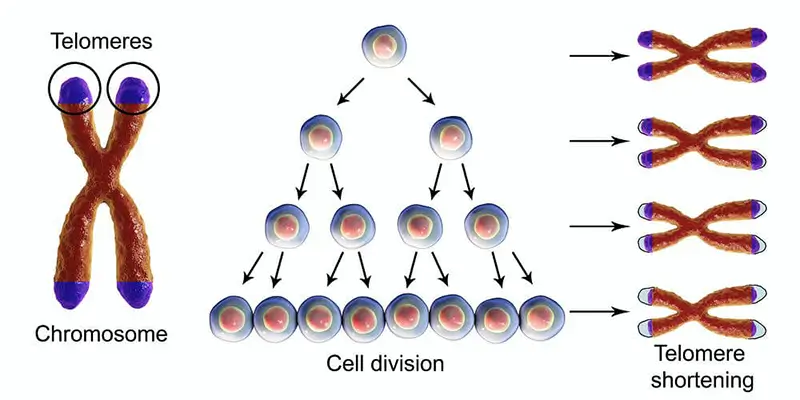
O objectivo do telómero é manter o fim do cromossoma de deterioração ou fusão com outros cromossomas vizinhos. Durante a duplicação de cromossomas, as enzimas que duplicam o ADN podem manter a sua unidade de duplicação no final de um cromossoma. O que acontece é que, em cada duplicação, o fim do cromossoma é encurtado. Depois de demasiadas divisões, os telómeros desaparecem, e não há mais divisões apenas morte. Trata-se de um processo chamado envelhecimento.
Podemos abrandar este processo e aumentar a nossa longevidade abrandando os danos oxidativos através de níveis elevados de antioxidantes na alimentação, e podemos abrandá-lo aumentando a eficiência energética através da redução da nossa taxa metabólica. Além disso, qualquer tipo de dano no ADN encurtará a nossa vida útil, não apenas o oxidativo. Isto inclui radiação, poluição, toxinas e qualquer tipo de dano físico ou químico. Os danos oxidativos não podem ser travados. O problema é que nada na natureza é 100% eficaz. Parte do oxigénio nas nossas células escapa sob a forma de radicais livres e oxida noutro local.
Eventualmente, não haverá mais divisão e repetição do ADN apenas danos e morte. E a culpa é do oxigénio, para além de outras substâncias tóxicas.
Isto afecta todos os organismos vivos, incluindo as plantas. A forma como os planos se defendem contra isto é criando substâncias que têm um ou mais electrões extra para dar ao oxigénio para neutralizar os danos. Estes são conhecidos como antioxidantes. Existe uma gama diferente de antioxidantes que as plantas podem produzir e os tipos mais comuns no reino vegetal já são mencionados como pigmentos vegetais. Estes pigmentos também protegem a planta dos danos causados pela radiação UV, para além da oxidação.
Dois antioxidantes principais são também vitaminas para nós. O primeiro é já mencionado vitamina C que é solúvel em água e neutraliza os radicais livres em soluções de água no corpo. Esta é a principal diferença entre os dois. O segundo é a vitamina E que é solúvel em óleo (óleo e água não se misturam) e vai para as partes que são feitas de gordura onde a vitamina C solúvel em água não pode e que aí neutraliza os radicais livres. Por exemplo, o cérebro é um órgão "rico em gordura" e a deficiência grave de vitamina E manifesta-se como neuropatia e miopatia, já que a vitamina E é essencial para o desenvolvimento e manutenção do sistema nervoso central. A vitamina E poderia impedir a oxidação lipídica em todo o corpo e, sem níveis adequados de ingestão, acumular-se-iam problemas de saúde. O betacaroteno é também um pigmento lipossolúvel.
Metabolismo antioxidante
Quando os antioxidantes libertam o seu electrão, eles próprios se tornam pró-radicais. É importante compreender isto. Não existem, ou digamos desta forma, tipos muito raros de antioxidantes que "apenas" dão electrões e não se transformam em radicais livres. Há alguns que irei discutir em artigos correlacionados. Quando alguma substância tem uma ligação fraca ao seu electrão e algumas substâncias mais reactivas como os radicais livres ou toxinas têm uma força mais forte, ela puxará esse electrão para longe. Mas mesmo aquele antioxidante que se tornou um fraco radical livre quer o seu electrão de volta. A força ou reactividade desse radical livre recentemente formado é muito menos reactiva, mas mesmo assim, quer o seu electrão de volta.
Cada vez que consumimos antioxidantes, estes transformar-se-ão em pró-radicais no corpo.c
A forma como os nossos corpos evoluíram para lidar com isto é ter diferentes enzimas para neutralizar estas novas substâncias. A lógica subjacente é a seguinte: o veneno mais forte é neutralizado, depois o mais fraco e, no final, o mais fraco é removido do corpo ou neutralizado. É uma reacção química em cascata que dura algum tempo até que o corpo elimine as toxinas ou os radicais livres. Se consumirmos quantidades adequadas de antioxidantes, eles neutralizarão os radicais livres mais fortes e, em seguida, os mais fracos, e então, ao longo da linha, os danos serão minimizados. Mas são necessárias as vias enzimáticas no corpo para o fazer.
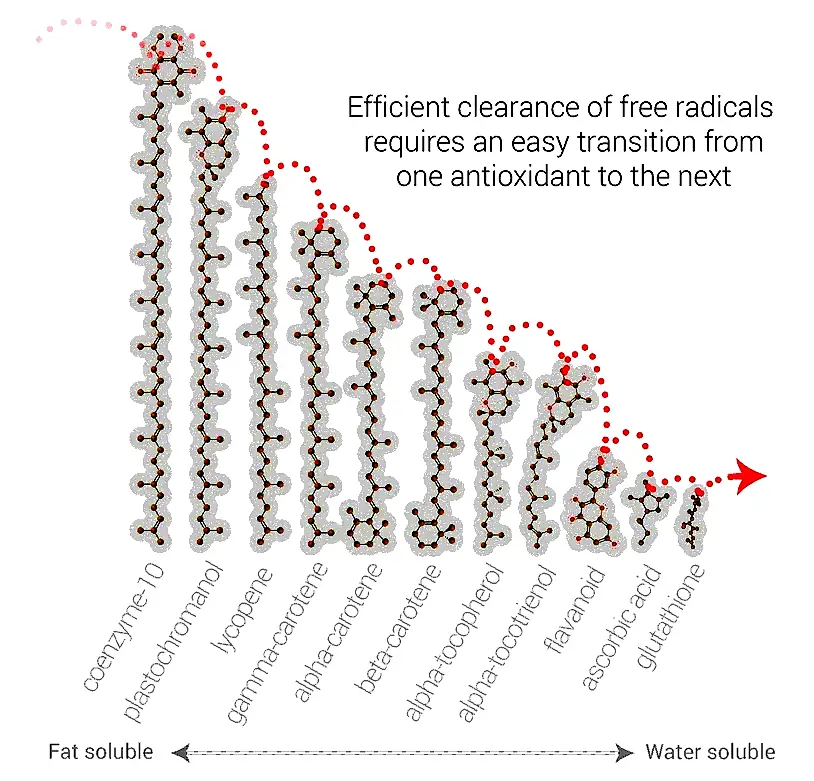
Se tomar apenas vitamina E ou beta-caroteno na forma extraída como suplemento, fará mais estragos do que bem. Esta é a razão pela qual alguns comprimidos de antioxidantes extraídos não funcionam. Pode tomar a quantidade de vitamina E que quiser, mas isso não neutralizará todos os radicais livres porque não existem outras enzimas suficientes para tirar partido desses níveis excessivos e não naturais de vitamina E. A maior parte dessa vitamina E o corpo não conseguirá remover ou utilizar correctamente e isso causará danos por si só. Apenas os alimentos vegetais integrais não processados que estão naturalmente cheios de antioxidantes em investigação experimental mostraram benefícios. Nalguns casos, os antioxidantes suplementares aumentaram o risco de mortalidade. Eram piores do que não fazer nada e as pessoas que os tomam pagam para viver vidas mais curtas. Nesta meta-análise (Bjelakovic et al., 2007), os investigadores incluíram 68 ensaios aleatórios com 232 606 participantes (385 publicações). A conclusão foi que suplementos antioxidantes aumentou significativamente a mortalidade. Beta-caroteno, vitamina A, e vitamina E individualmente ou combinadas, aumentaram significativamente a mortalidade, mas a vitamina C e o selénio não tiveram efeito significativo na mortalidade.
Mas mais uma vez, temos de ser objectivos aqui. Na maioria dos ensaios, utilizaram vitamina E sintética e beta-caroteno. Existe uma diferença molecular entre a vitamina E que ocorre naturalmente e a molécula que as empresas de suplementos criam.
Vitamina E suplementar
A indústria não pode produzir vitamina E com a mesma estrutura molecular em laboratórios, porque seria demasiado cara. São suplementos de comercialização que não são vitamina E como vitamina E.
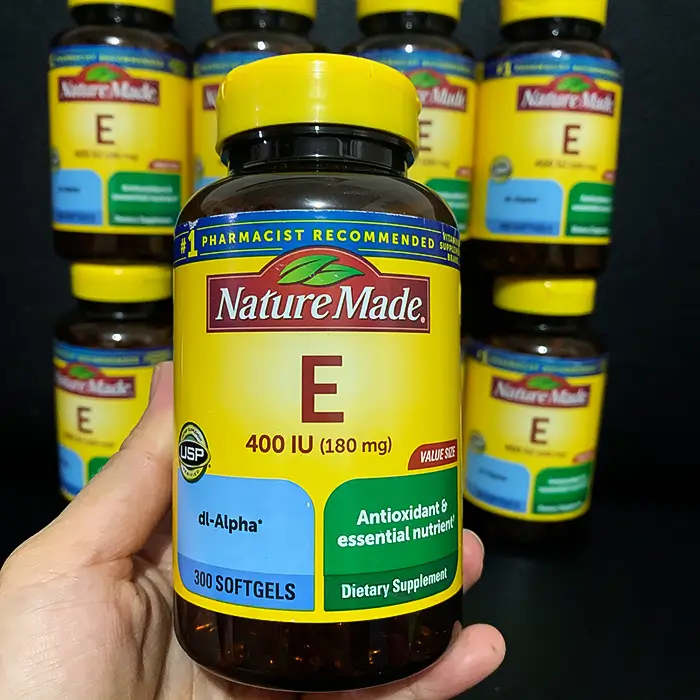
Natural α-tocopherol feito por plantas encontradas em alimentos tem uma configuração RRR na posição 2, 4', e 8' - da molécula α-tocopherol (erradamente referido como d-α-tocopherol). Quimicamente sintetizado all-rac-α-tocopherol (all-racemic-α-tocopherol; incorrectamente etiquetado dl-α-tocopherol) é uma mistura de oito estereoisómeros de α-tocopherol, que surgiu dos três carbonos quirais nas posições 2, 4', e 8': RRR-, RSR-, RRS-, RSS-, SRR-, SSR-, SRS-, e SSS-α-tocopherol. Embora todos os estereoisómeros tenham a mesma actividade antioxidante in vitro, apenas as formas na conformação R na posição 2 (nota 2R) cumprem os requisitos de vitamina E nos seres humanos.
Isto não é novidade. Todos na nutrição e medicina sabem que a vitamina E sintética não tem qualquer actividade antioxidante in vivo. É um falso comprimido vitamínico que é utilizado para fortificar a comida do bebé.
Em termos químicos, a vitamina E natural é d alfa-tocoferol, enquanto a sintética é dl alfa-tocoferil. Quando procurar uma forma natural de vitamina E, seleccione sempre uma que seja "d" (e não "dl"), e a palavra tocoferol termina em "ol" (e não "yl").
Nos alimentos integrais, existem também outros tipos de tocoferóis para além do alfa, que é considerado como uma vitamina. Existem tocoferóis beta e gama e têm os seus benefícios fisiológicos específicos. Quantidades excessivas de vitamina E natural podem, e eu digo aqui que podem não ser tão más como uma quantidade excessiva de vitamina E sintética.
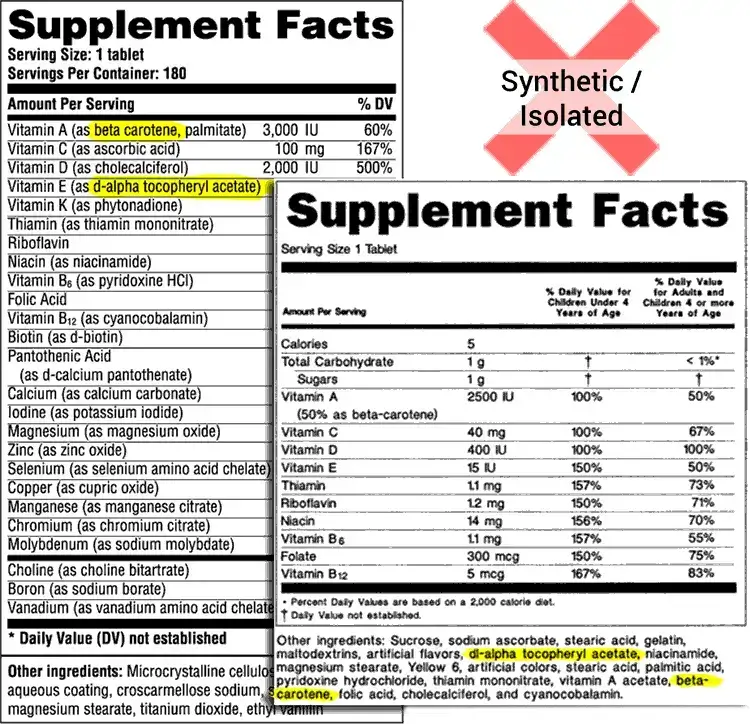
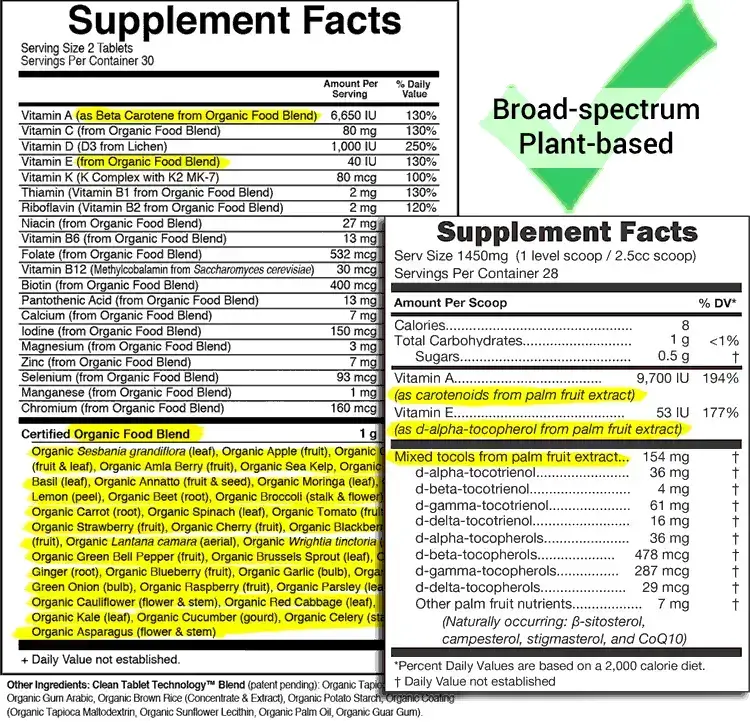
O verdadeiro benefício da vitamina E suplementar existe quando não se tem uma ingestão adequada de vitamina E a partir dos alimentos. Normalmente, as pessoas que têm um a dieta americana normal é deficiente em vitamina E porque a vitamina E encontra-se nos óleos de frutos secos e sementes, numa embalagem de alimentos integrais. Se óleo de extracção esse óleo entrará em contacto com o oxigénio e a vitamina E oxidará ou, por outras palavras, o óleo ficará rançoso. Quando abre uma noz ou uma semente e a come imediatamente, terá todos os benefícios da vitamina E natural. Se quiser tomar um suplemento e não comer alimentos integrais oleosos à base de plantas em quantidade suficiente, procure um suplemento que tenha uma mistura extraída naturalmente de diferentes tipos de tocoferóis, incluindo os tipos alfa, beta, gama e delta.
Algumas sementes têm apenas um tipo, por exemplo, 100 gramas de sementes de linhaça têm 20,0 mg de gama-tocoferol, mas apenas 0,3 mg de alfa-tocoferol. Se não souber este facto, pode pensar que a linhaça não tem vitamina E, uma vez que não está indicada no rótulo. Apenas o tipo alfa é listado e reconhecido como uma vitamina, mas isso não é um quadro completo. A maioria dos fitoquímicos que não são reconhecidos como vitaminas não constam de nenhum rótulo. Os dados científicos actuais sugerem que a suplementação com uma mistura natural de tocoferóis tem benefícios se tiver deficiência de vitamina E e que a suplementação com mais do que isso não terá qualquer benefício adicional e pode criar problemas (Dotan et al., 2009). O mesmo se passa com o beta-caroteno.
Houve uma série de estudos que descobriram uma ligação entre o cancro do pulmão, sobretudo nos fumadores, e as doenças cardiovasculares e o beta-caroteno suplementar. Não se sabe porque é que isto acontece. Até agora, existe apenas especulação porque essa ligação não existe se o betacaroteno for consumido numa embalagem de alimentos integrais. O raciocínio é que pode haver uma série de outros fitoquímicos nos alimentos integrais que actuam em sinergia com o beta-caroteno. As pessoas que fumam não devem tomar suplementos de beta-caroteno ou, aliás, qualquer pessoa o deve fazer. O beta-caroteno deposita-se na gordura do corpo e, com o tempo, pode colorir a pele. Comer demasiadas cenouras pode tornar a sua pele cor-de-laranja. Em casos extremos, as pessoas podem ficar com o nariz ou as palmas das mãos cor-de-laranja.
É uma condição médica conhecida como carotenemia e a doença é geralmente inofensiva. Mas por causa do sex appeal, as pessoas estão a tomar suplementos de beta-caroteno, uma vez que é mais conveniente do que fazer sumos de cenoura todos os dias. Houve uma série de experiências que revelaram que as pessoas que têm uma pequena quantidade ou, digamos, uma fase inicial de carotenemia, têm um rosto mais apelativo para o sexo oposto. É um belo "brilho dourado" de uma pele jovem e saudável. Isto pode ter sido uma resposta subconsciente evolutiva para sinalizar ao sexo oposto o indivíduo saudável com uma dieta saudável. Isso significa mais hipóteses de uma gravidez bem sucedida. Pode ser um indicador de saúde e este incentivo é algo que algumas pessoas estão a utilizar como uma forma de suplemento para dar a si próprias uma aparência saudável. Se quiser tomar beta-caroteno suplementar, tome sempre a forma natural e uma melhor opção será comer cenouras ou, pelo menos, remover a fibra e beber sumo de cenoura. Em média, uma dose saudável de beta-caroteno é de seis a oito miligramas por dia. De acordo com um blogue de saúde da Universidade de Columbia, "para que a carotenemia se instale, pode ser necessário consumir até 20 miligramas por dia (ou três cenouras grandes)". Tal como a vitamina E, nos alimentos integrais naturais existem também carotenos alfa, beta e gama, bem como uma série de outros pigmentos. Por isso, mais uma vez, opte sempre por uma fonte alimentar completa de fitoquímicos, se puder. Os investigadores da Cleveland Clinic efectuaram uma meta-análise, combinando os resultados de oito estudos sobre os efeitos do beta-caroteno em doses que variam entre 15 e 50 miligramas. Depois de investigarem dados de mais de 130.000 pacientes, os investigadores descobriram que a toma de suplementos de beta-caroteno (a maior parte desses suplementos, para ser sincero, era uma forma sintética de caroteno) conduziu a um pequeno aumento da mortalidade cardiovascular (Vivekananthan et al., 2003).
Os antioxidantes solúveis em óleo, como a vitamina E e o beta-caroteno, são importantes para a prevenção de doenças cardíacas, uma vez que se pensa que o LDL oxidado desempenha um papel importante na patogénese da aterosclerose. Estudos observacionais têm associado alfa-tocoferol (vitamina E), beta-caroteno, e outros pigmentos solúveis em óleo e antioxidantes com reduções nos eventos cardiovasculares, mas mais uma vez isto é proveniente de fontes alimentares destes antioxidantes. Quando pesquisada sob a forma de suplemento foi uma história diferente. Como o betacaroteno é uma substância solúvel em óleo, a absorção será aumentada se adicionar algumas nozes ou sementes às suas cenouras mas se quiser uma forma suplementar de betacaroteno então escolha um suplemento de origem natural e não exagere com as quantidades.
Existem antioxidantes suplementares muito melhores que não têm quaisquer efeitos negativos e são dezenas e centenas de vezes mais potentes do que o beta-caroteno ou a vitamina E suplementar. Mas, mais uma vez, a vitamina E é uma vitamina e tem um papel vital no funcionamento do corpo e é necessário ingerir uma quantidade adequada nos alimentos ou, se não tiver o suficiente na sua dieta, tomar um suplemento. Há também um equívoco de que, como o retinol ou a vitamina A de origem animal é a "verdadeira" vitamina A, de alguma forma o nosso corpo não absorverá e utilizará beta-caroteno suficiente na dieta vegana para produzir vitamina A, pelo que os veganos precisam de tomar um suplemento de vitamina A. Isto não está correcto. É apenas mais um mito. Pode ser verdade se formos o que eu gosto de chamar de veganos de plástico que comem batatas fritas e bebem A Coca-Cola, mas se seguir uma dieta vegana integral normal, não é esse o caso. Se quiser suplementar, alguns antioxidantes potentes suplementares não têm quaisquer efeitos secundários negativos.
Porque nós, como espécie, perdemos a nossa capacidade de produzir vitamina C, dependemos de fontes externas. Existem também outros antioxidantes internos que o nosso corpo pode produzir, os mais conhecidos seriam o glutatião. Mas ainda assim, temos de nos lembrar de um facto simples. Nós, como primatas veganos, que durante a maior parte da nossa evolução apenas consumimos folhas e frutos verdes, independentemente do que a medicina alopática esteja a empurrar como narrativa ainda dependente de uma ingestão óptima de antioxidantes dietéticos. Vontade crescente conteúdo antioxidante prolongar a nossa vida? Vai, mas não nos tornará imortais. Irá dar-nos mais protecção contra as doenças modernas de afluência e aumentar a nossa saúde e como efeito secundário poderá dar-nos mais alguns anos no final. Mas o principal objectivo é a prevenção de doenças.
Taxa de envelhecimento
Existem, no entanto, estudos científicos sobre a nossa longevidade. Nos últimos anos, a ciência tem vindo a mudar para a ideia de que o envelhecimento nada mais é do que a própria doença. E há alguma verdade nisso.
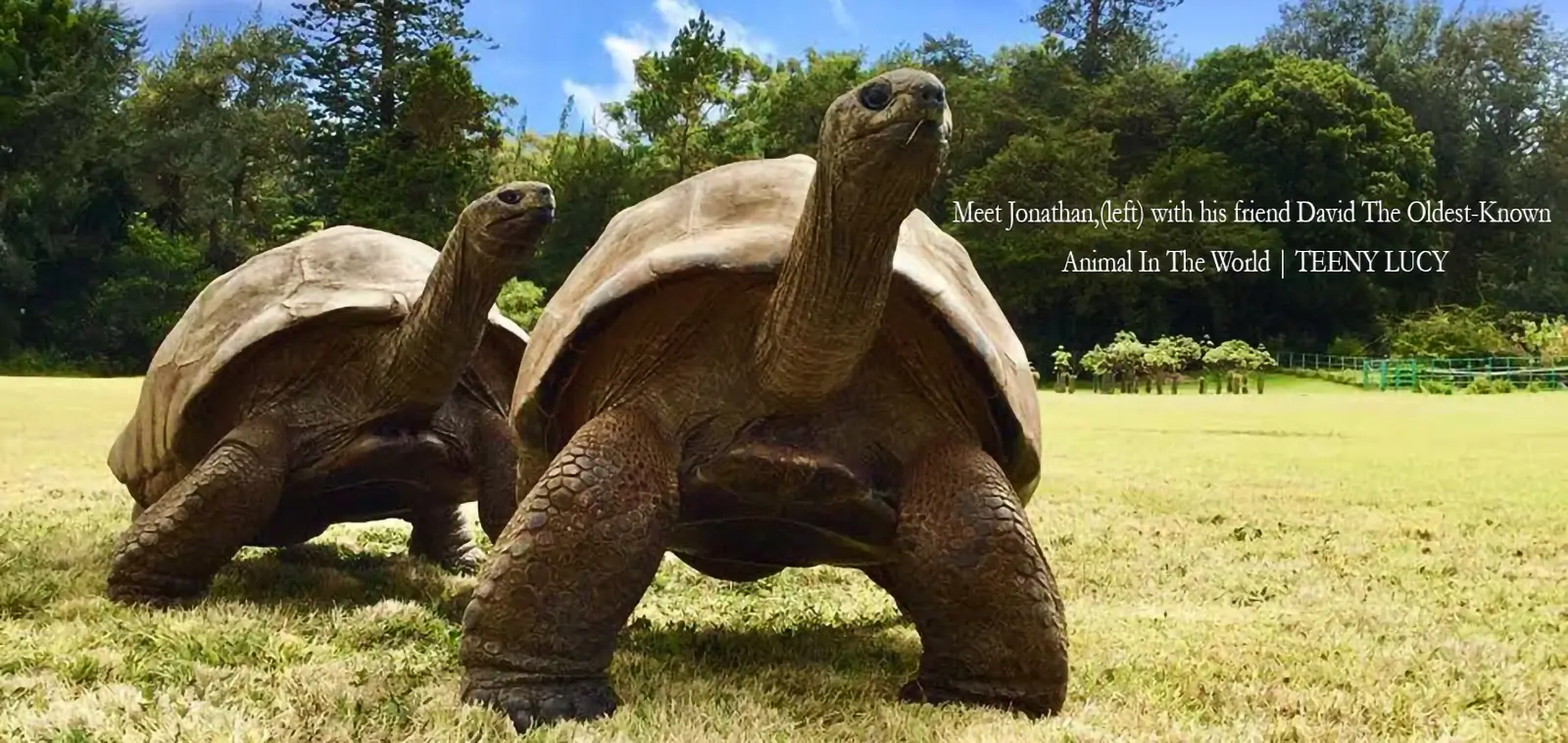
Se olharmos para o reino animal, quanto maior for o metabolismo da espécie ou, por outras palavras, quanto mais energia as células precisarem para usar na unidade de tempo para existir, mais rápido será o dano. Os pequenos animais com taxas metabólicas rápidas terão uma duração de vida mais curta do que, por exemplo, as tartarugas gigantes com taxas metabólicas extremamente lentas, que têm uma duração média de vida de 80 a 150 anos.
Já alguma vez se perguntou quantos batimentos cardíacos um homem comum tem na sua vida? Acontece que cada animal recebe cerca de um bilião de batimentos. Quanto mais elevada for a taxa metabólica, mais oxigénio é utilizado e mais circulação do sangue e intensidade da poção é necessária.
Os animais mais pequenos têm taxas metabólicas mais elevadas, e o seu coração bate mais depressa. Se calcularmos o número de batimentos para diferentes tamanhos de diferentes espécies de animais, o número mágico é de um bilião. Gatos, coelhos, baleias, porcos, elefantes, não importa, é sempre um bilião. Em contraste, o homem e a barba, em geral, são algumas das espécies que obtivemos o melhor negócio. Temos mais do dobro do número natural habitual para outras espécies. Cerca de 2,21 mil milhões para nós.
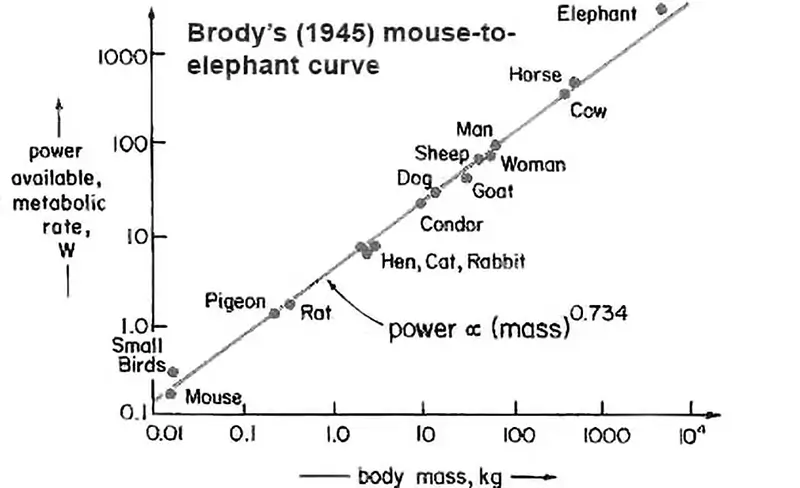
Chama-se a isto a teoria da taxa de vida. A ideia foi inicialmente lançada por Max Rubner em 1908. Ele observou que os animais maiores sobreviviam sempre mais que os mais pequenos e que os animais maiores tinham metabolismos mais lentos. Estes resultados foram ainda mais apoiados quando a lei de Max Kleiber foi descoberta em 1932. Kleiber assumiu que a taxa metabólica basal podia ser correctamente prevista tomando 3/4 da potência do peso corporal.
Esta teoria é coloquialmente conhecida como a curva rato a-elefante. O apoio a esta teoria foi reforçado por estudos que ligam uma taxa metabólica basal mais baixa (evidente com um batimento cardíaco mais baixo) ao aumento da esperança de vida.
Nos últimos anos, os cientistas começaram a investigação no campo da longevidade das aves. Em geral, as aves vivem cerca de duas a três vezes mais tempo do que os mamíferos. É de notar que as células aviárias podem utilizar até 2,5 vezes mais oxigénio por unidade de tempo do que as células de mamíferos. Temos um fenómeno científico não resolvido se combinarmos o facto de as aves terem elevadas taxas metabólicas e utilização de oxigénio com o seu tempo de vida prolongado. As aves desenvolveram certas defesas contra os danos causados pelos radicais livres. As especificidades de tais medidas preventivas continuam a ser um mistério. O estudo da longevidade é um tema quente na ciência moderna de hoje, com uma grande perspectiva para o futuro.
Será significativo, especialmente no sector farmacêutico, como já está a acontecer. O grande dinheiro e o futuro da descoberta de medicamentos estão aí. Actualmente, a indústria farmacêutica realiza estudos sobre uma variedade de produtos químicos, sendo um deles, por exemplo, o composto SRT1720. Universal restrição calórica píldora, todo lo que podamos comer y seguir obteniendo beneficios. SRT1720 imita la restricción dietética y mitiga muchas de las consecuencias negativas de la obesidad y de una dieta rica en grasas sin toxicidad.
No futuro, talvez possamos ter alguma pílula semelhante, mas até lá o que podemos fazer é uma intervenção dietética. Precisamos de optimizar a nossa ingestão de antioxidantes, por mais que a medicina alopática imponha a crença de que os antioxidantes não são importantes. Ao mesmo tempo, enquanto fazem investigação científica sobre longevidade para fins de remissão.
Astaxantina, MegaHidrato, ou apenas Curcumina simples
Se quisermos suplementar o que podemos ter actualmente é algo sob a forma de fortes antioxidantes universais como Astaxantina, MegaHydrate, ou simplesmente Curcumina.
Actualmente, MegaHydrate é o antioxidante dietético mais potente conhecido pela ciência. É um antioxidante sintético artificial que também actua ao mesmo tempo como um agente de viscosidade. Força as moléculas de água a organizarem-se na estrutura geométrica enquanto que na forma líquida cria cristais líquidos a partir da água regular diminuindo a sua viscosidade e tensão superficial. O cristal líquido é o quarto estado da água. Ao mesmo tempo, tem hidrogénio ionizado puro como um fornecedor livre de antioxidante de electrões. As pessoas perguntam-me sempre o que penso sobre ele devido a todas as crenças da nova era do seu inventor e eu não sei. Algumas pesquisas sobre ele são sólidas, mas ainda assim, é necessário fazer mais pesquisas e parece que até agora a ciência por detrás dele é sólida. Isto pode ajudar também as pessoas com doenças cardiovasculares, porque irá baixar a viscosidade do sangue. Isto pode ser uma coisa boa e uma coisa má se o fizermos em demasia e acabarmos num acidente, sangraremos até à morte. Também se exagerar, pode estar em risco de patofisiologia cardíaca. A combinação de hipoxia do tecido e redução da viscosidade do sangue leva a uma diminuição da resistência vascular sistémica. O corpo responde à diminuição da resistência vascular sistémica aumentando a retenção de sódio e água, resultando num aumento do volume do AVC e do débito cardíaco. Além disso, esta substância é 100% sintética e pode perturbar os processos no corpo. É por isso que necessita de mais investigação.
Patrick Flanagan partilha como descobriu a Energia dos Cristais, a Microhidrina e o MegaHidrato. Desde a sua adolescência, a sua investigação levou-o a descobrir os segredos da água de Hunza e como o hidrogénio ionizado e um mineral coloidal com propriedades anómalas podem ser muito benéficos para a regeneração do seu corpo.
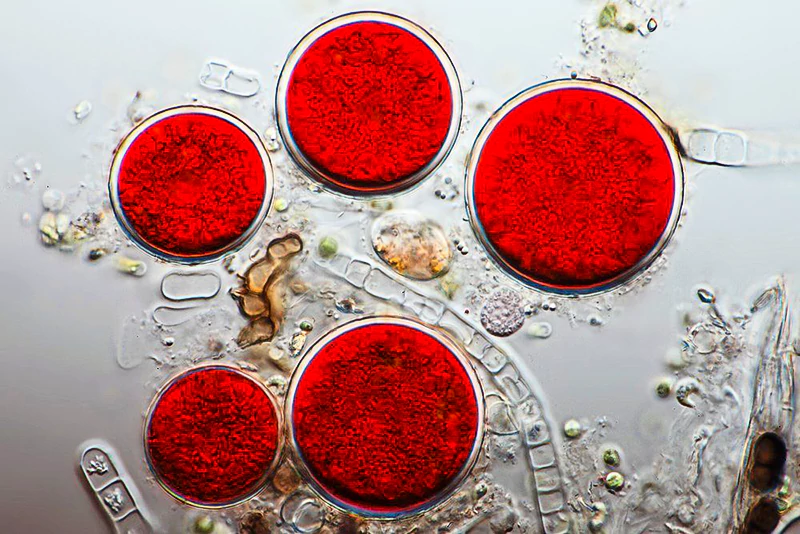
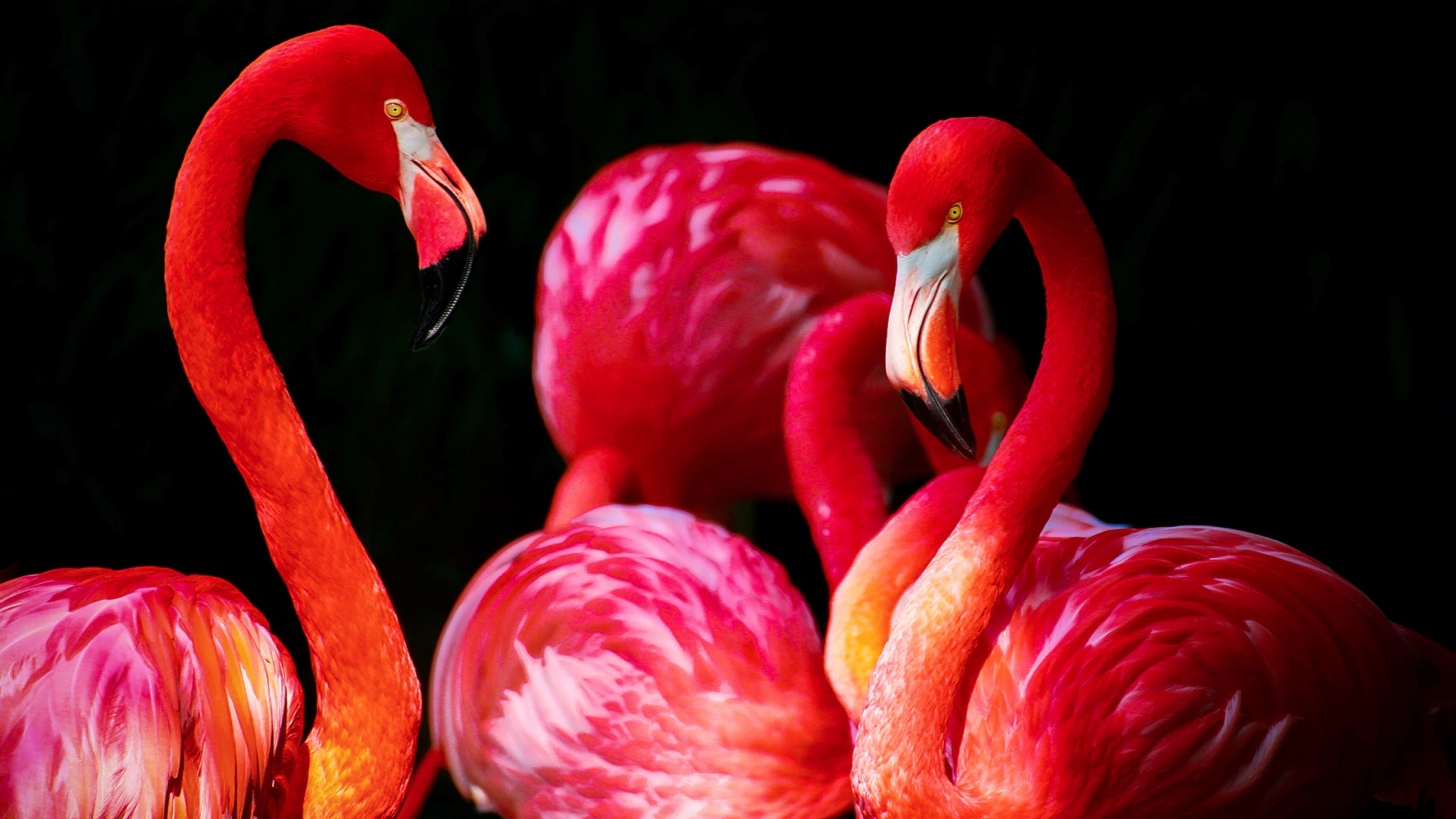
O mais potente antioxidante natural conhecido pela ciência é a Astaxantina. A vantagem desta substância é que não se transforma em pró-radical. Cederá os seus electrões e deixará o corpo. Em segundo lugar, tem a propriedade única de ser um antioxidante solúvel em água e solúvel em gordura. É um antioxidante universal. É produzido por algas microscópicas como defesa contra a radiação UV. A razão pela qual os camarões, o salmão e os flamingos cor-de-rosa são vermelhos é porque consomem astaxantina. É uma substância bem estudada com uma vasta gama de benefícios para a saúde. Eu próprio a tomo e recomendo-a a todos como suplemento adicional, porque não perturba nenhum processo enzimático interno, o que é muito importante, e como antioxidante lipossolúvel permanece nas membranas celulares durante períodos prolongados, oferecendo uma protecção antioxidante duradoura e universal, para além de outros antioxidantes dietéticos.
Para além de ser uma ocorrência normal em células humanas saudáveis, o stress oxidativo é também essencial para o bom funcionamento de alguns processos metabólicos chave, incluindo a sinalização da insulina e a eritropoiese. luz da investigação fisiológica actual, parece mais benéfico preservar o delicado equilíbrio redox da célula do que interferir com a homeostase antioxidante por um fornecimento não fisiológico e exógeno excessivo de antioxidantes, se houver o risco de estes antioxidantes externos poderem perturbar alguns destes processos. É por isso que dependemos predominantemente dos alimentos e das substâncias naturais em primeiro lugar e de moléculas sintéticas muito bem pesquisadas.
O antioxidante dietético mais potente e mais consumido é a curcumina. Se não tiver dinheiro de astaxantinas então basta acrescentar isto à sua dieta. É barato e sujo.
Trata-se de um pigmento amarelo, um polifenol presente na curcuma. A curcuma é conhecida há muito tempo pelos seus benefícios terapêuticos na medicina tradicional. Ajuda no tratamento da síndrome metabólica, da artrite, ansiedadee hiperlipidemia, bem como doenças oxidativas e inflamatórias. Ajuda a controlar a inflamação de qualquer tipo, incluindo a dor muscular provocada pelo exercício, o que melhoraria a recuperação e o desempenho dos atletas. No entanto, mesmo as pessoas sem problemas médicos conhecidos em que a inflamação crónica desempenha um papel importante beneficiarão de uma dose relativamente baixa de a curcumina como suplemento antioxidante para a longevidade e a prevenção da saúde. Devido à biodisponibilidade limitada da curcumina, a toma de curcuma por si só não tem os benefícios para a saúde associados e a curcuma é uma boa fonte de ácido oxálico, pelo que a sobredosagem não é uma opção. Existem várias substâncias capazes de melhorar a biodisponibilidade. Por exemplo, foi demonstrado que a piperina, o principal ingrediente activo da pimenta preta, melhora a biodisponibilidade em 2000% quando associada à curcumina num complexo. Eu tomo todos os dias uma colher de chá com um grama de pimenta moída.
Quantos antioxidantes?
Precisamos de complementar e fazer ou quanto é óptimo se consumirmos uma dieta alimentar completa?
As unidades que medem a capacidade antioxidante de diferentes substâncias são chamadas ORAC. ORAC significa Capacidade de Absorção Radical de Oxigénio.
Em 2007, o USDA publicou a primeira base de dados de Valores ORACque incluía 277 produtos alimentares. Depois, em 2010, foi publicado o estudo, que demorou 8 anos a ser concluído e abrangeu o valor antioxidante de 3149 produtos alimentares (Carlsen et al., 2010).
A partir de hoje, toda a base de dados de valores ORAC do website da USDA foi retirada. Fizeram-no devido a pressões políticas. A indústria começou a preocupar-se devido a um aumento da sensibilização das pessoas. Nem todos os frutos são tornados iguais. O mesmo se aplica aos legumes. A indústria começou a notar que esta base de dados influenciava as decisões dos consumidores e eles não gostaram disso. A política foi invertida.
Actualmente, não existe um diário "oficial" consumo recomendado de unidades ORAC. Muitos médicos nem sequer propõem uma dieta rica em antioxidantes e vários investigadores sugeriram que a ingestão ideal é de apenas 3000-5000 unidades ORAC por dia. Até o próprio USDA recomendou o consumo de apenas 5000 unidades ORAC por dia. A FSA do Reino Unido e a FDA sugerem "5 porções de fruta e vegetais por dia", o que resulta numa pontuação ORAC estimada em 3500. Eu sugeriria que precisamos de, pelo menos, 15000 a mais de 25000 se formos fumadores ou tivermos alguma exposição à poluição. No valor mais baixo. E quanto mais, melhor, se contarmos apenas os alimentos integrais como fonte. Compilei a lista completa directamente do documento de investigação e com algumas fontes adicionais. Pode encontrá-la e descarregá-la aqui (orac-valores).
Mas hoje em medicina alopática é tudo uma anedota e, pior ainda, uma conspiração deliberada. Isto deve-se ao facto de o antioxidante número um na dieta americana padrão ser o café. Aceitar as recomendações do ORAC significa automaticamente a mesma coisa que o Relatório McGovern sugerido. Mudança recomendações dietéticas ou, por outras palavras, pirâmide alimentar. Se precisa de mais antioxidantes, isso significa que terá de consumir mais produtos vegetais integrais, o que significaria consumir menos alimentos processados e carne e lacticínios que não os têm. E isso não é algo que ninguém queira. Não há muito lucro em cenouras e couves. São muito menos satisfatórios do que a pizza e o gelado. Medicina alopática e as grandes farmacêuticas não gostam quando as pessoas tomam curcumina em vez de quimioterapia e, acredite ou não, a curcumina é um dos principais medicamentos de quimioterapia que, em alguns casos, tem efeitos anticancerígenos mais elevados do que os medicamentos patenteados. Este facto é comprovado pela investigação. Até à data, não é falado nem utilizado em nenhum consultório de oncologista.
Conclusão
- Os fitoquímicos (todos os produtos químicos que as plantas produzem) são essenciais para a vida.
- Dependemos de fitoquímicos antioxidantes, dois deles são vitaminas para nós, vitamina C e vitamina E.
- Para além das vitaminas, na linha dos fitoquímicos mais importantes para nós são a seguir os pigmentos naturais. Estes pigmentos são criados pelas plantas como mecanismo de defesa contra os danos provocados pelo oxigénio livre (antioxidantes) ou como defesa contra a radiação UV.
- O stress oxidativo acontece quando uma molécula de oxigénio se divide em átomos únicos com electrões não reparados. Estas moléculas agressivas são chamadas radicais livres. São tão agressivas que atacam a molécula estável mais próxima, tentando roubar a sua partícula de electrões.
- Não existem fitoquímicos e quantidades adequadas de antioxidantes em produtos animais.
- Os antioxidantes são importantes porque evitam danos no ADN e também influenciam a taxa de envelhecimento.
- Nos últimos anos, a ciência tem vindo a mudar para a ideia de que o envelhecimento nada mais é do que a própria doença. Se olharmos para o reino animal, quanto maior for o metabolismo da espécie ou, por outras palavras, quanto mais energia as células precisarem para usar na unidade de tempo para existir, mais rápido será o dano. Chama-se a isto o ritmo da teoria da vida.
- Quando os antioxidantes libertam o seu electrão, eles próprios se tornam pró-radicais. A forma como os nossos corpos evoluíram para lidar com isto é ter diferentes enzimas para neutralizar estas novas substâncias.
- Nunca tomar antioxidantes suplementares que se transformem em pró-oxidantes no interior do corpo
- Nunca tome antioxidantes suplementares que necessitem de vias enzimáticas para serem removidos do corpo, eles podem ultrapassar o mecanismo de defesa natural do corpo, faça a sua pesquisa antes de os tomar
- Nunca tomam suplementos de vitamina E, selénio, beta-caroteno e licopeno- apresentaram um aumento de risco de cancro em forma de suplemento
- Tomar sempre fontes alimentares inteiras de antioxidantes antes das formas suplementares extraídas, devido às sinergias fitoquímicas
- Não há nenhuma cura milagrosa ou substituto para uma dieta ruim, existem apenas fontes alimentares antioxidantes suplementares mais potentes, como amla, açafrão, cacau, hibisco, astaxantina ou frutas vermelhas…
- Actualmente, MegaHydrate é o antioxidante dietético mais potente conhecido pela ciência.
- O mais potente antioxidante natural conhecido pela ciência é a Astaxantina.
- O antioxidante dietético mais potente e mais consumido é a curcumina.
- As unidades que medem a capacidade antioxidante de diferentes substâncias são chamadas ORAC. ORAC significa Capacidade de Absorção Radical de Oxigénio.
- Hoje em dia não há consumo "oficial" diário recomendado de unidades ORAC.
Perguntas Frequentes
Referências:
Referências:
Passagens seleccionadas de um livro: Pokimica, Milos. Go Vegan? Revisão da Ciência-Parte 3. Kindle ed., Amazon, 2020.
- Bjelakovic, G., Nikolova, D., Gluud, L. L., Simonetti, R. G., & Gluud, C. (2007). Mortality in randomized trials of antioxidant supplements for primary and secondary prevention: systematic review and meta-analysis (Mortalidade em ensaios aleatórios de suplementos antioxidantes para prevenção primária e secundária: revisão sistemática e meta-análise). JAMA, 297(8), 842-857. https://doi.org/10.1001/jama.297.8.842
- Dotan, Y., Lichtenberg, D., & Pinchuk, I. (2009). Nenhuma evidência apoia a suplementação indiscriminada de vitamina E. BioFactors (Oxford, Inglaterra), 35(6), 469-473. https://doi.org/10.1002/biof.61
- Vivekananthan, D. P., Penn, M. S., Sapp, S. K., Hsu, A., & Topol, E. J. (2003). Utilização de vitaminas antioxidantes para a prevenção de doenças cardiovasculares: meta-análise de ensaios aleatórios. Lancet (Londres, Inglaterra), 361(9374), 2017-2023. https://doi.org/10.1016/S0140-6736(03)13637-9
- Carlsen, M. H., Halvorsen, B. L., Holte, K., Bøhn, S. K., Dragland, S., Sampson, L., Willey, C., Senoo, H., Umezono, Y., Sanada, C., Barikmo, I., Berhe, N., Willett, W. C., Phillips, K. M., Jacobs, D. R., Jr, & Blomhoff, R. (2010). O conteúdo antioxidante total de mais de 3100 alimentos, bebidas, especiariaservas e suplementos utilizados em todo o mundo. Revista de nutrição, 9, 3. https://doi.org/10.1186/1475-2891-9-3
- Benzie, I. F., & Wachtel-Galor, S. (2010). Dietas vegetarianas e saúde pública: biomarcadores e ligações redox. Antioxidantes e sinalização redox, 13(10), 1575-1591. https://doi.org/10.1089/ars.2009.3024
- Macho-González, A., Garcimartín, A., López-Oliva, M. E., Bastida, S., Benedí, J., Ros, G., Nieto, G., & Sánchez-Muniz, F. J. (2020). A carne e os produtos à base de carne podem induzir o estresse oxidativo? Antioxidantes, 9(7), 638. https://doi.org/10.3390/antiox9070638
- Dietrich, M., Jacques, P., Pencina, M., Lanier, K., Keyes, M., Kaur, G., Wolf, P., & Vasan, R. (2009). Uso de suplemento de vitamina E e a incidência de doenças cardiovasculares e mortalidade por todas as causas no Framingham Heart Study: Does the Underlying Health Status Play a Role? Aterosclerose, 205(2), 549. https://doi.org/10.1016/j.atherosclerosis.2008.12.019
- Bjelakovic, G., Nikolova, D., & Gluud, C. (2013). Análises de Meta-Regressão, Meta-Análises e Análises Sequenciais de Ensaios dos Efeitos da Suplementação com Beta-Caroteno, Vitamina A e Vitamina E Isoladamente ou em Diferentes Combinações na Mortalidade por Todas as Causas: Temos evidências de ausência de danos? PLoS ONE, 8(9). https://doi.org/10.1371/journal.pone.0074558
- Instituto de Medicina (EUA) Painel sobre Antioxidantes Dietéticos e Compostos Relacionados. (2000). Doses dietéticas de referência de vitamina C, vitamina E, selénio e carotenóides. National Academies Press (EUA). [PubMed]
- Conhecimentos actuais em nutrição, 10ª edição. (2012, 19 de junho). Wiley.com. https://www.wiley.com/en-us/Present+Knowledge+in+Nutrition,+10th+Edition-p-9781119946045
- Jiang Q. (2014). Formas naturais de vitamina E: metabolismo, actividades antioxidantes e anti-inflamatórias e o seu papel na prevenção e terapia de doenças. Biologia e medicina dos radicais livres, 72, 76-90. https://doi.org/10.1016/j.freeradbiomed.2014.03.035
- Stone, I. (1979). Homo sapiens ascorbicus, um mutante humano robusto corrigido bioquimicamente. Hipóteses médicas, 5(6), 711-721. https://doi.org/10.1016/0306-9877(79)90093-8
- Marshall, B., & Levy, S. B. (2011). Animais de alimentação e antimicrobianos: Impactos na saúde humana. Revisões de Microbiologia Clínica, 24(4), 718-733. https://doi.org/10.1128/cmr.00002-11
Publicações Relacionadas

Você tem alguma dúvida sobre saúde e nutrição?
Gostaria muito de ouvir a sua opinião e responder-lhes no meu próximo post. Agradeço o vosso contributo e a vossa opinião e aguardo com expetativa a vossa resposta em breve. Convido-vos também a siga-nos no Facebook, Instagram e Pinterest para mais conteúdos sobre dieta, nutrição e saúde. Pode deixar um comentário e ligar-se a outros entusiastas da saúde, partilhar as suas dicas e experiências e obter apoio e encorajamento da nossa equipa e comunidade.
Espero que este post tenha sido informativo e agradável para si e que esteja preparado para aplicar os conhecimentos que aprendeu. Se achou este post útil, por favor partilhá-lo com os seus amigos e familiares que também possam beneficiar com isso. Nunca se sabe quem poderá precisar de alguma orientação e apoio no seu percurso de saúde.
– Você Também Pode Gostar –

EMF radiação (radiação eletromagnética) de exposição - Não 5G representar riscos para a saúde?
Exposição a Pesticidas em Crianças: Testes de Exposição na Vida Real
Feijão Verde: Benefícios Nutricionais e Para a Saúde
Deficiência de B12 e Declínio Cognitivo: Estratégias de Optimização da Homocisteína
Benefícios da Teobromina: Impulsionar o Cérebro Sem Ansiedade

A Coca-Cola Company - Revisão Histórica
Poder Anticancerígeno das Frutas e Legumes: Evidências Clínicas e in Vivo
Benefícios da Spirulina: Superalimento Rico em Ficocianina
Aprender Sobre Nutrição

Milos Pokimica é médico de medicina natural, nutricionista clínico, escritor de saúde e nutrição médica, e conselheiro em ciências nutricionais. Autor da série de livros Go Vegan? Revisão de Ciênciaopera também o website de saúde natural GoVeganWay.com
Medical Disclaimer
GoVeganWay.com traz comentários dos mais recentes a nutrição e a saúde relacionados com a pesquisa. As informações fornecidas representa a opinião pessoal do autor e não pretende nem implícita para ser um substituto para aconselhamento médico profissional, diagnóstico ou tratamento. As informações fornecidas são apenas para fins informativos e não se destina a servir como um substituto para a consulta, o diagnóstico e/ou tratamento médico de um médico qualificado ou prestador de cuidados de saúde.NUNCA DESCONSIDERE o CONSELHO MÉDICO PROFISSIONAL OU adiar a BUSCA de TRATAMENTO MÉDICO por causa DE ALGO QUE TENHA LIDO OU ACESSADO por MEIO de GoVeganWay.com
NUNCA APLIQUE QUAISQUER MUDANÇAS de estilo de VIDA OU QUALQUER MUDANÇA COMO UMA CONSEQUÊNCIA DE ALGO QUE TENHA LIDO NO GoVeganWay.com ANTES de CONSULTORIA de LICENÇA MÉDICA.
No caso de uma emergência médica, ligue para o médico ou para o 911 imediatamente. GoVeganWay.com não recomenda ou endossa qualquer específicos, grupos, organizações, exames, médicos, produtos, procedimentos, opiniões ou outras informações que podem ser mencionadas dentro.
Escolhas do Editor -
Câncer Editor De Picaretas Fitoquímicos
Poder Anticancerígeno das Frutas e Legumes: Evidências Clínicas e in Vivo
Alguns extractos vegetais rivalizam com os principais medicamentos de quimioterapia e, ao mesmo tempo, visam vários tipos diferentes de células cancerígenas.
Antioxidantes Editor De Picaretas ORAC
Óleos Essenciais Como Suplementos Antioxidantes: Regras e Estratégias
Os óleos essenciais de qualidade alimentar podem ser uma estratégia conveniente e amiga do consumidor para optimizar o valor antioxidante e a pontuação ORAC da nossa dieta.
Antioxidantes Editor De Picaretas ORAC
Dieta Rica em Antioxidantes: Regras e Estratégias Gerais
Existem estratégias fáceis e económicas para optimizar o valor antioxidante da nossa dieta.
Antioxidantes Editor De Picaretas ORAC
Compreender os Valores ORAC: Níveis de Antioxidantes nos Alimentos
Quando a sua principal fonte de antioxidantes é o café, sabe que tem um problema grave.
Antioxidantes Editor De Picaretas ORAC
Astaxantina Benefícios: Antioxidante Natural Mais Poderoso do Mundo
A astaxantina é o mais poderoso e natural antioxidante universal (tanto o petróleo e a água-solúvel) desconhecido para a ciência. Ele se acumula nos tecidos e Ele nunca pode transformar-se em um pró-oxidante.
Antioxidantes Editor De Picaretas ORAC Fitoquímicos
Antioxidantes: Compreender os Princípios Básicos
Los productos de origen animal no contienen fitoquímicos ni antioxidantes. Por término medio, los alimentos vegetales contienen más de 60 veces más antioxidantes que los de origen animal.
Editor De Picaretas A Dieta Vegetariana
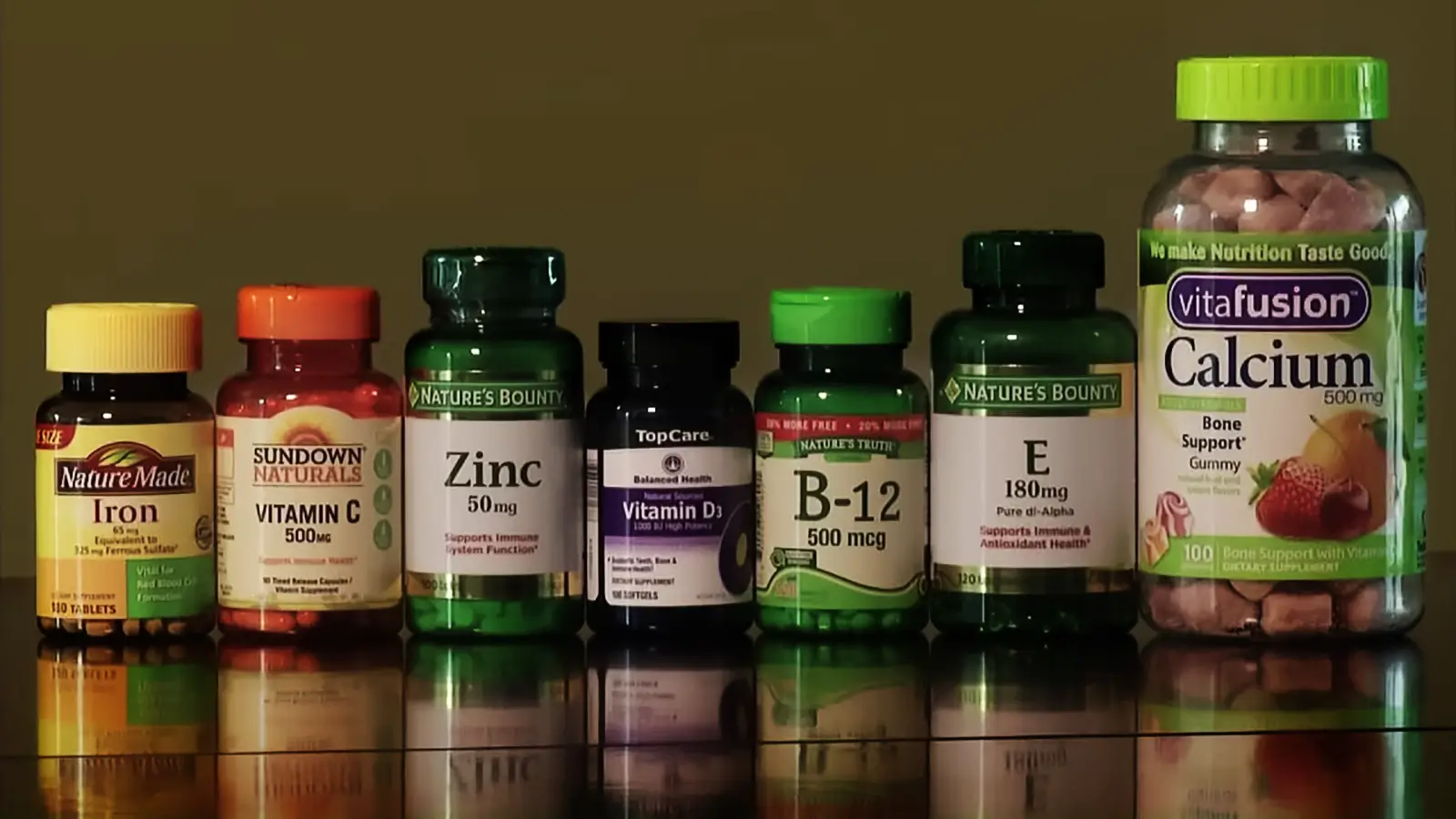
Deficiências de Nutrientes na Dieta Vegana: Estratégias de Prevenção
Existem nove deficiências comuns de nutrientes na escala populacional que afectam as pessoas que se alimentam de uma dieta à base de plantas. Se não forem corrigidas a tempo, algumas deficiências têm consequências terríveis e não tratáveis.
Editor De Picaretas Alimentação Ideal
Deficiência de Micronutrientes na Dieta Americana Padrão: Estratégias de Otimização
O perfil nutricional da nossa dieta moderna à base de carne, açúcar e alimentos processados é completamente incongruente com a nossa evolução, resultando numa grave deficiência de micronutrientes.
Editor De Picaretas Fitoquímicos
Fitoquímicos: Conceitos Básicos
Cada fitoquímico que existe tem uma acção biológica no corpo humano. Cada um de milhões de diferentes fitoquímicos.
Editor De Picaretas Leite Alimentação Ideal
Leite e Lacticínios: Correlações de Risco Para a Saúde
As associações conhecidas com o consumo de leite e lacticínios são infertilidade, cancro dos ovários e da mama, leucemia, diabetes tipo 1, autismo, arteriosclerose, catarata, artrite reumatóide, esclerose múltipla, hiperactividade, congestão, espinhas, e muito mais...As associações conhecidas com o consumo de leite e lacticínios são infertilidade, cancro dos ovários e da mama, leucemia, diabetes tipo 1, autismo, arteriosclerose, catarata, artrite reumatóide, esclerose múltipla, hiperactividade, congestão, espinhas, e muito mais...
Câncer Editor De Picaretas Proteína
Proteína Completa: Sinalização do IGF-1 na Formação do Cancro
Quando você comer proteína animal que tem quatro vezes a chance de desenvolver todos os tipos de câncer. Quando você fuma tem quatro vezes a chance de desenvolver câncer de pulmão.
Câncer Editor De Picaretas Proteína
A Anatomia do Câncer de risco para a Saúde correlações
Cerca de 2% dos casos de câncer estão por medicamento considerado puramente causada por fatores genéticos. O mesmo intervalo de dentro do reino animal. Você ainda não foi informado de toda a verdade.
Milos Pokimica é escritor especializado em saúde e nutrição e consultor em ciências nutricionais. Autor da série de livros Go Vegan? Revisão de Ciênciaopera também o website de saúde natural GoVeganWay.com
Artigos Mais Recentes –
Restrição De Calorias Longevidade
Como Fazer Jejum: Alimentos em Jejum que Não Quebram a Autofagia
Autofagia. Já alguma vez se interrogou sobre o que acontece às células do seu corpo quando morrem ou se danificam? Será que se acumulam e criam problemas ou são eliminadas de alguma forma? A resposta é que o seu corpo...
Saúde Dentária Prevenção
Dentes Sensíveis a Doces e Dor: Solução Rápida e Duradoura
Uma solução rápida e fácil para o alívio da dor é o óleo essencial de cravinho, um poderoso antioxidante e analgésico que pode ajudar com doenças das gengivas e dores de dentes.
Feijão
Feijão Verde: Benefícios Nutricionais e Para a Saúde
O feijão verde tem poucas calorias e é rico em compostos naturais que podem ajudá-lo a controlar o açúcar no sangue, a reduzir o colesterol e a combater os radicais livres.
Dieta de alimentos crus A Dieta Vegetariana
Pode-se Comer Cogumelos Crus: Riscos Para a Saúde, Nutrição e Segurança
Os cogumelos têm toxinas sensíveis ao calor, como a hidrazina ou a agaritina, e paredes celulares feitas de quitina que não podem ser bem digeridas pelos seres humanos.
A Dieta Vegetariana
Os Peixes São Animais? Uma Perspetiva Cultural
Em algumas culturas, a carne de peixe não é considerada carne e o peixe é permitido mesmo durante o jejum.
Saúde Dentária Prevenção
Elixir Bucal Natural Caseiro: Comprovado, Mais Forte e Menos Tóxico
O elixir bucal natural caseiro é mais forte do que a clorexidina, menos tóxico e, se ingerido, pode provocar algumas náuseas, mas também tem um elevado valor ORAC.
Saúde Dentária Prevenção
Como Parar a Cárie Dentária: Sintomas, Causas e Prevenção
Consumo de açúcar é a principal causa de cáries e a cárie dentária, combinado com deficiência de minerais, especialmente o magnésio, o zinco, o cobre e elementos-traço.
Antioxidantes Superalimentos
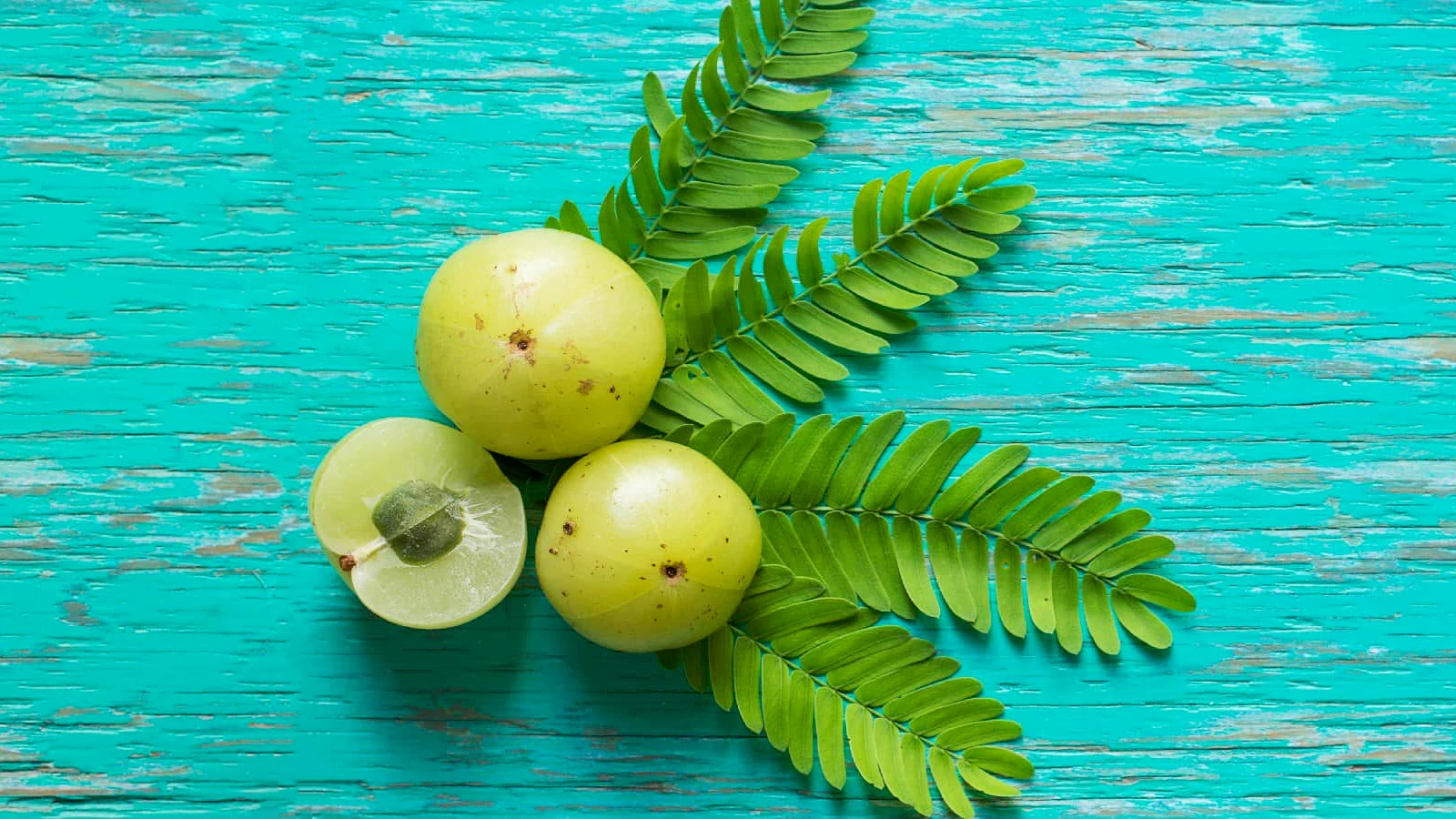
Amla: Benefícios Comprovados, Nutrição e Significado Clínico
O amla é um dos antioxidantes mais poderosos do mundo, com uma pontuação ORAC de 261.530. É uma fonte rica de fitoquímicos que têm vários benefícios para a saúde.
Superior De Saúde De Notícias — ScienceDaily
- New drug reverses severe fatty liver disease by repairing the guton Outubro 17, 2026
Scientists have discovered that a potential new drug can reverse severe fatty liver disease in animal models by restoring gut health and blocking harmful substances from reaching the liver. The breakthrough could pave the way for new treatments for liver disease and potentially other serious conditions, including cardiovascular disease.
- Brain cells meant to protect us may be fueling cognitive declineon Outubro 17, 2026
Scientists have uncovered a surprising cause of age-related cognitive decline involving brain cells previously thought to be entirely beneficial. As these cells become dysfunctional, they can produce abnormal amounts of myelin, disrupting nerve fibers and potentially contributing to worsening memory and thinking skills.
- Scientists discover how deep sleep builds muscle, burns fat, and boosts the brainon Outubro 17, 2026
Scientists have discovered a surprising two-way relationship between sleep and growth hormone, revealing how the brain carefully balances physical recovery with wakefulness. The findings could help explain why poor sleep harms metabolism and brain health, potentially opening the door to new treatments for sleep and neurological disorders.
- Stanford’s new microscope reveals living cells like never beforeon Outubro 17, 2026
Stanford scientists have developed a revolutionary microscope that reveals the hidden inner workings of living cells in real time, without the fluorescent labels that can interfere with observations. The breakthrough could provide new insights into cancer, infectious diseases, and how drugs interact with cells.
- USC scientists discover how to create a never-ending supply of cancer-fighting cellson Outubro 16, 2026
USC scientists have discovered a way to create a potentially renewable supply of genetically engineered immune cells that can attack cancer and strengthen the body’s natural defenses. By growing and modifying immature immune cells rather than mature ones, researchers developed a system that can continuously produce tumor-fighting cells inside the body.
- Yale scientists discover how stress changes the brain to make memories strongeron Outubro 16, 2026
Yale scientists have uncovered how the stress hormone cortisol helps the brain turn emotional experiences into stronger, longer-lasting memories. The discovery reveals that stress can reshape communication between brain networks involved in emotion and memory, potentially explaining why certain moments are so difficult to forget.
- A protein that fuels cancer could also be the key to fighting iton Outubro 16, 2026
Scientists have discovered how to turn a protein that normally fuels cancer growth into a weapon against it. By activating PPARD in immune cells, researchers made them better at burning fat and attacking tumors, slowing or stopping cancer growth in laboratory experiments. The approach showed promise against colorectal, breast, and ovarian cancers, as well as melanoma.
PubMed, #vegan-dieta –
- Common questions and misconceptions about diets: what does the scientific evidence really show?on Outubro 15, 2026
The study of diet and nutrition is often filled with numerous myths and misconceptions. A Google Scholar search of “diets health” yields over 4 million results. This review examines frequently asked questions about diets and dietary habits. These questions include the following: 1) Is a caloric surplus necessary for building skeletal muscle? 2) Is it possible to lose body mass or fat mass without caloric restriction? 3) Is intermittent fasting better than chronic caloric restriction for […]
- Toward consensus on complementary feeding recommendations: findings from a national evidence-informed modified Delphi study in Türkiyeon Outubro 12, 2026
CONCLUSIONS: Integration of quantitative Delphi findings with qualitative thematic analysis revealed that non-consensus primarily stemmed from the practical nuances of clinical execution and contextual adaptation, rather than a fundamental skepticism toward the underlying scientific data. These findings provide an evidence-informed foundation for developing context-sensitive CF recommendations for clinical practice.
- Characterization of nutritional intake in vegan pregnant women and its association on birth weighton Outubro 8, 2026
CONCLUSIONS: Vegan women had a higher rate of SGA than non-vegan women, and this increased risk may be partly related to differences in maternal protein intake and composition. In addition, vegan women had lower dietary intakes of calcium, vitamin B12, vitamin D, DHA, and choline, highlighting these nutrients as important considerations in the nutritional assessment and counseling of pregnant women adhering to a strictly vegan diet.
- Changes in ectopic lipids, insulin sensitivity, and beta cell function after a low-fat vegan diet in adults with type 2 diabetes: a 16-week single-arm clinical trialon Outubro 8, 2026
CONCLUSIONS: On an ad libitum low-fat plant-based (vegan) dietary intervention, the participants with type 2 diabetes experienced reductions in ectopic fat, particularly visceral and hepatocellular fat, improvements in insulin sensitivity, reductions in AGEs, and improvements in beta-cell function.
Publicações Aleatórias -
Diabetes Editor De Picaretas
A Diabetes provoca e carboidratos refinados - vegan argumento
As pessoas acreditam que os carboidratos refinados estão associadas com picos de insulina e o diabetes provoca. Eles estão certos. No entanto, eles também estão errados.
Câncer Água Potável Toxicidade
A água da torneira toxicidade - avaliação de Risco
Se vivemos numa cidade onde temos a certeza de que a água da torneira é pura, isso ainda não significa que a água seja “pura”.
Editor De Picaretas Prevenção Toxicidade
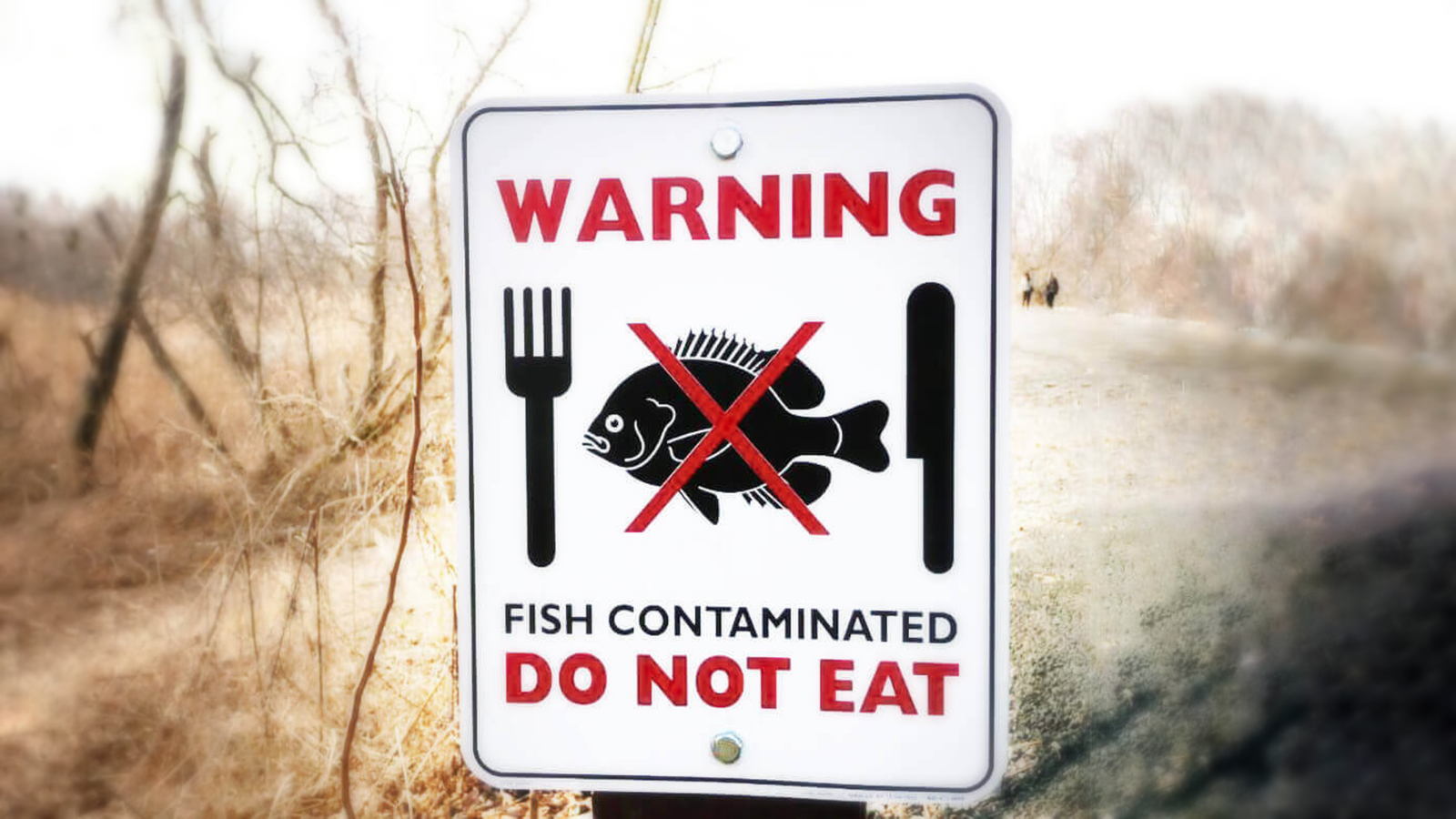
Toxicidade Ambiental- É Apenas Uma Cadeia Alimentar
Toxicidade ambiental é a bioacumulação de toxinas. Organismos são filtros. Mas há mais ainda piores processo chamado de biomagnificação na cadeia alimentar.
Diabetes Alimentação Ideal
Adoçantes artificiais - Compreender as noções básicas
Adoçantes artificiais são não-naturais, substâncias químicas sintéticas, por isso temos de olhar para ciência disponível para compreender os possíveis efeitos para a saúde que esses produtos químicos podem ter.
Câncer Prevenção Toxicidade
Pesticidas, OGM e Sobrecarga Tóxica.
A exposição a pesticidas causa directamente cancro, defeitos de nascença, esterilidade e infertilidade, danos no cérebro e sistema nervoso, fígado, rins, e outros órgãos.
Editor De Picaretas Dieta Paleo A Dieta Vegetariana
Vegan Neandertais? A verdade sobre o real Neandertal dieta
Uma típica representação de Neandertais imagens-los como matar o mamute lanoso. No entanto, uma placa bacteriana conta uma história diferente sobre a dieta dos Neandertais
Alimentação Ideal Prevenção A Dieta Vegetariana
Estudo adventista de Saúde - vegan argumento
Estudo adventista de Saúde mostrou que os Adventistas do Sétimo dia têm uma mensuráveis menor risco do que outros Americanos para a maioria dos Ocidentais doenças.
Antioxidantes
Poder Antioxidante da Vitamina C: Melhorar a Saúde e a Longevidade
A vitamina C não requer actividade enzimática para ser removida do corpo e não se torna pró-oxidante mas sim uma forma reduzida de antioxidante mais fraco.

A Medicina Alopática Câncer Editor De Picaretas
Câncer, O que é Proibido Curas-máquina de Rife, análise de Histórico
A taxa de recuperação para pacientes que têm não-tratáveis câncer e foram declarou doente terminal, utilizando Repleto de Máquina de ressonância tecnologia foi de 100%.
A Medicina Alopática Câncer
Câncer, O que é Proibido Curas - ESSIAC
Em uma pequena cidade no Norte de Ontário, em 1922, rumores começaram a circular de um câncer-a cura de chá que era proveniente de florestas de Ontário. Índios chamados esta mistura de chá de vida."

Posts Em Destaque –

A Medicina Alopática Editor De Picaretas
A História da Grande Farmácia - IG Farben
A parte de Rockefeller, o monopólio da química e indústrias de medicamentos veio em cumprimento após a 2ª guerra mundial. A Standard Oil e a IG Farben cooperação fez isso em realidade.
Câncer Editor De Picaretas Fitoquímicos
Poder Anticancerígeno das Frutas e Legumes: Evidências Clínicas e in Vivo
Alguns extractos vegetais rivalizam com os principais medicamentos de quimioterapia e, ao mesmo tempo, visam vários tipos diferentes de células cancerígenas.
Editor De Picaretas Alimentação Ideal
Deficiência de Micronutrientes na Dieta Americana Padrão: Estratégias de Otimização
O perfil nutricional da nossa dieta moderna à base de carne, açúcar e alimentos processados é completamente incongruente com a nossa evolução, resultando numa grave deficiência de micronutrientes.
Antioxidantes Editor De Picaretas ORAC
Dieta Rica em Antioxidantes: Regras e Estratégias Gerais
Existem estratégias fáceis e económicas para optimizar o valor antioxidante da nossa dieta.
Antioxidantes Editor De Picaretas ORAC Fitoquímicos
Antioxidantes: Compreender os Princípios Básicos
Los productos de origen animal no contienen fitoquímicos ni antioxidantes. Por término medio, los alimentos vegetales contienen más de 60 veces más antioxidantes que los de origen animal.
Editor De Picaretas Alimentação Ideal Proteína
As Necessidades proteicas - uma verdade Inconveniente
Quando o antropólogo estudos mostraram que hominíneos viveu em média de 15 a 20 gramas de proteína por dia, havia um assim-chamado "uma proteína Grande fiasco" na década de 1970.
Editor De Picaretas Alimentação Ideal A Dieta Vegetariana
QUE orientações dietéticas - Nova pirâmide alimentar e a supressão da ciência
As directrizes dietéticas da OMS recomendam uma dieta pobre em gordura saturada (proteína animal), açúcar e sal e rica em frutas e vegetais como um requisito para combater o aumento epidémico de doenças crónicas em todo o mundo.
Editor De Picaretas Prevenção Toxicidade
Toxicidade Ambiental- É Apenas Uma Cadeia Alimentar
Toxicidade ambiental é a bioacumulação de toxinas. Organismos são filtros. Mas há mais ainda piores processo chamado de biomagnificação na cadeia alimentar.
Editor De Picaretas A Obesidade Alimentação Ideal
Causa da Obesidade - Desadaptação ou vício
Qual é a causa da epidemia de obesidade? Para toda a vida na Terra, a comida não é uma escolha. A coisa mais difícil para o animal no deserto é o ganho de peso.
Diabetes Editor De Picaretas Alimentação Ideal
Açúcar Refinado: Compreender os Riscos
As crianças consomem cerca de um quinto do total de suas necessidades energéticas a partir de apenas o açúcar refinado. Se somarmos a gordura e o resto da nutrição privação de alimentos processados para a lista torna-se uma nutrição completa pesadelo.
Últimas do PubMed, #dieta baseada em vegetais –
- Habitual Diet, Gut Microbiome Dysbiosis, and alpha-Synucleinopathy Conversion in Isolated Rapid Eye Movement (REM) Sleep Behavior Disorderpor Suyi Xie on Outubro 17, 2026
CONCLUSIONS: Habitual diet in iRBD is associated with gut microbiome dysbiosis and predicts neurodegenerative progression. These findings highlight diet-microbiome interactions as modifiable targets for intervention in prodromal α-synucleinopathy. © 2026 The Author(s). Movement Disorders published by Wiley Periodicals LLC on behalf of International Parkinson and Movement Disorder Society.
- Plant-Based Functional Formulae Mitigate Western Diet-Induced MASLD by Modulating Hepatic Oxidative Stress, Inflammation as Well as Nrf-2/HO-1 and NF-kappaB Gene Expressionpor Rasha S Mohamed on Outubro 16, 2026
Psyllium has long been used to improve satiety and control weight. Leek and dill leaves are abundant in bioactive substances that have been confirmed to have anti-inflammatory and antioxidant properties. Our goal was to assess the hepatoprotective effects of two formulae (dill and psyllium or leek and psyllium) against oxidative stress and inflammatory markers in a metabolic dysfunction-associated steatotic liver disease (MASLD) rat model. Twenty four rats were used in this study. Rats were…
- Toxicological Evaluation of Zingiber purpureum Extract and Its Effects on Gut Microbiota in Zebrafishpor Nisamanee Charoenchon on Outubro 16, 2026
Zingiber purpureum Roscoe (Phlai) is renowned in Southeast Asia for its anti-inflammatory, antioxidant, and antibacterial activities, yet its safety and effects on gut health in vivo are not well characterized. This study investigated the biological effects of ethanolic-soluble Phlai extract (ESPE) in zebrafish (Danio rerio), focusing on chemical marker standardization in phenylbutanoids and cucurminoids, developmental toxicity, gut microbiota investigation, and tissue histopathology. […]
- Dietary Phytochemical Index and Fasting Plasma Glucose in Adults with Type 2 Diabetes: A Cross-Sectional Studypor Stavroula Maria Konstantopoulou on Outubro 16, 2026
Background/Objectives: Type 2 diabetes mellitus (T2D) is a major public health challenge. Phytochemicals have gained attention for their potential role in glucose regulation. This study aimed to investigate the association between dietary phytochemical intake, assessed using the Dietary Phytochemical Index (DPI), and fasting plasma glucose in adults with established T2D. Methods: A cross-sectional study was conducted among 340 adults with T2D attending the Diabetes Clinic of the General […]
- Promoting the Mediterranean Diet in the Workplace: An Observational Cross-Sectional Studypor Nicola Magnavita on Outubro 16, 2026
Background/Objectives: The Mediterranean diet (MD) is a set of customs and eating habits developed in countries bordering the Mediterranean Sea thousands of years ago. These habits are frequently proposed as a complement to pharmacological therapies for chronic diseases and could also counteract their onset. This study aimed to investigate adherence to the MD in workers from 22 companies in Latium (Italy) and to evaluate the association of diet with workers’ health. Methods: Workers […]
- Trendy, but Are They Safe? Current Popular Diets and Their Use in Inflammatory Bowel Diseases: Narrative Reviewpor Klara Szwarc on Outubro 16, 2026
Inflammatory bowel disease (IBD) arises from the interplay between genetic susceptibility, immune dysregulation, microbiota, and environmental exposures, with diet potentially contributing to both pathogenesis and management. Patients frequently modify their diet independently, often using different strategies during remission and active symptoms. This narrative review synthesises evidence on patient-accessible dietary patterns and selected structured nutritional therapies across five […]