







La Exposición al Arsénico y el Consumo de Arroz- El Más Tóxico de Grano de Todos Ellos
De todas las fuentes alimentarias conocidas, el arroz absorbe la mayor concentración de arsénico entre todos los alimentos de consumo habitual.
Milos Pokimica
Escrito por: Milos Pokimica
Revisado Médicamente Por: Dr. Xiùying Wáng, M.D.
Actualizado el 9 de junio de 2023El arsénico es un elemento natural que se encuentra en el agua, el aire, los alimentos y el suelo. También se utiliza en pesticidas, diferentes productos químicos, tabaco, conservantes de la madera y en la minería metálica.
La mayor parte de la exposición proviene del agua. The water becomes contaminated underground by rocks that release arsenic. Puede encontrarse en aguas subterráneas, agua potable, lagos o embalses y pozos.
Algunos países están más afectados que otros y algunas zonas están más afectadas que otras. El arsénico en el agua potable es un problema realmente grave en muchos países del mundo. China tiene un gran problema con la contaminación del agua por arsénico. India, Bangladesh, Chile, Vietnam, Taiwán y Estados Unidos. (Naujokas et al., 2013) En algunas partes del mundo el suministro de agua está tan contaminado que la OMS estima que, por ejemplo en una zona muy afectada de Bangladesh, más del 21,4% de todas las muertes se atribuyeron a altos niveles de arsénico en el agua potable (Argos et al., 2010). El problema de esta toxina es que no tiene olor, sabor ni color.

El arsénico también puede encontrarse en los alimentos, como el arroz y algunos pescados. También puede entrar en el organismo al respirar polvo que contenga arsénico o a través de la piel, aunque ésta no es una vía importante de exposición.
Aunque los peces depredadores superiores son una fuente importante de exposición, de todas las fuentes alimentarias conocidas el arroz absorbe la mayor concentración entre todos los alimentos de consumo habitual. Por ejemplo, contiene entre 10 y 20 veces más arsénico que otros cultivos de cereales.
Como el arroz crece en condiciones de inundación, el arsénico del suelo se libera y está más fácilmente disponible. El arsénico liberado será absorbido por la planta de arroz, y parte de él acabará en los granos de arroz. Dado que el arsénico ya se encuentra de forma natural en el suelo, se absorberá independientemente de las prácticas agrícolas. Si hay contaminación del agua, aunque el arroz se cultive de forma ecológica, las concentraciones serán elevadas.
Se ha registrado una elevada exposición de la población en distintas zonas del mundo, especialmente en partes de Asia y Sudamérica. China y Bangladesh tienen un problema de filtración de arsénico en el agua potable y son países en los que tradicionalmente predomina una dieta basada en el arroz. En algunas partes de China y Bangladesh, el agua potable está muy contaminada con altos niveles de arsénico. En 2004 entró en vigor en la UE una norma de precaución más estricta para el arsénico total máximo de 10 µg/l en el agua potable, pero para ser justos la UE nunca ha tenido un problema como China, así que para la UE es fácil adoptar normas estrictas donde no hay problemas en primer lugar.
Como cualquier otro tóxico, los niños están más expuestos porque suelen consumir más por unidad de peso corporal, además de tener unos patrones alimentarios más particulares y unas opciones dietéticas limitadas. Por ejemplo, el arroz se utiliza en muchos primeros alimentos. Si calculamos la exposición al arsénico en la dieta de los niños por kilogramo de peso corporal, se estima que es, de media, entre 2 y 3 veces superior a la de los adultos. Se encuentran niveles elevados en la mayoría de los alimentos y bebidas a base de arroz ampliamente utilizados para lactantes y niños pequeños. Los niveles bajos de arsénico afectan a los fetos o a los niños a diferentes niveles, como el desarrollo del crecimiento y el desarrollo inmunitario, y también influyen en el desarrollo del cociente intelectual. En 2004 se llevó a cabo un estudio en Bangladesh que demostró que los niños expuestos al arsénico en el agua potable obtenían puntuaciones mucho más bajas en las pruebas estandarizadas. En 2013, un estudio demostró que las mujeres embarazadas expuestas a cantidades mínimas de arsénico en el agua potable tenían hijos con muchas más probabilidades de desarrollar problemas respiratorios. En Suecia, su Agencia Nacional de Alimentación (SNFA) tiene una recomendación oficial de que los niños menores de seis años no consuman arroz en ninguna de sus formas, especialmente pasteles de arroz. Los pasteles de arroz contienen más arsénico que cualquier otro producto a base de arroz, y la recomendación para los adultos es que reduzcan el consumo de pasteles de arroz si lo consumen con regularidad. Los niños deben seguir una dieta equilibrada basada en diferentes cereales como fuente de hidratos de carbono y los lactantes, y los niños pequeños deben evitar por completo el consumo de arroz, especialmente pasteles de arroz y bebidas de arroz. La exposición prolongada al arsénico en adultos se asocia a un aumento de las enfermedades cardiacas, así como de los cánceres de pulmón, piel y vejiga.
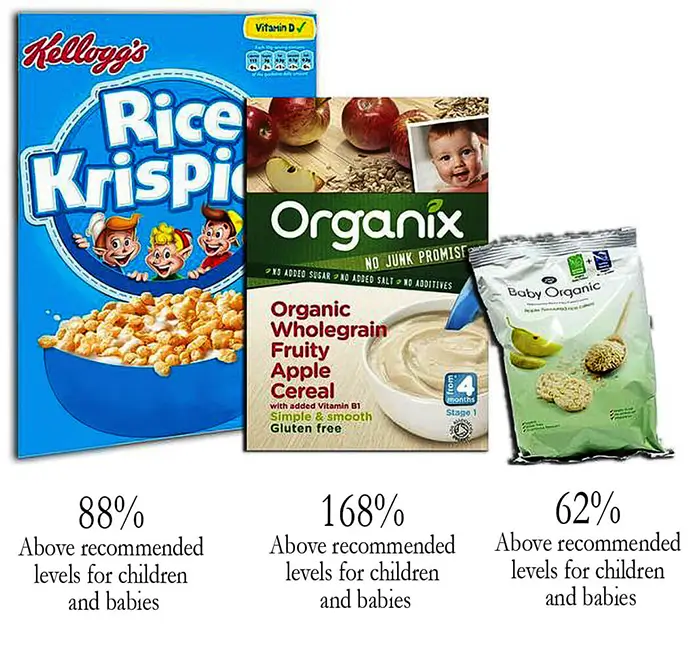
Si queremos comer arroz, hay que tomar medidas para reducir el contenido de arsénico, pero variarán en función del tipo de arroz, la forma en que se haya procesado, las condiciones y el lugar en que se haya cultivado, y la forma en que se haya cocinado.
La mayor concentración se encuentra en el salvado. El salvado de arroz no debe consumirse en absoluto, por lo que cualquier producto elaborado con él, por ejemplo, la leche de arroz comercial, tendría concentraciones más elevadas.
Existen métodos de cocción para rebajar el nivel de arroz acabado.
El primer método es el remojo. Al remojar el arroz, éste absorberá agua, pero también abrirá la estructura de los granos, por lo que parte del arsénico soluble en agua se filtrará del arroz al líquido. Cuando pongas el arroz o las judías en remojo, tira el agua. No la utilices.
Además, cuando el arroz esté cocido, parte del arsénico se filtrará al agua. Así que, de nuevo, no dejes que el agua se evapore porque el arsénico seguirá ahí. Esta es la forma tradicional de cocinar el arroz. Cocer el arroz en la cantidad adecuada de agua y luego tirarlo.
Para recapitular, remojar, escurrir, aclarar con agua dulce, cocer con agua dulce y volver a aclarar.
El arroz basmati suele contener menos arsénico que otros tipos, y el arroz integral suele contener más porque gran parte del arsénico está en la cáscara.
La cocción normal del arroz en una olla arrocera o la cocción hasta sequedad sin remojo conservan un 84% de arsénico.
Cuando se utiliza una parte de arroz con cinco partes de agua, sólo queda el 43% del arsénico detectado inicialmente en el arroz.
El mejor método es remojar, luego enjuagar y después cocinar 5 a 1. Ese método eliminará más del 80% del arsénico. Ese método eliminará más del 80% del arsénico. Y como el arsénico se produce de forma natural, comprar productos ecológicos no suele ayudar. El consumo de productos ecológicos no repercute necesariamente en los niveles de metales o contaminantes orgánicos persistentes. Si hay arsénico en el suelo, siguen siendo productos "ecológicos".
Referencias:
- Naujokas, M. F., Anderson, B., Ahsan, H., Aposhian, H. V., Graziano, J. H., Thompson, C., & Suk, W. A. (2013). The broad scope of health effects from chronic arsenic exposure: update on a worldwide public health problem. Perspectivas de salud medioambiental, 121(3), 295-302. https://doi.org/10.1289/ehp.1205875
- Argos, M., Kalra, T., Rathouz, P. J., Chen, Y., Pierce, B., Parvez, F., Islam, T., Ahmed, A., Rakibuz-Zaman, M., Hasan, R., Sarwar, G., Slavkovich, V., van Geen, A., Graziano, J., & Ahsan, H. (2010). Arsenic exposure from drinking water, and all-cause and chronic-disease mortalities in Bangladesh (HEALS): a prospective cohort study. Lancet (Londres, Inglaterra), 376(9737), 252-258. https://doi.org/10.1016/S0140-6736(10)60481-3
Contenidos Relacionados

¿Tienes alguna duda acerca de la nutrición y la salud?
Me encantaría conocer tu opinión y responderlas en mi próximo post. Agradezco su aportación y opinión y espero tener noticias suyas pronto. También le invito a síguenos en Facebook, Instagram y Pinterest para más contenidos sobre dieta, nutrición y salud. Puedes dejar un comentario allí y conectar con otros entusiastas de la salud, compartir tus consejos y experiencias, y recibir apoyo y ánimo de nuestro equipo y nuestra comunidad.
Espero que este post le haya resultado informativo y ameno y que esté preparado para aplicar los conocimientos adquiridos. Si le ha resultado útil, por favor compártelo con tus amigos y familiares que también podrían beneficiarse de ella. Nunca se sabe quién puede necesitar orientación y apoyo en su camino hacia la salud.
– También Te Puede Interesar –

La intolerancia a la lactosa - el 65% de probabilidad de tener
La Expresión Génica y la Epigenética: Cómo la Dieta y el Entorno Determinan su Salud
La Exposición al Arsénico y el Consumo de Carne- El "Veneno" Libre de Aves de Corral Ley
Toxicidad Ambiental- Es Sólo Una Cadena Alimentaria

Atracones y Regulación Hormonal: Hambre Emocional
Edulcorantes artificiales- Conceptos básicos

La historia de Big Pharma - IG Farben

Plaguicidas en Los Alimentos, Exposición en la Dieta Estadounidense Estándar - 80% Procedente de la Carne

Aprenda Sobre Nutricion

Milos Pokimica es doctor en medicina natural, nutricionista clínico, escritor sobre salud médica y nutrición y asesor en ciencias de la nutrición. Autor de la serie de libros Go Vegan? Revisión de la Ciencia, también dirige el sitio web sobre salud natural GoVeganWay.com.
Descargo De Responsabilidad Médica
GoVeganWay.com trae los comentarios de la última de la nutrición y la salud relacionados con la investigación. La información proporcionada representa la opinión personal del autor y no pretende ni implica ser un sustituto de consejo médico profesional, diagnóstico o tratamiento. La información proporcionada es sólo para fines informativos y no pretende servir como un sustituto de la consulta, el diagnóstico y/o tratamiento médico de un médico calificado o profesional de la salud.NUNCA ignore el CONSEJO MÉDICO PROFESIONAL O RETRASAR la BÚSQUEDA de TRATAMIENTO MÉDICO a CAUSA DE ALGO QUE HAYA LEÍDO EN O accesibles a TRAVÉS de GoVeganWay.com
NUNCA APLICAR CUALQUIER cambio de ESTILO de vida O CAMBIOS EN su totalidad COMO UNA CONSECUENCIA DE ALGO QUE HA LEÍDO EN GoVeganWay.com ANTES de CONSULTAR con LICENCIA PROFESIONAL MÉDICO.
En el caso de una emergencia médica, llame a un médico o al 911 inmediatamente. GoVeganWay.com no se recomienda ni aprueba ninguna de los grupos, las organizaciones, las pruebas, los médicos, productos, procedimientos, opiniones u otra información que pueda ser mencionado en el interior.
Selecciones del Editor -
El cáncer Editor De Selecciones Fitoquímicos
Poder Anticancerígeno de Frutas y Verduras: Pruebas Clínicas e in Vivo
Algunos extractos vegetales rivalizan con los principales fármacos quimioterapéuticos y, al mismo tiempo, atacan varios tipos diferentes de células cancerosas.
Antioxidantes Editor De Selecciones ORAC
Aceites Esenciales Como Suplementos Antioxidantes: Reglas y Estrategias
Los aceites esenciales de calidad alimentaria pueden ser una estrategia cómoda y de fácil consumo para optimizar el valor antioxidante y las puntuaciones ORAC de nuestra dieta.
Antioxidantes Editor De Selecciones ORAC
Dieta Rica en Antioxidantes: Reglas y Estrategias Generales
Existen estrategias fáciles y rentables para optimizar el valor antioxidante de nuestra dieta.
Antioxidantes Editor De Selecciones ORAC
Comprender los Valores ORAC: Niveles de Antioxidantes en los Alimentos
Cuando tu principal fuente de antioxidantes es el café, sabes que tienes un grave problema.

Antioxidantes Editor De Selecciones ORAC
Astaxantina Beneficios: Antioxidante Natural Más Potente del Mundo
La astaxantina es el más potente y natural antioxidante universal (petróleo y agua-soluble) que conoce la ciencia. Se acumula en los tejidos y nunca puede convertirse en un pro-oxidante.
Antioxidantes Editor De Selecciones ORAC Fitoquímicos
Antioxidantes: Conceptos Básicos
Los productos de origen animal no contienen fitoquímicos ni antioxidantes. Por término medio, los alimentos vegetales contienen más de 60 veces más antioxidantes que los de origen animal.
Editor De Selecciones Dieta Vegana
Deficiencias Nutricionales en la Dieta Vegana: Estrategias de Prevención
Existen nueve deficiencias nutricionales comunes a escala poblacional que afectan a las personas que siguen una dieta basada en plantas. Si no se corrigen a tiempo, algunas deficiencias tienen consecuencias terribles y no tratables.
Editor De Selecciones Dieta Óptima
Deficiencia de Micronutrientes en la Dieta Americana Estándar: Estrategias de Optimización
El perfil nutricional de nuestra dieta moderna a base de carne, azúcar y alimentos procesados es totalmente incongruente con nuestra evolución, lo que provoca una grave carencia de micronutrientes.
Editor De Selecciones Fitoquímicos
Fitoquímicos: Conceptos Básicos
Todos y cada uno de los fitoquímicos que existen tienen una acción biológica en el cuerpo humano. Cada uno de los millones de fitoquímicos diferentes.
Editor De Selecciones La leche Dieta Óptima
Leche y Productos Lácteos: Correlaciones de Riesgo Para la Salud
Las asociaciones conocidas con el consumo de leche y productos lácteos son infertilidad, cáncer de ovario y de mama, leucemia, diabetes de tipo 1, autismo, arteriosclerosis, cataratas, artritis reumatoide, esclerosis múltiple, hiperactividad, congestión, granos...
El cáncer Editor De Selecciones La proteína
Proteína Completa: Señalización del IGF-1 en la Formación del Cáncer
Cuando usted come proteínas animales que tienen cuatro veces más probabilidad de desarrollar todos los tipos de cáncer. Cuando usted fuma, usted tiene cuatro veces la posibilidad de desarrollar cáncer de pulmón.

El cáncer Editor De Selecciones La proteína
La Anatomía de Cáncer de riesgo para la Salud de las correlaciones
Aproximadamente el 2% de los cánceres son por la medicina considera puramente causada por factores genéticos. De la misma gama como dentro del reino animal. No le han dicho toda la verdad.
Milos Pokimica es escritor especializado en salud y nutrición y asesor en ciencias nutricionales. Autor de la serie de libros Go Vegan? Revisión de la Ciencia, también dirige el sitio web sobre salud natural GoVeganWay.com.
Últimos Artículos –

La Restricción De Calorías La longevidad
Cómo Ayunar: Alimentos en Ayunas Que No Rompen la Autofagia
Autofagia. ¿Se ha preguntado alguna vez qué ocurre con las células de su cuerpo cuando mueren o se dañan? ¿Se amontonan y crean problemas, o se eliminan de alguna manera? La respuesta es que su cuerpo...
Salud Dental Prevención
Dolor y Sensibilidad a los Dulces: Solución Rápida y Duradera
Una solución rápida y fácil para aliviar el dolor es el aceite esencial de clavo, un potente antioxidante y analgésico que puede ayudar con las enfermedades de las encías y el dolor de muelas.
Los frijoles
Judías Verdes: Nutrición y Beneficios Para la Salud
Los frijoles verdes son bajos en calorías y ricos en compuestos naturales que pueden ayudar a controlar su azúcar en la sangre, reducir el colesterol y combatir los radicales libres.
Dieta de alimentos crudos Dieta Vegana
Se Pueden Comer Setas Crudas: Riesgos Para La Salud, Nutrición Y Seguridad
Las setas tienen toxinas sensibles al calor, como la hidracina o la agaritina, y paredes celulares compuestas de quitina que el ser humano no puede digerir bien.
Dieta Vegana
¿Son Los Peces Animales? Una Perspectiva Cultural
En algunas culturas, la carne de pescado no se considera carne, y el pescado está permitido incluso durante el ayuno.

Salud Dental Prevención
Enjuague Bucal Natural Casero: Probado, Más Fuerte y Menos Tóxico
El enjuague bucal natural hecho en casa es más fuerte que la clorhexidina, menos tóxico y si se ingiere puede dar un poco de náuseas, pero también un alto estallido en el valor ORAC.
Salud Dental Prevención
Cómo Detener la Caries Dental: Síntomas, Causas y Prevención
El consumo de azúcar es la principal causa de caries y deterioro dental, combinado con carencias de minerales, especialmente magnesio, zinc, cobre y oligoelementos.
Antioxidantes Superalimentos
Amla: Beneficios Probados, Nutrición e Importancia Clínica
El amla es uno de los antioxidantes más potentes del mundo, con una puntuación ORAC de 261.530. Es una rica fuente de fitoquímicos que tienen diversos beneficios para la salud. Es una rica fuente de fitoquímicos que tienen diversos beneficios para la salud.
Top Noticias De Salud — ScienceDaily
- FDA-approved epilepsy drug may help reverse osteoarthritis damageen octubre 8, 2026
Researchers at Yale have identified a promising new approach to osteoarthritis that could do more than simply ease pain. The epilepsy drug lacosamide appears to block a protein involved in both pain signaling and cartilage destruction, helping damaged joints shift back toward repair in preclinical studies.
- Just 7 days of strength training started shrinking fat cells in miceen octubre 8, 2026
Just seven strength-training sessions helped obese mice shrink visceral fat cells and reactivate molecular pathways involved in burning stored fat, despite no change in overall body weight. The findings suggest some benefits of resistance exercise may begin long before weight loss becomes visible, though the results still need to be confirmed in humans.
- Scientists warn a popular vitamin D supplement may have a hidden downsideen octubre 8, 2026
Not all vitamin D supplements are created equal, and new research suggests that one popular form may have an unexpected downside. Scientists found that taking vitamin D2 can actually lower the body’s levels of vitamin D3, the form naturally produced by sunlight and more effective at boosting overall vitamin D. Previous studies also suggest that vitamin D3 may provide stronger immune protection against viruses and bacteria.
- Not all trans fats are bad, major review findsen octubre 8, 2026
A large analysis of 22 studies found that the trans fats naturally present in dairy foods such as milk, butter, yogurt, and cheese do not appear to raise the risk of heart disease or type 2 diabetes. Unlike industrial trans fats from partially hydrogenated oils, dairy trans fats showed no meaningful harmful effects on blood fats in controlled trials and were not linked to higher rates of heart disease, stroke, cardiovascular death, or diabetes in long-term studies.
- Dads are dying after their kids are born, and almost no one is tracking iten octubre 8, 2026
A study of more than 130,000 babies born in Georgia found that hundreds of fathers died within the first five years of their child’s life, and about 60% of those deaths were potentially preventable. Homicide, accidental injuries, suicide, and drug overdoses accounted for most of the preventable deaths, highlighting what researchers call a major blind spot in public health.
- Stanford scientists turn a cancer driver into a kill switchen octubre 8, 2026
A Stanford-designed molecule turns a major lymphoma-promoting protein against cancer cells, activating their own self-destruct machinery instead of simply blocking tumor growth. In mice, the treatment completely eliminated aggressive human lymphoma tumors within 11 days, although much more testing is needed before it could reach patients.
- Taking antibiotics? Sugar may be making the damage worseen octubre 7, 2026
Eating more sugar while taking antibiotics was linked to greater disruption of the gut microbiome and increased growth of potentially harmful bacteria. Researchers say temporarily cutting back on sweets during and after antibiotic treatment could be a simple way to reduce this damage, though clinical trials are still needed.
PubMed, #Dieta vegana –
- Sustained Regression of Parotid Mucosa-Associated Lymphoid Tissue (MALT) Lymphoma After Nutritional and Nutraceutical Intervention Without Chemoimmunotherapy: A Case Reporten octubre 5, 2026
Extranodal marginal zone lymphoma of mucosa-associated lymphoid tissue (MALT) in the setting of Sjögren’s syndrome (SS) is a well-recognized complication of chronic autoimmune salivary gland inflammation. Standard management options include radiotherapy, immunotherapy, and combination chemoimmunotherapy, with active surveillance reserved for stable, low-burden disease. The potential role of structured nutritional and nutraceutical intervention in this setting has not been previously […]
- Plant-Based Diets in Adolescence: Cardiometabolic Benefits, Developmental Risks, and the Role of Fortificationen septiembre 26, 2026
Adolescence is a critical window in which dietary patterns stabilise while nutrient requirements remain high to support growth, bone accrual, and neurodevelopment. Plant-based diets are increasingly adopted by young people, yet paediatric evidence indicates that they should not be treated as a single exposure, because diet quality substantially modifies both benefits and risks. Healthy plant-based patterns-rich in whole grains, legumes, fruits, vegetables, nuts, and unsaturated fats-are…
- Dietary Patterns, Micronutrient Adequacy, and Metabolic Vulnerability in Alzheimer’s Disease: A Critical Narrative Reviewen septiembre 26, 2026
Dietary factors may influence cognitive aging and Alzheimer’s disease (AD), but observational associations, mechanistic findings, and intervention effects should not be considered equivalent evidence. This critical narrative review examines how dietary patterns, micronutrient adequacy, and metabolic health may modify AD-related vulnerability. A targeted search of PubMed/MEDLINE, Scopus, and Web of Science through April 2026 prioritized systematic reviews, meta-analyses, randomized trials, and…
Random Posts –
Editor De Selecciones Dieta Óptima
Deficiencia de Micronutrientes en la Dieta Americana Estándar: Estrategias de Optimización
El perfil nutricional de nuestra dieta moderna a base de carne, azúcar y alimentos procesados es totalmente incongruente con nuestra evolución, lo que provoca una grave carencia de micronutrientes.
El cáncer Agua Potable Toxicidad
El agua del grifo de la toxicidad de evaluación de Riesgos
Si vivimos en una ciudad donde estamos seguros de que el agua del grifo es pura, eso no significa que el agua sea "pura".

Editor De Selecciones La Obesidad
El trastorno de atracones compulsivos - La psicología de hambre
En la naturaleza, no hay refinado de azúcar o grasa. Nuestro cerebro nunca había sido expuesto a una combinación de los dos a la vez nos obliga a ir de borrachera comiendo desorden.

Editor De Selecciones La Obesidad
Atracones y Regulación Hormonal: Hambre Emocional
Durante toda nuestra evolución, fuimos como cualquier otra especie de este planeta, en constante hambre y en busca de comida. Comer en exceso es un ejemplo de inadaptación.

La Restricción De Calorías La longevidad
Ayuno intermitente frente a restricción calórica: ¿hay alguna diferencia?
Hay una forma de dieta que está diseñada principalmente para utilizar la autofagia llamada ayuno intermitente. Hacer una dieta de restricción calórica total es una elección difícil.
Toxicidad
El Mercurio- Neurotoxina de Los Peces
El mercurio es un industrial de la toxina y la mayoría de los neurotóxicos sustancia conocida. El plancton se absorbe de agua de mar e iniciar la bioacumulación en la cadena alimentaria.
Antioxidantes Editor De Selecciones ORAC Fitoquímicos
Antioxidantes: Conceptos Básicos
Los productos de origen animal no contienen fitoquímicos ni antioxidantes. Por término medio, los alimentos vegetales contienen más de 60 veces más antioxidantes que los de origen animal.
La Diabetes La leche
Leche A1: Diabetes, Autismo y Cardiopatías
La evidencia epidemiológica sugiere que A1 leche con el a1 de la beta-caseína, es una variante posible factor de riesgo en el desarrollo de la diabetes tipo 1 en los niños, autismo y enfermedades del corazón en los adultos.
Dieta Vegana
¿Son Los Peces Animales? Una Perspectiva Cultural
En algunas culturas, la carne de pescado no se considera carne, y el pescado está permitido incluso durante el ayuno.
Editor De Selecciones Dieta Óptima
Alimentos Procesados: Comprender los Riesgos
Los alimentos procesados significan que se elimina algo de los alimentos enteros, normalmente fibra, y se añade algo, normalmente grasa, azúcar, sal y msg.

Puestos Destacados –

El cáncer Editor De Selecciones Toxicidad
Exposición a Plaguicidas en Niños: Pruebas de Exposición en la Vida Real
Los niños y especialmente las mujeres embarazadas son más vulnerables a la exposición a los pesticidas. Si analizamos el mundo real de los niveles de exposición en situaciones de la vida real, lo que podría ser el resultado?
Editor De Selecciones Dieta Óptima
Deficiencia de Micronutrientes en la Dieta Americana Estándar: Estrategias de Optimización
El perfil nutricional de nuestra dieta moderna a base de carne, azúcar y alimentos procesados es totalmente incongruente con nuestra evolución, lo que provoca una grave carencia de micronutrientes.
Editor De Selecciones Dieta Óptima
Dieta Humana Optima- Enfermedades Crónicas, Guerras de Dietas y el Argumento Vegano
Nuestra dieta humana óptima natural es la dieta que comieron nuestros ancestros homínidos durante los últimos 30 millones de años, no los humanos anatómicamente modernos de la Edad de Piedra.
Antioxidantes Editor De Selecciones ORAC
Comprender los Valores ORAC: Niveles de Antioxidantes en los Alimentos
Cuando tu principal fuente de antioxidantes es el café, sabes que tienes un grave problema.
La Diabetes Editor De Selecciones
La Diabetes causa y grasas saturadas - Los veganos argumento
A medida que aumenta el nivel de grasa en el torrente sanguíneo, disminuye la capacidad del organismo para eliminar el azúcar. Una de las causas de la diabetes es nuestra inadaptación a una gran ingesta de grasas

La Medicina Alopática El cáncer Editor De Selecciones
El cáncer, La Prohibida Curas-máquina de Rife, reseña Histórica
La tasa de recuperación de pacientes con cáncer no tratable y declarados enfermos terminales mediante la utilización de la tecnología resonante de la máquina Rife fue del 100%.
Editor De Selecciones La inflamación
Los seres humanos omnívoros dilema - el consumo de Carne, las bacterias probióticas, la inflamación y el intestino
Son los seres humanos omnívoros en un verdadero anatómica sentido? Hay una diferencia fundamental en la forma en que el tracto digestivo trabaja en plantas vs consumo de carne de las especies.

El cáncer Editor De Selecciones Toxicidad
Plaguicidas en Los Alimentos, Exposición en la Dieta Estadounidense Estándar - 80% Procedente de la Carne
La mayoría de los plaguicidas y, especialmente, metales pesados y otros residuos tóxicos contaminantes que tenemos, nos obtiene de la carne. Más de 80 por ciento de la exposición a pesticidas en la dieta Americana estándar proviene de productos de origen animal, no a partir de frutas o verduras.
El cáncer Editor De Selecciones Fitoquímicos
Poder Anticancerígeno de Frutas y Verduras: Pruebas Clínicas e in Vivo
Algunos extractos vegetales rivalizan con los principales fármacos quimioterapéuticos y, al mismo tiempo, atacan varios tipos diferentes de células cancerosas.
La Diabetes Editor De Selecciones
La Diabetes causa y los hidratos de carbono refinados - Los veganos argumento
La gente cree que los carbohidratos refinados se asocian a picos de insulina y son una de las causas de la diabetes. Y tienen razón. Sin embargo, también se equivocan.
La última versión desde PubMed, #Dieta basada en plantas –
- Analysis of the Provision of Plant-Based, Vegetarian and Omnivorous Meals in UK Care Homes for Older Peoplepor Saffron Whyton en octubre 8, 2026
CONCLUSION: Even though the National Health Service recommends reductions in consumption of red and processed meats with increased consumption of plant-based proteins, this transition is yet to be implemented in care homes. This study suggests that there is potential to improve the health and sustainability of meals provided in care home by increasing the availability of plant-based options, especially those rich in plant-based proteins.
- Weight loss-independent associations of body composition changes with device-derived metabolic age during Mediterranean diet follow-uppor Ahmet Emre Hatır en octubre 8, 2026
CONCLUSION: Favorable changes in Tanita-derived metabolic age were observed during follow-up. The associated body composition changes may partly reflect shared components of the device algorithm because metabolic age is a composite surrogate rather than a direct measure of biological aging. Given the retrospective uncontrolled design, causal effects of the Mediterranean diet cannot be established.
- Connecting digital food literacy and sustainable eating in children and adolescents: a focused mini review of evidence gaps and educational prioritiespor Lu Xing en octubre 7, 2026
Children and adolescents learn about food through digital and physical environments while developing an understanding of dietary effects on human and planetary health. Digital healthy-eating education, food-literacy education, and sustainable-diet education have nevertheless developed along largely separate trajectories. This focused Mini Review examines interventions that combine a substantive digital educational mechanism, a food-literacy capacity, and an explicit sustainability target in…
- The gut microbiota-inflammageing axis in cardiometabolic health of older adults and dietary intervention strategiespor Xin Liu en octubre 7, 2026
Rapid global population ageing is accelerating the burden of cardiometabolic disease, and inflammageing-the chronic, low-grade, sterile inflammation that accompanies advancing age-has emerged as a shared pathological substrate linking cardiovascular disease, metabolic syndrome, and type 2 diabetes mellitus in older adults. Increasing evidence identifies the gut microbiota as an upstream driver of this process, forming a modifiable feedback loop with the intestinal barrier, the immune system, […]
- Effects of High-Phenolic Extra Virgin Olive Oil on Sensory Processing in Children With Autism Spectrum Disorder: A Pilot Studypor Despoina Papastavridou en octubre 7, 2026
No approved treatments currently exist for the core symptoms of autism spectrum disorder (ASD), prompting clinicians and families to seek alternative approaches, including dietary and nutritional interventions. The Mediterranean diet (MeDi), characterized by a high intake of antioxidant and anti-inflammatory components, is associated with improved health outcomes and reduced risk of chronic diseases. A key element of the MeDi is extra virgin olive oil (EVOO), which is rich in bioactive…
- Plant-based diet quality and risk of giant cell arteritis and polymyalgia rheumatica: findings from the E3N prospective cohort studypor Lucas Pacoureau en octubre 7, 2026
CONCLUSION: Adherence to a healthful plant-based diet was inversely associated with GCA risk but not PMR, suggesting disease-specific environmental pathways. These findings provide the first prospective evidence linking dietary quality to GCA risk, supporting further investigation of dietary exposures in inflammatory rheumatic diseases.