







¿Son Los Peces Animales? Una Perspectiva Cultural
En algunas culturas, la carne de pescado no se considera carne, y el pescado está permitido incluso durante el ayuno.
Milos Pokimica
Escrito por: Milos Pokimica
Revisado Médicamente Por: Dr. Xiùying Wáng, M.D.
Actualizado el 20 de septiembre de 2023Principales Conclusiones:
- ¿Son los peces animales? Según todas las definiciones científicas, sí, pero algunas personas no consideran que el pescado sea carne.
- Judíos y musulmanes siguen normas kosher o halal que prohíben comer carne de mamíferos o aves que no tengan pezuñas hendidas ni rumien. Pero el pescado está permitido, siempre que tenga aletas y escamas.
- Los hindúes y los budistas practican el vegetarianismo o el veganismo para evitar dañar a los seres vivos. Pero pueden considerar que el pescado es menos sensible que otros animales y, por tanto, aceptable para el consumo.
- Jesús declaró que todos los alimentos son limpios y que lo importante no es lo que entra en la boca, sino lo que sale de ella. También comía pescado y lo utilizaba para alimentar a la multitud y simbolizar su resurrección.
- El término pez no es un término científico que describa un grupo específico de animales.
- Algunos animales parecen peces, pero en realidad son mamíferos. Entre ellos están las ballenas, los delfines, las marsopas, las focas, los leones marinos y los manatíes. Estos animales se llaman mamíferos marinos porque se han adaptado a vivir en el agua, pero siguen compartiendo las características de otros mamíferos.
- Según un estudio de la Wildlife Conservation Society, en al menos 114 países la población ha consumido una o más de al menos 87 especies de mamíferos marinos desde 1990.
- El calderón tropical tiene un neocórtex que contiene unos 37.200 millones de neuronas y 228.100 millones de células gliales, mientras que nosotros sólo tenemos unos 16.300 millones de neuronas y 84.600 millones de células gliales en nuestro neocórtex (Mortensen y otros, 2014).
- Los peces pueden detectar el miedo en otros peces y asustarse también. Esta capacidad está regulada por la oxitocina, la misma sustancia química cerebral que subyace a la capacidad de empatía en los seres humanos (Akinrinade y otros, 2023).
- Los peces sienten apego emocional por sus parejas y pueden volverse pesimistas cuando las pierden. Los científicos descubrieron que las hembras de cíclidos separadas de sus parejas preferidas mostraban un estado afectivo negativo (Laubu y otros, 2019).
- Los peces tienen sentidos y capacidades complejas que han evolucionado a lo largo de millones de años. Pueden comunicarse, cooperar, aprender, recordar y resolver problemas. Algunos peces incluso utilizan herramientas, construyen nidos y se reconocen en los espejos (Kohda y otros, 2019).
- Los peces tienen nociceptores, que son células nerviosas especializadas que detectan estímulos nocivos y envían señales al cerebro. Los peces también tienen receptores opioides, que son moléculas que se unen a sustancias naturales o sintéticas que reducen la sensación de dolor.
- Los peces muestran cambios en su comportamiento, fisiología y actividad cerebral cuando se exponen a estímulos dolorosos, como descargas eléctricas, calor o sustancias químicas (Marrón, 2014).
- Comer pescado va en contra del principio vegetariano de evitar el sufrimiento y la explotación de los animales.
- Comer pescado no es necesario para tu salud si eres vegetariano o vegano. Puedes obtener todos los nutrientes esenciales que necesitas de las plantas o de suplementos.
- Si sigue una dieta basada en plantas por motivos de salud, puede que le resulte beneficioso añadir pescado bajo en a cadena alimentaria una vez a la semana para evitar la deficiencia de omega 3 si no quiere tomar suplementos. La dieta Seagan es mucho mejor que la estándar americano dieta.
- El pescado es carne y toda la carne contiene colesterol. La razón por la que los médicos no suelen aconsejar a la gente que reduzca el consumo de pescado es que éste contiene ácidos grasos omega-3.
- Debe evitar freír o añadir mantequilla o salsas de nata a su pescado o pol de palma o cualquier otra fuente de grasa saturada, ya que estos métodos pueden aumentar el contenido de grasa saturada de la comida y esto hará que su pescado sea tan malo como la carne de cerdo para los niveles de colesterol.
- Aunque los niveles de contaminantes son minúsculos cuando se miden directamente en el agua de mar, pueden ser gravemente tóxicos cuando se miden en los principales depredadores del océano. Comer este tipo de pescado puede tener efectos devastadores para nuestra salud, como inflamación, daños nerviosos, cáncer y mucho más.
- La contaminación de origen humano por sí sola es razón suficiente para no tocar nunca nada que salga del océano, especialmente si estás embarazada o eres un niño.
¿Qué es un Pez?
¿Le encanta comer pescado? ¿O lo evita por razones éticas o religiosas?
Quizá le sorprenda saber que el pescado es un animal, pero algunas personas no lo consideran carne.
Los peces pertenecen al grupo de los vertebrados, lo que significa que tienen columna vertebral, como usted y como yo. Pero no todo el mundo piensa en los peces como animales, ni siquiera como carne.
Una de las razones es que los peces son muy diferentes de los demás animales. Son de sangre fría, lo que significa que no regulan su temperatura corporal como nosotros. Tienen escamas, que cubren su piel y les protegen de parásitos e infecciones. Viven en el agua, lo que les hace adaptarse a un medio distinto del de los animales terrestres.
Otra razón es que algunas personas tienen creencias religiosas o personales que les hacen evitar comer ciertos tipos de carne, como cerdo, ternera o pollo. Pero puede que no tengan las mismas restricciones para el pescado.
Por ejemplo, algunos judíos y musulmanes siguen normas kosher o halal que prohíben comer carne de mamíferos o aves que no tengan pezuñas hendidas ni rumien. Pero el pescado está permitido, siempre que tenga aletas y escamas. Del mismo modo, algunos hindúes y budistas practican el vegetarianismo o el veganismo para evitar dañar a los seres vivos. Pero pueden considerar que el pescado es menos sensible que otros animales y, por tanto, aceptable para el consumo.
Otra razón por la que algunas personas pueden no considerar animales a los peces es porque tienen formas de expresar las emociones y el dolor diferentes a las de los mamíferos o las aves. Los peces no tienen expresiones faciales ni vocalizaciones que los humanos puedan reconocer o relacionar fácilmente. Sin embargo, esto no significa que los peces no sientan nada o no tengan inteligencia. Los peces tienen sistemas nerviosos y órganos sensoriales complejos que les permiten responder a estímulos e interactuar con su entorno. Los peces también pueden aprender, recordar, comunicarse, cooperar y resolver problemas.
La Biblia, por ejemplo, tiene diferentes explicaciones de por qué comer pescado está permitido o no por Dios. En el Antiguo Testamento, Dios dio leyes dietéticas a los israelitas que les prohibían comer cualquier criatura marina que no tuviera aletas o escamas, como el marisco o el bagre.
En el Nuevo Testamento, Jesús declaró que todos los alimentos son limpios y que lo importante no es lo que entra en la boca, sino lo que sale de ella. También comía pescado y lo utilizaba para alimentar a las multitudes y simbolizar su resurrección.
Algunos católicos evitan comer carne los viernes de Cuaresma, pero pueden comer pescado, huevos, productos lácteos y otros mariscos. En la ortodoxia oriental, los huevos, los productos lácteos y la carne están prohibidos durante la Cuaresma, pero el pescado está permitido. Esto se debe a que el pescado se considera un tipo de carne diferente a la de los animales terrestres prohibidos por la Biblia. Algunos judíos también ayunan varios días al año y se abstienen de toda comida y bebida, pero pueden comer pescado otros días cuando observan un ayuno parcial.
Por lo tanto, la Biblia no tiene una explicación única o simple para comer pescado. Depende del contexto, de la interpretación y de la elección personal de cada individuo.
Sin embargo, desde una perspectiva biológica, los peces son definitivamente animales. Pertenecen al reino animal, que incluye todos los organismos vivos que pueden moverse, alimentarse, crecer y reproducirse. Los peces también tienen cerebro, branquias, aletas y otros órganos que los hacen únicos y diversos. En el mundo hay más de 30.000 especies de peces de todas las formas, tamaños y colores.
¿En qué se Diferencian Los Peces de Los Demás Animales?
El término pez no es un término científico que describa un grupo específico de animales.
Es un nombre común que utilizamos para referirnos a varias criaturas acuáticas que tienen algunas similitudes, pero también muchas diferencias.
Por ejemplo, hay peces óseos, como el salmón y el atún, cuyo esqueleto está hecho de hueso. Hay peces cartilaginosos, como los tiburones y las rayas, cuyo esqueleto está hecho de cartílago. Y hay peces sin mandíbula, como las lampreas y las anguilas, que no tienen mandíbula ni espinas.
Estos distintos tipos de peces tienen diferentes historias evolutivas y relaciones con otros animales. Por ejemplo, los tiburones y las rayas están más emparentados con los humanos que con las lampreas o las anguilas. Esto se debe a que los tiburones y las rayas pertenecen a la misma clase que los humanos: Condrictios. Las lampreas y las anguilas pertenecen a otra clase: Agnatha. Por lo tanto, pez es un término cómodo para referirse a diversos organismos acuáticos, pero no es un grupo taxonómico que se utilizaría en un esquema de clasificación filogenética.
¿Qué significa esto para usted? Bueno, depende de cómo vea usted a los peces. ¿Es un animal? ¿Son carne? ¿Son comida? ¿Son amigos?
La respuesta puede variar en función de su cultura, religión, ética, preferencias y conocimientos. Pero una cosa es cierta:
Los peces se definen científicamente como animales, tienen cerebro y experimentan dolor.
¿Existen Peces Mamíferos?
Algunos de los animales que viven en el agua son mamíferos, como nosotros. Pero, ¿cómo diferenciar a los peces de los mamíferos? ¿Y por qué es importante?
Los peces y los mamíferos son dos tipos de animales que tienen columna vertebral, lo que los convierte en vertebrados. Pero pertenecen a distintas clases de vertebrados: los peces pertenecen a las clases Agnatha, Chondrichthyes y Osteichthyes, mientras que los mamíferos pertenecen a la clase Mammalia. Estas clases tienen características diferentes que las hacen únicas.
Por ejemplo, los peces tienen branquias, que les permiten respirar bajo el agua. También tienen escamas, que cubren su piel y les protegen de parásitos e infecciones. Los peces son de sangre fría, lo que significa que no regulan su temperatura corporal como nosotros. También ponen huevos, que eclosionan en crías.
Por otra parte, los mamíferos tienen pulmones y glándulas mamarias, que producen la leche para alimentar a sus crías. Los mamíferos son de sangre caliente, lo que significa que pueden mantener una temperatura corporal constante independientemente del entorno. También dan a luz a crías vivas, que suelen estar completamente desarrolladas y preparadas para sobrevivir.
Algunos animales parecen peces, pero en realidad son mamíferos. Entre ellos están las ballenas, los delfines, las marsopas, las focas, los leones marinos y los manatíes. Estos animales se llaman mamíferos marinos porque se han adaptado a vivir en el agua, pero siguen compartiendo las características de otros mamíferos.
Por ejemplo, los mamíferos marinos respiran aire por los pulmones, no por las branquias. Tienen pelo o pelaje en el cuerpo, no escamas. Y producen leche para alimentar a sus crías, no huevos. Los mamíferos marinos también son de sangre caliente y tienen crías vivas. Algunos incluso tienen patas o aletas que les ayudan a moverse en tierra o en el agua.
¿Por qué es importante conocer la diferencia entre peces y mamíferos?
Imagina que estás en un restaurante y ves un menú con platos como filete de ballena, sopa de foca o sushi de delfín. ¿Sentiría curiosidad por probarlos?
Algunas personas comen mamíferos marinos por diversas razones, como la alimentación, la tradición, la religión o las preferencias. Para algunos, los mamíferos marinos son una fuente de nutrición e ingresos. Para otros, son un símbolo de identidad cultural y patrimonio. Y para otros, son una cuestión de gusto y elección. Sin embargo, comer mamíferos marinos también puede tener efectos negativos sobre el medio ambiente, el bienestar animal y la salud humana.
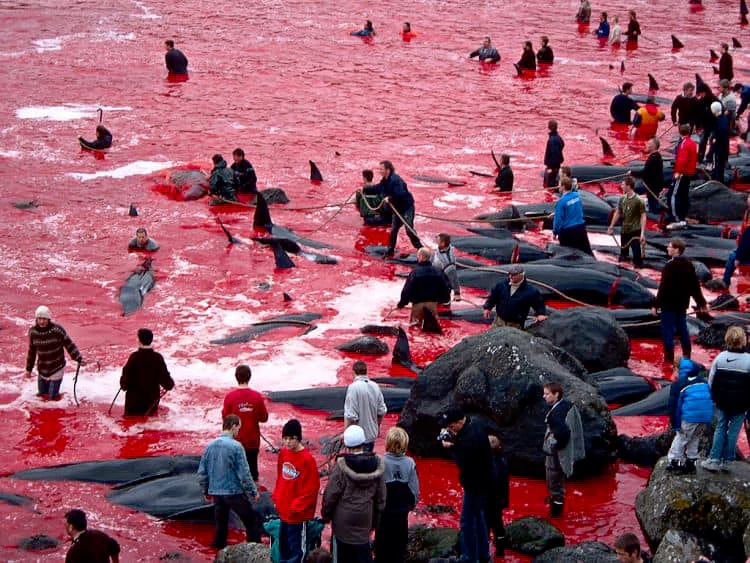
Según un estudio de la Wildlife Conservation Society, en al menos 114 países la población ha consumido una o más de al menos 87 especies de mamíferos marinos desde 1990.
Algunos de los animales más consumidos son pequeños cetáceos como delfines y marsopas. El estudio también reveló que el consumo de mamíferos marinos está aumentando en algunas regiones, especialmente en Asia y África.
Algunos de los lugares o culturas que se alimentan de mamíferos marinos son:
- Japón: Japón es uno de los mayores consumidores de mamíferos marinos del mundo. Tiene una larga historia de caza de ballenas y delfines, que se consideran parte de su patrimonio cultural y tradición culinaria. Japón también afirma que realiza investigaciones científicas sobre las ballenas, pero muchos críticos sostienen que se trata de una tapadera para la caza comercial. Japón se alimenta principalmente de rorcuales aliblancos, rorcuales comunes y delfines.
- Ártico: Los pueblos del Ártico, como los inuit, los yupik y los chukchi, han dependido de la carne y la grasa de ballena durante miles de años. Cazan ballenas, focas, morsas y osos polares para obtener alimentos, ropa, herramientas y combustible. También tienen una conexión espiritual con estos animales y los respetan como parte de su cultura e identidad. Se alimentan principalmente de ballenas de Groenlandia, belugas, narvales, focas anilladas, focas barbudas y focas arpa.
- Canadá: Canadá permite la caza de focas con fines de subsistencia y comerciales. La caza de focas la practican sobre todo terranovas y labradores, que la consideran una fuente vital de ingresos y alimentos. También argumentan que la población de focas es abundante y debe controlarse para proteger las poblaciones de peces. Canadá se alimenta principalmente de focas arpa, focas de casco y focas grises.
- Mozambique: Mozambique es uno de los países donde la gente ha empezado recientemente a comer mamíferos marinos debido a la pobreza y la inseguridad alimentaria. En abril de 2019, más de 100 personas murieron tras comer una ballena muerta que llegó a la costa en la provincia de Cabo Delgado. La ballena estaba contaminada con saxitoxina, una toxina marina mortal que causa envenenamiento paralítico por mariscos. En Mozambique se comen sobre todo ballenas jorobadas.
Cognición de los Mamíferos Marinos.
¿Quién crees que es el animal más inteligente de la Tierra? Podríamos decir que somos nosotros, los humanos. Hemos hecho mucho con nuestros cerebros, que son más grandes y avanzados que los de la mayoría de los animales.
Pero, ¿y si te dijera que hay otro animal que tiene un cerebro más grande y avanzado que el nuestro? Un animal que vive en el agua, no en la tierra. Un animal del que quizá no sepas mucho. Un animal que se llama calderón tropical.
El calderón tropical es un tipo de delfín que puede alcanzar los 6,5 metros de longitud y pesar hasta 2,3 toneladas. Vive en grandes grupos llamados manadas, que pueden tener hasta 150 miembros. Se comunican entre sí mediante diversos sonidos, como chasquidos, silbidos y zumbidos. Se alimenta de peces, calamares y pulpos, y utiliza la ecolocalización para encontrar a sus presas.
Pero lo que hace tan especial al calderón tropical es su cerebro. Su cerebro es enorme, pesa unos 5,7 kilogramos, más del doble que el nuestro. Su cerebro también es complejo, ya que tiene más neuronas y células gliales que cualquier otro mamífero, incluidos nosotros. Las neuronas son las células que transmiten la información en el cerebro, mientras que las células gliales son las que sostienen y protegen a las neuronas. El neocórtex es la parte del cerebro responsable de las funciones cognitivas superiores, como el aprendizaje, la memoria, el razonamiento y el lenguaje.
El calderón tropical tiene un neocórtex que contiene unos 37.200 millones de neuronas y 228.100 millones de células gliales, mientras que nosotros sólo tenemos unos 16.300 millones de neuronas y 84.600 millones de células gliales en nuestro neocórtex (Mortensen y otros, 2014).
¿Qué significa esto para la inteligencia del calderón tropical? Bueno, no lo sabemos con certeza, porque no tenemos una forma clara y universal de medir la inteligencia en las distintas especies. Sin embargo, podemos suponer que tener más neuronas significa tener más capacidad de procesamiento y potencial para aprender y resolver problemas. También podemos fijarnos en algunos de los comportamientos que muestra el calderón tropical, que sugieren que es muy inteligente y social.
Por ejemplo, el calderón tropical puede aprender nuevas habilidades de otras ballenas, como a capturar determinados tipos de peces o a evitar a los depredadores. También puede cooperar con otras ballenas para cazar o defenderse de amenazas. Incluso puede mostrar empatía y altruismo hacia otras ballenas o delfines heridos o varados, ayudándoles o quedándose con ellos hasta que se recuperan o mueren.
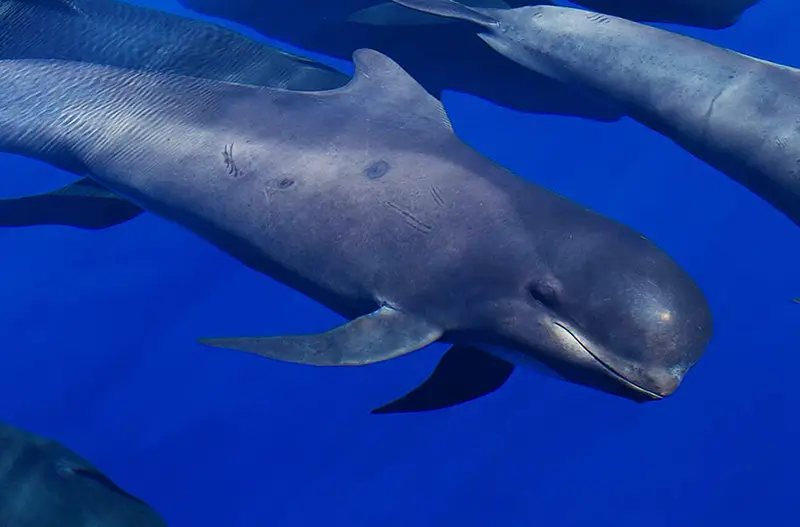
Así que, la próxima vez que piense en quién es el animal más inteligente de la Tierra, no se olvide del calderón tropical. Puede que no tenga brazos, piernas o habla como nosotros, pero tiene un cerebro más grande y complejo que el nuestro. Puede que no tenga tecnología como nosotros, pero tiene cultura y sociedad como nosotros. Puede que no se parezca en nada a nosotros, pero sigue siendo un ser inteligente y sensible que merece nuestro respeto y protección.
¿Tienen Emociones los Peces?
Los científicos suelen ser reacios a atribuir sentimientos humanos a los animales. Pero en general se acepta que muchos animales tienen estados de ánimo, incluidos los peces.
Según algunos estudios recientes, los peces sí tienen emociones y pueden incluso empatizar con otros peces. También pueden mostrar signos de estado de ánimo, inteligencia y necesidades sociales. He aquí algunas de las principales conclusiones de estos estudios:
- Los peces pueden detectar el miedo en otros peces y asustarse también. Esta capacidad está regulada por la oxitocina, la misma sustancia química cerebral que subyace a la capacidad de empatía en los seres humanos (Akinrinade y otros, 2023).
- Los peces sienten apego emocional por sus parejas y pueden volverse pesimistas cuando las pierden. Los científicos descubrieron que las hembras de cíclidos separadas de sus parejas preferidas mostraban un estado afectivo negativo (Laubu y otros, 2019).
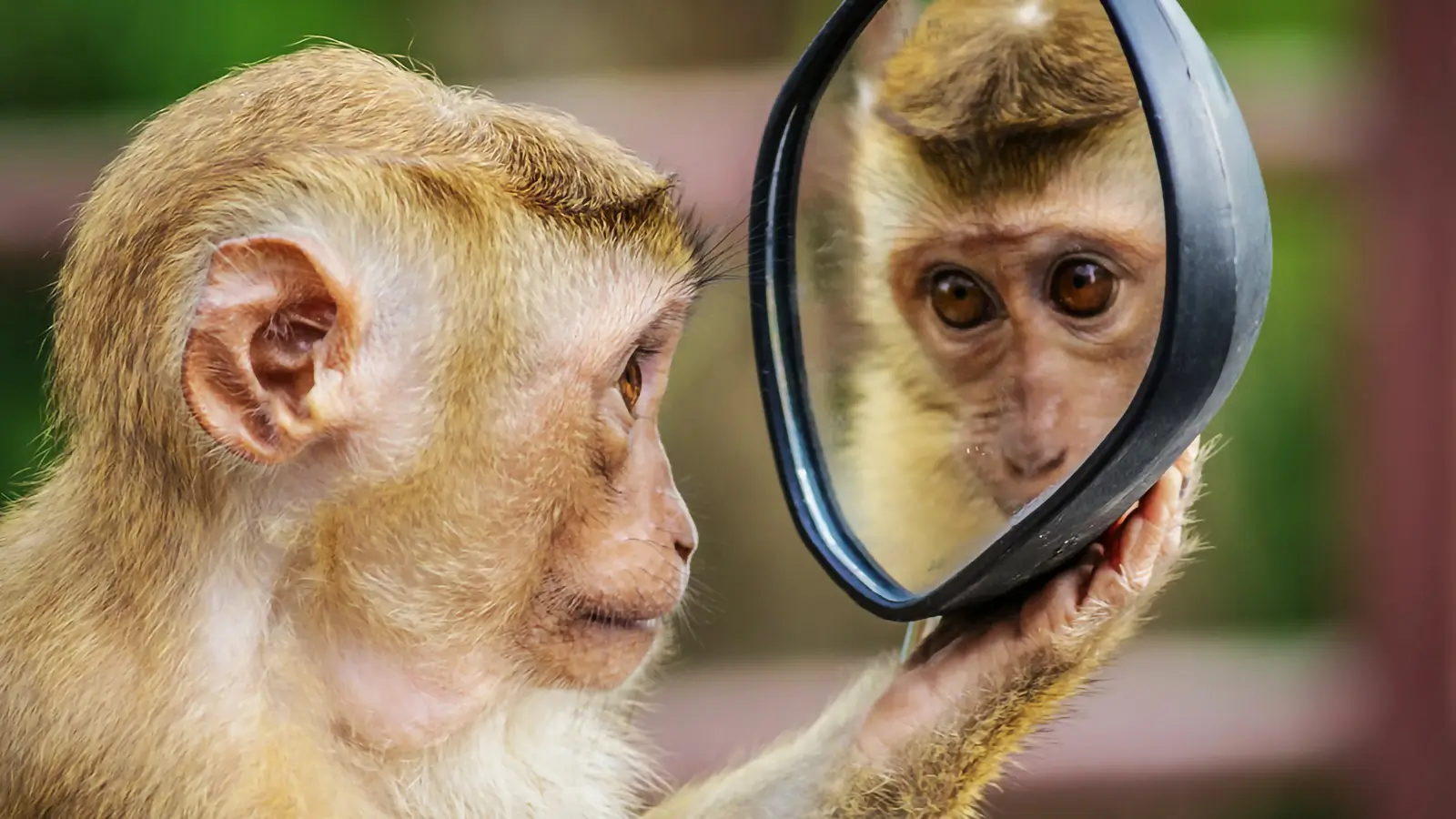
- Los peces tienen sentidos y capacidades complejas que han evolucionado a lo largo de millones de años. Pueden comunicarse, cooperar, aprender, recordar y resolver problemas. Algunos peces incluso utilizan herramientas, construyen nidos y se reconocen en los espejos (Kohda y otros, 2019).
Esta capacidad de reconocerse en el espejo se denomina autorreconocimiento especular (MSR, por sus siglas en inglés) y es un signo de cognición de alto nivel. Significa que tiene sentido de sí mismo, que puede distinguirse de los demás y que puede evaluar su propio estado. No muchos animales pueden hacerlo. Sólo algunos mamíferos y aves, como chimpancés, delfines, elefantes y urracas, han mostrado MSR.
Pero, ¿y los demás animales? ¿También tienen sentido del yo? ¿Cómo podemos ponerlos a prueba?
La forma habitual de comprobar la MSR es la prueba de la marca. Esta prueba consiste en poner una marca en el cuerpo del animal que éste no puede ver sin un espejo, y luego observar si intenta quitársela o tocarla cuando ve su reflejo. Esto indicaría que reconocen la marca como algo anormal en ellos mismos, y no en otro animal.
Sin embargo, esta prueba tiene algunas limitaciones. Supone que el animal puede realizar determinados comportamientos, como la prueba de contingencia y el comportamiento autodirigido. La prueba de contingencia significa que el animal puede entender que el espejo refleja sus propios movimientos y acciones, no los de otra persona. El comportamiento autodirigido significa que el animal puede dirigir su atención o sus acciones hacia sí mismo, no sólo hacia los demás. Estos comportamientos pueden ser difíciles de detectar o interpretar en animales muy diferentes a nosotros, sobre todo en los que no tienen extremidades ni manos para tocarse.
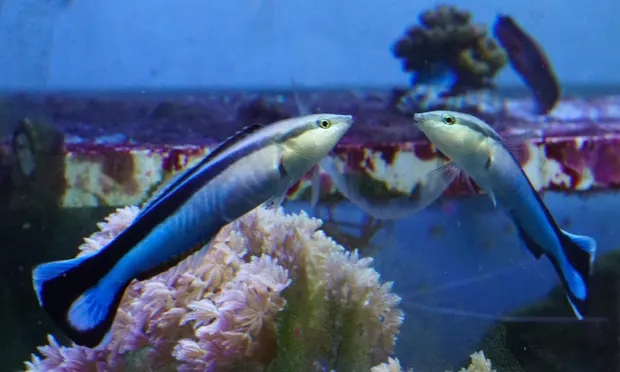
Aquí es donde (Kohda y otros, 2019). Los científicos pusieron a prueba a un pez, el pez limpiador, que es una especie monógama y cooperativa que vive en los arrecifes de coral. Estos peces muestran un comportamiento que podría interpretarse como la superación de la prueba de la marca.
Reaccionan ante su reflejo como si fuera otro pez, realizan movimientos inusuales frente al espejo y miran su reflejo con frecuencia. Cuando los científicos les colocaron una etiqueta de color en el cuerpo y les dieron un espejo, intentaron rascarse la etiqueta frotando el cuerpo contra el espejo u otros objetos. No lo hacían cuando la etiqueta era transparente o cuando no había espejo.
Este hallazgo es sorprendente porque sugiere que los peces también pueden tener MSR. Pero también plantea algunas preguntas. ¿Aceptamos que estos peces son conscientes de sí mismos, basándonos en su comportamiento en la prueba de la marca? ¿O pensamos que su comportamiento se debe a otra cosa, como la curiosidad o la confusión, y que no tienen MSR? Si respondemos afirmativamente a la primera pregunta, ¿qué significa esto para nuestra forma de pensar sobre la inteligencia animal? Si respondemos que no a la segunda pregunta, ¿qué significa esto para la forma en que utilizamos y entendemos la prueba de la marca como una medida de la inteligencia animal? cognición animal?
Contagio Emocional.
El contagio emocional es la forma más básica de empatía, que es la capacidad de comprender y preocuparse por los sentimientos de los demás.
¿Alguna vez te has sentido triste cuando has visto llorar a alguien, o asustado cuando has oído gritar a alguien? Si es así, has experimentado el contagio emocional, que es la capacidad de compartir y sentir las emociones de los demás.
En el estudio sobre el pez cebra (Akinrinade y otros, 2023), que son peces pequeños y coloridos que viven en agua dulce, los científicos querían saber qué hace que el pez cebra sienta y muestre contagio emocional. Se centraron en una hormona llamada oxitocina, conocida por regular la empatía y el vínculo social en mamíferos como los humanos, los perros y los ratones. La oxitocina es producida por células especiales del cerebro y liberada al torrente sanguíneo o directamente a otras regiones cerebrales. La oxitocina puede afectar a cómo nos comportamos y sentimos en distintas situaciones, como abrazar, besar o ayudar.
Los peces cebra son animales muy sociables que pueden formar grupos y comunicarse entre sí. También pueden mostrar contagio emocional, sobre todo cuando ven a sus amigos en peligro. Por ejemplo, cuando un pez cebra se expone a un depredador o a una conmoción, los demás peces cebra cercanos también mostrarán signos de miedo y estrés, como congelarse, lanzarse o cambiar de color.
Descubrimos que la oxitocina es necesaria y suficiente para que el pez cebra observador imite el comportamiento angustiado de los demostradores de su especie. Esto significa que sin oxitocina o su receptor, el pez cebra observador no muestra contagio emocional.
También examinamos las regiones cerebrales que intervienen en el contagio emocional en el pez cebra. Descubrimos que son similares a las que intervienen en el mismo proceso en roedores, como ratones y ratas.
Esto significa que el contagio emocional es un fenómeno evolutivamente conservado que ha estado presente desde el origen de los vertebrados. Esto también significa que el contagio emocional no es exclusivo de los humanos o los mamíferos, sino que lo comparten muchos otros animales, como los peces.
Las Rupturas Duelen, Incluso Si Eres Un Pez.
¿Se ha preguntado alguna vez qué papel desempeñan las emociones en las relaciones sentimentales? Para los seres humanos, los sentimientos son una parte crucial a la hora de encontrar y mantener una pareja, sobre todo al principio de una relación. Cuando nos emparejamos con alguien que nos gusta de verdad, nos sentimos felices y satisfechos, lo que nos hace confiar más en nuestra elección y comprometernos más con ella. Las emociones pueden hacer o deshacer una relación y afectar a su éxito a largo plazo.
Pero, ¿son los humanos los únicos que experimentan emociones en las relaciones? ¿Qué ocurre con otros animales que establecen vínculos duraderos y crían juntos a sus hijos?
Las emociones también son importantes para estos animales, sobre todo cuando su supervivencia y reproducción dependen de lo bien que cooperen con sus parejas.
Para probar esta idea, los científicos estudiaron un pez llamado cíclido convicto, conocido por su monogamia y cuidado parental (Laubu y otros, 2019). Estos peces forman parejas estables que trabajan juntas para defender sus huevos y alevines de los depredadores. Los científicos querían ver cómo afecta la calidad de su pareja a su estado emocional, y cómo influye eso en su éxito reproductivo.
Dieron a las hembras la posibilidad de elegir entre dos machos y, después de que las hembras hicieran su elección, los científicos les asignaron su pareja preferida o no preferida. En algunos casos, los investigadores las separaron y emparejaron a las hembras con los machos que habían rechazado.
Descubrieron que las hembras que tenían su pareja preferida tenían más huevos y alevines que las que tenían su pareja no preferida. Esto demuestra que la calidad de la pareja es importante para estos peces.
Pero, ¿cómo se sentían al respecto? Para medir su estado emocional, utilizamos un método llamado paradigma del sesgo de juicio, que ya se ha empleado en otros animales, como aves y mamíferos. Este método consiste en entrenar a los animales para que asocien diferentes señales con distintos resultados y luego comprobar cómo responden a señales ambiguas.
Por ejemplo, si un pez aprende que una luz azul significa comida y que una luz roja no significa nada, ¿cómo reaccionará ante una luz morada? Un pez optimista esperará comida y se acercará a la luz violeta, mientras que un pez pesimista no esperará nada y evitará la luz violeta.
Descubrieron que las mujeres que tenían una pareja no preferida eran más pesimistas que las que tenían una pareja preferida. Por otro lado, las mujeres que obtuvieron su pareja preferida no mostraron ningún cambio en su estado emocional, lo que sugiere que estaban satisfechas con su situación.
Los resultados de este estudio demuestran que el vínculo de pareja puede afectar a las emociones no sólo de los humanos, sino también de otros animales como los peces. Esto implica que las emociones son una adaptación evolutiva que ayuda a los animales a encontrar y mantener buenas parejas, y a cooperar con ellas para mejorar el éxito reproductivo.
Las emociones no son sólo algo humano, son algo universal.
¿Pueden Sentir Dolor los Peces?
Los peces son uno de los grupos de animales más diversos y utilizados por los seres humanos. Los pescamos en océanos, ríos y lagos para alimentarnos y comerciar con ellos. Los criamos en piscifactorías y tanques para consumo y entretenimiento. Los estudiamos en laboratorios y acuarios para el conocimiento y la innovación.
Por desgracia, mucha gente tiende a subestimar la inteligencia y la sensibilidad de los peces. Piensan que los peces son seres de sangre fría, sin cerebro ni emociones, que no pueden sentir dolor ni sufrir. Piensan que los peces son tan diferentes de nosotros que no tienen importancia moral o ética. Pero, ¿es esto realmente cierto? ¿O es sólo una forma cómoda de justificar nuestra explotación y negligencia hacia estos increíbles animales?
La verdad es que los peces son mucho más de lo que parece a simple vista. Tienen un rico mundo sensorial que les permite ver, oír, oler, saborear y tocar su entorno. Tienen una notable capacidad cognitiva que les permite aprender, recordar, comunicarse y cooperar entre sí. Tienen un sofisticado sistema emocional que les hace experimentar alegría, miedo, estrés y dolor. Tienen una personalidad única que les hace individuales y distintivos.
De hecho, muchos estudios han demostrado que la percepción y la cognición de los peces a menudo igualan o superan las de otros vertebrados, incluidos mamíferos y aves. Por ejemplo, algunos peces pueden utilizar herramientas, como piedras o conchas, para abrir presas duras, una habilidad que requiere resolución de problemas e innovación. Algunos peces pueden contar, clasificar, planificar y engañar, habilidades que indican pensamiento y razonamiento de orden superior.
¿Y el dolor? ¿Sienten los peces el dolor como nosotros? Se trata de una cuestión controvertida que lleva décadas debatiéndose entre científicos, filósofos y defensores de los animales. Algunos sostienen que los peces no tienen las estructuras cerebrales ni las terminaciones nerviosas necesarias para sentir dolor. Otros afirman que los peces sí tienen respuestas fisiológicas y conductuales que indican dolor. Las pruebas a favor de ambas posturas son complejas y poco concluyentes.
Sin embargo, una revisión de los datos disponibles sugiere claramente que los peces experimentan dolor de forma similar a otros vertebrados (Marrón, 2014).
La revisión descubrió que los peces tienen nociceptores, que son células nerviosas especializadas que detectan estímulos nocivos y envían señales al cerebro. La revisión también descubrió que los peces tienen receptores opioides, que son moléculas que se unen a sustancias naturales o sintéticas que reducen la sensación de dolor. La revisión también descubrió que los peces muestran cambios en su comportamiento, fisiología y actividad cerebral cuando se exponen a estímulos dolorosos, como descargas eléctricas, calor o sustancias químicas.
Estos hallazgos implican que los peces no sólo son conscientes del dolor, sino que también lo sufren. Esto significa que los peces son seres sensibles que tienen una experiencia subjetiva de su existencia. Esto significa también que los peces merecen nuestra consideración moral y un trato ético.
Por desgracia, las leyes y políticas actuales no reflejan esta realidad. Los peces suelen quedar excluidos de la protección legal y las normas de bienestar que se aplican a otros vertebrados. Los peces suelen ser objeto de prácticas crueles e inhumanas en la pesca, la acuicultura, la investigación y las industrias del entretenimiento. A menudo se mata a los peces sin aturdimiento ni anestesia, causándoles agonía y angustia innecesarias.
Esto no sólo es poco ético, sino también insostenible. La sobrepesca y la contaminación amenazan la supervivencia de muchas especies de peces y ecosistemas. El cambio climático y la pérdida de hábitats están alterando el equilibrio natural del medio acuático. La salud y el bienestar humanos también están en peligro por el consumo de productos pesqueros contaminados o enfermos.
¿Pueden Comer Pescado los Vegetarianos?
La respuesta corta es no.
Los vegetarianos no comen ningún tipo de carne animal, ya proceda de la tierra o del agua. Los peces también son animales y tienen sentimientos, igual que las vacas, los cerdos y los pollos.
Comer pescado va en contra del principio vegetariano de evitar el sufrimiento y la explotación de los animales.
Pero espera, dirás, ¿qué pasa con las personas que comen pescado pero no carne? ¿No son también vegetarianos? En realidad, no lo son.
Tienen otro nombre: pescatarianos.
Los pescatarianos son personas que siguen una dieta mayoritariamente vegetariana pero que ocasionalmente comen pescado y marisco. Pueden tener distintos motivos para hacerlo, como disfrutar de su sabor u obtener beneficios para la salud.
Sin embargo, comer pescado no es necesario para tu salud si eres vegetariano o vegano. Puedes obtener todos los nutrientes esenciales que necesitas de las plantas o de suplementos.
Por ejemplo, se sabe que el pescado y el marisco tienen un alto contenido en proteínas, ácidos grasos omega-3, zinc y vitamina B12.
También puede obtener omega-3 de fuentes vegetales, como los suplementos de DHA a base de algas, y en cuanto al zinc y la vitamina B12, la chlorella es una fuente excelente de ambos. Puedes leer más sobre la chlorella en este artículo Beneficios de la Chlorella: Guía Esencial.
Seagan Vs Pescatarian.
El término seaganismo fue acuñado por Sana, nutricionista y experta en bienestar, que explica que significa "cuando combinas una dieta vegana con pescado y marisco". Esta dieta se ha hecho especialmente popular tras el auge del veganismo, que ha atraído a mucha gente por su atractivo medioambiental y ético.
Sin embargo, el veganismo no está exento de dificultades, sobre todo cuando se trata de obtener suficientes proteínas y ácidos grasos omega-3, esenciales para nuestra salud.
Quizá se pregunte en qué se diferencia la dieta seagan de la pescatariana, otra forma popular de alimentación que incluye pescado y marisco, pero no carne ni aves. La principal diferencia es que el seaganismo no incluye productos lácteos, por lo que los huevos, la leche y el queso quedan fuera de la lista de la compra.
Esto significa que los marinos recurren a fuentes vegetales de calcio, como las verduras de hoja verde, los frutos secos, las semillas y la leche vegetal enriquecida. También evitan los productos de origen animal, como la miel, la gelatina y el cuero.
Otra diferencia es que los marineros son muy cuidadosos a la hora de elegir pescado y marisco de origen sostenible, para minimizar su impacto ambiental y garantizar el bienestar de los animales. Evitan las especies sobreexplotadas, como el bacalao, el atún y el pez espada, y optan por peces más pequeños que se encuentran más abajo en la cadena alimentaria, como las sardinas, las anchoas y la caballa.
¿Cuáles son los beneficios para la salud de la dieta seagan? Una de las principales razones por las que la gente elige la dieta seagan son sus beneficios para la salud. Al comer una dieta basada en plantas con pescado y marisco unas cuantas veces a la semana, los seagan pueden disfrutar de lo mejor de ambos mundos: las vitaminas, minerales, antioxidantes y fibra de las plantas, y la proteína, omega-3, vitamina B-12, y vitamina D del pescado.
La otra opción es utilizar sólo suplementos. Sin embargo, este tipo de dieta es más apetecible para las personas que no quieren seguir una dieta vegana completa y no están en el veganismo por razones filosóficas, sino más bien por razones de salud.
Si sigue una dieta basada en plantas por motivos de salud, podría ser beneficioso añadir pescado de bajo contenido en la cadena alimentaria una vez a la semana para evitar la deficiencia de omega 3 si no desea tomar suplementos. Esta dieta es mucho mejor que la dieta americana estándar.
Los marinos pueden beneficiarse de la menor ingesta de grasas saturadas y colesterol que supone evitar la carne y los productos lácteos. Esto puede ayudar a reducir la presión arterial y los niveles de colesterol, y mejorar el control del azúcar en sangre.
Sin embargo, hay un gran pero. Sólo es mejor para la salud no comer pescado más de una vez a la semana. Comer pescado todos los días anulará la mayoría de los beneficios de una dieta basada en plantas.
Pescado y Colesterol.
El pescado es carne y toda la carne contiene colesterol. La razón por la que los médicos no suelen aconsejar que se reduzca el consumo de pescado es que éste contiene ácidos grasos omega-3.
El argumento es que, aunque todos los pescados contienen colesterol, son bajos en grasas saturadas, que son las principales responsables de elevar los niveles de colesterol LDL (malo). Algunos pescados también contienen ácidos grasos omega-3, que pueden ayudar a reducir los niveles de triglicéridos y aumentar los de colesterol HDL (bueno). Los omega-3 son esenciales para la salud y pueden proteger de las enfermedades cardiovasculares. El problema es que puedes obtener omega 3 de los suplementos de DHA a base de algas y no necesitas pescado.
Los distintos tipos de pescado tienen diferentes cantidades de colesterol y omega-3. Por ejemplo, el salmón, el arenque, la caballa y las sardinas son ricos en omega-3 y bajos en colesterol. Los mariscos como las gambas, la langosta, el cangrejo y las ostras tienen un alto contenido en colesterol, pero también contienen algunos omega-3. El calamar tiene el mayor contenido en colesterol. El calamar es el marisco con mayor contenido de colesterol.
Debe evitar freír o añadir mantequilla o salsas de nata a su pescado o pol de palma o cualquier otra fuente de grasa saturada, ya que estos métodos pueden aumentar el contenido de grasa saturada de la comida y esto hará que su pescado sea tan malo como la carne de cerdo para los niveles de colesterol. Esto añadiría grasa saturada al colesterol ya existente en el pescado. En su lugar, puede asar, hornear, cocinar a la parrilla o al vapor su pescado y sazonarlo con hierbas, especias, zumo de limón o vinagre.
| Marisco (crudo, raciones de 3,5 oz) | Colesterol total (mg) | Ácidos grasos omega-3 (gramos) |
| Langosta | 71-95 | 0.1 |
| Salmón | 63-74 | 2.6 |
| Ostras | 55 | 0.7 |
| Cangrejo | 52 | 0.4 |
| Fletán | 41 | 0.6 |
| Atún | 30-48 | 0.2-1.5 |
| Sardinas | 142 | 1.2 |
| Calamar | 231 | 0.4 |
| Gambas | 194 | 0.32 |
Toxicidad Para Los Peces.
Imagina un vaso de agua con una gota de veneno. ¿Te lo beberías? Probablemente no. Ahora imagina esa misma gota de veneno diluida en un gran cubo de agua. ¿Te la beberías? Tal vez sí, pensando que el veneno está demasiado diluido para hacerte daño. Pero, ¿y si no fueras el único que bebe de ese cubo? ¿Y si hubiera millones de criaturas diminutas que también bebieran de él y luego se convirtieran en tu alimento? Eso es lo que está ocurriendo en nuestros océanos ahora mismo.
Cada día, toneladas de contaminación procedente de fábricas, granjas, ciudades y otras fuentes son arrastradas por la lluvia y los ríos, y acaban en el océano. Algunos de estos contaminantes son biodegradables, es decir, pueden descomponerse mediante procesos naturales. Pero otros son persistentes, lo que significa que permanecen en el océano durante mucho tiempo, creando un grave problema para la vida marina.
Aunque la concentración de estos contaminantes en el océano es baja, no desaparecen sin más. Son absorbidos por el plancton y las algas, los diminutos organismos que forman la base de la cadena alimentaria marina. Estos organismos filtran el agua para obtener sus nutrientes, pero también acaban ingiriendo los contaminantes junto con ellos. Es lo que se denomina bioacumulación, el proceso por el que las toxinas se acumulan en los organismos vivos.
Pero la cosa no acaba ahí. Cuando animales más grandes, como los peces, se comen el plancton y las algas, también se comen las toxinas que han acumulado. Y cuando animales aún más grandes, como tiburones, delfines o humanos, comen estos peces, también se comen las toxinas que han acumulado. Es lo que se denomina biomagnificación, el proceso por el que las toxinas aumentan su concentración a medida que ascienden por la cadena alimentaria.
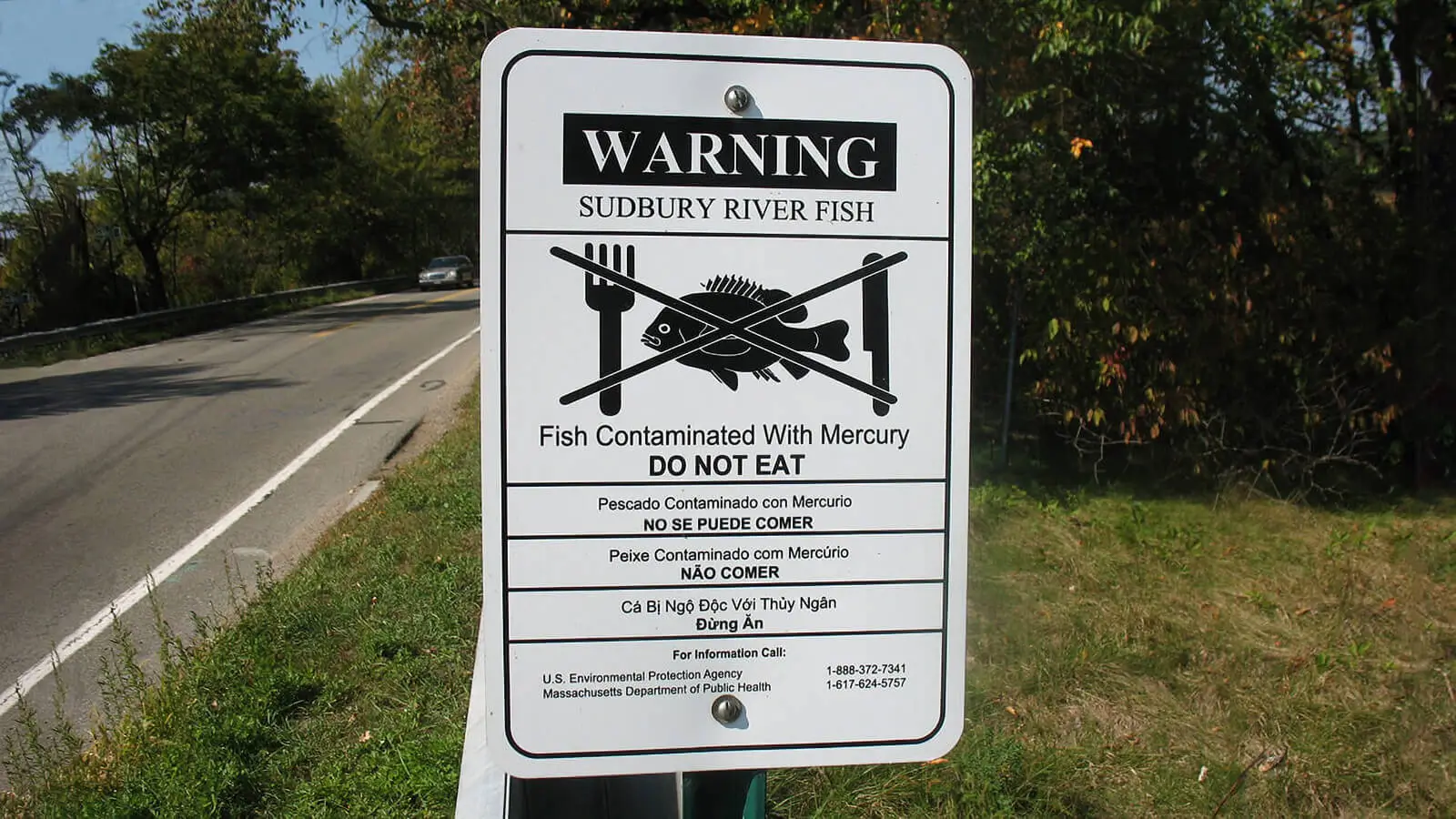
El resultado es que, aunque los niveles de contaminantes son minúsculos cuando se miden directamente en el agua de mar, pueden ser gravemente tóxicos cuando se miden en los principales depredadores del océano. Comer este tipo de pescado puede tener efectos devastadores para nuestra salud, como por ejemplo la inflamación...daño nervioso, cáncery mucho más.
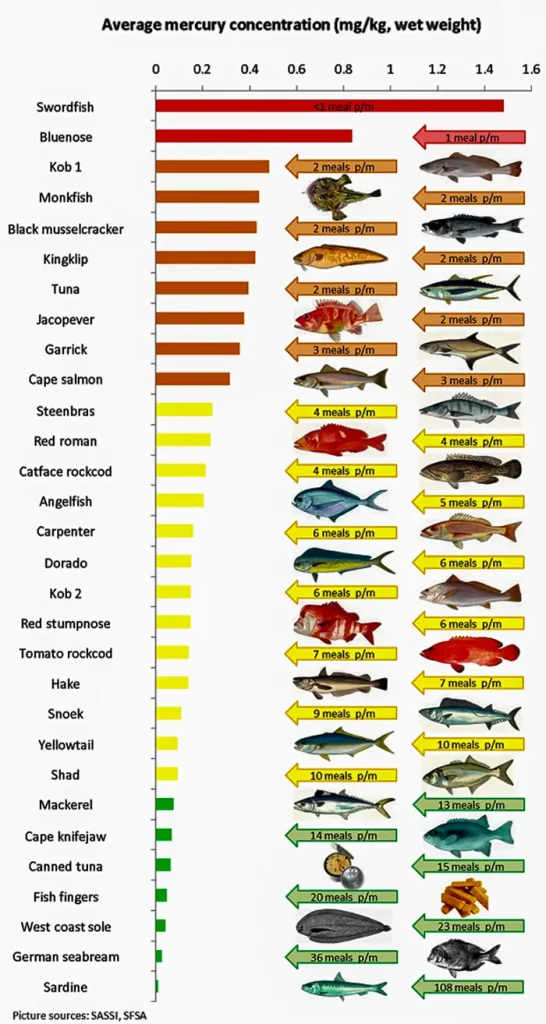
Puede que pienses que el pescado es una fuente de carne saludable, rico en proteínas y ácidos grasos omega-3. Pero la verdad es que el pescado es de todo menos sano. El la contaminación hoy es tan grande que incluso si ignoramos todos los demás efectos nocivos del consumo de carne que he analizado en otros artículos libros y temas, la contaminación causada por el hombre por sí sola es suficiente para ser una razón para no tocar nunca nada que salga del océano, especialmente si estás embarazada o si eres un niño.
¿Qué podemos hacer para protegernos a nosotros mismos y a nuestros océanos de esta amenaza? Podemos empezar por reducir nuestro consumo de pescado y marisco o evitarlos por completo. También podemos elegir pescados que estén más abajo en la cadena alimentaria y tengan menos probabilidades de estar contaminados, como las sardinas o las anchoas. También podemos apoyar a las organizaciones ecologistas que trabajan para prevenir y limpiar la contaminación de los océanos. Y podemos educarnos a nosotros mismos y a los demás sobre los peligros de la contaminación oceánica y cómo prevenirla.
Puede leer más sobre la toxicidad de los peces en estos artículos Toxicidad del pescado: la carne más tóxica y Peces de piscifactoría: el paraíso del "pozo negro.
Preguntas Frecuentes
Referencias:
- Akinrinade, I., Kareklas, K., Teles, M., Reis, T. K., Gliksberg, M., Petri, G., Levkowitz, G., & Oliveira, R. F. (2023). Evolutionarily conserved role of oxytocin in social fear contagion in zebrafish. Science, 379(6638), 1232-1237. https://doi.org/10.1126/science.abq5158
- Laubu, C., Louâpre, P., & Dechaume-Moncharmont, F. (2019b). Pair-bonding influences affective state in a monogamous fish species. Actas de la Royal Society B: Ciencias Biológicas, 286(1904), 20190760. https://doi.org/10.1098/rspb.2019.0760
- Kohda, M., Hotta, T., Takeyama, T., Awata, S., Tanaka, H., Asai, J., & Jordan, L. A. (2019). Si un pez puede pasar la prueba de la marca, ¿cuáles son las implicaciones para las pruebas de conciencia y autoconciencia en animales? PLOS Biology, 17(2), e3000021. https://doi.org/10.1371/journal.pbio.3000021
- Brown, C. (2014). Inteligencia, sensibilidad y ética de los peces. Cognición animal, 18(1), 1-17. https://doi.org/10.1007/s10071-014-0761-0
- Mortensen, H. S., Pakkenberg, B., Dam, M., Dietz, R., Sonne, C., Mikkelsen, B., & Eriksen, N. (2014). Relaciones cuantitativas en el neocórtex delphinid. Fronteras de la neuroanatomía, 8, 132. https://doi.org/10.3389/fnana.2014.00132
Contenidos Relacionados
¿Tienes alguna duda acerca de la nutrición y la salud?
Me encantaría saber de usted y responderlas en mi próxima publicación. Agradezco sus aportes y opiniones y espero tener noticias suyas pronto. También te invito a síguenos en Facebook, Instagram y Pinterest para más contenidos sobre dieta, nutrición y salud. Puedes dejar un comentario allí y conectar con otros entusiastas de la salud, compartir tus consejos y experiencias, y recibir apoyo y ánimo de nuestro equipo y nuestra comunidad.
Espero que este post le haya resultado informativo y ameno y que esté preparado para aplicar los conocimientos adquiridos. Si le ha resultado útil, por favor compártelo con tus amigos y familiares que también podrían beneficiarse de ella. Nunca se sabe quién puede necesitar orientación y apoyo en su camino hacia la salud.
– También Te Puede Interesar –

El agotamiento de glucógeno - Cómo no hacer ejercicio
Beneficios del Sulforafano: El Superpoder Desintoxicante del Brócoli

La Diabetes causa y los hidratos de carbono refinados - Los veganos argumento
El tamaño del cerebro, la inteligencia y el consumo de carne - Los veganos argumento
Astaxantina Beneficios: Antioxidante Natural Más Potente del Mundo

Deficiencias Nutricionales en la Dieta Vegana: Estrategias de Prevención
Agua Destilada Para Beber: ¿Una Ayuda Para la Desintoxicación o un Veneno Mortal?

Coca-Cola Company - Reseña Histórica

Aprenda Sobre Nutricion

Milos Pokimica es doctor en medicina natural, nutricionista clínico, escritor sobre salud médica y nutrición y asesor en ciencias de la nutrición. Autor de la serie de libros Go Vegan? Revisión de la Ciencia, también dirige el sitio web sobre salud natural GoVeganWay.com.
Descargo De Responsabilidad Médica
GoVeganWay.com le ofrece reseñas de las últimas investigaciones relacionadas con la nutrición y la salud. La información proporcionada representa la opinión personal del autor y no pretende ni implica sustituir el asesoramiento, diagnóstico o tratamiento médico profesional. La información proporcionada tiene fines informativos únicamente y no pretende sustituir la consulta, el diagnóstico y/o el tratamiento médico de un médico o proveedor de atención médica calificado.NUNCA ignore el CONSEJO MÉDICO PROFESIONAL O RETRASAR la BÚSQUEDA de TRATAMIENTO MÉDICO a CAUSA DE ALGO QUE HAYA LEÍDO EN O accesibles a TRAVÉS de GoVeganWay.com
NUNCA APLICAR CUALQUIER cambio de ESTILO de vida O CAMBIOS EN su totalidad COMO UNA CONSECUENCIA DE ALGO QUE HA LEÍDO EN GoVeganWay.com ANTES de CONSULTAR con LICENCIA PROFESIONAL MÉDICO.
En el caso de una emergencia médica, llame a un médico o al 911 inmediatamente. GoVeganWay.com no se recomienda ni aprueba ninguna de los grupos, las organizaciones, las pruebas, los médicos, productos, procedimientos, opiniones u otra información que pueda ser mencionado en el interior.
Selecciones del editor –

El cáncer Editor De Selecciones Fitoquímicos
Poder Anticancerígeno de Frutas y Verduras: Pruebas Clínicas e in Vivo
Algunos extractos vegetales rivalizan con los principales fármacos quimioterapéuticos y, al mismo tiempo, atacan varios tipos diferentes de células cancerosas.
Antioxidantes Editor De Selecciones ORAC
Aceites Esenciales Como Suplementos Antioxidantes: Reglas y Estrategias
Los aceites esenciales de calidad alimentaria pueden ser una estrategia cómoda y de fácil consumo para optimizar el valor antioxidante y las puntuaciones ORAC de nuestra dieta.
Antioxidantes Editor De Selecciones ORAC
Dieta Rica en Antioxidantes: Reglas y Estrategias Generales
Existen estrategias fáciles y rentables para optimizar el valor antioxidante de nuestra dieta.
Antioxidantes Editor De Selecciones ORAC
Comprender los Valores ORAC: Niveles de Antioxidantes en los Alimentos
Cuando tu principal fuente de antioxidantes es el café, sabes que tienes un grave problema.
Antioxidantes Editor De Selecciones ORAC
Astaxantina Beneficios: Antioxidante Natural Más Potente del Mundo
La astaxantina es el más potente y natural antioxidante universal (petróleo y agua-soluble) que conoce la ciencia. Se acumula en los tejidos y nunca puede convertirse en un pro-oxidante.
Antioxidantes Editor De Selecciones ORAC Fitoquímicos
Antioxidantes: Conceptos Básicos
Los productos de origen animal no contienen fitoquímicos ni antioxidantes. Por término medio, los alimentos vegetales contienen más de 60 veces más antioxidantes que los de origen animal.

Editor De Selecciones Dieta Vegana
Deficiencias Nutricionales en la Dieta Vegana: Estrategias de Prevención
Existen nueve deficiencias nutricionales comunes a escala poblacional que afectan a las personas que siguen una dieta basada en plantas. Si no se corrigen a tiempo, algunas deficiencias tienen consecuencias terribles y no tratables.
Editor De Selecciones Dieta Óptima
Deficiencia de Micronutrientes en la Dieta Americana Estándar: Estrategias de Optimización
El perfil nutricional de nuestra dieta moderna a base de carne, azúcar y alimentos procesados es totalmente incongruente con nuestra evolución, lo que provoca una grave carencia de micronutrientes.
Editor De Selecciones Fitoquímicos
Fitoquímicos: Conceptos Básicos
Todos y cada uno de los fitoquímicos que existen tienen una acción biológica en el cuerpo humano. Cada uno de los millones de fitoquímicos diferentes.
Editor De Selecciones La leche Dieta Óptima
Leche y Productos Lácteos: Correlaciones de Riesgo Para la Salud
Las asociaciones conocidas con la leche y el consumo de lácteos son infertilidad, cáncer de ovario y de mama, leucemia, diabetes tipo 1, autismo, arteriosclerosis, cataratas, artritis reumatoide, esclerosis múltiple, hiperactividad, congestión, granos y más...

El cáncer Editor De Selecciones La proteína
Proteína Completa: Señalización del IGF-1 en la Formación del Cáncer
Cuando usted come proteínas animales que tienen cuatro veces más probabilidad de desarrollar todos los tipos de cáncer. Cuando usted fuma, usted tiene cuatro veces la posibilidad de desarrollar cáncer de pulmón.

El cáncer Editor De Selecciones La proteína
La Anatomía de Cáncer de riesgo para la Salud de las correlaciones
Según los medicamentos, alrededor del 2% de los cánceres se consideran puramente causados por factores genéticos. El mismo rango que dentro del reino animal. No te han dicho toda la verdad.
Milos Pokimica es escritor especializado en salud y nutrición y asesor en ciencias nutricionales. Autor de la serie de libros Go Vegan? Revisión de la Ciencia, también dirige el sitio web sobre salud natural GoVeganWay.com.
Últimos artículos -

La Restricción De Calorías La longevidad
Cómo Ayunar: Alimentos en Ayunas Que No Rompen la Autofagia
Autofagia. ¿Alguna vez te has preguntado qué les sucede a las células de tu cuerpo cuando mueren o se dañan? ¿Simplemente se acumulan y crean problemas, o se eliminan de alguna manera? La respuesta es que tu cuerpo...
Salud Dental Prevención
Dolor y Sensibilidad a los Dulces: Solución Rápida y Duradera
Una solución rápida y fácil para aliviar el dolor es el aceite esencial de clavo, un potente antioxidante y analgésico que puede ayudar con las enfermedades de las encías y el dolor de muelas.
Los frijoles
Judías Verdes: Nutrición y Beneficios Para la Salud
Los frijoles verdes son bajos en calorías y ricos en compuestos naturales que pueden ayudar a controlar su azúcar en la sangre, reducir el colesterol y combatir los radicales libres.
Dieta de alimentos crudos Dieta Vegana
Se Pueden Comer Setas Crudas: Riesgos Para La Salud, Nutrición Y Seguridad
Las setas tienen toxinas sensibles al calor, como la hidracina o la agaritina, y paredes celulares compuestas de quitina que el ser humano no puede digerir bien.
Dieta Vegana
¿Son Los Peces Animales? Una Perspectiva Cultural
En algunas culturas, la carne de pescado no se considera carne, y el pescado está permitido incluso durante el ayuno.

Salud Dental Prevención
Enjuague bucal natural casero: probado, más fuerte y menos tóxico
El enjuague bucal natural hecho en casa es más fuerte que la clorhexidina, menos tóxico y si se ingiere puede dar un poco de náuseas, pero también un alto estallido en el valor ORAC.
Salud Dental Prevención
Cómo Detener la Caries Dental: Síntomas, Causas y Prevención
El consumo de azúcar es la principal causa de caries y deterioro dental, combinado con carencias de minerales, especialmente magnesio, zinc, cobre y oligoelementos.
Antioxidantes Superalimentos
Amla: Beneficios Probados, Nutrición e Importancia Clínica
El amla es uno de los antioxidantes más potentes del mundo, con una puntuación ORAC de 261.530. Es una rica fuente de fitoquímicos que tienen diversos beneficios para la salud. Es una rica fuente de fitoquímicos que tienen diversos beneficios para la salud.
Top Noticias De Salud — ScienceDaily
- How the body really ages: 7 million cells mapped across 21 organsen febrero 28, 2026
Scientists have built a massive cellular atlas showing how aging reshapes the body across 21 organs. Studying nearly 7 million cells, they found that aging starts earlier than expected and unfolds in a coordinated way throughout the body. About a quarter of cell types change in number over time, and many of these shifts differ between males and females. The research also highlights shared genetic “hotspots” that could become targets for anti-aging therapies.
- Scientists discover a bacterial kill switch and it could change the fight against superbugsen febrero 28, 2026
Drug-resistant bacteria are becoming harder to treat, pushing scientists to look for new antibiotic targets. Researchers have now discovered that several unrelated viruses disable a key bacterial protein called MurJ, which is essential for building the bacterial cell wall. High-resolution imaging shows these viral proteins lock MurJ into a single position, stopping cell wall construction and leading to bacterial death.
- Your morning coffee could one day help fight canceren febrero 28, 2026
Scientists at Texas A&M are turning an everyday pick-me-up into a high-tech medical switch. By combining caffeine with CRISPR gene editing, researchers have created a system that allows cells to be programmed in advance — and then activated simply by consuming a small dose of caffeine from coffee, chocolate, or soda. The approach, known as chemogenetics, lets scientists precisely turn gene-editing activity on and off inside targeted cells, including powerful immune T cells that can fight […]
- Scientists discover diet that tricks the body into burning fat without exerciseen febrero 27, 2026
Researchers found that cutting two amino acids common in animal protein—methionine and cysteine—made mice burn significantly more energy. The boost in heat production was nearly as powerful as constant exposure to cold temperatures. The mice didn’t eat less or exercise more; they simply generated more heat in their beige fat. The discovery hints that diet alone might activate the body’s calorie-burning machinery.
- Iron outperforms rare metals in stunning chemistry advanceen febrero 27, 2026
Researchers at Nagoya University have created a more efficient iron-based photocatalyst that could reduce the need for rare and expensive metals in advanced chemistry. Unlike earlier designs, the new catalyst uses far fewer costly chiral ligands while still precisely controlling the three dimensional structure of molecules.
- Scientists turn methane into medicine in stunning breakthroughen febrero 27, 2026
Scientists have unveiled a breakthrough way to turn natural gas—long burned as fuel—into valuable chemical building blocks for medicines and other high-demand products. By designing a clever iron-based catalyst powered by LED light, researchers managed to activate stubborn molecules like methane and transform them into complex compounds, even creating the hormone therapy drug dimestrol directly from methane for the first time.
- American Heart Association warns 60% of US women will have cardiovascular disease by 2050en febrero 27, 2026
Heart disease is on track to tighten its grip on American women. New projections from the American Heart Association warn that over the next 25 years, cardiovascular disease will rise sharply, driven largely by a surge in high blood pressure, diabetes, and obesity. By 2050, nearly 60% of women in the U.S. could have high blood pressure, and close to one in three women ages 22 to 44 may already be living with some form of heart disease.
PubMed, #Dieta vegana –
- Three-Tier Plate, Triple Win: Health, Sustainability, and Equity in the Slovenian Nutrition Guidelines 2025en febrero 27, 2026
The prevalence of diet-related noncommunicable diseases (NCDs; e.g., obesity, type 2 diabetes, cardiovascular disease, and certain cancers) is increasing globally, while food systems are also driving climate change and biodiversity loss. Transitioning to predominantly plant-based (“plant-forward”) dietary patterns can improve health and lower environmental impacts. We present the Slovenian Nutrition Guidelines 2025 (SNG2025)-their methodology, development, and core recommendations. Developed […]
- Omnivores, Flexitarians, Vegetarians, and Vegans Attach Different Importance to Eleven Motives for Daily Food Choice Decisions: Findings from 5111 UK Adultsen febrero 27, 2026
Many initiatives aimed at improving population-wide health or providing food sources that are sustainable and environmentally friendly are focused on a switch from primarily meat-based diets to diets that are more vegetable-based. Building rational approaches to promoting such changes requires an understanding of consumers’ motives for their dietary choices. Aiming to extend prior research, the present study examines eleven food choice motives across nine dietary groups varying in their […]
- Precision Nutrition in Type 2 Diabetes Prevention Through Molecular Nutrigenomic and Epigenetic Modulation of Insulin Signaling and Glucose Metabolismen febrero 27, 2026
Precision nutrition has emerged as a promising strategy for the prevention of type 2 diabetes mellitus (T2DM) by targeting molecular pathways underlying insulin resistance and impaired glucose metabolism. Accumulating evidence indicates that dietary patterns, caloric intake, and specific nutrients can modulate gene expression and epigenetic mechanisms involved in insulin signaling, inflammation, and energy homeostasis. This narrative review synthesizes recent human and experimental studies…
- Livestock Integration Into Cropping Systems Enhances Their Climate Change Resistance and Mitigation While Reducing Their Environmental Impactsen febrero 26, 2026
The sustainability of cropping systems is linked to their circularity, which is their ability to close resource cycles such as carbon and nitrogen through strategies for managing crop residues, byproducts, and other inputs. Here, we investigate three crop rotations-business-as-usual (BAU), vegan, and integrated crop-livestock systems (ICLS)-varying in livestock integration, crop residue fate, and human diet sustained. Under ten climate change scenarios, we compare their impacts on multiple…
- Association between dietary pattern, atherogenic index of plasma, and cardiovascular disease risk factors amongst adults: A cross-sectional cohort-based studyen febrero 26, 2026
CONCLUSION: The findings suggest that high adherence to a vegan diet is beneficial for cardiovascular health, as evidenced by lower AIP, a marker of atherosclerosis risk. It highlights the potential role of dietary interventions in reducing cardiovascular risk, with a focus on plant-based diets for improving lipid profiles and heart health.
Publicaciones aleatorias –

Editor De Selecciones Dieta Óptima La Dieta Paleo
Dieta paleo - Sin carne a la vista
Los humanos evolucionaron durante 50 millones de años a partir de mamíferos herbívoros. La caza no es una actividad natural de los homínidos. La dieta paleo sólo existe desde hace 200.000 años.
El cáncer El embarazo Toxicidad
Aspartamo: La Verdad Sobre Sus Riesgos Y Peligros
Una de las excitotoxinas que han hecho tan feliz a la industria es la sustancia química que hace todas las cosas que hacen las excitotoxinas pero que, a diferencia del glutamato monosódico, es dulce al gusto. Se conoce químicamente como aspartamo (Nutra Sweet).

La Diabetes Editor De Selecciones
La Diabetes causa y grasas saturadas - Los veganos argumento
A medida que aumenta el nivel de grasa en el torrente sanguíneo, disminuye la capacidad del organismo para eliminar el azúcar. Una de las causas de la diabetes es nuestra inadaptación a una gran ingesta de grasas
Antioxidantes Editor De Selecciones ORAC
Dieta Rica en Antioxidantes: Reglas y Estrategias Generales
Existen estrategias fáciles y rentables para optimizar el valor antioxidante de nuestra dieta.

Dieta Óptima ORAC
Extracción Casera de Aceite: La Técnica Secreta de la Densidad de Nutrientes
El procesamiento de los alimentos (casa de la extracción de aceite) también puede ser utilizado en invertir para aumentar la densidad nutricional y el perfil de los alimentos.
El cáncer Toxicidad
La Exposición al Arsénico y el Consumo de Carne- El "Veneno" Libre de Aves de Corral Ley
En EE.UU., más de las tres cuartas partes de la exposición al arsénico procede de productos animales y, sobre todo, del pollo, más que de la ternera, el cerdo, los perritos calientes, los huevos y la leche.
La Diabetes La leche
Leche A1: Diabetes, Autismo y Cardiopatías
La evidencia epidemiológica sugiere que A1 leche con el a1 de la beta-caseína, es una variante posible factor de riesgo en el desarrollo de la diabetes tipo 1 en los niños, autismo y enfermedades del corazón en los adultos.
Antioxidantes El cáncer Fitoquímicos
Cúrcuma: Mejora de la Salud y Beneficios Clínicos
En la cúrcuma se han identificado hasta ahora más de 300 fitoquímicos activos. Es tan potente que incluso puede alterar nuestra expresión génica.
Desintoxicación Agua Potable Toxicidad
Agua Destilada Para Beber: ¿Una Ayuda Para la Desintoxicación o un Veneno Mortal?
Existe mucha desinformación sobre las propiedades desintoxicantes del agua y del agua destilada en particular. La purificación del agua es un gran negocio. ¿Qué dice la ciencia al respecto?
Dieta Óptima La Dieta Paleo La proteína
Dieta Rica en Proteínas y Acidosis Metabólica: Correlaciones Entre los Riesgos Para la Salud
Los niveles bajos de acidosis metabólica crónica son un fenómeno común en el mundo occidental. La mayoría de las personas que siguen la dieta estadounidense estándar se encuentran en un estado de acidosis crónica y no son conscientes de ello.

Publicaciones destacadas -

Editor De Selecciones La Obesidad
Experimento de Inanición de Minnesota: Por qué las Dietas Nos Hacen Engordar. La Psicología del Hambre.
Uno de los primeros estudios científicos sobre lo que es el hambre hace a la mente fue observado en un estudio recordado como el Minnesota Hambre Experimento realizado por la Universidad de Minnesota, ya en 1944.

La Diabetes Editor De Selecciones
La Diabetes causa y los hidratos de carbono refinados - Los veganos argumento
La gente cree que los carbohidratos refinados se asocian a picos de insulina y son una de las causas de la diabetes. Y tienen razón. Sin embargo, también se equivocan.
La Diabetes Editor De Selecciones
La Diabetes causa y grasas saturadas - Los veganos argumento
A medida que aumenta el nivel de grasa en el torrente sanguíneo, disminuye la capacidad del organismo para eliminar el azúcar. Una de las causas de la diabetes es nuestra inadaptación a una gran ingesta de grasas

Editor De Selecciones Dieta Óptima La proteína
Necesidades de Proteínas: Una Verdad Incómoda
Cuando los estudios antropólogos demostraron que los homínidos vivían una media de 15 a 20 gramos de proteína al día, se produjo lo que se llamó el "gran fiasco de las proteínas" en los años 1970.
Antioxidantes Editor De Selecciones ORAC Fitoquímicos
Antioxidantes: Conceptos Básicos
Los productos de origen animal no contienen fitoquímicos ni antioxidantes. Por término medio, los alimentos vegetales contienen más de 60 veces más antioxidantes que los de origen animal.

Editor De Selecciones Dieta Óptima La proteína
Dieta Alta En Proteínas - Riesgo Para La Salud De Las Correlaciones
La escasez es la regla de las proteínas en la naturaleza. En términos evolutivos, los antropólogos han demostrado que los homínidos vivían una media de 15 a 25 gramos de proteína al día. En el tipo occidental moderno de dieta alta en proteínas consumiríamos eso...

Editor De Selecciones Prevención Dieta Vegana
El estudio de China - Los veganos argumento
El estudio de China mostró que no hay ninguna enfermedad del corazón o el cáncer o la diabetes en las comunidades rurales subdesarrolladas en el mundo con base de almidón de las dietas veganas.
Antioxidantes Editor De Selecciones ORAC
Dieta Rica en Antioxidantes: Reglas y Estrategias Generales
Existen estrategias fáciles y rentables para optimizar el valor antioxidante de nuestra dieta.
Antioxidantes Editor De Selecciones ORAC
Comprender los Valores ORAC: Niveles de Antioxidantes en los Alimentos
Cuando tu principal fuente de antioxidantes es el café, sabes que tienes un grave problema.
Editor De Selecciones La inflamación
Los seres humanos omnívoros dilema - el consumo de Carne, las bacterias probióticas, la inflamación y el intestino
Son los seres humanos omnívoros en un verdadero anatómica sentido? Hay una diferencia fundamental en la forma en que el tracto digestivo trabaja en plantas vs consumo de carne de las especies.
La última versión desde PubMed, #Dieta basada en plantas –
- Three-Tier Plate, Triple Win: Health, Sustainability, and Equity in the Slovenian Nutrition Guidelines 2025por Nataša Fidler Mis en febrero 27, 2026
The prevalence of diet-related noncommunicable diseases (NCDs; e.g., obesity, type 2 diabetes, cardiovascular disease, and certain cancers) is increasing globally, while food systems are also driving climate change and biodiversity loss. Transitioning to predominantly plant-based (“plant-forward”) dietary patterns can improve health and lower environmental impacts. We present the Slovenian Nutrition Guidelines 2025 (SNG2025)-their methodology, development, and core recommendations. Developed […]
- Cognitive Effects of Taurine and Related Sulphur-Containing Amino Acids: A Systematic Review of Human Trials and Considerations for Plant-Based Dietary Transitionspor Jack A Moore en febrero 27, 2026
As diets shift towards more plant-based patterns, nutrients mainly supplied by animal-sourced foods are receiving greater attention. Among these are sulphur-containing amino acids (SCAAs) such as taurine, methionine, and cysteine. These compounds play important roles in neuroprotection, antioxidant defence, and cellular signalling; functions that are closely linked to cognitive health. This systematic review examined the effects of SCAA supplementation on cognitive performance in randomised…
- Precision Nutrition in Type 2 Diabetes Prevention Through Molecular Nutrigenomic and Epigenetic Modulation of Insulin Signaling and Glucose Metabolismpor Daniel Rumui en febrero 27, 2026
Precision nutrition has emerged as a promising strategy for the prevention of type 2 diabetes mellitus (T2DM) by targeting molecular pathways underlying insulin resistance and impaired glucose metabolism. Accumulating evidence indicates that dietary patterns, caloric intake, and specific nutrients can modulate gene expression and epigenetic mechanisms involved in insulin signaling, inflammation, and energy homeostasis. This narrative review synthesizes recent human and experimental studies…
- Nutritional Disorders and Metabolic Adaptations in Dromedary Camels: Insights into Foregut Fermentation and Mineral Balancepor Muhammad Mahboob Ali Hamid en febrero 27, 2026
Dromedary camels possess unique anatomical, physiological, and metabolic adaptations that enable survival in arid environments; however, these same adaptations make them highly sensitive to nutritional imbalance under modern feeding conditions. This review synthesizes current knowledge on nutritional pathologies and metabolic disorders in camels, emphasizing the links between diet composition, foregut fermentation, mineral status, and systemic health. Imbalances in energy and carbohydrates…
- A Mixed Methods Evaluation of a Whole Food Plant-Based Nutrition Program for Medical Studentspor Tai Metzger en febrero 27, 2026
Background/Objectives: Whole food, plant-based (WFPB) diets have been associated with reduced cardiovascular risk and enhanced overall health. However, nutrition education in medical training remains limited. This study evaluated an experiential WFPB intervention known as the “Plant Plunge.” Methods: A total of 64 medical student participants attended weekly one-hour nutrition seminars on campus led by a local nonprofit, received complimentary WFPB lunches, and were encouraged to eat a WFPB […]
- Arachidonic Acid Metabolic Rewiring Drives Differential Plant Protein Adaptation in Golden Pompano (Trachinotus ovatus)por Yayang Gao en febrero 27, 2026
The replacement of fishmeal with plant protein is widely regarded as a key strategy for sustainable aquaculture. However, carnivorous marine fish often show limited tolerance to fishmeal-free diets. Here, we investigated growth performance, hepatic physiological responses, and molecular mechanisms underlying adaptation to a soy protein concentrate-based diet (SPCD) in golden pompano (Trachinotus ovatus). An 8-week feeding trial was conducted under communal rearing conditions, followed by the…