







La Diabetes causa y los hidratos de carbono refinados - Los veganos argumento
La gente cree que los carbohidratos refinados se asocian a picos de insulina y son una de las causas de la diabetes. Y tienen razón. Sin embargo, también se equivocan.
Milos Pokimica
Escrito por: Milos Pokimica
Revisado Médicamente Por: Dr. Xiùying Wáng, M.D.
Actualizado el 9 de junio de 2023La mayoría de la gente tiene la creencia de que los carbohidratos refinados como el arroz blanco son terribles y que los carbohidratos refinados están asociados con picos de insulina y son una de las causas de la diabetes. Y tienen razón.
Sin embargo, están equivocados al mismo tiempo. Tendremos que ver el panorama completo de los carbohidratos refinados y la diabetes.
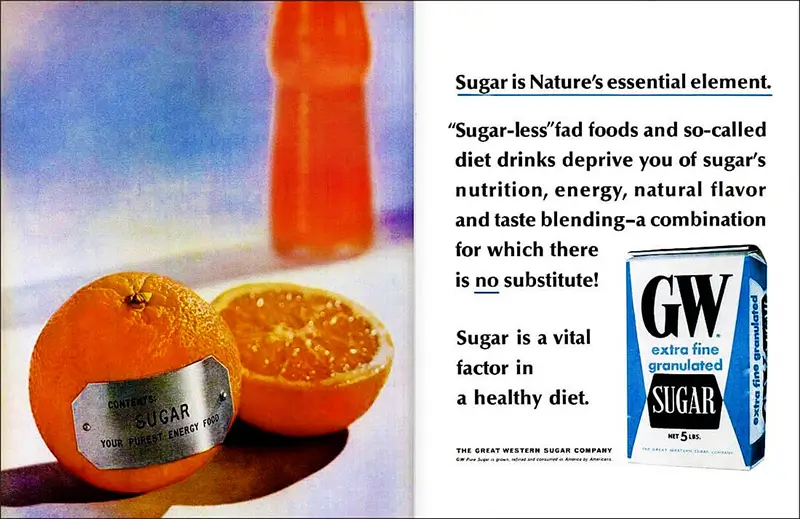
Cuando se refina el arroz o los cereales, se elimina el salvado. A los consumidores nos gusta el pan o el arroz blando y sin fibra, que se nos puede pegar entre los dientes y sabe mal. Sin embargo, como la fibra ralentiza la digestión y absorbe el agua, los carbohidratos del arroz sin fibra se absorben más rápidamente y crean un pico de insulina antinatural que provoca una reacción antinatural en nuestro cuerpo que, por compensación, se adapta regulando a la baja los receptores de insulina. Esto causa resistencia a la insulina y es uno de los muchos factores que las personas con diabetes tienen que eliminar de su dieta.
Otro factor es la grasa intercelular, que bloquea la señalización del receptor de insulina. Así que carbohidratos y azúcares refinados provocan una digestión rápida de cantidades grandes y antinaturales de calorías. Como el azúcar se absorbe a gran velocidad, no quemamos todas las calorías porque hay demasiadas en el torrente sanguíneo, y algunas acabarán almacenadas en forma de grasa. Y lo que es peor, en cuanto termina la digestión y todos los azúcares están fuera de la sangre, empezamos a sentir hambre de nuevo. Por lo tanto, la falta de fibra se correlaciona con atracones constantes que luego causan la obesidad y la disminución de los receptores de insulina. Entonces la obesidad causa independientemente todas las cosas malas de las que ya escribí antes, y el bucle se termina. Una pequeña intervención como no me gusta meterme salvado en los dientes puede causar una cascada de efectos. Una gran parte de la comunidad médica considera que los carbohidratos son la causa de todos los males y de todas las enfermedades que tenemos hoy en día. Esta es la base del razonamiento de dietas como la dieta Paleo y Atkins. Aquí no hay mala lógica. Hasta ahora.
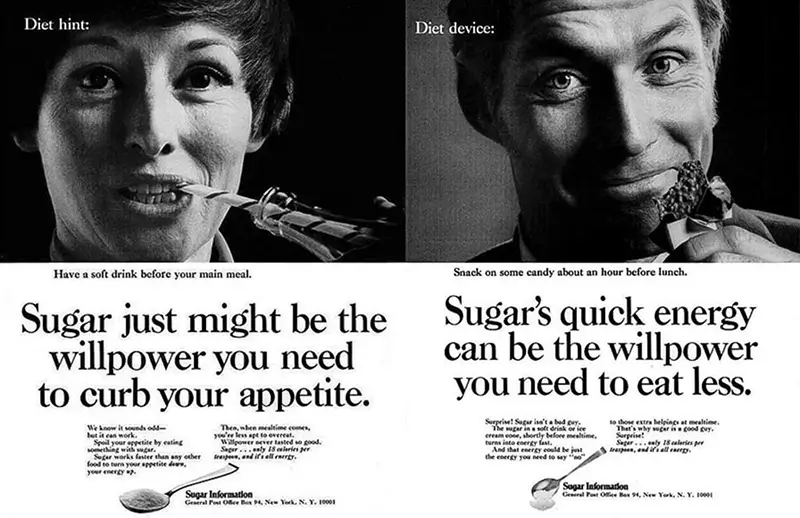
La industria puede vender proteínas en polvo y suplementos y toda la carne que pueda, especialmente si la carne es magra. Una buena pechuga de pollo y quizá algo con grasas saludables como el atún. Muchas personas con diabetes que empiezan a adoptar este tipo de dieta pueden empeorar su estado. Por ejemplo, la moderna epidemia de diabetes en China y Japón se ha relacionado con el consumo de arroz blanco, lo cual es otra verdad a medias. En consecuencia, por eso El Estudio de China irrita a la gente.
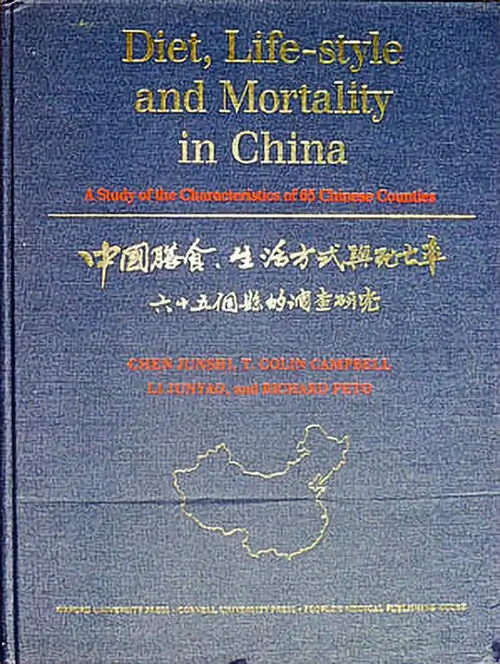
El arroz alimenta actualmente a casi la mitad de la población mundial, pero ¿cómo podemos conformarnos con tasas de diabetes mucho más bajas que hace unas décadas, cuando se comía aún más arroz? En este estudio, por ejemplo (Hu et al., 2012) un mayor consumo de arroz blanco se correlacionó con una probabilidad significativamente mayor de padecer diabetes de tipo 2, sobre todo en poblaciones asiáticas (chinos y japoneses). Además, no se trata de un estudio pequeño, con 352.384 participantes y periodos de seguimiento de entre 4 y 22 años. Si lo analizamos estadísticamente por el número total de habitantes, el metaanálisis dosis-respuesta demostró que por cada comida diaria de adición de ingesta de arroz blanco, el riesgo relativo de diabetes de tipo 2 era de 1,11, lo que significa un aumento del riesgo de 11%. En la actualidad, China tiene la misma tasa de diabetes de alrededor de 10% que Estados Unidos, que tiene alrededor de 11% a pesar de tener siete veces menos obesidad. El arroz blanco no parece estar relacionado con la obesidad ni con los infartos de miocardio y los derrames cerebrales, sólo con la diabetes.
Sin embargo, si nos fijamos de nuevo en el Estudio de China, las dietas rurales basadas en plantas y centradas en el arroz se asociaron con un bajo riesgo de diabetes, cáncer y enfermedades del corazón. Este 10% de prevalencia de la diabetes acaba de ocurrir. En el año 2000, China tenía una de las tasas de diabetes más bajas del mundo. Se trata de un cambio drástico que ocurrió en sólo 20 años.
¿Qué ha pasado?
Pues lo mismo ocurre en todos los países cuando sube el nivel de vida. El consumo de carne aumentó un sorprendente 40% y el de arroz descendió un 30%.. Y ahora tenemos un problema. Si aumenta el consumo de carne, disminuye el de arroz y aumenta el riesgo de diabetes y, al mismo tiempo, el consumo de arroz se correlaciona de forma independiente con el riesgo de diabetes, ¿qué está pasando? ¿Es sólo arroz?
¿Deberíamos seguir una dieta más paleo y suprimir todo el arroz? Eso es lo que nos dicen. Los carbohidratos refinados están relacionados con la diabetes y la obesidad. La respuesta es sencilla. Lo que ocurre es que la proteína animal está empeorando mucho el arroz. Este es un estudio que deberías ir a leer (Gulliford et al., 1989). La fecha de publicación fue octubre de 1989.
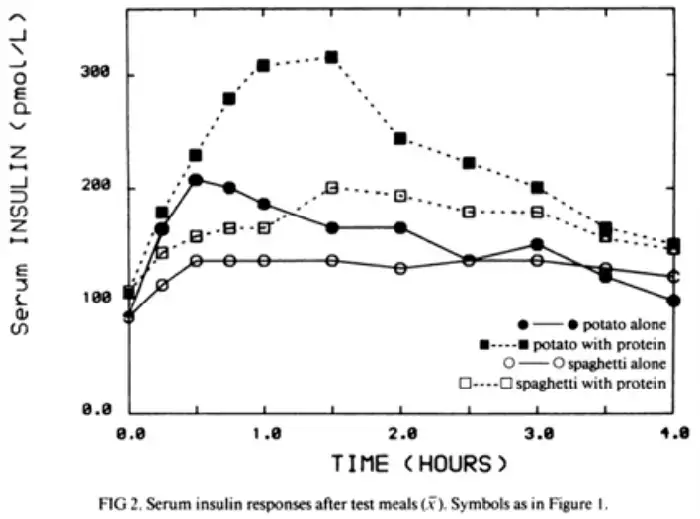
Un verdadero "nuevo" avance médico. Seis sujetos diabéticos no insulinodependientes habían recibido comidas que contenían 25 g de carbohidratos en forma de patata o de espaguetis. Es decir, la misma comida que el arroz blanco. Pasta pura de harina blanca y patata rica en almidón y baja en fibra. A continuación se midió la respuesta a la insulina y se duplicaron las comidas incluyendo el plus de 25 g de proteínas y otra que incluía 25 g de grasas. Se midió el nivel de azúcar en sangre y las respuestas de la insulina durante 4h después de la comida de prueba. La adición de proteínas aumentó drásticamente las respuestas de la insulina. Se trata de una ciencia "puntera" para dar a alguien azúcar y proteínas y medir la respuesta de la insulina.
Así que ahí está. La respuesta. Es el santo grial de la nutrición.
La proteína.
Si observamos el gráfico, veremos que la adición de proteínas empeora las patatas exactamente dos veces. De 150 a 300.
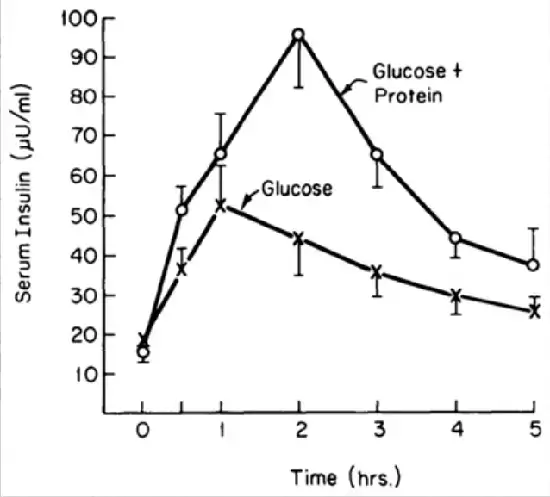
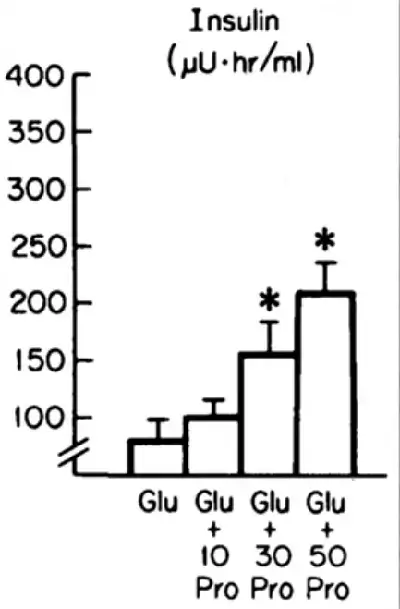
También podemos hacerlo con agua azucarada. De 50 a 100. Cuanta más carne añadamos, peor será. Cuando lleguemos a 50 g de proteína, provocaremos una oleada de insulina que es gravemente antinatural y causante de enfermedades. La proteína animal potencia significativamente la secreción de insulina desencadenada por la ingestión de carbohidratos. Y todo el tiempo nos habían dicho que las causas de la diabetes son el arroz blanco y la harina blanca y el azúcar. Y eso es correcto en parte. La verdad es más complicada. El principal factor causante de la diabetes es la inadaptación a nuestra nueva dieta.
La fibra reducirá la respuesta a la insulina, como la pasta integral, pero no al 100%. Añadir carne a cualquier almidón es problemático. Esta combinación no es natural. Es mucho peor, casi dos veces peor para la respuesta a la insulina comer pechuga de pollo asada con pan integral que la misma porción de pasta Pomodoro normal de harina blanca con o sin aceite.
Piénsalo así. ¿Algún otro animal almuerza regularmente con diferentes alimentos?
Los carnívoros sólo comen carne. Los vegetarianos sólo comen plantas. ¿Y los omnívoros? ¿Creemos que ese oso va a pescar un pez y luego no se lo va a comer durante un tiempo hasta que llegue la hora de comer para poder llevar ese pez a la colmena y tomar después el postre?
Incluso combinar diferentes alimentos en la misma comida es 100% antinatural y una invención humana moderna. Y este aumento de insulina es una mala adaptación.
Yo preguntaría lo siguiente. ¿Podemos comer sólo carne sin pan? ¿Disfrutaríamos de las salchichas grasientas solas? ¿Disfrutaríamos sólo de la carne de las hamburguesas sin los panes? Es una mezcla de grasa y carbohidratos (azúcar) lo que desencadena anormalmente la señalización de dopamina en nuestro cerebro y muchas otras cosas como en este caso la reacción anormal de la insulina. Combinar esto con un bajo consumo de fibra es una receta para el desastre. Combinar diferentes alimentos no es una forma natural de comer, pero es placentero, así que tendremos que afrontarlo de la mejor manera posible.
La diabetes de tipo 2 puede tratarse hasta cierto punto. En realidad es bastante sencillo. Si excluimos el ejercicio y la pérdida de peso, el primer paso sería no consumir proteínas animales. El número dos sería la fibra. Es decir, mucha fibra en cada comida. Si tienes que comer carne y no tienes otra opción, entonces come carne. Sólo carne. Nada de pan, arroz o azúcar. Azúcar significa azúcar regular o fructosa o carbohidratos en cualquier forma. Nada de ensaladas ni nada. Tal vez algo de queso. Nada de leche. La leche contiene azúcar o lactosa.
Si tienes que comer una combinación de azúcares y proteínas, entonces sería una buena idea añadir un poco de cáscara de psyllium o salvado de trigo normal y comer cucharadas de ello después de la comida. Eso ralentizará la digestión hasta cierto punto. La cáscara de psilio no tiene calorías; es 100 por cien fibra. Podemos utilizarla en dietas si queremos dar volumen a las comidas en el estómago para darnos más saturación, pero sabe a cartón que es líquido.
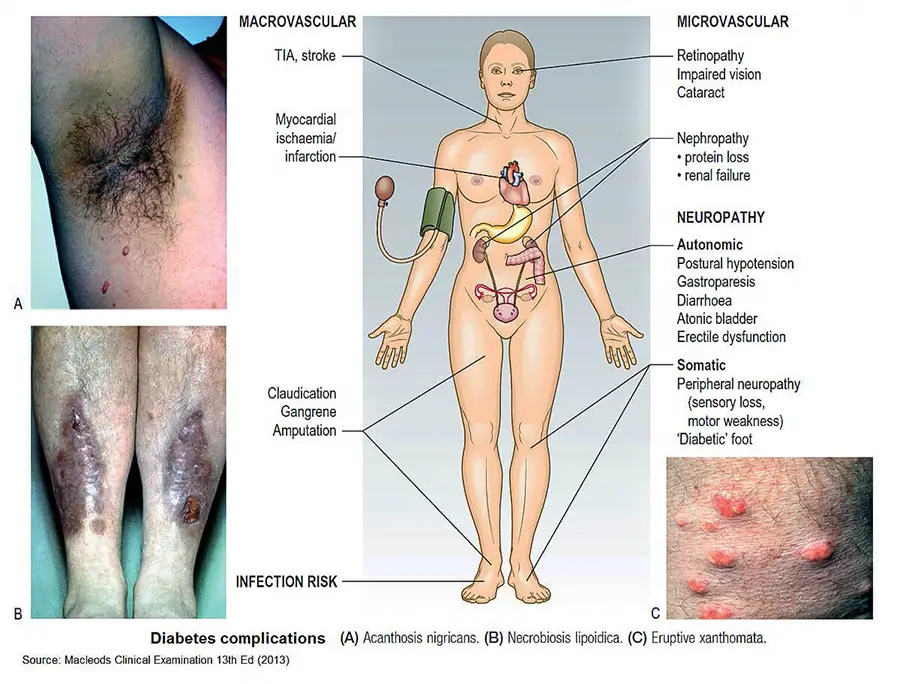
El número tres sería el almidón resistente, es decir, las alubias. Si comemos salchichas con mucho pan y mucho alcohol, probablemente estemos acabados si tenemos diabetes en la familia. Cuando vemos que 1 de cada 10 personas tiene diabetes, nos quedamos cortos. La cifra real es de 1 de cada 3 personas en los países desarrollados; sólo que puede que no lo sepan porque no tienen síntomas visibles y la resistencia a la insulina está en el rango que se conoce como prediabetes. La prediabetes es una enfermedad en sí misma y, a largo plazo, puede tener efectos adversos. En 1 de cada 10 casos se convierte en una diabetes en toda regla. Los CDC estiman que estas cifras seguirán creciendo sobre todo a escala mundial, a medida que se produzca la industrialización de las regiones no desarrolladas del planeta. Si padece prediabetes, es posible que los daños a largo plazo, especialmente en el corazón, los vasos sanguíneos y los riñones, ya estén empezando.
Referencias:
- Hu, E. A., Pan, A., Malik, V., & Sun, Q. (2012). White rice consumption and risk of type 2 diabetes: meta-analysis and systematic review. BMJ (ed. de investigación clínica), 344, e1454. https://doi.org/10.1136/bmj.e1454
- Gulliford, M. C., Bicknell, E. J., & Scarpello, J. H. (1989). Differential effect of protein and fat ingestion on blood glucose responses to high- and low-glycemic-index carbohydrates in noninsulin-dependent diabetic subjects. El diario Americano de la nutrición clínica, 50(4), 773-777. https://doi.org/10.1093/ajcn/50.4.773
Contenidos Relacionados



¿Tienes alguna duda acerca de la nutrición y la salud?
Me encantaría conocer tu opinión y responderlas en mi próximo post. Agradezco su aportación y opinión y espero tener noticias suyas pronto. También le invito a síguenos en Facebook, Instagram y Pinterest para más contenidos sobre dieta, nutrición y salud. Puedes dejar un comentario allí y conectar con otros entusiastas de la salud, compartir tus consejos y experiencias, y recibir apoyo y ánimo de nuestro equipo y nuestra comunidad.
Espero que este post le haya resultado informativo y ameno y que esté preparado para aplicar los conocimientos adquiridos. Si le ha resultado útil, por favor compártelo con tus amigos y familiares que también podrían beneficiarse de ella. Nunca se sabe quién puede necesitar orientación y apoyo en su camino hacia la salud.
– También Te Puede Interesar –

Enjuague Bucal Natural Casero: Probado, Más Fuerte y Menos Tóxico

Dieta de alimentos crudos - La perspectiva evolutiva
La Exposición al Arsénico y el Consumo de Carne- El "Veneno" Libre de Aves de Corral Ley
El Alcohol riesgos para la salud - La "paradoja francesa", "el vino", y "en moderación"
El agua del grifo de la toxicidad de evaluación de Riesgos

Estudio de Salud adventista - Los veganos argumento
La Diabetes causa y los hidratos de carbono refinados - Los veganos argumento
Fitoquímicos: Conceptos Básicos

Aprenda Sobre Nutricion

Milos Pokimica es doctor en medicina natural, nutricionista clínico, escritor sobre salud médica y nutrición y asesor en ciencias de la nutrición. Autor de la serie de libros Go Vegan? Revisión de la Ciencia, también dirige el sitio web sobre salud natural GoVeganWay.com.
Descargo De Responsabilidad Médica
GoVeganWay.com trae los comentarios de la última de la nutrición y la salud relacionados con la investigación. La información proporcionada representa la opinión personal del autor y no pretende ni implica ser un sustituto de consejo médico profesional, diagnóstico o tratamiento. La información proporcionada es sólo para fines informativos y no pretende servir como un sustituto de la consulta, el diagnóstico y/o tratamiento médico de un médico calificado o profesional de la salud.NUNCA ignore el CONSEJO MÉDICO PROFESIONAL O RETRASAR la BÚSQUEDA de TRATAMIENTO MÉDICO a CAUSA DE ALGO QUE HAYA LEÍDO EN O accesibles a TRAVÉS de GoVeganWay.com
NUNCA APLICAR CUALQUIER cambio de ESTILO de vida O CAMBIOS EN su totalidad COMO UNA CONSECUENCIA DE ALGO QUE HA LEÍDO EN GoVeganWay.com ANTES de CONSULTAR con LICENCIA PROFESIONAL MÉDICO.
En el caso de una emergencia médica, llame a un médico o al 911 inmediatamente. GoVeganWay.com no se recomienda ni aprueba ninguna de los grupos, las organizaciones, las pruebas, los médicos, productos, procedimientos, opiniones u otra información que pueda ser mencionado en el interior.
Selecciones del Editor -
El cáncer Editor De Selecciones Fitoquímicos
Poder Anticancerígeno de Frutas y Verduras: Pruebas Clínicas e in Vivo
Algunos extractos vegetales rivalizan con los principales fármacos quimioterapéuticos y, al mismo tiempo, atacan varios tipos diferentes de células cancerosas.
Antioxidantes Editor De Selecciones ORAC
Aceites Esenciales Como Suplementos Antioxidantes: Reglas y Estrategias
Los aceites esenciales de calidad alimentaria pueden ser una estrategia cómoda y de fácil consumo para optimizar el valor antioxidante y las puntuaciones ORAC de nuestra dieta.
Antioxidantes Editor De Selecciones ORAC
Dieta Rica en Antioxidantes: Reglas y Estrategias Generales
Existen estrategias fáciles y rentables para optimizar el valor antioxidante de nuestra dieta.
Antioxidantes Editor De Selecciones ORAC
Comprender los Valores ORAC: Niveles de Antioxidantes en los Alimentos
Cuando tu principal fuente de antioxidantes es el café, sabes que tienes un grave problema.

Antioxidantes Editor De Selecciones ORAC
Astaxantina Beneficios: Antioxidante Natural Más Potente del Mundo
La astaxantina es el más potente y natural antioxidante universal (petróleo y agua-soluble) que conoce la ciencia. Se acumula en los tejidos y nunca puede convertirse en un pro-oxidante.
Antioxidantes Editor De Selecciones ORAC Fitoquímicos
Antioxidantes: Conceptos Básicos
Los productos de origen animal no contienen fitoquímicos ni antioxidantes. Por término medio, los alimentos vegetales contienen más de 60 veces más antioxidantes que los de origen animal.
Editor De Selecciones Dieta Vegana
Deficiencias Nutricionales en la Dieta Vegana: Estrategias de Prevención
Existen nueve deficiencias nutricionales comunes a escala poblacional que afectan a las personas que siguen una dieta basada en plantas. Si no se corrigen a tiempo, algunas deficiencias tienen consecuencias terribles y no tratables.
Editor De Selecciones Dieta Óptima
Deficiencia de Micronutrientes en la Dieta Americana Estándar: Estrategias de Optimización
El perfil nutricional de nuestra dieta moderna a base de carne, azúcar y alimentos procesados es totalmente incongruente con nuestra evolución, lo que provoca una grave carencia de micronutrientes.
Editor De Selecciones Fitoquímicos
Fitoquímicos: Conceptos Básicos
Todos y cada uno de los fitoquímicos que existen tienen una acción biológica en el cuerpo humano. Cada uno de los millones de fitoquímicos diferentes.

Editor De Selecciones La leche Dieta Óptima
Leche y Productos Lácteos: Correlaciones de Riesgo Para la Salud
Las asociaciones conocidas con el consumo de leche y productos lácteos son infertilidad, cáncer de ovario y de mama, leucemia, diabetes de tipo 1, autismo, arteriosclerosis, cataratas, artritis reumatoide, esclerosis múltiple, hiperactividad, congestión, granos...
El cáncer Editor De Selecciones La proteína
Proteína Completa: Señalización del IGF-1 en la Formación del Cáncer
Cuando usted come proteínas animales que tienen cuatro veces más probabilidad de desarrollar todos los tipos de cáncer. Cuando usted fuma, usted tiene cuatro veces la posibilidad de desarrollar cáncer de pulmón.

El cáncer Editor De Selecciones La proteína
La Anatomía de Cáncer de riesgo para la Salud de las correlaciones
Aproximadamente el 2% de los cánceres son por la medicina considera puramente causada por factores genéticos. De la misma gama como dentro del reino animal. No le han dicho toda la verdad.
Milos Pokimica es escritor especializado en salud y nutrición y asesor en ciencias nutricionales. Autor de la serie de libros Go Vegan? Revisión de la Ciencia, también dirige el sitio web sobre salud natural GoVeganWay.com.
Últimos Artículos –

La Restricción De Calorías La longevidad
Cómo Ayunar: Alimentos en Ayunas Que No Rompen la Autofagia
Autofagia. ¿Se ha preguntado alguna vez qué ocurre con las células de su cuerpo cuando mueren o se dañan? ¿Se amontonan y crean problemas, o se eliminan de alguna manera? La respuesta es que su cuerpo...

Salud Dental Prevención
Dolor y Sensibilidad a los Dulces: Solución Rápida y Duradera
Una solución rápida y fácil para aliviar el dolor es el aceite esencial de clavo, un potente antioxidante y analgésico que puede ayudar con las enfermedades de las encías y el dolor de muelas.
Los frijoles
Judías Verdes: Nutrición y Beneficios Para la Salud
Los frijoles verdes son bajos en calorías y ricos en compuestos naturales que pueden ayudar a controlar su azúcar en la sangre, reducir el colesterol y combatir los radicales libres.
Dieta de alimentos crudos Dieta Vegana
Se Pueden Comer Setas Crudas: Riesgos Para La Salud, Nutrición Y Seguridad
Las setas tienen toxinas sensibles al calor, como la hidracina o la agaritina, y paredes celulares compuestas de quitina que el ser humano no puede digerir bien.
Dieta Vegana
¿Son Los Peces Animales? Una Perspectiva Cultural
En algunas culturas, la carne de pescado no se considera carne, y el pescado está permitido incluso durante el ayuno.

Salud Dental Prevención
Enjuague Bucal Natural Casero: Probado, Más Fuerte y Menos Tóxico
El enjuague bucal natural hecho en casa es más fuerte que la clorhexidina, menos tóxico y si se ingiere puede dar un poco de náuseas, pero también un alto estallido en el valor ORAC.
Salud Dental Prevención
Cómo Detener la Caries Dental: Síntomas, Causas y Prevención
El consumo de azúcar es la principal causa de caries y deterioro dental, combinado con carencias de minerales, especialmente magnesio, zinc, cobre y oligoelementos.
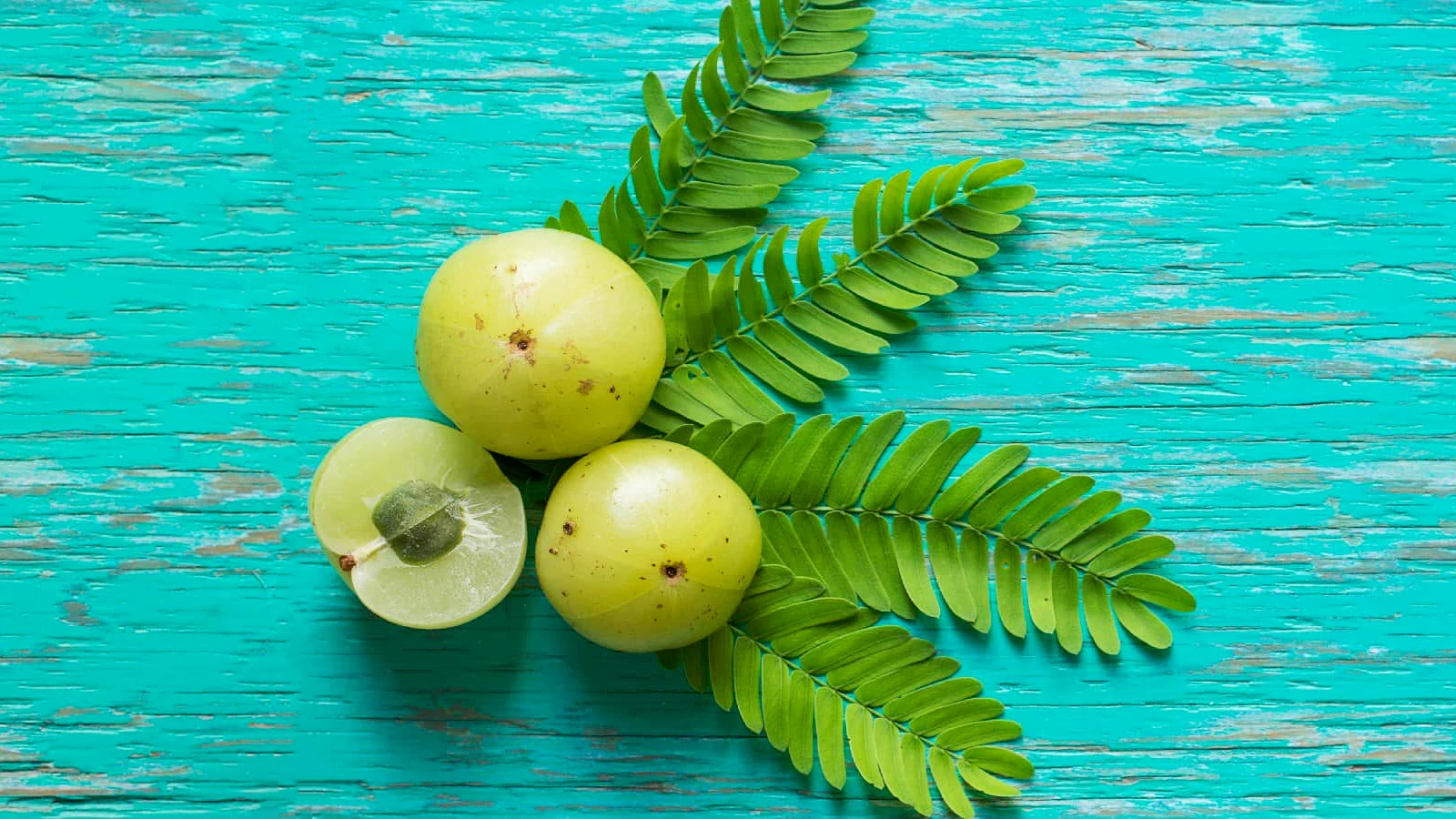
Antioxidantes Superalimentos
Amla: Beneficios Probados, Nutrición e Importancia Clínica
El amla es uno de los antioxidantes más potentes del mundo, con una puntuación ORAC de 261.530. Es una rica fuente de fitoquímicos que tienen diversos beneficios para la salud. Es una rica fuente de fitoquímicos que tienen diversos beneficios para la salud.
Top Noticias De Salud — ScienceDaily
- Glucosamine, a popular joint supplement, linked to faster Alzheimer’s progressionen septiembre 27, 2026
A large health-record analysis found that glucosamine use was associated with a 25% higher likelihood of mild cognitive impairment progressing to dementia. Lab experiments suggest the popular joint supplement may intensify an abnormal sugar-tagging process in the Alzheimer’s brain, although researchers say clinical trials are needed to determine whether it actually causes harm.
- Atrial fibrillation patients saw 69% lower risk with common blood thinnersen septiembre 27, 2026
Direct oral anticoagulants cut the risk of serious clinical events by 69% in atrial fibrillation patients with an intermediate risk of stroke, according to the randomized SINGLE-AF trial. The benefit was driven mainly by fewer ischemic strokes, with no increase in major bleeding.
- One CRISPR treatment cut “bad” cholesterol in half for a full yearen septiembre 27, 2026
A single dose of an experimental CRISPR therapy cut LDL cholesterol and triglycerides by about half in patients with difficult-to-treat lipid disorders. The reductions were still present one year later, with the highest dose lowering LDL by 52.5% and triglycerides by 47.8%.
- Why rheumatoid arthritis pain may persist even when inflammation is under controlen septiembre 27, 2026
Pain and fatigue in rheumatoid arthritis can persist even after inflammation improves, with depression, poor sleep, obesity, smoking, and chronic pain potentially helping sustain symptoms. Researchers say identifying these hidden drivers could prevent unnecessary medication changes and lead to more personalized treatment.
- Scientists say house cats could help unlock better cancer treatments for humansen septiembre 27, 2026
Scientists have mapped the genetics of cat cancer on an unprecedented scale and found surprising similarities with tumors in humans. The findings could help bring precision cancer treatments to cats while also revealing new clues about how human cancers develop and respond to drugs.
- A major risk of breast cancer screening may have been overestimated for decadesen septiembre 26, 2026
A new analysis suggests mammograms may lead to far less breast cancer overdiagnosis than some earlier studies indicated. Researchers reexamined all eight major randomized screening trials and accounted for differences in follow-up time, screening frequency, and screening after trials ended. Their results were consistent with an overdiagnosis rate below 5%, rather than estimates approaching 30% to 50%.
- That fresh cleaning smell could be filling your home with nanoparticlesen septiembre 26, 2026
Researchers found that scented cleaners can react with ozone indoors to create billions or trillions of invisible nanoparticles that can penetrate deep into the lungs. The pollution forms within minutes and, in some cases, may produce an inhaled particle dose comparable to or greater than standing near heavy traffic.
PubMed, #Dieta vegana –
- Plant-Based Diets in Adolescence: Cardiometabolic Benefits, Developmental Risks, and the Role of Fortificationen septiembre 26, 2026
Adolescence is a critical window in which dietary patterns stabilise while nutrient requirements remain high to support growth, bone accrual, and neurodevelopment. Plant-based diets are increasingly adopted by young people, yet paediatric evidence indicates that they should not be treated as a single exposure, because diet quality substantially modifies both benefits and risks. Healthy plant-based patterns-rich in whole grains, legumes, fruits, vegetables, nuts, and unsaturated fats-are…
- Plant-Based Functional Custard Enriched with Vitamin D3: Insight into Technological Properties, Nutrition and Bone Tissue Regenerationen septiembre 26, 2026
A plant-based or vegan diet is considered one of the most important dietary patterns, often followed for religious or health reasons. It should contain vital nutrients such as protein, iron, zinc, calcium, vitamin D, and others. The objective of this study was to produce a plant-based food product with high nutritional value (vegan custard, VC) and fortify it with vitamin D(3) (vegan custard + D(3)). Thirty-five female albino rats, with an average body weight of 160 ± 5 g, were divided […]
- Dietary Patterns, Micronutrient Adequacy, and Metabolic Vulnerability in Alzheimer’s Disease: A Critical Narrative Reviewen septiembre 26, 2026
Dietary factors may influence cognitive aging and Alzheimer’s disease (AD), but observational associations, mechanistic findings, and intervention effects should not be considered equivalent evidence. This critical narrative review examines how dietary patterns, micronutrient adequacy, and metabolic health may modify AD-related vulnerability. A targeted search of PubMed/MEDLINE, Scopus, and Web of Science through April 2026 prioritized systematic reviews, meta-analyses, randomized trials, and…
- A Structured Narrative Review of Contemporary Dietary Strategies Following Acute Coronary Syndromesen septiembre 24, 2026
CONCLUSIONS: A Mediterranean-style diet remains the dietary pattern supported by the strongest evidence for secondary prevention following ACS. Until further pragmatic randomized trials are available, clinicians should continue recommending Mediterranean-style dietary patterns while individualising dietary advice according to patient preferences, cultural practices, and long-term adherence.
- Toward International Dietary Guidance: A Food Guide Pyramid for Human and Planetary Healthen septiembre 23, 2026
Dietary guidelines shape food policy, education, and food systems worldwide. Recent controversies in dietary guideline development, together with rising burdens of diet-related chronic disease and increasing environmental pressures, highlight the need for globally relevant dietary guidance aligned with both human and planetary health. We developed an evidence-informed International Food Guide Pyramid emphasizing optimal carbohydrate-containing staple foods. The International Carbohydrate […]
Random Posts –
El cáncer Editor De Selecciones La proteína
Proteína Completa: Señalización del IGF-1 en la Formación del Cáncer
Cuando usted come proteínas animales que tienen cuatro veces más probabilidad de desarrollar todos los tipos de cáncer. Cuando usted fuma, usted tiene cuatro veces la posibilidad de desarrollar cáncer de pulmón.
El cáncer Toxicidad
La Exposición al Arsénico y el Consumo de Carne- El "Veneno" Libre de Aves de Corral Ley
En EE.UU., más de las tres cuartas partes de la exposición al arsénico procede de productos animales y, sobre todo, del pollo, más que de la ternera, el cerdo, los perritos calientes, los huevos y la leche.
Editor De Selecciones La inflamación Dieta Vegana
La Inflamación y la Dieta- Argumento Vegana
Hemos evolucionado para recibir una ráfaga de antioxidantes protectoras cuando comemos pero no están presentes en la carne. La inflamación y la dieta tienen un alto nivel de correlación.
El cáncer Dieta Óptima
La Expresión Génica y la Epigenética: Cómo la Dieta y el Entorno Determinan su Salud
Lo importante no son los genes, sino la forma en que se expresan.
Café Toxicidad
El café de los beneficios– No sin riesgos
Consideramos que la cafeína es algo bueno para nuestro cerebro o malo o neutral?
¿Para qué sirve la cafeína?

COVID-19 Prevención La Vitamina D
La deficiencia de vitamina D - Factores de Riesgo
Sólo hay dos vitaminas que no produzcan las plantas: la vitamina D y la otra, la vitamina B12. La carencia de vitamina D es realmente preocupante.
Antioxidantes ORAC Fitoquímicos
Suplementos Antioxidantes Frente a Alimentos Integrales: Pagar para Vivir Menos
Los suplementos antioxidantes no muestran el observado beneficios para la salud de las dietas ricas en frutas y verduras, mientras que la vitamina E, el selenio, beta caroteno, el licopeno muestran un aumento del riesgo de cáncer.
El cáncer Agua Potable Toxicidad
El agua del grifo de la toxicidad de evaluación de Riesgos
Si vivimos en una ciudad donde estamos seguros de que el agua del grifo es pura, eso no significa que el agua sea "pura".
Editor De Selecciones Fitoquímicos
Fitoquímicos: Conceptos Básicos
Todos y cada uno de los fitoquímicos que existen tienen una acción biológica en el cuerpo humano. Cada uno de los millones de fitoquímicos diferentes.
Desintoxicación Agua Potable
Agua alcalina - beneficios de Salud y riesgos
En la comunidad de la salud y la nutrición se habla mucho de los beneficios del "agua ionizada" o "agua alcalina". ¿Qué dice la ciencia?

Puestos Destacados –
La Diabetes Editor De Selecciones
La Diabetes causa y los hidratos de carbono refinados - Los veganos argumento
La gente cree que los carbohidratos refinados se asocian a picos de insulina y son una de las causas de la diabetes. Y tienen razón. Sin embargo, también se equivocan.
Editor De Selecciones Dieta Vegana
Deficiencias Nutricionales en la Dieta Vegana: Estrategias de Prevención
Existen nueve deficiencias nutricionales comunes a escala poblacional que afectan a las personas que siguen una dieta basada en plantas. Si no se corrigen a tiempo, algunas deficiencias tienen consecuencias terribles y no tratables.

Editor De Selecciones La Obesidad
El trastorno de atracones compulsivos - La psicología de hambre
En la naturaleza, no hay refinado de azúcar o grasa. Nuestro cerebro nunca había sido expuesto a una combinación de los dos a la vez nos obliga a ir de borrachera comiendo desorden.

La Medicina Alopática Editor De Selecciones Dieta Óptima
El Informe McGovern - Intereses especiales y supresión de la ciencia
En 1977 el empuje para un cambio de Pautas Dietéticas (McGovern Informe) a más a base de plantas vegana uno se había introducido en el Congreso de los estados UNIDOS.
El cáncer Editor De Selecciones La proteína
La Anatomía de Cáncer de riesgo para la Salud de las correlaciones
Aproximadamente el 2% de los cánceres son por la medicina considera puramente causada por factores genéticos. De la misma gama como dentro del reino animal. No le han dicho toda la verdad.
Editor De Selecciones Dieta Óptima Dieta Vegana
QUE la dieta de las directrices de la Nueva pirámide de los alimentos y la supresión de la ciencia
QUE las pautas dietéticas recomiendan una dieta baja en grasas saturadas (proteína animal), el azúcar, la sal y alta en frutas y verduras, como un requisito para hacer frente a la epidemia aumento de las enfermedades crónicas en todo el mundo.

La Medicina Alopática El cáncer Editor De Selecciones
El cáncer, La Prohibida Curas-máquina de Rife, reseña Histórica
La tasa de recuperación de pacientes con cáncer no tratable y declarados enfermos terminales mediante la utilización de la tecnología resonante de la máquina Rife fue del 100%.

El cáncer Editor De Selecciones Toxicidad
Exposición a Plaguicidas en Niños: Pruebas de Exposición en la Vida Real
Los niños y especialmente las mujeres embarazadas son más vulnerables a la exposición a los pesticidas. Si analizamos el mundo real de los niveles de exposición en situaciones de la vida real, lo que podría ser el resultado?
Antioxidantes Editor De Selecciones ORAC
Dieta Rica en Antioxidantes: Reglas y Estrategias Generales
Existen estrategias fáciles y rentables para optimizar el valor antioxidante de nuestra dieta.
Editor De Selecciones Dieta Óptima
Dieta Humana Optima- Enfermedades Crónicas, Guerras de Dietas y el Argumento Vegano
Nuestra dieta humana óptima natural es la dieta que comieron nuestros ancestros homínidos durante los últimos 30 millones de años, no los humanos anatómicamente modernos de la Edad de Piedra.
La última versión desde PubMed, #Dieta basada en plantas –
- Long-Term Monitoring of Radioactive Cesium in Commercial Foods and Dietary Intake Estimated by Total Diet Studies in Japan after the Fukushima Daiichi Nuclear Power Plant Accidentpor Hiromi Nabeshi en septiembre 27, 2026
Following the Fukushima Daiichi Nuclear Power Plant accident in 2011, Japan implemented extensive monitoring of radioactive materials in foods and established strict regulatory limits based on an annual effective dose of 1 mSv/year from artificial radionuclides. This review summarizes long-term surveillance data on radioactive cesium (r-Cs) in commercial foods and long-term assessments of dietary intake of r-Cs and strontium-90 (^(90)Sr) using the total diet study (TDS)/market basket (MB)…
- Nutrition and Endometriosis: Current Evidence on Dietary Risk Factors and Clinical Impact – A Narrative Reviewpor Christine Dawczynski en septiembre 27, 2026
Endometriosis (EM) is a severe chronic inflammatory disease characterized by the presence of endometrium-like tissue outside the uterine cavity, causing pain and significantly reducing quality of life. Worldwide, around 10% of women of reproductive age are affected and there is no cure as of now. The limited treatment options focus on hormone therapy, surgery and pain management–without satisfactory long-term effects. Nutritional strategies might support the prevention and treatment of…
- North American and Andean Indigenous Plant-Based Foods and Their Contemporary Scientific Rationale for Health Improvementpor Lena Gálvez Ranilla en septiembre 27, 2026
Plant-based food systems have been an integral part of human ecology since the dawn of domestication across all continents from over 12,000 y ago. This served the needs of human health and wellness from whole plant form to the use of parts in a range of water-based extracts to dry form or fermentation-based applications. This conference paper focuses on some examples of plant-based foods in the Americas that have been used since ancient times among indigenous North American and Andean […]
- Plant-Based Diets in Adolescence: Cardiometabolic Benefits, Developmental Risks, and the Role of Fortificationpor Bianca Simionescu en septiembre 26, 2026
Adolescence is a critical window in which dietary patterns stabilise while nutrient requirements remain high to support growth, bone accrual, and neurodevelopment. Plant-based diets are increasingly adopted by young people, yet paediatric evidence indicates that they should not be treated as a single exposure, because diet quality substantially modifies both benefits and risks. Healthy plant-based patterns-rich in whole grains, legumes, fruits, vegetables, nuts, and unsaturated fats-are…
- Dietary Patterns, Micronutrient Adequacy, and Metabolic Vulnerability in Alzheimer’s Disease: A Critical Narrative Reviewpor Isidora Sierralta en septiembre 26, 2026
Dietary factors may influence cognitive aging and Alzheimer’s disease (AD), but observational associations, mechanistic findings, and intervention effects should not be considered equivalent evidence. This critical narrative review examines how dietary patterns, micronutrient adequacy, and metabolic health may modify AD-related vulnerability. A targeted search of PubMed/MEDLINE, Scopus, and Web of Science through April 2026 prioritized systematic reviews, meta-analyses, randomized trials, and…
- Baseline Ferritin and Body Composition as Correlates of Longitudinal Metabolic Changes During an Energy-Restricted Mediterranean-Style Intervention Across Three Overweight Phlogistic-Related Clinical…por Begoña de Cuevillas en septiembre 26, 2026
CONCLUSIONS: Baseline ferritin and body composition were correlates of heterogeneous inflammatory-metabolic profiles and ferritin changes. These hypothesis-generating associations do not establish causal or mechanistic effects and require controlled confirmation with comprehensive iron-status assessment.