







Café benefícios– Não sem riscos
Pensamos que os benefícios do café que obtemos quando bebemos é algo bom para o nosso cérebro ou mau ou neutro? O que faz a cafeína real e quais são os riscos?
Milos Pokimica
Escrito por: Milos Pokimica
Revisto Clinicamente Por: Dr. Xiùying Wáng, M.D.
Atualizado em 29 de maio de 2023Pensamos que a cafeína é algo bom para o nosso cérebro ou mau ou neutro? Fala-se muito sobre os benefícios do café, mas os benefícios do café são também apenas um dos lados da moeda. O café está também associado a alguns riscos para a saúde que as pessoas geralmente ignoram. A verdadeira questão é se pensamos que os benefícios do café superam os riscos associados?
Até à data, a investigação não tem provas de associar uma ligação entre o café e um risco acrescido de doença cardíaca ou cancro. Alguns dos estudos encontrados diminuíram a mortalidade global pela mesma pequena quantidade, e outros descobriram que faz o oposto. Se lhes tirarmos uma conclusão média, será aproximadamente muito pequeno ou nenhum efeito significativo sobre a longevidade.
Existem então alguns riscos associados aos benefícios do café que tanto desejamos?
O café parece aumentar a função cognitiva e reduzir o risco de depressão. Os potenciais benefícios do café incluem também a protecção contra doenças neurodegenerativas, melhor controlo da asma e menor risco de doenças gastrointestinais seleccionadas. Então, encontrámos o nosso medicamento tipo anfetamina gratuitamente?
O café tem uma alta concentração de antioxidantes que proporcionam às células protecção contra o stress oxidativo e inflamação. Afinal de contas é o feijão. Contudo, podemos obter outros grãos não tóxicos para obter todos os benefícios que o grão de café tem, e não devemos confundir os benefícios do café como únicos. A maioria dos alimentos ricos em antioxidantes terá o mesmo efeito.
Quando as pessoas falam de benefícios do café, dizem meias verdades ao insinuar que é apenas o benefício desse grão e que não teríamos benefícios semelhantes se comêssemos outro tipo de grão. Por exemplo, os grãos de cacau também têm cafeína, mas muito mais antioxidantes polifenólicos benéficos e muito mais benefícios para a saúde, pelo que falar sobre os benefícios do café é um pouco enganador.
Para chegarmos à verdade, devemos analisar estudos sobre a cafeína pura e o seu efeito no corpo, pois é por isso que as pessoas bebem café em primeiro lugar. Poderíamos obter a maioria dos benefícios do café também com descafeinado. É a cafeína que precisamos de investigar e não apenas utilizar ciência enganosa para justificar o nosso hábito. É a mesma história que o álcool, encontrando alguns benefícios que também podemos encontrar noutros produtos alimentares sem qualquer capacidade especial única de apenas grãos de café, para que possamos justificar a nossa elevada taxa de cafeína.
O que faz o real cafeína fazer?
Podemos tomá-lo em comprimidos, por exemplo, ou em bebidas energéticas. Se olharmos para a estrutura química da cafeína, veremos que é muito semelhante à adenosina. A adenosina é um químico no cérebro que nos deixa adormecidos. Sempre que estamos acordados, a adenosina acumula-se lentamente no nosso cérebro. A adenosina liga-se aos receptores e, com o tempo, retarda a nossa actividade cerebral. Quanto mais tempo estivermos acordados, mais adenosina se acumula, e mais cansados nos sentimos. A dada altura, iremos dormir. Enquanto a concentração de adenosina adormecida diminui e no ciclo da manhã recomeça.
Como a cafeína é semelhante à adenosina e actua como um bloqueador dos receptores de adenosina no cérebro, irá cancelar a química natural do cérebro, fazendo-nos sentir mais alerta.
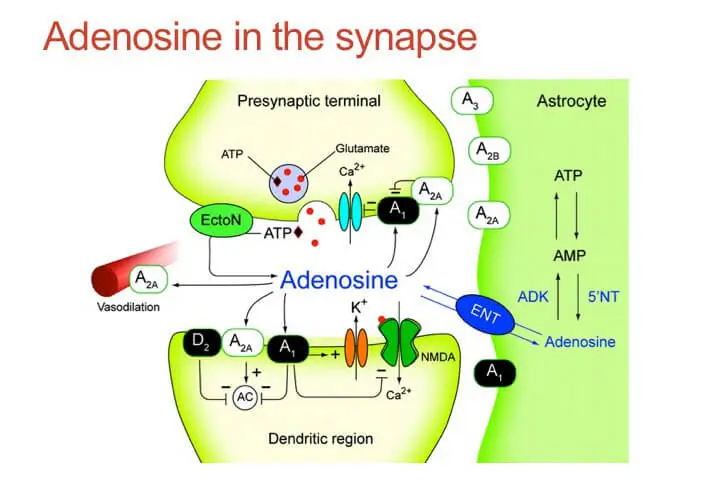
Para indivíduos que bebem regularmente café em grandes quantidades, os nossos cérebros ajustam-se desenvolvendo mais receptores de adenosina, pelo que é necessária mais cafeína para obter a mesma resposta. Ter mais receptores de adenosina significa também que mais adenosina entra no nosso cérebro, por isso, se não bebermos café, estaremos mais cansados do que no nosso estado normal normal.. De manhã, não estaremos totalmente alerta e durante o dia sentir-nos-emos mais cansados se não bebermos a nossa taça nesse dia. Tem uma meia-vida de 6 horas, o que significa que metade dela desaparecerá em 6 horas, pelo que, após 6 horas, sentir-se-á metade do efeito. Um par de horas depois desaparecerá na sua maioria, e precisaremos de outra chávena.
A cafeína também estimula o corpo a produzir muito mais adrenalina do que a necessária e isso acabará em aumento do ritmo cardíaco e ansiedade.
A cafeína coloca o corpo num estado stressante de luta e de resposta em voo, levando a um aumento da ansiedade. As pessoas que já estão demasiado tenso e propenso a ataques de pânico e outras condições pró-ansiedade podem ter reacções graves com um tremor nas mãos e suores frios e palpitações cardíacas de cafeína.
A cafeína também impede que a dopamina seja reabsorvida, agindo como a cocaína, em certo sentido, conduzindo a bons sentimentos, pelo que, por esta altura, já nos encontramos em comportamento viciante e temos sintomas de abstinência. Este efeito dopaminérgico é o que torna o café tão viciante.
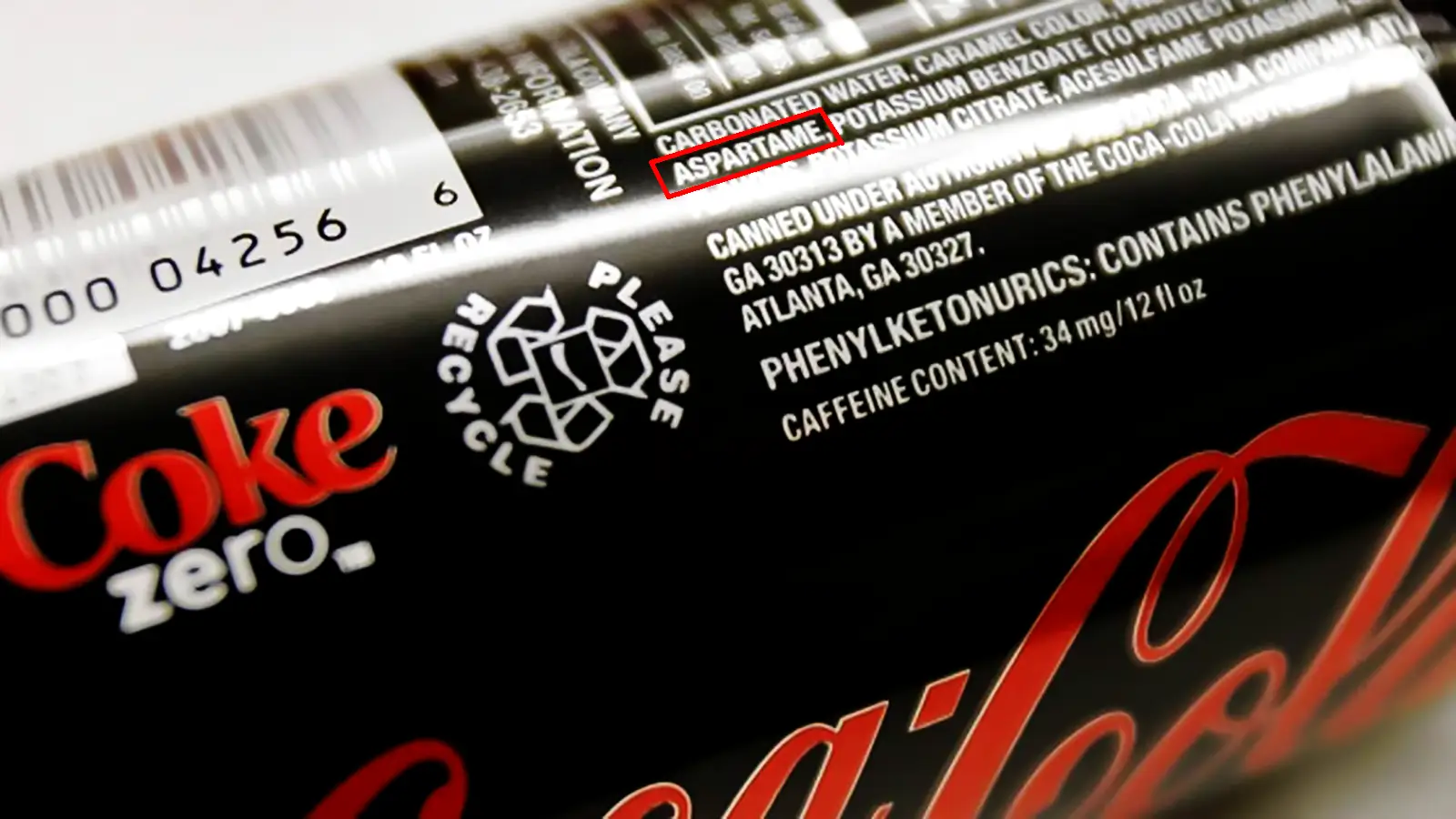
A razão pela qual a Coca-Cola coloca cafeína em Coca-Cola é precisamente por causa disto. O desenvolvimento do cérebro das crianças é ainda mais sensível.
A dose letal de cafeína é de 150mg por kg de massa corporal. Para um humano de 70kg, é de 14000mg de cafeína. Uma chávena de café tem, em média, 150mg. Isto não é suficiente para matar, mas ainda há mais um facto de que as pessoas tendem a saber pouco sobre o assunto. No entanto, é o efeito mais importante de todos eles. A adenosina também controla o fluxo sanguíneo através do cérebro.
A cafeína produz vasoconstrição cerebral ao antagonizar os receptores de adenosina.
A vasoconstrição cerebral induzida pela cafeína está bem documentada (Diukova et al., 2012). Verificou-se que 250 mg de cafeína estão associados a reduções significativas da perfusão cerebral trinta e noventa minutos depois. O valor da diminuição do fluxo sanguíneo no cérebro vai de 20% para uma chávena pequena de café a 40% para 2 ou 3 chávenas. O consumo crónico de cafeína resulta numa adaptação do sistema vascular de receptores de adenosina, presumivelmente para compensar os efeitos vasoconstritores da cafeína. Todo este choque de adrenalina e stress sob a forma de "estou a sufocar e a morrer, ajudem-me, sou o vosso cérebro sem oxigénio" é o que realmente vos acorda porque estão prestes a morrer literalmente. É esse o seu estado de alerta. Resposta de stress de luta ou fuga. E essa é a verdadeira função da cafeína, ser mais um químico neurotóxico para a defesa contra as pragas. Se bebermos café todos os dias, o cérebro adapta-se e tenta compensar.
Contudo, existe um prazo para o que o cérebro pode compensar. O limite é de cerca de 400 mg de cafeína por dia. Beber mais do que isso terá efeitos vasoconstritores, mesmo em pessoas que são viciadas em cafeína crónica. O que acontece é que, na expectativa de mais uma chávena de café, o cérebro vai aumentar a sua pressão cerebral interna. Assim, quando bebemos café, a pressão vai baixar devido aos efeitos vasoconstritores e tornar-se normal. Se saltarmos essa chávena de manhã e saltarmos novamente à tarde, a acumulação de pressão interna do cérebro vai dar-nos uma enxaqueca. Esta é a razão pela qual as pessoas que estão a tentar desistir normalmente sofrem de dores de cabeça que podem durar dias antes dos seus cérebros começarem a adaptar-se novamente a novas condições normalizadas. Há mais.
A cafeína também é frequentemente utilizada como suplemento pré-treino, mas a cafeína pode afectar negativamente e limitar o fluxo sanguíneo para o músculo cardíaco durante o exercício (Namdar et al., 2009).
Quando fazemos exercício físico, o fluxo sanguíneo tem de aumentar para corresponder ao aumento da necessidade de oxigénio e cafeína pode afectar negativamente também este mecanismo e não apenas o fornecimento de sangue ao cérebro. Restringe o fluxo sanguíneo no músculo cardíaco, mas, curiosamente, não afectou o fluxo sanguíneo enquanto os sujeitos do estudo estavam em repouso. Quando os sujeitos tomaram comprimidos de cafeína e exercitaram o fluxo sanguíneo foi significativamente inferior ao normal. O fluxo sanguíneo deve aumentar quando as pessoas fazem exercício devido à procura mais significativa de energia, mas a cafeína bloqueia os receptores de adenosina no músculo cardíaco e bloqueia os receptores específicos nas paredes dos vasos sanguíneos. Não recomendaria a ninguém que tomasse cafeína como suplemento pré-treino ou que qualquer atleta bebesse cafeína antes de praticar desporto. No estudo superior mencionado após a administração oral de cafeína 200 mg de ciclo-circulação sanguínea induzida pelo exercício do miocárdio diminuiu 11% em indivíduos normais. Em indivíduos com doença arterial coronária, a diminuição foi de 18% e de 25% em indivíduos estenóticos (com diminuição do depósito de colesterol das artérias coronárias). A cafeína é um pesticida que mata insectos e outras plantas. Veneno neurotóxico. Tem o objectivo de defender a planta do café.
A planta do café é uma das raras plantas na natureza que comete suicídio. Benefícios exclusivos do café, o suicídio. As folhas e os grãos que caem do cafeeiro têm cafeína, e começam a envenenar o solo. No início, matam tudo o que vive na camada superior do solo, mas à medida que o tempo passa e mais e mais folhas caem, e mais concentração de cafeína no solo levanta mais do sistema radicular da própria planta do café é afectada. Investigações relativas à utilização de cafeína nas plantas demonstraram que quando a concentração de cafeína se torna suficientemente elevada começa a distorcer as células das plantas e se se torna ainda mais elevada, o resultado é a morte da planta.
As pessoas normalmente tentam beber café quando já estão suficientemente stressadas. Têm muito trabalho, ou precisam de estudar para o exame, para que uma resposta stressante constante e cheia de adrenalina e cortisol para cima e para baixo lhes dê fadiga adrenalina e condição geral stressante. A fadiga adrenalina não é uma doença real, apenas um termo inventado. Não é um diagnóstico médico aceite. Existe uma verdadeira condição médica chamada doença de Addison que causa a insuficiência adrenal. A fadiga adrenal não causa uma produção inadequada de uma ou mais destas hormonas como resultado de uma doença subjacente. A fadiga adrenal é uma forma leve de insuficiência adrenal causada por stress crónico com rápidos altos e baixos hormonais durante o dia. Não se trata tanto de uma insuficiência das glândulas supra-renais, mas sim de um estado de fadiga geral provocado por flutuações hormonais constantes. Tentar tomar Valium para relaxar ou porque não se consegue dormir só vai piorar as coisas.
Quantas pessoas estão a queixar-se das suas vidas stressantes?
A pergunta válida deve ser: quantos deles são viciados em cafeína?
Tenha isso em mente na próxima vez que estiver de olho naquela 2ª (ou 10ª) chávena de joe.
Referências:
- Diukova, A., Ware, J., Smith, J. E., Evans, C. J., Murphy, K., Rogers, P. J., & Wise, R. G. (2012). Separação dos efeitos neurais e vasculares da cafeína usando EEG-FMRI simultâneo: efeitos diferenciais da cafeína nas respostas cerebrais cognitivas e sensório-motoras. NeuroImage, 62(1), 239-249. https://doi.org/10.1016/j.neuroimage.2012.04.041
- Namdar, M., Schepis, T., Koepfli, P., Gaemperli, O., Siegrist, P. T., Grathwohl, R., Valenta, I., Delaloye, R., Klainguti, M., Wyss, C. A., Lüscher, T. F., & Kaufmann, P. A. (2009). Caffeine impairs myocardial blood flow response to physical exercise in patients with coronary artery disease as well as in age-matched controls. PloS one, 4(5), e5665. https://doi.org/10.1371/journal.pone.0005665
- Butt, M. S., & Sultan, M. T. (2011). O café e o seu consumo: benefícios e riscos. Revisões críticas em ciência de alimentos e nutrição, 51(4), 363-373. https://doi.org/10.1080/10408390903586412
Publicações Relacionadas



Você tem alguma dúvida sobre saúde e nutrição?
Gostaria muito de ouvir a sua opinião e responder-lhes no meu próximo post. Agradeço o vosso contributo e a vossa opinião e aguardo com expetativa a vossa resposta em breve. Convido-vos também a siga-nos no Facebook, Instagram e Pinterest para mais conteúdos sobre dieta, nutrição e saúde. Pode deixar um comentário e ligar-se a outros entusiastas da saúde, partilhar as suas dicas e experiências e obter apoio e encorajamento da nossa equipa e comunidade.
Espero que este post tenha sido informativo e agradável para si e que esteja preparado para aplicar os conhecimentos que aprendeu. Se achou este post útil, por favor partilhá-lo com os seus amigos e familiares que também possam beneficiar com isso. Nunca se sabe quem poderá precisar de alguma orientação e apoio no seu percurso de saúde.
– Você Também Pode Gostar –
Azul de Metileno: Usos Terapêuticos e Significado Clínico
Açafrão-da-Terra: Melhorar a Saúde e Benefícios Clínicos
A Diabetes provoca e carboidratos refinados - vegan argumento

A deficiência de vitamina D - Fatores de Risco
Excitotoxicity de MSG (glutamato Monossódico)-Revisão Científica
Amla: Benefícios Comprovados, Nutrição e Significado Clínico
Tamanho do cérebro, inteligência e consumo de carne – O argumento vegano
Dietética Rica em Proteínas e Acidose Metabólica: Correlações de Riscos Para a Saúde

Aprender Sobre Nutrição

Milos Pokimica é médico de medicina natural, nutricionista clínico, escritor de saúde e nutrição médica, e conselheiro em ciências nutricionais. Autor da série de livros Go Vegan? Revisão de Ciênciaopera também o website de saúde natural GoVeganWay.com
Medical Disclaimer
GoVeganWay.com traz comentários dos mais recentes a nutrição e a saúde relacionados com a pesquisa. As informações fornecidas representa a opinião pessoal do autor e não pretende nem implícita para ser um substituto para aconselhamento médico profissional, diagnóstico ou tratamento. As informações fornecidas são apenas para fins informativos e não se destina a servir como um substituto para a consulta, o diagnóstico e/ou tratamento médico de um médico qualificado ou prestador de cuidados de saúde.NUNCA DESCONSIDERE o CONSELHO MÉDICO PROFISSIONAL OU adiar a BUSCA de TRATAMENTO MÉDICO por causa DE ALGO QUE TENHA LIDO OU ACESSADO por MEIO de GoVeganWay.com
NUNCA APLIQUE QUAISQUER MUDANÇAS de estilo de VIDA OU QUALQUER MUDANÇA COMO UMA CONSEQUÊNCIA DE ALGO QUE TENHA LIDO NO GoVeganWay.com ANTES de CONSULTORIA de LICENÇA MÉDICA.
No caso de uma emergência médica, ligue para o médico ou para o 911 imediatamente. GoVeganWay.com não recomenda ou endossa qualquer específicos, grupos, organizações, exames, médicos, produtos, procedimentos, opiniões ou outras informações que podem ser mencionadas dentro.
Escolhas do Editor -
Câncer Editor De Picaretas Fitoquímicos
Poder Anticancerígeno das Frutas e Legumes: Evidências Clínicas e in Vivo
Alguns extractos vegetais rivalizam com os principais medicamentos de quimioterapia e, ao mesmo tempo, visam vários tipos diferentes de células cancerígenas.
Antioxidantes Editor De Picaretas ORAC
Óleos Essenciais Como Suplementos Antioxidantes: Regras e Estratégias
Os óleos essenciais de qualidade alimentar podem ser uma estratégia conveniente e amiga do consumidor para optimizar o valor antioxidante e a pontuação ORAC da nossa dieta.
Antioxidantes Editor De Picaretas ORAC
Dieta Rica em Antioxidantes: Regras e Estratégias Gerais
Existem estratégias fáceis e económicas para optimizar o valor antioxidante da nossa dieta.
Antioxidantes Editor De Picaretas ORAC
Compreender os Valores ORAC: Níveis de Antioxidantes nos Alimentos
Quando a sua principal fonte de antioxidantes é o café, sabe que tem um problema grave.

Antioxidantes Editor De Picaretas ORAC
Astaxantina Benefícios: Antioxidante Natural Mais Poderoso do Mundo
A astaxantina é o mais poderoso e natural antioxidante universal (tanto o petróleo e a água-solúvel) desconhecido para a ciência. Ele se acumula nos tecidos e Ele nunca pode transformar-se em um pró-oxidante.
Antioxidantes Editor De Picaretas ORAC Fitoquímicos
Antioxidantes: Compreender os Princípios Básicos
Los productos de origen animal no contienen fitoquímicos ni antioxidantes. Por término medio, los alimentos vegetales contienen más de 60 veces más antioxidantes que los de origen animal.
Editor De Picaretas A Dieta Vegetariana
Deficiências de Nutrientes na Dieta Vegana: Estratégias de Prevenção
Existem nove deficiências comuns de nutrientes na escala populacional que afectam as pessoas que se alimentam de uma dieta à base de plantas. Se não forem corrigidas a tempo, algumas deficiências têm consequências terríveis e não tratáveis.
Editor De Picaretas Alimentação Ideal
Deficiência de Micronutrientes na Dieta Americana Padrão: Estratégias de Otimização
O perfil nutricional da nossa dieta moderna à base de carne, açúcar e alimentos processados é completamente incongruente com a nossa evolução, resultando numa grave deficiência de micronutrientes.
Editor De Picaretas Fitoquímicos
Fitoquímicos: Conceitos Básicos
Cada fitoquímico que existe tem uma acção biológica no corpo humano. Cada um de milhões de diferentes fitoquímicos.

Editor De Picaretas Leite Alimentação Ideal
Leite e Lacticínios: Correlações de Risco Para a Saúde
As associações conhecidas com o consumo de leite e lacticínios são infertilidade, cancro dos ovários e da mama, leucemia, diabetes tipo 1, autismo, arteriosclerose, catarata, artrite reumatóide, esclerose múltipla, hiperactividade, congestão, espinhas, e muito mais...As associações conhecidas com o consumo de leite e lacticínios são infertilidade, cancro dos ovários e da mama, leucemia, diabetes tipo 1, autismo, arteriosclerose, catarata, artrite reumatóide, esclerose múltipla, hiperactividade, congestão, espinhas, e muito mais...
Câncer Editor De Picaretas Proteína
Proteína Completa: Sinalização do IGF-1 na Formação do Cancro
Quando você comer proteína animal que tem quatro vezes a chance de desenvolver todos os tipos de câncer. Quando você fuma tem quatro vezes a chance de desenvolver câncer de pulmão.

Câncer Editor De Picaretas Proteína
A Anatomia do Câncer de risco para a Saúde correlações
Cerca de 2% dos casos de câncer estão por medicamento considerado puramente causada por fatores genéticos. O mesmo intervalo de dentro do reino animal. Você ainda não foi informado de toda a verdade.
Milos Pokimica é escritor especializado em saúde e nutrição e consultor em ciências nutricionais. Autor da série de livros Go Vegan? Revisão de Ciênciaopera também o website de saúde natural GoVeganWay.com
Artigos Mais Recentes –
Restrição De Calorias Longevidade
Como Fazer Jejum: Alimentos em Jejum que Não Quebram a Autofagia
Autofagia. Já alguma vez se interrogou sobre o que acontece às células do seu corpo quando morrem ou se danificam? Será que se acumulam e criam problemas ou são eliminadas de alguma forma? A resposta é que o seu corpo...
Saúde Dentária Prevenção
Dentes Sensíveis a Doces e Dor: Solução Rápida e Duradoura
Uma solução rápida e fácil para o alívio da dor é o óleo essencial de cravinho, um poderoso antioxidante e analgésico que pode ajudar com doenças das gengivas e dores de dentes.
Feijão
Feijão Verde: Benefícios Nutricionais e Para a Saúde
O feijão verde tem poucas calorias e é rico em compostos naturais que podem ajudá-lo a controlar o açúcar no sangue, a reduzir o colesterol e a combater os radicais livres.
Dieta de alimentos crus A Dieta Vegetariana
Pode-se Comer Cogumelos Crus: Riscos Para a Saúde, Nutrição e Segurança
Os cogumelos têm toxinas sensíveis ao calor, como a hidrazina ou a agaritina, e paredes celulares feitas de quitina que não podem ser bem digeridas pelos seres humanos.
A Dieta Vegetariana
Os Peixes São Animais? Uma Perspetiva Cultural
Em algumas culturas, a carne de peixe não é considerada carne e o peixe é permitido mesmo durante o jejum.

Saúde Dentária Prevenção
Elixir Bucal Natural Caseiro: Comprovado, Mais Forte e Menos Tóxico
O elixir bucal natural caseiro é mais forte do que a clorexidina, menos tóxico e, se ingerido, pode provocar algumas náuseas, mas também tem um elevado valor ORAC.
Saúde Dentária Prevenção
Como Parar a Cárie Dentária: Sintomas, Causas e Prevenção
Consumo de açúcar é a principal causa de cáries e a cárie dentária, combinado com deficiência de minerais, especialmente o magnésio, o zinco, o cobre e elementos-traço.
Antioxidantes Superalimentos
Amla: Benefícios Comprovados, Nutrição e Significado Clínico
O amla é um dos antioxidantes mais poderosos do mundo, com uma pontuação ORAC de 261.530. É uma fonte rica de fitoquímicos que têm vários benefícios para a saúde.
Superior De Saúde De Notícias — ScienceDaily
PubMed, #vegan-dieta –
- Toward consensus on complementary feeding recommendations: findings from a national evidence-informed modified Delphi study in Türkiyeon Outubro 12, 2026
CONCLUSIONS: Integration of quantitative Delphi findings with qualitative thematic analysis revealed that non-consensus primarily stemmed from the practical nuances of clinical execution and contextual adaptation, rather than a fundamental skepticism toward the underlying scientific data. These findings provide an evidence-informed foundation for developing context-sensitive CF recommendations for clinical practice.
- Characterization of Nutritional Intake in Vegan Pregnant Women and its Association on Birth Weighton Outubro 8, 2026
CONCLUSIONS: Vegan women had a higher rate of SGA than non-vegan women, and this increased risk may be partly related to differences in maternal protein intake and composition. In addition, vegan women had lower dietary intakes of calcium, vitamin B12, vitamin D, DHA, and choline, highlighting these nutrients as important considerations in the nutritional assessment and counseling of pregnant women adhering to a strictly vegan diet.
- Changes in ectopic lipids, insulin sensitivity, and beta cell function after a low-fat vegan diet in adults with type 2 diabetes: a 16-week single-arm clinical trialon Outubro 8, 2026
CONCLUSIONS: On an ad libitum low-fat plant-based (vegan) dietary intervention, the participants with type 2 diabetes experienced reductions in ectopic fat, particularly visceral and hepatocellular fat, improvements in insulin sensitivity, reductions in AGEs, and improvements in beta-cell function.
- Sustained Regression of Parotid Mucosa-Associated Lymphoid Tissue (MALT) Lymphoma After Nutritional and Nutraceutical Intervention Without Chemoimmunotherapy: A Case Reporton Outubro 5, 2026
Extranodal marginal zone lymphoma of mucosa-associated lymphoid tissue (MALT) in the setting of Sjögren’s syndrome (SS) is a well-recognized complication of chronic autoimmune salivary gland inflammation. Standard management options include radiotherapy, immunotherapy, and combination chemoimmunotherapy, with active surveillance reserved for stable, low-burden disease. The potential role of structured nutritional and nutraceutical intervention in this setting has not been previously […]
Publicações Aleatórias -
Câncer A Inflamação Toxicidade
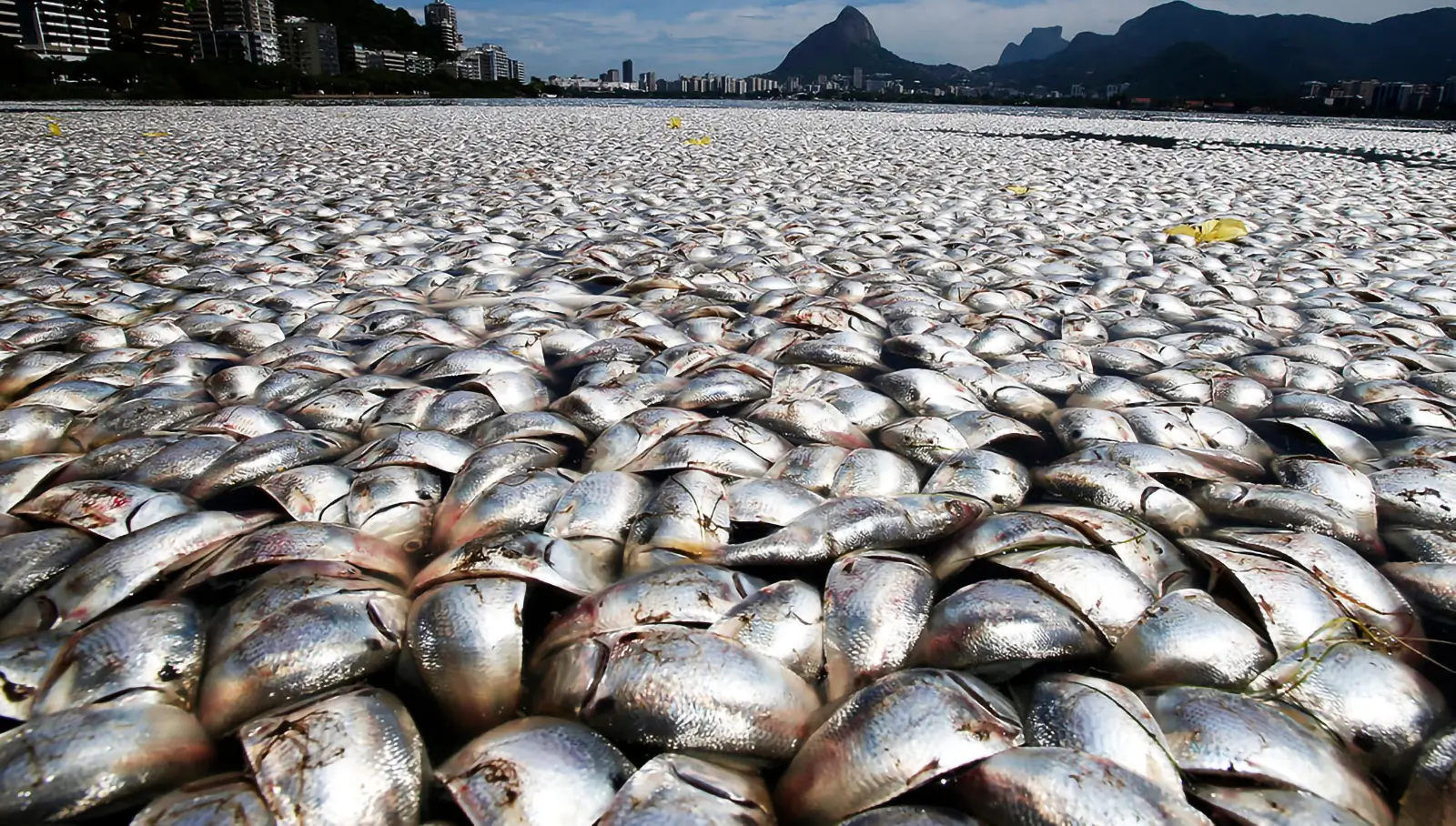
Toxicidade do Peixe- A Carne Mais Tóxica
A poluição é lavado e irá terminar no mar, eventualmente, e de algas, filtrar a água de iniciar o processo de bioacumulação. Toxicidade nos peixes é uma grande preocupação.
Desintoxicação Água Potável
Água alcalina - Benefícios e riscos para a saúde
Há muitas conversas sobre saúde na comunidade da saúde e nutrição sobre os benefícios da "água ionizada" ou "água alcalina". O que tem a ciência a dizer?
Atividade Física Prevenção
Exercício - Por que exatamente o que é necessário?
Na comunidade de saúde, o exercício tem quase um status mítico como uma das melhores coisas que você pode fazer por si mesmo, exceto para evitar fumar.
Editor De Picaretas A Inflamação A Dieta Vegetariana
Inflamação e Dieta- Argumento Vegan
Evoluímos para receber uma explosão de proteção antioxidantes quando nós comer, mas lá não estão presentes na carne. A inflamação e a dieta têm um alto nível de correlação.
Câncer Editor De Picaretas Fitoquímicos
Poder Anticancerígeno das Frutas e Legumes: Evidências Clínicas e in Vivo
Alguns extractos vegetais rivalizam com os principais medicamentos de quimioterapia e, ao mesmo tempo, visam vários tipos diferentes de células cancerígenas.

A Dieta Vegetariana
Humano de carne, ou seja, o mito?- O animal cognição
Não somos mais inteligentes espécies se nós cientificamente medida animal cognição. As barbatanas longas baleia-piloto cérebro neocortical parte contém mais neurônios do que os nossos próprios.

COVID-19 Prevenção A Vitamina D
A deficiência de vitamina D - Fatores de Risco
Existem apenas duas vitaminas que não são produzidos pelas plantas, vitamina D, e o outro de vitamina B12. A deficiência de vitamina D é uma preocupação real.

Alimentação Ideal ORAC
Casa de extração de petróleo - A técnica secreta de densidade de nutrientes
O processamento de alimentos (extracção de óleo doméstico) também pode ser utilizado ao contrário para aumentar a densidade e o perfil nutricional dos alimentos.
Desintoxicação Toxicidade
Desintoxicação– Uma Revisão Científica
Existem programas de dieta projetado para ajudar a reduzir a inflamação e do corpo em geral toxicidade e aumento de desintoxicação que são apoiadas pela ciência.

Editor De Picaretas Alimentação Ideal Dieta Paleo
Dieta Paleo - Sem carne em vista
Os seres humanos evoluíram para 50 milhões de anos a partir de plantas-alimentares de mamíferos. A caça não é natural hominídeo atividade. A dieta Paleo só existia para os últimos 200.000 anos.

Posts Em Destaque –
Antioxidantes Editor De Picaretas ORAC Fitoquímicos
Antioxidantes: Compreender os Princípios Básicos
Los productos de origen animal no contienen fitoquímicos ni antioxidantes. Por término medio, los alimentos vegetales contienen más de 60 veces más antioxidantes que los de origen animal.

A Medicina Alopática Editor De Picaretas
A História da Grande Farmácia - IG Farben
A parte de Rockefeller, o monopólio da química e indústrias de medicamentos veio em cumprimento após a 2ª guerra mundial. A Standard Oil e a IG Farben cooperação fez isso em realidade.
Editor De Picaretas Leite Alimentação Ideal
Leite e Lacticínios: Correlações de Risco Para a Saúde
As associações conhecidas com o consumo de leite e lacticínios são infertilidade, cancro dos ovários e da mama, leucemia, diabetes tipo 1, autismo, arteriosclerose, catarata, artrite reumatóide, esclerose múltipla, hiperactividade, congestão, espinhas, e muito mais...As associações conhecidas com o consumo de leite e lacticínios são infertilidade, cancro dos ovários e da mama, leucemia, diabetes tipo 1, autismo, arteriosclerose, catarata, artrite reumatóide, esclerose múltipla, hiperactividade, congestão, espinhas, e muito mais...
Editor De Picaretas Fitoquímicos
Fitoquímicos: Conceitos Básicos
Cada fitoquímico que existe tem uma acção biológica no corpo humano. Cada um de milhões de diferentes fitoquímicos.
Editor De Picaretas A Inflamação
Os seres humanos onívoros dilema - o consumo de Carne, bactérias probióticas, a inflamação, e com o intestino
Seres humanos são onívoros, em um verdadeiro anatômica sentido? Há uma diferença fundamental na maneira como as trato digestivo trabalha em plantas vs comer carne de espécie.
Editor De Picaretas Alimentação Ideal
Alimentos Processados: Compreender os Riscos
Os alimentos processados significam que algo dos alimentos integrais é removido, normalmente a fibra, e algo é adicionado, normalmente a gordura, o açúcar, o sal e o MSG.

Câncer Editor De Picaretas Toxicidade
Exposição a Pesticidas em Crianças: Testes de Exposição na Vida Real
Crianças e, principalmente, as mulheres grávidas são mais vulneráveis à exposição aos pesticidas. Se analisarmos do mundo real, os níveis de exposição em cenários da vida real, qual seria o resultado?

Editor De Picaretas Prevenção A Dieta Vegetariana
China estudo - vegan argumento
China estudo mostrou que não há nenhuma doença cardíaca ou câncer ou diabetes em subdesenvolvido comunidades rurais em todo o mundo com base de amido de dietas veganas.
Editor De Picaretas A Obesidade
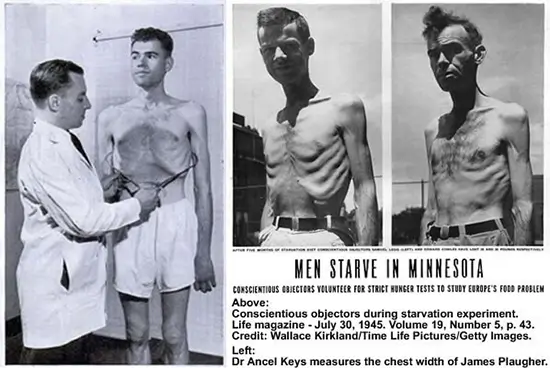
Experiência de Fome no Minnesota: Porque é Que Fazer Dieta Nos Faz Engordar. A Psicologia da Fome.
Um dos primeiros estudos científicos sobre o que a fome não faz para a mente foi observado em um estudo lembrado como o Minnesota Fome Experimento realizado pela Universidade de Minnesota de volta em 1944.
Diabetes Editor De Picaretas
A Diabetes provoca e gordura saturada - vegan argumento
Como o nível de gordura no sangue, aumenta a capacidade do corpo para limpar açúcar cai. Um dos diabetes provoca é o nosso desadaptação para uma grande ingestão de gordura
Últimas do PubMed, #dieta baseada em vegetais –
- Colloid mill modified zein suspension technology for plant protein rich bird food: first clutch performance compared with egg based food in fiorino canariespor Ercan Mevliyaoğulları on Outubro 13, 2026
CONCLUSIONS: EGG16 improved first-clutch egg production. ZEIN16 did not show a statistically detectable reduction in hatchability after eggs were laid, but equivalence or non-inferiority to EGG16 was not tested. ZEIN16 should therefore be positioned as a preliminary plant-protein-rich bird egg food analogue produced through colloid-mill-based zein suspension technology, rather than as a reproductive replacement for egg-based food.
- Diet-associated variation in the midgut bacterial communities of Loxostege sticticalis larvae fed botanically distinct host plantspor Dong Li on Outubro 13, 2026
INTRODUCTION: Gut microbiota can influence insect physiology and ecological interactions, but how botanically distinct host plants affect gut bacterial communities in polyphagous insects remains poorly understood.
- Exploring the Likelihood of Healthcare Students to Advise Patients on the Health Benefits of Predominantly Plant-Based Dietspor Patricia Dyett on Outubro 13, 2026
The aim of this study was to survey select healthcare students in the Americas about their likelihood to advise on health benefits of predominantly plant-based diets to noncommunicable disease patients; and to identify possible demographic, academic, and psychographic associations and predictors. The study design included targeted questions from a validated electronic questionnaire which was administered to a convenience sample of nursing and dietetics students across four university campus…
- Dietary modulation of the gut microbiota in type 2 diabetes and obesity: mechanisms, interventions, and clinical perspectivespor Alicja Kubica on Outubro 12, 2026
Obesity and type 2 diabetes mellitus (T2DM) are associated with heterogeneous changes in gut microbial composition and function, while mechanistic studies support plausible links among diet, microbial metabolism, intestinal barrier function, immune signaling, and host metabolism. This narrative review integrates diet-microbiome mechanisms, dietary-assessment and multi-omics methodology, major dietary patterns, quantitative clinical intervention evidence, treatment-related microbiome […]
- Adherence to the Nordic Nutrition Recommendations 2023 and incidence of type 2 diabetes: a Danish cohort studypor Mathilde M Nørgaard on Outubro 12, 2026
CONCLUSION: Greater adherence to NNR23 was associated with lower risk of T2D, supporting the potential relevance of the NNR23 for T2D prevention.
- Structure and functional properties of Dendrobium officinale polysaccharide-hemp seed protein gels for dysphagia diets as regulated by alkali concentration and temperaturepor Tingting Ding on Outubro 10, 2026
Dysphagia is highly prevalent among older adults and increases the risks of malnutrition, dehydration, and aspiration pneumonia, highlighting the need for safe and nutritionally adequate texture-modified foods. Polysaccharide-protein gels are promising candidates for this purpose, but precise control of their rheological properties and structural stability remains challenging. Here, we systematically investigated how alkali concentration (Na(2)CO(3), 0.5-2.5%, w/v) and thermal treatment […]