






Vitamina C Intravenosa no Tratamento do Cancro: 40 Anos de Evidência
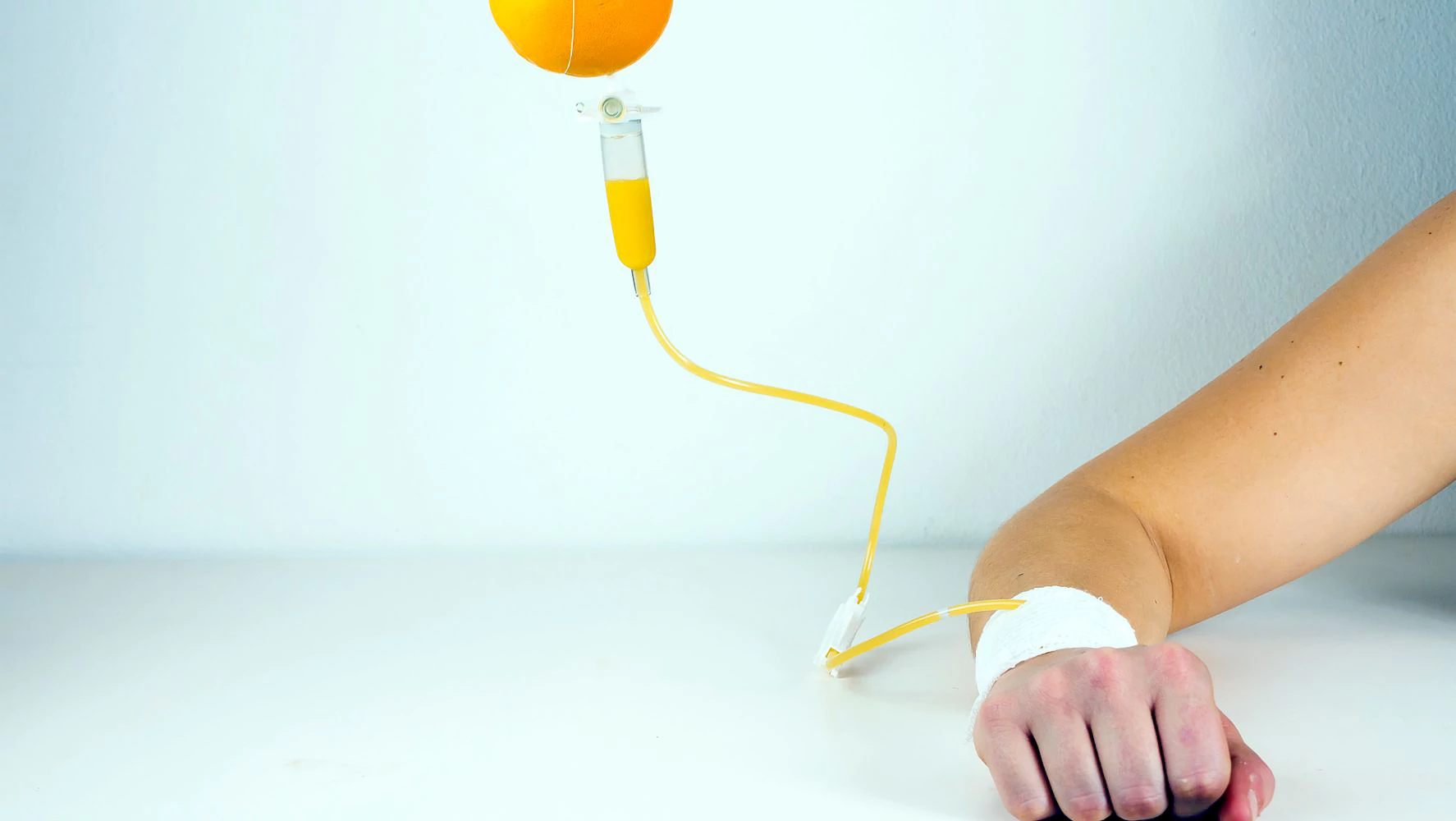
A vitamina C intravenosa é um agente quimioterápico não tóxico que pode ser administrado em conjunto com tratamentos convencionais do cancro e incorporado como um protocolo de prevenção e longevidade.
Milos Pokimica
Escrito por: Milos Pokimica
Revisto Clinicamente Por: Dr. Xiùying Wáng, M.D.
Updated Dezembro 21, 2025Há mais de 80 anos, o bioquímico Otto Warburg observou que as células cancerígenas precisam de mais glicose e produzem mais lactato do que as células normais. Este processo, também conhecido como glicólise aeróbica ou efeito Warburg, tem sido utilizado para detectar tumores no ambiente terapêutico, utilizando a tomografia por emissão de pósitrons (PET).
Vários estudos genéticos revelaram que esta diferença metabólica pode ser crucial para a sobrevivência e proliferação do cancro, mesmo que o mecanismo preciso através do qual a reprogramação da glucose contribui para a carcinogénese seja ainda desconhecido. Como resultado, a inibição da glicólise pode proporcionar aos doentes com cancro um tratamento mais especializado. Em qualquer altura em que a investigação mostra uma diferença entre o cancro e uma célula normal, é um sinal de tratamento potencial. A diferença é exactamente o que os cientistas procuram em primeiro lugar. A forma de visar selectivamente apenas as células cancerosas sem danificar as células normais.
Curiosamente, também neste caso se demonstrou ser a verdade. Verificou-se que o GLUT1 não só transporta glicose mas também ácido desidroascórbico (DHA), a forma oxidada ou reduzida de vitamina C.
O aumento da absorção de DHA nas células mutantes produziu stress oxidativo porque o DHA intracelular foi rapidamente convertido de novo em vitamina C à custa do glutatião (GSH). O glutatião é um dos principais antioxidantes nas células. O aumento da absorção de DHA nas células mutantes levou ao stress oxidativo, que aumentou o número de espécies reactivas de oxigénio (ROS) nas células. Em resposta, o aumento de ROS activou a enzima polimerase de reparação do ADN (ADP-ribose) polimerase (PARP), que utilizou uma grande quantidade de NAD+ celular como cofactor. A gliceraldeído 3-fosfato desidrogenase (GAPDH) está inactiva quando os níveis de NAD+ são baixos porque o GAPDH necessita de NAD+ como co-factor. Nas células mutantes altamente glicolíticas KRAS ou BRAF, o bloqueio do GAPDH causou finalmente uma crise energética e morte celular que não foi observada nas células do tipo selvagem KRAS e BRAF.
Embora haja poucas dúvidas de que as mutações KRAS e BRAF são dois dos oncogenes mais frequentemente mutantes no cancro humano, não são as únicas mutações que foram ligadas ao metabolismo da glucose alterado e à sensibilidade ao tratamento ascorbato. As células cancerosas renais (RCC) sem BVS (Von Hippel-Lindau), um supressor tumoral que enfraquece o HIF1A por ubiquitinação, são substancialmente mais vulneráveis à terapia do ascorbato do que as células proficientes na BVS. O aumento da actividade transcripcional da HIF1A nas células nulas da BVS-CVS leva ao aumento da expressão do GLUT1, bem como à desregulação de várias outras enzimas glicolíticas, o que resulta numa reprogramação metabólica.
Além disso, os cancros com níveis mais elevados de danos no ADN, tais como os que foram submetidos a radioterapia ou com mutações genéticas BRCA, são mais dependentes da reparação do ADN mediada pelo PARP. Ao privá-los do NAD+ necessário para a activação PARP, a vitamina C farmacológica pode visar selectivamente tais cancros.
Utilizei aqui deliberadamente as definições científicas deste manual porque ainda há um grande número de médicos que têm muitas perguntas e não gostam de antioxidantes e têm sempre algo a acrescentar ou a debater.
Os doentes com cancro têm o estado de vitamina C comprometido? A IVC é segura? O fornecimento intravenoso de vitamina C é o melhor método? A IVC afecta a radiação ou a quimioterapia? Pode a IVC melhorar a qualidade de vida e diminuir os graves efeitos secundários da quimioterapia? Quais são os mecanismos de acção relevantes da IVC? Quais são as dosagens, frequência e duração ideais do tratamento de IVC? E assim por diante.
Desde a sua descoberta há um século, o ideal dosagem de vitamina C necessária para optimizar a sua saúde benefícios tem sido altamente contestado. O duas vezes vencedor do Prémio Nobel e químico de renome mundial Linus Pauling acreditava firmemente que as megadoses de vitamina C (mais de 1 g tomado diariamente) podiam prevenir e tratar uma vasta gama de doenças, incluindo a constipação e o cancro comuns. No entanto, a afirmação de Pauling tem sido geralmente ignorada ou mesmo ridicularizada na medicina alopática moderna. Esta controvérsia ainda hoje está muito viva.
Há mais de 60 anos, William McCormick, um médico de Toronto, formulou a hipótese de que a vitamina C pode prevenir o cancro ao aumentar a produção de colagénio depois de ver que os doentes com cancro apresentavam frequentemente níveis muito baixos de vitamina C no seu sangue e apresentavam sintomas semelhantes aos do escorbuto. Estendendo esta noção, um cirurgião escocês chamado Ewan Cameron propôs em 1972 que o ascorbato pode prevenir o crescimento do cancro através da inibição da enzima hialuronidase, que de outra forma enfraquece a matriz extracelular e permite a metástase do cancro. Começou a tratar doentes com cancro que estavam em fase terminal, e mais tarde publicou um estudo de caso de 50 pacientes em que alguns dos pacientes tratados beneficiaram de uma dose elevada de vitamina C.
Incentivada pelo resultado, Cameron juntou-se a Linus Pauling para realizar ensaios clínicos envolvendo doentes com cancro terminal. Em 1976, publicaram um estudo de 100 pacientes com cancro terminal tratados com ascorbato. A sua progressão da doença e taxas de sobrevivência foram comparadas com 1000 pacientes de controlo retrospectivo que foram comparados com os pacientes tratados com vitamina C no que diz respeito à idade, sexo, tipo de cancro, e fase clínica. Os resultados mostraram que os pacientes tratados com vitamina C tinham aumentado a qualidade de vida e quadruplicado o seu tempo médio de sobrevivência.
Num estudo de acompanhamento realizado por Cameron e Pauling, 22% dos pacientes com cancro que receberam tratamento com vitamina C viveram mais de um ano, em comparação com apenas 0,4% dos pacientes de controlo. Além disso, uma investigação clínica realizada separadamente no Japão produziu resultados semelhantes.
Hoje há milhares de casos, e isto está bem documentado, e há uma linha de investigação nos últimos anos sobre o efeito anticancerígeno da vitamina C. Num caso clínico, sei que um homem tinha cancro da próstata e um protocolo simples de vitamina C oral. Foi-lhe recomendado por um perito em tratamentos "subterrâneos" do cancro cujo nome não posso utilizar publicamente. Inicialmente, ele atingiu a tolerância intestinal tomando 60 gramas por dia. Após dois meses, a sua tolerância desceu para menos de 30 gramas por dia. Mas agora temos algo que vai contra os interesses da indústria farmacêutica e se ler a segunda parte da série de livros, sabe o que isso significa.
Naquela época, tudo começou com Linus Pauling. Um homem contra a máquina. O mesmo que com o Royal Raymond Rife ou qualquer outro cientista de renome da noite para o dia foi descartado e nomeado como um charlatão, renegado, cientista delirante e todos os outros "nomes" que se possam pensar. Era uma estratégia padrão de propaganda e difamação dos cartéis bancários químicos das Grandes Farmacêuticas.
Mas neste caso, tal como já aconteceu uma vez com Rife, houve também um problema. Linus Carl Pauling (1901-1994) foi um químico físico e pai da bioquímica que ganhou dois prémios Nobel; um em química em 1954, seguido por um Prémio Nobel da Paz em 1962. Ele também deveria ter ganho o terceiro Nobel, mas poder decidir que isso não era bom para o negócio e deu-o a Watson e Crick por "por pouco" o terem vencido à descoberta da estrutura do ADN. A revista New Scientist classificou-o como um dos 20 maiores cientistas que alguma vez viveu. O seu laboratório não podia ser apenas queimado e não podia ser apenas preso ou processado como Rife era e todos os outros.
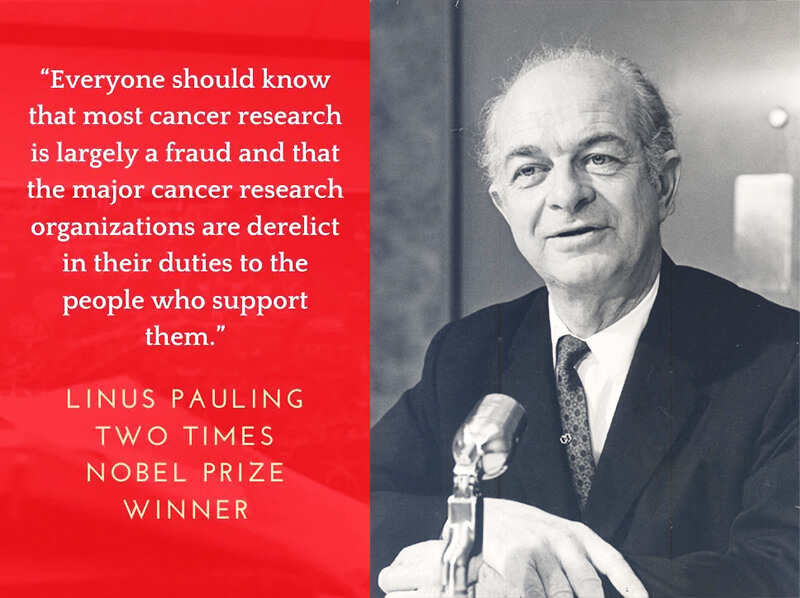
Em tempos fez investigação sobre a vitamina C e compreendeu a bioquímica por detrás dos antioxidantes e a sua capacidade de neutralizar substâncias tóxicas, e os radicais livres e matar os vírus.
Escreveu um livro sobre o tema da vitamina C onde defendeu a mega-dosagem para utilizar o potencial antioxidante da vitamina C para prevenir o frio e, devido à sua reputação, o livro foi um bestseller. As vendas de vitamina C dispararam com o aval de Pauling. Mas ele era ingénuo. Estava convencido de que tinha descoberto uma nova cura para muitas doenças e que os profissionais médicos ficariam felizes porque podem curar pessoas com algo barato e que não precisam de receita médica e que os médicos não perderão mais tempo com pessoas com constipações comuns para as quais, de qualquer forma, não tinham qualquer tratamento naquela altura.
Mas ele estava errado. Os ataques foram lançados imediatamente. Primeiro, de Harvard e o professor Frederic Stair chamou-lhe um idiota que não sabe nada sobre nutrição e que não é um médico mas apenas um químico e que não sabe nada sobre o que está a falar na área da nutrição. A recomendação de Pauling era de um mínimo de 6 gramas por dia e ele estava a extrapolar nessa altura as quantidades de vitamina C que era prescrita por um medicamento veterinário para os primatas nos jardins zoológicos. Ele calculou o RDA para os primatas com o seu peso corporal e apenas recalculou e recomendou a mesma quantidade aos humanos.
Foi uma heresia. Isso foi 200 vezes o que foi oficialmente recomendado. O verdadeiro problema era o medo de que isto pudesse realmente funcionar e que os profissionais médicos ficassem sem um grande pedaço do rendimento dos medicamentos prescritos. Pauling argumentava que a vitamina C como antioxidante tem o valor de impulsionar os mecanismos naturais de defesa do organismo e pode curar não só a constipação comum mas também uma série de outras doenças como o cancro e muitas outras, e não só isso. Ele argumentou que a mega-dosagem aumentará a longevidade e a qualidade de vida. Na medicina alopática (moderna), se tiver uma cura "mágica" que cura todas as doenças e lhe dá a longevidade que é um charlatão. Se tem dois Nobels e é o "pai" da bioquímica, e tem uma substância que também é barata e suja, não é apenas um charlatão, é uma ameaça.
O próximo passo de Pauling atingiu o estabelecimento médico até à área sacrossanta de ganhar dinheiro. Escreveu um livro baseado em registos médicos de pacientes que foram tratados com altas doses de vitamina C pelo cirurgião escocês dr. Ewen Cameron. Tanto Cameron como Pauling afirmaram que antioxidantes como a vitamina C podem parar os danos do ADN e prevenir o cancro e se os pacientes já têm um que a vitamina C pode prolongar a vida sem efeitos secundários da quimioterapia. Em 1966, Cameron publicou o seu primeiro livro, Hyaluronidase, and Cancer (Hialuronidase e Cancro). Em 1971, Cameron começou a corresponder com o Dr. Linus Pauling e publicou Cancer and Vitamin C with Pauling em 1979. Pauling ainda não se apercebeu do alcance da corrupção, tirou os dados da sua pesquisa e foi para o American National Cancer Institute. A resposta foi que ele é um charlatão e um perigo para a sociedade e que precisa de parar a sua heresia e que eles não vão fazer qualquer investigação.
Porque não conseguiam silenciá-lo ou fazê-lo desaparecer, e devido à consciência pública, a pressão aumentava e a Clínica Mayo decidiu fazer investigação. O estudo da Clínica Mayo foi interrompido após 75 dias e foi administrada uma dose baixa de vitamina C oral e não intravenosa e foi concebida de uma forma que Pauling considera uma fraude. Escreveu uma série de cartas às revistas médicas afirmando que se tratava de uma conspiração. Foi rejeitado e chamado de charlatão perigoso e na realidade tanto a sua própria esposa como o Dr. Cameron, ambos morreram de cancro. Pauling mesmo depois disso não desistiu da sua teoria e ainda estava a promover a sua teoria antioxidante e tinha o seu próprio laboratório onde fazia pesquisas que existem até hoje. É o Linus Pauling Institute perto de São Francisco que tem cerca de 40 funcionários científicos e até hoje é financiado por benfeitores privados inspirados pela causa. Testaram a vitamina C no colesterol e nas doenças cardíacas e publicaram uma série de artigos sobre a redução dos efeitos da vitamina C no colesterol e, mais importante ainda, sobre a oxidação do colesterol. O ramo médico apenas rejeita todos os seus estudos e ponto final.
No final, quem tinha razão, foi tudo uma conspiração? A resposta é sim, foi tudo uma conspiração para proteger o modelo de negócio. Quarenta anos depois, sabemos agora exactamente o que a oxidação faz ao ADN e sabemos exactamente o que fazem os antioxidantes e, neste caso, a vitamina C. Por exemplo, aqui está um estudo de 2015 de Singapura (Raymond et al., 2016) com uma conclusão:
"Em comparação com a quimioterapia, a terapia IVC, em combinação com uma dieta e regime de suplementos, é bem tolerada, parece ter actividade antitumoral em alguns casos, foi administrada juntamente com a terapia convencional sem prejudicar a resposta, é segura para a maioria dos pacientes, e é barata. Parece também aumentar a qualidade de vida dos pacientes. A terapia IVC tem o potencial de se tornar um método quimioterápico importante para combater o cancro. No entanto, isto só pode ter lugar através de mais investigação e estudo clínico".
(Raymond et al., 2016)
Então onde estão agora o Instituto Nacional Americano do Cancro e a Clínica Mayo para dar a estes cientistas os títulos de charlatães e megalómanos senis? Aqui estão algumas citações do estudo:
"Após tratamento com IVC (vitamina C intravenosa), P2 mostrou actividade necrótica nos seus nódulos linfáticos cervicais aumentados anormais que não tinham sido removidos pela radioterapia anterior. O carcinoma invasivo da mama em P7 desapareceu após 6 meses. Mais notoriamente, o tumor P8 tinha sido afectado por retracção de 49,3% nos primeiros 21 dias de terapia intensiva de IVC. Seguiu-se um encolhimento de 93% após aproximadamente 6 semanas. O paciente foi totalmente desobstruído 10 meses depois. O P9 também mostrou um notável encolhimento do tumor. Após a recaída do cancro em 2009, o paciente não procurou tratamento convencional e decidiu concentrar-se unicamente na terapia IVC. Para P9, o seu tumor também encolheu de 11,3 × 10,7 × 7,5 para 7,1 × 6,6 × 6,0 cm3 durante toda a duração da terapia IVC. Por outro lado, quando P5 parou a terapia IVC, o seu crescimento tumoral mamário começou a piorar. O seu tumor cresceu de 6 × 5,6 × 4,2 para 6,6 × 6 × 3,7 cm3 num período de menos de 5 meses. Quando P5 começou a terapia IVC, os seus 3 tumores mostraram resultados consistentes: contracção de 30% a 53%. Estas melhorias no seu tumor foram observadas num período de 1 mês. O crescimento tumoral de P5 só começou a piorar após a remoção da terapia IVC e ilustrou a probabilidade de regressão tumoral atribuída à terapia IVC".
(Raymond et al., 2016)
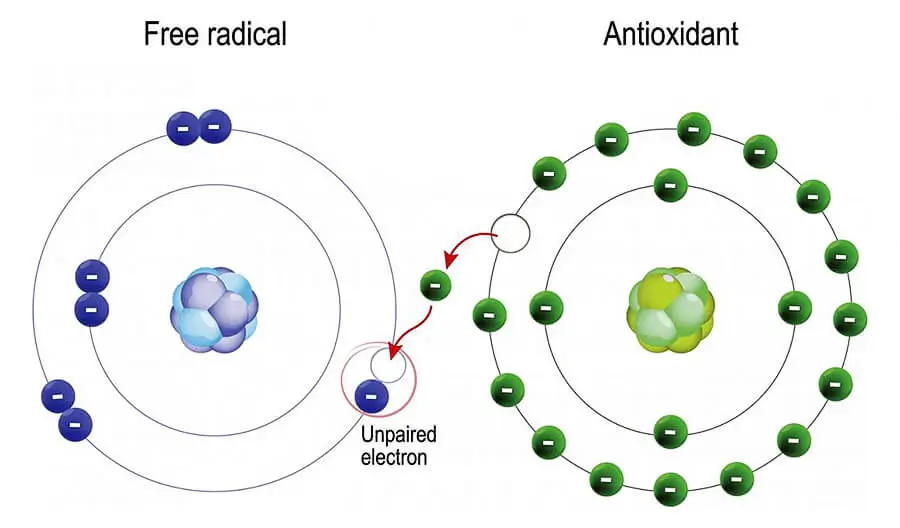
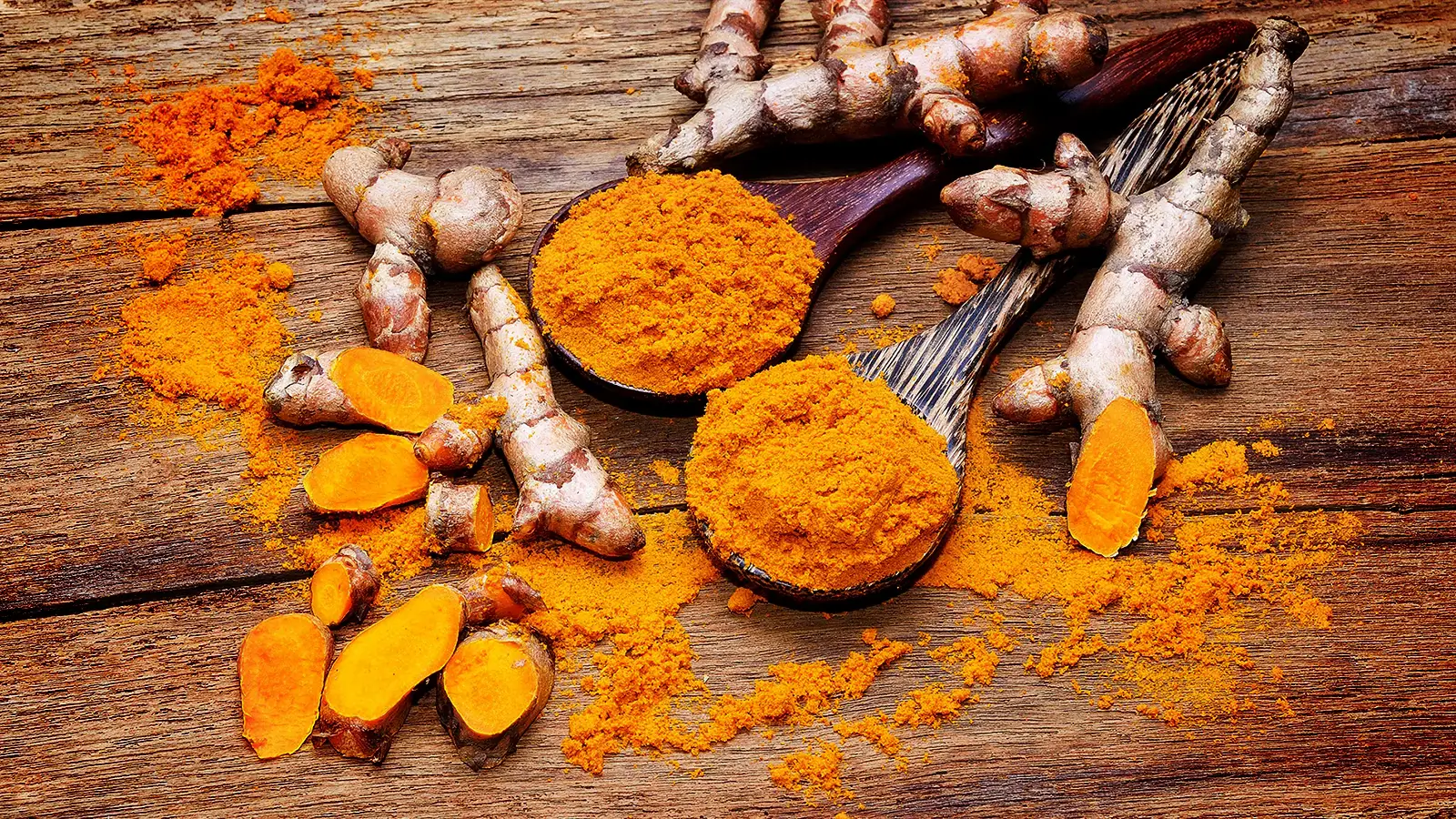
Este estudo é apenas um exemplo, por esta altura já existem centenas de estudos feitos sobre mega-dosagens de vitamina C, mas adivinhem só, nunca ninguém dirá isto aos pacientes. A vitamina C é barata, a vitamina C não pode ser patenteada e a vitamina C é eficaz. E tenha em mente que a vitamina C não é, na realidade, um antioxidante muito forte. Na realidade, é fraca em comparação com alguns outros antioxidantes disponíveis, mas quando se toma uma quantidade enorme dela e a injecta directamente na veia, pode-se compensar a sua fraca força, dando-lhe uma dose mais elevada. E o corpo tem a capacidade de urinar a forma oxidada da vitamina C, porque é um antioxidante hidrossolúvel sem problemas e sem utilização de quaisquer enzimas no processo. O efeito final será a absorção de electrões livres e a neutralização de oxidantes e outros agentes tóxicos no interior do corpo. Tudo o que a vitamina C foi capaz de fazer, foi capaz de fazer devido às suas propriedades antioxidativas. Não há nada de único que a vitamina C tenha que outros antioxidantes não tenham. Todos eles estão a um nível molecular, apenas dadores de electrões, e é tudo. Por exemplo, o açafrão-da-terra normal provou ser um "medicamento" anti-câncer ainda mais potente do que a CIV e a maioria dos tratamentos de quimioterapia no mercado. Ou que tal compreender apenas o facto de que o cancro é uma condição e não uma doença e que precisa de ter uma abordagem holística e não uma abordagem redutora impulsionada pela medicina alopática.
Luis Pauling tinha razão porque compreendia os processos bioquímicos naturais dos antioxidantes no interior do corpo. Era ostracizado e estava disposto a correr o risco e não se importava com o que clínicas corruptas como a Mayo fazem. Ele queria pessoalmente que a sua heresia fosse o seu legado e não o título de pai da bioquímica e da biologia molecular ou prémios Nobel. Ele queria ser recordado como um homem de vitamina C que trouxe à luz a importância dos antioxidantes e da revolução na medicina humana.
Os antioxidantes previnem o ADN de danos e prolongam a vida e se tiver menos inflamação terá menos mutação e menos células cancerígenas a viver dentro de si e terá um sistema imunitário que não está sobrecarregado com toxinas que podem de facto matar todas as células cancerígenas antes de se tornarem o problema e não apenas isso. Os antioxidantes e em particular a vitamina C também matam directamente as células cancerosas. O Dr. Riordan realizou um projecto de investigação com a duração de 15 anos chamado RECNAC (cancer spelled backward). A sua investigação em culturas celulares mostrou que a vitamina C era selectivamente citotóxica contra as células cancerígenas. O mecanismo para tal é resumido pelo Dr. Hunninghake:
"As células cancerígenas estavam a tomar activamente vitamina C de uma forma que esgotou as reservas de tecidos. As tomografias PET são normalmente encomendadas por oncologistas para avaliar os seus doentes oncológicos para metástases (cancro disseminado para outros órgãos).
O que é realmente injectado no paciente no início do exame é glucose radioactiva. As células cancerosas... dependem da glucose como fonte primária de combustível metabólico... [e] empregam mecanismos de transporte chamados transportadores de glucose para puxar activamente a glucose.
Na grande maioria dos animais, a vitamina C é sintetizada a partir da glicose em apenas quatro etapas metabólicas. Por conseguinte, a forma molecular da vitamina C é notavelmente semelhante à glicose. As células cancerígenas transportam activamente a vitamina C para dentro de si mesmas, possivelmente porque a confundem com a glicose. Outra explicação plausível é que estão a utilizar a vitamina C como antioxidante. Independentemente disso, a vitamina C acumula-se nas células cancerígenas.
Se grandes quantidades de vitamina C forem apresentadas às células cancerosas, grandes quantidades serão absorvidas. Nestas concentrações invulgarmente grandes, o antioxidante vitamina C começará a comportar-se como um pró-oxidante, uma vez que interage com o cobre e ferro intracelular. Esta interacção química produz pequenas quantidades de peróxido de hidrogénio.
Como as células cancerígenas são relativamente baixas numa enzima antioxidante intracelular chamada catalase, a indução de uma dose elevada de vitamina C de peróxido continuará a acumular-se até que eventualmente lise a célula cancerígena de dentro para fora! Isto faz com que uma dose elevada de IVC seja efectivamente um agente quimioterápico não tóxico que pode ser administrado em conjunto com tratamentos convencionais do cancro. "
Dr. Hunninghake
O Instituto Linus Pauling da Universidade Estatal do Oregon é especializado na investigação da nutrição molecular, com ênfase nas vitaminas, minerais e fitoquímicos (produtos químicos à base de plantas). A LPI foi co-fundada em 1973 por Linus Pauling. O objectivo actual do instituto é levar a cabo investigação científica rigorosa e divulgar ao público em geral informação sanitária baseada em provas sobre alimentos e suplementos.
Referências:
Passagens seleccionadas de um livro: Passagens seleccionadas de um livro: Pokimica, Milos. Go Vegan? Revisão da Ciência-Parte 3. Kindle ed., Amazon, 2020.
- Block G. (1991). Vitamin C and cancer prevention: the epidemiologic evidence. O American journal of clinical nutrition, 53(1 Suplemento), 270S-282S. https://doi.org/10.1093/ajcn/53.1.270S
- Schoenfeld, J. D., Sibenaller, Z. A., Mapuskar, K. A., Wagner, B. A., Cramer-Morales, K. L., Furqan, M., Sandhu, S., Carlisle, T. L., Smith, M. C., Abu Hejleh, T., Berg, D. J., Zhang, J., Keech, J., Parekh, K. R., Bhatia, S., Monga, V., Bodeker, K. L., Ahmann, L., Vollstedt, S., Brown, H., ... Allen, B. G. (2017). O2⋅- e H2O2-A perturbação mediada pelo metabolismo do Fe causa a suscetibilidade diferencial das células cancerosas NSCLC e GBM ao ascorbato farmacológico. Célula cancerígena, 31(4), 487-500.e8. https://doi.org/10.1016/j.ccell.2017.02.018
- Cimmino, L., Dolgalev, I., Wang, Y., Yoshimi, A., Martin, G. H., Wang, J., Ng, V., Xia, B., Witkowski, M. T., Mitchell-Flack, M., Grillo, I., Bakogianni, S., Ndiaye-Lobry, D., Martín, M. T., Guillamot, M., Banh, R. S., Xu, M., Figueroa, M. E., Dickins, R. A., Abdel-Wahab, O., ... Aifantis, I. (2017). A restauração da função TET2 bloqueia a auto-renovação aberrante e a progressão da leucemia. Célula, 170(6), 1079-1095.e20. https://doi.org/10.1016/j.cell.2017.07.032
- Raymond, Y. C., Glenda, C. S., & Meng, L. K. (2016). Efeitos de altas doses de vitamina C em pacientes com câncer em Cingapura: Nove casos. Terapias integrativas do cancro, 15(2), 197-204. https://doi.org/10.1177/1534735415622010
- Moertel, C. G., Fleming, T. R., Creagan, E. T., Rubin, J., O'Connell, M. J., & Ames, M. M. (1985). High-dose vitamin C versus placebo no tratamento de pacientes com cancro avançado que não fizeram quimioterapia prévia. A randomized double-blind comparison. O New England journal of medicine, 312(3), 137-141. https://doi.org/10.1056/NEJM198501173120301
- Verrax, J., & Calderon, P. B. (2008). O lugar controverso da vitamina C no tratamento do cancro. Farmacologia bioquímica, 76(12), 1644-1652. https://doi.org/10.1016/j.bcp.2008.09.024
- Parrow, N. L., Leshin, J. A., & Levine, M. (2013). Ascorbato parenteral como terapêutica do câncer: Uma reavaliação baseada na farmacocinética. Antioxidantes e sinalização redox, 19(17), 2141-2156. https://doi.org/10.1089/ars.2013.5372
- Levine, M., Espey, M. G., & Chen, Q. (2009). Perder e encontrar um caminho em C: Nova promessa para o ascorbato farmacológico no tratamento do cancro. Biologia e medicina dos radicais livres, 47(1), 27. https://doi.org/10.1016/j.freeradbiomed.2009.04.001
- Ohno, S., Ohno, Y., Suzuki, N., Soma, G., & Inoue, M. (2009). Terapia com altas doses de vitamina C (ácido ascórbico) no tratamento de pacientes com cancro avançado. Investigação anticancerígena, 29(3), 809-815. [PubMed]
- Hoffer, L. J., Robitaille, L., Zakarian, R., Melnychuk, D., Kavan, P., Agulnik, J., Cohen, V., Small, D., & Miller, W. H., Jr (2015). Alta dose de vitamina C intravenosa combinada com quimioterapia citotóxica em pacientes com câncer avançado: um ensaio clínico de fase I-II. PloS one, 10(4), e0120228. https://doi.org/10.1371/journal.pone.0120228
- Creagan, E. T., & Moertel, C. (1979). Vitamin C therapy of advanced cancer. O New England journal of medicine, 301(25), 1399. https://doi.org/10.1056/nejm197912203012517
- Padayatty, S. J., & Levine, M. (2000). Reavaliação do ascorbato no tratamento do cancro: provas emergentes, mentes abertas e serendipidade. Jornal do Colégio Americano de Nutrição, 19(4), 423-425. https://doi.org/10.1080/07315724.2000.10718941
- Wilson, M. K., Baguley, B. C., Wall, C., Jameson, M. B., & Findlay, M. P. (2014). Revisão da vitamina C intravenosa em altas doses como agente anticâncer. Revista de oncologia clínica da Ásia-Pacífico, 10(1), 22-37. https://doi.org/10.1111/ajco.12173
- Cameron, E., & Pauling, L. (1976). Ascorbato suplementar no tratamento de apoio do cancro: Prolongamento dos tempos de sobrevivência no cancro humano terminal. Actas da Academia Nacional de Ciências dos Estados Unidos da América, 73(10), 3685-3689. https://doi.org/10.1073/pnas.73.10.3685
Publicações Relacionadas


Você tem alguma dúvida sobre saúde e nutrição?
Gostaria muito de ouvir a sua opinião e responder-lhes no meu próximo post. Agradeço o vosso contributo e a vossa opinião e aguardo com expetativa a vossa resposta em breve. Convido-vos também a siga-nos no Facebook, Instagram e Pinterest para mais conteúdos sobre dieta, nutrição e saúde. Pode deixar um comentário e ligar-se a outros entusiastas da saúde, partilhar as suas dicas e experiências e obter apoio e encorajamento da nossa equipa e comunidade.
Espero que este post tenha sido informativo e agradável para si e que esteja preparado para aplicar os conhecimentos que aprendeu. Se achou este post útil, por favor partilhá-lo com os seus amigos e familiares que também possam beneficiar com isso. Nunca se sabe quem poderá precisar de alguma orientação e apoio no seu percurso de saúde.
– Você Também Pode Gostar –
A água da torneira toxicidade - avaliação de Risco
Pesticidas nos Alimentos, Exposição na Dieta Americana Padrão - 80 Por Cento da Carne
Deficiência de B12 e Declínio Cognitivo: Estratégias de Optimização da Homocisteína

Esclerose Lateral Amiotrófica- Proliferação de Algas Cianobactérias e Exposição a BMAA na Dieta
Café benefícios– Não sem riscos
Deficiência de Micronutrientes na Dieta Americana Padrão: Estratégias de Otimização
As Necessidades proteicas - uma verdade Inconveniente
Como Fazer Jejum: Alimentos em Jejum que Não Quebram a Autofagia
Aprender Sobre Nutrição

Milos Pokimica é médico de medicina natural, nutricionista clínico, escritor de saúde e nutrição médica, e conselheiro em ciências nutricionais. Autor da série de livros Go Vegan? Revisão de Ciênciaopera também o website de saúde natural GoVeganWay.com
Medical Disclaimer
GoVeganWay.com traz comentários dos mais recentes a nutrição e a saúde relacionados com a pesquisa. As informações fornecidas representa a opinião pessoal do autor e não pretende nem implícita para ser um substituto para aconselhamento médico profissional, diagnóstico ou tratamento. As informações fornecidas são apenas para fins informativos e não se destina a servir como um substituto para a consulta, o diagnóstico e/ou tratamento médico de um médico qualificado ou prestador de cuidados de saúde.NUNCA DESCONSIDERE o CONSELHO MÉDICO PROFISSIONAL OU adiar a BUSCA de TRATAMENTO MÉDICO por causa DE ALGO QUE TENHA LIDO OU ACESSADO por MEIO de GoVeganWay.com
NUNCA APLIQUE QUAISQUER MUDANÇAS de estilo de VIDA OU QUALQUER MUDANÇA COMO UMA CONSEQUÊNCIA DE ALGO QUE TENHA LIDO NO GoVeganWay.com ANTES de CONSULTORIA de LICENÇA MÉDICA.
No caso de uma emergência médica, ligue para o médico ou para o 911 imediatamente. GoVeganWay.com não recomenda ou endossa qualquer específicos, grupos, organizações, exames, médicos, produtos, procedimentos, opiniões ou outras informações que podem ser mencionadas dentro.
Escolhas do Editor -
Câncer Editor De Picaretas Fitoquímicos
Poder Anticancerígeno das Frutas e Legumes: Evidências Clínicas e in Vivo
Alguns extractos vegetais rivalizam com os principais medicamentos de quimioterapia e, ao mesmo tempo, visam vários tipos diferentes de células cancerígenas.
Antioxidantes Editor De Picaretas ORAC
Óleos Essenciais Como Suplementos Antioxidantes: Regras e Estratégias
Os óleos essenciais de qualidade alimentar podem ser uma estratégia conveniente e amiga do consumidor para optimizar o valor antioxidante e a pontuação ORAC da nossa dieta.
Antioxidantes Editor De Picaretas ORAC
Dieta Rica em Antioxidantes: Regras e Estratégias Gerais
Existem estratégias fáceis e económicas para optimizar o valor antioxidante da nossa dieta.
Antioxidantes Editor De Picaretas ORAC
Compreender os Valores ORAC: Níveis de Antioxidantes nos Alimentos
Quando a sua principal fonte de antioxidantes é o café, sabe que tem um problema grave.
Antioxidantes Editor De Picaretas ORAC
Astaxantina Benefícios: Antioxidante Natural Mais Poderoso do Mundo
A astaxantina é o mais poderoso e natural antioxidante universal (tanto o petróleo e a água-solúvel) desconhecido para a ciência. Ele se acumula nos tecidos e Ele nunca pode transformar-se em um pró-oxidante.
Antioxidantes Editor De Picaretas ORAC Fitoquímicos
Antioxidantes: Compreender os Princípios Básicos
Los productos de origen animal no contienen fitoquímicos ni antioxidantes. Por término medio, los alimentos vegetales contienen más de 60 veces más antioxidantes que los de origen animal.
Editor De Picaretas A Dieta Vegetariana
Deficiências de Nutrientes na Dieta Vegana: Estratégias de Prevenção
Existem nove deficiências comuns de nutrientes na escala populacional que afectam as pessoas que se alimentam de uma dieta à base de plantas. Se não forem corrigidas a tempo, algumas deficiências têm consequências terríveis e não tratáveis.
Editor De Picaretas Alimentação Ideal
Deficiência de Micronutrientes na Dieta Americana Padrão: Estratégias de Otimização
O perfil nutricional da nossa dieta moderna à base de carne, açúcar e alimentos processados é completamente incongruente com a nossa evolução, resultando numa grave deficiência de micronutrientes.
Editor De Picaretas Fitoquímicos
Fitoquímicos: Conceitos Básicos
Cada fitoquímico que existe tem uma acção biológica no corpo humano. Cada um de milhões de diferentes fitoquímicos.
Editor De Picaretas Leite Alimentação Ideal
Leite e Lacticínios: Correlações de Risco Para a Saúde
As associações conhecidas com o consumo de leite e lacticínios são infertilidade, cancro dos ovários e da mama, leucemia, diabetes tipo 1, autismo, arteriosclerose, catarata, artrite reumatóide, esclerose múltipla, hiperactividade, congestão, espinhas, e muito mais...As associações conhecidas com o consumo de leite e lacticínios são infertilidade, cancro dos ovários e da mama, leucemia, diabetes tipo 1, autismo, arteriosclerose, catarata, artrite reumatóide, esclerose múltipla, hiperactividade, congestão, espinhas, e muito mais...
Câncer Editor De Picaretas Proteína
Proteína Completa: Sinalização do IGF-1 na Formação do Cancro
Quando você comer proteína animal que tem quatro vezes a chance de desenvolver todos os tipos de câncer. Quando você fuma tem quatro vezes a chance de desenvolver câncer de pulmão.

Câncer Editor De Picaretas Proteína
A Anatomia do Câncer de risco para a Saúde correlações
Cerca de 2% dos casos de câncer estão por medicamento considerado puramente causada por fatores genéticos. O mesmo intervalo de dentro do reino animal. Você ainda não foi informado de toda a verdade.
Milos Pokimica é escritor especializado em saúde e nutrição e consultor em ciências nutricionais. Autor da série de livros Go Vegan? Revisão de Ciênciaopera também o website de saúde natural GoVeganWay.com
Artigos Mais Recentes –
Restrição De Calorias Longevidade
Como Fazer Jejum: Alimentos em Jejum que Não Quebram a Autofagia
Autofagia. Já alguma vez se interrogou sobre o que acontece às células do seu corpo quando morrem ou se danificam? Será que se acumulam e criam problemas ou são eliminadas de alguma forma? A resposta é que o seu corpo...
Saúde Dentária Prevenção
Dentes Sensíveis a Doces e Dor: Solução Rápida e Duradoura
Uma solução rápida e fácil para o alívio da dor é o óleo essencial de cravinho, um poderoso antioxidante e analgésico que pode ajudar com doenças das gengivas e dores de dentes.
Feijão
Feijão Verde: Benefícios Nutricionais e Para a Saúde
O feijão verde tem poucas calorias e é rico em compostos naturais que podem ajudá-lo a controlar o açúcar no sangue, a reduzir o colesterol e a combater os radicais livres.
Dieta de alimentos crus A Dieta Vegetariana
Pode-se Comer Cogumelos Crus: Riscos Para a Saúde, Nutrição e Segurança
Os cogumelos têm toxinas sensíveis ao calor, como a hidrazina ou a agaritina, e paredes celulares feitas de quitina que não podem ser bem digeridas pelos seres humanos.
A Dieta Vegetariana
Os Peixes São Animais? Uma Perspetiva Cultural
Em algumas culturas, a carne de peixe não é considerada carne e o peixe é permitido mesmo durante o jejum.
Saúde Dentária Prevenção
Elixir Bucal Natural Caseiro: Comprovado, Mais Forte e Menos Tóxico
O elixir bucal natural caseiro é mais forte do que a clorexidina, menos tóxico e, se ingerido, pode provocar algumas náuseas, mas também tem um elevado valor ORAC.
Saúde Dentária Prevenção
Como Parar a Cárie Dentária: Sintomas, Causas e Prevenção
Consumo de açúcar é a principal causa de cáries e a cárie dentária, combinado com deficiência de minerais, especialmente o magnésio, o zinco, o cobre e elementos-traço.
Antioxidantes Superalimentos
Amla: Benefícios Comprovados, Nutrição e Significado Clínico
O amla é um dos antioxidantes mais poderosos do mundo, com uma pontuação ORAC de 261.530. É uma fonte rica de fitoquímicos que têm vários benefícios para a saúde.
Superior De Saúde De Notícias — ScienceDaily
- “Broken heart syndrome” can look just like a heart attack. This test can tell them aparton Setembro 2, 2026
“Broken heart syndrome” can mimic a heart attack so closely that patients often need invasive testing to tell the difference. Researchers have now developed the BioTAK score, which combines biological sex with blood biomarkers to identify the condition before cardiac catheterization. In a validation study of nearly 1,800 patients, it correctly classified almost 90% of participants.
- Money problems may age your brain fasteron Setembro 2, 2026
Persistent financial hardship in early and middle adulthood was linked to poorer thinking skills by the 50s and more signs of brain aging later in life. Researchers say years of chronic stress and financial worry may gradually take a toll on the brain.
- Alzheimer’s may leave a mark on the brain long before plaques appearon Setembro 2, 2026
Brain changes associated with Alzheimer’s may begin at least seven years before amyloid plaques become detectable with current PET scans. Researchers uncovered the signal by tracking healthy older adults with repeated brain imaging over nearly 20 years. The discovery could help scientists identify Alzheimer’s earlier and suggests that important disease processes may start before visible plaque buildup.
- Too much coffee may weaken bones, study findson Setembro 2, 2026
Following nearly 10,000 older women for 10 years, researchers found that tea drinking was associated with slightly higher hip bone density. Moderate coffee consumption did not appear harmful, but drinking more than five cups a day was linked to lower bone density. The findings suggest tea may offer a small bone-health boost, while excessive coffee could carry some drawbacks.
- Your neighborhood in your 20s may shape your heart decades lateron Setembro 2, 2026
Where you live in early adulthood may quietly shape your heart health for decades. Researchers found that adverse neighborhood conditions were linked to a higher risk of coronary artery calcification in midlife, an early warning sign of cardiovascular disease.
- Obesity leaves a lasting memory in immune cellson Setembro 2, 2026
Obesity appears to leave a molecular imprint on key immune cells that may persist for 5 to 10 years after weight loss. This long-lasting “obesity memory” could help explain why some obesity-related health risks remain elevated even after body weight returns to normal.
- Mindfulness may lower blood pressure in just 8 weekson Setembro 1, 2026
Mindfulness, gratitude, and optimism training may improve blood pressure, inflammation, and other heart-health measures within just eight to 12 weeks. The strongest programs paired daily practice with regular reinforcement, suggesting that improving psychological well-being could become another tool for protecting cardiovascular health.
PubMed, #vegan-dieta –
- A self-selected vegan diet reduces skeletal muscle mass in healthy older adults: a randomized controlled trialon Setembro 1, 2026
CONCLUSIONS: A self-selected vegan diet reduces protein intake, skeletal muscle mass, and MPS in older adults. The negative impact of a vegan diet on skeletal muscle mass can be mitigated by RE. This trial was registered at clinicaltrials.gov as NCT05809466. (https://clinicaltrials.gov/study/NCT05809466).
- Growth parameters and IGF-1 axis biomarkers differ among omnivorous, vegetarian, and vegan childrenon Agosto 29, 2026
CONCLUSION: Children following a vegan diet are significantly smaller and have a lower BMI than their peers. Both, vegetarian and vegan diets are associated with lower BMIs and lower IGF-1 and IGFBP-3 values. These findings highlight the potential relevance of dietary composition for growth childhood.
- The Role of Anti-Inflammatory Nutrition in Metabolic Syndrome and Cardiometabolic Diseaseson Agosto 27, 2026
Background: Metabolic syndrome is closely linked to chronic systemic inflammation and intestinal dysbiosis. Anti-inflammatory nutrition is an approach based on the interaction between dietary intake, chronic low-grade inflammation, and the pathophysiological mechanisms of metabolic syndrome and cardiometabolic diseases. This narrative review evaluates the impact of plant-based dietary models, including vegan and modified Mediterranean variants, on key metabolic and inflammatory parameters….
- Standard Therapy Plus Adjunctive Vegan Lifestyle Intervention in Metastatic Prostate Cancer: A Case Reporton Agosto 26, 2026
Prostate cancer is among the most frequently diagnosed cancers in men globally, with metastatic disease contributing substantially to morbidity and mortality. While conventional therapies remain the standard of care, dietary and lifestyle behaviors are increasingly explored as potentially modifiable factors influencing clinical outcomes, although their role in advanced disease is not well established. We report a 60-year-old, physically active male, lifelong non-smoker without significant…
- Severe Methylmalonic Acidemia Precipitated by Dietary B12 Deficiency in Vegan Toddleron Agosto 26, 2026
A previously healthy 19-month-old female presented after her family found her upon awakening to be sleepy, uninterested in eating, and lethargic. On arrival, blood gas showed profound metabolic acidosis with normal lactate that did not improve with normalization of glucose and sodium. Her acidosis continued to worsen, so a broad workup was initiated, considering ingestions, DKA, and inborn errors of metabolism. In collecting further history, the patient’s nutrition history included a […]
Publicações Aleatórias -
Editor De Picaretas Alimentação Ideal
Alimentos Processados: Compreender os Riscos
Os alimentos processados significam que algo dos alimentos integrais é removido, normalmente a fibra, e algo é adicionado, normalmente a gordura, o açúcar, o sal e o MSG.

Editor De Picaretas Alimentação Ideal A Vitamina D
Vitamina D - a Mais do que os seus ossos
A vitamina D não é uma vitamina. É um pró-hormônio, um esteróide com um hormônio, como a atividade que regula a cerca de 3% do genoma humano.
A Dieta Vegetariana
Os Peixes São Animais? Uma Perspetiva Cultural
Em algumas culturas, a carne de peixe não é considerada carne e o peixe é permitido mesmo durante o jejum.
Antioxidantes ORAC Fitoquímicos
Suplementos Antioxidantes Versus Alimentos Integrais: Pagar Para Viver uma Vida Mais Curta
Os suplementos antioxidantes não apresentam os benefícios para a saúde observados em dietas ricas em frutas e vegetais, enquanto a vitamina E, o selênio, o beta-caroteno e o licopeno apresentam um risco aumentado de câncer.
Câncer Desintoxicação A Inflamação
Benefícios do Sulforafano: O Superpoder Desintoxicante dos Brócolos
O sulforafano é o indutor enzimático natural de fase 2 mais potente conhecido pela ciência. Também foi demonstrado que o sulforafano é um inibidor dose-dependente da tumorigênese induzida por carcinógeno.
Editor De Picaretas Alimentação Ideal Proteína
Dieta De Alta Proteína Risco Para A Saúde Correlações
A escassez é a regra de proteína na natureza. Em termos evolutivos, os antropólogos têm comprovado que os hominíneos viveram uma média de 15 a 25 gramas de proteína por dia. O ocidental moderno tipo de proteína de alta dieta que iria consumir...
Editor De Picaretas Alimentação Ideal
Dieta Humana Optima- Doenças Crónicas, Guerras Alimentares e o Argumento Vegan
Nossa dieta humana natural ideal é aquela que nossos ancestrais hominídeos comiam nos últimos 30 milhões de anos, e não os humanos anatomicamente modernos da Idade da Pedra.

Câncer Prevenção Radiação
EMF radiação (radiação eletromagnética) de exposição - Não 5G representar riscos para a saúde?
As fontes artificiais de radiação de campos electromagnéticos fornecem uma radiação contínua de baixo nível. A situação só pode piorar.
Editor De Picaretas Dieta Paleo A Dieta Vegetariana
Tamanho do cérebro, inteligência e consumo de carne – O argumento vegano
A combinação de alguma quantidade de carne colhida à dieta predominantemente vegana não se tornou uma força crucial no surgimento da inteligência humana e do tamanho do cérebro.
A Dieta Vegetariana
Humano de carne, ou seja, o mito?- O animal cognição
Não somos mais inteligentes espécies se nós cientificamente medida animal cognição. As barbatanas longas baleia-piloto cérebro neocortical parte contém mais neurônios do que os nossos próprios.
Posts Em Destaque –
Câncer Editor De Picaretas Proteína
A Anatomia do Câncer de risco para a Saúde correlações
Cerca de 2% dos casos de câncer estão por medicamento considerado puramente causada por fatores genéticos. O mesmo intervalo de dentro do reino animal. Você ainda não foi informado de toda a verdade.
Editor De Picaretas A Obesidade
Experiência de Fome no Minnesota: Porque é Que Fazer Dieta Nos Faz Engordar. A Psicologia da Fome.
Um dos primeiros estudos científicos sobre o que a fome não faz para a mente foi observado em um estudo lembrado como o Minnesota Fome Experimento realizado pela Universidade de Minnesota de volta em 1944.
Câncer Editor De Picaretas Fitoquímicos
Poder Anticancerígeno das Frutas e Legumes: Evidências Clínicas e in Vivo
Alguns extractos vegetais rivalizam com os principais medicamentos de quimioterapia e, ao mesmo tempo, visam vários tipos diferentes de células cancerígenas.
Editor De Picaretas Alimentação Ideal
Dieta Humana Optima- Doenças Crónicas, Guerras Alimentares e o Argumento Vegan
Nossa dieta humana natural ideal é aquela que nossos ancestrais hominídeos comiam nos últimos 30 milhões de anos, e não os humanos anatomicamente modernos da Idade da Pedra.
Editor De Picaretas A Dieta Vegetariana
Deficiências de Nutrientes na Dieta Vegana: Estratégias de Prevenção
Existem nove deficiências comuns de nutrientes na escala populacional que afectam as pessoas que se alimentam de uma dieta à base de plantas. Se não forem corrigidas a tempo, algumas deficiências têm consequências terríveis e não tratáveis.
Antioxidantes Editor De Picaretas ORAC Fitoquímicos
Antioxidantes: Compreender os Princípios Básicos
Los productos de origen animal no contienen fitoquímicos ni antioxidantes. Por término medio, los alimentos vegetales contienen más de 60 veces más antioxidantes que los de origen animal.
Editor De Picaretas A Inflamação
Os seres humanos onívoros dilema - o consumo de Carne, bactérias probióticas, a inflamação, e com o intestino
Seres humanos são onívoros, em um verdadeiro anatômica sentido? Há uma diferença fundamental na maneira como as trato digestivo trabalha em plantas vs comer carne de espécie.
Diabetes Editor De Picaretas
A Diabetes provoca e carboidratos refinados - vegan argumento
As pessoas acreditam que os carboidratos refinados estão associadas com picos de insulina e o diabetes provoca. Eles estão certos. No entanto, eles também estão errados.
Editor De Picaretas Fitoquímicos
Fitoquímicos: Conceitos Básicos
Cada fitoquímico que existe tem uma acção biológica no corpo humano. Cada um de milhões de diferentes fitoquímicos.
Editor De Picaretas Alimentação Ideal Proteína
As Necessidades proteicas - uma verdade Inconveniente
Quando o antropólogo estudos mostraram que hominíneos viveu em média de 15 a 20 gramas de proteína por dia, havia um assim-chamado "uma proteína Grande fiasco" na década de 1970.
Últimas do PubMed, #dieta baseada em vegetais –
- Microbiome and Metabolomics in Obesity: Advances in Understanding and Interventions Across the Lifespanpor Ioanna Panagiota Kalafati on Setembro 2, 2026
Obesity arises from intertwined and reciprocal diet-microbiome-host pathways that reshape energy balance, insulin sensitivity, and inflammation. This review synthesizes mechanistic links between microbial functions and metabolic control, charts lifestyle-related lifecourse dynamics from birth to older age, examines how GLP-1-based therapies may perturb gut ecology and metabolite output and surveys AI/ML frameworks for multi-omics integration. Plant-based, fiber-rich dietary patterns generally…
- A self-selected vegan diet reduces skeletal muscle mass in healthy older adults: a randomized controlled trialpor Jacintha Domić on Setembro 1, 2026
CONCLUSIONS: A self-selected vegan diet reduces protein intake, skeletal muscle mass, and MPS in older adults. The negative impact of a vegan diet on skeletal muscle mass can be mitigated by RE. This trial was registered at clinicaltrials.gov as NCT05809466. (https://clinicaltrials.gov/study/NCT05809466).
- Effect of a PROtein-enriched MEDiterranean diet and EXercise (PROMED-EX) on nutritional status and cognitive performance in older adults at risk of undernutrition and cognitive decline: the PROMED-EX…por Nicola Ann Ward on Setembro 1, 2026
CONCLUSIONS: Dietary intervention improved nutritional status in community-dwelling older adults at risk of undernutrition. Correcting undernutrition could help to slow cognitive decline and promote physical health and quality of life during aging. This study was registered at clinicaltrials.gov as NCT05166564.
- Effects of dietary fiber sources on nitrogen metabolism and fecal microbiota in growing-finishing pigspor Jixiang Ma on Agosto 31, 2026
Nitrogen metabolism in pigs is closely associated with gut microbiota, but the differential effects of dietary fiber sources on nitrogen metabolism and gut microbiota remain unclear. This study investigated the effects of pectin, β-glucan, arabinoxylan, and cellulose on nitrogen metabolism, fecal microbiota, and metabolic characteristics in growing-finishing pigs. Sixty healthy castrated male pigs (initial body weight 44.32 ± 0.29 kg) were randomly assigned to five groups (n = 12 per group) […]
- Diet, predator, and molecular marker properties influence dietary DNA detection in ladybird beetles (Coleoptera: Coccinellidae) during digestionpor Li-Qun Cai on Agosto 31, 2026
DNA-based gut content analysis is a powerful tool for quantifying predation, yet dietary DNA detectability is influenced by multiple factors. Here, we systematically evaluated the effects of diet, predator traits (species, life stage, and sample type), and molecular marker properties (marker length and type) on dietary DNA detectability in ladybird beetles (Coleoptera: Coccinellidae), using Cryptolaemus montrouzieri Mulsant, 1853 as a representative species alongside other ladybird species….
- Inequities in Children’s Food Environment: A Comparison between Slum and Non-slum Settings in Urban Bangladeshpor Tania Ahmed Chowdhury on Agosto 31, 2026
Children living in urban slums face persistent nutritional and health inequities, many of which are rooted in the food environment. This study examined the drivers of children’s food behaviors in Dhaka, Bangladesh, comparing slum and non-slum settings through a cross-sectional survey of 300 mothers of school-aged children (8-12 years) and focus group discussions. Quantitative analysis revealed disparities in diet quality: children in non-slum areas had a 13% higher dietary quality score (p