







Tamanho do cérebro, inteligência e consumo de carne – O argumento vegano
A combinação de alguma quantidade de carne colhida à dieta predominantemente vegana não se tornou uma força crucial no surgimento da inteligência humana e do tamanho do cérebro.
Milos Pokimica
Escrito por: Milos Pokimica
Revisto Clinicamente Por: Dr. Xiùying Wáng, M.D.
Actualizado em 9 de Junho de 2023Cozinhar foi a parte crucial do desenvolvimento de um cérebro humano ou foi a sua utilização de ferramentas da Idade da Pedra, ou se adicionou USOs (unidades de armazenamento subterrâneo) ricas em amido ou carne à dieta?
Qual foi a fonte de energia mais crucial que forneceu a energia muito necessária para o desenvolvimento do tamanho do cérebro?
Os debates são de natureza emocional, e não tão lógicos como a ciência precisa de ser. É devido ao nosso desejo subjacente de provarmos a nós próprios que o consumo de carne é natural para a evolução humana, para que possamos justificar o consumo de carne em grande escala na era moderna. Os dados científicos e arqueológicos podem tornar-se um problema neste cenário, se os dados não reflectirem a forma desejável de ver as coisas.
Os cientistas não são imunes a preconceitos emocionais. Para se ter um consumo diário de carne em grande escala, os dois critérios devem ser cumpridos.
(1) Precisamos de ter uma opção viável para adquirir a carne.
(2) Precisamos de ter a capacidade fisiológica para a digerir.
O primeiro critério para os humanos que não são caçadores anatómicos e são lentos e fracos e não podem competir com os verdadeiros caçadores anatómicos é procurar por ele. Esta opção não suportará as necessidades calóricas e só poderá ser uma fonte adicional de calorias em pequena medida. Para a segunda opção, precisaríamos de ter tecnologia de fogo. Subsequentemente, qualquer coisa antes do Homo erectus é excluída. Alguns cientistas acreditam que mesmo o Homo erectus não era capaz de controlar o fogo. Trata-se de um grande debate.
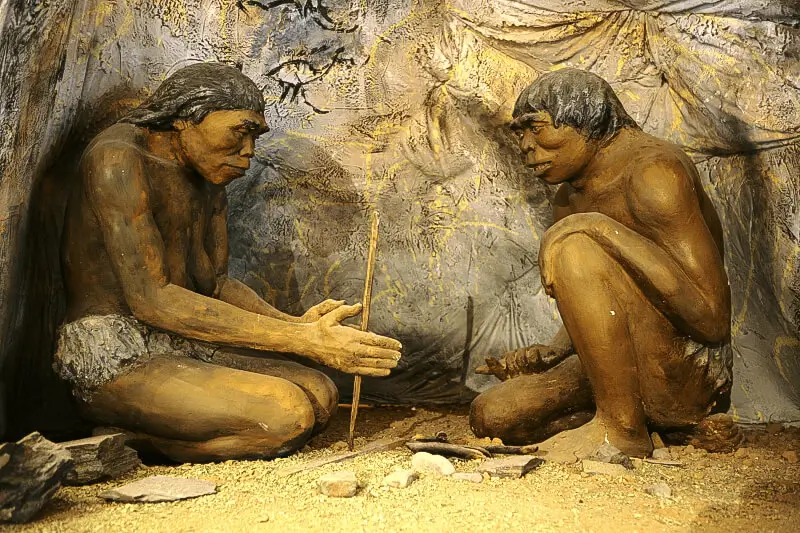
Actualmente, o primeiro caso bem aceite de queima de fogo de forma controlada veio da Caverna Qesem de Israel há 400.000 anos atrás.
Quando não se caça e se vive numa árvore e se precisa de forragem para as folhas e frutos comestíveis, tem uma vida difícil. O que aconteceu então é um processo de selecção natural que favorece fortemente os traços que aumentam a eficiência da forragem. Assim, à medida que os alimentos vegetais se foram tornando cada vez mais importantes, a adaptação ao longo do tempo deu gradualmente origem ao grupo de características actualmente consideradas como sendo propriedade dos primatas. A maioria destas características são adaptadas para facilitar o movimento e a forrageação nas árvores.
Por exemplo, a adaptação produziu mãos bem adaptadas para agarrar ramos e manipular frutos e folhas delgadas e pequenas. A fim de detectar frutos maduros e permitir o movimento seguro através da adaptação de habitats arbóreos, a melhoria forçada das capacidades ópticas (incluindo percepção de profundidade, acuidade aguçada, e visão cromática). Uma boa visão é crucial para se deslocar através do espaço tridimensional do dossel da floresta e determinar rapidamente o aparecimento de frutos maduros ou folhas pequenas e jovens. As espécies carnívoras não têm uma visão a cores. Não precisam de detectar frutos maduros.
Além disso, tais pressões ambientais favoreceram também a capacidade de aprender e lembrar a identidade e a localização das partes comestíveis das plantas e também de calcular as estratégias óptimas de forragem para poupar energia, aumentando assim também a flexibilidade comportamental. O foraging beneficia da melhoria das capacidades visuais e cognitivas. Como resultado, promoveu o desenvolvimento de cérebros de tamanhos invulgarmente grandes, uma característica dos primatas desde o seu início.
Comer carne ou medula não teve nada a ver com o desenvolvimento do cérebro de maior tamanho. Os diferentes alimentos vegetais carecerão dos diferentes nutrientes de que necessitamos. Por exemplo, uma planta pode ter alguns mas não todos os aminoácidos e vitaminas a um nível adequado, ou mesmo que seja densa em nutrientes e não tenha fibra pode carecer de energia sob a forma de hidratos de carbono (amido e açúcar). Os mamíferos que dependem principalmente das plantas para satisfazer as suas necessidades nutricionais diárias e não estão adaptados a uma fonte alimentar vegetal específica que esteja em abundância, devem procurar uma variedade de fontes alimentares complementares a partir de um conjunto diferente de plantas.
Têm de combinar diferentes tipos de alimentos para obterem todos os nutrientes de que necessitam. Esta exigência complica muito a recolha de alimentos. É uma vida dura, e é uma luta constante pela comida e requer um uso constante do pensamento.
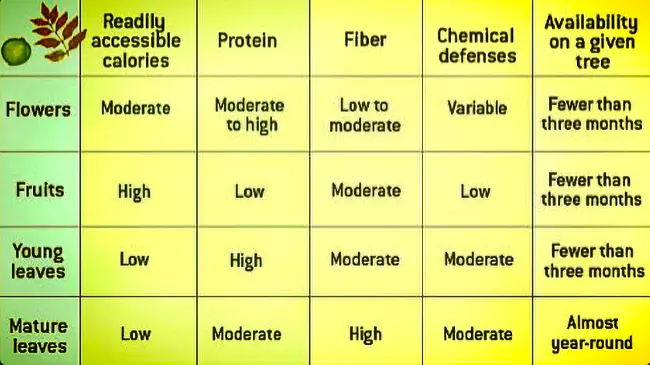
A maioria dos hominídeos arbóreos e outros primatas concentram-se em frutos maduros de um lado e folhas jovens. Também comem outros tipos de alimentos, mas estes dois são os principais. Os frutos tendem a ser ricos em energia sob a forma de frutose e relativamente baixos em fibra, mas podem não fornecer todos os aminoácidos essenciais e tendem a ser a mais rara de todas as fontes vegetais. Este tipo de escassez complica as coisas porque se num determinado período do ano não houver frutos disponíveis. Durante esse período de tempo, as necessidades energéticas não são satisfeitas, e existe uma necessidade de suplementação com diferentes fontes de plantas. As folhas estão cheias de proteínas e estão em todo o lado, mas são de qualidade inferior, o que significa que não há carboidratos nelas e não podemos viver só delas, e tendem a ser preenchidas com produtos químicos tóxicos indesejáveis.
Como os primatas não estão adaptados para digerir fibra, comem folhas jovens que são mais macias do que as velhas e resistentes que não podem ser digeridas. Quando as árvores exibem picos sazonais na produção de frutos e as folhas jovens dos primatas têm de os comer o mais possível e a dependência de uma única escolha alimentar não é sustentável.
De uma perspectiva evolucionária, existem duas estratégias básicas para lidar com estes problemas.
Uma delas é aumentar a eficiência de extracção de nutrientes de alimentos fibrosos. Esta é uma forma de adaptação que podemos ver nos mamíferos que são pastores.
Para os hominídeos no passado e também para os primatas, e a fibra humana passa essencialmente pelo seu estômago inalterada.
Outra adaptação biológica que pode facilitar a sobrevivência em alimentos vegetais de baixa qualidade é crescer mais ao longo do tempo. Quando um animal se torna maior em comparação com animais mais pequenos, consumirá maiores quantidades globais de alimentos para alimentar a sua massa tecidular mais extensa. Contudo, por razões que a ciência não foi capaz de explicar inteiramente, quanto mais massivo for o animal, menos calorias necessitará para se sustentar e alcançar uma alimentação adequada. Em termos matemáticos, os animais maiores necessitam de menos energia por unidade de peso corporal. O que isto significa é que os animais maiores são capazes de comer menos e podem comer alimentos de menor qualidade para satisfazer as suas necessidades energéticas.
No entanto, crescer maior para os primatas não é uma opção, porque são animais arborícolas. Por crescerem demasiado, correm o risco de cair para a morte.
Outra estratégia evolutiva está aberta aos comedores de plantas arborícolas e é mais comportamental do que biológica.
É uma estratégia de forragem. Como os frutos são raros e muito dispersos esporadicamente nas florestas tropicais, a estratégia requer a implementação de práticas que prometem reduzir a energia de aquisição destes recursos. Para sobreviver, os primatas devem usar cada vez mais os seus cérebros para formar estratégias de forragem que sejam sustentáveis. Uma boa memória melhoraria significativamente a abordagem. A capacidade de recordar os locais exactos das plantas que produzem frutos desejáveis e quando estas árvores são susceptíveis de dar frutos maduros e de recordar as direcções precisas para estas árvores melhoraria a rentabilidade do forrageamento no sentido do gasto de energia através da redução dos custos de energia de busca e viagem, aumentando a capacidade do cérebro para recordar e planear com antecedência.

Em comparação, os grazers não precisam de desenvolvimento cerebral porque os seus alimentos estão à sua volta e tudo o que eles precisam é de baixar a cabeça. A confiança na memória e nas estratégias de procura de alimentos impulsionou a selecção e o desenvolvimento de um cérebro de maior tamanho, com uma maior capacidade de armazenamento de informação. Como grupo, os primatas sempre dependeram da alimentação selectiva e de terem a capacidade cerebral para levar esta estratégia a bom termo.
O crescimento do tamanho do cérebro em combinação com o crescimento do tamanho do corpo e uma diminuição do tamanho dos dentes, apoia a noção de uma dieta de alta qualidade. E esta é uma adaptação evolutiva que é universal a todos os primatas nos últimos 66 Ma. Alguns têm ido longe como os humanos. Temos um cérebro suficientemente evoluído para criar açúcar branco puro e refinado. açúcar branco refinado.
A maioria das outras espécies comedoras de plantas, em oposição, têm tendido a concentrar-se fortemente em adaptações fisiológicas para melhor digerir a fibra, a fim de reduzir a necessidade de investir energia na procura de alimentos de alta qualidade. As adaptações comportamentais, que requerem uma maior potência cerebral, permitem a certas espécies escolher alimentos de alta qualidade.
Se parecermos ser sensíveis às calorias, o cérebro é o órgão mais caro a manter. Absorve a vasta quantidade de energia dos alimentos, cerca de 20% em repouso nos seres humanos. A selecção natural não vai favorecer o desenvolvimento de um cérebro de tamanho massivo se não for para obter quaisquer benefícios com o alargamento. O aparecimento de seres humanos modernos com cérebros grandes e capazes ocorreu porque a selecção natural favoreceu adaptações que se concentraram na eficiência da forragem. Essa foi a linha de evolução que permitiu aos primatas concentrarem a sua alimentação nas dietas mais densas em energia e de baixa fibra que conseguissem encontrar, e encontrar é uma palavra crucial.

Encontrar alimentos de alta qualidade num ambiente escasso é o que criou os seres humanos modernos. Tinha pouco a ver com comer carne ou qualquer outra forma de energia. Uma forma de energia é de menor importância do que a forma como a energia é obtida. Por outras palavras, se a carne teve alguma coisa a ver com o desenvolvimento do cérebro, então todas as espécies carnívoras deste planeta já estarão a colonizar os alcances exteriores da galáxia. Não há nenhum nutriente mágico na carne que tenha sido responsável pelo aumento da força cerebral humana. A carne é apenas carne, outra fonte de energia.
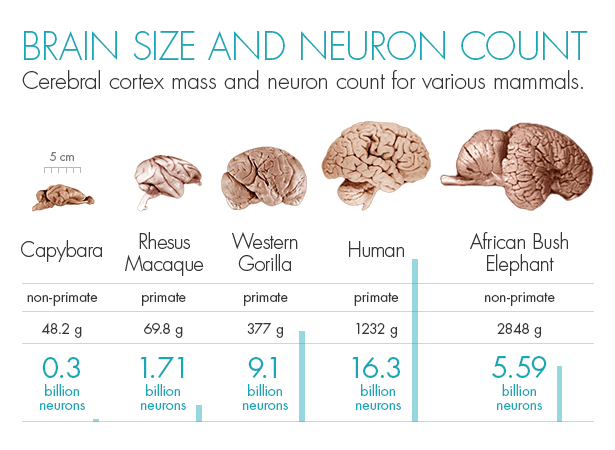
Não existe uma correlação absoluta entre o consumo de carne e a inteligência. A forma de combinar uma certa quantidade de carne colhida com uma dieta predominantemente vegana não se tornou uma força fulcral no aparecimento dos humanos modernos. Além disso, também não está correlacionado com o tamanho do cérebro. Não existe uma relação particularmente forte entre o tamanho do cérebro e a inteligência, com um valor de correlação entre 0,3 e 0,4 num total de 1,0. O que conta é o número de neurónios no cérebro, independentemente do tamanho do cérebro (Dicke & Roth, 2016). O cérebro humano tem o maior número de neurónios corticais (cerca de 15 mil milhões), apesar de o cérebro e o córtex humanos serem muito mais pequenos do que, por exemplo, os dos cetáceos e elefantes (com 10-12 mil milhões ou mesmo menos neurónios corticais).
Referências:
- Dicke, U., & Roth, G. (2016). Fatores neuronais que determinam alta inteligência. Transacções filosóficas da Sociedade Real de Londres. Série B, Ciências Biológicas, 371(1685), 20150180. https://doi.org/10.1098/rstb.2015.0180
- Barr, W. Andrew, et al. "No Sustained Increase in Zooarchaeological Evidence for Carnivory After the Appearance of Homo Erectus." Actas da Academia Nacional de Ciências dos Estados Unidos da América, vol. 119, no. 5, National Academy of Sciences, Jan. 2022, https://doi.org/10.1073/pnas.2115540119.
Publicações Relacionadas

Você tem alguma dúvida sobre saúde e nutrição?
Gostaria muito de ouvir a sua opinião e responder-lhes no meu próximo post. Agradeço o vosso contributo e a vossa opinião e aguardo com expetativa a vossa resposta em breve. Convido-vos também a siga-nos no Facebook, Instagram e Pinterest para mais conteúdos sobre dieta, nutrição e saúde. Pode deixar um comentário e ligar-se a outros entusiastas da saúde, partilhar as suas dicas e experiências e obter apoio e encorajamento da nossa equipa e comunidade.
Espero que este post tenha sido informativo e agradável para si e que esteja preparado para aplicar os conhecimentos que aprendeu. Se achou este post útil, por favor partilhá-lo com os seus amigos e familiares que também possam beneficiar com isso. Nunca se sabe quem poderá precisar de alguma orientação e apoio no seu percurso de saúde.
– Você Também Pode Gostar –
Os Peixes São Animais? Uma Perspetiva Cultural

Dentes Sensíveis a Doces e Dor: Solução Rápida e Duradoura
Câncer, O que é Proibido Curas - ESSIAC
Estímulos Supernormais- Transtorno da Compulsão Alimentar e Regulação do Apetite
Poder Antioxidante das Especiarias: Resultados in Vivo com Dosagens Realistas
Leite e Lacticínios: Correlações de Risco Para a Saúde
A fluoretação da água - revisão Científica
Pode-se Comer Cogumelos Crus: Riscos Para a Saúde, Nutrição e Segurança

Aprender Sobre Nutrição

Milos Pokimica é médico de medicina natural, nutricionista clínico, escritor de saúde e nutrição médica, e conselheiro em ciências nutricionais. Autor da série de livros Go Vegan? Revisão de Ciênciaopera também o website de saúde natural GoVeganWay.com
Medical Disclaimer
GoVeganWay.com traz comentários dos mais recentes a nutrição e a saúde relacionados com a pesquisa. As informações fornecidas representa a opinião pessoal do autor e não pretende nem implícita para ser um substituto para aconselhamento médico profissional, diagnóstico ou tratamento. As informações fornecidas são apenas para fins informativos e não se destina a servir como um substituto para a consulta, o diagnóstico e/ou tratamento médico de um médico qualificado ou prestador de cuidados de saúde.NUNCA DESCONSIDERE o CONSELHO MÉDICO PROFISSIONAL OU adiar a BUSCA de TRATAMENTO MÉDICO por causa DE ALGO QUE TENHA LIDO OU ACESSADO por MEIO de GoVeganWay.com
NUNCA APLIQUE QUAISQUER MUDANÇAS de estilo de VIDA OU QUALQUER MUDANÇA COMO UMA CONSEQUÊNCIA DE ALGO QUE TENHA LIDO NO GoVeganWay.com ANTES de CONSULTORIA de LICENÇA MÉDICA.
No caso de uma emergência médica, ligue para o médico ou para o 911 imediatamente. GoVeganWay.com não recomenda ou endossa qualquer específicos, grupos, organizações, exames, médicos, produtos, procedimentos, opiniões ou outras informações que podem ser mencionadas dentro.
Escolhas do Editor -
Câncer Editor De Picaretas Fitoquímicos
Poder Anticancerígeno das Frutas e Legumes: Evidências Clínicas e in Vivo
Alguns extractos vegetais rivalizam com os principais medicamentos de quimioterapia e, ao mesmo tempo, visam vários tipos diferentes de células cancerígenas.
Antioxidantes Editor De Picaretas ORAC
Óleos Essenciais Como Suplementos Antioxidantes: Regras e Estratégias
Os óleos essenciais de qualidade alimentar podem ser uma estratégia conveniente e amiga do consumidor para optimizar o valor antioxidante e a pontuação ORAC da nossa dieta.
Antioxidantes Editor De Picaretas ORAC
Dieta Rica em Antioxidantes: Regras e Estratégias Gerais
Existem estratégias fáceis e económicas para optimizar o valor antioxidante da nossa dieta.
Antioxidantes Editor De Picaretas ORAC
Compreender os Valores ORAC: Níveis de Antioxidantes nos Alimentos
Quando a sua principal fonte de antioxidantes é o café, sabe que tem um problema grave.

Antioxidantes Editor De Picaretas ORAC
Astaxantina Benefícios: Antioxidante Natural Mais Poderoso do Mundo
A astaxantina é o mais poderoso e natural antioxidante universal (tanto o petróleo e a água-solúvel) desconhecido para a ciência. Ele se acumula nos tecidos e Ele nunca pode transformar-se em um pró-oxidante.
Antioxidantes Editor De Picaretas ORAC Fitoquímicos
Antioxidantes: Compreender os Princípios Básicos
Los productos de origen animal no contienen fitoquímicos ni antioxidantes. Por término medio, los alimentos vegetales contienen más de 60 veces más antioxidantes que los de origen animal.
Editor De Picaretas A Dieta Vegetariana
Deficiências de Nutrientes na Dieta Vegana: Estratégias de Prevenção
Existem nove deficiências comuns de nutrientes na escala populacional que afectam as pessoas que se alimentam de uma dieta à base de plantas. Se não forem corrigidas a tempo, algumas deficiências têm consequências terríveis e não tratáveis.
Editor De Picaretas Alimentação Ideal
Deficiência de Micronutrientes na Dieta Americana Padrão: Estratégias de Otimização
O perfil nutricional da nossa dieta moderna à base de carne, açúcar e alimentos processados é completamente incongruente com a nossa evolução, resultando numa grave deficiência de micronutrientes.
Editor De Picaretas Fitoquímicos
Fitoquímicos: Conceitos Básicos
Cada fitoquímico que existe tem uma acção biológica no corpo humano. Cada um de milhões de diferentes fitoquímicos.
Editor De Picaretas Leite Alimentação Ideal
Leite e Lacticínios: Correlações de Risco Para a Saúde
As associações conhecidas com o consumo de leite e lacticínios são infertilidade, cancro dos ovários e da mama, leucemia, diabetes tipo 1, autismo, arteriosclerose, catarata, artrite reumatóide, esclerose múltipla, hiperactividade, congestão, espinhas, e muito mais...As associações conhecidas com o consumo de leite e lacticínios são infertilidade, cancro dos ovários e da mama, leucemia, diabetes tipo 1, autismo, arteriosclerose, catarata, artrite reumatóide, esclerose múltipla, hiperactividade, congestão, espinhas, e muito mais...
Câncer Editor De Picaretas Proteína
Proteína Completa: Sinalização do IGF-1 na Formação do Cancro
Quando você comer proteína animal que tem quatro vezes a chance de desenvolver todos os tipos de câncer. Quando você fuma tem quatro vezes a chance de desenvolver câncer de pulmão.

Câncer Editor De Picaretas Proteína
A Anatomia do Câncer de risco para a Saúde correlações
Cerca de 2% dos casos de câncer estão por medicamento considerado puramente causada por fatores genéticos. O mesmo intervalo de dentro do reino animal. Você ainda não foi informado de toda a verdade.
Milos Pokimica é escritor especializado em saúde e nutrição e consultor em ciências nutricionais. Autor da série de livros Go Vegan? Revisão de Ciênciaopera também o website de saúde natural GoVeganWay.com
Artigos Mais Recentes –

Restrição De Calorias Longevidade
Como Fazer Jejum: Alimentos em Jejum que Não Quebram a Autofagia
Autofagia. Já alguma vez se interrogou sobre o que acontece às células do seu corpo quando morrem ou se danificam? Será que se acumulam e criam problemas ou são eliminadas de alguma forma? A resposta é que o seu corpo...
Saúde Dentária Prevenção
Dentes Sensíveis a Doces e Dor: Solução Rápida e Duradoura
Uma solução rápida e fácil para o alívio da dor é o óleo essencial de cravinho, um poderoso antioxidante e analgésico que pode ajudar com doenças das gengivas e dores de dentes.
Feijão
Feijão Verde: Benefícios Nutricionais e Para a Saúde
O feijão verde tem poucas calorias e é rico em compostos naturais que podem ajudá-lo a controlar o açúcar no sangue, a reduzir o colesterol e a combater os radicais livres.
Dieta de alimentos crus A Dieta Vegetariana
Pode-se Comer Cogumelos Crus: Riscos Para a Saúde, Nutrição e Segurança
Os cogumelos têm toxinas sensíveis ao calor, como a hidrazina ou a agaritina, e paredes celulares feitas de quitina que não podem ser bem digeridas pelos seres humanos.
A Dieta Vegetariana
Os Peixes São Animais? Uma Perspetiva Cultural
Em algumas culturas, a carne de peixe não é considerada carne e o peixe é permitido mesmo durante o jejum.

Saúde Dentária Prevenção
Elixir Bucal Natural Caseiro: Comprovado, Mais Forte e Menos Tóxico
O elixir bucal natural caseiro é mais forte do que a clorexidina, menos tóxico e, se ingerido, pode provocar algumas náuseas, mas também tem um elevado valor ORAC.
Saúde Dentária Prevenção
Como Parar a Cárie Dentária: Sintomas, Causas e Prevenção
Consumo de açúcar é a principal causa de cáries e a cárie dentária, combinado com deficiência de minerais, especialmente o magnésio, o zinco, o cobre e elementos-traço.
Antioxidantes Superalimentos
Amla: Benefícios Comprovados, Nutrição e Significado Clínico
O amla é um dos antioxidantes mais poderosos do mundo, com uma pontuação ORAC de 261.530. É uma fonte rica de fitoquímicos que têm vários benefícios para a saúde.
Superior De Saúde De Notícias — ScienceDaily
- Glucosamine, a popular joint supplement, linked to faster Alzheimer’s progressionon Setembro 27, 2026
A large health-record analysis found that glucosamine use was associated with a 25% higher likelihood of mild cognitive impairment progressing to dementia. Lab experiments suggest the popular joint supplement may intensify an abnormal sugar-tagging process in the Alzheimer’s brain, although researchers say clinical trials are needed to determine whether it actually causes harm.
- Atrial fibrillation patients saw 69% lower risk with common blood thinnerson Setembro 27, 2026
Direct oral anticoagulants cut the risk of serious clinical events by 69% in atrial fibrillation patients with an intermediate risk of stroke, according to the randomized SINGLE-AF trial. The benefit was driven mainly by fewer ischemic strokes, with no increase in major bleeding.
- One CRISPR treatment cut “bad” cholesterol in half for a full yearon Setembro 27, 2026
A single dose of an experimental CRISPR therapy cut LDL cholesterol and triglycerides by about half in patients with difficult-to-treat lipid disorders. The reductions were still present one year later, with the highest dose lowering LDL by 52.5% and triglycerides by 47.8%.
- Why rheumatoid arthritis pain may persist even when inflammation is under controlon Setembro 27, 2026
Pain and fatigue in rheumatoid arthritis can persist even after inflammation improves, with depression, poor sleep, obesity, smoking, and chronic pain potentially helping sustain symptoms. Researchers say identifying these hidden drivers could prevent unnecessary medication changes and lead to more personalized treatment.
- Scientists say house cats could help unlock better cancer treatments for humanson Setembro 27, 2026
Scientists have mapped the genetics of cat cancer on an unprecedented scale and found surprising similarities with tumors in humans. The findings could help bring precision cancer treatments to cats while also revealing new clues about how human cancers develop and respond to drugs.
- A major risk of breast cancer screening may have been overestimated for decadeson Setembro 26, 2026
A new analysis suggests mammograms may lead to far less breast cancer overdiagnosis than some earlier studies indicated. Researchers reexamined all eight major randomized screening trials and accounted for differences in follow-up time, screening frequency, and screening after trials ended. Their results were consistent with an overdiagnosis rate below 5%, rather than estimates approaching 30% to 50%.
- That fresh cleaning smell could be filling your home with nanoparticleson Setembro 26, 2026
Researchers found that scented cleaners can react with ozone indoors to create billions or trillions of invisible nanoparticles that can penetrate deep into the lungs. The pollution forms within minutes and, in some cases, may produce an inhaled particle dose comparable to or greater than standing near heavy traffic.
PubMed, #vegan-dieta –
- Plant-Based Diets in Adolescence: Cardiometabolic Benefits, Developmental Risks, and the Role of Fortificationon Setembro 26, 2026
Adolescence is a critical window in which dietary patterns stabilise while nutrient requirements remain high to support growth, bone accrual, and neurodevelopment. Plant-based diets are increasingly adopted by young people, yet paediatric evidence indicates that they should not be treated as a single exposure, because diet quality substantially modifies both benefits and risks. Healthy plant-based patterns-rich in whole grains, legumes, fruits, vegetables, nuts, and unsaturated fats-are…
- Plant-Based Functional Custard Enriched with Vitamin D3: Insight into Technological Properties, Nutrition and Bone Tissue Regenerationon Setembro 26, 2026
A plant-based or vegan diet is considered one of the most important dietary patterns, often followed for religious or health reasons. It should contain vital nutrients such as protein, iron, zinc, calcium, vitamin D, and others. The objective of this study was to produce a plant-based food product with high nutritional value (vegan custard, VC) and fortify it with vitamin D(3) (vegan custard + D(3)). Thirty-five female albino rats, with an average body weight of 160 ± 5 g, were divided […]
- Dietary Patterns, Micronutrient Adequacy, and Metabolic Vulnerability in Alzheimer’s Disease: A Critical Narrative Reviewon Setembro 26, 2026
Dietary factors may influence cognitive aging and Alzheimer’s disease (AD), but observational associations, mechanistic findings, and intervention effects should not be considered equivalent evidence. This critical narrative review examines how dietary patterns, micronutrient adequacy, and metabolic health may modify AD-related vulnerability. A targeted search of PubMed/MEDLINE, Scopus, and Web of Science through April 2026 prioritized systematic reviews, meta-analyses, randomized trials, and…
- A Structured Narrative Review of Contemporary Dietary Strategies Following Acute Coronary Syndromeson Setembro 24, 2026
CONCLUSIONS: A Mediterranean-style diet remains the dietary pattern supported by the strongest evidence for secondary prevention following ACS. Until further pragmatic randomized trials are available, clinicians should continue recommending Mediterranean-style dietary patterns while individualising dietary advice according to patient preferences, cultural practices, and long-term adherence.
- Toward International Dietary Guidance: A Food Guide Pyramid for Human and Planetary Healthon Setembro 23, 2026
Dietary guidelines shape food policy, education, and food systems worldwide. Recent controversies in dietary guideline development, together with rising burdens of diet-related chronic disease and increasing environmental pressures, highlight the need for globally relevant dietary guidance aligned with both human and planetary health. We developed an evidence-informed International Food Guide Pyramid emphasizing optimal carbohydrate-containing staple foods. The International Carbohydrate […]
Publicações Aleatórias -
Câncer Desintoxicação A Inflamação
Benefícios do Sulforafano: O Superpoder Desintoxicante dos Brócolos
O sulforafano é o indutor enzimático natural de fase 2 mais potente conhecido pela ciência. Também foi demonstrado que o sulforafano é um inibidor dose-dependente da tumorigênese induzida por carcinógeno.
A Vitamina D
Deficiência de vitamina D – As estratégias de otimização
Com a deficiência de vitamina D, sofreremos de uma ampla gama de problemas de saúde, mesmo que não tenhamos uma doença óssea diretamente visível.
Editor De Picaretas Alimentação Ideal
Dieta Humana Optima- Doenças Crónicas, Guerras Alimentares e o Argumento Vegan
Nossa dieta humana natural ideal é aquela que nossos ancestrais hominídeos comiam nos últimos 30 milhões de anos, e não os humanos anatomicamente modernos da Idade da Pedra.
A Obesidade
A Obesidade, Fatores De Risco
O que são associados a obesidade, fatores de risco? Para toda a vida no planeta Terra, exceto para nós, a comida não é uma escolha.
A Medicina Alopática Câncer
Câncer, O que é Proibido Curas - ESSIAC
Em uma pequena cidade no Norte de Ontário, em 1922, rumores começaram a circular de um câncer-a cura de chá que era proveniente de florestas de Ontário. Índios chamados esta mistura de chá de vida."

Antioxidantes
Vitamina C Intravenosa no Tratamento da Gripe: Prova viva da Prática Clínica
Quando se quer administrar vitamina C intravenosa no hospital, não se diz ao médico. Em vez disso, diz ao seu advogado para dizer ao seu médico, por escrito.
A Dieta Vegetariana
Humano de carne, ou seja, o mito?- O animal cognição
Não somos mais inteligentes espécies se nós cientificamente medida animal cognição. As barbatanas longas baleia-piloto cérebro neocortical parte contém mais neurônios do que os nossos próprios.

COVID-19 Prevenção A Vitamina D
A deficiência de vitamina D - Fatores de Risco
Existem apenas duas vitaminas que não são produzidos pelas plantas, vitamina D, e o outro de vitamina B12. A deficiência de vitamina D é uma preocupação real.
Câncer Editor De Picaretas Fitoquímicos
Poder Anticancerígeno das Frutas e Legumes: Evidências Clínicas e in Vivo
Alguns extractos vegetais rivalizam com os principais medicamentos de quimioterapia e, ao mesmo tempo, visam vários tipos diferentes de células cancerígenas.
Editor De Picaretas A Inflamação A Dieta Vegetariana
Inflamação e Dieta- Argumento Vegan
Evoluímos para receber uma explosão de proteção antioxidantes quando nós comer, mas lá não estão presentes na carne. A inflamação e a dieta têm um alto nível de correlação.

Posts Em Destaque –

A Medicina Alopática Editor De Picaretas Alimentação Ideal
O McGovern Relatório - de Interesse Especial e A Supressão da Ciência
Em 1977, a pressão para uma mudança de Orientações Dietéticas (McGovern Relatório) para mais de base vegetal vegan, um havia sido apresentado ao Congresso dos EUA.

Editor De Picaretas Alimentação Ideal A Dieta Vegetariana
QUE orientações dietéticas - Nova pirâmide alimentar e a supressão da ciência
As directrizes dietéticas da OMS recomendam uma dieta pobre em gordura saturada (proteína animal), açúcar e sal e rica em frutas e vegetais como um requisito para combater o aumento epidémico de doenças crónicas em todo o mundo.

Câncer Editor De Picaretas Toxicidade
Exposição a Pesticidas em Crianças: Testes de Exposição na Vida Real
Crianças e, principalmente, as mulheres grávidas são mais vulneráveis à exposição aos pesticidas. Se analisarmos do mundo real, os níveis de exposição em cenários da vida real, qual seria o resultado?

A Medicina Alopática Editor De Picaretas
A História da Grande Farmácia - IG Farben
A parte de Rockefeller, o monopólio da química e indústrias de medicamentos veio em cumprimento após a 2ª guerra mundial. A Standard Oil e a IG Farben cooperação fez isso em realidade.

Câncer Editor De Picaretas Toxicidade
Pesticidas nos Alimentos, Exposição na Dieta Americana Padrão - 80 Por Cento da Carne
A maioria dos pesticidas e, especialmente, metais pesados e outros resíduos tóxicos poluentes temos, temos de carne. Mais de 80% da exposição aos pesticidas na dieta Americana padrão vem de produtos de origem animal, não a partir de frutas ou de produtos hortícolas.

Editor De Picaretas Alimentação Ideal Proteína
Dieta De Alta Proteína Risco Para A Saúde Correlações
A escassez é a regra de proteína na natureza. Em termos evolutivos, os antropólogos têm comprovado que os hominíneos viveram uma média de 15 a 25 gramas de proteína por dia. O ocidental moderno tipo de proteína de alta dieta que iria consumir...
Editor De Picaretas Fitoquímicos
Fitoquímicos: Conceitos Básicos
Cada fitoquímico que existe tem uma acção biológica no corpo humano. Cada um de milhões de diferentes fitoquímicos.

A Medicina Alopática Câncer Editor De Picaretas
Câncer, O que é Proibido Curas-máquina de Rife, análise de Histórico
A taxa de recuperação para pacientes que têm não-tratáveis câncer e foram declarou doente terminal, utilizando Repleto de Máquina de ressonância tecnologia foi de 100%.
Antioxidantes Editor De Picaretas ORAC Fitoquímicos
Antioxidantes: Compreender os Princípios Básicos
Los productos de origen animal no contienen fitoquímicos ni antioxidantes. Por término medio, los alimentos vegetales contienen más de 60 veces más antioxidantes que los de origen animal.
Câncer Editor De Picaretas Proteína
A Anatomia do Câncer de risco para a Saúde correlações
Cerca de 2% dos casos de câncer estão por medicamento considerado puramente causada por fatores genéticos. O mesmo intervalo de dentro do reino animal. Você ainda não foi informado de toda a verdade.
Últimas do PubMed, #dieta baseada em vegetais –
- Long-Term Monitoring of Radioactive Cesium in Commercial Foods and Dietary Intake Estimated by Total Diet Studies in Japan after the Fukushima Daiichi Nuclear Power Plant Accidentpor Hiromi Nabeshi on Setembro 27, 2026
Following the Fukushima Daiichi Nuclear Power Plant accident in 2011, Japan implemented extensive monitoring of radioactive materials in foods and established strict regulatory limits based on an annual effective dose of 1 mSv/year from artificial radionuclides. This review summarizes long-term surveillance data on radioactive cesium (r-Cs) in commercial foods and long-term assessments of dietary intake of r-Cs and strontium-90 (^(90)Sr) using the total diet study (TDS)/market basket (MB)…
- Nutrition and Endometriosis: Current Evidence on Dietary Risk Factors and Clinical Impact – A Narrative Reviewpor Christine Dawczynski on Setembro 27, 2026
Endometriosis (EM) is a severe chronic inflammatory disease characterized by the presence of endometrium-like tissue outside the uterine cavity, causing pain and significantly reducing quality of life. Worldwide, around 10% of women of reproductive age are affected and there is no cure as of now. The limited treatment options focus on hormone therapy, surgery and pain management–without satisfactory long-term effects. Nutritional strategies might support the prevention and treatment of…
- North American and Andean Indigenous Plant-Based Foods and Their Contemporary Scientific Rationale for Health Improvementpor Lena Gálvez Ranilla on Setembro 27, 2026
Plant-based food systems have been an integral part of human ecology since the dawn of domestication across all continents from over 12,000 y ago. This served the needs of human health and wellness from whole plant form to the use of parts in a range of water-based extracts to dry form or fermentation-based applications. This conference paper focuses on some examples of plant-based foods in the Americas that have been used since ancient times among indigenous North American and Andean […]
- Plant-Based Diets in Adolescence: Cardiometabolic Benefits, Developmental Risks, and the Role of Fortificationpor Bianca Simionescu on Setembro 26, 2026
Adolescence is a critical window in which dietary patterns stabilise while nutrient requirements remain high to support growth, bone accrual, and neurodevelopment. Plant-based diets are increasingly adopted by young people, yet paediatric evidence indicates that they should not be treated as a single exposure, because diet quality substantially modifies both benefits and risks. Healthy plant-based patterns-rich in whole grains, legumes, fruits, vegetables, nuts, and unsaturated fats-are…
- Dietary Patterns, Micronutrient Adequacy, and Metabolic Vulnerability in Alzheimer’s Disease: A Critical Narrative Reviewpor Isidora Sierralta on Setembro 26, 2026
Dietary factors may influence cognitive aging and Alzheimer’s disease (AD), but observational associations, mechanistic findings, and intervention effects should not be considered equivalent evidence. This critical narrative review examines how dietary patterns, micronutrient adequacy, and metabolic health may modify AD-related vulnerability. A targeted search of PubMed/MEDLINE, Scopus, and Web of Science through April 2026 prioritized systematic reviews, meta-analyses, randomized trials, and…
- Baseline Ferritin and Body Composition as Correlates of Longitudinal Metabolic Changes During an Energy-Restricted Mediterranean-Style Intervention Across Three Overweight Phlogistic-Related Clinical…por Begoña de Cuevillas on Setembro 26, 2026
CONCLUSIONS: Baseline ferritin and body composition were correlates of heterogeneous inflammatory-metabolic profiles and ferritin changes. These hypothesis-generating associations do not establish causal or mechanistic effects and require controlled confirmation with comprehensive iron-status assessment.