







Taille du Cerveau, Intelligence et Consommation de Viande- L'argument Végétalien
La combinaison d'une certaine quantité de viande fourragée au régime à prédominance végétalienne n'est pas devenue une force pivot dans l'émergence de l'intelligence humaine et de la taille du cerveau.
Milos Pokimica
Écrit par : Milos Pokimica
Examiné Médicalement Par : Dr. Xiùying Wáng, M.D.
Mis à jour le 9 juin 2023La cuisine était-elle la partie cruciale du développement d'une taille de cerveau humain ou était-elle l'utilisation d'outils de l'âge de pierre, ou s'il s'agissait d'ajouter des USO riches en amidon (unités de stockage souterraines) ou de la viande à l'alimentation ?
Quelle était la source d'énergie la plus cruciale qui a fourni l'énergie indispensable au développement de la taille du cerveau ?
Les débats sont de nature émotionnelle et ne sont pas aussi logiques que la science doit l'être. Cela est dû à notre désir sous-jacent de nous prouver que la consommation de viande est naturelle pour l'évolution humaine, afin de pouvoir justifier la consommation de viande à grande échelle à l'ère moderne. Les données scientifiques et archéologiques peuvent devenir un problème dans ce scénario si les données ne reflètent pas la façon souhaitable de voir les choses.
Les scientifiques ne sont pas à l'abri des biais émotionnels. Pour qu'il y ait une consommation quotidienne de viande à grande échelle, les deux critères suivants doivent être remplis.
(1) Nous devons disposer d'une option viable pour l'acquisition de la viande.
(2) Nous devons avoir la capacité physiologique de le digérer.
Le premier critère pour les humains qui ne sont pas des chasseurs anatomiques, qui sont lents et faibles et qui ne peuvent pas rivaliser avec les vrais chasseurs anatomiques, est de faire les poubelles. Cette option ne permet pas de couvrir les besoins en calories et ne peut constituer une source supplémentaire de calories que dans une faible mesure. Pour la seconde option, nous devrions disposer de la technologie du feu. Par conséquent, tout ce qui est antérieur à l'Homo erectus est exclu. Certains scientifiques pensent que même l'Homo erectus n'était pas capable de maîtriser le feu. C'est un grand débat.

À l'heure actuelle, le plus ancien exemple bien accepté de combustion contrôlée de feu provient de la grotte de Qesem, en Israël, il y a 400 000 ans.
Lorsque l'on ne chasse pas, que l'on vit sur un arbre et que l'on doit chercher des feuilles et des fruits comestibles, la vie est difficile. Il s'est alors produit un processus de sélection naturelle qui a fortement favorisé les caractéristiques améliorant l'efficacité de la recherche de nourriture. Ainsi, au fur et à mesure que la nourriture végétale devenait de plus en plus importante, l'adaptation a progressivement donné naissance au groupe de caractéristiques actuellement considérées comme la propriété des primates. La plupart de ces caractéristiques sont adaptées pour faciliter le déplacement et la recherche de nourriture dans les arbres.
Par exemple, l'adaptation a donné naissance à des mains bien adaptées pour saisir les branches et manipuler les fruits et les feuilles minces et petits. Afin de détecter les fruits mûrs et de se déplacer en toute sécurité dans les habitats arboricoles, l'adaptation a nécessité l'amélioration des capacités optiques (notamment la perception de la profondeur, l'acuité visuelle et la vision des couleurs). Une bonne vision est essentielle pour se déplacer dans l'espace tridimensionnel de la canopée forestière et pour déterminer rapidement l'apparition de fruits mûrs ou de jeunes feuilles minuscules. Les espèces carnivores n'ont pas de vision en couleur. Elles n'ont pas besoin de détecter les fruits mûrs.
En outre, ces pressions environnementales ont également favorisé la capacité à apprendre et à se souvenir de l'identité et de l'emplacement des parties comestibles des plantes, ainsi qu'à calculer les stratégies de recherche de nourriture optimales pour économiser de l'énergie, ce qui a également accru la flexibilité comportementale. La recherche de nourriture bénéficie de l'amélioration des capacités visuelles et cognitives. Par conséquent, elle a favorisé le développement de cerveaux exceptionnellement grands, une caractéristique des primates depuis leur création.
La consommation de viande ou de moelle osseuse n'a rien à voir avec le développement d'un cerveau de plus grande taille. Les différents aliments végétaux ne contiennent pas tous les nutriments dont nous avons besoin. Par exemple, une plante peut contenir certains acides aminés et vitamines à un niveau adéquat, mais pas tous, ou même si elle est riche en nutriments et ne contient pas de fibres, elle peut manquer d'énergie sous forme d'hydrates de carbone (amidon et sucre). Les mammifères qui dépendent principalement des plantes pour satisfaire leurs besoins nutritionnels quotidiens et qui ne sont pas adaptés à une source alimentaire végétale particulière abondante doivent par conséquent rechercher une variété de sources alimentaires complémentaires provenant d'un éventail différent de plantes.
Ils doivent combiner différents types d'aliments pour obtenir tous les nutriments dont ils ont besoin. Cette exigence complique grandement la collecte de nourriture. C'est une vie difficile, une lutte constante pour la nourriture et une réflexion de tous les instants.
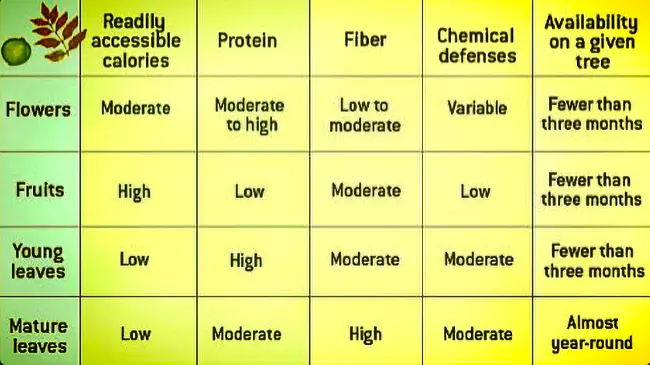
La plupart des hominidés arboricoles et des autres primates se concentrent sur les fruits mûrs d'un côté et sur les jeunes feuilles. Ils mangent également d'autres types d'aliments, mais ces deux-là sont les principaux. Les fruits ont tendance à être riches en énergie sous forme de fructose et relativement pauvres en fibres, mais ils peuvent ne pas fournir tous les acides aminés essentiels et ont tendance à être les plus rares de toutes les sources végétales. Ce type de rareté complique les choses, car si, à une certaine période de l'année, il n'y a pas de fruits disponibles, le besoin en énergie de l'organisme s'en trouve augmenté. Pendant cette période, les besoins énergétiques ne sont pas satisfaits et il est nécessaire de compléter l'alimentation avec d'autres sources végétales. Les feuilles sont pleines de protéines et sont omniprésentes, mais elles sont de moindre qualité, c'est-à-dire qu'elles ne contiennent pas d'hydrates de carbone et que nous ne pouvons pas nous en contenter, et elles ont tendance à contenir des produits chimiques toxiques indésirables.
Les primates n'étant pas adaptés à la digestion des fibres, ils mangent les jeunes feuilles qui sont plus tendres que les vieilles feuilles coriaces qui ne peuvent pas être digérées. Lorsque les arbres présentent des pics saisonniers de production de fruits et de jeunes feuilles, les primates doivent les manger autant qu'ils le peuvent et la dépendance à l'égard d'un seul choix alimentaire n'est pas durable.
D'un point de vue évolutif, il existe deux stratégies de base pour faire face à ces problèmes.
L'une consiste à augmenter l'efficacité de extraction de nutriments provenant d'aliments fibreux. C'est une forme d'adaptation que l'on peut voir chez les mammifères qui sont des brouteurs.
Pour les hominidés dans le passé et aussi pour les primates, et les fibres humaines traversent essentiellement leur estomac sans changement.
Une autre adaptation biologique qui peut faciliter la survie avec des aliments végétaux de faible qualité est la croissance au fil du temps. Lorsqu'un animal grossit par rapport à des animaux plus petits, il consomme des quantités globales de nourriture plus importantes pour nourrir sa masse tissulaire plus étendue. Cependant, pour des raisons que la science n'a pas pu entièrement expliquer, plus l'animal est massif, moins il a besoin de calories pour se maintenir et atteindre une alimentation adéquate. En termes mathématiques, les animaux plus grands ont besoin de moins d'énergie par unité de poids corporel. Cela signifie que les animaux de grande taille sont capables de manger moins et de consommer des aliments de moindre qualité pour satisfaire leurs besoins énergétiques.
Cependant, grossir pour les primates n'est pas une option car ce sont des animaux arboricoles. A force de devenir trop massives, elles risquent de tomber jusqu'à leur mort.
Une autre stratégie évolutive est ouverte aux mangeurs de plantes arboricoles et est plus comportementale que biologique.
C'est une stratégie de recherche de nourriture. Comme les fruits sont rares et très sporadiquement dispersés dans les forêts tropicales, la stratégie nécessite la mise en œuvre de pratiques qui promettent de réduire l'énergie nécessaire à l'acquisition de ces ressources. Pour survivre, les primates doivent utiliser de plus en plus leur cerveau pour élaborer des stratégies de recherche de nourriture durables. Une bonne mémoire améliorerait considérablement l'approche. La capacité à se souvenir de l'emplacement exact des plantes qui produisent des fruits désirables et de la date à laquelle ces arbres sont susceptibles de porter des fruits mûrs, ainsi qu'à se souvenir des directions précises vers ces arbres, améliorerait la rentabilité de la recherche de nourriture en termes de dépenses énergétiques, en réduisant les coûts énergétiques liés à la recherche et au déplacement grâce à l'augmentation de la capacité du cerveau à se souvenir et à planifier à l'avance.

En comparaison, les brouteurs n'ont pas besoin de développer leur cerveau car leur nourriture est tout autour d'eux et il leur suffit de baisser la tête. La dépendance à l'égard de la mémoire et des stratégies de recherche de nourriture a favorisé la sélection et le développement d'un cerveau de plus grande taille, capable d'emmagasiner davantage d'informations. En tant que groupe, les primates ont toujours dépendu de l'alimentation sélective et de la puissance cérébrale pour mener à bien cette stratégie.
L'augmentation de la taille du cerveau, combinée à la croissance de la taille du corps et à la diminution de la taille des dents, confirme l'idée d'un régime alimentaire de haute qualité. Il s'agit d'une adaptation évolutive universelle à tous les primates au cours des 66 derniers Ma. Certains sont allés plus loin, comme l'homme. Nous avons un cerveau suffisamment évolué pour créer de la nourriture pure. sucre blanc raffiné.
La plupart des autres espèces de mangeurs de plantes, par opposition, ont eu tendance à se concentrer fortement sur les adaptations physiologiques pour mieux digérer les fibres afin de réduire la nécessité d'investir de l'énergie dans la recherche d'une nourriture de haute qualité. Les adaptations comportementales, qui nécessitent des capacités cérébrales accrues, permettent à certaines espèces de choisir des aliments de haute qualité.
En termes de calories, le cerveau est l'organe le plus coûteux à entretenir. Il absorbe la plus grande partie de l'énergie provenant de l'alimentation, soit environ 20 % au repos chez l'homme. La sélection naturelle ne va pas favoriser le développement d'un cerveau de grande taille si elle n'en retire aucun avantage. L'apparition d'humains modernes dotés d'un cerveau volumineux et performant s'est produite parce que la sélection naturelle a favorisé les adaptations axées sur l'efficacité de la recherche de nourriture. C'est la ligne d'évolution qui a permis aux primates de concentrer leur alimentation sur les régimes les plus denses en énergie et les plus pauvres en fibres qu'ils pouvaient trouver, et trouver est un mot crucial.

C'est en trouvant de la nourriture de qualité dans un environnement rare que l'homme moderne a vu le jour. Cela n'a pas grand-chose à voir avec le fait de manger de la viande ou toute autre forme d'énergie. Une forme d'énergie est moins importante que la manière dont elle est obtenue. En d'autres termes, si la viande avait quelque chose à voir avec le développement du cerveau, toutes les espèces carnivores de cette planète auraient déjà colonisé les confins de la galaxie. Il n'y a pas de nutriment magique dans la viande qui soit responsable de l'augmentation de la puissance cérébrale humaine. La viande n'est que de la viande, une autre source d'énergie.
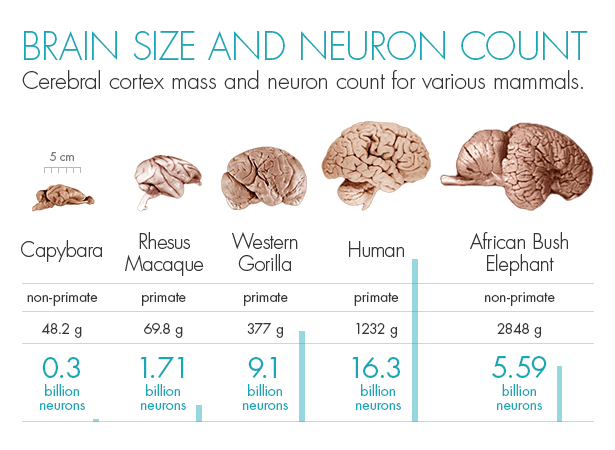
Il n'y a pas de corrélation absolue entre la consommation de viande et l'intelligence. La combinaison d'une certaine quantité de viande provenant de la cueillette et d'un régime essentiellement végétalien n'a pas joué un rôle déterminant dans l'émergence de l'homme moderne. Il n'y a pas non plus de corrélation avec la taille du cerveau. Il n'y a pas de relation particulièrement forte entre la taille du cerveau et l'intelligence, avec une valeur de corrélation comprise entre 0,3 et 0,4 sur une possibilité de 1,0. C'est le nombre de neurones dans le cerveau, quelle que soit la taille du cerveau, qui compte (Dicke & Roth, 2016). Le cerveau humain possède le plus grand nombre de neurones corticaux (environ 15 milliards), malgré le fait que le cerveau et le cortex humains sont beaucoup plus petits que, par exemple, ceux des cétacés et des éléphants (avec 10 à 12 milliards ou même moins de neurones corticaux). neurones).
Références :
- Dicke, U., & Roth, G. (2016). Facteurs neuronaux déterminant une haute intelligence. Transactions philosophiques de la Royal Society de Londres. Série B, Sciences biologiques, 371(1685), 20150180. https://doi.org/10.1098/rstb.2015.0180
- Barr, W. Andrew, et al. "Aucune augmentation soutenue des preuves zooarchéologiques de carnivore après l'apparition de Homo Erectus.” Actes de l'Académie nationale des sciences des États-Unis d'Amérique, vol. 119, non. 5, Académie nationale des sciences, janvier 2022, https://doi.org/10.1073/pnas.2115540119.
Articles Similaires


Vous avez des questions sur la nutrition et la santé ?
J'aimerais avoir de vos nouvelles et y répondre dans mon prochain post. J'apprécie votre contribution et votre opinion et j'ai hâte d'avoir de vos nouvelles bientôt. Je vous invite également à nous suivre sur Facebook, Instagram et Pinterest pour plus de contenu sur l'alimentation, la nutrition et la santé. Vous pouvez y laisser un commentaire et entrer en contact avec d'autres passionnés de santé, partager vos conseils et expériences, et obtenir le soutien et les encouragements de notre équipe et de notre communauté.
J'espère que ce billet a été instructif et agréable pour vous et que vous êtes prêt à mettre en pratique les connaissances que vous avez acquises. Si vous avez trouvé ce billet utile, veuillez le partager à vos amis et à votre famille qui pourraient également en bénéficier. On ne sait jamais qui peut avoir besoin de conseils et de soutien dans son parcours de santé.
– Vous pourriez aussi aimer –

Épuisement du Glycogène - Comment ne Pas Faire d'Exercice
Adaptations à l'Entraînement Altérées par les Antioxydants - Prévention des Dommages Oxydatifs Dans le Muscle
Le Dilemme des Humains Omnivores- Consommation de Viande, Bactéries Probiotiques, Inflammation et Intestin
Comment Arrêter les Caries Dentaires : Symptômes, Causes et Prévention

Directives Diététiques de l'OMS - Nouvelle Pyramide Alimentaire et Suppression de la Science

Toxicité de l'Eau du Robinet - Évaluation des Risques
Régime Hyperprotéiné et Acidose Métabolique : Corrélations des Risques Pour la Santé
Les Bienfaits de la Théobromine : Booster le Cerveau Sans Anxiété

Apprendre la Nutrition

Milos Pokimica est docteur en médecine naturelle, nutritionniste clinique, rédacteur en santé médicale et nutrition et conseiller en sciences nutritionnelles. Auteur de la série de livres Devenir vegetarien ? Examen des sciences, il exploite également le site Web de santé naturelle GoVeganWay.com
Avis de non-responsabilité médicale
GoVeganWay.com vous propose des critiques des dernières recherches liées à la nutrition et à la santé. Les informations fournies représentent l'opinion personnelle de l'auteur et ne sont pas destinées ni implicitement à remplacer un avis médical professionnel, un diagnostic ou un traitement. Les informations fournies sont fournies à titre informatif uniquement et ne sont pas destinées à remplacer la consultation, le diagnostic et/ou le traitement médical d'un médecin ou d'un prestataire de soins de santé qualifié.NE JAMAIS IGNORER LES CONSEILS MÉDICAUX PROFESSIONNELS OU RETARDER LA RECHERCHE DE SOINS MÉDICAUX EN RAISON DE QUELQUE CHOSE QUE VOUS AVEZ LU OU ACCÉDÉ SUR GoVeganWay.com
N'APPLIQUEZ JAMAIS DE CHANGEMENTS AU STYLE DE VIE OU TOUT CHANGEMENT À LA SUITE DE QUELQUE CHOSE QUE VOUS AVEZ LU SUR GoVeganWay.com AVANT DE CONSULTER UN PRATICIEN MÉDICAL AGRÉÉ.
En cas d'urgence médicale, appelez immédiatement un médecin ou le 911. GoVeganWay.com ne recommande ni n'approuve aucun groupe, organisation, test, médecin, produit, procédure, opinion ou autre information spécifique pouvant être mentionné à l'intérieur.
Choix de l'éditeur -
Cancer Choix de l'éditeur Phytochimiques
Pouvoir Anticancéreux des Fruits et Légumes : Preuves in Vivo et Cliniques
Certains extraits végétaux rivalisent avec les principaux médicaments de chimiothérapie et ciblent en même temps plusieurs types différents de cellules cancéreuses.
Antioxydants Choix de l'éditeur ORAC
Les Huiles Essentielles en Tant Que Compléments Antioxydants : Règles et Stratégies
Les huiles essentielles de qualité alimentaire peuvent constituer une stratégie pratique et conviviale pour optimiser la valeur antioxydante et les scores ORAC de notre alimentation.
Antioxydants Choix de l'éditeur ORAC
Régime Riche en Antioxydants : Règles Rénérales et Stratégies
Il existe des stratégies simples et rentables pour optimiser la valeur antioxydante de notre alimentation.
Antioxydants Choix de l'éditeur ORAC
Comprendre les Valeurs ORAC : La Teneur en Antioxydants des Aliments
Lorsque votre principale source d'antioxydants est le café, vous savez que vous avez un sérieux problème.

Antioxydants Choix de l'éditeur ORAC
Avantages de l’Astaxanthine : L’Antioxydant Naturel le Plus Puissant au Monde
L'astaxanthine est l'antioxydant naturel et universel le plus puissant (soluble dans l'huile et dans l'eau) connu de la science. Il s'accumule dans les tissus et ne peut jamais se transformer en pro-oxydant.
Antioxydants Choix de l'éditeur ORAC Phytochimiques
Les Antioxydants : Comprendre les Bases
Il n'y a pas de composés phytochimiques ou d'antioxydants dans les produits d'origine animale. En moyenne, les aliments végétaux contiennent plus de 60 fois plus d'antioxydants que les aliments d'origine animale.
Choix de l'éditeur Régime végétalien
Les Carences en Nutriments Dans le Régime Végétalien : Stratégies de Prévention
Il existe neuf carences nutritionnelles courantes à l'échelle de la population qui affectent les personnes qui suivent un régime à base de plantes. Si elles ne sont pas corrigées à temps, certaines déficiences ont des conséquences terribles et incurables.
Choix de l'éditeur Régime optimal
Déficience en Micronutriments Dans le Régime Alimentaire Américain Standard : Stratégies d'Optimisation
Le profil nutritionnel de notre régime moderne à base de viande, de sucre et d'aliments transformés est totalement incongru avec notre évolution, ce qui entraîne de graves carences en micronutriments.
Choix de l'éditeur Phytochimiques
Photochimie : Comprendre les Bases
Chaque phytochimique qui existe a une action biologique dans le corps humain. Chacun parmi des millions de composés phytochimiques différents.

Choix de l'éditeur Lait Régime optimal
Lait et Produits Laitiers : Corrélations Avec les Risques Pour la Santé
Les associations connues avec la consommation de lait et de produits laitiers sont l'infertilité, le cancer des ovaires et du sein, la leucémie, le diabète de type 1, l'autisme, l'artériosclérose, la cataracte, la polyarthrite rhumatoïde, la sclérose en plaques, l'hyperactivité, la congestion, les boutons, etc.

Cancer Choix de l'éditeur Protéine
Protéine Complète : Signalisation de l'IGF-1 dans la Formation du Cancer
Lorsque vous mangez des protéines animales, vous avez quatre fois plus de chances de développer tous les types de cancer. Lorsque vous fumez, vous avez quatre fois plus de chances de développer un cancer du poumon.

Cancer Choix de l'éditeur Protéine
Anatomie du Cancer - Corrélations Entre Les Risques Pour la Santé
Environ 2 % des cancers sont considérés par la médecine comme étant purement causés par des facteurs génétiques. La même gamme que dans le règne animal. On ne vous a pas dit toute la vérité.
Milos Pokimica est rédacteur spécialisé dans la santé et la nutrition et conseiller en sciences nutritionnelles. Auteur d'une série de livres Devenir vegetarien ? Examen des sciences, il exploite également le site Web de santé naturelle GoVeganWay.com
Derniers articles –

Restriction calorique Longévité
Comment Jeûner : Les Aliments de Jeûne Qui N'interrompent Pas L'Autophagie
Autophagie. Vous êtes-vous déjà demandé ce qui arrive aux cellules de votre corps lorsqu’elles meurent ou sont endommagées ? Est-ce qu'ils s'accumulent et créent des problèmes, ou sont-ils éliminés d'une manière ou d'une autre ? La réponse est que votre corps…

Santé Dentaire La prévention
Sensibilité et Douleur des Dents aux Sucreries : Solution Rapide et Durable
L'huile essentielle de clou de girofle est une solution rapide et facile pour soulager la douleur. C'est un antioxydant puissant et un analgésique qui peut aider à lutter contre les maladies des gencives et les maux de dents.
Les haricots
Haricots Verts : Nutrition et Bienfaits Pour La Santé
Les haricots verts sont pauvres en calories et riches en composés naturels qui peuvent vous aider à contrôler votre glycémie, à réduire votre taux de cholestérol et à lutter contre les radicaux libres.
Régime alimentaire cru Régime végétalien
Peut-on Manger des Champignons Crus : Risques pour la Santé, Nutrition et Sécurité
Les champignons contiennent des toxines sensibles à la chaleur, comme l'hydrazine ou l'agaritine, et des parois cellulaires composées de chitine qui ne peuvent pas être digérées correctement par l'homme.
Régime végétalien
Les Poissons Sont-ils Des Animaux ? Une Perspective Culturelle
Dans certaines cultures, la viande de poisson n'est pas considérée comme de la viande et le poisson est autorisé même pendant le jeûne.

Santé Dentaire La prévention
Rince-bouche naturel fait maison : éprouvé, plus fort et moins toxique
Le bain de bouche naturel fait maison est plus puissant que la chlorhexidine, moins toxique et, s'il est avalé, il peut donner des nausées, mais il a aussi une valeur ORAC élevée.
Santé Dentaire La prévention
Comment Arrêter les Caries Dentaires : Symptômes, Causes et Prévention
La consommation de sucre est la principale cause des caries dentaires, associée à des carences en minéraux, notamment en magnésium, zinc, cuivre et oligo-éléments.
Antioxydants Superaliments
Amla : Avantages Prouvés, Nutrition et Signification Clinique
L'amla est l'un des antioxydants les plus puissants au monde, avec un score ORAC de 261 530. Il s'agit d'une riche source de substances phytochimiques qui ont de nombreux effets bénéfiques sur la santé.
Top Des Nouvelles Sur la Santé - ScienceDaily
- This daily habit could lower dementia risk by 35%, scientists sayle mai 13, 2026
A huge long-term study found that drinking two to three cups of coffee a day was linked to a much lower risk of dementia, especially before age 75. Researchers say caffeine may help keep brain cells active while reducing inflammation and harmful plaque buildup associated with Alzheimer’s disease. But more coffee wasn’t better — the protective effect appeared to level off after moderate intake.
- Scientists discover a mysterious silicone pollutant that may be everywherele mai 13, 2026
Researchers have uncovered unexpectedly high levels of silicone-based pollutants called methylsiloxanes floating through the atmosphere across cities, rural regions, and even forests. Much of the pollution appears to come from vehicle emissions, likely linked to engine oil additives that survive combustion and escape into the air. Scientists say humans may inhale more of these compounds daily than other notorious pollutants like PFAS or microplastics.
- Your “um” and pauses could reveal early dementia riskle mai 13, 2026
The little pauses, “ums,” and moments when you struggle to find the right word may reveal far more about your brain than anyone realized. Researchers discovered that everyday speech patterns are closely tied to executive function — the mental system that powers memory, planning, focus, and flexible thinking. By using AI to analyze natural conversations, the team found they could predict cognitive performance with surprising accuracy, potentially opening the door to simple speech-based […]
- A rare cancer-fighting plant compound has been decodedle mai 13, 2026
Scientists at UBC Okanagan have uncovered how plants produce mitraphylline, a rare natural compound with promising anti cancer potential. The team identified two enzymes that work together to build the molecule’s unusual twisted structure, solving a mystery that had puzzled researchers for years. Because mitraphylline appears only in tiny amounts in tropical plants like kratom and cat’s claw, the discovery could make it far easier to produce sustainably in the future.
- Scientists discover a weak spot shared by polio and common cold virusesle mai 13, 2026
Scientists at the University of Maryland, Baltimore County, have uncovered a crucial trick used by enteroviruses—the group behind diseases like polio, myocarditis, encephalitis, and even the common cold—to reproduce inside human cells. The team captured, in unprecedented detail, how viral RNA recruits both viral and human proteins to assemble the machinery needed for replication, acting almost like a molecular “on-off switch” that controls whether the virus copies itself or makes […]
- New drugs could wipe out the “zombie cells” linked to cancer and agingle mai 13, 2026
Researchers found a new way to kill harmful “zombie” cells that linger after chemotherapy and help cancers become more aggressive. These senescent cells survive by relying on a protective protein called GPX4, even while sitting on the edge of a deadly iron-triggered collapse. New drugs remove that protection, causing the cells to self-destruct. In mice, the approach reduced tumor size and boosted survival, hinting at a promising new cancer therapy.
- Scientists make old blood stem cells young again in major anti-aging breakthroughle mai 12, 2026
As blood stem cells age, their lysosomes become overactive and damaged, triggering inflammation and weakening the body’s ability to regenerate healthy blood and immune cells. By calming this cellular “overdrive,” researchers restored the stem cells’ youthful function, dramatically boosting their ability to regenerate and produce balanced blood cells.
PubMed, #régime-vegan –
- DNA Damage Across Dietary Patterns: A Comet Assay Study in Vegans and Omnivoresle mai 13, 2026
Plant-based diets are generally associated with a reduced risk of chronic diseases; however, the relationship between a vegan diet and genome integrity remains insufficiently characterized. In this cross-sectional study, we assessed primary DNA damage in peripheral blood cells of vegans and omnivores. A total of 62 apparently healthy adults were included: 31 vegans (median vegan diet duration 4.5 years) and 31 omnivores matched for sex and smoking status. DNA damage was assessed using the…
- The Role of Microbiome and Diet on Disease Activity and Immune-Inflammatory Status in Rheumatoid Arthritisle mai 13, 2026
Rheumatoid arthritis (RA) is a chronic inflammatory disease of autoimmune background and unknown etiology. The importance of genetic factors in RA development is well-established. Environmental factors have also been extensively researched in relation to risk of RA and managing its symptoms. Smoking, physical activity, diet, and gut microbiota are considered to be the most essential modifiable factors in RA. Among dietary interventions, the most researched is Mediterranean diet, […]
- Iron Deficiency in Vegetarian Athletes: A Narrative Reviewle mai 9, 2026
PURPOSE OF REVIEW: The increasing adoption of vegetarian dietary patterns among athletes (including lacto-ovo, lacto-, ovo-vegetarian, and vegan diets) has prompted growing interest in their potential effects on health and sports performance. Iron status remains one of the key nutritional concerns in this context, given the lower bioavailability of non-heme iron and the higher physiological demands of exercise. This review aims to synthesize and critically evaluate current evidence on the…
- Reduced interleukin-2 production and increased CREMα protein expression in vegetarians and vegans due to zinc deficiencyle mai 9, 2026
Nutrition is a key determinant of health and may be regarded as a form of preventive medicine, as an adequate supply of vitamins, fats, proteins, and trace elements is essential for proper immune function. In recent decades vegetarian and vegan diets have become increasingly popular but may increase the risk of trace element deficiencies if not carefully planned. Zinc deficiency can impair immune responses and reduce resistance to infections. While previous research has mainly focused on […]
- Improving the protein quality of New Zealand vegan diets: an optimisation modelling approach incorporating energy constraints and diet acceptabilityle mai 8, 2026
INTRODUCTION: Under consumption of certain indispensable amino acids (IAAs) is common in poorly planned vegan diets, but targeted dietary modifications through optimisation modelling can improve the overall protein adequacy and protein quality of these diets.
Messages aléatoires –
Restriction calorique Cancer Longévité
Restriction Calorique, Autophagie, Longévité et Perte Musculaire
Nous voulons tous une quantité substantielle de masse musculaire et un métabolisme rapide afin de pouvoir manger plus, mais l'autophagie est ce qui est conforme à la biologie évolutive.

Restriction calorique Longévité
Jeûne Intermittent vs Restriction Calorique - Y a-t-il Une Différence ?
Il existe une forme de régime qui est principalement conçue pour utiliser l'autophagie appelée jeûne intermittent. Faire un régime de restriction calorique complet est un choix difficile.
Antioxydants ORAC
Consommation Optimale d'Antioxydants : Apports Recommandés en Unités ORAC
La consommation optimale d'antioxydants dépend de l'exposition à la toxicité. Le score d'unité ORAC minimum est de 8 000 à 10 000 par jour juste pour contrecarrer le métabolisme.
Santé Dentaire La prévention
Rince-bouche naturel fait maison : éprouvé, plus fort et moins toxique
Le bain de bouche naturel fait maison est plus puissant que la chlorhexidine, moins toxique et, s'il est avalé, il peut donner des nausées, mais il a aussi une valeur ORAC élevée.
Choix de l'éditeur Régime paléo Régime végétalien
Taille du Cerveau, Intelligence et Consommation de Viande- L'argument Végétalien
La combinaison d'une certaine quantité de viande fourragée au régime à prédominance végétalienne n'est pas devenue une force pivot dans l'émergence de l'intelligence humaine et de la taille du cerveau.
Cancer Régime optimal
Expression Génétique et Epigénétique : Comment l'Alimentation et l'Environnement Façonnent Votre Santé
Ce ne sont pas les gènes qui comptent, mais la façon dont ils s'expriment.

Choix de l'éditeur Industrie alimentaire
Coca-Cola Company- Revue Historique
Si vous voulez savoir quel est l'ingrédient secret du sirop de Coca-Cola. C'est l'Allemagne nazie, les escadrons de la mort guatémaltèques, le neuromarketing et le travail des enfants.

Antioxydants
Le Pouvoir Antioxydant de la Vitamine C : Améliorer la Santé et la Longévité
La vitamine C ne nécessite pas d'activité enzymatique pour être éliminée de l'organisme et ne devient pas pro-oxydant mais une forme réduite d'antioxydant plus faible.
Antioxydants Superaliments
Amla : Avantages Prouvés, Nutrition et Signification Clinique
L'amla est l'un des antioxydants les plus puissants au monde, avec un score ORAC de 261 530. Il s'agit d'une riche source de substances phytochimiques qui ont de nombreux effets bénéfiques sur la santé.
Cancer Grossesse Toxicité
Aspartame : La Vérité sur les Risques et Dangers
L'une des excitotoxines qui a rendu l'industrie si heureuse est le produit chimique qui fait tout ce que font les excitotoxines, mais contrairement au MSG, il est doux au goût. Il est chimiquement connu sous le nom d'aspartame (Nutra Sweet).

Postes en vedette -

Choix de l'éditeur La prévention Régime végétalien
Étude sur la Chine- L'argument Végétalien
Une étude chinoise a montré qu'il n'y a pas de maladie cardiaque, de cancer ou de diabète dans les communautés rurales sous-développées du monde avec des régimes végétaliens à base d'amidon.
Diabète Choix de l'éditeur
Causes du Diabète et Glucides Raffinés- L'argument Végétalien
Les gens pensent que les glucides raffinés sont associés à des pics d'insuline et sont l'une des causes du diabète. Ils ont raison. Cependant, ils ont également tort.
Antioxydants Choix de l'éditeur ORAC
Régime Riche en Antioxydants : Règles Rénérales et Stratégies
Il existe des stratégies simples et rentables pour optimiser la valeur antioxydante de notre alimentation.

Médecine allopathique Cancer Choix de l'éditeur
Cancer, The Forbidden Cures-Rife Machine, Revue Historique
Le taux de récupération des patients atteints d'un cancer non traitable et déclarés en phase terminale en utilisant la technologie de résonance Rife Machine était de 100 %.
Choix de l'éditeur Régime végétalien
Les Carences en Nutriments Dans le Régime Végétalien : Stratégies de Prévention
Il existe neuf carences nutritionnelles courantes à l'échelle de la population qui affectent les personnes qui suivent un régime à base de plantes. Si elles ne sont pas corrigées à temps, certaines déficiences ont des conséquences terribles et incurables.
Cancer Choix de l'éditeur Phytochimiques
Pouvoir Anticancéreux des Fruits et Légumes : Preuves in Vivo et Cliniques
Certains extraits végétaux rivalisent avec les principaux médicaments de chimiothérapie et ciblent en même temps plusieurs types différents de cellules cancéreuses.

Cancer Choix de l'éditeur Toxicité
Exposition des Enfants Aux Pesticides : Tests d'Exposition en Situation Réelle
Les enfants et surtout les femmes enceintes sont plus vulnérables à l'exposition aux pesticides. Si nous analysions les niveaux d'exposition réels dans des scénarios réels, quel serait le résultat ?

Choix de l'éditeur Obésité
Hyperphagie Boulimique - La Psychologie de la Faim
Dans la nature, il n'y a ni sucre raffiné ni graisse. Notre cerveau n'avait jamais été exposé à une combinaison des deux tout à la fois nous forçant à l'hyperphagie boulimique.
Choix de l'éditeur Obésité
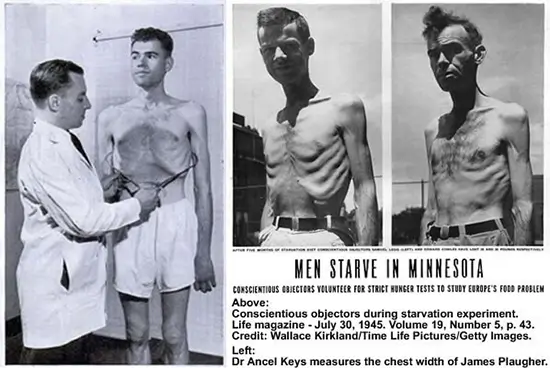
Expérience de Famine au Minnesota : Pourquoi les Régimes Nous Font Grossir. La Psychologie de la Faim.
L'une des premières études scientifiques sur les effets de la faim sur l'esprit a été observée dans une étude connue sous le nom de Minnesota Starvation Experiment réalisée par l'Université du Minnesota en 1944.
Antioxydants Choix de l'éditeur ORAC
Comprendre les Valeurs ORAC : La Teneur en Antioxydants des Aliments
Lorsque votre principale source d'antioxydants est le café, vous savez que vous avez un sérieux problème.
Dernières Nouvelles de PubMed, #alimentation végétale –
- Mediterranean Diet Can Reduce Fat Accumulation and Obesity Progression Through Action of Plant Bioactive Moleculespar Paola Sportiello le mai 13, 2026
Obesity is a multifactorial disease associated with a chronic imbalance between energy intake and energy consumption, as well as the ingestion of high-fat foods. It is widely reported that the Mediterranean Diet (MD), a dietary regimen rich in vegetables, fruits, fiber and complex polyunsaturated lipids, can positively act on obesity onset. These aliments contain bioactive molecules that exert beneficial effects on two traits often associated with obesity: lipid accumulation and imbalance in…
- Effects of Microalgae-Based Nutraceuticals on Muscle Composition and Intestinal Function in Juvenile Gilthead Seabream Fed Plant Protein-Based Dietspar Alba Galafat le mai 13, 2026
This study evaluated the effects of dietary fortification of high plant protein aquafeeds with two microalgae-based functional ingredients on growth, muscle composition, oxidative status, digestive function, and intestinal morphology in juvenile Sparus aurata with an average body weight of 28.4 g. Four diets were tested: a control with high fishmeal and fish oil (CTF), a plant-based diet containing 5% fishmeal and 5% fish oil (CTV), and two CTV diets supplemented with 1% LB-IMMUNOboost (IB10) […]
- The Mediterranean Diet and Cardiovascular Protection: Biochemical Mechanisms with Emphasis on Platelet-Activating Factorpar Paraskevi Detopoulou le mai 13, 2026
Landmark epidemiological studies and clinical trials, such as the Seven Countries Study, the Lyon Diet Heart Study, the PREDIMED Study and the CORDIOPREV Study, have shown significant reductions in cardiovascular events in those following the Mediterranean diet (MD). The aim of the present work is to summarize the most robust available evidence and the major biological pathways underlying the protective effects of the MD, with particular emphasis on the role of PAF inhibitors. […]
- Diet-Dependent Chemical Profiling and Bioactivity of Otala tingitana Mucus: Antibacterial Activity, Antioxidant Capacity, and In Vivo Wound-Healing Effectspar Abdelmajid El Khayari le mai 13, 2026
Snail mucus is increasingly investigated as a biologically compatible source of multifunctional biomolecules for pharmaceutical and dermatological use. However, the chemical profile and biological activities of mucus from the Moroccan endemic terrestrial snail Otala tingitana remain poorly characterized. In addition, the influence of heliciculture diet on the composition and functional properties of the mucus remains unclear. Here, O. tingitana was reared for 140 days under controlled […]
- The Therapeutic Potential of Polyphenols in Modulating Barrier Lipids, Microbiome Interactions, and Inflammatory Pathways in Atopic Dermatitispar Karolina Blady le mai 13, 2026
Atopic dermatitis (AD) is a chronic inflammatory skin disease with a complex pathogenesis involving epidermal barrier dysfunction, microbiome dysbiosis, and immune dysregulation. Despite significant advances in therapy, including biologics and targeted treatments, their use may be limited by adverse effects, highlighting the need for safe adjunctive strategies. Polyphenols are naturally occurring bioactive compounds that are abundant in plant-based foods and are known for their…
- The Role of Microbiome and Diet on Disease Activity and Immune-Inflammatory Status in Rheumatoid Arthritispar Aleksandra Rodziewicz le mai 13, 2026
Rheumatoid arthritis (RA) is a chronic inflammatory disease of autoimmune background and unknown etiology. The importance of genetic factors in RA development is well-established. Environmental factors have also been extensively researched in relation to risk of RA and managing its symptoms. Smoking, physical activity, diet, and gut microbiota are considered to be the most essential modifiable factors in RA. Among dietary interventions, the most researched is Mediterranean diet, […]