







Binge Eating Störung- Die Psychologie des Hungers
In der Natur gibt es weder raffinierten Zucker noch Fett. Unser Gehirn war noch nie einer Kombination aus beidem gleichzeitig ausgesetzt gewesen, die uns zu einer Essattacke zwang.
Milos Pokimica
Geschrieben von: Milos Pokimica
Medizinisch Begutachtet Von: Dr. Xiùying Wáng, M.D.
Aktualisiert 12. Oktober 2023Essen zum Vergnügen ist nichts Neues. Binge-Eating-Störung ist nichts Neues. Die Fähigkeit, überschüssige Nahrung zu sich zu nehmen, ist.
Die Binge-Eating-Störung (BED) ist eine Form der Essstörung, die mittlerweile offiziell als Diagnose anerkannt ist. Fast 2 % der Weltbevölkerung sind davon betroffen und können zu weiteren ernährungsbedingten Gesundheitsproblemen wie hohem Cholesterinspiegel und Diabetes führen.
Bei Fütter- und Essstörungen geht es nicht nur um das Essen, weshalb sie zu den psychiatrischen Störungen zählen. Menschen entwickeln sie normalerweise, um mit einem tieferen Problem oder einer anderen psychischen Erkrankung umzugehen, wie z Angst oder Depression. Die häufigste Form der Essstörung in den Vereinigten Staaten ist die Binge-Eating-Störung. Menschen, die an einer Binge-Eating-Störung leiden, haben häufig das Gefühl, die Kontrolle zu verlieren und große Mengen an Nahrungsmitteln auf einmal zu sich zu nehmen (sogenanntes Binge-Eating). Menschen mit Binge-Eating-Störung erbrechen im Gegensatz zu Menschen mit anderen Essstörungen ihr Essen nach dem Binge-Eating nicht. Untersuchungen zufolge leiden Männer und Frauen zu gleichen Teilen an einer Binge-Eating-Störung.
Übermäßiges Essen ist ein natürlicher Teil des Menschseins; Wir können in sozialen Situationen (z. B. beim Weihnachtsessen) oder alleine (z. B. bei einem Abend mit Netflix und Essen zum Mitnehmen) zu viel essen. Übermäßiges Essen liegt dann vor, wenn eine Person freiwillig oder aus Versehen so viel isst, dass sie nicht mehr angenehm satt ist. Wir essen möglicherweise zu viel, wenn Essen vorhanden ist, wenn das Essen, das wir essen, angenehm ist, wenn wir gelangweilt oder abgelenkt sind oder wenn es uns beruhigt oder tröstet (z. B. wenn wir uns traurig fühlen, überfordert sind oder nach einem anstrengenden Tag).
Ein Essanfall unterscheidet sich von übermäßigem Essen und kommt weitaus häufiger vor. Es ist das starke Verlangen, zu viel zu essen, das im Laufe der Zeit immer wieder auftritt, begleitet von Gefühlen der Scham, der Schuld und der Unkontrolliertheit. Essattacken sind äußerst belastend und können die Fähigkeit einer Person beeinträchtigen, vollständig an allen Aspekten des Lebens teilzunehmen (z. B. Arbeit oder Schule, Freizeitaktivitäten, soziale Kontakte und Beziehungen).
Von einer Binge-Eating-Störung spricht man, wenn beim Essattacken mindestens drei der folgenden Symptome auftreten:
- Essen Sie schneller als gewöhnlich
- Essen bis zum unangenehmen Sättigungsgefühl
- Große Mengen essen, wenn man keinen Hunger hat
- Alleine essen, um Peinlichkeiten zu vermeiden
- Fühlen Sie sich danach angewidert, deprimiert oder schuldig
Die Binge-Eating-Störung ist eine Sucht wie jede andere Sucht, nur dass es sich in diesem Fall bei der illegalen Substanz um äußerst schmackhaftes Essen handelt. Dies ist eigentlich eine Sucht, die wir alle haben, aber bei manchen Menschen kann sie sich nicht nur in Fettleibigkeit, sondern auch in Essattacken äußern. Um diese Sucht zu verstehen, müssen wir verstehen, wie sich unser Gehirn entwickelt hat, und verstehen, dass wir heute im evolutionären Sinne schlecht an unsere Umwelt angepasst sind.
In der Natur gibt es weder freien Zucker noch freies Fett. Energie wird in komplexen Vollwertpaketen und in der einen oder anderen Form gespeichert. Nüsse und Samen speichern ihre Energie in Form von Fett und Getreide beispielsweise in Form von komplexen Zuckern oder Kohlenhydraten, außerdem enthalten sie Ballaststoffe und andere Stoffe. Unser Gehirn war noch nie dem ausgesetzt gewesen raffinierter Zucker oder Fett, und vor allem noch nie einer Kombination aus beiden in hohen Dosen auf einmal ausgesetzt gewesen. Wenn wir beispielsweise Eis oder Milchschokolade essen, haben wir eine Zucker-Fett-Kombination, die es in der Natur nicht gibt. Was im Gehirn passiert, ist das Gleiche, was passiert, wenn man Crack-Kokain inhaliert.
Crack-Kokain selbst ist ein raffiniertes Produkt. Kokain kommt natürlicherweise nur in der Kokapflanze vor. Man kann auf diesem hohen Niveau nicht high werden, wenn man die Blätter kaut, wie es Indianerstämme tun. Es ist ein traditionelles Stimulans zur Bekämpfung von Hunger, Müdigkeit und Durst.
Wenn wir jedoch das Kokain, den Zucker oder das Fett extrahieren oder mit anderen Worten raffinieren, ist das eine andere Sache. Wir können Mohnsamen essen, so viel wir wollen, aber wenn wir das Opium raffinieren und in die Vene spritzen oder den Mohntee trinken, dann kommt der magische Drache. Bei typischen Untersuchungen zu Hunger und Gewichtsregulierung lag der Schwerpunkt auf dem sogenannten metabolischen oder homöostatischen Hunger. Stoffwechselhunger wird durch echte physiologische Notwendigkeiten angetrieben und wird am häufigsten mit dem Knurren eines leeren Magens identifiziert. In den 1980er Jahren hatten Forscher alle wichtigen Hormone und neuronalen Verbindungen identifiziert, die für den Stoffwechselhunger verantwortlich sind.
In den späten 1990er Jahren begannen bildgebende Untersuchungen des Gehirns und Experimente mit Nagetieren, einen zweiten, bisher unbekannten biologischen Signalweg aufzudecken. Dieser Weg lag dem Prozess des Essens zum Vergnügen zugrunde. Wie ich bereits im Fall von Fettleibigkeit geschrieben habe, wird das Standardregulierungssystem dem Gehirn mitteilen, dass wir Fettdepots für einen längeren Zeitraum gespeichert haben und dass wir wenig Hunger ertragen können. Übermäßiges Essen ist eine Form der Drogensucht.
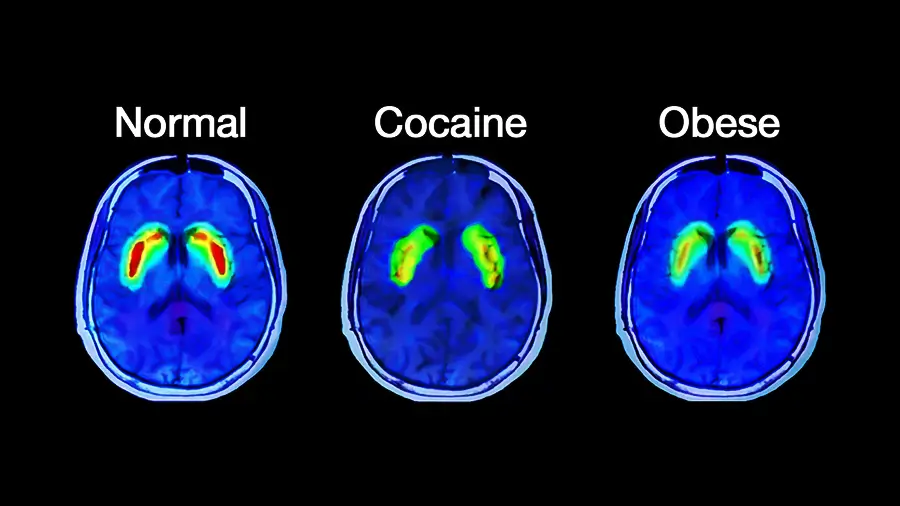
Es wurde festgestellt, dass extrem süße oder fetthaltige Lebensmittel, die wir heute haben, aber in der Natur nicht vorkommen, den Belohnungskreislauf des Gehirns auf die gleiche Weise anregen, wie es Kokain und Glücksspiel bewirken können. Schon der bloße Anblick des Essens löst eine Reaktion des Gehirns aus. Sobald diese Nahrung auf die Zunge trifft, senden die Geschmacksknospen Signale an verschiedene Bereiche des Gehirns. Dies führt zu einer Reaktion, die die Freisetzung des neurochemischen Dopamins auslöst. Häufiger übermäßiger Verzehr sehr schmackhafter Nahrungsmittel sättigt das Kleinhirn mit einer erheblichen Menge Dopamin, was das Gehirn dazu zwingt, sich letztendlich anzupassen, indem es sich selbst desensibilisiert und die Anzahl der zellulären Rezeptoren verringert, die die Neurochemikalie erkennen und darauf reagieren.
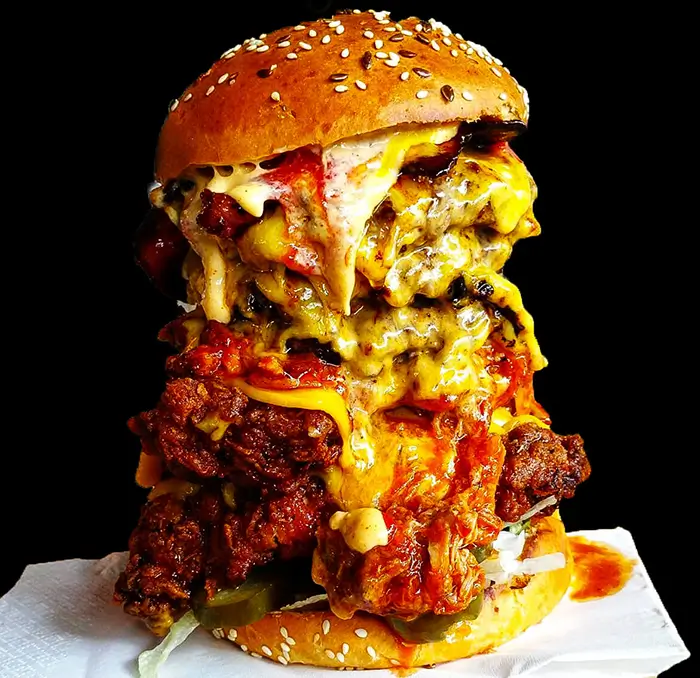
Ein hoher und konstanter Dopaminspiegel ist eine übermäßige Reizform, die als übernatürliche Reize bezeichnet wird. Es ist ein Begriff, den Evolutionsbiologen verwenden, um den Reiz darzustellen, der eine Reaktion hervorruft, die bedeutsamer ist als der Reiz, für den er sich entwickelt hat, selbst wenn er künstlich ist. Der Nahrungsmittelindustrie nutzt es ständig und fast auf jede erdenkliche Art und Weise. Sie versuchen sogar, emotionale Reaktionen und Gefühle sozialer Akzeptanz und Wohlbefinden mit übernatürlichen Reizen zu verknüpfen.
Infolgedessen kann es bei Menschen, die Widerstand aufbauen, tatsächlich dazu kommen, sich zu ernähren, als ein Prozess der Erinnerung oder sogar der Aufrechterhaltung eines Gefühls des Wohlbefindens. Dies ist möglicherweise der Grund, warum es auch zu einer Herunterregulierung der Leptinrezeptoren im Gehirn kommt.
Von 2007 bis 2011 wurde an der Universität Göteborg in Schweden eine Reihe von Forschungsarbeiten durchgeführt. Sie bewiesen, dass die Ausschüttung von Ghrelin (dem Hungerhormon) durch den Bauch die Ausschüttung von Dopamin im Belohnungskreislauf des Gehirns sofort steigert (Anderberg et al., 2016). Dies ist eine bedeutende Erkenntnis. Sie entdeckten auch, dass Medikamente, die die Bindung von Ghrelin an Neuronen verhindern, die Tendenz zu übermäßigem Essen bei übergewichtigen Menschen eindämmen.
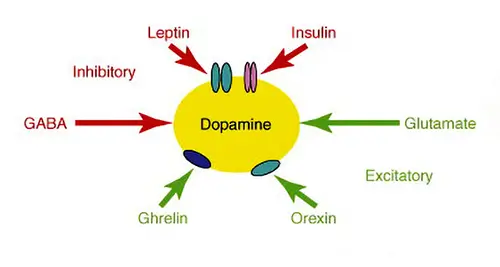
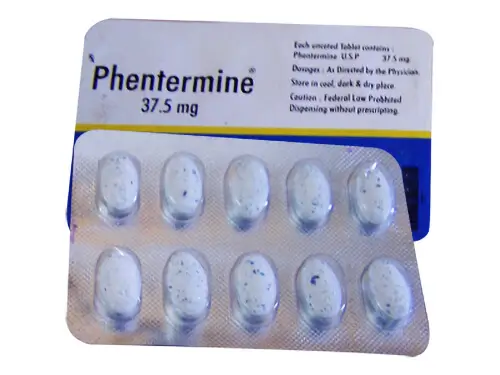
Unter normalen Bedingungen unterdrücken Leptin und Insulin die Freisetzung von Dopamin. Theoretisch sollte dies das Genussgefühl im weiteren Verlauf einer Mahlzeit verringern. Aktuelle Studien an Nagetieren legen nahe, dass das Gehirn nicht mehr auf diese Hormone reagiert, wenn die Menge an Fettgewebe im Körper zunimmt (Massadi et al., 2019). So sorgt fortgesetztes Essen dafür, dass das Gehirn mit Dopamin überschwemmt wird, auch wenn die Lustschwelle weiter steigt. Eine Form der Fehlanpassung an unsere aktuelle Umgebung und Art zu essen und zu leben. Wenn wir die Reize von Nahrung auf Kokain oder Nikotin oder Koffein umstellen, können wir den Hungertrieb unterdrücken. Alternativ auch umgekehrt. Wenn wir mit dem Rauchen aufhören, steigt der Appetit. Selbst bei präkolumbianischen Ureinwohnern Amerikas wurde Tabakkonsum mit einer hungerunterdrückenden Wirkung in Verbindung gebracht. Zigarettenrauchen zur Gewichtsreduktion ist möglicherweise keine gute Idee, da wir eine Sucht gegen eine andere austauschen. Sie können extrahiertes Nikotin in Produkten wie Kaugummi oder elektronischen Zigaretten mit einer Koffeinkombination ausprobieren. Es gibt beispielsweise bestimmte Medikamente, die auf das Hungerzentrum im Gehirn abzielen, um den Appetit zu senken, wie Belviq, Contrave, Saxenda, Phentermine und Qsymia. Phentermin ist ein Amphetamin. Normale „Geschwindigkeit“ kann auch funktionieren. Das krampflösende Medikament Topamax gegen Epilepsie und Migräne senkt den Appetit und ist zur Behandlung von Essattacken zugelassen. Wenn alles andere fehlschlägt, sind bisher sieben Operationen zur Gewichtsreduktion registriert, vom Schneiden und Heften bis hin zur Ballonoperation. Alles wegen der übernatürlichen Reize raffinierter Lebensmittel.
Es gibt eine Gruppe sensibler Menschen, die übermäßig auf köstliche Speisen reagieren. Sie hätten eine übermäßige Reaktion im Belohnungskreislauf des Gehirns, die ihre Gehirnchemie dramatisch verändern würde. Ein überstimulierter Belohnungskreislauf des Gehirns setzt jeden Selbstkontrollmechanismus außer Kraft, so dass die Willenskraft selten oder nie ausreicht, um sie dazu zu zwingen, sich dem Verzehr dieser Lebensmittel zu widersetzen, sobald sie in der Nähe sind, was zu einer Essattacke führt. Forscher am Scripps Research Institute in Jupiter, Florida, fanden heraus, dass bei Ratten, denen uneingeschränkter Zugang zu kalorienreichen Nahrungsmitteln gewährt wurde, im Gehirn neurologische Veränderungen im Belohnungskreislauf auftraten (Johnson et al., 2010).
Es war die erste Studie, die zeigte, dass der neurologische Mechanismus, der Menschen in die Drogenabhängigkeit treibt, auch den Zwang zu übermäßigem Essen antreibt und Menschen in Fettleibigkeit treibt.
Kalorienreiche Lebensmittel waren in diesem Fall Wurst, Speck, Käsekuchen und Schokolade. Einige der Ratten hatten nur eine Stunde am Tag Zeit, sich an fettreichem Futter zu erfreuen, während andere 24 Stunden am Tag uneingeschränkten Zugang hatten. Beide Gruppen erhielten Zugang zu einem typischen, gesunden Futter für Laborratten. Die eine Gruppe, die über unbegrenzten Zugang zu kalorienreichen Lebensmitteln verfügte, aß wenig bis gar keine der üblichen milden kalorienarmen Chow-Alternativen. Sie wurden schnell fettleibig, weil sie so viel aßen, wie sie konnten, etwa doppelt so viele Kalorien wie die Kontrollgruppe.
Die große Überraschung war, dass selbst die Ratten, die nur begrenzten Zugang zu Junkfood hatten, ihr Bestes taten, um mitzuhalten. Während dieser einen Stunde aßen sie ununterbrochen so viel sie konnten. Sie schafften es, im Laufe dieser einzigen Stunde pro Tag durchschnittlich 66 % ihrer täglichen Kalorien zu sich zu nehmen, und entwickelten schnell ein Muster einer zwanghaften Essstörung. ICHEs wurde auch beobachtet, dass eine Gruppe fettleibiger Ratten mit uneingeschränktem Zugang zu Junkfood eine deutlich erhöhte Belohnungsschwelle aufwies. Das Gleiche passiert mit der Drogenabhängigkeit. Nachdem gezeigt wurde, dass fettleibige Ratten ein eindeutig suchtähnliches Verhalten bei der Nahrungssuche zeigten und dass eine erhöhte Schwelle für Belohnungsniveaus sie dazu zwingt, immer mehr zu versuchen, das gleiche Belohnungsniveau zu erreichen, untersuchten die Forscher die zugrunde liegenden neurologischen Mechanismen, die für diese Veränderungen verantwortlich sind.
Es gibt einen spezifischen Rezeptor im Gehirn, der bekanntermaßen eine wichtige Rolle bei der Anfälligkeit für Drogenabhängigkeit spielt, nämlich den Dopamin-D2-Rezeptor. Im Gehirn gibt es Neurotransmitter wie Dopamin. Dopamin ist eine Wohlfühlchemikalie, die freigesetzt wird, wenn wir ein angenehmes Erlebnis wie Sex oder Essen haben. Der D2-Rezeptor reagiert auf Dopamin. Kokain zum Beispiel ist eine Droge, die den Dopaminspiegel im Gehirn erhöht, indem sie dessen Ausschüttung blockiert. Eine Überstimulation der Dopaminrezeptoren durch übernatürliche Reize führt schließlich zu einer neuronalen Anpassung in Form einer Herunterregulierung der Rezeptoren. Auch dies wurde in der Studie gezeigt. Die Spiegel der D2-Dopaminrezeptoren waren im Gehirn fettleibiger Tiere deutlich reduziert. Das Gleiche passiert auch Drogenabhängigen. Um den Einfluss von Dopamin auf das Fressverhalten von Ratten zu bestimmen, wurde ein Virus in die Gehirne einer Testgruppe von Tieren eingeführt, um deren Dopamin-D2-Rezeptoren auszuschalten. Suchtähnliches Verhalten trat fast augenblicklich auf. Am nächsten Tag veränderten sich ihre Gehirne in einen Zustand, der mit dem eines Tieres übereinstimmte, das mehrere Wochen lang zu viel gefressen hatte. Außerdem waren die Tiere in ihrem Essverhalten zwanghaft geworden und entwickelten Essattacken. Die Forschung, deren Abschluss drei Jahre in Anspruch nahm, bestätigt die süchtig machenden Eigenschaften von Junk Food.
Essattacken bei Tieren haben Lipide und bei Tieren Essattacken von Zuckern unterschiedliche physiologische Wirkungen, die stärkste Wirkung kann jedoch durch die Kombination neuronaler Wirkungen dieser beiden Inhaltsstoffe erzielt werden. Tatsächlich schien das am meisten gewünschte Futter für die Laborratten ein Lebensmittel mit der höchsten Kombination aus Fett und Zucker zu sein: Käsekuchen.
Verweise:
- Anderberg, RH, Hansson, C., Fenander, M., Richard, JE, Dickson, SL, Nissbrandt, H., Bergquist, F. & Skibicka, KP (2016). Das aus dem Magen stammende Hormon Ghrelin verstärkt impulsives Verhalten. Neuropsychopharmacology: offizielle Veröffentlichung des American College of Neuropsychopharmacology, 41(5), 1199–1209. https://doi.org/10.1038/npp.2015.297
- Al Massadi, O., Nogueiras, R., Dieguez, C., & Girault, JA (2019). Ghrelin und Futterbelohnung. Neuropharmakologie, 148, 131–138. https://doi.org/10.1016/j.neuropharm.2019.01.001
- Johnson, PM, & Kenny, PJ (2010). Dopamin-D2-Rezeptoren bei suchtähnlicher Belohnungsstörung und zwanghaftem Essen bei adipösen Ratten. Naturneurowissenschaften, 13(5), 635–641. https://doi.org/10.1038/nn.2519
- Palmiter RD (2007). Ist Dopamin ein physiologisch relevanter Mediator des Fressverhaltens? Trends in den Neurowissenschaften, 30(8), 375–381. https://doi.org/10.1016/j.tins.2007.06.004
- Obradovic, M., Sudar-Milovanovic, E., Soskic, S., Essack, M., Arya, S., Stewart, AJ, Gojobori, T. & Isenovic, ER (2021). Leptin und Fettleibigkeit: Rolle und klinische Implikationen. Grenzen in der Endokrinologie, 12, 585887. https://doi.org/10.3389/fendo.2021.585887
- Crujeiras, AB, Carreira, MC, Cabia, B., Andrade, S., Amil, M., & Casanueva, FF (2015). Leptinresistenz bei Fettleibigkeit: Eine epigenetische Landschaft. Biowissenschaften, 140, 57–63. https://doi.org/10.1016/j.lfs.2015.05.003
- Peng, J., Yin, L. & Wang, X. (2021). Zentrale und periphere Leptinresistenz bei Fettleibigkeit und Verbesserungen durch körperliche Betätigung. Hormone und Verhalten, 133, 105006. https://doi.org/10.1016/j.yhbeh.2021.105006
Zusammenhängende Posts

Haben Sie Fragen zum Thema Ernährung und Gesundheit?
Ich würde gerne von Ihnen hören und sie in meinem nächsten Beitrag beantworten. Ich schätze Ihren Beitrag und Ihre Meinung und freue mich darauf, bald von Ihnen zu hören. Ich lade Sie auch ein zu Folgen Sie uns auf Facebook, Instagram und Pinterest für weitere Inhalte zu Ernährung und Gesundheit. Sie können dort einen Kommentar hinterlassen und sich mit anderen Gesundheitsbegeisterten austauschen, Ihre Tipps und Erfahrungen teilen und Unterstützung und Ermutigung von unserem Team und unserer Community erhalten.
Ich hoffe, dass dieser Beitrag für Sie informativ und unterhaltsam war und dass Sie bereit sind, die gewonnenen Erkenntnisse anzuwenden. Wenn Sie diesen Beitrag hilfreich fanden, dann es teilen mit Ihren Freunden und Familienangehörigen, die ebenfalls davon profitieren könnten. Man weiß nie, wer auf seinem Weg zur Gesundheit vielleicht etwas Anleitung und Unterstützung braucht.
– Das könnte Ihnen auch gefallen –

Allopathische Medizin- Die Psychologie der Angst
Diabetes Ursachen und Raffinierte Kohlenhydrate- Das Vegane Argument
Kann Man Pilze Roh Essen: Gesundheitsrisiken, Ernährung und Sicherheit
Entzündung und Ernährung- Veganes Argument
Destilliertes Wasser Zum Trinken - Entgiftungshilfe Oder Tödliches Gift?
Fischtoxizität- Das Giftigste Fleisch
Künstliche Süßstoffe- Die Grundlagen Verstehen

Langlebigkeit: Die Rate der Lebenstheorie

Über Ernährung Lernen

Milos Pokimica ist Doktor der Naturheilkunde, klinischer Ernährungsberater, Autor für medizinische Gesundheit und Ernährung sowie Berater für Ernährungswissenschaften. Autor der Buchreihe Zum Veganer werden? Rückblick auf die Wissenschafter betreibt auch das Natürliche Gesundheit website GoVeganWay.com
Medizinischer Haftungsausschluss
GoVeganWay.com bietet Ihnen Rezensionen der neuesten Ernährungs- und Gesundheitsforschung. Die bereitgestellten Informationen stellen die persönliche Meinung des Autors dar und sind weder als Ersatz für eine professionelle medizinische Beratung, Diagnose oder Behandlung gedacht noch implizit. Die bereitgestellten Informationen dienen ausschließlich Informationszwecken und sollen nicht als Ersatz für die Beratung, Diagnose und/oder medizinische Behandlung durch einen qualifizierten Arzt oder Gesundheitsdienstleister dienen.Ignorieren Sie niemals professionellen medizinischen Rat oder verzögern Sie die Suche nach medizinischer Behandlung, weil Sie etwas auf GoVeganWay.com gelesen oder über GoVeganWay.com darauf zugegriffen haben
Nehmen Sie NIEMALS Änderungen im Lebensstil oder irgendwelche Änderungen vor, die eine Folge von etwas sind, das Sie auf GoVeganWay.com gelesen haben, bevor Sie einen zugelassenen Arzt konsultieren.
Bei einem medizinischen Notfall rufen Sie sofort einen Arzt oder die Notrufnummer 911 an. GoVeganWay.com empfiehlt oder unterstützt keine bestimmten Gruppen, Organisationen, Tests, Ärzte, Produkte, Verfahren, Meinungen oder andere Informationen, die darin erwähnt werden könnten.
Herausgeber-Tipps –
Krebs Auswahl des Herausgebers Phytochemikalien
Antikrebskraft von Obst und Gemüse: In Vivo und Klinische Beweise
Einige Pflanzenextrakte konkurrieren mit führenden Chemotherapeutika und wirken gleichzeitig auf mehrere verschiedene Arten von Krebszellen.
Antioxidantien Auswahl des Herausgebers ORAC
Ätherische Öle als Antioxidative Nahrungsergänzungsmittel: Regeln und Strategien
Ätherische Öle in Lebensmittelqualität können eine praktische und verbraucherfreundliche Strategie zur Optimierung des Antioxidantienwerts und der ORAC-Werte unserer Ernährung sein.
Antioxidantien Auswahl des Herausgebers ORAC
Antioxidantienreiche Ernährung: Allgemeine Regeln und Strategien
Es gibt einfache und kostengünstige Strategien zur Optimierung des antioxidativen Wertes unserer Ernährung.
Antioxidantien Auswahl des Herausgebers ORAC
ORAC-Werte Verstehen: Antioxidantienspiegel in Lebensmitteln
Wenn Ihre Hauptquelle für Antioxidantien Kaffee ist, wissen Sie, dass Sie ein ernstes Problem haben.

Antioxidantien Auswahl des Herausgebers ORAC
Astaxanthin Vorteile: Das Stärkste Natürliche Antioxidans der Welt
Astaxanthin ist das stärkste natürliche und universelle Antioxidans (sowohl öl- als auch wasserlöslich), das der Wissenschaft bekannt ist. Es reichert sich im Gewebe an und kann sich niemals in ein Prooxidans verwandeln.
Antioxidantien Auswahl des Herausgebers ORAC Phytochemikalien
Antioxidantien: Die Grundlagen Verstehen
Tierische Produkte enthalten keine sekundären Pflanzenstoffe oder Antioxidantien. Pflanzliche Lebensmittel enthalten im Durchschnitt mehr als 60-mal so viele Antioxidantien wie tierische Lebensmittel.
Auswahl des Herausgebers Vegane Diät
Nährstoffmangel Bei Veganer Ernährung: Präventionsstrategien
Es gibt neun bevölkerungsweit verbreitete Nährstoffmängel, die Menschen betreffen, die sich pflanzlich ernähren. Wenn einige Mängel nicht rechtzeitig behoben werden, haben sie schreckliche und nicht behandelbare Folgen.
Auswahl des Herausgebers Optimale Ernährung
Mikronährstoffmangel in der Amerikanischen Standardernährung: Strategien zur Optimierung
Das Nährstoffprofil unserer modernen Ernährung mit Fleisch, Zucker und verarbeiteten Lebensmitteln ist völlig unvereinbar mit unserer Evolution und führt zu schwerem Mikronährstoffmangel.
Auswahl des Herausgebers Phytochemikalien
Phytochemikalien: Die Grundlagen Verstehen
Jeder einzelne existierende sekundäre Pflanzenstoff hat eine biologische Wirkung im menschlichen Körper. Jedes einzelne aus Millionen verschiedener sekundärer Pflanzenstoffe.

Auswahl des Herausgebers Milch Optimale Ernährung
Milch und Milchprodukte: Gesundheitsrisikokorrelationen
Bekannte Zusammenhänge mit Milch und Milchkonsum sind Unfruchtbarkeit, Eierstock- und Brustkrebs, Leukämie, Diabetes Typ 1, Autismus, Arteriosklerose, Katarakt, rheumatoide Arthritis, Multiple Sklerose, Hyperaktivität, Stauung, Pickel und mehr …
Krebs Auswahl des Herausgebers Eiweiß
Komplettes Protein: IGF-1-Signalisierung bei der Krebsentstehung
Wenn Sie tierisches Eiweiß essen, ist die Wahrscheinlichkeit, an allen Krebsarten zu erkranken, viermal höher. Wenn Sie rauchen, besteht ein vierfach erhöhtes Risiko, an Lungenkrebs zu erkranken.

Krebs Auswahl des Herausgebers Eiweiß
Die Anatomie von Krebs - Gesundheitsrisikokorrelationen
Etwa 2 % der Krebserkrankungen werden in der Medizin als rein genetisch bedingt angesehen. Das gleiche Verbreitungsgebiet wie im Tierreich. Dir wurde nicht die ganze Wahrheit gesagt.
Milos Pokimica ist Autor für Gesundheit und Ernährung sowie Berater für Ernährungswissenschaften. Er ist Autor einer Buchreihe. Zum Veganer werden? Rückblick auf die Wissenschafter betreibt auch das Natürliche Gesundheit website GoVeganWay.com
Neueste Artikel –

Kalorienbeschränkung Langlebigkeit
Wie Man Fastet: Fasten-Lebensmittel, Die Die Autophagie Nicht Stören
Autophagie. Haben Sie sich jemals gefragt, was mit den Zellen in Ihrem Körper passiert, wenn sie sterben oder beschädigt werden? Häufen sie sich einfach an und verursachen Probleme, oder werden sie irgendwie entsorgt? Die Antwort ist, dass Ihr Körper...

Zahngesundheit Verhütung
Süßigkeiten Zahnempfindlichkeit & Schmerz: Schnelle Abhilfe & Dauerhafte Lösung
Eine schnelle und einfache Lösung zur Schmerzlinderung ist ätherisches Nelkenöl, ein starkes Antioxidans und Schmerzmittel, das bei Zahnfleischerkrankungen und Zahnschmerzen helfen kann.

Bohnen
Grüne Bohnen: Ernährung und Gesundheitliche Vorteile
Grüne Bohnen sind kalorienarm und reich an natürlichen Stoffen, die Ihnen helfen können, Ihren Blutzucker zu kontrollieren, Ihren Cholesterinspiegel zu senken und freie Radikale abzuwehren.
Rohkostdiät Vegane Diät
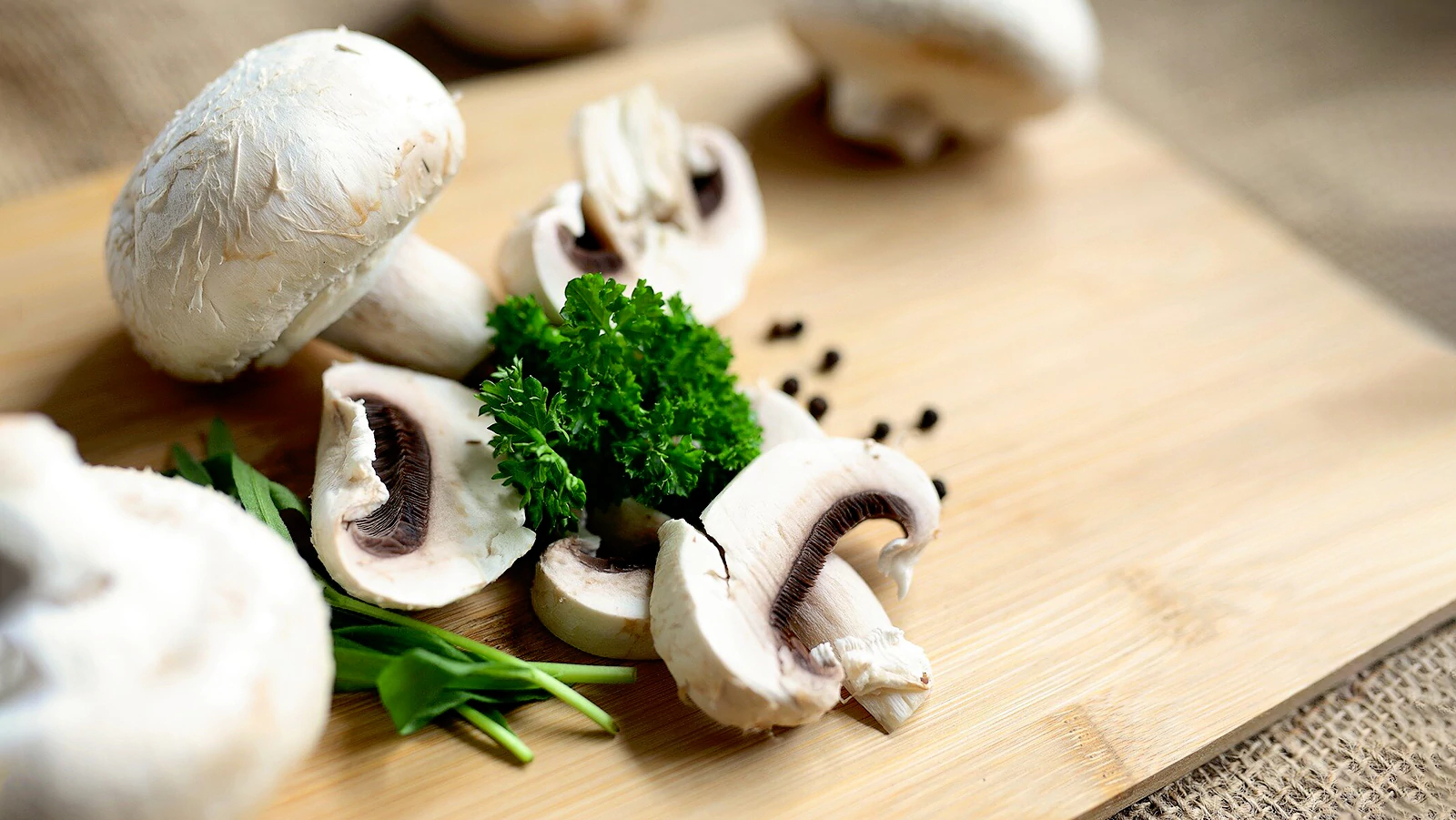
Kann Man Pilze Roh Essen: Gesundheitsrisiken, Ernährung und Sicherheit
Pilze enthalten hitzeempfindliche Giftstoffe wie Hydrazin oder Agaritin und Zellwände aus Chitin, die vom Menschen nicht gut verdaut werden können.
Vegane Diät
Sind Fische Tiere? Eine kulturelle Perspektive
In einigen Kulturen wird Fischfleisch nicht als Fleisch betrachtet, und Fisch ist sogar während des Fastens erlaubt.

Zahngesundheit Verhütung
Hausgemachte Natürliche Mundspülung: Bewährt, Stärker und Weniger Giftig
Selbstgemachtes natürliches Mundwasser ist stärker als Chlorhexidin, weniger giftig und kann beim Verschlucken zu Übelkeit führen, hat aber auch einen hohen ORAC-Wert.
Zahngesundheit Verhütung
Wie Man Karies Stoppt: Symptome, Ursachen und Prävention
Der Zuckerkonsum ist die Hauptursache für Karies und Zahnfäule, verbunden mit einem Mangel an Mineralien, insbesondere Magnesium, Zink, Kupfer und Spurenelementen.
Antioxidantien Superlebensmittel
Amla: Bewährte Vorteile, Ernährung und Klinische Bedeutung
Amla ist eines der stärksten Antioxidantien der Welt mit einem ORAC-Wert von 261.530. Sie ist eine reichhaltige Quelle von sekundären Pflanzenstoffen, die verschiedene gesundheitliche Vorteile haben.
Top-Gesundheitsnachrichten – ScienceDaily
- USC scientists discover how to create a never-ending supply of cancer-fighting cellsam Oktober 16, 2026
USC scientists have discovered a way to create a potentially renewable supply of genetically engineered immune cells that can attack cancer and strengthen the body’s natural defenses. By growing and modifying immature immune cells rather than mature ones, researchers developed a system that can continuously produce tumor-fighting cells inside the body.
- Yale scientists discover how stress changes the brain to make memories strongeram Oktober 16, 2026
Yale scientists have uncovered how the stress hormone cortisol helps the brain turn emotional experiences into stronger, longer-lasting memories. The discovery reveals that stress can reshape communication between brain networks involved in emotion and memory, potentially explaining why certain moments are so difficult to forget.
- A protein that fuels cancer could also be the key to fighting itam Oktober 16, 2026
Scientists have discovered how to turn a protein that normally fuels cancer growth into a weapon against it. By activating PPARD in immune cells, researchers made them better at burning fat and attacking tumors, slowing or stopping cancer growth in laboratory experiments. The approach showed promise against colorectal, breast, and ovarian cancers, as well as melanoma.
- Scientists discover how exercise reverses muscle agingam Oktober 16, 2026
Scientists have uncovered a hidden biological mechanism that helps explain how exercise can reverse some of the damage caused by muscle aging. The key is a gene called DEAF1, which becomes overactive with age and interferes with the muscles’ ability to clear damaged proteins and repair themselves. Exercise can help restore this balance, allowing older muscles to rebuild and regain strength, although the benefits may diminish when the system becomes too disrupted.
- Mysterious brain activity under anesthesia challenges what we know about consciousnessam Oktober 15, 2026
Even under general anesthesia, the human brain can analyze language, recognize different types of words, and predict what comes next in a story, according to a surprising discovery by Baylor researchers. The findings challenge our understanding of consciousness and suggest that the unconscious brain is far more capable than scientists previously realized.
- Eating late at night linked to up to 30% higher risk of liver diseaseam Oktober 15, 2026
Eating late at night could be putting your liver at risk, according to a large study led by Oregon Health & Science University. Researchers analyzed data from nearly 200,000 people and found that those who regularly ate after dinner or around bedtime had a 20% to 30% higher risk of liver disease, including fatty liver disease and cirrhosis.
- Scientists discover a surprising danger in smaller cancer cellsam Oktober 15, 2026
Scientists have discovered that unusually small cancer cells carrying extra chromosomes can be far more aggressive than larger ones, growing faster, spreading more readily, and resisting common treatments. The surprising finding could help explain why some tumors are especially dangerous and provide a new way to predict cancer outcomes.
PubMed, #Vegane Diät –
- Common questions and misconceptions about diets: what does the scientific evidence really show?am Oktober 15, 2026
The study of diet and nutrition is often filled with numerous myths and misconceptions. A Google Scholar search of “diets health” yields over 4 million results. This review examines frequently asked questions about diets and dietary habits. These questions include the following: 1) Is a caloric surplus necessary for building skeletal muscle? 2) Is it possible to lose body mass or fat mass without caloric restriction? 3) Is intermittent fasting better than chronic caloric restriction for […]
- Toward consensus on complementary feeding recommendations: findings from a national evidence-informed modified Delphi study in Türkiyeam Oktober 12, 2026
CONCLUSIONS: Integration of quantitative Delphi findings with qualitative thematic analysis revealed that non-consensus primarily stemmed from the practical nuances of clinical execution and contextual adaptation, rather than a fundamental skepticism toward the underlying scientific data. These findings provide an evidence-informed foundation for developing context-sensitive CF recommendations for clinical practice.
- Characterization of nutritional intake in vegan pregnant women and its association on birth weightam Oktober 8, 2026
CONCLUSIONS: Vegan women had a higher rate of SGA than non-vegan women, and this increased risk may be partly related to differences in maternal protein intake and composition. In addition, vegan women had lower dietary intakes of calcium, vitamin B12, vitamin D, DHA, and choline, highlighting these nutrients as important considerations in the nutritional assessment and counseling of pregnant women adhering to a strictly vegan diet.
- Changes in ectopic lipids, insulin sensitivity, and beta cell function after a low-fat vegan diet in adults with type 2 diabetes: a 16-week single-arm clinical trialam Oktober 8, 2026
CONCLUSIONS: On an ad libitum low-fat plant-based (vegan) dietary intervention, the participants with type 2 diabetes experienced reductions in ectopic fat, particularly visceral and hepatocellular fat, improvements in insulin sensitivity, reductions in AGEs, and improvements in beta-cell function.
Zufällige Beiträge –

Krebs Auswahl des Herausgebers Toxizität
Pestizidexposition bei Kindern: Tests Zur Exposition im Wirklichen Leben
Kinder und insbesondere schwangere Frauen sind anfälliger für die Exposition gegenüber Pestiziden. Was wäre das Ergebnis, wenn wir reale Expositionswerte in realen Szenarien analysieren würden?
Auswahl des Herausgebers Fettleibigkeit
Supernormale Stimuli: Binge-Eating-Störung und Appetitregulierung
Wenn wir einen Hamburger sehen, sind das übernatürliche Reize. Urtriebe beeinflussen unser Verhalten und zwingen uns zu einer Binge-Eating-Störung.
Antioxidantien Auswahl des Herausgebers ORAC
Astaxanthin Vorteile: Das Stärkste Natürliche Antioxidans der Welt
Astaxanthin ist das stärkste natürliche und universelle Antioxidans (sowohl öl- als auch wasserlöslich), das der Wissenschaft bekannt ist. Es reichert sich im Gewebe an und kann sich niemals in ein Prooxidans verwandeln.
Krebs Entzündung Toxizität
Gesundheitsrisiken Durch Alkohol- Das „französische Paradoxon“, „der Wein“ und „in Maßen“
Irgendwie glauben wir, dass ein Glas Wein gar nicht so schlecht ist, oder noch schlimmer, wir glauben an den Mythos, dass Alkohol aufgrund der Antioxidantien der Traube die Gesundheit fördert.

Auswahl des Herausgebers Optimale Ernährung Vitamin-D
Vitamin D- Mehr Als Nur Ihre Knochen
Vitamin D ist kein Vitamin. Es handelt sich um ein Prohormon, ein Steroid mit hormonähnlicher Wirkung, das etwa 3 % des menschlichen Genoms reguliert.

Auswahl des Herausgebers Fettleibigkeit Optimale Ernährung
Ursache für Fettleibigkeit: Fehlanpassung Oder Sucht
Was ist die Ursache der Fettleibigkeitsepidemie? Für alles Leben auf der Erde ist Nahrung keine Wahl. Das Schwierigste für das Tier in der Wildnis ist die Gewichtszunahme.
Auswahl des Herausgebers Verhütung Toxizität
Umwelttoxizität- Es Ist Nur Eine Nahrungskette
Unter Umwelttoxizität versteht man die Bioakkumulation von Toxinen. Organismen sind Filter. Aber es gibt noch einen noch schlimmeren Prozess namens Biomagnifikation in der Nahrungskette.
Auswahl des Herausgebers Entzündung Vegane Diät
Entzündung und Ernährung- Veganes Argument
Wir haben uns so entwickelt, dass wir beim Essen eine Menge schützender Antioxidantien erhalten, diese sind jedoch in Fleisch nicht enthalten. Entzündung und Ernährung weisen einen hohen Grad an Korrelation auf.

Auswahl des Herausgebers Fettleibigkeit
Essattacken und Hormonregulation: Emotionaler Hunger
Während unserer gesamten Evolution waren wir wie jede andere Spezies auf diesem Planeten ständig hungrig und auf der Suche nach Nahrung. Übermäßiges Essen ist ein Beispiel für eine Fehlanpassung.
Entzündung Toxizität
Endotoxämie Durch Bakterien in Gekochtem Fleisch- Entzündung und Ernährung
Sind Menschen Allesfresser im eigentlichen anatomischen Sinne? Es gibt einen grundlegenden Unterschied in der Funktionsweise des Verdauungstrakts bei pflanzlichen und fleischfressenden Arten.

Beliebte Beiträge -

Auswahl des Herausgebers Optimale Ernährung
Optimale Menschliche Ernährung - Chronische Krankheiten, Diätkriege und das Veganer-Argument
Unsere natürlichen optimale menschliche Ernährung eine Diät, die unsere hominin-Vorfahren aßen für die letzten 30 Millionen Jahren, nicht anatomisch modernen Menschen in der Steinzeit.
Auswahl des Herausgebers Optimale Ernährung
Verarbeitete Lebensmittel: Die Risiken Verstehen
Verarbeitete Lebensmittel bedeuten, dass etwas aus der ganzen Nahrung entfernt wird, in der Regel Ballaststoffe, und etwas hinzugefügt wird, in der Regel Fett, Zucker, Salz und MSG.

Auswahl des Herausgebers Verhütung Vegane Diät
China Studie- Das Vegane Argument
Eine Studie aus China hat gezeigt, dass es in unentwickelten ländlichen Gemeinden der Welt mit stärkebasierter veganer Ernährung weder Herzkrankheiten noch Krebs oder Diabetes gibt.
Auswahl des Herausgebers Optimale Ernährung Vegane Diät
Ernährungsrichtlinien der WHO- Neue Ernährungspyramide und Unterdrückung der Wissenschaft
Die Ernährungsrichtlinien der WHO empfehlen eine Ernährung mit wenig gesättigten Fettsäuren (tierischem Eiweiß), Zucker und Salz sowie viel Obst und Gemüse als Voraussetzung, um den epidemischen Anstieg chronischer Krankheiten weltweit zu bekämpfen.
Auswahl des Herausgebers Phytochemikalien
Phytochemikalien: Die Grundlagen Verstehen
Jeder einzelne existierende sekundäre Pflanzenstoff hat eine biologische Wirkung im menschlichen Körper. Jedes einzelne aus Millionen verschiedener sekundärer Pflanzenstoffe.

Krebs Auswahl des Herausgebers Toxizität
Pestizide in Lebensmitteln, Exposition in der Amerikanischen Standardnahrung - 80 Prozent aus Fleisch
Die meisten Pestizide und insbesondere Schwermetalle und andere giftige Schadstoffe, die wir aufnehmen, stammen aus Fleisch. Mehr als 80 Prozent der Pestizidbelastung in der amerikanischen Standardernährung stammt aus tierischen Produkten, nicht aus Obst oder Gemüse.
Auswahl des Herausgebers Fettleibigkeit Optimale Ernährung
Ursache für Fettleibigkeit: Fehlanpassung Oder Sucht
Was ist die Ursache der Fettleibigkeitsepidemie? Für alles Leben auf der Erde ist Nahrung keine Wahl. Das Schwierigste für das Tier in der Wildnis ist die Gewichtszunahme.
Diabetes Auswahl des Herausgebers Optimale Ernährung
Raffinierter Zucker: Die Risiken Verstehen
Kinder decken etwa ein Fünftel ihres Gesamtkalorienbedarfs allein aus raffiniertem Zucker. Wenn wir Fett und den Rest nährstoffarmer verarbeiteter Lebensmittel zur Liste hinzufügen, wird das zu einem kompletten Ernährungs-Albtraum.
Antioxidantien Auswahl des Herausgebers ORAC
Antioxidantienreiche Ernährung: Allgemeine Regeln und Strategien
Es gibt einfache und kostengünstige Strategien zur Optimierung des antioxidativen Wertes unserer Ernährung.

Auswahl des Herausgebers Fettleibigkeit
Binge Eating Störung- Die Psychologie des Hungers
In der Natur gibt es weder raffinierten Zucker noch Fett. Unser Gehirn war noch nie einer Kombination aus beidem gleichzeitig ausgesetzt gewesen, die uns zu einer Essattacke zwang.
Neuestes von PubMed, #pflanzliche Ernährung –
- Plant-Based Functional Formulae Mitigate Western Diet-Induced MASLD by Modulating Hepatic Oxidative Stress, Inflammation as Well as Nrf-2/HO-1 and NF-kappaB Gene Expressionvon Rasha S Mohamed am Oktober 16, 2026
Psyllium has long been used to improve satiety and control weight. Leek and dill leaves are abundant in bioactive substances that have been confirmed to have anti-inflammatory and antioxidant properties. Our goal was to assess the hepatoprotective effects of two formulae (dill and psyllium or leek and psyllium) against oxidative stress and inflammatory markers in a metabolic dysfunction-associated steatotic liver disease (MASLD) rat model. Twenty four rats were used in this study. Rats were…
- Bioactive Ingredients in the Mediterranean Diet for Hepatic Health: In Vitro Evaluation of Selected Extracts Against Non-Alcoholic Steatosisvon Valentina Vassallo am Oktober 16, 2026
Natural products derived from the Mediterranean diet have attracted considerable interest as potential drug leads owing to their antioxidant and anti-inflammatory properties, as well as their beneficial effects on metabolic disorders such as non-alcoholic fatty liver disease (NAFLD). This study investigated the individual and combined effects of carvacrol, thymol, basil essential oil, and lycopene in an in vitro HepG2 model of hepatic steatosis. Their antioxidant activity was first confirmed […]
- Dietary Phytochemical Index and Fasting Plasma Glucose in Adults with Type 2 Diabetes: A Cross-Sectional Studyvon Stavroula Maria Konstantopoulou am Oktober 16, 2026
Background/Objectives: Type 2 diabetes mellitus (T2D) is a major public health challenge. Phytochemicals have gained attention for their potential role in glucose regulation. This study aimed to investigate the association between dietary phytochemical intake, assessed using the Dietary Phytochemical Index (DPI), and fasting plasma glucose in adults with established T2D. Methods: A cross-sectional study was conducted among 340 adults with T2D attending the Diabetes Clinic of the General […]
- Toxicological Evaluation of Zingiber purpureum Extract and Its Effects on Gut Microbiota in Zebrafishvon Nisamanee Charoenchon am Oktober 16, 2026
Zingiber purpureum Roscoe (Phlai) is renowned in Southeast Asia for its anti-inflammatory, antioxidant, and antibacterial activities, yet its safety and effects on gut health in vivo are not well characterized. This study investigated the biological effects of ethanolic-soluble Phlai extract (ESPE) in zebrafish (Danio rerio), focusing on chemical marker standardization in phenylbutanoids and cucurminoids, developmental toxicity, gut microbiota investigation, and tissue histopathology. […]
- Trendy, but Are They Safe? Current Popular Diets and Their Use in Inflammatory Bowel Diseases: Narrative Reviewvon Klara Szwarc am Oktober 16, 2026
Inflammatory bowel disease (IBD) arises from the interplay between genetic susceptibility, immune dysregulation, microbiota, and environmental exposures, with diet potentially contributing to both pathogenesis and management. Patients frequently modify their diet independently, often using different strategies during remission and active symptoms. This narrative review synthesises evidence on patient-accessible dietary patterns and selected structured nutritional therapies across five […]
- Promoting the Mediterranean Diet in the Workplace: An Observational Cross-Sectional Studyvon Nicola Magnavita am Oktober 16, 2026
Background/Objectives: The Mediterranean diet (MD) is a set of customs and eating habits developed in countries bordering the Mediterranean Sea thousands of years ago. These habits are frequently proposed as a complement to pharmacological therapies for chronic diseases and could also counteract their onset. This study aimed to investigate adherence to the MD in workers from 22 companies in Latium (Italy) and to evaluate the association of diet with workers’ health. Methods: Workers […]