







Mikronährstoffmangel in der Amerikanischen Standardernährung: Strategien zur Optimierung
Das Nährstoffprofil unserer modernen Ernährung mit Fleisch, Zucker und verarbeiteten Lebensmitteln ist völlig unvereinbar mit unserer Evolution und führt zu schwerem Mikronährstoffmangel.
Milos Pokimica
Geschrieben von: Milos Pokimica
Medizinisch Begutachtet Von: Dr. Xiùying Wáng, M.D.
Updated Dezember 22, 2025Die zentralen Thesen:
- Die Ernährungsprofile der modernen amerikanischen Standarddiät (SAD) sind völlig unvereinbar mit unserer Evolution, was zu Mikronährstoffmangel führt.
– Mikronährstoffmängel äußern sich durch chronische Krankheiten (Ames, 2006).
– Es gibt 102 Mineralien, die der menschliche Körper braucht, und synthetische Düngemittel ersetzen nur ein paar Mineralien, die Pflanzen benötigen.
– Es gibt nur einige nichtorganische Mineralien, die bioverfügbar sind.
– Nehmen Sie Jodpräparate ein oder essen Sie Algen.
– Einige der Chemikalien, die im Pflanzenreich vorkommen, aber im Tierreich nicht vorkommen, wie z. B. Vitamin C, Magnesium oder Vitamin E, können in der modernen, von tierischen Produkten dominierten Ernährung im westlichen Stil grundsätzlich nicht korrigiert werden.
– 94,3 % der US-Bevölkerung decken nicht den täglichen Bedarf an Vitamin D.
– 100 % der Bevölkerung hatten eine geringere Kaliumzufuhr als den empfohlenen Wert (Cogswell et al., 2012).
– 99 % der Menschen haben eine übermäßige Natriumaufnahme (Cogswell et al., 2012).
– 88,5 % Nichteinhaltung von Vitamin E.
– 66,9 % der Bevölkerung haben einen Vitamin-K-Mangel.
– 52,2 % der Bevölkerung haben einen Mangel an Magnesium, 44,1 % an Kalzium, 43,0 % an Vitamin A und 38,9 % an Vitamin C.
-Wenn Sie sich nicht vollwertig pflanzlich ernähren, liegt die Wahrscheinlichkeit, dass Sie einen subklinischen Magnesiummangel haben, bei über 95 %.
– Durch die Verarbeitung werden alle bereits weitgehend verbrauchten Mikronährstoffe entfernt.
– Zwei zusätzliche Nahrungsmittel, die wir täglich zu uns nehmen sollten, sind 40 Gramm rohe Sonnenblumenkerne (Vitamin E) und 40 Gramm roher Kakao (Magnesium, Antioxidantien). Sie können ein oder zwei Grünkohlblätter für Lutein und Vitamin K, zusätzliches Vitamin D, Kaliumsalz, Seetang oder Lugol-Lösung, zwei Kiwis für Vitamin C oder ein anderes Vitamin-C-reiches Lebensmittel und eine oder zwei Karotten für Vitamin A hinzufügen, 20 Gramm Leinsamen für Omega-3-Fettsäuren und essen Sie idealerweise Bio-Produkte für den Gehalt an Spurenelementen. Dies gilt jeden einzelnen Tag für den Rest Ihres Lebens. Wenn Sie sich pflanzlich ernähren, sollten Sie der Mischung Vitamin B12 hinzufügen und, wenn nicht, Folsäure oder B-Komplex-Ergänzungsmittel.
In der Natur ist Essen ein Pauschalangebot.
Keine Verarbeitung von Lebensmitteln jeglicher Art. Um an den Zucker als Energiequelle für unser Leben zu gelangen, mussten wir alle anderen sekundären Pflanzenstoffe in den Pflanzen konsumieren, und dazu gehören auch defensive und toxische sekundäre Pflanzenstoffe, die Pflanzen ebenfalls produzieren. Tiere sind Konsumenten, daher gibt es keine andere Wahl, wenn wir uns mit der evolutionären Anpassung befassen.
Das bedeutet, dass wir im Gegensatz zu Pflanzen, wenn wir leben wollen, irgendeine Form von Energie mit all dem damit verbundenen „Gepäck“ physisch verbrauchen müssen.
Außerdem müssen wir Gewebebausteine in Form von Aminosäuren und Mineralien zu uns nehmen. Wir können Sonnenenergie nicht wie Pflanzen zum Leben nutzen, deshalb müssen wir uns ernähren.
Der entscheidende Unterschied zwischen Tieren und Pflanzen besteht nicht nur darin, dass Pflanzen aus Sonnenstrahlung ihre eigene chemische Energie erzeugen, sondern auch darin, dass Pflanzen sich nicht bewegen können. Das bedeutet, dass Pflanzen sich nicht physisch gegen Tiere wehren können. Sie können irgendeine Art von Verteidigung haben, wie z. B. harte Panzer oder eine Art Stacheln oder Dornen, aber das ist alles. Es gibt auch Umweltbedingungen. Wenn die Umgebung zu kalt oder zu warm wird, ziehen wir um. Wenn es eine Dürre gibt, werden wir auch umziehen. Aber Pflanzen können das nicht. Evolutionäre Anpassungsmechanismen für das Pflanzenreich müssen eine andere Strategie verfolgen.
Im Gegensatz zu Säugetieren können sich Pflanzen nur chemisch schützen.
Sie mögen es nicht, gefressen oder angegriffen zu werden, und Pflanzen können sich nur durch Millionen verschiedener Chemikalien schützen, die sie produzieren. Wie wir werden auch Pflanzen von Bakterien und Pilzen befallen und verfügen wie wir über ein Immunsystem, um diese Angreifer abzuwehren. Sie verfügen außerdem über ein Immunsystem zur Abwehr von Tieren, sodass einige von ihnen äußerst giftige Substanzen enthalten und jedes Tier töten, das sie frisst. Auch Pflanzen leiden unter DNA-Schäden durch freie Radikale und müssen sich daher gegen Oxidation und Sonneneinstrahlung schützen. Alle diese Chemikalien sind das Immunsystem der Pflanze. Einige von ihnen haben auch andere Stoffwechselfunktionen.
Auf grundlegender evolutionärer Ebene stehen nun alle Tiere vor einem ernsten Problem. Das Ergebnis dieser chemischen Kriegsführung ist, dass Tiere auch alle anderen in der Pflanze enthaltenen Verbindungen aufnehmen müssen, wenn sie überleben und Zucker oder Fett aus Pflanzen als Energiequelle verbrauchen oder extrahieren wollen.
In der Natur ist Essen ein Pauschalangebot.
Diese Stoffe, die in pflanzlichen Geweben vorkommen, werden als bezeichnet sekundäre Pflanzenstoffe. Griechisch phyto bedeutet im modernen Englisch „Pflanze“.
Im Laufe der Millionen Jahre der Evolution haben sich Tiere, deren Existenz auf Pflanzen angewiesen war, daran angepasst, einige von ihnen zu fressen. Nicht alle, nur einige. Verschiedene Tierarten fressen unterschiedliche Pflanzenarten, an die sie sich durch die Evolution angepasst haben. Der Grund, warum wir heute als Menschen mit großen Gehirnen existieren, ist die hohe Qualität der Ernährung, die das Kochen schwer verdaulicher Pflanzenquellen ermöglicht. Es gibt kein anderes Tier, das Feuer nutzt. Feuer wird einige der giftigen sekundären Pflanzenstoffe zerstören und die Energiereserven in den Pflanzen freisetzen, damit diese besser bioverfügbar sind. Dadurch werden wir in der Lage sein, ein breites Spektrum verschiedener Pflanzenarten zu verdauen.
Das Endergebnis dieses „Kampfes“ ist, dass Tiere, die auf Pflanzen als Nahrungsquelle angewiesen waren, sich im Laufe der Millionen von Jahren der Evolution dazu entwickelten, einige davon zu konsumieren. Als Gegenmaßnahme entwickelten die Tiere selbst Abwehrmechanismen, die Abwehrmechanismen der Pflanzen. Allerdings nur für bestimmte Pflanzenarten, nicht für alle.
Verschiedene Tiere fressen unterschiedliche Pflanzenarten, zu deren Verzehr sie sich entwickelt haben. Wir als moderne Menschen verfügen tatsächlich über die größtmögliche Auswahl an konsumierbaren pflanzlichen Quellen und das ist es, was uns überhaupt erst zum Menschen gemacht hat. Die überlegene Nahrung, die überschüssige Kalorien für die Gehirnentwicklung ermöglichte, wurde durch Erhitzen ansonsten unverdaulicher hochwertiger Pflanzenquellen mit hoher Nährstoffdichte bereitgestellt. Andere Tiere nutzen kein Feuer. Feuer verbrennt einige der giftigen sekundären Pflanzenstoffe und macht die Energiespeicher in den Pflanzen leichter zugänglich, sodass Hominiden eine Vielzahl unterschiedlicher Pflanzenarten verdauen können. Es war Stehender Mann Das war der erste, der Feuer zum Kochen benutzte.

Aber selbst beim Kochen können wir die meisten Pflanzenarten dieser Welt nicht essen, da sie verschiedene giftige sekundäre Pflanzenstoffe enthalten, die nicht hitzeempfindlich sind. Außerdem können wir Ballaststoffe nicht wie Weidetiere als Energiequelle verdauen. Wir sind an eine qualitativ hochwertige, nährstoffreiche Ernährung angepasst, die durch den Einsatz von Futtersuchstrategien und den Einsatz von Feuer bereitgestellt wird.
Aber das geht noch einen Schritt weiter und so kommt die Rolle von Vitaminen für das Überleben von Tierarten zum Vorschein.
Verschiedene Pflanzenfresserarten fressen unterschiedliche Pflanzen und passen ihren Organismus mit der Zeit an unterschiedliche Chemikalien an, die in dieser bestimmten Pflanze vorkommen. Mit der Zeit wird die Anpassung so weit fortgeschritten sein, dass Tiere ohne einige der sekundären Pflanzenstoffe, die in den Pflanzen, die sie fressen, produziert werden, nicht mehr leben können. In diesem Fall wären diese Chemikalien ebenso lebenswichtig wie Zucker oder Fett und werden als Vitamine bezeichnet. Vita bedeutet Leben.
Bevor Vitamine für das Leben verschiedener Arten lebenswichtig wurden, waren sie lediglich ein weiterer sekundärer Pflanzenstoff.
Das ist wichtig, denn verschiedene Tiere fressen unterschiedliche Pflanzen und haben unterschiedliche Anpassungen.
Die Entwicklung unseres heutigen Körpers hat mehr als fünfzig Millionen Jahre gedauert, und das ist sehr wichtig.
Es dauert lange, bis die Evolution funktioniert. Abrupte Veränderungen in der Umwelt können zum Aussterben ganzer Arten führen. Und genau das haben die industrielle Revolution und die Entdeckung synthetischer Düngemittel bewirkt. Um eine Kalorie aus Fleisch zu produzieren, werden 7 Kalorien Stärke benötigt. Noch nie in unserer gesamten Evolution als Spezies waren wir einer so hohen Verfügbarkeit tierischer Produkte ausgesetzt.
Selbst in der Paläozeit betrug der Fleischzufluss in Jäger- und Sammlergesellschaften nicht mehr als 5 bis 10 Prozent der Kalorien (Paläo Diät- Kein Fleisch in Sicht). Ich habe das bereits analysiert anthropologische Seite dieses Themas in zugehörigen Artikeln und im ersten Teil der Buchreihe. Es hat 50 Millionen Jahre gedauert, bis wir unseren Körper durch vegane Ernährung geformt haben. Während des größten Teils dieser 50 Millionen Jahre ernährten sich unsere Vorfahren nur von grünen Blättern und Früchten, ebenso wie mehr als 85 % der heutigen Primaten, einschließlich der Menschenaffen. Wir haben 5 bis 10 Prozent unserer Kalorien ausschließlich aus Fleischquellen zu uns genommen, und das ist die Wahrheit. Und das nur während einiger Hunderttausend Jahre während der Paläoperiode. Nur Neandertaler und nicht alle, einige von ihnen ernährten sich vegan, aber nur einige Gruppen von Neandertalern im hohen Norden ernährten sich während der Eiszeit hauptsächlich von Fleisch. Als Ganzmammuts bis zur Ausrottung gejagt wurden oder verschwanden Meteoreinschlag in der jüngeren Dryas Sie hatten große Probleme, kleinere, schnellere Beute zu fangen, und starben aus. Dies kann eine abrupte Veränderung der Umwelt bewirken. Ganz Mammut ist ein sehr langsames Tier und kann leicht getötet werden und in Klimazonen der Eiszeit unter dem Gefrierpunkt gefriert Fleisch, bevor es schlecht wird. Aber wenn es keine Mammuts mehr zum Jagen gibt, dann isst man nichts mehr. Dies war nur ein Zeitraum von ein paar Hunderttausenden von Jahren und evolutionär gesehen reichte die Zeit nicht aus, um irgendeine sinnvolle Anpassung vorzunehmen. Von der neolithischen Revolution bis zur Zeit der modernen industriellen Revolution gab es überall wieder stärkebasierte vegane Ernährung. Im Nahen Osten war es Weizen, in Mesoamerika Mais oder in Asien Reis. Spielt keine Rolle.
Mikronährstoffmangel.
Entscheidend ist, dass die Ernährungsprofile der modernen amerikanischen Standarddiät (SAD) völlig im Widerspruch zu unserer Entwicklung stehen. Alle Anpassungen, die wir an verschiedene sekundäre Pflanzenstoffe und deren Überlebensnotwendigkeit haben, sind nicht mehr gültig.
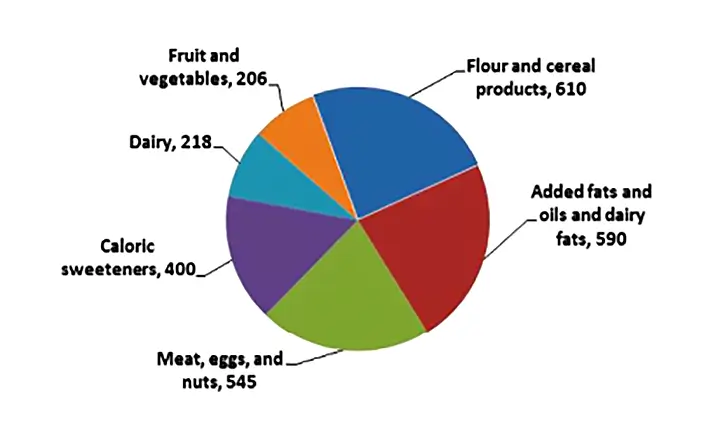
Beispielsweise haben mehr als 86 % der Menschen, die die amerikanische Standarddiät zu sich nehmen, einen Vitamin-E-Mangel. Ich werde jeden einzelnen Mikronährstoffmangel in entsprechenden Artikeln genauer analysieren. Es handelt sich um ein umfangreiches Thema, für das mehr als 30 oder 40 Artikel erforderlich sind, um ein grundlegendes Verständnis zu erlangen und einige Strategien in Form zu haben Nährstoffeingriffe aufgrund von Nährstoffmangel töten und bevor wir sterben, haben wir chronische Krankheiten (Fairfield und Fletcher, 2002).
Mikronährstoffdefizite äußern sich in chronischen Erkrankungen (Ames, 2006).
Es wäre für Sie schwierig, eine inkongruente Ernährung allein durch Nahrungsergänzungsmittel oder andere Strategien zu korrigieren. Denken Sie daran: Die Natur gewinnt immer. Wenn Sie eine völlig inkongruente, von tierischen Produkten dominierte Ernährung haben, stehen Sie im Widerspruch zu 50 Millionen Jahren Evolution und die Natur wird sich durchsetzen.
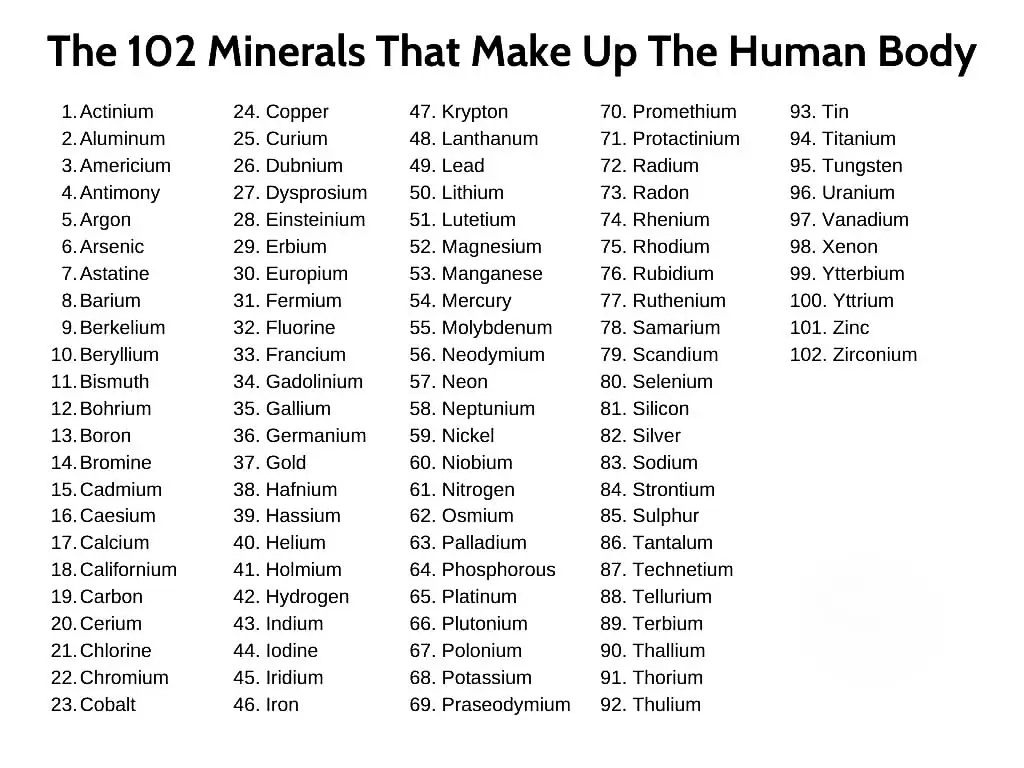
Darüber hinaus können wir verarbeitete Lebensmittel, Zucker, Öl und normale anorganische Produkte, die auf nährstoffarmen Böden angebaut werden, mit synthetischen Düngemitteln hinzufügen. Es gibt 102 Mineralien, die der menschliche Körper braucht, und synthetische Düngemittel ersetzen nur ein paar Mineralien, die Pflanzen benötigen. Laky-Vitamine sind für uns nur Chemikalien, daher können wir Nahrungsergänzungsmittel oder einige diätetische Maßnahmen einnehmen, um einige der Mängel unserer Ernährung zu beheben. Es gibt jedoch Tausende anderer sekundärer Pflanzenstoffe und Antioxidantien, die wir nicht ersetzen können.
Eine schlechte Ernährung zu ergänzen ist einfach schlecht.
Es ist besser als nichts, aber es würde am Ende trotzdem zu chronischen Krankheiten führen (Angelo et al., 2015). Das bedeutet nicht, dass es keine Strategien gibt, die umgesetzt werden müssen, aber Sie müssen alle kommenden Artikel lesen, um alle Strategien umzusetzen und Ihre Ernährung deutlich umstellen, wenn Sie nicht zu 100 Prozent Vollgas geben wollen auf pflanzlicher, ernährungsphysiologisch optimierter Weise. In diesem Artikel werde ich nur einige Beispiele verwenden, damit wir ein grundlegendes Verständnis dafür bekommen, wo die Ursache des Problems liegt. Und es ist eine Fehlanpassung und Veränderung unserer Umwelt. Fehlanpassung ist die Grundlage aller unserer Ernährungs- und Gesundheitsprobleme. Fehlanpassung aufgrund des Überangebots an übernatürliche Reize, sehr schmackhaftes All-you-can-eat-Essen und überall Stimulanzien.
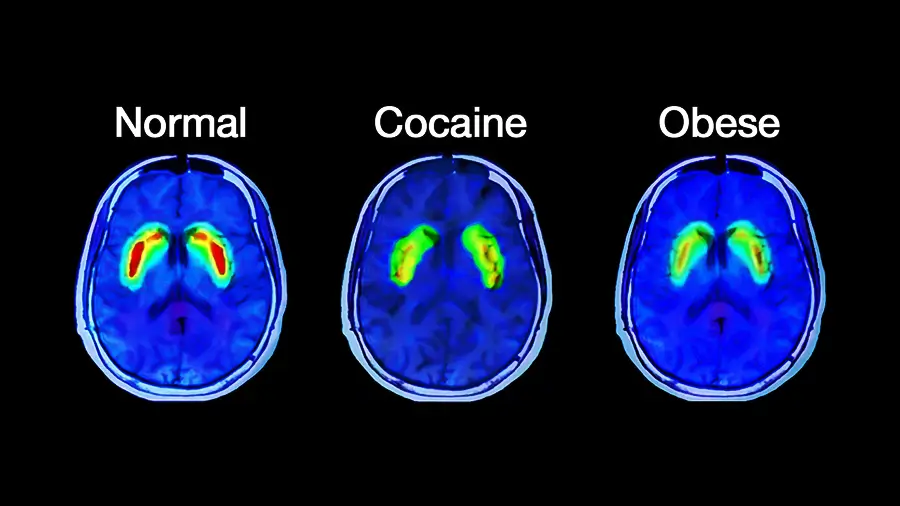
Das Endergebnis dieser Fehlanpassung ist Diabetes. Krebs, Herzerkrankungen und alle anderen Wohlstandskrankheiten. Wenn ich anfange, über westliche Diäten zu sprechen, verfügen die Menschen immer über unbewusste Selbstverteidigungsmechanismen, weil in meiner Praxis und in wissenschaftlichen Studien eine Herunterregulierung von D2-Dopaminrezeptoren im Gehirn ist tatsächlich die Hauptantriebskraft für den Status quo (Binge Eating Störung- Die Psychologie des Hungers).
Jahrzehntelange öffentliche Gesundheitsbotschaften, sich ausgewogen zu ernähren, haben nicht zu einer Verhaltensänderung geführt. Energiereiche, nährstoffarme Lebensmittel machen schätzungsweise 27 % der täglichen Kalorienaufnahme in der amerikanischen Ernährung aus (Kant, 2000). Alkohol macht weitere 4 % der täglichen Kalorienaufnahme aus. Fast die gesamte amerikanische Bevölkerung und alle anderen Bevölkerungsgruppen sowie in den entwickelten Ländern sind überfüttert und übersteigen den Energiebedarf (Kalorien), decken jedoch nicht den Bedarf an Mikronährstoffen (Vitamine und ernährungswesentliche Mineralien). Eine Analyse nationaler US-Umfragedaten (Nationale Umfrage zur Gesundheits- und Ernährungsuntersuchung) fanden heraus, dass Kinder und Erwachsene mit einer hohen Aufnahme von zugesetztem Zucker (und das bedeutet mehr als 25 Prozent der gesamten Energieaufnahme; die von der National Academy of Medicine empfohlene Obergrenze, die an sich schon eine Schande ist) eine geringere Nahrungsaufnahme mehrerer Mikronährstoffe aufwiesen, insbesondere die Vitamine A, C und E sowie Magnesium und Kalium (Marriott et al., 2010).
Und die große Frage ist, warum A, C und E, Magnesium und Kalium. Es handelt sich immer um A, C, E, Magnesium und Kalium. Und auch Vitamin D, Jod, Spurenelemente und Antioxidantien. Diese Mängel sind bei mehr als 90 Prozent der Bevölkerung überall in den entwickelten Ländern konstant (Bailey et al., 2015). Und die Antwort ist, dass wir keine anatomischen und echten Allesfresser sind. Nur omnivores Verhalten, wie zum Beispiel Schimpansen.
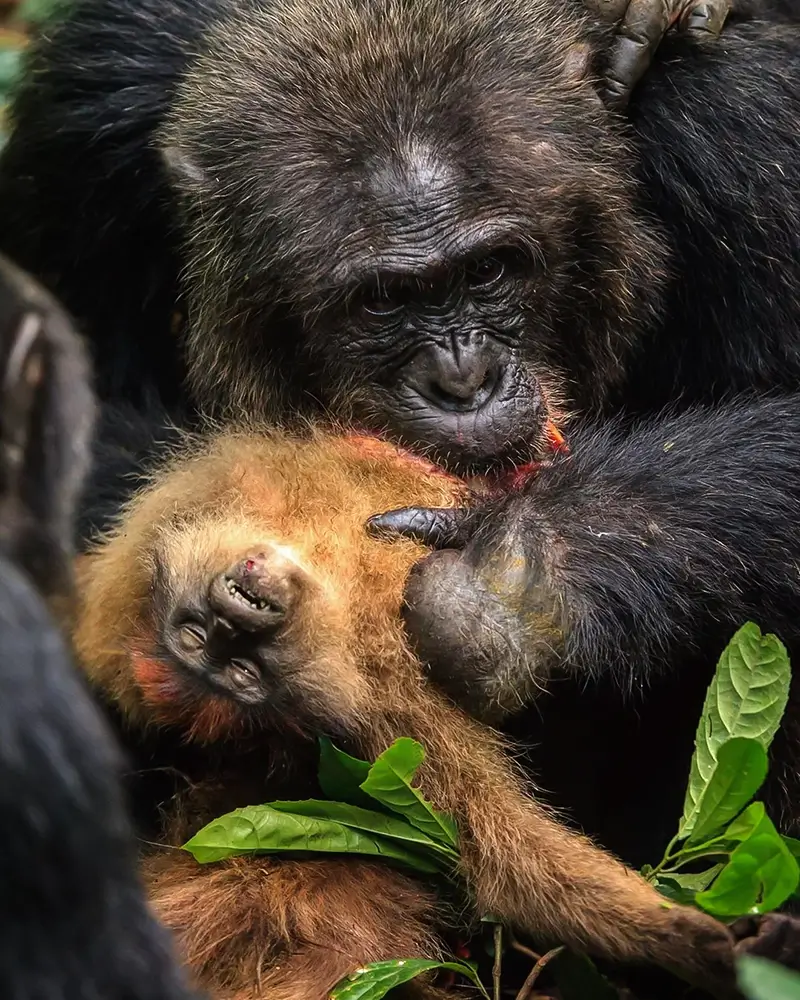
Das ist der Beweis, den Sie brauchen, wenn Sie die Wahrheit wissen wollen. Auf dem gesamten Planeten gibt es keine echte Allesfresserart, die einen Mangel hätte Vitamin C Zum Beispiel. Der Hauptgrund liegt darin, dass Vitamin C für echte anatomische Alles- und Fleischfresser kein Vitamin ist. Sie haben die Fähigkeit, in der Leber so viel Vitamin C zu produzieren, wie sie benötigen. Andererseits würden Allesfresser und Fleischfresser niemals eine Herzkrankheit bekommen, da Cholesterin im Gegensatz zu uns für sie ein Vitamin ist.
Im Gegensatz zu echten Allesfressern produzieren wir als Menschen wie alle anderen Pflanzenfresser auf diesem Planeten unser eigenes Cholesterin in der eigenen Leber, so viel, wie wir unser ganzes Leben lang benötigen. Im Laufe unseres Lebens benötigen wir kein einziges Gramm Cholesterin aus der Nahrung. Aber Vitamin C brauchen wir, sonst sterben wir irgendwann an Skorbut.
Was also hauptsächlich zu einem Mikronährstoffmangel an Vitamin C führt, ist eine Fehlanpassung. Der Übergang von einer pflanzlichen zu einer tierischen Ernährung mit Vitamin-C-Mangel. Ungefähr 75 % der US-Bevölkerung (Alter ≥ 1 Jahr) verzehren nicht die empfohlene Obstmenge und mehr als 80 % verzehren nicht die empfohlene Gemüsemenge. Die 2015-2020 Ernährungsrichtlinien Für die Amerikaner wurden die Nährstoffe hervorgehoben, die in der US-Bevölkerung zu wenig konsumiert werden, d Krankheiten (Ernährungsrichtlinien für Amerikaner | gesundheit.gov, nd-c).
Einige davon enthalten Vitamin D (das einzige Vitamin, das nicht von Pflanzen produziert wird und wir in Afrika nicht mehr nackt herumlaufen), Kalzium, Kalium (einige Fische enthalten zwar eine gewisse Menge Kalium, kommt aber hauptsächlich in Pflanzen vor), Ballaststoffe (Nr Ballaststoffe in tierischen Produkten) und Eisen (Frauen im gebärfähigen Alter und schwangere Frauen). Andere Nährstoffe, darunter die Vitamine A, C und E sowie Magnesium, von denen außer Vitamin A in der Leber keines in ausreichender Menge in tierischen Produkten vorhanden ist. Magnesium verleiht Chlorophyll seine grüne Farbe und ist in tierischen Produkten nicht in ausreichender Menge enthalten.
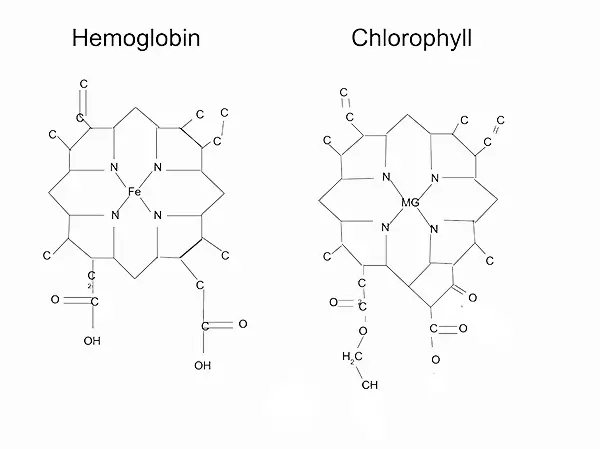
Darüber hinaus sind einige Personengruppen stärker gefährdet, da die oben genannten Zahlen nur durchschnittlich sind. Schätzungsweise 13 % der US-Bevölkerung haben eine zusätzliche Zuckeraufnahme, die über dem Grenzwert für zugesetzten Zucker liegt, und sind möglicherweise einem höheren Risiko für Mikronährstoffmangel ausgesetzt. Tatsächlich haben National Health and Nutrition Examination Surveys (NHANES), die den Ernährungs- und Gesundheitszustand einer landesweit repräsentativen Stichprobe der zivilen, nicht institutionalisierten US-Bevölkerung bewerten, eine hohe Prävalenz ausgewählter Mikronährstoffmängel in der US-Bevölkerung gemeldet (siehe Tabelle 1). ).
| NHANES 2007–2010: Übliche Mikronährstoffaufnahme aus Nahrungsquellen und Prävalenz von Mikronährstoffmangel bei US-Bürgern im Alter von ≥ 4 Jahren | ||
| Mikronährstoff | Mittlere tägliche Aufnahme über die Nahrung* | % |
| Folat | 542 μg DFE | 9.5 |
| Niacin | 24,7 mg | 1.1 |
| Riboflavin | 2,2 mg | 2.1 |
| Thiamin | 1,6 mg | 4.7 |
| Vitamin A | 621 μg RAE | 43.0 |
| Vitamin B6 | 2,0 mg | 9.5 |
| Vitamin B12 | 5,3 μg | 2.5 |
| Vitamin C | 84,0 mg | 38.9 |
| Vitamin-D | 4,9 μg | 94.3 |
| Vitamin E# | 7,4 mg | 88.5 |
| Vitamin K | 85,2 μg | 66.9† |
| Kalzium | 987 mg | 44.1 |
| Kupfer | 1,3 μg | 4.2 |
| Eisen | 15,1 mg | 7.4 |
| Magnesium | 286 mg | 52.2 |
| Phosphor | 1.350 mg | 1.0 |
| Kalium | 2.595 mg | 100† |
| Selen | 108 μg | 0.3 |
| Natrium | 3.433 mg | 0.1† |
| Zink | 11,7 mg | 11.7 |
| Cholin†† | 315 mg | 91.7† |
| *beinhaltet angereicherte und angereicherte Lebensmittel #α-Tocopherol †% ††gilt als essentieller Nährstoff, ist aber nicht unbedingt ein Mikronährstoff Abkürzungen: DFE, Nahrungsfolatäquivalente; RAE, Retinol-Aktivitätsäquivalente |
Die Hauptursache für diese Defizite ist eine Fehlanpassung, und sie beginnt mit der Art und Weise, wie unser Gehirn funktioniert. Fehlfunktionen in unserer Gehirnchemie sind der Grund für unser Verlangen nach Tieren und verarbeitete Lebensmittel als eine Form übernatürlicher Reize. Wir wollen keinen Grünkohl kauen. Wir wollen Pizza und Eis. Hominine fraßen als Pflanzenfresser verschiedene Pflanzen, aber nur Pflanzen und nur anatomisch moderne Menschen begannen in der Paläozeit, nach einer gewissen Menge Fleisch zu jagen, und das war's. Im Laufe der Evolution passten die Hominiden ihren Körper an die verschiedenen Verbindungen an, die in den Pflanzen, die sie fraßen, enthalten waren. Sie haben sich nicht an die starken Entzündungen angepasst, die in fleischdominierten Allesfresser-Ernährungsformen auftreten, indem sie unser eigenes Vitamin C produzierten. Hominins haben in unserer natürlichen Ernährung ein Übergewicht an Antioxidantien und Mineralien zu sich genommen, sind aber heute das Antioxidantien-Nahrungsmittel Nummer eins in der westlichen Standardernährung ist Kaffee. Und dieser Prozess dauerte Millionen von Jahren.
Einige der Chemikalien, die im Pflanzenreich vorkommen, aber im Tierreich nicht vorkommen, wie z. B. Vitamin C, Magnesium oder Vitamin E, sind in der modernen, von tierischen Produkten dominierten Ernährungsweise im westlichen Stil grundsätzlich unmöglich zu korrigieren ist eine Grundlage für Unzulänglichkeit und das ist der springende Punkt beim Verständnis der Grundursache unserer Unterernährung.
Heute sind wir fettleibig und unterernährt zugleich.
Dünnes Fett zugleich.
Mit all den Fortschritten im wissenschaftlichen Bereich und in der Medizin, Wir sind gleichzeitig so krank wie nie zuvor. Ein Drittel von uns wird an Krebs sterben. Ein Drittel an einer Herzerkrankung.
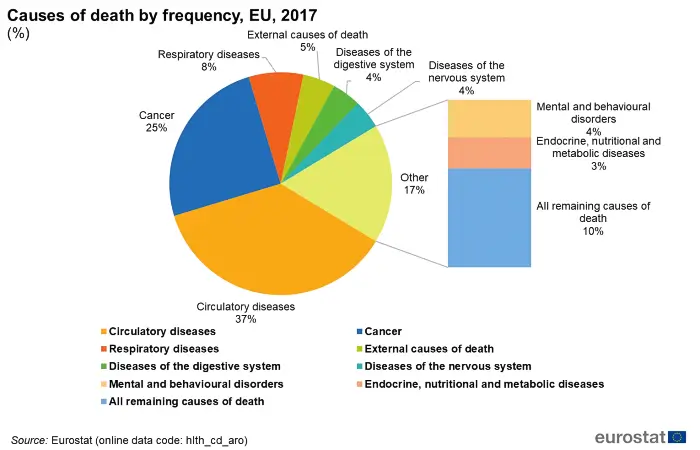
100 % der Bevölkerung hatten eine geringere Zufuhr als der empfohlene Wert für Vitamin D.
Wenn wir uns die Tabellen (siehe Tabelle 1) ansehen, wäre der Mangel Nummer eins Kalium und auch Vitamin D. Die gesamte Bevölkerung, oder um genau zu sein, 94,3 % der US-Bevölkerung deckt nicht den täglichen Bedarf an Vitamin D und Vitamin D ist Dreck billiges Vitamin, das etwa 3 % der Gene in unserem Körper reguliert.
Mehr dazu können Sie hier lesen verwandte Artikel über Vitamin D. Warum Menschen, insbesondere Menschen mit dunklerem Hautton und Menschen, die nicht dem Sonnenlicht ausgesetzt sind, dieses Vitamin nicht als Ernährungsstrategie ergänzen, ist mir ein Rätsel.
Diese Tabellen messen nicht alle anderen „nicht essentiellen“ Mineralien, die tatsächlich essentiell sind, aber in geringerem Maße. Außerdem zählen sie Antioxidantien außer Vitamin C und Vitamin E nicht zu den essentiellen Nährstoffen und geben keine empfohlene Tagesdosis an, sondern alle diese Nährstoffe sind essentiell oder spielen mit anderen Worten eine Rolle im menschlichen Körper. Für Spurenelemente und sekundäre Pflanzenstoffe einschließlich Antioxidantien grundsätzlich, die gesamte Bevölkerung ist mangelhaft. Und auch für Kalium.
100 % der Bevölkerung hatten eine geringere Kaliumzufuhr als den empfohlenen Wert.
Kalium kommt hauptsächlich in pflanzlichen Nahrungsquellen vor. Tierische Produkte enthalten keinen ausreichenden Kaliumgehalt. Aufgrund der Umstellung auf eine von tierischen Produkten dominierte Ernährung nehmen weniger als 2 Prozent der Erwachsenen in den USA das empfohlene tägliche Minimum zu sich, und dabei handelt es sich um die minimale, nicht optimale Kaliumzufuhr (Cogswell et al., 2012). Alle diese Menschen sind überwiegend Veganer. Es gibt mehr Veganer als 2 Prozent der US-Bevölkerung und nicht einmal alle von ihnen haben eine optimale Kaliumzufuhr. Allein diese Tatsache kann uns viel über das Argument „Menschen sind Allesfresser“ der Paläo-Diät sagen. Und diese Zahl beinhaltet künstlich und absichtlich manipulierte RDA. Basierend auf der wahren Entwicklung unserer Hominin-Vorfahren übersteigt die optimale Kaliumaufnahme über die Nahrung wahrscheinlich die bestehenden minimalen oder sogar empfohlenen Zufuhren bei weitem. Mehr als 98 Prozent der Amerikaner ernähren sich stark kaliumarm. Dieser Mangel wird noch deutlicher, wenn wir unsere derzeitige Nahrungsaufnahme mit der unserer homininen Vorfahren vergleichen. Im Laufe der Zeit haben wir möglicherweise weit mehr als 10.000 mg pro Tag konsumiert. Die aktuelle Ernährungsempfehlung lautet, mindestens etwa 5000 mg zu sich zu nehmen. Tatsächlich ist die Kaliumaufnahme der meisten Menschen marginal. Und das wird und hat gesundheitliche Konsequenzen, insbesondere wenn wir die Mechanismen hinter der Natrium-Kalium-Pumpe und ihre Auswirkungen auf Neuronen, Nieren, Herz-Kreislauf-System und Flüssigkeitshaushalt verstehen.
99 % der Menschen haben eine übermäßige Natriumaufnahme.
Zu viel Natrium in der Nahrung stört die Natrium-Kalium-Pumpe, verursacht Bluthochdruck und erhöht und steigert unabhängig davon das Risiko für Magenkrebs, Schlaganfall, Herzerkrankungen und Nierenerkrankungen. Salz verstärkt auch Entzündungen und fast jede bekannte Krankheit steht im Zusammenhang mit chronischen Entzündungen. Beispielsweise ist die Natriumaufnahme mit einer erhöhten Krankheitsaktivität bei Multipler Sklerose, einer entzündlichen Autoimmunerkrankung des Nervennervs, verbunden (Farez et al., 2015). Etwa das Drei- bis Vierfache der Rate bei Menschen mit mittlerer oder hoher Natriumaufnahme im Vergleich zu Menschen, die weniger als einen Teelöffel (weniger als 6 Gramm) der gesamten Salzmenge pro Tag zu sich nehmen. Beispielsweise leiden Menschen mit mittlerer oder hoher Natriumaufnahme drei- bis viermal häufiger an Multipler Sklerose (entzündliche Autoimmunerkrankung) als Menschen, die weniger als einen Teelöffel Salz pro Tag zu sich nehmen. Multiple Sklerose ist durch einen erhöhten Natriumspiegel im Rückenmark gekennzeichnet (Das ist 2020). Lupus, eine weitere tödliche und schwere entzündliche Autoimmunerkrankung, ist durch einen erhöhten Natriumspiegel in allen Geweben gekennzeichnet (Carranza-León et al., 2020). Alle Krankheiten können durch Interpolation mit einer Zunahme der Entzündung verbunden sein, die durch eine erhöhte Natriumaufnahme über die Nahrung verursacht wird. Da Natrium vor allem in Junkfood auf dem ersten Teller vorkommt, wurde argumentiert, dass Natrium lediglich ein Indikator für eine insgesamt schlechte Ernährung sei. In gewisser Weise ein Sündenbock für eine schlechte Ernährung.
Heute wissen wir, dass es einen ursächlichen Zusammenhang zwischen Salz und Bluthochdruck gibt. Heute haben wir mehr als 140 randomisierte kontrollierte Experimente nur mit Natrium durchgeführt. Heute wissen wir, dass eine Reduzierung der Salzzugabe unabhängig von anderen Faktoren den Blutdruck senkt, und je mehr Salz man reduziert, desto besser (Huang et al., 2020). Salz wird traditionell auch zum Fermentieren von Lebensmitteln verwendet. Es gibt einige neue Experimente, die gezeigt haben, dass Natrium unser Mikrobiom tatsächlich negativ verändern kann, indem es die Entwicklung nicht-probiotischer Bakterien im Darm fördert.
Im anthropologischen Sinne Unsere Hominin-Vorfahren hatten nie Kristallsalz. Das einzige aufgenommene Natrium war Natrium, das natürlicherweise in Nahrungsquellen vorkommt. Unser Körper ist nur darauf ausgelegt, etwa 750 mg pro Tag zu verarbeiten.
Da Natrium und Kalium gegensätzliche Mineralien sind, die die Natrium-Kalium-Pumpe regulieren, ist es notwendig, sie relativ zu betrachten. Nicht als einzelner Mangel.
Dieser ist schwer zu berechnen. Die Anzahl der Personen, die beiden Empfehlungen Folge leisten würden, und dies ist meine Extrapolation der Daten, sowohl für die Natrium- als auch für die Kaliumaufnahme, würde heute bei etwa einer Person von 6.000 liegen (Cogswell et al., 2012). Dies ist ein Paradebeispiel für eine Fehlanpassung an unsere Umwelt. Einer von 6.000 Menschen lebt im Einklang mit unserer natürlichen Entwicklung. Darüber hinaus müssen wir bedenken, dass sich mehr als einer von 6.000 Menschen pflanzlich ernährt.
Sogar Veganer gehören überwiegend zur Non-Compliance-Gruppe.
Dies zeigt sich darin, dass ein Drittel von uns an Herzerkrankungen sterben wird. Alle Tiere lecken gerne Salz, aber nur wir können es tatsächlich bei jeder einzelnen Mahlzeit lecken. Wir können das leicht korrigieren, aber niemand wird es tun. Nicht einmal Menschen, die sich vollwertig pflanzlich ernähren, können auf Salz verzichten. Was wir tun können, ist, mehr Gemüse und Bohnen zu essen, um Kalium zu gewinnen. Auch dies würde nicht ausreichen, wie das Ergebnis der Compliance zeigt.
Da die meisten von uns heute zu viel Natrium und gleichzeitig zu wenig Kalium zu sich nehmen, bleibt für den Großteil der Bevölkerung nur eine Ernährungsumstellung. In diesem Fall müssen wir unserer Ernährung direkt ein Kaliumsalz hinzufügen.
Wenn wir uns eine Metaanalyse randomisierter kontrollierter Studien zum Ersatz von Natriumchlorid durch Kaliumchlorid ansehen, ist das Endergebnis erwartungsgemäß eine Senkung des Blutdrucks. Das Problem mit Kaliumchlorid ist, dass es nicht gut schmeckt. Es kann Speisesalz nicht wirklich ersetzen. Es hat einen metallischen oder chemischen Geschmack. Es kann bis zu einem gewissen Grad mit normalem Tischgesessen gemischt werden, ohne dass es auffällt. Oder es könnte einfach als Ergänzung eingenommen werden. Aus diesem Grund wurde in den meisten Studien der Metaanalyse normales Salz durch 25 bis 33 % Kaliumchlorid ersetzt. Dennoch waren die Ergebnisse positiv. Die meisten Menschen können bei einer Substitutionsrate von weniger als 30 % nicht zwischen gewöhnlichem Salz und Kaliumsalz unterscheiden. Die FDA gibt an, dass Kaliumchlorid „normalerweise als sicher gilt, Denn im Gegensatz zu einigen anderen Mineralien kann es leicht über den Urin aus dem Körper ausgeschieden werden. Bei Nierenschäden ist Vorsicht geboten, da die Nieren nicht in der Lage sind, den Kaliumspiegel zu regulieren. Zu den Risikogruppen zählen auch Patienten, die Medikamente einnehmen, die die Kaliumausscheidung beeinträchtigen, sowie Personen mit Nebenniereninsuffizienz.
Wenn Sie ein Kaliumpräparat einnehmen möchten und dies von Ihrem individuellen Ernährungsprofil abhängt, würde ich Ihnen dies empfehlen, wenn Sie nicht in der Lage sind, Ihre Ernährung zu korrigieren. Wir müssen Ihr individuelles Ernährungsprofil analysieren oder Sie können dies einige Wochen lang selbst tun, um das Ausmaß der Nährstoffmängel festzustellen. In den meisten Fällen wurden bei langfristiger Einnahme von Kaliumpräparaten im Bereich von 3.000 mg bis 4.000 mg pro Tag keine nachteiligen Auswirkungen festgestellt.
Die normale Kaliumaufnahme der menschlichen Spezies könnte in der Größenordnung von 15.000 mg pro Tag liegen, wenn wir unsere Evolution betrachten. Dies ist der Bereich, den Hominin-Arten in ihrer normalen pflanzlichen veganen Ernährung, bestehend aus Obst und Gemüse, zu sich nehmen würden. Der Kaliumspiegel im Blut bleibt bei gesunden Personen ohne Nierenprobleme tatsächlich im normalen Bereich, selbst wenn die Kaliumaufnahme auf 15.000 mg pro Tag erhöht wird.
88,5 % Nichteinhaltung von Vitamin E.
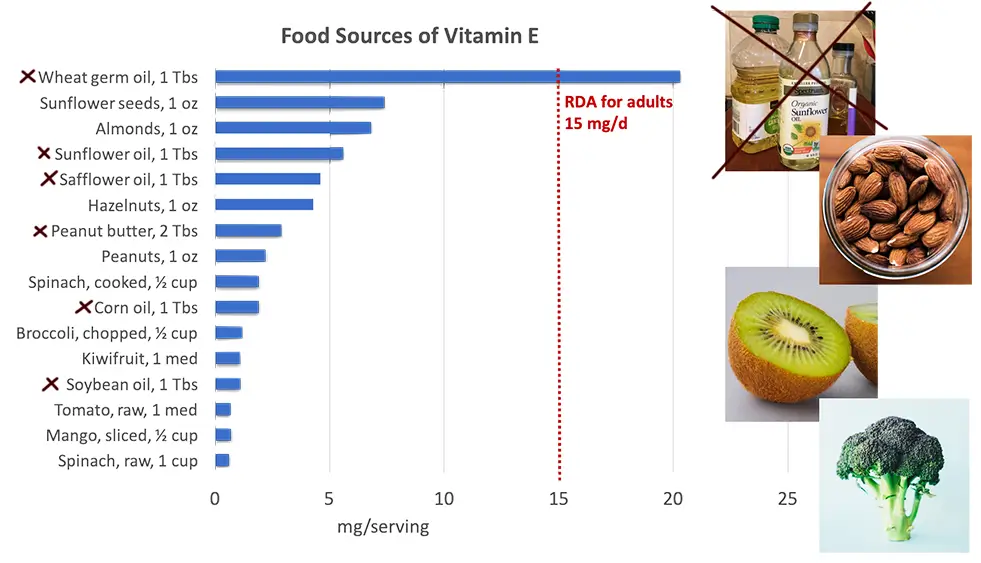
Vitamin E ist selbst in einer pflanzlichen Vollwertkost nur sehr schwer aufzunehmen. Die meisten von uns, die nicht aktiv versuchen, einen Vitamin-E-Mangel zu beheben, werden am Ende eine unzureichende Zufuhr haben. Die empfohlene Tagesdosis für α-Tocopherol beträgt 15 mg/Tag. Es wird geschätzt, dass mehr als 90 % der amerikanischen Erwachsenen den geschätzten durchschnittlichen Bedarf (EAR) von 12 mg/Tag an α-Tocopherol nicht decken. Der Begriff Vitamin E bezeichnet eigentlich ein einzelnes Vitamin aus einer Familie von acht Molekülen. Sie alle sind fettlösliche Antioxidantien: vier Tocopherol-Isoformen (α-, β-, γ- und δ-Tocopherol) und vier Tocotrienol-Isoformen (α-, β-, γ- und δ-Tocotrienol).
Nur eine Form, α-Tocopherol, wird als Vitamin E klassifiziert. Dies bedeutet jedoch nicht, dass die übrigen Tocopherole keine biologischen Funktionen im menschlichen Körper haben. In der menschlichen Leber ist α-Tocopherol die Form von Vitamin E, die vorzugsweise an das α-Tocopherol-Transferprotein (α-TTP) gebunden und in Lipoproteine eingebaut wird, die α-Tocopherol zu anderen Geweben transportieren. Daher ist es die vorherrschende Form von Vitamin E, die im Blut und im Gewebe vorkommt. Aber auch das bedeutet nicht, dass andere Arten von Tocopherolen keine Bedeutung haben. Ganz im Gegenteil. Auch andere Vitamin-E-Formen als α-Tocopherol gelten als wirksame Antioxidantien. Tocotrienole und γ-Tocopherol gelten als bessere Fänger von Peroxylradikalen bzw. reaktiven Stickstoffspezies als α-Tocopherol.
Die Hauptfunktion von α-Tocopherol beim Menschen ist die eines fettlöslichen Antioxidans. Fette, die ein integraler Bestandteil aller Zellmembranen sind, sind anfällig für Schäden durch Lipidperoxidation durch freie Radikale. α-Tocopherol ist in einzigartiger Weise dazu geeignet, Peroxylradikale abzufangen und so eine Kettenreaktion der Lipidoxidation zu verhindern. Wenn ein Molekül α-Tocopherol ein freies Radikal neutralisiert, wird es oxidiert und seine antioxidative Wirkung geht verloren. Andere Antioxidantien wie Vitamin C sind in der Lage, die antioxidative Kapazität von α-Tocopherol wiederherzustellen.
Neben der Aufrechterhaltung der Integrität der Zellmembranen im gesamten Körper schützt α-Tocopherol auch die darin enthaltenen Fette Lipoproteine niedriger Dichte (LDLs) durch Oxidation. Lipoproteine sind Partikel aus Lipiden und Proteinen, die Fette durch den Blutkreislauf transportieren. LDLs transportieren gezielt Cholesterin von der Leber zu den Geweben des Körpers. Oxidierte LDLs werden mit der Entstehung von Herz-Kreislauf-Erkrankungen in Verbindung gebracht.
Ein Mangel an Vitamin E, insbesondere bei chronischer Inflation, die durch einen Mangel an anderen antioxidantienreichen Nahrungsquellen verursacht wird, steht in Zusammenhang mit der Anhäufung von Schäden durch freie Radikale.
Da sich Öl und Wasser nicht vermischen, benötigt unser Körper Vitamin C für Wasser und Vitamin E für Fettanteile unserer Zellen als Abwehrmechanismus gegen freie Radikale. Organe, die aus Fett bestehen, wie zum Beispiel das Gehirn, sind besonders anfällig für Entzündungen, die durch einen Vitamin-E-Mangel verursacht werden.
Vitamin-E-Mangel steht im Zusammenhang mit Krebs, kognitivem Verfall, Alzheimer-Krankheit, altersbedingter Makuladegeneration, altersbedingtem Katarakt, Herz-Kreislauf-Erkrankungen, altersbedingter Verschlechterung der Immunfunktion, Typ-2-Diabetes mellitus und Fettlebererkrankungen.
Dabei handelt es sich um einen Mangel, der sich lange Zeit verbirgt, während wir einen DNA-Schaden erleiden, und sich dann als chronische Krankheit manifestiert, die nicht behandelbar ist, weil der Schaden bereits angerichtet ist.
Wenn wir einen Vitamin-E-Mangel verspüren, ist es in den meisten Fällen bereits zu spät. Dies ist kein Mangel, den irgendjemand haben möchte, insbesondere angesichts der bereits vorhandenen toxischen Überlastung und chronischen Entzündung (Pestizidexposition bei Amerikanischen Kindern- Tests zur Exposition Gegenüber Pestiziden). Vor allem, weil es sich um einen Mangel handelt, dessen Behebung nicht teuer ist, es aber gleichzeitig sehr schwierig sein wird, ihn auf natürliche Weise zu beheben, wenn man nicht weiß, was man tut.
Dies liegt daran, dass Vitamin E als fettlösliches Antioxidans nur in Fett vorkommt. Und weil es ein Antioxidans ist, reagiert es mit dem Sauerstoff in der Luft. Wenn also Vitamin E der Luft ausgesetzt wird, ist es verschwunden. Öl ist ranzig. Ende der Geschichte. Die wichtigste Vitamin-E-Quelle in der westlichen Ernährung ist Pflanzenöl. Das ist eine große, fette Lüge, die darauf abzielt, Sie zu täuschen. Der Grund dafür, dass die Industrie Öl raffiniert, besteht darin, ihm Aromamoleküle zu entziehen. Bei dem Öl handelt es sich nicht um extra natives, vakuumversiegeltes und konserviertes kaltgepresstes Öl, sondern lediglich um ranziges, entzündungsförderndes, krebserregendes Öl ohne jegliches Vitamin E, das raffiniert ist, damit Sie als Verbraucher den Geruch des Ranzigwerdens nicht wahrnehmen. Dies gilt auch für gemahlenes Saatgut. Wenn Sie vorgemahlene Sonnenblumenkerne oder Leinsamen oder Samen oder Nüsse haben, deren schützende Schale entfernt wurde, wurde Vitamin E der Luft ausgesetzt und der Samen oder die Nuss ist ranzig geworden. extrahiert In einer heimischen Ölextraktionsmaschine wird die Vitamin-E-Konzentration deutlich reduziert, sobald das Öl extrahiert wird. Sie sollten es sofort verwenden. Dies gilt auch in Situationen, in denen Sie Ihre Samen zu Hause mahlen oder einen Mixer verwenden oder auf andere Weise Vitamin E der Luft und allen anderen Antioxidantien auf diese Weise aussetzen.
Und was machen die meisten Menschen mit Öl? Sie verwenden Öl zum Braten, Kochen und Backen. Die Temperatur erhöht die Oxidation und wenn Sie Öl zum Kochen verwenden, müssen Sie sich von jeglichem Vitamin-E-Gehalt verabschieden. Sie haben entzündungsförderndes, krebserregendes und mutagenes ranziges Öl, und alles, was Sie zum Braten darin verwenden, ist ebenfalls krebserregend. Zum Frittieren gesättigte Fettsäuren ist stabiler, hat einen höheren Rauchpunkt als mehrfach ungesättigtes Fett, aber das ist ein umfangreiches Thema für einen anderen Artikel. Vitamin E ist sehr schwer zu konsumieren. Nur in Papierstatistiken sieht man Pflanzenöle als Vitamin-E-Quelle, und das geschieht ganz bewusst, nur um die Leute nicht völlig aus der Fassung zu bringen. In den USA beträgt die durchschnittliche Aufnahme von α-Tocopherol aus Lebensmitteln (einschließlich angereicherter und angereicherter Quellen mit entzündungsförderndem gefälschtem Vitamin E und aller gefälschten Konzentrationen von Vitamin E in ranzigen extrahierten Ölen und offenen und gemahlenen Samen sowie angereicherten Lebensmitteln mit gefälschtem Vitamin E). synthetisches Vitamin E) beträgt für Erwachsene 7,2 mg/Tag (Fulgoni et al., 2011). Selbst dieser vorgetäuschte, nicht vorhandene Wert liegt deutlich unter der empfohlenen Tagesdosis von 15 mg α-Tocopherol.
Wenn die Verbraucher das wüssten, was würde passieren? Würden Sie aufhören, etwas Frittiertes oder in Öl gebackenes zu essen? Würden Sie beginnen, Vitamin-E-Ergänzungen in Ihre Ernährungsinterventionsstrategien einzubeziehen?
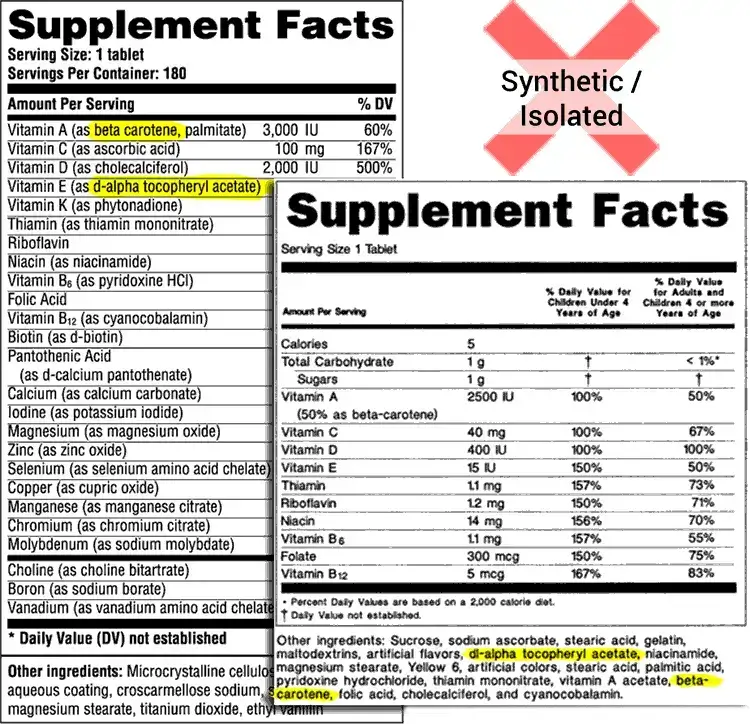
Entscheidend ist auch hier, dass die Industrie nicht in der Lage ist oder es zu teuer wäre, die molekulare Struktur von Vitamin E im Labor zu 100 Prozent herzustellen. Sie verkaufen Vitamin-E-Präparate, die kein Vitamin E sind.
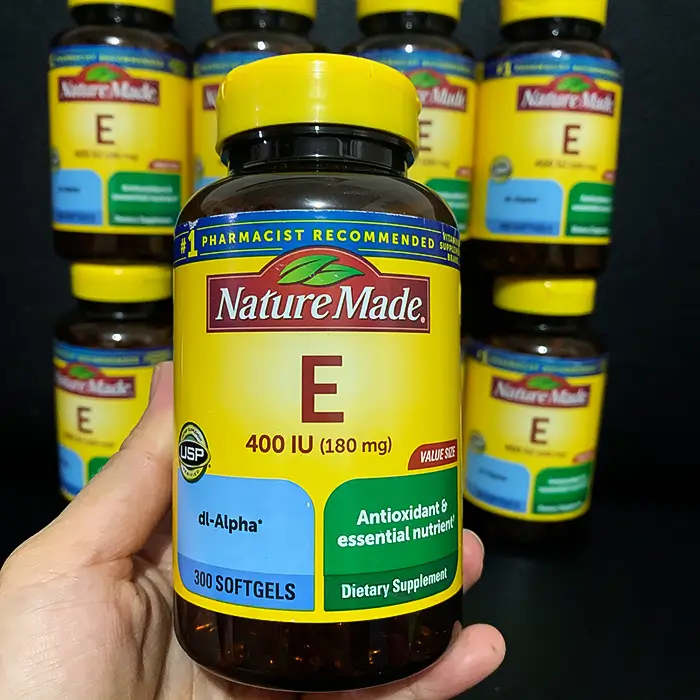
Natürliches α-Tocopherol, das von in Lebensmitteln vorkommenden Pflanzen hergestellt wird, weist eine RRR-Konfiguration an der 2-, 4'- und 8'-Position des α-Tocopherolmoleküls auf (fälschlicherweise als d-α-Tocopherol bezeichnet). Chemisch synthetisiertes all-rac-α-Tocopherol (allracemisches-α-Tocopherol; fälschlicherweise als dl-α-Tocopherol bezeichnet) ist eine Mischung aus acht Stereoisomeren von α-Tocopherol, die aus den drei chiralen Kohlenstoffen an den 2, 4'-Positionen entstanden sind. und 8'-Positionen: RRR-, RSR-, RRS-, RSS-, SRR-, SSR-, SRS- und SSS-α-Tocopherol. Während alle Stereoisomere in vitro die gleiche antioxidative Aktivität aufweisen, erfüllen nur die Formen in der R-Konformation an Position 2 (bezeichnet als 2R) den Vitamin-E-Bedarf des Menschen.
Das ist nichts Neues. Jeder in Ernährung und Medizin weiß, dass synthetisches Vitamin E in vivo keine antioxidative Wirkung hat. Dabei handelt es sich um eine gefälschte Vitaminpille, die zur Anreicherung von Babynahrung dient.
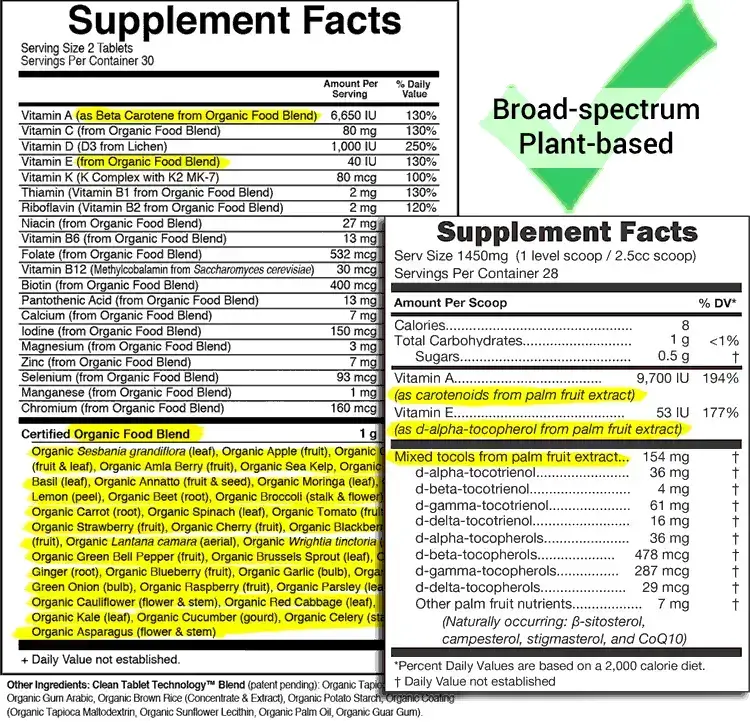
Nach einer 10-jährigen Nachbeobachtungszeit zeigte eine prospektive Beobachtungsanalyse von rund 4.000 Personen im Rahmen der Framingham Heart Study keinen statistisch signifikanten Zusammenhang zwischen der Einnahme von Vitamin-E-Ergänzungsmitteln und der kardiovaskulären oder auch nur der Gesamtmortalität (Dietrich et al., 2009). Darüber hinaus zeigte eine neuere Metaanalyse von 53 randomisierten Studien mit 241.883 Teilnehmern, dass Beta-Carotin, Vitamin A und Vitamin E die Gesamtmortalität signifikant erhöhten, während Dosen unterhalb der RDAs keinen Einfluss auf die Mortalität hatten. Wir wissen, dass Vitamin-E-Nahrungsergänzungsmittel reine Geldverschwendung sind, aber es gibt eine Reihe von Studien, die einen Anstieg der Sterblichkeit gezeigt haben. Leute, die es einnehmen, könnten es tatsächlich sein dafür bezahlen, ein kürzeres Leben zu führen. Heute herrscht wissenschaftlicher Konsens darüber, dass es bei Menschen, die normalerweise gesund sind, derzeit keinen schlüssigen Beweis dafür gibt, dass eine Vitamin-E-Supplementierung unterhalb des Niveaus von übermäßigem Training und chronischer Überdosierung das Risiko erhöht, an Herz-Kreislauf-Erkrankungen oder anderen Erkrankungen zu sterben. Hohe Dosierungen von zusätzlichem Vitamin E können jedoch mit Medikamenten interagieren und möglicherweise deren Wirksamkeit verringern oder deren Toxizität erhöhen. Aber auch hier beziehen sich alle diese Studien auf synthetisches Vitamin E. Ich würde gerne eine Studie mit natürlichem Vitamin E sehen und nicht nur mit Vitamin E, sondern mit einem Nahrungsergänzungsmittel, das eine Mischung aus verschiedenen Tocopherolen enthält.
Wenn Sie einen Vitamin-E-Mangel haben und Nahrungsergänzungsmittel einnehmen möchten, suchen Sie sich ein natürliches Vitamin-E-Ergänzungsmittel, idealerweise mit einer Mischung aus verschiedenen natürlichen Tocopherolen, und nehmen Sie nicht mehr als 400 IE ein (Jiang, 2014).
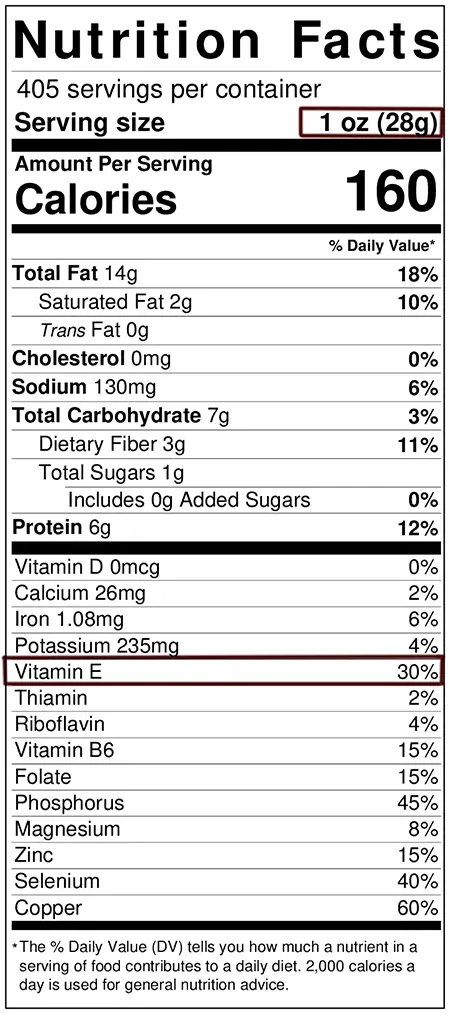
Eine weitere echte natürliche Option ist die Korrektur Ihrer Ernährung. Wir brauchen eine ganze und rohe frische Nuss oder einen frischen Samen, der ausreichend Vitamin E enthält. Und wenn man sich die Nährwerttabellen ansieht, sind Sonnenblumenkerne und Mandeln die einzige verfügbare Option, aber Mandeln sind viel teurer. Alle anderen Samen haben einen deutlich geringeren Vitamin-E-Gehalt. Um den Vitamin-E-Mangel zu beheben, wären mindestens 40 Gramm rohe Sonnenblumenkerne erforderlich. Und das bedeutet: 40 Gramm Sonnenblumenkerne, jeden Tag, für den Rest Ihres Lebens.
66,9 % der Bevölkerung haben einen Vitamin-K-Mangel.
Vitamin K ist ein fettlösliches Vitamin, das in grünem Blattgemüse wie Grünkohl, Grünkohl und Spinat vorkommt. Blutungen und Blutungen sind die klassischen Anzeichen eines Vitamin-K-Mangels, obwohl diese Auswirkungen nur in schweren Fällen auftreten. Da Vitamin K für die Carboxylierung von Osteocalcin im Knochen erforderlich ist, könnte ein Vitamin-K-Mangel auch die Knochenmineralisierung verringern und zur Osteoporose beitragen (Palermo et al., 2017) (Gray et al., 2018).
Ein klinisch signifikanter Vitamin-K-Mangel bei Erwachsenen ist sehr selten und beschränkt sich in der Regel auf Menschen mit Malabsorptionsstörungen oder solche, die Medikamente einnehmen, die den Vitamin-K-Stoffwechsel beeinträchtigen. Bei gesunden Menschen, die sich abwechslungsreich ernähren, ist es nahezu unmöglich, eine ausreichend niedrige Vitamin-K-Zufuhr zu erreichen, um die klinischen Standardmessungen der Blutgerinnung zu verändern.
Dies bedeutet jedoch nicht, dass nicht auch chronischere Effekte außerhalb der Gerinnung auftreten würden, wie z. B. eine Abnahme der Knochenmineraldichte (Mott et al., 2019). Allein bei Vitamin-K-Mangel wird empfohlen, täglich ein paar grüne Blätter zuzugeben. Tatsächlich sind dunkelgrüne Blätter so reich an Vitamin K, dass Sie, wenn Sie Warfarin einnehmen, ein Medikament, das den Vitamin-K-Stoffwechsel vergiftet, eng mit Ihrem Arzt zusammenarbeiten müssen, um die Dosis auf Ihre Grünaufnahme abzustimmen, um sie nicht zu untergraben die Wirksamkeit des Medikaments!
Ohne Vitamin K2 wäre dieser Mangel noch viel schlimmer. Vitamin K2 kommt in Fleisch, Fisch und Eiern vor. Der wissenschaftliche Konsens ist, dass eines davon (Phyllochinon oder Menachinon, früher K1 und K2) für die Aufrechterhaltung des menschlichen Vitamin-K-Status geeignet ist (Elder et al., 2006). Die empfohlene Verzehrmenge beträgt etwa 100 µg. Eine halbe Tasse Grünkohl enthält mehr als 500. Außerdem müssen Veganer für Vitamin K2 kein Nato essen. Beide sind völlig in Ordnung und Menschen, die sich omnivor ernähren, sollten tagsüber etwas Grünzeug hinzufügen. Wenn es Hinweise darauf gibt, dass K2 einen einzigartigen Nutzen hat, dann stellt unser Mikrobiom K2 aus K1 in Grünpflanzen her. Selbst wenn wir ein Problem mit unserem Mikrobiom hätten, können unsere eigenen Zellen K1 aus K2 herstellen, genau wie andere Tiere. Sie benötigen also keine Nahrungsergänzungsmittel oder Natto, essen Sie einfach Ihr Gemüse.
Die Hauptursache für diesen Mangel ist, wie auch für andere Mängel, eine Fehlanpassung an unsere „Allesfresser“-Ernährung im westlichen Stil. Eine 100-Gramm-Portion roher Grünkohl liefert beispielsweise 93 mg Vitamin C oder 103 % der empfohlenen Tagesdosis. Es liefert außerdem eine ausreichende Menge an empfohlener Tagesdosis für Vitamin K und darüber hinaus auch die Carotinoide Lutein und Zeaxanthin.
Dann 52,2 % für Magnesium, 44,1 % für Kalzium, 43,0 % für Vitamin A und 38,9 % für Vitamin C.
Wie es möglich ist, dass 40 Prozent der Bevölkerung es nicht schaffen, auch nur eine einzige mittelgroße Kiwi mit 56 mg Vitamin C an einem Tag zu konsumieren, denn 62 Prozent der empfohlenen Tagesdosis sind für mich wieder ein Rätsel. Und diese Zahl für RDA (empfohlener Tagesbedarf) ist eine Verschwörung für sich. Diese Zahlen sind bewusst niedrig angesetzt, damit die Leute nicht ausrasten. Beispielsweise wurde die empfohlene Tagesdosis für Vitamin C auf einen zulässigen Mindestwert festgelegt, der Skorbut verhindern würde. Diese RDA stellt nicht dar, dass diese Aufnahme optimal ist. Beispielsweise ist eine durchschnittliche Ziege in Zeiten von Krankheit oder Stress in der Lage, mehr als 10 Gramm Vitamin C pro Tag zu produzieren. Vergleichen Sie 10.000 mg einer durchschnittlichen Ziege mit einer Kiwi pro Tag mit 56 mg Vitamin C. Wenn Sie das nächste Mal jemand fragt, woher Sie Ihr Protein haben, fragen Sie ihn zurück, woher Sie Ihr Vitamin C, Vitamin E usw. haben. und Magnesium? Keines davon ist in tierischen Produkten enthalten, aber alle Pflanzen bestehen aus Protein. Vitamin C ist ein umfangreiches Thema und wäre ein Thema für weitere Artikel, insbesondere im Hinblick auf die Arbeit von Linus Pauling.
In dem Vortrag geht es um die Rolle von Vitamin C (Ascorbinsäure) bei verschiedenen Funktionen im Körper und darum, dass es Forschungsergebnisse im Gesundheitswesen gibt, die oft vergessen, geleugnet und angezweifelt werden. Dr. Humphries hat eine historische Perspektive auf Vitamin C und seine Bedeutung bei verschiedenen Krankheiten, beschreibt aber auch seine Rolle für die Gesundheit im Allgemeinen.
Longevity Essentials, Jun 25, 2021
Magnesiummangel.
Wenn wir Magnesium betrachten, wäre die normale Reaktion, dass es eines der am häufigsten vorkommenden Mineralien in der Natur ist und dass die Wahrscheinlichkeit eines Mangels bei uns allen sehr gering ist. Das erste Problem sind jedoch synthetische Düngemittel. Der Mutterboden ist so erschöpft, dass es aussieht, als wären fast alle Industriepflanzen hydroponisch angebaut worden.
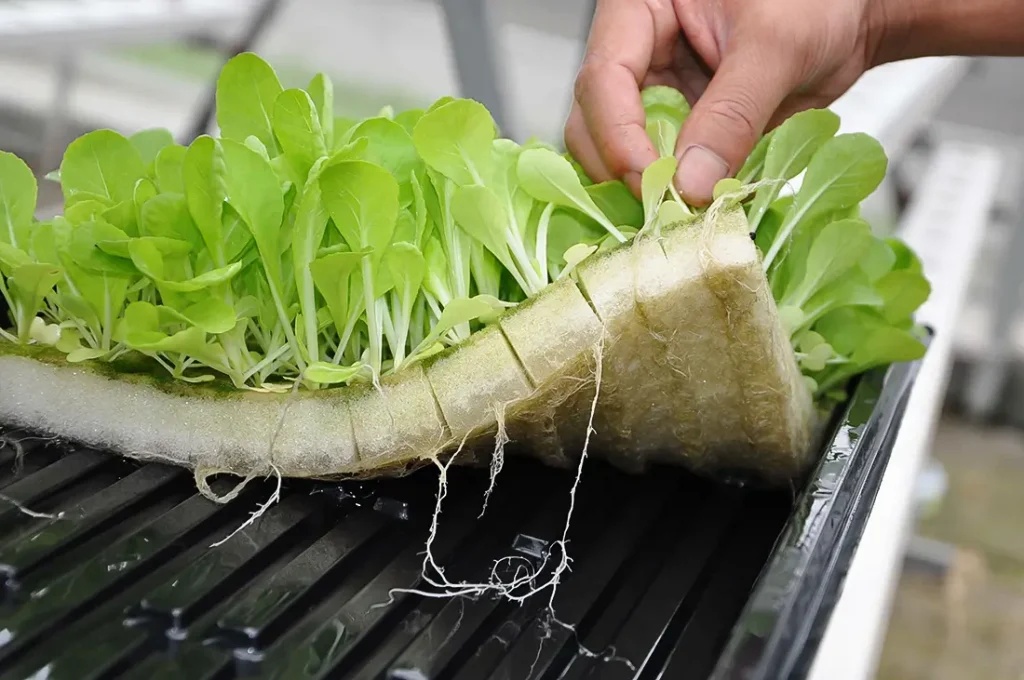
Seit 1940 kam es durch den Einsatz synthetischer Düngemittel zu einem enormen Rückgang der Mikronährstoffdichte von Lebensmitteln (Thomas, 2007).
Im Vereinigten Königreich kam es beispielsweise zu einem Magnesiumverlust bei Rindfleisch (–4 bis –8 %), Speck (–18 %), Huhn (–4 %), Cheddar-Käse (−38 %), Parmesankäse (−70 %), Vollmilch (−21 %) und Gemüse (−24 %) (Thomas, 2007). Seit den 1970er Jahren ist der Magnesiumgehalt im Weizen um fast 20 % gesunken, was möglicherweise auf eine unausgewogene Düngung der Pflanzen zurückzuführen ist (hohe Mengen an Stickstoff, Phosphor und Kalium, wobei letzteres die Magnesiumaufnahme in den Pflanzen hemmt).
Zusätzlich zu den bereits erschöpften Produkten sind wir noch einen Schritt weiter gegangen und haben begonnen, Lebensmittel vollständig zu verarbeiten. Durch diese Verarbeitung werden alle bereits weitgehend verbrauchten Mikronährstoffe entfernt.
Der Magnesiumverlust bei der Lebensmittelraffinierung/-verarbeitung ist erheblich: Weißmehl (−82 %), polierter Reis (−83 %), Stärke (−97 %) und Weißzucker (−99 %)(Guo et al., 2016).
Verarbeitete Lebensmittel aller Art, Fett, raffiniertes Mehl und Zucker enthalten kein Magnesium, und daher prädisponiert uns unsere westliche Ernährung für Magnesiummangel und alle anderen bestehenden Mineralstoffmängel. Gute Nahrungsquellen für Magnesium sind Nüsse, dunkle Schokolade und unraffinierte Vollkornprodukte. In tierischen Produkten ist nicht viel Magnesium enthalten. In tierischen Produkten ist Magnesium enthalten, aber wir als Spezies haben uns durch den Verzehr grüner Blätter entwickelt und unser Bedarf an Magnesium ist beträchtlich. Es ist Magnesium, das Chlorophyll seine grüne Farbe verleiht.
Magnesium ist das siebthäufigste Element in der Erdkruste. Bei Wirbeltieren kommt Magnesium äußerst häufig vor und ist das zweithäufigste intrazelluläre Kation (Kalium ist das erste). Extrazelluläres Magnesium macht nur etwa 1 Prozent des gesamten Körpermagnesiums aus, das hauptsächlich im Serum und in den roten Blutkörperchen vorkommt.
Magnesium ist für die Funktion von über 300 Enzymen notwendig. Beispielsweise handelt es sich bei Osteoporose sowohl um einen Magnesiummangel als auch um einen Kalziummangel, da der Körper für den Kalziumstoffwechsel ein Enzym verwendet, das Magnesium enthält. Schwarzafrikanische Frauen südlich der Sahara, die zu 99 % Laktose intolerant Sie bekommen zwar keine Osteoporose, wenn sie 300 mg Kalzium pro Tag zu sich nehmen, essen aber vergleichsweise viel mehr Gemüse und Bohnen.
Zu den Hauptfunktionen von Magnesium in der menschlichen Biologie gehören die Aufrechterhaltung des Ionengradienten (Halten des intrazellulären Natrium- und Kalziumspiegels niedrig und des Kaliumspiegels), die Zell- und Gewebeintegrität, mitochondriale oxidative Phosphorylierung (ATP-Produktion und -Aktivierung) sowie DNA-, RNA- und Proteinsynthese und -integrität. Es ist eines der wichtigsten lebenswichtigen Mineralien.
Ein eklatanter Magnesiummangel ist schwer zu erkennen, da sich der Großteil des Magnesiums in den Zellen befindet. Die Messung des Magnesiumspiegels im Blut hat keine Aussagekraft.
Es gibt zwei Arten von Nährstoffmängeln: offensichtliche Mängel, die schwerwiegende und sofortige Folgen haben können, und subklinische Mängel, die auf lange Sicht ihr zerstörerisches Potenzial zeigen. Es sind die subklinischen Mängel, die am meisten Anlass zur Sorge geben, da sie schwer zu diagnostizieren sind und uns für zahlreiche chronische Krankheiten prädisponieren. Subklinischer Magnesiummangel ist weit verbreitet. Die klinischen Beweise zeigen, dass die meisten von uns einen unzureichenden Magnesiumspiegel haben. Dieser nicht diagnostizierte und stille Magnesiummangel ist eine der Hauptursachen für chronische Krankheiten, einschließlich Herz-Kreislauf-Erkrankungen und früher Sterblichkeit, nicht nur in Industrieländern, sondern auf der ganzen Welt. Die meisten von uns heute in der Ernährungswissenschaft, darunter auch ich, betrachten Magnesiummangel als eine Krise der öffentlichen Gesundheit.
Wie bei Vitamin E führt ein chronischer Magnesiummangel zu systemischen Schäden, und wenn schwerwiegendere Symptome auftreten, ist es bereits zu spät. Es sind bereits Schäden entstanden, insbesondere weil das Vorliegen eines subakuten oder chronischen Magnesiummangels schwer zu diagnostizieren ist. Bei den durch Magnesiummangel geschädigten Geweben handelt es sich um Gewebe des Herz-Kreislauf-, Nieren- und neuromuskulären Systems, und die frühen Schäden sind nicht leicht erkennbar. Eine langfristig suboptimale Magnesiumzufuhr ist an der Pathogenese chronischer Erkrankungen all dieser Systeme beteiligt. Magnesiummangel ist ein ernstes Thema, vor allem weil er heutzutage überall auftritt.
Wenn Sie sich nicht vollwertig pflanzlich ernähren, liegt die Wahrscheinlichkeit, dass Sie an einem subklinischen Magnesiummangel leiden, bei über 95 %.
Dieser Mangel beginnt in den meisten Fällen bereits im Kindesalter. Gerade die Kinder in der westlichen Welt essen zu viel Zucker und zu wenig grünes Blattgemüse.
Eine typische westliche Ernährung liefert möglicherweise nur genügend Magnesium, um einen offensichtlichen Magnesiummangel zu vermeiden, es ist jedoch unwahrscheinlich, dass sie einen hohen normalen Magnesiumspiegel aufrechterhält und eine optimale Risikominderung für koronare Herzkrankheit und Osteoporose sowie eine Vielzahl anderer damit zusammenhängender Erkrankungen bietet.
Zahlreiche Studien haben gezeigt, dass mindestens 300 mg zusätzliches Magnesium erforderlich sind, um eine signifikante Verbesserung der Serummagnesiumkonzentrationen zu erzielen.
Mit anderen Worten: Die meisten Menschen benötigen zusätzlich 300 mg Magnesium pro Tag, um ihr Risiko für die Entwicklung zahlreicher chronischer Krankheiten zu senken. Während also die empfohlene Tagesdosis (RDA) an Magnesium (zwischen 300 und 420 mg/Tag für die meisten Menschen) einen offensichtlichen Magnesiummangel verhindern kann, ist es unwahrscheinlich, dass sie zu optimaler Gesundheit und Langlebigkeit führt, was das ultimative Ziel sein sollte.
| Weniger schwerwiegende Anzeichen eines Magnesiummangels. |
| Aggression. Angst. Ataxia. Chvostek-Zeichen (Zucken der Gesichtsmuskeln als Reaktion auf das Klopfen auf den Bereich des Gesichtsnervs). Verwirrtheit. Krämpfe (spontane Krämpfe oder schmerzhafte Krämpfe der Muskeln in Ihren Händen und Füßen). Orientierungslosigkeit. Faszikulationen (eine kurze, spontane Kontraktion, die eine kleine Anzahl von Muskelfasern betrifft und oft zu flackernden Bewegungen unter der Haut führt. Dies kann ein Symptom einer Erkrankung der Motoneuronen sein.) Hyperreflexie. Reizbarkeit. Muskelschwäche. Neuromuskuläre Reizbarkeit. Schmerzen oder Hyperalgesie (verringert die nozizeptive Schwelle). Lichtempfindlichkeit. Spastik. Tetanie (unwillkürliche Muskelkrämpfe). Tinnitus (Ohrensausen). Zittern. Trousseau-Zeichen. Schwindel. Vitamin-D Widerstand. |
In den meisten Fällen ist ein Mangel höchstwahrscheinlich chronisch und subklinisch, bis Sie beispielsweise feststellen, dass Sie irgendwie Verkalkungen in den Arterien haben.
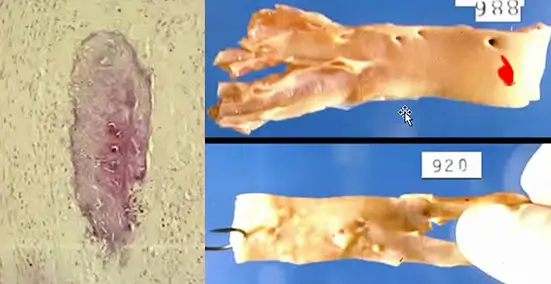
Magnesiummangel und Magnesiummangel im Weichgewebe können zu Verkalkungen im Herzen, in der Leber und in der Skelettmuskulatur führen. Magnesiummangel schädigt die Nieren aufgrund von Kalziumablagerungen und kann zu zahlreichen Elektrolytstörungen führen (ein häufiges Problem bei Patienten mit chronischer Nierenerkrankung). Andere Studien an Tieren zeigen, dass Magnesiummangel Herznekrosen und Verkalkungen verursacht. Eine unzureichende Magnesiumaufnahme über die Nahrung erhöht unabhängig von anderen Faktoren die Entwicklung von atherosklerotischem Plaque. Magnesiummangel reduziert die Herzfunktion Na-K-ATPaseDies führt zu höheren Natrium- und Kalziumspiegeln und niedrigeren Magnesium- und Kaliumspiegeln im Herzen.
Dies erhöht die Gefäßverengung in den Koronararterien, was zu Krämpfen der Koronararterien führen kann. Herzinfarktund Arrhythmien, die selbst bei Profisportlern zum Tod durch ischämischen Herzinfarkt führen. Wenn man bedenkt, dass etwa 25 % aller Myokardinfarkte nicht auf eine atherosklerotische Plaqueruptur zurückzuführen sind, könnten durch Magnesiummangel hervorgerufene Koronararterienkrämpfe einige dieser Ereignisse erklären.
Tod durch Magnesiummangel.
| Mögliche kardiovaskuläre Manifestationen eines Magnesiummangels |
| Hypertonie. Arrhythmien. Verkalkungen. Arteriosklerose. Herzinsuffizienz. Erhöhte Thrombozytenreaktivität und Thrombose. Herzinfarkt. Schlaganfall. Plötzlichen Herztod |
Wie man Magnesiummangel beheben kann, wäre ein Thema in entsprechenden Artikeln. Es ist keine Lösung, es als Nahrungsergänzungsmittel einzunehmen, insbesondere nicht als Multimineralstoff-Ergänzungsmittel oder einfach allein. Mineralien wirken in Gruppen. Zu jedem Mineral gibt es ein Gegenmineral, und nur organische Mineralien sind klein genug, um für menschliche Zellen bioverfügbar zu sein.
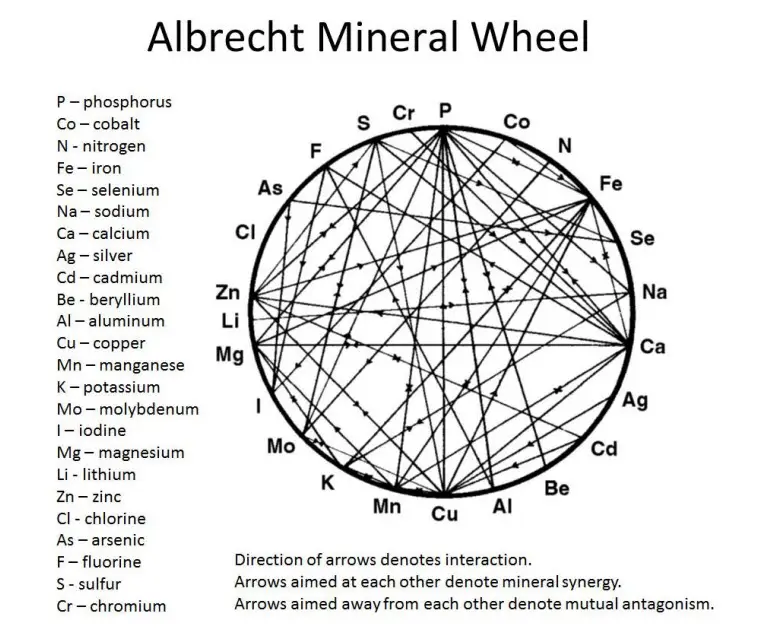
Beispielsweise kann eine Kalziumergänzung aufgrund der konkurrierenden Hemmung der Absorption zu einem Magnesiummangel führen, oder es könnte auch andersherum sein. Eine übermäßige Zufuhr von Vitamin D kann durch übermäßige Kalziumaufnahme zu Magnesiummangel führen (Rosanoff et al., 2016) und erhöhen somit das Risiko von Arterienverkalkungen. Auch die Einnahme von Diuretika und anderen Medikamenten kann zu einem Magnesiummangel führen.
Wenn wir mit Mineralstoffmangel zu kämpfen haben, ist aufgrund des Mineralstoffrads in den meisten Fällen die Ernährung die einzige Lösung. Wir müssen Lebensmittel konsumieren, die auf normalem, nicht erschöpftem Boden angebaut werden. Dabei handelt es sich um Produkte, die in einem ersten Schritt auf Böden ohne den Einsatz synthetischer Düngemittel angebaut wurden. Der zweite Schritt besteht darin, nährstoffreiche Nahrung zu sich zu nehmen. Denn die meisten von Ihnen würden es nicht tun und weiterhin tierische Produkte zu sich nehmen, die nicht ausreichend Magnesium enthalten, und noch schlimmer: Sie würden weiterhin raffinierte Kalorien zu sich nehmen, was Ihnen eine schnelle Lösung für Ihr Magnesiumproblem und Ihren Mangel bescheren würde ORAC-Diätwert Punktzahl.
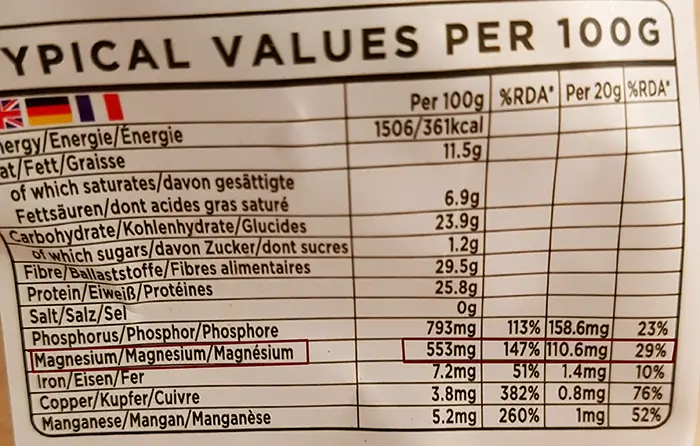
Bisher haben wir bereits zwei Nahrungsergänzungsmittel, die wir täglich zu uns nehmen sollten: 40 Gramm rohe Sonnenblumenkerne und 40 Gramm roher Kakao. Sie können ein oder zwei Grünkohlblätter für Vitamin K, zusätzliches Vitamin D, Kaliumsalz, zwei Kiwis für Vitamin C oder ein anderes Vitamin-C-reiches Lebensmittel und eine oder zwei Karotten für Vitamin A hinzufügen. Dies gilt für den Rest jeden Tag Ihres Lebens. Wenn Sie sich pflanzlich ernähren, sollten Sie der Mischung Vitamin B12 hinzufügen.
Vitamin-A-Mangel.
Wenn wir uns den Vitamin-A-Status ansehen, ist er genauso aussagekräftig wie alles andere. Vitamin A zum Beispiel ist nur das orangefarbene Pigment, das wir in Kürbissen oder Karotten sehen. Unser Körper verwendet das Beta-Carotin-Pigment aus Karotten, um Vitamin A herzustellen. Bevor Vitamin A zu Vitamin wurde, war es nur ein Pigment, das Pflanzen zur Abwehr der Oxidation durch freie Radikale nutzen. Es war nur ein weiteres Antioxidans, wurde aber mit der Zeit durch Anpassung zu einem essentiellen Vitamin. Zu den Lebensmitteln mit hohem Vitamin-A-Gehalt gehören rotes, orangefarbenes und gelbes Gemüse sowie dunkelgrünes Blattgemüse und Süßkartoffeln. Einige Lebensmittel und Nahrungsergänzungsmittel können zu toxischen Vitamin-A-Spiegeln führen, beispielsweise in der Leber, aber auch in Lebertran, Red Snapper und Herbalife-Nahrungsergänzungsmitteln. Es ist offensichtlich, dass die Hälfte der Bevölkerung überhaupt kein Gemüse isst und gleichzeitig auch nie Leber oder Fisch zu sich nimmt, was gut ist. Das meiste Vitamin A, das Menschen, die SAD essen, zu sich nehmen, stammt tatsächlich aus Eigelb und hier und da aus einigen Salaten und Obst. Die orange Farbe des Eigelbs ist Vitamin A. Die Einnahme von Vitamin-A-Ergänzungsmitteln kann zu Vergiftungen führen, da Vitamin A ein fettlösliches Vitamin ist und sich im Körper anreichert. Die tierische Form von Vitamin A namens Retinol ist eine Form, die unser Körper nutzt und aus Beta-Carotin umgewandelt wird. Das Problem ist jedoch, dass unser Körper überschüssiges Retinol nicht entgiften kann. Wir hatten nie das Bedürfnis, uns als Pflanzenfresser zu einer übermäßigen Aufnahme von Retinol über die Nahrung zu entwickeln. Bei fleischfressenden Tieren ist die Leber in der Lage, übermäßige Mengen an Vitamin A zu verstoffwechseln, bei uns ist dies jedoch nicht möglich, sodass eine längere Exposition gegenüber hohen Retinolspiegeln zu Toxizität führen kann. Vitamin-A-Nahrungsergänzungsmittel verkürzen auf lange Sicht Ihre Lebenserwartung, wenn Sie nicht sehr vorsichtig sind und nicht genau wissen, was Sie tun. Seitdem Arktisforscher an einer Überdosis Vitamin A starben, nachdem sie die Lebern von Eisbären gefressen hatten, ist die sichere Obergrenze der Aufnahme immer weiter gesunken, und tatsächlich leben diejenigen, die Vitamin-A-Ergänzungsmittel einnehmen, auch kürzer. Im Gegensatz dazu zeigt Beta-Carotin diesen Trend nicht und unser Körper wandelt nur die Menge um, die benötigt wird. Zusätzliches Carotin gelangt in Ihre Haut und verleiht ihr einen „goldenen Glanz“, der in evolutionärer Hinsicht ein Zeichen für Gesundheit und sexuelle Attraktivität ist. Und ja, dazu gibt es Experimente. Zu viel Beta-Carotin führt wiederum zu einem starken „Glühen“ und macht Sie orange, daher ist Mäßigung der Schlüssel. Seitdem Arktisforscher an einer Überdosis Vitamin A starben, nachdem sie die Lebern von Eisbären gefressen hatten, ist die sichere Obergrenze der Aufnahme immer weiter gesunken, und tatsächlich leben diejenigen, die Vitamin-A-Ergänzungsmittel einnehmen, auch kürzer. Im Gegensatz dazu zeigt Beta-Carotin diesen Trend nicht und unser Körper wandelt nur die Menge um, die benötigt wird. Zusätzliches Carotin gelangt in Ihre Haut und verleiht ihr einen „goldenen Glanz“, der in evolutionärer Hinsicht ein Zeichen für Gesundheit und sexuelle Attraktivität ist. Und ja, dazu gibt es Experimente. Zu viel Beta-Carotin führt wiederum zu einem starken „Glühen“ und macht Sie orange, daher ist Mäßigung der Schlüssel. Seitdem Arktisforscher an einer Überdosis Vitamin A starben, nachdem sie die Lebern von Eisbären gefressen hatten, ist die sichere Obergrenze der Aufnahme immer weiter gesunken, und tatsächlich leben diejenigen, die Vitamin-A-Ergänzungsmittel einnehmen, auch kürzer. Im Gegensatz dazu zeigt Beta-Carotin diesen Trend nicht und unser Körper wandelt nur die Menge um, die benötigt wird. Zusätzliches Carotin gelangt in Ihre Haut und verleiht ihr einen „goldenen Glanz“, der in evolutionärer Hinsicht ein Zeichen für Gesundheit und sexuelle Attraktivität ist. Und ja, dazu gibt es Experimente. Zu viel Beta-Carotin führt wiederum zu einem starken „Glühen“ und macht Sie orange, daher ist Mäßigung der Schlüssel. Beta-Carotin zeigt diesen Trend nicht und unser Körper wandelt nur die Menge um, die benötigt wird. Zusätzliches Carotin gelangt in Ihre Haut und verleiht ihr einen „goldenen Glanz“, der in evolutionärer Hinsicht ein Zeichen für Gesundheit und sexuelle Attraktivität ist. Und ja, dazu gibt es Experimente. Zu viel Beta-Carotin führt wiederum zu einem starken „Glühen“ und macht Sie orange, daher ist Mäßigung der Schlüssel. Beta-Carotin zeigt diesen Trend nicht und unser Körper wandelt nur die Menge um, die benötigt wird. Zusätzliches Carotin gelangt in Ihre Haut und verleiht ihr einen „goldenen Glanz“, der in evolutionärer Hinsicht ein Zeichen für Gesundheit und sexuelle Attraktivität ist. Und ja, dazu gibt es Experimente. Zu viel Beta-Carotin führt wiederum zu einem starken „Glühen“ und macht Sie orange, daher ist Mäßigung der Schlüssel.
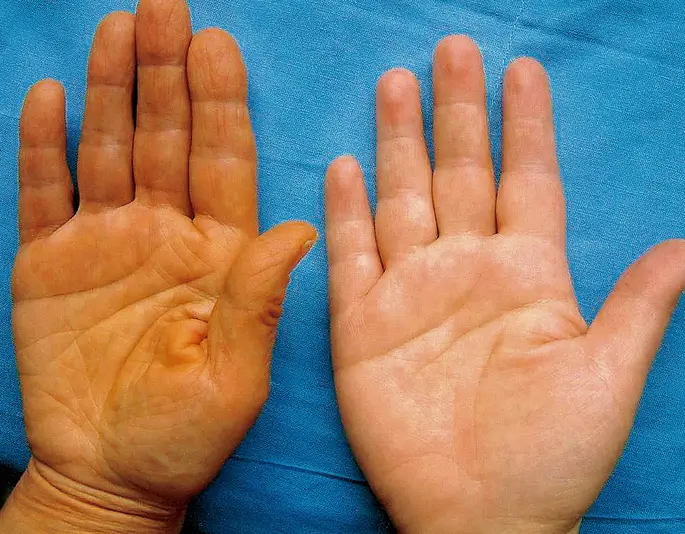
Es gibt einen sehr schlechten Trend, dass Menschen Beta-Carotin-Nahrungsergänzungsmittel einnehmen, um sich diesen „goldenen Glanzeffekt“ zu verschaffen, insbesondere in der Modelbranche. Nahrungsergänzungsmittel mit Beta-Carotin haben sich nachweislich bis zu einem gewissen Grad als krebserregend erwiesen und haben nicht die gleichen gesundheitlichen Auswirkungen wie natürliches Beta-Carotin, was wahrscheinlich darauf zurückzuführen ist, dass Lebensmittel in der Natur ein Paketangebot sind. Mit Beta-Carotin in Vollwertkost würden wir eine große Menge anderer synergistischer Verbindungen damit konsumieren. Es gibt auch einen schlechten Trend in der Modelbranche, bei dem Menschen bewusst toxische Dosen Retinol einnehmen, um ihre Haut auszutrocknen und so Akne vorzubeugen, oder einfach nur Mikrodosen von Accutane einnehmen, das ebenfalls eine Form von Retinol ist. Ihr Lebensunterhalt hängt von einer gesund aussehenden Haut ab, aber dem Rest der Menschen werde ich immer davon abraten. Nehmen Sie kein Vitamin A oder Beta-Carotin ein. Iss Karotten.
Wenn Sie Multivitamin- und Mineralstoffpräparate einnehmen möchten, tun Sie dies nicht. Nehmen Sie einzelne Vitamine ein, die von guter Qualität sind und die Sie nicht mit der Nahrung ergänzen können. Nehmen Sie niemals ein Multimineralpräparat ein. Es gibt nur einige nichtorganische Mineralien, die bioverfügbar sind.
Jod.
Das eine wäre Jod, und dieses ist sehr wichtig, und die FDA hat die empfohlene Tagesdosis für Jod absichtlich auf einen Wert gesenkt, der nur eine offensichtliche Verzögerung verhindert. Und um es zu bekommen, muss man zunächst Speisesalz essen. Und was passiert, wenn man hohen Blutdruck hat und Salz aus der Ernährung gestrichen wird? Gott bewahre, dass du schwanger wirst und anfängst, Speisesalz zu meiden. Ihr Baby könnte am Ende einen um 20 bis 40 Punkte niedrigeren IQ haben. Nehmen Sie Jodpräparate ein oder essen Sie Algen (auf dieses Thema möchte ich in diesem Artikel nicht näher eingehen, Jod ist sehr wichtig für die allgemeine Gesundheit und jeder von uns leidet unter einem völligen Mangel). Dies wäre ein Thema für entsprechende Artikel. Sie können damit beginnen, sich diesen Vortrag anzusehen.
Dr. Jorge Flechas – Jodversorgung des gesamten Körpers. Restaurative Medizin, Konferenz in Portland, Oregon 2011
Aufgrund der Erschöpfung des Oberbodens sind in unserer Nahrung keine Spuren organischer Mineralien mehr enthalten, und dies ist auch ein Thema für eine Reihe verwandter Artikel, auf die ich hier nicht näher eingehen möchte. Unser Körper besteht aus 102 Mineralien und keines davon ist in der RDA aufgeführt. Was Sie tun sollten, ist, Produkte zu essen, die auf dem Land angebaut werden, ohne den Einsatz von synthetischen Düngemitteln.
Jedes Lebensmitteletikett ist nur eine Fälschung. Ich werde das noch einmal schreiben. Jedes Lebensmitteletikett im Laden, das nicht auf reichhaltigem Naturboden ohne den Einsatz synthetischer Düngemittel angebaut wird, enthält keinerlei Mineralien außer den Mineralien aus synthetischen Düngemitteln selbst.
Alle Etiketten sind gefälscht. Wenn Lebensmittel nicht biologisch auf nährstoffreichen Böden angebaut werden, denken Sie daran. Das Etikett ist gefälscht. Sie könnten versuchen, ein anderes organisches Mineralstoffpräparat wie Shilajit oder etwas Ähnliches zu finden, aber das wäre extrem teuer. Nahrungsergänzungsmittel können sogar teurer sein als der Verzehr von Bio-Produkten. Eine weitere Möglichkeit besteht darin, Produkte zu essen, die über große Wurzelsysteme verfügen, die tief in den Boden reichen. Walnüsse wären hierfür ein gutes Beispiel.
Die Alternative ist, was die meisten Leute tun werden. Nichts. Mehrere chronische Krankheiten und Beschwerden führen zu lebensbeeinträchtigenden Folgen und schließlich zum Tod durch Wohlstandskrankheiten.
Abschluss:
- Im Gegensatz zu Tieren können sich Pflanzen nur chemisch schützen.
- Diese in pflanzlichen Geweben vorkommenden Stoffe werden als sekundäre Pflanzenstoffe bezeichnet. Griechisch phyto bedeutet im modernen Englisch „Pflanze“.
- Diese Chemikalien waren mit der Zeit ebenso lebenswichtig wie Zucker oder Fett und werden als Vitamine bezeichnet.
- Noch nie in unserer gesamten Evolution als Spezies waren wir einer so hohen Verfügbarkeit tierischer Produkte ausgesetzt.
- Selbst in der Paläozeit betrug der Fleischzufluss in Jäger- und Sammlergesellschaften nicht mehr als 5 bis 10 Prozent der Kalorien.
- Die Ernährungsprofile der modernen amerikanischen Standarddiät (SAD) stimmen völlig nicht mit unserer Entwicklung überein.
- Mikronährstoffmängel äußern sich in chronischen Erkrankungen.
- Eine schlechte Ernährung zu ergänzen ist einfach schlecht.
- Es gibt 102 Mineralien, die der menschliche Körper braucht, und synthetische Düngemittel ersetzen nur ein paar Mineralien, die Pflanzen benötigen.
- Energiereiche, nährstoffarme Lebensmittel machen schätzungsweise 27 % der täglichen Kalorienaufnahme in der amerikanischen Ernährung aus.
- Alkohol macht weitere 4 % der täglichen Kalorienaufnahme aus.
- Anatomische Allesfresser und Fleischfresser produzieren ihr eigenes Vitamin C.
- Pflanzenfresser produzieren ihr eigenes Cholesterin.
- Ungefähr 75 % der US-Bevölkerung (Alter ≥ 1 Jahr) verzehren nicht die empfohlene Obstmenge und mehr als 80 % verzehren nicht die empfohlene Gemüsemenge
- Einige der Chemikalien, die im Pflanzenreich vorkommen, aber im Tierreich nicht vorkommen, wie z. B. Vitamin C, Magnesium oder Vitamin E, können in der modernen, von tierischen Produkten dominierten Ernährung im westlichen Stil grundsätzlich nicht korrigiert werden.
- 94,3 % der US-Bevölkerung decken nicht den täglichen Bedarf an Vitamin D.
- 100 % der Bevölkerung hatten eine geringere Kaliumzufuhr als den empfohlenen Wert.
- 99 % der Menschen haben eine übermäßige Natriumaufnahme.
- Unsere homininen Vorfahren hatten nie Kristallsalz.
- Die normale Kaliumaufnahme der menschlichen Spezies könnte in der Größenordnung von 15.000 mg pro Tag liegen, wenn wir unsere Evolution betrachten.
- 88,5 % Nichteinhaltung von Vitamin E.
- Synthetische Vitamin-E-Nahrungsergänzungsmittel haben in vivo keine antioxidative Wirkung.
- Wenn Sie einen Vitamin-E-Mangel haben und Nahrungsergänzungsmittel einnehmen möchten, suchen Sie sich ein natürliches Vitamin-E-Ergänzungsmittel, idealerweise mit einer Mischung aus verschiedenen natürlichen Tocopherolen, und nehmen Sie nicht mehr als 400 IE ein.
- 66,9 % der Bevölkerung haben einen Vitamin-K-Mangel.
- 52,2 % der Bevölkerung haben einen Mangel an Magnesium, 44,1 % an Kalzium, 43,0 % an Vitamin A und 38,9 % an Vitamin C.
- Wenn Sie sich nicht vollwertig pflanzlich ernähren, liegt die Wahrscheinlichkeit, dass Sie an einem subklinischen Magnesiummangel leiden, bei über 95 %.
- Eine Nahrungsergänzung mit Kalzium kann aufgrund der kompetitiven Hemmung der Absorption zu einem Magnesiummangel führen, oder es könnte auch andersherum sein.
- Eine übermäßige Zufuhr von Vitamin D kann durch eine übermäßige Kalziumaufnahme zu einem Magnesiummangel führen und somit das Risiko von Arterienverkalkungen erhöhen. Auch die Einnahme von Diuretika und anderen Medikamenten kann zu einem Magnesiummangel führen.
- Vitamin-A-Nahrungsergänzungsmittel verkürzen auf lange Sicht Ihre Lebenserwartung, wenn Sie nicht sehr vorsichtig sind und nicht genau wissen, was Sie tun.
- Nehmen Sie einzelne Vitamine ein, die von guter Qualität sind und die Sie nicht mit der Nahrung ergänzen können. Nehmen Sie niemals ein Multimineralpräparat ein.
- Es gibt nur einige nichtorganische Mineralien, die bioverfügbar sind.
- Nehmen Sie Jodpräparate ein oder essen Sie Algen.
- Seit 1940 kam es durch den Einsatz synthetischer Düngemittel zu einem enormen Rückgang der Mikronährstoffdichte von Lebensmitteln.
- Jedes Lebensmitteletikett im Laden, das nicht auf reichhaltigem Naturboden ohne den Einsatz synthetischer Düngemittel angebaut wird, enthält keinerlei Mineralien außer den Mineralien aus synthetischen Düngemitteln selbst.
- Durch die Verarbeitung werden alle bereits weitgehend verbrauchten Mikronährstoffe entfernt.
- Zwei zusätzliche Nahrungsmittel, die wir täglich zu uns nehmen sollten, sind 40 Gramm rohe Sonnenblumenkerne (Vitamin E) und 40 Gramm roher Kakao (Magnesium, Antioxidantien). Sie können ein oder zwei Grünkohlblätter für Lutein und Vitamin K, zusätzliches Vitamin D, Kaliumsalz, Seetang oder Lugol-Lösung, zwei Kiwis für Vitamin C oder ein anderes Vitamin-C-reiches Lebensmittel und eine oder zwei Karotten für Vitamin A hinzufügen, 20 Gramm Leinsamen für Omega-3-Fettsäuren und essen Sie idealerweise Bio-Produkte für den Gehalt an Spurenelementen. Dies gilt jeden einzelnen Tag für den Rest Ihres Lebens. Wenn Sie sich pflanzlich ernähren, sollten Sie der Mischung Vitamin B12 hinzufügen und, wenn nicht, Folsäure oder B-Komplex-Ergänzungsmittel.
Häufig Gestellte Fragen
Verweise:
- Thomas D. (2007). Der Mineralienmangel an Nahrungsmitteln, die uns als Nation zur Verfügung stehen (1940-2002) – eine Rezension der 6. Auflage von McCance und Widdowson. Ernährung und Gesundheit, 19(1-2), 21–55. https://doi.org/10.1177/026010600701900205
- Guo, W., Nazim, H., Liang, Z. & Yang, D. (2016). Magnesiummangel bei Pflanzen: Ein dringendes Problem. Das Crop Journal, 4(2), 83-91. https://doi.org/10.1016/j.cj.2015.11.003
- Ernährungsrichtlinien für Amerikaner | gesundheit.gov. (nd-b). https://health.gov/our-work/nutrition-physical-activity/dietary-guidelines
- Kant AK (2000). Konsum energiereicher, nährstoffarmer Lebensmittel durch erwachsene Amerikaner: Auswirkungen auf Ernährung und Gesundheit. Die dritte nationale Gesundheits- und Ernährungsuntersuchungsumfrage, 1988-1994. Das amerikanische Journal für klinische Ernährung, 72(4), 929–936. https://doi.org/10.1093/ajcn/72.4.929
- Marriott, BP, Olsho, L., Hadden, L. & Connor, P. (2010). Aufnahme von zugesetztem Zucker und ausgewählten Nährstoffen in den Vereinigten Staaten, National Health and Nutrition Examination Survey (NHANES) 2003–2006. Kritische Rezensionen zur Lebensmittelwissenschaft und Ernährung, 50(3), 228–258. https://doi.org/10.1080/10408391003626223
- Bailey, RL, West, KP, Jr. & Black, RE (2015). Die Epidemiologie globaler Mikronährstoffdefizite. Annalen der Ernährung und des Stoffwechsels, 66 Ergänzung 2, 22–33. https://doi.org/10.1159/000371618
- Ames BN (2006). Eine geringe Aufnahme von Mikronährstoffen kann die degenerativen Erkrankungen des Alterns durch die Zuteilung knapper Mikronährstoffe durch Triage beschleunigen. Tagungsband der National Academy of Sciences der Vereinigten Staaten von Amerika, 103(47), 17589–17594. https://doi.org/10.1073/pnas.0608757103
- Huskisson, E., Maggini, S. & Ruf, M. (2007). Die Rolle von Vitaminen und Mineralstoffen im Energiestoffwechsel und im Wohlbefinden. Das Journal der internationalen medizinischen Forschung, 35(3), 277–289. https://doi.org/10.1177/147323000703500301
- Fairfield, KM, & Fletcher, RH (2002). Vitamine zur Vorbeugung chronischer Krankheiten bei Erwachsenen: wissenschaftliche Überprüfung. JAMA, 287(23), 3116–3126. https://doi.org/10.1001/jama.287.23.3116
- Angelo, G., Drake, VJ, & Frei, B. (2015). Wirksamkeit einer Multivitamin-/Mineralstoffergänzung zur Reduzierung des Risikos chronischer Erkrankungen: Eine kritische Überprüfung der Erkenntnisse aus Beobachtungsstudien und randomisierten kontrollierten Studien. Kritische Rezensionen zur Lebensmittelwissenschaft und Ernährung, 55(14), 1968–1991. https://doi.org/10.1080/10408398.2014.912199
- Berner, LA, Keast, DR, Bailey, RL und Dwyer, JT (2014). Angereicherte Lebensmittel tragen wesentlich zur Nährstoffaufnahme in der Ernährung von Kindern und Jugendlichen in den USA bei. Zeitschrift der Akademie für Ernährung und Diätetik, 114(7), 1009–1022.e8. https://doi.org/10.1016/j.jand.2013.10.012
- Rosanoff, A., Dai, Q. & Shapses, SA (2016). Wechselwirkungen wesentlicher Nährstoffe: Interagiert ein niedriger oder suboptimaler Magnesiumstatus mit dem Vitamin D- und/oder Kalziumstatus? Fortschritte in der Ernährung (Bethesda, Md.), 7(1), 25–43. https://doi.org/10.3945/an.115.008631
- Cogswell, ME, Zhang, Z., Carriquiry, AL, Gunn, JP, Kuklina, EV, Saydah, SH, Yang, Q. & Moshfegh, AJ (2012). Natrium- und Kaliumaufnahme bei Erwachsenen in den USA: NHANES 2003-2008. Das amerikanische Journal für klinische Ernährung, 96(3), 647–657. https://doi.org/10.3945/ajcn.112.034413
- Elder, SJ, Haytowitz, DB, Howe, J., Peterson, JW, & Booth, SL (2006). Vitamin-K-Gehalt von Fleisch, Milchprodukten und Fast Food in der US-Ernährung. Zeitschrift für Agrar- und Lebensmittelchemie, 54(2), 463–467. https://doi.org/10.1021/jf052400h
- Fulgoni, VL, 3., Keast, DR, Bailey, RL, & Dwyer, J. (2011). Lebensmittel, Stärkungsmittel und Nahrungsergänzungsmittel: Woher bekommen Amerikaner ihre Nährstoffe? Das Journal der Ernährung, 141(10), 1847–1854. https://doi.org/10.3945/jn.111.142257
- Gray, A., Avenell, A. und Bolland, M. (2018). Überarbeitete Metaanalyse zu Vitamin K und Frakturen. JAMA Innere Medizin, 178(8), 1135. https://doi.org/10.1001/jamainternmed.2018.2853
- Palermo, A, Tuccinardi, D, D'Onofrio, L, Watanabe, M, Maggi, D, Maurizi, AR, Greto, V, Buzzetti, R, Napoli, N, Pozzilli, P., & Manfrini, S. (2017 ). Vitamin K und Osteoporose: Mythos oder Realität? Stoffwechsel: klinisch und experimentell, 70, 57–71. https://doi.org/10.1016/j.metabol.2017.01.032
- Mott, A., Bradley, T., Wright, K., Cockayne, ES, Shearer, MJ, Adamson, J., Lanham-New, SA, & Torgerson, DJ (2019). Einfluss von Vitamin K auf die Knochenmineraldichte und Knochenbrüche bei Erwachsenen: eine aktualisierte systematische Überprüfung und Metaanalyse randomisierter kontrollierter Studien. Osteoporosis International: Eine Zeitschrift, die als Ergebnis der Zusammenarbeit zwischen der European Foundation for Osteoporose und der National Osteoporosis Foundation der USA gegründet wurde, 30(8), 1543–1559. https://doi.org/10.1007/s00198-019-04949-0
- Gremium des Institute of Medicine (US) für Mikronährstoffe. (2001). Nahrungsreferenzwerte für Vitamin A, Vitamin K, Arsen, Bor, Chrom, Kupfer, Jod, Eisen, Mangan, Molybdän, Nickel, Silizium, Vanadium und Zink. National Academies Press (USA). [PubMed]
- Dietrich, M., Jacques, P., Pencina, M., Lanier, K., Keyes, M., Kaur, G., Wolf, P. & Vasan, R. (2009). Verwendung von Vitamin-E-Ergänzungsmitteln und das Auftreten von Herz-Kreislauf-Erkrankungen und Gesamtmortalität in der Framingham-Herzstudie: Spielt der zugrunde liegende Gesundheitszustand eine Rolle? Arteriosklerose, 205(2), 549. https://doi.org/10.1016/j.atherosclerosis.2008.12.019
- Bjelakovic, G., Nikolova, D. & Gluud, C. (2013). Meta-Regressionsanalysen, Meta-Analysen und versuchssequenzielle Analysen der Auswirkungen einer Supplementierung mit Beta-Carotin, Vitamin A und Vitamin E einzeln oder in verschiedenen Kombinationen auf die Gesamtmortalität: Haben wir Beweise dafür, dass kein Schaden vorliegt? Plus eins, 8(9). https://doi.org/10.1371/journal.pone.0074558
- Gremium des Institute of Medicine (US) für diätetische Antioxidantien und verwandte Verbindungen. (2000). Nahrungsreferenzwerte für Vitamin C, Vitamin E, Selen und Carotinoide. National Academies Press (USA). [PubMed]
- Aktuelles Wissen in der Ernährung, 10. Auflage. (2012b, 19. Juni). Wiley.com. https://www.wiley.com/en-us/Present+Knowledge+in+Nutrition,+10th+Edition-p-9781119946045
- Jiang Q. (2014). Natürliche Formen von Vitamin E: Stoffwechsel, antioxidative und entzündungshemmende Aktivitäten und ihre Rolle bei der Prävention und Therapie von Krankheiten. Biologie und Medizin freier Radikale, 72, 76–90. https://doi.org/10.1016/j.freeradbiomed.2014.03.035
- Huang, L., Trieu, K., Yoshimura, S., Neal, B., Woodward, M., Campbell, NR, Li, Q., Lackland, DT, Leung, AKC, Anderson, CA, MacGregor, GA, & He, F. (2020). Einfluss der Dosis und Dauer der Natriumreduktion in der Nahrung auf den Blutdruck: systematische Überprüfung und Metaanalyse randomisierter Studien. BMJ, m315. https://doi.org/10.1136/bmj.m315
- Farez, MF, Fiol, MP, Gaitán, MI, Quintana, FJ, & Correale, J. (2015). Die Natriumaufnahme ist mit einer erhöhten Krankheitsaktivität bei Multipler Sklerose verbunden. Zeitschrift für Neurologie, Neurochirurgie und Psychiatrie, 86(1), 26–31. https://doi.org/10.1136/jnnp-2014-307928
- Carranza-León, DA, Oeser, A., Marton, A., Wang, P., Gore, JC, Titze, J., Stein, CM, Chung, CP, & Ormseth, MJ (2020). Natriumgehalt im Gewebe bei Patienten mit systemischem Lupus erythematodes: Zusammenhang mit Krankheitsaktivität und Entzündungsmarkern. Lupus, 29(5), 455–462. https://doi.org/10.1177/0961203320908934
- Hori M. (2020). Leitartikel für: „Natrium im Rückenmark bei schubförmig remittierender Multipler Sklerose: Erhöhte Konzentrationen und Assoziationen mit mikrostruktureller Gewebeanisotropie“. Zeitschrift für Magnetresonanztomographie: JMRI, 52(5), 1439–1440. https://doi.org/10.1002/jmri.27253
Zusammenhängende Posts




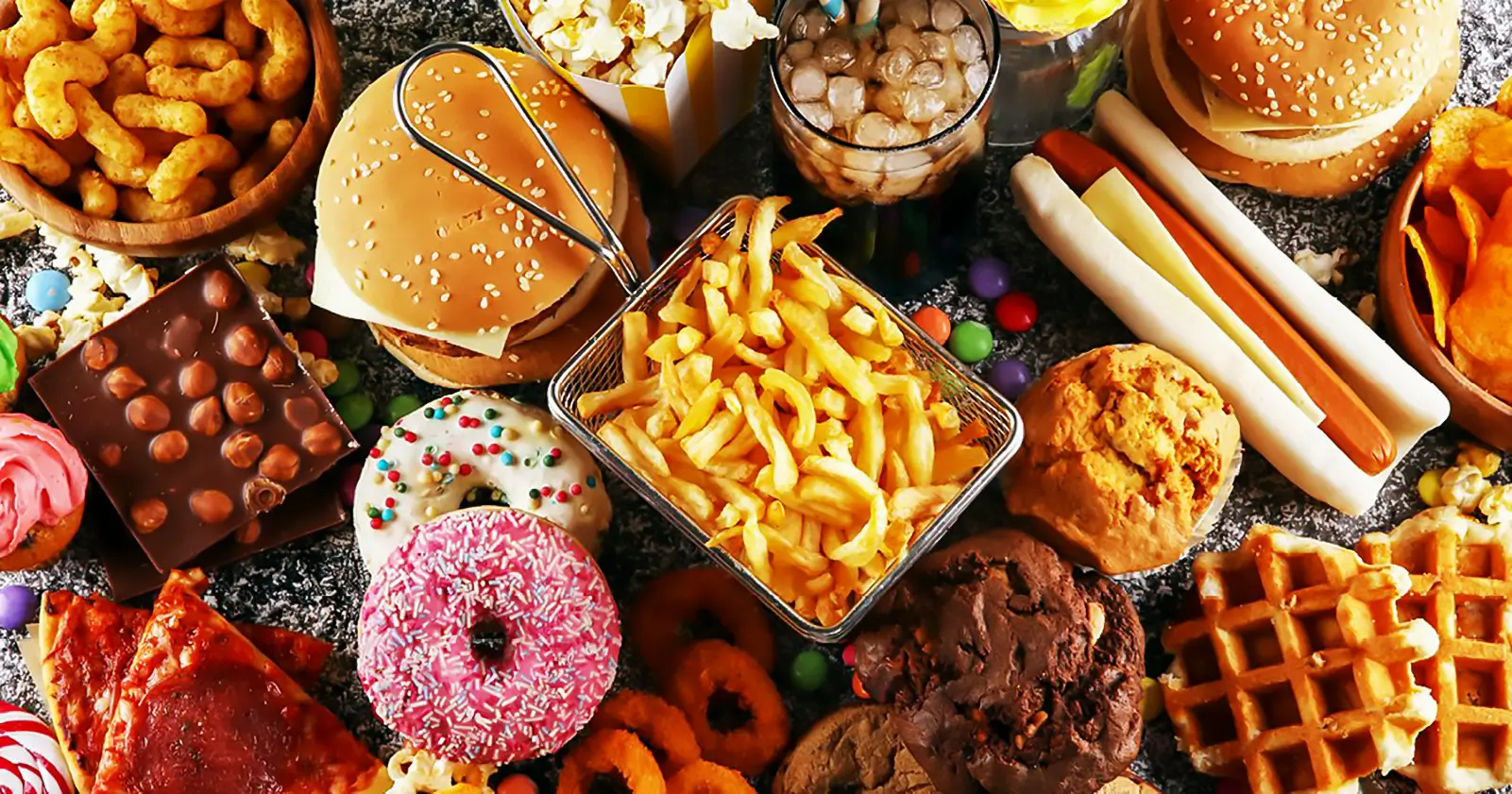


Haben Sie Fragen zum Thema Ernährung und Gesundheit?
Ich würde gerne von Ihnen hören und sie in meinem nächsten Beitrag beantworten. Ich schätze Ihren Beitrag und Ihre Meinung und freue mich darauf, bald von Ihnen zu hören. Ich lade Sie auch ein zu Folgen Sie uns auf Facebook, Instagram und Pinterest für weitere Inhalte zu Ernährung und Gesundheit. Sie können dort einen Kommentar hinterlassen und sich mit anderen Gesundheitsbegeisterten austauschen, Ihre Tipps und Erfahrungen teilen und Unterstützung und Ermutigung von unserem Team und unserer Community erhalten.
Ich hoffe, dass dieser Beitrag für Sie informativ und unterhaltsam war und dass Sie bereit sind, die gewonnenen Erkenntnisse anzuwenden. Wenn Sie diesen Beitrag hilfreich fanden, dann es teilen mit Ihren Freunden und Familienangehörigen, die ebenfalls davon profitieren könnten. Man weiß nie, wer auf seinem Weg zur Gesundheit vielleicht etwas Anleitung und Unterstützung braucht.
– Das könnte Ihnen auch gefallen –
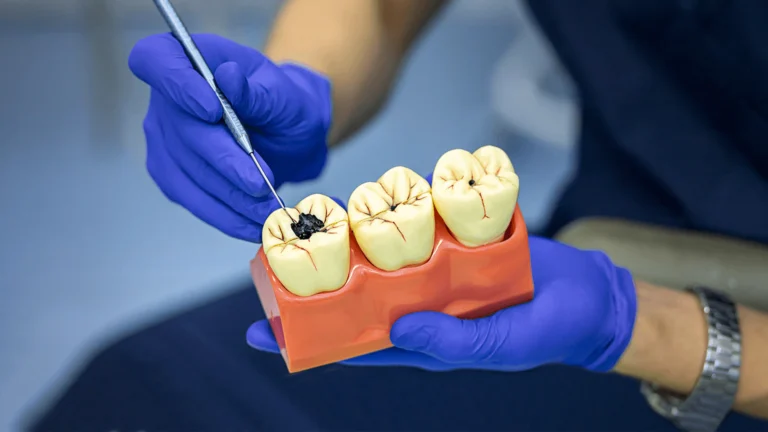
Wie Man Karies Stoppt: Symptome, Ursachen und Prävention

Intravenöses Vitamin C bei der Behandlung von Influenza: Lebende Beweise aus der Klinischen Praxis

Mittelmeerdiät- „Wunder“ von Olivenöl

Humanes Fleisch Oder Humaner Mythos?- Die Tierische Erkenntnis
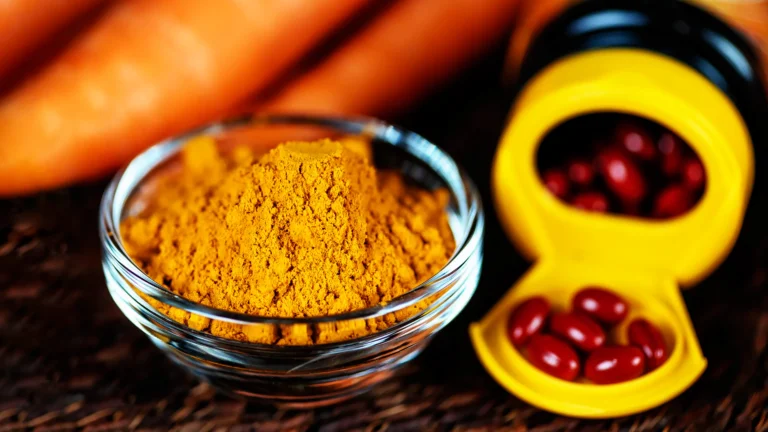
Antioxidantienreiche Ernährung: Allgemeine Regeln und Strategien
Quecksilber- Neurotoxin aus dem Fisch
Entzündung und Ernährung- Veganes Argument
Milch und Milchprodukte: Gesundheitsrisikokorrelationen

Über Ernährung Lernen

Milos Pokimica ist Doktor der Naturheilkunde, klinischer Ernährungsberater, Autor für medizinische Gesundheit und Ernährung sowie Berater für Ernährungswissenschaften. Autor der Buchreihe Zum Veganer werden? Rückblick auf die Wissenschafter betreibt auch das Natürliche Gesundheit website GoVeganWay.com
Medizinischer Haftungsausschluss
GoVeganWay.com bietet Ihnen Rezensionen der neuesten Ernährungs- und Gesundheitsforschung. Die bereitgestellten Informationen stellen die persönliche Meinung des Autors dar und sind weder als Ersatz für eine professionelle medizinische Beratung, Diagnose oder Behandlung gedacht noch implizit. Die bereitgestellten Informationen dienen ausschließlich Informationszwecken und sollen nicht als Ersatz für die Beratung, Diagnose und/oder medizinische Behandlung durch einen qualifizierten Arzt oder Gesundheitsdienstleister dienen.Ignorieren Sie niemals professionellen medizinischen Rat oder verzögern Sie die Suche nach medizinischer Behandlung, weil Sie etwas auf GoVeganWay.com gelesen oder über GoVeganWay.com darauf zugegriffen haben
Nehmen Sie NIEMALS Änderungen im Lebensstil oder irgendwelche Änderungen vor, die eine Folge von etwas sind, das Sie auf GoVeganWay.com gelesen haben, bevor Sie einen zugelassenen Arzt konsultieren.
Bei einem medizinischen Notfall rufen Sie sofort einen Arzt oder die Notrufnummer 911 an. GoVeganWay.com empfiehlt oder unterstützt keine bestimmten Gruppen, Organisationen, Tests, Ärzte, Produkte, Verfahren, Meinungen oder andere Informationen, die darin erwähnt werden könnten.
Herausgeber-Tipps –
Krebs Auswahl des Herausgebers Phytochemikalien
Antikrebskraft von Obst und Gemüse: In Vivo und Klinische Beweise
Einige Pflanzenextrakte konkurrieren mit führenden Chemotherapeutika und wirken gleichzeitig auf mehrere verschiedene Arten von Krebszellen.
Antioxidantien Auswahl des Herausgebers ORAC
Ätherische Öle als Antioxidative Nahrungsergänzungsmittel: Regeln und Strategien
Ätherische Öle in Lebensmittelqualität können eine praktische und verbraucherfreundliche Strategie zur Optimierung des Antioxidantienwerts und der ORAC-Werte unserer Ernährung sein.
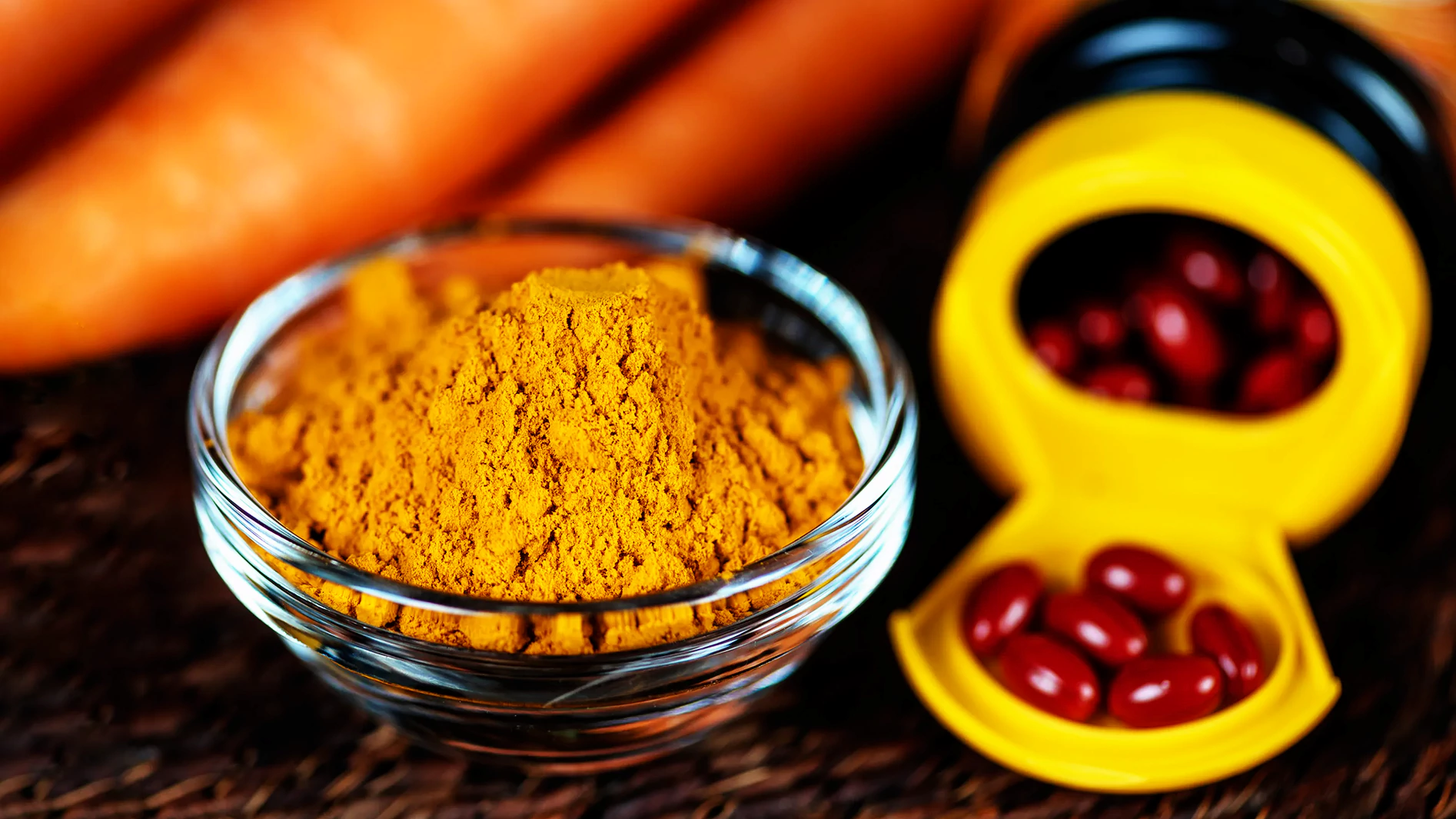
Antioxidantien Auswahl des Herausgebers ORAC
Antioxidantienreiche Ernährung: Allgemeine Regeln und Strategien
Es gibt einfache und kostengünstige Strategien zur Optimierung des antioxidativen Wertes unserer Ernährung.
Antioxidantien Auswahl des Herausgebers ORAC
ORAC-Werte Verstehen: Antioxidantienspiegel in Lebensmitteln
Wenn Ihre Hauptquelle für Antioxidantien Kaffee ist, wissen Sie, dass Sie ein ernstes Problem haben.

Antioxidantien Auswahl des Herausgebers ORAC
Astaxanthin Vorteile: Das Stärkste Natürliche Antioxidans der Welt
Astaxanthin ist das stärkste natürliche und universelle Antioxidans (sowohl öl- als auch wasserlöslich), das der Wissenschaft bekannt ist. Es reichert sich im Gewebe an und kann sich niemals in ein Prooxidans verwandeln.
Antioxidantien Auswahl des Herausgebers ORAC Phytochemikalien
Antioxidantien: Die Grundlagen Verstehen
Tierische Produkte enthalten keine sekundären Pflanzenstoffe oder Antioxidantien. Pflanzliche Lebensmittel enthalten im Durchschnitt mehr als 60-mal so viele Antioxidantien wie tierische Lebensmittel.
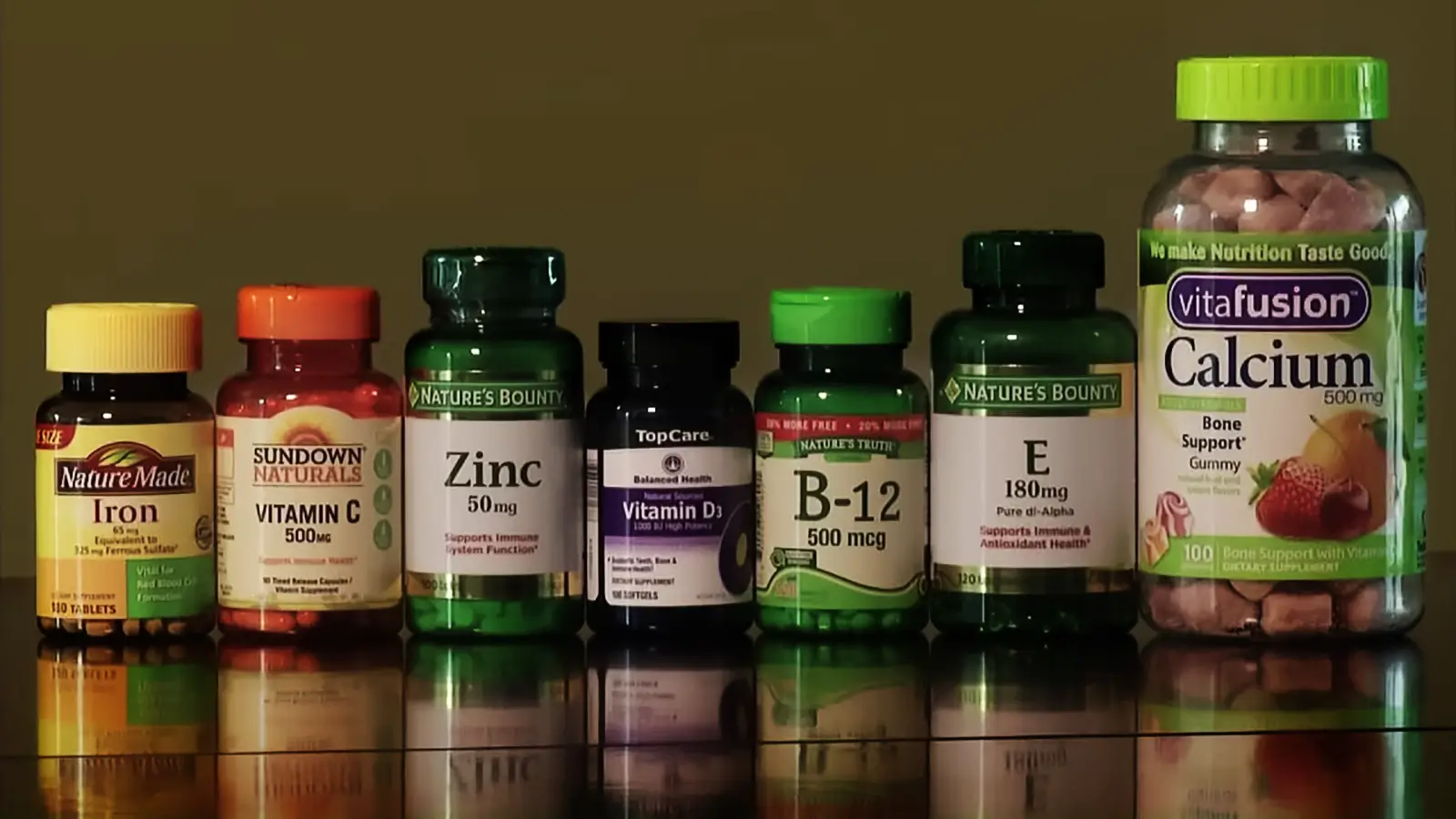
Auswahl des Herausgebers Vegane Diät
Nährstoffmangel Bei Veganer Ernährung: Präventionsstrategien
Es gibt neun bevölkerungsweit verbreitete Nährstoffmängel, die Menschen betreffen, die sich pflanzlich ernähren. Wenn einige Mängel nicht rechtzeitig behoben werden, haben sie schreckliche und nicht behandelbare Folgen.
Auswahl des Herausgebers Optimale Ernährung
Mikronährstoffmangel in der Amerikanischen Standardernährung: Strategien zur Optimierung
Das Nährstoffprofil unserer modernen Ernährung mit Fleisch, Zucker und verarbeiteten Lebensmitteln ist völlig unvereinbar mit unserer Evolution und führt zu schwerem Mikronährstoffmangel.
Auswahl des Herausgebers Phytochemikalien
Phytochemikalien: Die Grundlagen Verstehen
Jeder einzelne existierende sekundäre Pflanzenstoff hat eine biologische Wirkung im menschlichen Körper. Jedes einzelne aus Millionen verschiedener sekundärer Pflanzenstoffe.
Auswahl des Herausgebers Milch Optimale Ernährung
Milch und Milchprodukte: Gesundheitsrisikokorrelationen
Bekannte Zusammenhänge mit Milch und Milchkonsum sind Unfruchtbarkeit, Eierstock- und Brustkrebs, Leukämie, Diabetes Typ 1, Autismus, Arteriosklerose, Katarakt, rheumatoide Arthritis, Multiple Sklerose, Hyperaktivität, Stauung, Pickel und mehr …
Krebs Auswahl des Herausgebers Eiweiß
Komplettes Protein: IGF-1-Signalisierung bei der Krebsentstehung
Wenn Sie tierisches Eiweiß essen, ist die Wahrscheinlichkeit, an allen Krebsarten zu erkranken, viermal höher. Wenn Sie rauchen, besteht ein vierfach erhöhtes Risiko, an Lungenkrebs zu erkranken.

Krebs Auswahl des Herausgebers Eiweiß
Die Anatomie von Krebs - Gesundheitsrisikokorrelationen
Etwa 2 % der Krebserkrankungen werden in der Medizin als rein genetisch bedingt angesehen. Das gleiche Verbreitungsgebiet wie im Tierreich. Dir wurde nicht die ganze Wahrheit gesagt.
Milos Pokimica ist Autor für Gesundheit und Ernährung sowie Berater für Ernährungswissenschaften. Er ist Autor einer Buchreihe. Zum Veganer werden? Rückblick auf die Wissenschafter betreibt auch das Natürliche Gesundheit website GoVeganWay.com
Neueste Artikel –
Kalorienbeschränkung Langlebigkeit
Wie Man Fastet: Fasten-Lebensmittel, Die Die Autophagie Nicht Stören
Autophagie. Haben Sie sich jemals gefragt, was mit den Zellen in Ihrem Körper passiert, wenn sie sterben oder beschädigt werden? Häufen sie sich einfach an und verursachen Probleme, oder werden sie irgendwie entsorgt? Die Antwort ist, dass Ihr Körper...
Zahngesundheit Verhütung
Süßigkeiten Zahnempfindlichkeit & Schmerz: Schnelle Abhilfe & Dauerhafte Lösung
Eine schnelle und einfache Lösung zur Schmerzlinderung ist ätherisches Nelkenöl, ein starkes Antioxidans und Schmerzmittel, das bei Zahnfleischerkrankungen und Zahnschmerzen helfen kann.
Bohnen
Grüne Bohnen: Ernährung und Gesundheitliche Vorteile
Grüne Bohnen sind kalorienarm und reich an natürlichen Stoffen, die Ihnen helfen können, Ihren Blutzucker zu kontrollieren, Ihren Cholesterinspiegel zu senken und freie Radikale abzuwehren.
Rohkostdiät Vegane Diät
Kann Man Pilze Roh Essen: Gesundheitsrisiken, Ernährung und Sicherheit
Pilze enthalten hitzeempfindliche Giftstoffe wie Hydrazin oder Agaritin und Zellwände aus Chitin, die vom Menschen nicht gut verdaut werden können.
Vegane Diät
Sind Fische Tiere? Eine kulturelle Perspektive
In einigen Kulturen wird Fischfleisch nicht als Fleisch betrachtet, und Fisch ist sogar während des Fastens erlaubt.

Zahngesundheit Verhütung
Hausgemachte Natürliche Mundspülung: Bewährt, Stärker und Weniger Giftig
Selbstgemachtes natürliches Mundwasser ist stärker als Chlorhexidin, weniger giftig und kann beim Verschlucken zu Übelkeit führen, hat aber auch einen hohen ORAC-Wert.
Zahngesundheit Verhütung
Wie Man Karies Stoppt: Symptome, Ursachen und Prävention
Der Zuckerkonsum ist die Hauptursache für Karies und Zahnfäule, verbunden mit einem Mangel an Mineralien, insbesondere Magnesium, Zink, Kupfer und Spurenelementen.
Antioxidantien Superlebensmittel
Amla: Bewährte Vorteile, Ernährung und Klinische Bedeutung
Amla ist eines der stärksten Antioxidantien der Welt mit einem ORAC-Wert von 261.530. Sie ist eine reichhaltige Quelle von sekundären Pflanzenstoffen, die verschiedene gesundheitliche Vorteile haben.
Top-Gesundheitsnachrichten – ScienceDaily
- FDA-approved epilepsy drug may help reverse osteoarthritis damageam Oktober 8, 2026
Researchers at Yale have identified a promising new approach to osteoarthritis that could do more than simply ease pain. The epilepsy drug lacosamide appears to block a protein involved in both pain signaling and cartilage destruction, helping damaged joints shift back toward repair in preclinical studies.
- Just 7 days of strength training started shrinking fat cells in miceam Oktober 8, 2026
Just seven strength-training sessions helped obese mice shrink visceral fat cells and reactivate molecular pathways involved in burning stored fat, despite no change in overall body weight. The findings suggest some benefits of resistance exercise may begin long before weight loss becomes visible, though the results still need to be confirmed in humans.
- Scientists warn a popular vitamin D supplement may have a hidden downsideam Oktober 8, 2026
Not all vitamin D supplements are created equal, and new research suggests that one popular form may have an unexpected downside. Scientists found that taking vitamin D2 can actually lower the body’s levels of vitamin D3, the form naturally produced by sunlight and more effective at boosting overall vitamin D. Previous studies also suggest that vitamin D3 may provide stronger immune protection against viruses and bacteria.
- Not all trans fats are bad, major review findsam Oktober 8, 2026
A large analysis of 22 studies found that the trans fats naturally present in dairy foods such as milk, butter, yogurt, and cheese do not appear to raise the risk of heart disease or type 2 diabetes. Unlike industrial trans fats from partially hydrogenated oils, dairy trans fats showed no meaningful harmful effects on blood fats in controlled trials and were not linked to higher rates of heart disease, stroke, cardiovascular death, or diabetes in long-term studies.
- Dads are dying after their kids are born, and almost no one is tracking itam Oktober 8, 2026
A study of more than 130,000 babies born in Georgia found that hundreds of fathers died within the first five years of their child’s life, and about 60% of those deaths were potentially preventable. Homicide, accidental injuries, suicide, and drug overdoses accounted for most of the preventable deaths, highlighting what researchers call a major blind spot in public health.
- Stanford scientists turn a cancer driver into a kill switcham Oktober 8, 2026
A Stanford-designed molecule turns a major lymphoma-promoting protein against cancer cells, activating their own self-destruct machinery instead of simply blocking tumor growth. In mice, the treatment completely eliminated aggressive human lymphoma tumors within 11 days, although much more testing is needed before it could reach patients.
- Taking antibiotics? Sugar may be making the damage worseam Oktober 7, 2026
Eating more sugar while taking antibiotics was linked to greater disruption of the gut microbiome and increased growth of potentially harmful bacteria. Researchers say temporarily cutting back on sweets during and after antibiotic treatment could be a simple way to reduce this damage, though clinical trials are still needed.
PubMed, #Vegane Diät –
- Sustained Regression of Parotid Mucosa-Associated Lymphoid Tissue (MALT) Lymphoma After Nutritional and Nutraceutical Intervention Without Chemoimmunotherapy: A Case Reportam Oktober 5, 2026
Extranodal marginal zone lymphoma of mucosa-associated lymphoid tissue (MALT) in the setting of Sjögren’s syndrome (SS) is a well-recognized complication of chronic autoimmune salivary gland inflammation. Standard management options include radiotherapy, immunotherapy, and combination chemoimmunotherapy, with active surveillance reserved for stable, low-burden disease. The potential role of structured nutritional and nutraceutical intervention in this setting has not been previously […]
- Plant-Based Diets in Adolescence: Cardiometabolic Benefits, Developmental Risks, and the Role of Fortificationam September 26, 2026
Adolescence is a critical window in which dietary patterns stabilise while nutrient requirements remain high to support growth, bone accrual, and neurodevelopment. Plant-based diets are increasingly adopted by young people, yet paediatric evidence indicates that they should not be treated as a single exposure, because diet quality substantially modifies both benefits and risks. Healthy plant-based patterns-rich in whole grains, legumes, fruits, vegetables, nuts, and unsaturated fats-are…
- Dietary Patterns, Micronutrient Adequacy, and Metabolic Vulnerability in Alzheimer’s Disease: A Critical Narrative Reviewam September 26, 2026
Dietary factors may influence cognitive aging and Alzheimer’s disease (AD), but observational associations, mechanistic findings, and intervention effects should not be considered equivalent evidence. This critical narrative review examines how dietary patterns, micronutrient adequacy, and metabolic health may modify AD-related vulnerability. A targeted search of PubMed/MEDLINE, Scopus, and Web of Science through April 2026 prioritized systematic reviews, meta-analyses, randomized trials, and…
Zufällige Beiträge –
Krebs Auswahl des Herausgebers Toxizität
Wasserfluoridierung- Wissenschaftliche Überprüfung
Fluorid inaktiviert 62 Enzyme im Körper, inaktiviert die Aktivität der DNA- und RNA-Reparaturenzyme, ist mutagen, verursacht DNA-Schäden, erhöht Krebs und alle anderen mit Mutationen verbundenen Krankheiten und stört das Immunsystem.
Antioxidantien Physische Aktivität
Durch Antioxidantien Beeinträchtigte Trainingsanpassungen: Verhinderung Oxidativer Schäden im Muskel
Zusätzliche Antioxidantien können den Hauptvorteil von Bewegung blockieren, und zwar eine Steigerung unserer eigenen endogenen Antioxidantienproduktion.
Vegane Diät
Sind Fische Tiere? Eine kulturelle Perspektive
In einigen Kulturen wird Fischfleisch nicht als Fleisch betrachtet, und Fisch ist sogar während des Fastens erlaubt.
Krebs Auswahl des Herausgebers Eiweiß
Komplettes Protein: IGF-1-Signalisierung bei der Krebsentstehung
Wenn Sie tierisches Eiweiß essen, ist die Wahrscheinlichkeit, an allen Krebsarten zu erkranken, viermal höher. Wenn Sie rauchen, besteht ein vierfach erhöhtes Risiko, an Lungenkrebs zu erkranken.

Krebs Verhütung Strahlung
Belastung Durch EMF Strahlung (Elektromagnetische Strahlung)- Stellt 5G Gesundheitliche Risiken Dar?
Vom Menschen geschaffene EMF-Strahlungsquellen sorgen für eine kontinuierliche Strahlung geringer Intensität. Die Situation kann nur noch schlimmer werden.

Krebs Rohkostdiät
Acrylamid Exposition- Chips, Pommes und Krebs
Acrylamid wird als menschliches Karzinogen der Gruppe 2A eingestuft. Im Jahr 2002 wurde es in extrem hohen Konzentrationen in Kartoffelchips und Pommes Frites entdeckt.
Auswahl des Herausgebers Phytochemikalien
Phytochemikalien: Die Grundlagen Verstehen
Jeder einzelne existierende sekundäre Pflanzenstoff hat eine biologische Wirkung im menschlichen Körper. Jedes einzelne aus Millionen verschiedener sekundärer Pflanzenstoffe.
Entgiftung Wasser trinken Toxizität
Destilliertes Wasser Zum Trinken - Entgiftungshilfe Oder Tödliches Gift?
Es gibt viele Fehlinformationen über die entgiftenden Eigenschaften von Wasser und insbesondere von destilliertem Wasser. Wasseraufbereitung ist ein großes Geschäft. Was sagt die Wissenschaft dazu?

Optimale Ernährung Verhütung Vegane Diät
Mittelmeerdiät- „Wunder“ von Olivenöl
Die Mittelmeerdiät, die als Olivenölwunder vermarktet wurde, hatte nichts mit Öl jeglicher Art zu tun, außer in dem Maße, dass es Butter und Schmalz ersetzen kann.
Auswahl des Herausgebers Milch Optimale Ernährung
Milch und Milchprodukte: Gesundheitsrisikokorrelationen
Bekannte Zusammenhänge mit Milch und Milchkonsum sind Unfruchtbarkeit, Eierstock- und Brustkrebs, Leukämie, Diabetes Typ 1, Autismus, Arteriosklerose, Katarakt, rheumatoide Arthritis, Multiple Sklerose, Hyperaktivität, Stauung, Pickel und mehr …

Beliebte Beiträge -
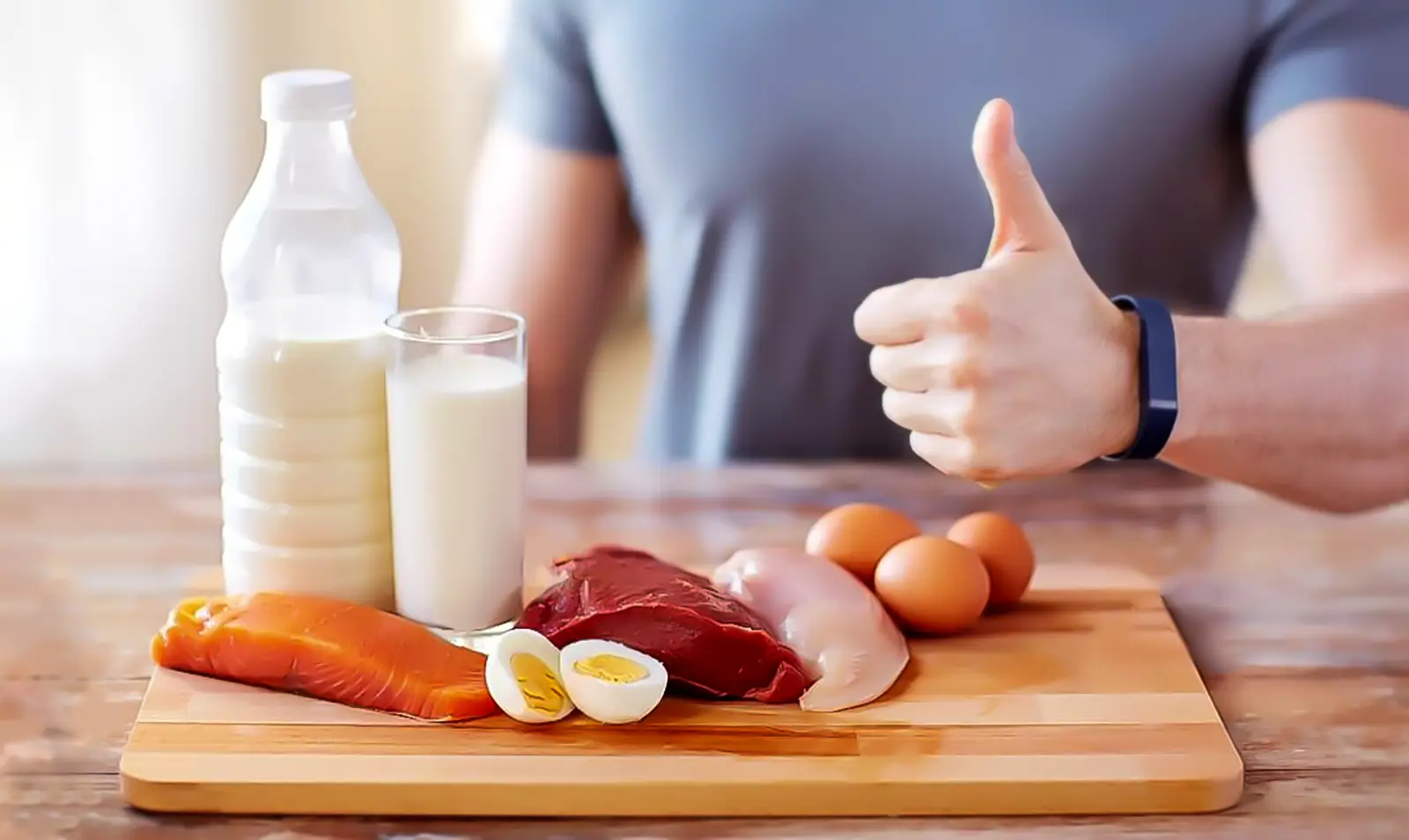
Auswahl des Herausgebers Optimale Ernährung Eiweiß
Proteinbedarf - Unbequeme Wahrheit
Als anthropologische Studien zeigten, dass Hominins durchschnittlich 15 bis 20 Gramm Protein pro Tag zu sich nahmen, kam es in den 1970er Jahren zu einem sogenannten „großen Protein-Fiasko“.

Allopathische Medizin Auswahl des Herausgebers Optimale Ernährung
Der McGovern Bericht- Besonderes Interesse und die Unterdrückung der Wissenschaft
Im Jahr 1977 wurde dem US-Kongress der Vorstoß für eine Änderung der Ernährungsrichtlinien (McGovern Report) hin zu einer stärker pflanzenbasierten veganen Ernährung vorgelegt.

Krebs Auswahl des Herausgebers Toxizität
Pestizide in Lebensmitteln, Exposition in der Amerikanischen Standardnahrung - 80 Prozent aus Fleisch
Die meisten Pestizide und insbesondere Schwermetalle und andere giftige Schadstoffe, die wir aufnehmen, stammen aus Fleisch. Mehr als 80 Prozent der Pestizidbelastung in der amerikanischen Standardernährung stammt aus tierischen Produkten, nicht aus Obst oder Gemüse.
Antioxidantien Auswahl des Herausgebers ORAC Phytochemikalien
Antioxidantien: Die Grundlagen Verstehen
Tierische Produkte enthalten keine sekundären Pflanzenstoffe oder Antioxidantien. Pflanzliche Lebensmittel enthalten im Durchschnitt mehr als 60-mal so viele Antioxidantien wie tierische Lebensmittel.
Auswahl des Herausgebers Entzündung
Das Allesfresser Dilemma des Menschen- Fleischkonsum, Probiotische Bakterien, Entzündungen und der Darm
Sind Menschen Allesfresser im eigentlichen anatomischen Sinne? Es gibt einen grundlegenden Unterschied in der Funktionsweise des Verdauungstrakts bei pflanzlichen und fleischfressenden Arten.
Krebs Auswahl des Herausgebers Phytochemikalien
Antikrebskraft von Obst und Gemüse: In Vivo und Klinische Beweise
Einige Pflanzenextrakte konkurrieren mit führenden Chemotherapeutika und wirken gleichzeitig auf mehrere verschiedene Arten von Krebszellen.
Auswahl des Herausgebers Optimale Ernährung Vegane Diät
Ernährungsrichtlinien der WHO- Neue Ernährungspyramide und Unterdrückung der Wissenschaft
Die Ernährungsrichtlinien der WHO empfehlen eine Ernährung mit wenig gesättigten Fettsäuren (tierischem Eiweiß), Zucker und Salz sowie viel Obst und Gemüse als Voraussetzung, um den epidemischen Anstieg chronischer Krankheiten weltweit zu bekämpfen.
Antioxidantien Auswahl des Herausgebers ORAC
ORAC-Werte Verstehen: Antioxidantienspiegel in Lebensmitteln
Wenn Ihre Hauptquelle für Antioxidantien Kaffee ist, wissen Sie, dass Sie ein ernstes Problem haben.
Auswahl des Herausgebers Vegane Diät
Nährstoffmangel Bei Veganer Ernährung: Präventionsstrategien
Es gibt neun bevölkerungsweit verbreitete Nährstoffmängel, die Menschen betreffen, die sich pflanzlich ernähren. Wenn einige Mängel nicht rechtzeitig behoben werden, haben sie schreckliche und nicht behandelbare Folgen.
Diabetes Auswahl des Herausgebers
Diabetes Ursachen und Raffinierte Kohlenhydrate- Das Vegane Argument
Die Menschen glauben, dass raffinierte Kohlenhydrate mit Insulinspitzen in Zusammenhang stehen und eine der Ursachen für Diabetes sind. Sie haben recht. Allerdings liegen sie auch falsch.
Neuestes von PubMed, #pflanzliche Ernährung –
- Analysis of the Provision of Plant-Based, Vegetarian and Omnivorous Meals in UK Care Homes for Older Peoplevon Saffron Whyton am Oktober 8, 2026
CONCLUSION: Even though the National Health Service recommends reductions in consumption of red and processed meats with increased consumption of plant-based proteins, this transition is yet to be implemented in care homes. This study suggests that there is potential to improve the health and sustainability of meals provided in care home by increasing the availability of plant-based options, especially those rich in plant-based proteins.
- Weight loss-independent associations of body composition changes with device-derived metabolic age during Mediterranean diet follow-upvon Ahmet Emre Hatır am Oktober 8, 2026
CONCLUSION: Favorable changes in Tanita-derived metabolic age were observed during follow-up. The associated body composition changes may partly reflect shared components of the device algorithm because metabolic age is a composite surrogate rather than a direct measure of biological aging. Given the retrospective uncontrolled design, causal effects of the Mediterranean diet cannot be established.
- Connecting digital food literacy and sustainable eating in children and adolescents: a focused mini review of evidence gaps and educational prioritiesvon Lu Xing am Oktober 7, 2026
Children and adolescents learn about food through digital and physical environments while developing an understanding of dietary effects on human and planetary health. Digital healthy-eating education, food-literacy education, and sustainable-diet education have nevertheless developed along largely separate trajectories. This focused Mini Review examines interventions that combine a substantive digital educational mechanism, a food-literacy capacity, and an explicit sustainability target in…
- The gut microbiota-inflammageing axis in cardiometabolic health of older adults and dietary intervention strategiesvon Xin Liu am Oktober 7, 2026
Rapid global population ageing is accelerating the burden of cardiometabolic disease, and inflammageing-the chronic, low-grade, sterile inflammation that accompanies advancing age-has emerged as a shared pathological substrate linking cardiovascular disease, metabolic syndrome, and type 2 diabetes mellitus in older adults. Increasing evidence identifies the gut microbiota as an upstream driver of this process, forming a modifiable feedback loop with the intestinal barrier, the immune system, […]
- Effects of High-Phenolic Extra Virgin Olive Oil on Sensory Processing in Children With Autism Spectrum Disorder: A Pilot Studyvon Despoina Papastavridou am Oktober 7, 2026
No approved treatments currently exist for the core symptoms of autism spectrum disorder (ASD), prompting clinicians and families to seek alternative approaches, including dietary and nutritional interventions. The Mediterranean diet (MeDi), characterized by a high intake of antioxidant and anti-inflammatory components, is associated with improved health outcomes and reduced risk of chronic diseases. A key element of the MeDi is extra virgin olive oil (EVOO), which is rich in bioactive…
- Plant-based diet quality and risk of giant cell arteritis and polymyalgia rheumatica: findings from the E3N prospective cohort studyvon Lucas Pacoureau am Oktober 7, 2026
CONCLUSION: Adherence to a healthful plant-based diet was inversely associated with GCA risk but not PMR, suggesting disease-specific environmental pathways. These findings provide the first prospective evidence linking dietary quality to GCA risk, supporting further investigation of dietary exposures in inflammatory rheumatic diseases.