







Sucre Raffiné : Comprendre les Risques
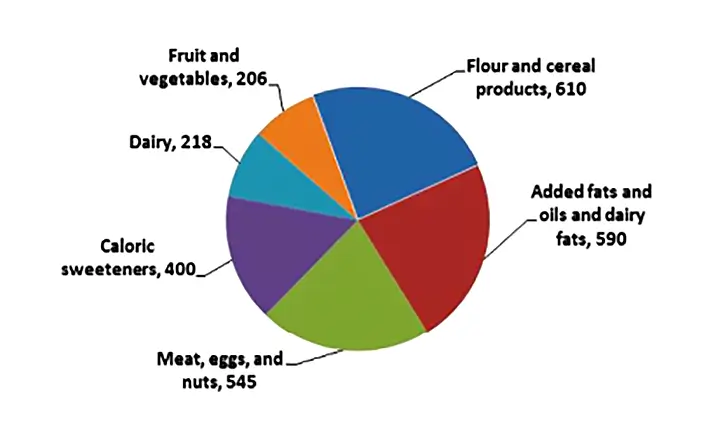
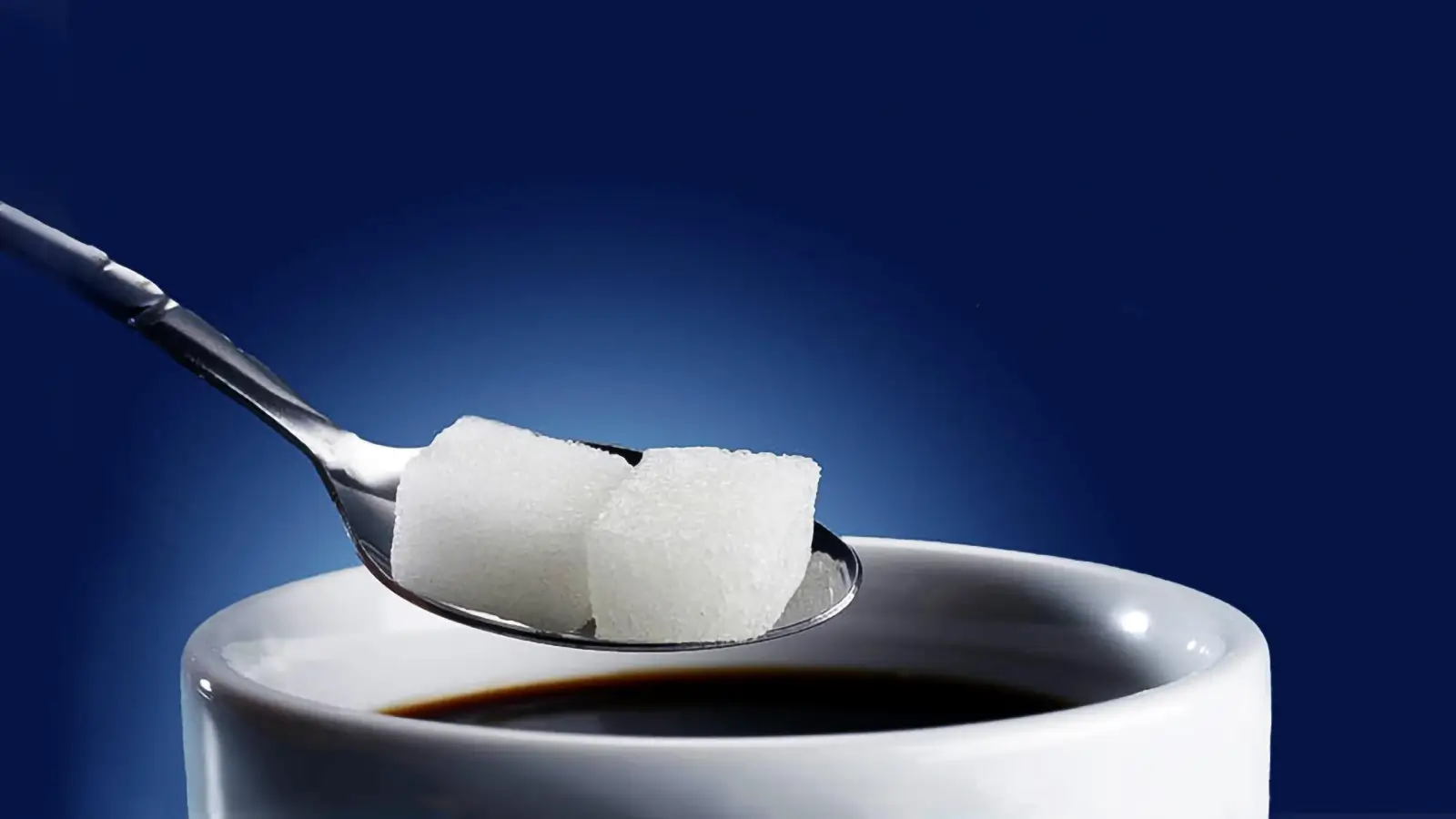
Les enfants consomment environ un cinquième de leurs besoins totaux en calories uniquement à partir de sucre raffiné. Si nous ajoutons à la liste des matières grasses et le reste des aliments transformés dépourvus de nutriments, cela devient un véritable cauchemar nutritionnel.
Milos Pokimica
Écrit par : Milos Pokimica
Examiné Médicalement Par : Dr. Xiùying Wáng, M.D.
Updated décembre 22, 2025Principaux Enseignements :
– A typical individual in the U.S. eats around 19.5 teaspoons, or 82 grams (g) of sugar, per day.
– Children consume even more sugar per unit of body weight than adults relatively. On average children consume around one-fifth of their total calorie needs from just sugar, at average.
– Aliments complets est proposé dans le cadre d'une offre groupée. Le tout pour le prix d'un.
– The toxicity lies not in the food, but in the processing.
– No natural food source has both high fat and high sugar content.
– Eating refined sugar creates an insulin spike-
– Hypoglycemia always follows hyperglycemia and when blood sugar starts to drop, it would drop much higher than in normal circumstances.
– Sugar consumption creates an inflammation spike.
– The process of burning energy that gives us life also gives us death and aging by free radical damage.
– Naturally, in food, there are antioxidants to fight free radicals, but when we eat refined sugar, we have a higher level of inflammation, premature aging, DNA damage with mutations, and other chronic diseases that are correlated with chronic inflammation.
– Eating processed sugar and any sugar that is concentrated is not healthy, even natural ones like honey because of too many empty calories with a low level of micronutrients.
– One hundred percent of calories from fructose or any other sugar that is not in the form of glucose is directly going to the liver to be altered into glucose.
– The process of altering fructose to glucose is biochemically the same as the process of metabolizing alcohol.
– The reason that agave nectar or other high fructose sugars do not spike blood sugar much is that all of that fructose needs to go to the liver first. This is why high fructose sweeteners are often marketed as “healthy” or “diabetic friendly.”
– Almost every sugar out there is some sort of combination of sugars when digested.
– The difference between honey and table white sugar is just 0.5 percent.
– Blackstrap and dark molasses ranked the highest in terms of antioxidant capacity, followed by date sugar and barley malt syrup.
– Date sugar scored very close to molasses (but with much fewer calories and a lot of fiber).
– The sweetest sugar of them all is fructose so the industry naturally likes to use it because it can use less of it for the same effect.
– The industry also adds large amounts of sugar to foods that are generally not sweet like yogurt or cereals.
Consommation de sucre.
Nous savons tous que nous mangeons trop de sucre et que le sucre est pratiquement partout. Le problème, c'est la question que je pose ensuite à la plupart des personnes que je consulte. Lorsque je leur demande quelle est la quantité de sucre, la plupart d'entre eux n'en ont aucune idée. Ils savent, ils ont entendu ou lu quelque part qu'il y a beaucoup de sucre raffiné ajouté aux aliments transformés, mais c'est tout. En fait, la plupart des gens ne connaissent pas la quantité de sucre raffiné qu'ils consomment dans la vie réelle.
Il est établi que l'individu type aux États-Unis consomme environ 19,5 cuillères à café, soit 82 grammes (g) de sucre, par jour.
Ce chiffre comprend à la fois le sucre raffiné et toutes les formes de sucre non raffiné présentes dans l'alimentation, comme le sucre des fruits.
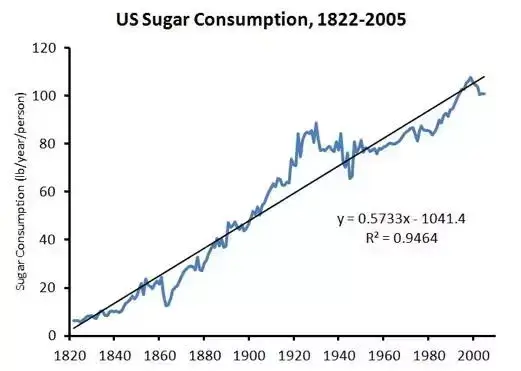
Pour la plupart des gens, 82 grammes de sucre peuvent représenter jusqu'à 20 % de leurs besoins caloriques quotidiens. Je ne parlerai pas de la carie dentaire dans cet article. Nous analyserons des conséquences plus graves pour la santé que les caries. Vous pouvez en savoir plus sur la carie dentaire dans cet article. Comment Arrêter la Carie Dentaire : Symptômes, Causes et Prévention.
Les enfants consomment encore plus de sucre par unité de poids corporel que les adultes, relativement. En moyenne, les enfants consomment environ un cinquième de leurs besoins caloriques totaux à partir du seul sucre.
Il s'agit d'un effondrement complet de la nutrition individuelle. Si l'on ajoute des graisses au mélange, des fleurs raffinées et le reste des calories vides, des aliments dépourvus d'intérêt nutritionnel, on obtient un effet d'aubaine. aliments transformés si l'on ajoute à cette liste tous les produits d'origine animale que la plupart des gens consomment quotidiennement, cela devient un véritable cauchemar. Le cauchemar qui aboutit à une alimentation compulsive, à l'obésité, au diabète, aux maladies auto-immunes, au cancer, aux problèmes cardiovasculaires et à toutes les maladies de l'abondance est une liste qui ressemble à une histoire sans fin.
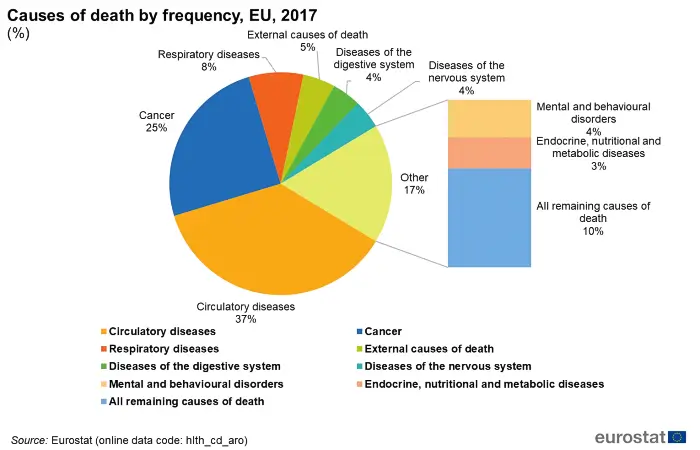
Vous ne devriez pas manger plus de zéro, sauf pour le sucre présent dans les fruits entiers.
“Free Sugars”.
Les fruits contiennent des sucres naturels en combinaison avec des fibres et antioxydants, les sucres ajoutés sont moins nocifs que les sucres raffinés que l'on trouve dans les aliments transformés. Les sucres ajoutés ou "sucres libres" désignent le glucose, le fructose et le saccharose ajoutés aux aliments et aux boissons, et pas seulement le sucre de table sous forme de cristaux. Cette expression ne fait pas référence aux sucres ordinaires que l'on trouve dans les fruits et légumes frais, car rien ne prouve que ces sucres soient liés à des problèmes de santé. Ils contiennent des fibres, ce qui évite les pics de glycémie, et des antioxydants, ce qui évite les pics d'inflammation.
Pourquoi manger du sucre raffiné créerait-il un pic de glycémie?
L'explication la plus simple serait que le sucre raffiné passe directement dans la circulation sanguine. Le sucre raffiné n'a aucune forme de digestion, il est simplement transporté dans le sang immédiatement après sa consommation. Ce n'est pas naturel. Dans la nature, il n'y a pas de sucre libre, de graisse libre ou de quoi que ce soit de libre. Il n'y a pas de repas gratuit.
Aliments complets est proposé dans le cadre d'une offre groupée. Le tout pour le prix d'un.
Pendant les 50 millions d'années de notre évolution, nous avons dû consommer des sources alimentaires entières pour obtenir l'énergie du sucre que cette source alimentaire stocke à l'intérieur. Cela signifie généralement que nous devrions manger beaucoup de fibres et, avec les fibres, toutes les autres substances présentes dans cette source alimentaire, notamment phytochimiques, des antioxydants, des vitamines et surtout des minéraux.
Encore une chose importante à retenir. Il serait presque impossible pour nos ancêtres primates d'atteindre le niveau de consommation de sucre que nous avons aujourd'hui. Ils devraient chercher de la nourriture et ce serait une situation très rare où ils pourraient se gaver de quelques fruits sucrés. Et même s'ils en étaient capables, la teneur en fibres empêcherait la digestion immédiate du sucre consommé.
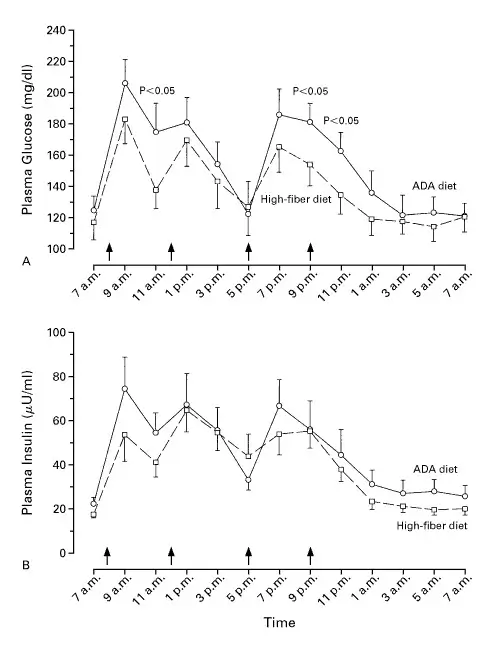
La toxicité ne réside pas dans l'aliment, mais dans la transformation.
Lorsque quelqu'un vous dit, et il s'agit généralement d'une personne qui fait de la nutrition un travail à temps partiel ou qui essaie de vendre des produits de marketing d'affiliation ou de promouvoir un régime comme le keto :
"Ne mangez pas de sucre (glucides)".
Vous devez comprendre qu'ils ne disent pas toute la vérité. Il s'agit en fait d'une version abrégée de la vérité :
"Ne mangez pas de sucre raffiné (glucides)".
Stimuli supranormaux.
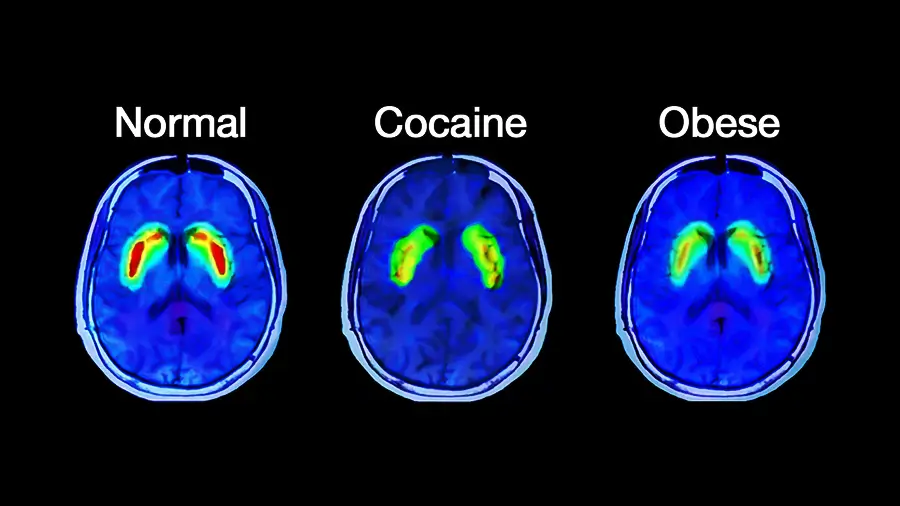
Permettez-moi de vous donner un autre exemple pour que vous compreniez. Les tribus indiennes mâchent régulièrement des feuilles de coca comme remède naturel ou comme pratique normale dans leurs traditions. Cela peut les aider à travailler sous des latitudes élevées et ils ne peuvent jamais ressentir une forme d'euphorie comme celle que peut ressentir quelqu'un qui sniffe de la cocaïne pure et transformée. Parce que nos ancêtres n'ont jamais été exposés à des niveaux aussi élevés de consommation instantanée de sucre, le sucre représente ce que l'on appelle la "défonce". stimuli supranormaux. En fait, des expériences ont montré qu'une force similaire constitue une stimulation anormale des parties du cerveau qui procurent du plaisir. La dopamine est activée presque de la même manière lorsque vous mangez du sucre raffiné que si vous avez sniffé de la cocaïne raffinée, surtout si vous ajoutez des graisses raffinées au mélange. La combinaison de sucre raffiné et de graisse est de plus en plus contre nature. Dans la nature, l'énergie est stockée d'une manière ou d'une autre.
Aucune source alimentaire naturelle n'a à la fois une teneur élevée en graisses et en sucres.
Par exemple, les noix et les graines ont une teneur élevée en matières grasses. Les fruits ont une teneur élevée en fructose. Les tubercules, les céréales, etc. ont une teneur élevée en hydrates de carbone. Dans la nature, il n'y a pas de combinaison de différents aliments dans un même repas. Les primates ne cuisinent pas recettes pour les aliments à haute libération de dopamine anormalement appétissants. Ils se nourrissent et lorsqu'ils trouvent de la nourriture, ils la mangent immédiatement.
Même le fait de peigner différents aliments en une seule séance est une pratique tout aussi peu naturelle que la transformation des aliments.
stimuli supranormaux et troubles de l'hyperphagie boulimique supernormal stimuli and binge eating disorders.
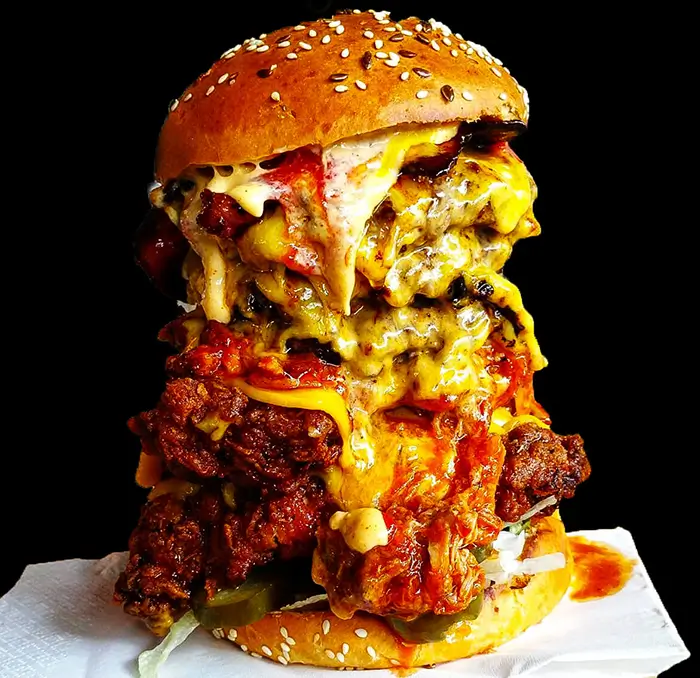
Manger des aliments très appétissants réduira votre capacité à éprouver du plaisir dans le reste de vos activités quotidiennes, pas seulement au sens alimentaire. Ce ne serait pas seulement que vous ne voudriez plus manger ces trucs verts, mais que vous réorganiseriez complètement votre cerveau dans le sens où vous auriez une expérience de plaisir définitivement inférieure au reste de vos activités au cours de la vie.
Pic d'insuline.
Une autre partie et la plupart d'entre nous le savons, donc je n'entrerai pas dans les détails, c'est que manger du sucre raffiné créerait un pic d'insuline, puis l'insuline sera libérée, mais beaucoup plus que dans des conditions normales. L'insuline poussera alors tout le sucre libre dans les tissus, mais il y aurait un problème. Trop de sucre a été libéré dans la circulation sanguine à la fois. Cela signifie qu'il n'y aurait plus de place pour stocker l'excès de sucre, sauf pour qu'il aille dans les dépôts de graisse. Ce serait une courte bouffée d'énergie qui devait être stockée quelque part et qui irait dans la graisse. Le sucre transformé à libération rapide ne vous soutiendra pas pendant une période prolongée. Cela irait simplement dans la graisse et créerait une résistance à l'insuline, ce qui vous rendrait diabétique.
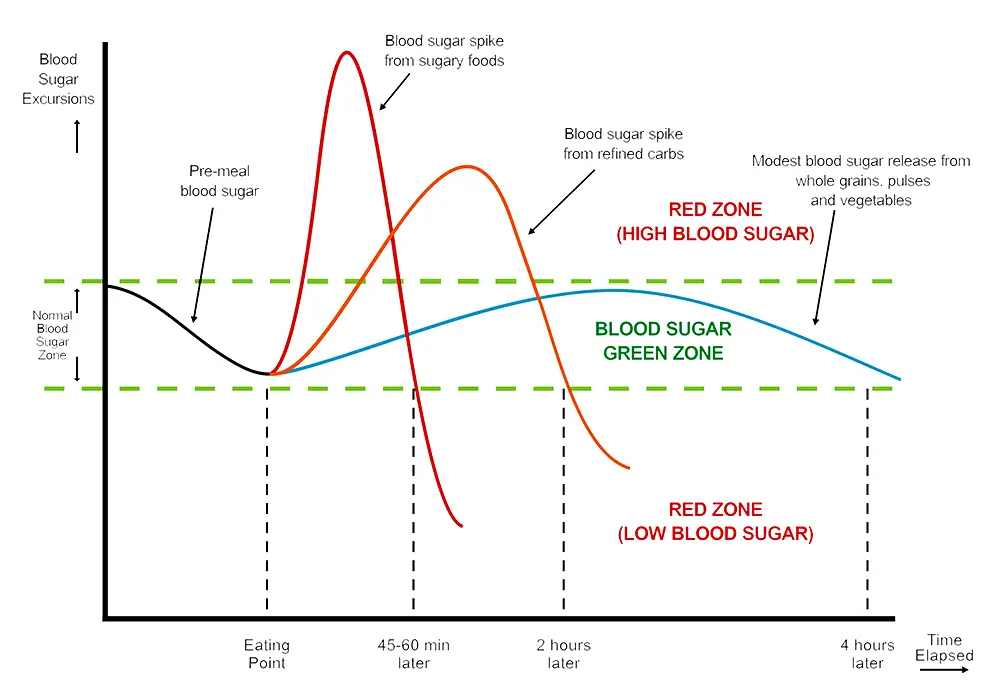
Lorsque l'insuline fait son travail, vous vous trouvez dans une situation d'hypoglycémie, c'est-à-dire que votre taux de sucre dans le sang est beaucoup plus bas qu'il ne le serait naturellement. C'est ce qu'on appelle l'hypoglycémie.
L'hypoglycémie suit toujours l'hyperglycémie et lorsque la glycémie commence à baisser, elle chute beaucoup plus que dans des circonstances normales.
Le cerveau commence à ressentir les effets de l'hypoglycémie et vous commencez à avoir des tremblements. Vous chercherez alors un nouvel aliment à forte teneur en sucre pour vous sentir normal. Vous mangerez juste pour arrêter l'hypoglycémie parce que votre cerveau détecte que si votre taux de sucre dans le sang diminue encore, vos cellules cérébrales commenceront à mourir. Le stress est une conséquence de l'hypoglycémie et non une simple sensation de faim. Comme pour tout toxicomane, il s'agit d'une recherche d'une nouvelle dose et non d'une recherche de nourriture pour se sustenter. Cela conduit à l'hyperphagie boulimique, l'obésité et un faible taux de dopamine dans le cerveau.
Le pic d'inflammation.
Ce n'est que la première étape. La plupart des gens connaissent cette partie. Dans la deuxième partie, la consommation de sucre va créer un pic d'inflammation.
Pourquoi manger du sucre raffiné créerait-il un pic d'inflammation?
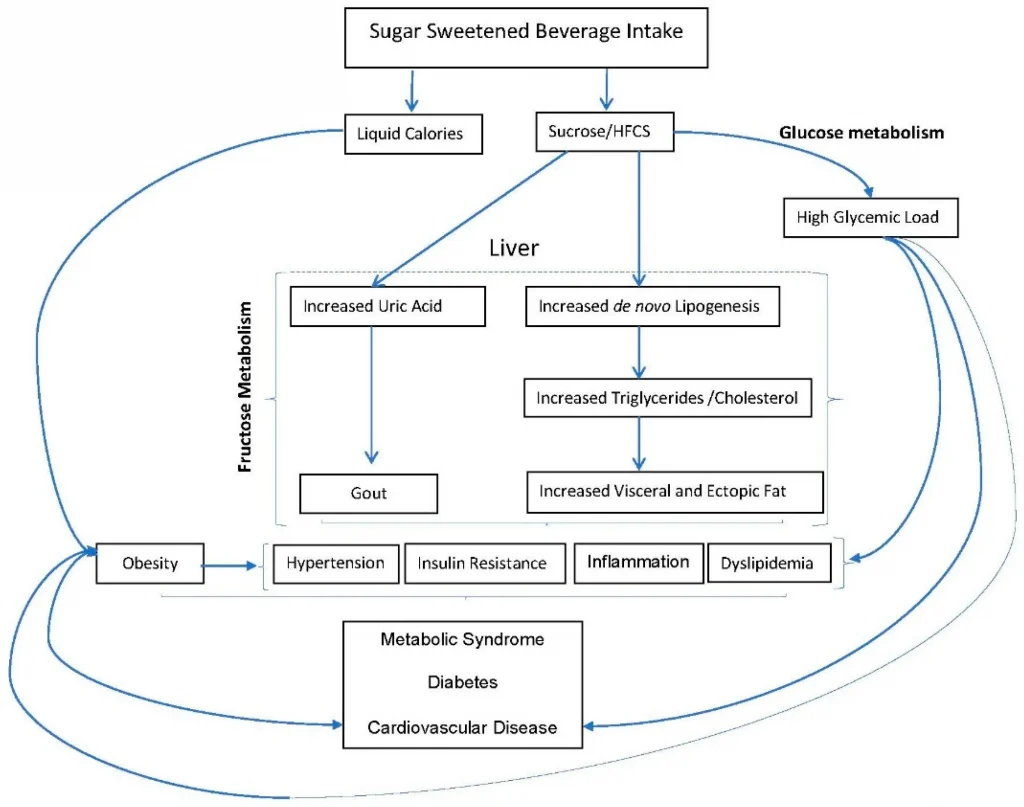
Figure 1. La compensation incomplète des calories liquides conduit à l'obésité, qui est une forme de cancer du sein. facteur de risque pour les résultats cardiométaboliques. L'augmentation du risque de diabète, de MetSyn et de MCV se produit également indépendamment du poids par le développement de facteurs de risque précipités par des effets glycémiques négatifs et un métabolisme accru du fructose dans le foie. L'ingestion excessive de fructose favorise la production d'acide urique hépatique, la lipogenèse de novo et l'accumulation de graisse viscérale et ectopique, et conduit également à la goutte. HFCS = sirop de maïs à haute teneur en fructose. "
(Malik et al., 2019)
Brûler du glucose (pas du sucre, grande différence) pour l'énergie n'est pas une réaction propre à 100 %. Les animaux sont des utilisateurs. Tout animal qui existe ne crée pas sa propre énergie. Au lieu de cela, les animaux obtiennent leur énergie en mangeant des producteurs qui créent de l'énergie. En d'autres termes, les animaux mangent des organismes qui stockent l'énergie solaire (plantes) ou mangent d'autres consommateurs. Tout ce que nous mangeons est juste de l'énergie solaire sous différentes formes matérielles.
Le but de manger est d'obtenir du glucose. Le glucose est la principale molécule que notre corps utilise pour fabriquer de l'énergie, et nous ne pouvons pas survivre sans lui. Il y a une réaction chimique dans notre corps appelée respiration cellulaire où les cellules utilisent le glucose et l'oxygène que nous respirons de l'air pour produire de l'énergie avec la création du sous-produit du dioxyde de carbone, qui sera éliminé du corps et de l'eau. Le problème est qu'il n'y a pas que du dioxyde de carbone qui se forme.
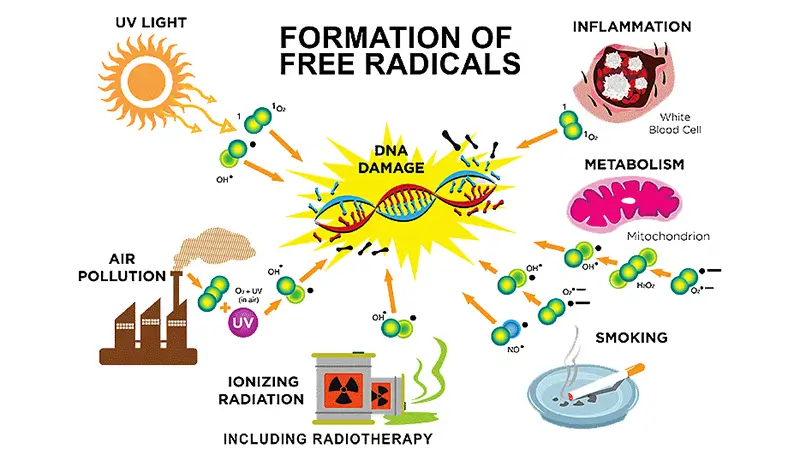
La respiration cellulaire régulière a la chaîne de transport d'électrons dans les mitochondries. Ce sont des conditions normales qui peuvent conduire à la formation d'espèces réactives de l'oxygène et à des dommages cellulaires. En d'autres termes, certains électrons peuvent "s'échapper" de la chaîne de transport d'électrons et se combiner avec l'oxygène pour former une forme volatile d'oxygène appelée radical superoxyde (O2•-). C'est l'un des types de radicaux libres des espèces réactives de l'oxygène (ROS).
En d'autres termes, le processus de combustion de l'énergie qui nous donne la vie nous donne également la mort et le vieillissement par les dommages des radicaux libres.
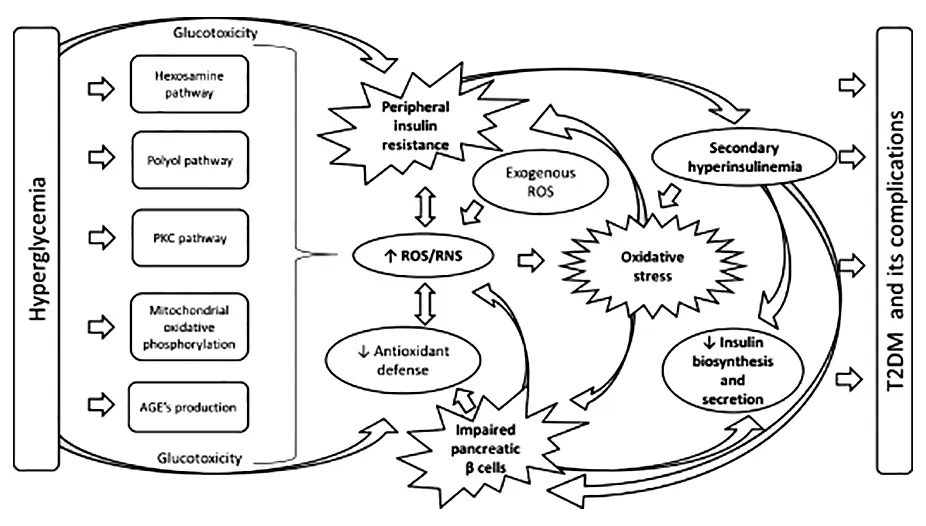
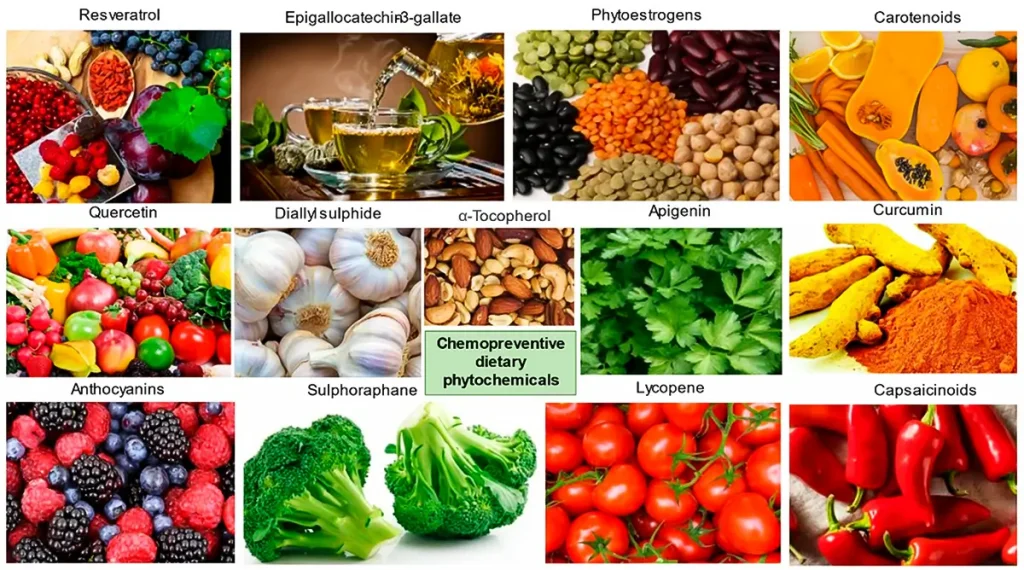
Naturellement, les aliments contiennent des antioxydants qui combattent les radicaux libres, mais lorsque nous consommons du sucre raffiné, le niveau d'inflammation est plus élevé que la normale, ce qui entraîne un vieillissement prématuré, des lésions de l'ADN avec des mutations, et presque tous les autres problèmes de santé publique maladie chronique qui est en corrélation avec l'inflammation chronique. En outre, la consommation de tout sucre transformé ou concentré n'est pas bonne, même les sucres naturels, car ils contiennent trop de calories vides et un faible niveau de micronutriments.
Le fructose n'est ni sain ni naturel.
Les sucres naturellement présents dans le miel et les sucres raffinés des sirops et les jus de fruits sont encore pires.
Pourquoi ? Parce qu'ils sont toujours raffinés et généralement sous forme de fructose (sucre de fruit) et non sous forme de glucose (celui que notre corps utilise).
Cent pour cent des calories provenant du fructose ou de tout autre sucre qui n'est pas sous forme de glucose vont directement au foie pour être transformées en glucose.
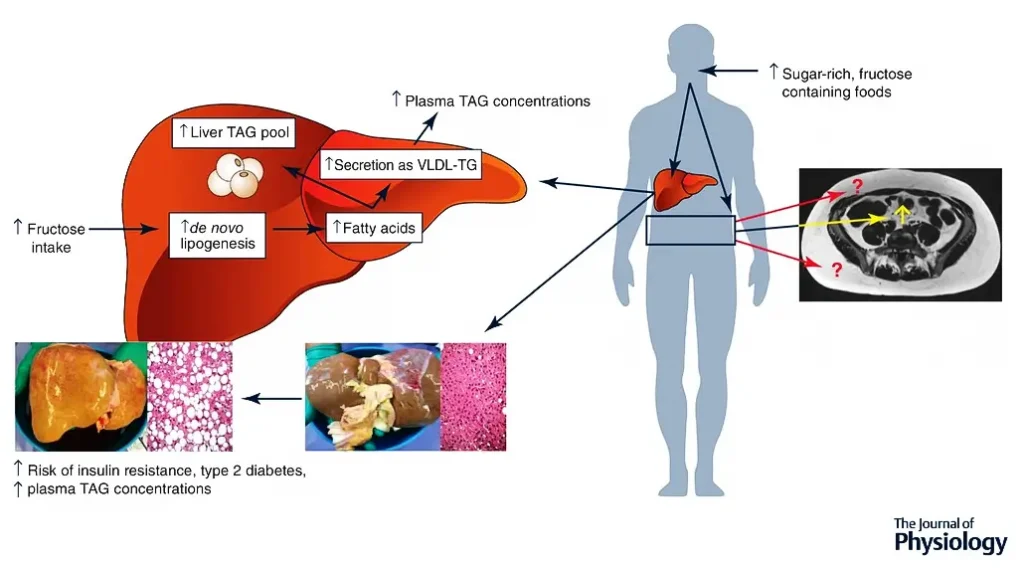
"Une consommation excessive de sucres libres (qui comprennent généralement un composé de glucose et de fructose) est associée à un risque accru de développer des maladies métaboliques chroniques, notamment l'obésité, la stéatose hépatique non alcoolique (NAFLD), le diabète de type 2 et les maladies cardiovasculaires. À ce jour, l'étude du métabolisme du fructose s'est principalement concentrée sur le foie, où il a été impliqué dans une altération de la sensibilité à l'insuline, une augmentation de l'accumulation de graisse et une dyslipidémie."
(Pinnick et al., 2019)
Le glucose est le seul sucre que nos cellules utilisent pour produire de l'énergie, de même que la plupart des cellules animales. Les plantes, les champignons et de nombreuses bactéries utilisent une voie très similaire. D'autres molécules, telles que les acides gras et les protéines, peuvent également servir de sources d'énergie, mais uniquement lorsqu'elles sont acheminées par des voies enzymatiques appropriées.
Lorsque le fructose va au foie pour le processus de modification chimique, ce ne sera pas un problème, sauf pour une chose.
Le processus de modification du fructose en glucose est biochimiquement exactement le même que le processus de métabolisation de l'alcool.
100 % la même chose et 100 % la même pression sur le foie que l'alcool. L'alcool est créé par la fermentation de fruits ou de fructose en fait. Dans le foie, la moitié du fructose est convertie en glucose, 25 % en lactate, 15 % en glycogène et 3 à 5 % en triglycérides. L'un des sous-produits est également le mauvais cholestérol, en plus des triglycérides.
Lorsque nous mangeons des fruits, cela n'a pas d'importance car peu importe la quantité de fruits que nous mangeons, la digestion serait progressive et la pression sur le foie normale et il y a beaucoup d'antioxydants pour combattre l'inflammation. Nous mangeons des fruits depuis 50 millions d'années.
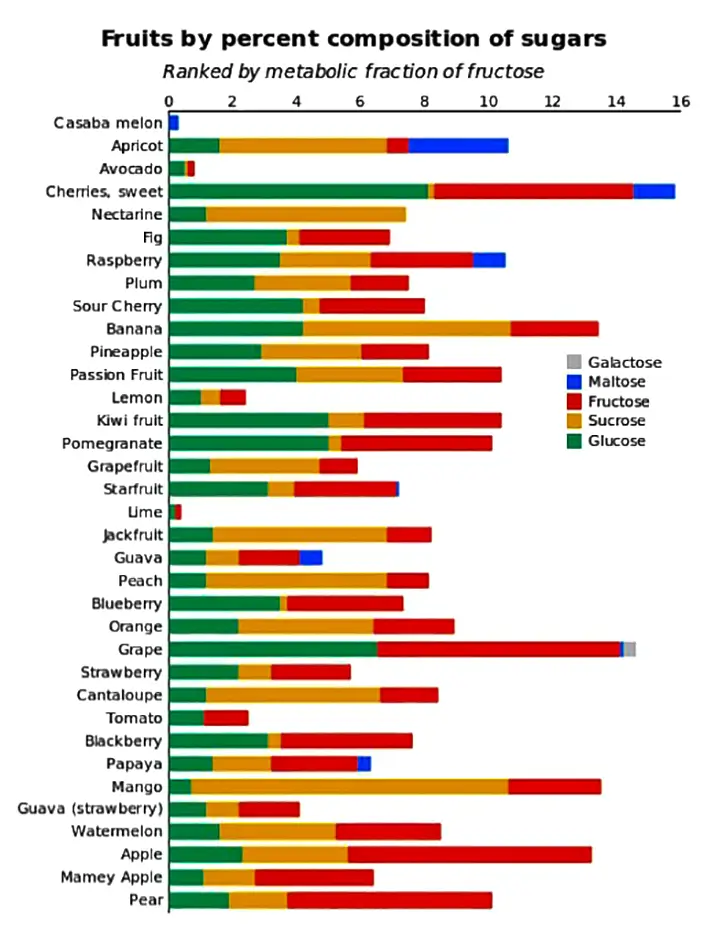
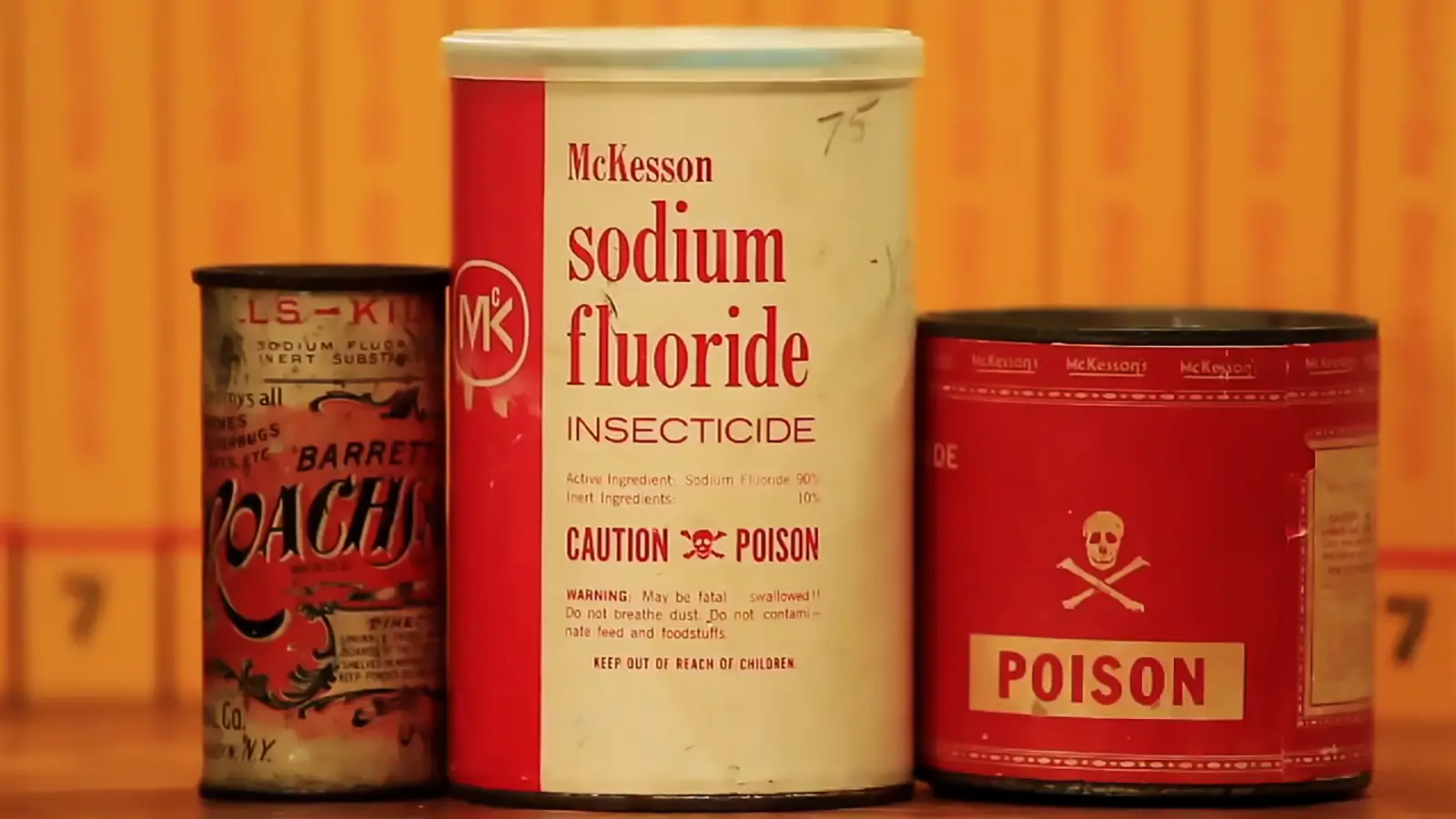
Cependant, lorsque nous raffinons et extrayons le fructose, c'est une autre histoire. Il passe directement dans la circulation sanguine et dans le foie et peut causer des dommages en cas de surconsommation. C'est la même chose avec l'alcool. Un verre de vin est acceptable, mais une bouteille de vodka ne l'est pas. Si la vodka contient 35 % à 95 % d'alcool (généralement 40 %, au minimum), un verre ou une bouteille équivaut à 400 grammes d'alcool. Et si 1 gramme de fructose équivaut à 1 gramme d'alcool, alors le problème peut se poser parce que nous pouvons facilement manger un tas de sucre raffiné, mais nous ne pouvons pas facilement consommer un litre de vodka. En théorie, nous pouvons manger 400 grammes de fructose en une seule fois, et le foie serait soumis à la même pression qu'avec un demi-litre de vodka, mais le cerveau ne le ressentirait pas.
Par exemple, les sodas sont pleins de sucres, les différents types variant en moyenne entre 37 et 45 grammes par portion de 12 onces (ce qui équivaut, en termes de teneur en alcool, à 80 ml de vodka si l'on utilise du HFCS (sirop de maïs à haute teneur en fructose) 65 comme édulcorant). Ces dernières années, plusieurs fabricants de sodas ont mis sur le marché des sodas "throwback" contenant du sucre de canne au lieu du HFCS, qui leur coûte plus cher, mais presque tous les sodas que vous achetez dans un distributeur automatique ou dans un restaurant contiennent du HFCS. Le HFCS 65 est par exemple utilisé dans les boissons non alcoolisées distribuées par Coca Cola Machines Freestyle. Le HFCS peut contribuer au syndrome de l'intestin perméable, augmenter le taux de mauvais cholestérol, solliciter inutilement le foie déjà bombardé d'acides gras oméga-3 et d'acides gras polyinsaturés. surcharge toxique, la prise de poids peut augmenter le risque de développer un cancer et peut entraîner une stéatose hépatique non alcoolique et contribuer au stockage des graisses dans tout le corps, et pas seulement dans le foie.
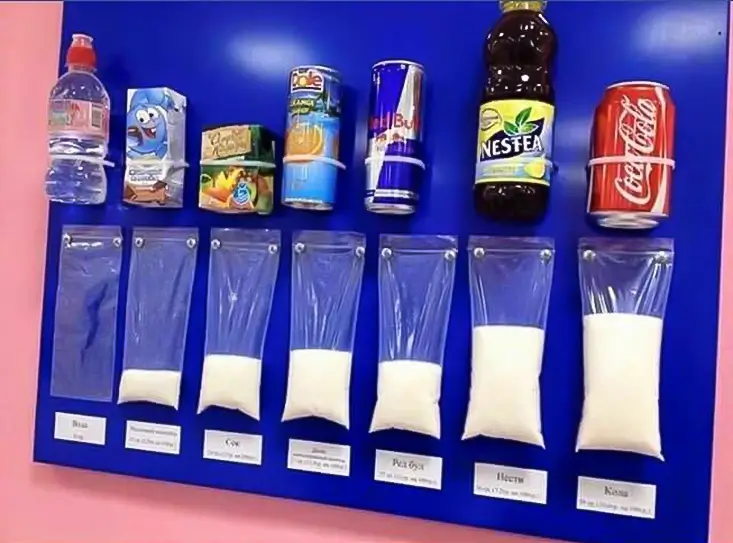
Si les parents n'aiment pas que leurs enfants boivent de la vodka, ils ne devraient pas les laisser boire du Coca-Cola ou toute autre boisson ou aliment contenant du fructose. Les personnes qui ont déjà des problèmes de foie, sous quelque forme que ce soit, et pas seulement les alcooliques ou les personnes souffrant de stéatose hépatique, doivent éviter le fructose. Et ne vous laissez pas abuser : la teneur élevée en fructose ne se trouve pas uniquement dans le sirop de maïs. Par exemple, le nectar d'agave "sain" est également un sirop à haute teneur en fructose.
La raison pour laquelle le nectar d'agave n'entraîne pas de hausse importante de la glycémie est que tout le fructose doit d'abord être acheminé vers le foie. C'est pourquoi les édulcorants à haute teneur en fructose sont souvent présentés comme "sains" ou "adaptés aux diabétiques".
Les souris recevant du nectar d'agave ont pris moins de poids et leur taux de glycémie et d'insuline était plus bas. Ceci étant dit, bien que le fructose n'augmente pas la glycémie à court terme, il peut contribuer à la résistance à l'insuline lorsqu'il est consommé en grandes quantités et aggraver la situation à long terme, mais lorsque vous ne comprenez pas le métabolisme des sucres, vous êtes une cible facile. Les diabétiques ne boivent pas d'alcool et ne devraient pas manger de fructose, qui, à long terme, est aussi mauvais que l'alcool. Il peut provoquer à long terme des augmentations importantes de la glycémie et des taux d'insuline, ce qui accroît fortement le risque de syndrome métabolique et de diabète de type 2. Cet édulcorant "sain" est même pire que le sucre ordinaire.
La meilleure option.
Presque tous les sucres existants sont une sorte de combinaison de sucres lorsqu'ils sont digérés.
Le miel, par exemple, est composé de fructose (38,2%) et de glucose (31%), de disaccharides (~9%), de saccharose, de maltose, d'isomaltose, de maltulose, de turanose et de kojibiose, et de 20 % d'eau. Contrairement au sucre de table, il contient des traces d'enzymes, de minéraux, de vitamines et d'antioxydants à hauteur d'environ 0,5 % de son poids.
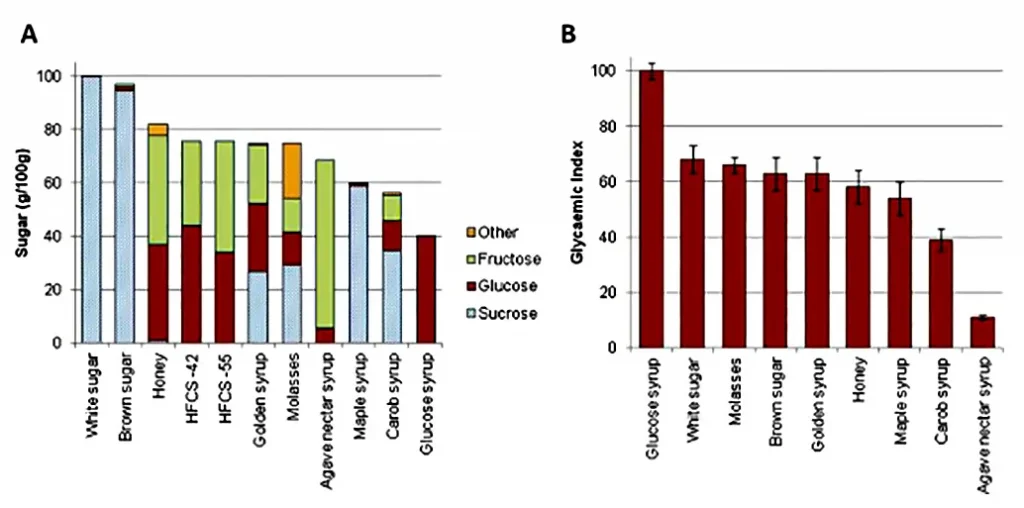
La différence entre le miel et le sucre blanc de table n'est que de 0,5 %.
Le sucre de table ou saccharose est obtenu à partir de betteraves à sucre de canne qui contiennent 50 % de glucose et 50 % de fructose. Chaque molécule de fructose contenue dans le saccharose (sucre de table) est liée à une molécule de glucose correspondante et doit passer par une étape métabolique supplémentaire avant de pouvoir être utilisée, contrairement au fructose du HFCS qui est immédiatement disponible pour la transformation des graisses, alors que le saccharose nécessite une décomposition supplémentaire. Le HFCS peut être composé de 55 % de fructose et de 42 % de glucose (on le trouve principalement dans les boissons sucrées) ou de 42 % de fructose et de 58 % de glucose (utilisé comme ingrédient dans d'autres aliments emballés). Le nectar d'agave contient entre 56 et 90 % de fructose, le reste étant essentiellement du glucose, ce qui en fait l'un des édulcorants les plus riches en fructose et sans valeur nutritionnelle, toutes les vitamines et tous les minéraux étant éliminés au cours du processus de raffinage. Il s'agit en effet d'un mauvais sucre.
Le sirop d'érable est extrait de la sève épaisse de l'érable, recueillie à partir d'un robinet percé dans le camion, puis bouillie pour évaporer l'excès d'eau. Bien que pauvre en fructose libre, sa teneur en saccharose varie de 51,7 à 75,6 % (soit la moitié du fructose) ; les teneurs en glucose et en fructose libre varient de 0,00 à 9,59 %. Le principal élément qui distingue le sirop d'érable du sucre raffiné est le fait qu'il contient également des minéraux et des antioxydants. 100 grammes de sirop d'érable contiennent du calcium : 7% des AJR, du potassium : 6 % des AJR, du fer : 7 % des AJR, du zinc : 28 % des AJR, du manganèse : 165 % des AJR, et au moins 24 antioxydants différents qui survivraient ou non au processus d'ébullition, mais gardez à l'esprit qu'il contient également tout un tas de sucre, de sorte que la densité des nutriments est aussi mauvaise que possible. Il est légèrement "moins mauvais" que le sucre. Remplacer le sucre raffiné par du sirop d'érable pur et de qualité est susceptible d'apporter un bénéfice net pour la santé, mais l'ajouter à votre régime alimentaire ne fera qu'empirer les choses.
100 grammes de mélasse contiennent en revanche du calcium : 20 % de l'AJR, du potassium : 42% de l'AJR, du fer : 26% de l'AJR, du manganèse : 77% de l'AJR, du magnésium : 61 % de l'AJR, du cuivre : 24 % de l'AJR, du sélénium : 25 % de l'AJR, de la vitamine B6 : 34 % de l'AJR et 290 calories au lieu de 400 pour le sucre de table ordinaire, de sorte qu'il faudrait probablement en utiliser davantage pour obtenir le même effet sucrant. La mélasse contient plusieurs nutriments importants et est assez riche en minéraux. Cependant, elle est également très riche en sucre et sa densité nutritionnelle reste faible. La mélasse est noire à cause des minéraux. Plus la couleur est foncée, plus elle contient de minéraux. La mélasse est dérivée du raffinage de la canne à sucre en sucre, tout comme le sucre de table (sa composition est celle du sucralose, à parts égales de fructose et de glucose), à la seule différence qu'elle n'a pas été raffinée à partir de tous les minéraux pour avoir une belle structure cristalline blanche. La mélasse varie en fonction de la quantité de sucre, mais c'est certainement un meilleur choix que le sucre de table blanc ordinaire (si vous ne craignez pas que votre beau gâteau de mariage blanc devienne brun).
Le sucre de coco appartient au même bateau que la plupart des alternatives au sucre. C'est plus sain que le sucre raffiné mais certainement pire que pas de sucre du tout. L'ingrédient principal du sucre de coco est le saccharose (70-79 %), suivi du glucose (3-9 %). Le saccharose (sucre de table) est composé de moitié de fructose lorsqu'il est calculé, le sucre de coco contient 38 à 48,5 % de fructose, ce qui est à peu près le même que le sucre de table.
Le sirop de malt d'orge est peut-être la meilleure option si vous voulez éviter le fructose (si vous souffrez d'une maladie du foie par exemple). Malting grains develop the enzymes required for modifying the grain’s starches into various types of sugar, so the sugar is just glucose derived from the grain’s carbohydrates by digesting them into simple sugars. The composition of barley malt syrup is made of approximately 60% maltose with the rest being made up of glucose and traces of fructose and sucrose. Maltose is just two units of glucose joined. No fruit and vegetables are used, so no fructose whatsoever. Malted grain is used to make beer, whiskey, malted milkshakes, malt vinegar, and some baked goods, such as malt loaf, bagels, and rich tea biscuits. Sugar obtained from malted barley is still just sugar. It has a moderately higher glycemic index of 40. It is the same as the sucanat. It is a healthier choice than white sugar (GI = 80) or high fructose corn syrup (GI = 87), but it is still just sugar. Among all types of sugar tested, this study (Phillips et al., 2009) ont découvert que seule la mélasse verte dépassait l'orge maltée en termes d'activité antioxydante.
Le sucre de dattes a obtenu des résultats très proches de ceux de la mélasse (mais avec beaucoup moins de calories et beaucoup de fibres). Les mélasses noires et foncées ont obtenu les meilleurs résultats en termes de capacité antioxydante, suivies par le sucre de dattes et le sirop de malt d'orge.
Le nectar d'agave raffiné, le sucre ordinaire et le sirop de maïs présentaient une activité antioxydante minimale (<0,01 mmol FRAP/100 g) ; le sucre de canne brut présentait une FRAP plus élevée (0,1 mmol/100 g). Les mélasses foncées et blackstrap ont la FRAP la plus élevée (4,6 à 4,9 mmol/100 g), tandis que le sirop d'érable, la cassonade et le miel ont une capacité antioxydante intermédiaire (0,2 à 0,7 mmol FRAP/100 g).
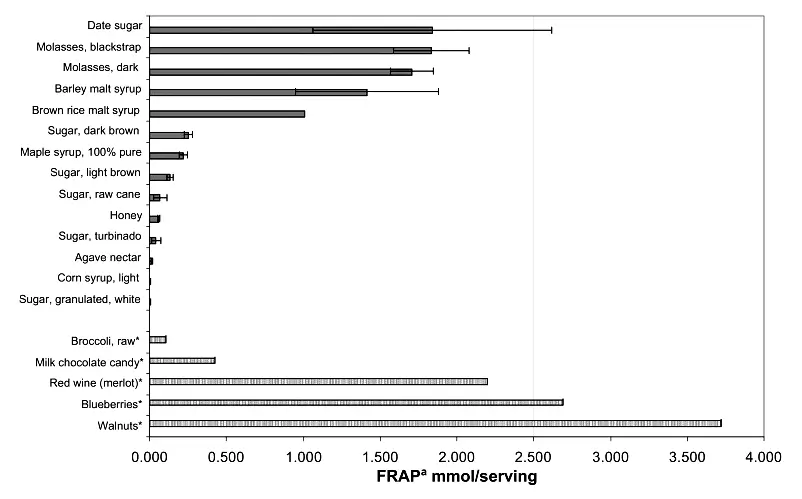
Sur la base d'une consommation moyenne de sucres raffinés et de l'activité antioxydante mesurée dans les régimes alimentaires typiques, le remplacement des édulcorants de substitution pourrait augmenter l'apport en antioxydants de 2,6 mmol/jour en moyenne, soit une quantité similaire à celle contenue dans une portion de baies ou de fruits à coque. Si vous optez pour la mélasse noire, l'augmentation sera de 4,46 mmol/jour pour 90 grammes de mélasse consommés. Et vous obtiendrez également une partie des minéraux. Le problème de la substitution des édulcorants de substitution pourrait être lié aux préférences gustatives de chacun ainsi qu'au degré de sucrosité. Le sirop de malt, par exemple, présente ce problème. Le maltose n'est pas aussi sucré que d'autres types de sucre, de sorte que vous utiliserez plus de sucre et plus de calories pour le même niveau d'édulcoration. Il n'est qu'environ 30 à 50 % aussi sucré que le saccharose (sucre de table) et nettement moins sucré que le miel (qui contient du fructose).
Le sucre le plus sucré étant le fructose, l'industrie aime naturellement l'utiliser car elle peut en utiliser moins pour le même effet.
HFCS.
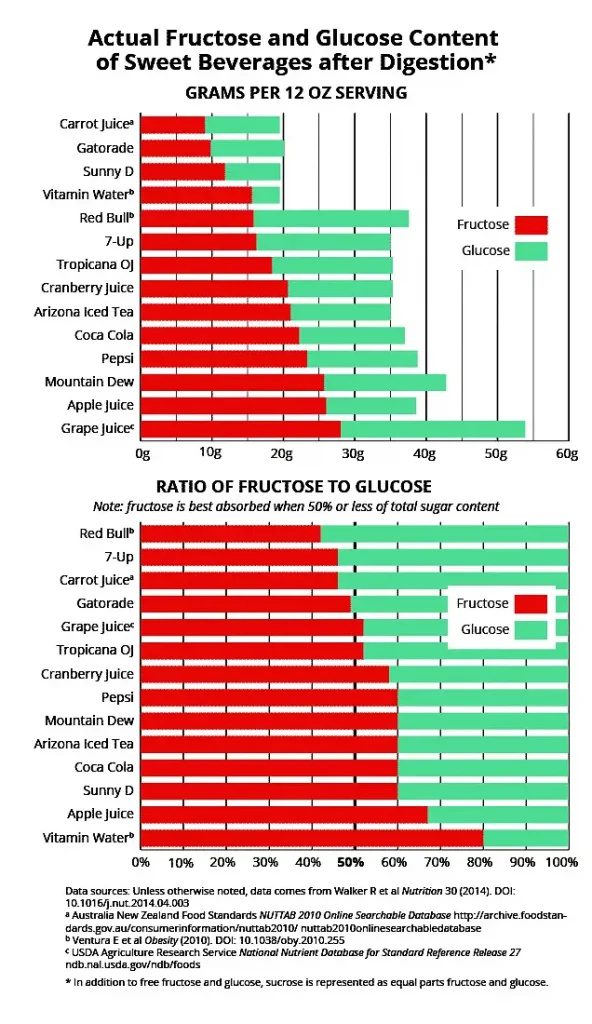
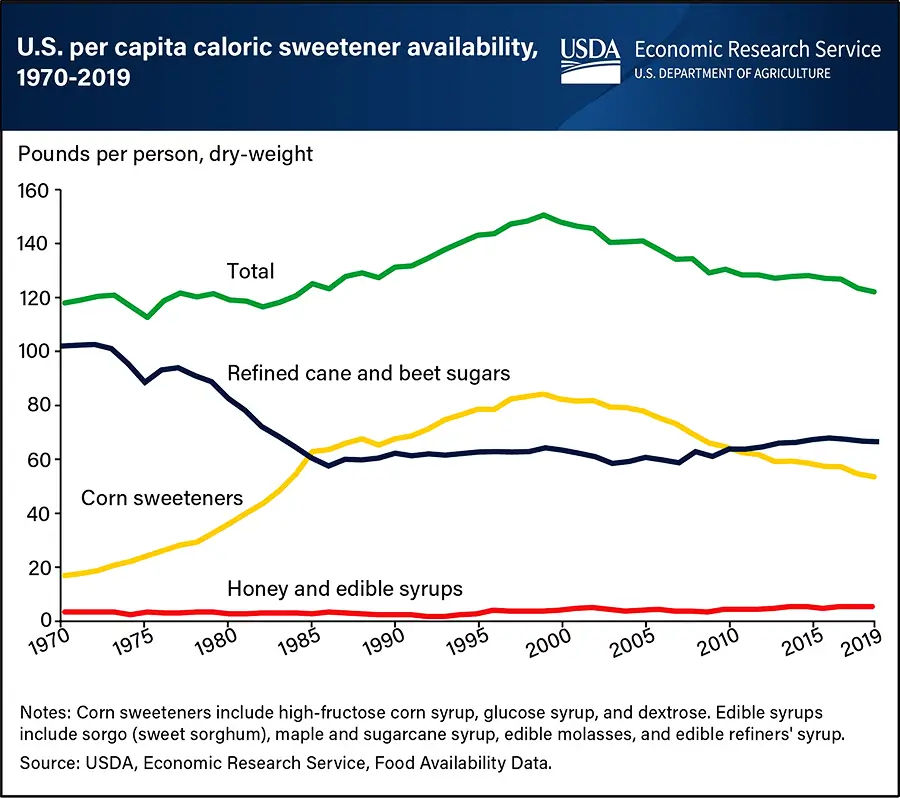
Les formulateurs d'aliments ont largement adopté le SHTF, et son utilisation a commencé à se développer entre le milieu des années 1970 et a atteint son apogée au milieu des années 1990, principalement en remplacement du saccharose (Edwards et al., 2016). Alors pourquoi l'industrie utilise-t-elle encore le HFCS ? La seule raison est qu'il est bon marché. Et pourquoi est-il bon marché ? Parce qu'il y a beaucoup de maïs génétiquement modifié cultivé aux États-Unis. Par rapport au saccharose, le HFCS présente de nombreux autres avantages qui le rendent intéressant pour les fabricants de produits alimentaires, notamment son pouvoir sucrant, sa solubilité et son acidité. La production de sirop de maïs à haute teneur en fructose est aujourd'hui énorme, mais l'industrie n'a connu qu'une faible expansion au cours des cinq à dix dernières années en raison des nombreux problèmes qu'elle a rencontrés. Les consommateurs soucieux de leur santé ont lu des livres comme ceux-ci et ont commencé à comprendre un peu mieux la nutrition ; ils ont donc délaissé les sodas au profit d'aliments frais et non transformés et du sucre en général. L'industrie a connu une baisse de la demande et, par conséquent, une diminution de la production annuelle.
Selon les données du ministère américain de l'agriculture (USDA), 90 % du HFCS-55 produit aujourd'hui aux États-Unis est vendu aux industries de fabrication de boissons. Le HFCS étant de plus en plus souvent considéré comme mauvais pour la santé, de nombreux fabricants de sodas l'ont abandonné au profit du sucre raffiné traditionnel. En 2017, Pepsi et Coca-Cola ont tous deux lancé des versions de leurs boissons phares qui se vantaient d'être édulcorées avec du sucre traditionnel. Néanmoins, le HFCS est toujours considéré comme un substitut bon marché du sucre, maintenant son omniprésence dans les sodas et les produits de confiserie américains, et le restera dans un avenir prévisible, à moins que tout le monde ne commence à lire des livres sur la nutrition et à s'éduquer en dehors des médias grand public. En fin de compte, l'industrie de production du HFCS devrait croître au cours des cinq prochaines années. Les efforts de marketing qu'elle peut déployer auront un effet et contribueront à faire oublier que le HFCS est moins bon pour la santé que le sucre traditionnel.
L'une des stratégies appliquées consiste à utiliser le HFCS-42 et le HFCS-55 ou, en d'autres termes, l'industrie réduit sa teneur en fructose. Le HCFS-42 est composé de 42 % de fructose, les sucres restants étant principalement du glucose et des sucres supérieurs, ce qui rend le sirop identique au sucre de table en termes de teneur en fructose ; il n'y a donc plus de différence. Il suffit d'utiliser un produit moins cher. Le seul problème est que le glucose n'est pas aussi sucré que le fructose, de sorte que lorsque vous réduisez la teneur en fructose, vous devez utiliser une plus grande quantité de sucre dans son ensemble pour atteindre le même niveau de sucrosité. L'effet net est presque le même si vous utilisez moins de sirop à haute teneur en fructose ou moins de sirop à haute teneur en fructose, sauf que vous pouvez maintenant commercialiser le produit comme quelque chose d'aussi "sain" que le sucre de table ordinaire. Les opérateurs bénéficient également de subventions gouvernementales pour le maïs, ce qui leur permet d'avoir accès à du maïs bon marché en vrac. Grâce aux interventions gouvernementales telles que les subventions au maïs, le faible coût du HFCS sera un facteur essentiel qui imposera l'utilisation du HFCS dans tous les produits commercialisés auprès d'une population générale qui n'est pas soucieuse de sa santé.
Quelle est la quantité de sucre réellement contenue dans ce produit ?
Déterminer la quantité de sucre, en général, dans votre aliment ou votre boisson peut être déroutant, car il apparaît sous de nombreuses formes différentes, pas seulement sous forme de HFCS ajouté, mais aussi sous forme de saccharose, de glucose, de fructose, de miel et autres, déjà mentionnés, et si vous ne savez pas qu'il s'agit en fait de sucre, vous pouvez vous faire berner. La loi n'oblige pas les producteurs de denrées alimentaires à distinguer les sucres ajoutés des sucres naturels sur l'étiquetage nutritionnel, ce qui constitue une tactique de plus pour vous tromper ; vous devez donc faire preuve d'intelligence. Vous pouvez connaître la quantité totale de sucre contenue dans un produit en consultant la rubrique "glucides (dont sucres)".
Les fabricants de produits alimentaires apposent souvent des allégations de santé sur la face avant de leurs produits afin de vous faire croire qu'ils sont bons pour la santé. Ils peuvent légalement le faire. Cela peut donner l'impression que certains aliments sont sains, alors qu'en réalité ils sont pleins de sucre ajouté. S'ils suppriment les matières grasses d'un produit, ils ne pourront pas le vendre parce qu'il aura un goût horrible.
Ce qu'ils font, c'est que s'il y a un problème de santé pour le même produit alimentaire qui est devenu une "connaissance" répandue, comme par exemple les graisses saturées dans l'huile d'olive, il n'y a pas de problème de santé. lait. Ils enlèvent ces graisses et les qualifient de "saines", "pauvres en graisses", "diététiques" ou "légères".
Cependant, ils ont souvent ajouter plus de calories sous forme de sucre raffiné pour faire de bon goût. Vraiment la “belle“ de la nourriture des entreprises qui se soucient de vous ajouter édulcorants artificiels au lieu de sucre raffiné et de la commercialisation de ce produit comme une saine et faible en calories régime alimentaire alternative, mais vous aurez à payer plus, et la plupart du temps les gens vont tout simplement acheter de sucre ajoutée.
Le L'industrie ajoute également de grandes quantités de sucre aux aliments qui ne sont généralement pas sucrés afin de pouvoir les vendre au grand public qui n'est pas soucieux de sa santé.
Il s'agit par exemple du yaourt, de la sauce spaghetti et des céréales pour petit-déjeuner. Les céréales pour petit-déjeuner, en particulier celles qui sont commercialisées pour les enfants, ont une teneur élevée en sucre ajouté, car les enfants en mangent davantage. Certaines peuvent contenir jusqu'à 12 grammes ou 3 cuillères à café de sucre dans une petite portion de 30 grammes (1 once). Ces céréales sont encore bien pires que celles qui sont commercialisées pour les adultes. Elles contiennent 56 % de sucre en plus, deux fois moins de fibres et 50 % de sodium en plus.
Les enfants se plaignent généralement lorsqu'ils sont contraints de manger des variétés non sucrées et que l'industrie les fournit. Certains yaourts peuvent contenir jusqu'à six cuillères à café (29 grammes) de sucre dans un seul contenant. Une tasse (245 grammes) de yaourt allégé contient environ 47 grammes de sucre. Cela représente 12 cuillères à café. 40 % de la sauce barbecue est du sucre pur. Une cuillère à soupe de ketchup contient une cuillère à café de sucre. Une bouteille normale de 570 ml de boisson pour sportifs contient huit cuillères à café de sucre. Les boissons pour sportifs ne sont que des "boissons sucrées". C'est la même chose que les sodas et les jus de fruits. Elles ont également été associées à l'obésité et aux maladies métaboliques. Le nom n'est que celui d'une boisson "pour sportifs".
Même les barres de petit-déjeuner à base de céréales complètes, censées être saines, peuvent contenir jusqu'à quatre cuillères à café (16 grammes) de sucre par barre. Ils n'indiquent pas la part de sucre ajouté et de sucre naturel dans un produit. Ils combinent tous les sucres et les mentionnent comme une seule quantité. Le granola est souvent vendu comme un aliment diététique à faible teneur en matières grasses. Cent grammes de granola contiennent près de 400 calories et plus de six cuillères à café de sucre. Les "barres santé" et les barres de céréales ne sont généralement que des barres chocolatées déguisées. Une bouteille d'eau vitaminée ordinaire contient 120 calories et 32 grammes de sucre. Coca (une canette, 330 ml) : 7,25 cuillères à café de sucre, Sprite (une canette) : 7,61 cuillères à café de sucre, Red Bull (une canette) : 5,35 cuillères à café de sucre, barre Snickers (57 g) : 5,83 cuillères à café de sucre, barre Twix (57 g) : 5,68 cuillères à café de sucre.
Le problème c'est qu'on aime notre sucre alors que faire ? Ce serait un sujet pour un autre article.
Références :
- Chandalia, M., Garg, A., Lutjohann, D., von Bergmann, K., Grundy, SM et Brinkley, LJ (2000). Effets bénéfiques d'un apport élevé en fibres alimentaires chez les patients atteints de diabète sucré de type 2. Le journal de médecine de la Nouvelle-Angleterre, 342(19), 1392–1398. https://doi.org/10.1056/NEJM200005113421903
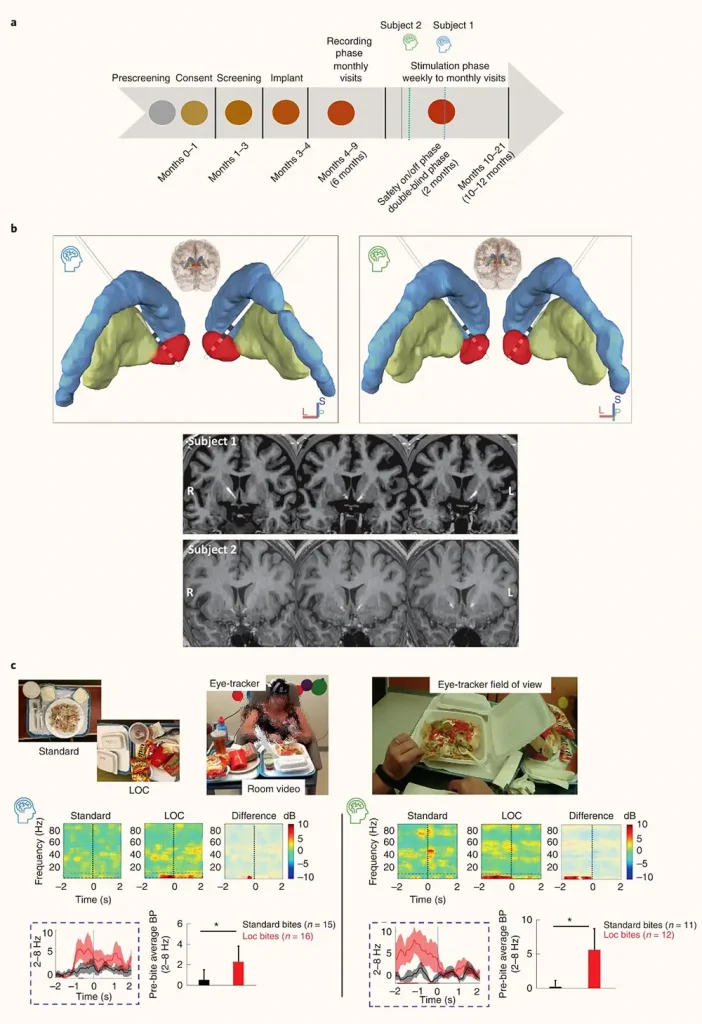
- Shivacharan, RS, Rolle, CE, Barbosa, DAN, Cunningham, TN, Feng, A., Johnson, ND, Safer, DL, Bohon, C., Keller, C., Buch, VP, Parker, JJ, Azagury, DE , Tass, PA, Bhati, MT, Malenka, RC, Lock, JD et Halpern, CH (2022). Étude pilote de la stimulation cérébrale profonde du noyau accumbens réactif pour la perte de contrôle de l'alimentation. Médecine naturelle, 28(9), 1791–1796. https://doi.org/10.1038/s41591-022-01941-w
- Malik, VS, & Hu, FB (2019). Boissons sucrées et santé cardiométabolique : une mise à jour des preuves. Nutriments, 11(8), 1840. https://doi.org/10.3390/nu11081840
- Wojcik, M., Krawczyk, M., Zieleniak, A., Mac Marcjanek, K. et Wozniak, LA (2020). Associations de l'hyperglycémie avec le stress oxydatif et l'inflammation chez les patients atteints de diabète de type 2. Sucres, sels et graisses alimentaires dans la santé humaine, 305-323. https://doi.org/10.1016/B978-0-12-816918-6.00014-7
- Pinnick, KE et Hodson, L. (2019). Défier les tissus métaboliques avec le fructose : réponses spécifiques aux tissus et spécifiques au sexe. Le Journal de la physiologie, 597(14), 3527–3537. https://doi.org/10.1113/JP277115
- Edwards, CH, Rossi, M., Corpe, CP, Butterworth, PJ et Ellis, PR (2016). Le rôle des sucres et des édulcorants dans l'alimentation, l'alimentation et la santé : des alternatives pour l'avenir. Tendances en science et technologie alimentaires, 56, 158-166. https://doi.org/10.1016/j.tifs.2016.07.008
- Blanc, JS (2008). Parlons franchement du sirop de maïs à haute teneur en fructose : qu'est-ce que c'est et ce qu'il n'est pas ? The American Journal of Clinical Nutrition, 88(6), 1716S-1721S. https://doi.org/10.3945/ajcn.2008.25825B
- Phillips, KM, Carlsen, MH et Blomhoff, R. (2009). Teneur totale en antioxydants des alternatives au sucre raffiné. Journal de l'Association américaine de diététique, 109(1), 64–71. https://doi.org/10.1016/j.jada.2008.10.014
- Bray, GA, Nielsen, SJ et Popkin, BM (2004). La consommation de sirop de maïs à haute teneur en fructose dans les boissons peut jouer un rôle dans l'épidémie d'obésité. La revue américaine de nutrition clinique, 79(4), 537–543. https://doi.org/10.1093/ajcn/79.4.537
Articles Similaires




Vous avez des questions sur la nutrition et la santé ?
Je serais ravie d'entendre vos commentaires et d'y répondre dans mon prochain message. J'apprécie votre contribution et votre opinion et j'espère avoir bientôt de vos nouvelles. Je vous invite également à nous suivre sur Facebook, Instagram et Pinterest pour plus de contenu sur l'alimentation, la nutrition et la santé. Vous pouvez y laisser un commentaire et entrer en contact avec d'autres passionnés de santé, partager vos conseils et expériences, et obtenir le soutien et les encouragements de notre équipe et de notre communauté.
J'espère que ce billet a été instructif et agréable pour vous et que vous êtes prêt à mettre en pratique les connaissances que vous avez acquises. Si vous avez trouvé ce billet utile, veuillez le partager à vos amis et à votre famille qui pourraient également en bénéficier. On ne sait jamais qui peut avoir besoin de conseils et de soutien dans son parcours de santé.
– Vous pourriez aussi aimer –

Régime Paléo- Pas de Viande en Vue
Risques Pour la Santé Liés à l'Alcool - Le "Paradoxe Français", "Le Vin" et "Avec Modération"
Les Bienfaits de la Théobromine : Booster le Cerveau Sans Anxiété

Avantages de l’Astaxanthine : L’Antioxydant Naturel le Plus Puissant au Monde
Expérience de Famine au Minnesota : Pourquoi les Régimes Nous Font Grossir. La Psychologie de la Faim.

Toxicité de l'Eau du Robinet - Évaluation des Risques

Sensibilité et Douleur des Dents aux Sucreries : Solution Rapide et Durable

Médecine Allopathique - L'essor d'Une Industrie

Apprendre la Nutrition

Milos Pokimica est docteur en médecine naturelle, nutritionniste clinique, rédacteur en santé médicale et nutrition et conseiller en sciences nutritionnelles. Auteur de la série de livres Devenir vegetarien ? Examen des sciences, il exploite également le site Web de santé naturelle GoVeganWay.com
Avis de non-responsabilité médicale
GoVeganWay.com vous propose des critiques des dernières recherches liées à la nutrition et à la santé. Les informations fournies représentent l'opinion personnelle de l'auteur et ne sont pas destinées ni implicites à se substituer à un avis médical professionnel, un diagnostic ou un traitement. Les informations fournies sont à titre informatif uniquement et ne sont pas destinées à remplacer la consultation, le diagnostic et/ou le traitement médical d'un médecin qualifié ou d'un prestataire de soins de santé.NE JAMAIS IGNORER LES CONSEILS MÉDICAUX PROFESSIONNELS OU RETARDER LA RECHERCHE DE SOINS MÉDICAUX EN RAISON DE QUELQUE CHOSE QUE VOUS AVEZ LU OU ACCÉDÉ SUR GoVeganWay.com
N'APPLIQUEZ JAMAIS DE CHANGEMENTS AU STYLE DE VIE OU TOUT CHANGEMENT À LA SUITE DE QUELQUE CHOSE QUE VOUS AVEZ LU SUR GoVeganWay.com AVANT DE CONSULTER UN PRATICIEN MÉDICAL AGRÉÉ.
En cas d'urgence médicale, appelez immédiatement un médecin ou le 911. GoVeganWay.com ne recommande ni n'approuve aucun groupe, organisation, test, médecin, produit, procédure, opinion ou autre information spécifique pouvant être mentionné à l'intérieur.
Choix de l'éditeur -
Cancer Choix de l'éditeur Phytochimiques
Pouvoir Anticancéreux des Fruits et Légumes : Preuves in Vivo et Cliniques
Certains extraits végétaux rivalisent avec les principaux médicaments de chimiothérapie et ciblent en même temps plusieurs types différents de cellules cancéreuses.
Antioxydants Choix de l'éditeur ORAC
Les Huiles Essentielles en Tant Que Compléments Antioxydants : Règles et Stratégies
Les huiles essentielles de qualité alimentaire peuvent constituer une stratégie pratique et conviviale pour optimiser la valeur antioxydante et les scores ORAC de notre alimentation.
Antioxydants Choix de l'éditeur ORAC
Régime Riche en Antioxydants : Règles Rénérales et Stratégies
Il existe des stratégies simples et rentables pour optimiser la valeur antioxydante de notre alimentation.
Antioxydants Choix de l'éditeur ORAC
Comprendre les Valeurs ORAC : La Teneur en Antioxydants des Aliments
Lorsque votre principale source d'antioxydants est le café, vous savez que vous avez un sérieux problème.

Antioxydants Choix de l'éditeur ORAC
Avantages de l’Astaxanthine : L’Antioxydant Naturel le Plus Puissant au Monde
L'astaxanthine est l'antioxydant naturel et universel le plus puissant (soluble dans l'huile et dans l'eau) connu de la science. Il s'accumule dans les tissus et ne peut jamais se transformer en pro-oxydant.
Antioxydants Choix de l'éditeur ORAC Phytochimiques
Les Antioxydants : Comprendre les Bases
Il n'y a pas de composés phytochimiques ou d'antioxydants dans les produits d'origine animale. En moyenne, les aliments végétaux contiennent plus de 60 fois plus d'antioxydants que les aliments d'origine animale.
Choix de l'éditeur Régime végétalien
Les Carences en Nutriments Dans le Régime Végétalien : Stratégies de Prévention
Il existe neuf carences nutritionnelles courantes à l'échelle de la population qui affectent les personnes qui suivent un régime à base de plantes. Si elles ne sont pas corrigées à temps, certaines déficiences ont des conséquences terribles et incurables.
Choix de l'éditeur Régime optimal
Déficience en Micronutriments Dans le Régime Alimentaire Américain Standard : Stratégies d'Optimisation
Le profil nutritionnel de notre régime moderne à base de viande, de sucre et d'aliments transformés est totalement incongru avec notre évolution, ce qui entraîne de graves carences en micronutriments.
Choix de l'éditeur Phytochimiques
Photochimie : Comprendre les Bases
Chaque phytochimique qui existe a une action biologique dans le corps humain. Chacun parmi des millions de composés phytochimiques différents.
Choix de l'éditeur Lait Régime optimal
Lait et Produits Laitiers : Corrélations Avec les Risques Pour la Santé
Les associations connues avec le lait et la consommation de produits laitiers sont l'infertilité, le cancer de l'ovaire et du sein, la leucémie, le diabète de type 1, l'autisme, l'artériosclérose, la cataracte, la polyarthrite rhumatoïde, la sclérose en plaques, l'hyperactivité, la congestion, les boutons, etc.
Cancer Choix de l'éditeur Protéine
Protéine Complète : Signalisation de l'IGF-1 dans la Formation du Cancer
Lorsque vous mangez des protéines animales, vous avez quatre fois plus de chances de développer tous les types de cancer. Lorsque vous fumez, vous avez quatre fois plus de chances de développer un cancer du poumon.

Cancer Choix de l'éditeur Protéine
Anatomie du Cancer - Corrélations Entre Les Risques Pour la Santé
Environ 2 % des cancers sont considérés par la médecine comme purement causés par des facteurs génétiques. La même gamme que dans le règne animal. On ne vous a pas dit toute la vérité.
Milos Pokimica est rédacteur spécialisé dans la santé et la nutrition et conseiller en sciences nutritionnelles. Auteur d'une série de livres Devenir vegetarien ? Examen des sciences, il exploite également le site Web de santé naturelle GoVeganWay.com
Derniers Articles –

Restriction calorique Longévité
Comment Jeûner : Les Aliments de Jeûne Qui N'interrompent Pas L'Autophagie
L'autophagie. Vous êtes-vous déjà demandé ce qu'il advient des cellules de votre corps lorsqu'elles meurent ou sont endommagées ? S'accumulent-elles et créent-elles des problèmes, ou sont-elles éliminées d'une manière ou d'une autre ? La réponse est que votre corps...
Santé Dentaire La prévention
Sensibilité et Douleur des Dents aux Sucreries : Solution Rapide et Durable
L'huile essentielle de clou de girofle est une solution rapide et facile pour soulager la douleur. C'est un antioxydant puissant et un analgésique qui peut aider à lutter contre les maladies des gencives et les maux de dents.
Les haricots
Haricots Verts : Nutrition et Bienfaits Pour La Santé
Les haricots verts sont pauvres en calories et riches en composés naturels qui peuvent vous aider à contrôler votre glycémie, à réduire votre taux de cholestérol et à lutter contre les radicaux libres.
Régime alimentaire cru Régime végétalien
Peut-on Manger des Champignons Crus : Risques pour la Santé, Nutrition et Sécurité
Les champignons contiennent des toxines sensibles à la chaleur, comme l'hydrazine ou l'agaritine, et des parois cellulaires composées de chitine qui ne peuvent pas être digérées correctement par l'homme.

Régime végétalien
Les Poissons Sont-ils Des Animaux ? Une Perspective Culturelle
Dans certaines cultures, la viande de poisson n'est pas considérée comme de la viande et le poisson est autorisé même pendant le jeûne.
Santé Dentaire La prévention
Rince-bouche Naturel Fait Maison : Éprouvé, Plus Fort et Moins Toxique
Le bain de bouche naturel fait maison est plus puissant que la chlorhexidine, moins toxique et, s'il est avalé, il peut donner des nausées, mais il a aussi une valeur ORAC élevée.
Santé Dentaire La prévention
Comment Arrêter les Caries Dentaires : Symptômes, Causes et Prévention
La consommation de sucre est la principale cause des caries dentaires, associée à des carences en minéraux, notamment en magnésium, zinc, cuivre et oligo-éléments.
Antioxydants Superaliments
Amla : Avantages Prouvés, Nutrition et Signification Clinique
L'amla est l'un des antioxydants les plus puissants au monde, avec un score ORAC de 261 530. Il s'agit d'une riche source de substances phytochimiques qui ont de nombreux effets bénéfiques sur la santé.
Top Des Nouvelles Sur la Santé - ScienceDaily
- USC scientists discover how to create a never-ending supply of cancer-fighting cellsle octobre 16, 2026
USC scientists have discovered a way to create a potentially renewable supply of genetically engineered immune cells that can attack cancer and strengthen the body’s natural defenses. By growing and modifying immature immune cells rather than mature ones, researchers developed a system that can continuously produce tumor-fighting cells inside the body.
- Yale scientists discover how stress changes the brain to make memories strongerle octobre 16, 2026
Yale scientists have uncovered how the stress hormone cortisol helps the brain turn emotional experiences into stronger, longer-lasting memories. The discovery reveals that stress can reshape communication between brain networks involved in emotion and memory, potentially explaining why certain moments are so difficult to forget.
- A protein that fuels cancer could also be the key to fighting itle octobre 16, 2026
Scientists have discovered how to turn a protein that normally fuels cancer growth into a weapon against it. By activating PPARD in immune cells, researchers made them better at burning fat and attacking tumors, slowing or stopping cancer growth in laboratory experiments. The approach showed promise against colorectal, breast, and ovarian cancers, as well as melanoma.
- Scientists discover how exercise reverses muscle agingle octobre 16, 2026
Scientists have uncovered a hidden biological mechanism that helps explain how exercise can reverse some of the damage caused by muscle aging. The key is a gene called DEAF1, which becomes overactive with age and interferes with the muscles’ ability to clear damaged proteins and repair themselves. Exercise can help restore this balance, allowing older muscles to rebuild and regain strength, although the benefits may diminish when the system becomes too disrupted.
- Mysterious brain activity under anesthesia challenges what we know about consciousnessle octobre 15, 2026
Even under general anesthesia, the human brain can analyze language, recognize different types of words, and predict what comes next in a story, according to a surprising discovery by Baylor researchers. The findings challenge our understanding of consciousness and suggest that the unconscious brain is far more capable than scientists previously realized.
- Eating late at night linked to up to 30% higher risk of liver diseasele octobre 15, 2026
Eating late at night could be putting your liver at risk, according to a large study led by Oregon Health & Science University. Researchers analyzed data from nearly 200,000 people and found that those who regularly ate after dinner or around bedtime had a 20% to 30% higher risk of liver disease, including fatty liver disease and cirrhosis.
- Scientists discover a surprising danger in smaller cancer cellsle octobre 15, 2026
Scientists have discovered that unusually small cancer cells carrying extra chromosomes can be far more aggressive than larger ones, growing faster, spreading more readily, and resisting common treatments. The surprising finding could help explain why some tumors are especially dangerous and provide a new way to predict cancer outcomes.
PubMed, #régime-vegan –
- Common questions and misconceptions about diets: what does the scientific evidence really show?le octobre 15, 2026
The study of diet and nutrition is often filled with numerous myths and misconceptions. A Google Scholar search of “diets health” yields over 4 million results. This review examines frequently asked questions about diets and dietary habits. These questions include the following: 1) Is a caloric surplus necessary for building skeletal muscle? 2) Is it possible to lose body mass or fat mass without caloric restriction? 3) Is intermittent fasting better than chronic caloric restriction for […]
- Toward consensus on complementary feeding recommendations: findings from a national evidence-informed modified Delphi study in Türkiyele octobre 12, 2026
CONCLUSIONS: Integration of quantitative Delphi findings with qualitative thematic analysis revealed that non-consensus primarily stemmed from the practical nuances of clinical execution and contextual adaptation, rather than a fundamental skepticism toward the underlying scientific data. These findings provide an evidence-informed foundation for developing context-sensitive CF recommendations for clinical practice.
- Characterization of nutritional intake in vegan pregnant women and its association on birth weightle octobre 8, 2026
CONCLUSIONS: Vegan women had a higher rate of SGA than non-vegan women, and this increased risk may be partly related to differences in maternal protein intake and composition. In addition, vegan women had lower dietary intakes of calcium, vitamin B12, vitamin D, DHA, and choline, highlighting these nutrients as important considerations in the nutritional assessment and counseling of pregnant women adhering to a strictly vegan diet.
- Changes in ectopic lipids, insulin sensitivity, and beta cell function after a low-fat vegan diet in adults with type 2 diabetes: a 16-week single-arm clinical trialle octobre 8, 2026
CONCLUSIONS: On an ad libitum low-fat plant-based (vegan) dietary intervention, the participants with type 2 diabetes experienced reductions in ectopic fat, particularly visceral and hepatocellular fat, improvements in insulin sensitivity, reductions in AGEs, and improvements in beta-cell function.
Messages Aléatoires -

Choix de l'éditeur Régime paléo Régime végétalien
Taille du Cerveau, Intelligence et Consommation de Viande- L'argument Végétalien
La combinaison d'une certaine quantité de viande fourragée au régime à prédominance végétalienne n'est pas devenue une force pivot dans l'émergence de l'intelligence humaine et de la taille du cerveau.
Antioxydants Activité physique
Adaptations à l'Entraînement Altérées par les Antioxydants - Prévention des Dommages Oxydatifs Dans le Muscle
Les antioxydants supplémentaires peuvent bloquer le principal avantage de l'exercice, à savoir l'augmentation de notre propre production d'antioxydants endogènes.
Cancer Choix de l'éditeur Protéine
Anatomie du Cancer - Corrélations Entre Les Risques Pour la Santé
Environ 2 % des cancers sont considérés par la médecine comme purement causés par des facteurs génétiques. La même gamme que dans le règne animal. On ne vous a pas dit toute la vérité.
Régime optimal La prévention Régime végétalien
Régime Méditerranéen- "Merveille" de l'huile d'Olive
Commercialisé comme une merveille d'huile d'olive, le régime méditerranéen n'a rien à voir avec une huile quelconque, sauf dans la mesure où elle peut remplacer le beurre et le saindoux.

Choix de l'éditeur Obésité
Hyperphagie Boulimique - La Psychologie de la Faim
Dans la nature, il n'y a ni sucre raffiné ni graisse. Notre cerveau n'avait jamais été exposé à une combinaison des deux tout à la fois nous forçant à l'hyperphagie boulimique.

Régime optimal La prévention Régime végétalien
Adventist Health Study - L'argument Végétalien
Adventist Health Study a montré que les adventistes du septième jour ont un risque mesurable inférieur à celui des autres Américains pour la plupart des maladies occidentales.

Cancer Inflammation Toxicité
Toxicité du Poisson - La Viande la Plus Toxique
La pollution est emportée et finira par se retrouver dans l'océan et les algues filtrent l'eau en déclenchant le processus de bioaccumulation. La toxicité des poissons est une grande préoccupation.

Médecine allopathique Choix de l'éditeur
L'histoire de Big Pharma - IG Farben
La partie du monopole des Rockefeller sur les industries chimiques et médicales est entrée en vigueur après la Seconde Guerre mondiale. La coopération entre Standard Oil et IG Farben en a fait une réalité.
Cancer Inflammation Toxicité
Poisson d'Elevage - Paradis du "Cesspool"
Les poissons d'élevage contiennent jusqu'à dix fois plus de polluants. Après la vaccination, le poisson est toujours sous antibiotiques et pesticides.
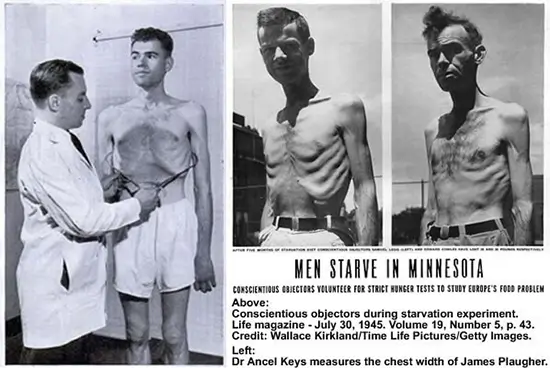
Choix de l'éditeur Obésité
Expérience de Famine au Minnesota : Pourquoi les Régimes Nous Font Grossir. La Psychologie de la Faim.
L'une des premières études scientifiques sur les effets de la faim sur l'esprit a été observée dans une étude connue sous le nom de Minnesota Starvation Experiment réalisée par l'Université du Minnesota en 1944.

Postes en Vedette -

Choix de l'éditeur Régime optimal Régime végétalien
Directives Diététiques de l'OMS - Nouvelle Pyramide Alimentaire et Suppression de la Science
Les directives diététiques de l'OMS recommandent une alimentation pauvre en graisses saturées (protéines animales), en sucre et en sel et riche en fruits et légumes pour lutter contre l'augmentation épidémique des maladies chroniques dans le monde.

Choix de l'éditeur Régime optimal
Régime Alimentaire Humain Optimal- Maladies Chroniques, Guerre des Régimes Alimentaires et Arguments des Végétaliens
Notre naturelle optimale de l'homme est un régime que nos ancêtres hominiens ont mangé au cours des 30 derniers millions d'années, et non pas l'homme anatomiquement moderne dans l'âge de Pierre.
Choix de l'éditeur Phytochimiques
Photochimie : Comprendre les Bases
Chaque phytochimique qui existe a une action biologique dans le corps humain. Chacun parmi des millions de composés phytochimiques différents.

Médecine allopathique Cancer Choix de l'éditeur
Cancer, The Forbidden Cures-Rife Machine, Revue Historique
Le taux de récupération des patients atteints d'un cancer non traitable et déclarés en phase terminale en utilisant la technologie de résonance Rife Machine était de 100 %.
Antioxydants Choix de l'éditeur ORAC
Comprendre les Valeurs ORAC : La Teneur en Antioxydants des Aliments
Lorsque votre principale source d'antioxydants est le café, vous savez que vous avez un sérieux problème.
Choix de l'éditeur Régime végétalien
Les Carences en Nutriments Dans le Régime Végétalien : Stratégies de Prévention
Il existe neuf carences nutritionnelles courantes à l'échelle de la population qui affectent les personnes qui suivent un régime à base de plantes. Si elles ne sont pas corrigées à temps, certaines déficiences ont des conséquences terribles et incurables.

Choix de l'éditeur La prévention Régime végétalien
Étude sur la Chine- L'argument Végétalien
Une étude chinoise a montré qu'il n'y a pas de maladie cardiaque, de cancer ou de diabète dans les communautés rurales sous-développées du monde avec des régimes végétaliens à base d'amidon.
Antioxydants Choix de l'éditeur ORAC
Régime Riche en Antioxydants : Règles Rénérales et Stratégies
Il existe des stratégies simples et rentables pour optimiser la valeur antioxydante de notre alimentation.
Diabète Choix de l'éditeur
Causes du Diabète et Glucides Raffinés- L'argument Végétalien
Les gens pensent que les glucides raffinés sont associés à des pics d'insuline et sont l'une des causes du diabète. Ils ont raison. Cependant, ils ont également tort.
Médecine allopathique Choix de l'éditeur
L'histoire de Big Pharma - IG Farben
La partie du monopole des Rockefeller sur les industries chimiques et médicales est entrée en vigueur après la Seconde Guerre mondiale. La coopération entre Standard Oil et IG Farben en a fait une réalité.
Dernières Nouvelles de PubMed, #alimentation végétale –
- Plant-Based Functional Formulae Mitigate Western Diet-Induced MASLD by Modulating Hepatic Oxidative Stress, Inflammation as Well as Nrf-2/HO-1 and NF-kappaB Gene Expressionpar Rasha S Mohamed le octobre 16, 2026
Psyllium has long been used to improve satiety and control weight. Leek and dill leaves are abundant in bioactive substances that have been confirmed to have anti-inflammatory and antioxidant properties. Our goal was to assess the hepatoprotective effects of two formulae (dill and psyllium or leek and psyllium) against oxidative stress and inflammatory markers in a metabolic dysfunction-associated steatotic liver disease (MASLD) rat model. Twenty four rats were used in this study. Rats were…
- Bioactive Ingredients in the Mediterranean Diet for Hepatic Health: In Vitro Evaluation of Selected Extracts Against Non-Alcoholic Steatosispar Valentina Vassallo le octobre 16, 2026
Natural products derived from the Mediterranean diet have attracted considerable interest as potential drug leads owing to their antioxidant and anti-inflammatory properties, as well as their beneficial effects on metabolic disorders such as non-alcoholic fatty liver disease (NAFLD). This study investigated the individual and combined effects of carvacrol, thymol, basil essential oil, and lycopene in an in vitro HepG2 model of hepatic steatosis. Their antioxidant activity was first confirmed […]
- Dietary Phytochemical Index and Fasting Plasma Glucose in Adults with Type 2 Diabetes: A Cross-Sectional Studypar Stavroula Maria Konstantopoulou le octobre 16, 2026
Background/Objectives: Type 2 diabetes mellitus (T2D) is a major public health challenge. Phytochemicals have gained attention for their potential role in glucose regulation. This study aimed to investigate the association between dietary phytochemical intake, assessed using the Dietary Phytochemical Index (DPI), and fasting plasma glucose in adults with established T2D. Methods: A cross-sectional study was conducted among 340 adults with T2D attending the Diabetes Clinic of the General […]
- Toxicological Evaluation of Zingiber purpureum Extract and Its Effects on Gut Microbiota in Zebrafishpar Nisamanee Charoenchon le octobre 16, 2026
Zingiber purpureum Roscoe (Phlai) is renowned in Southeast Asia for its anti-inflammatory, antioxidant, and antibacterial activities, yet its safety and effects on gut health in vivo are not well characterized. This study investigated the biological effects of ethanolic-soluble Phlai extract (ESPE) in zebrafish (Danio rerio), focusing on chemical marker standardization in phenylbutanoids and cucurminoids, developmental toxicity, gut microbiota investigation, and tissue histopathology. […]
- Trendy, but Are They Safe? Current Popular Diets and Their Use in Inflammatory Bowel Diseases: Narrative Reviewpar Klara Szwarc le octobre 16, 2026
Inflammatory bowel disease (IBD) arises from the interplay between genetic susceptibility, immune dysregulation, microbiota, and environmental exposures, with diet potentially contributing to both pathogenesis and management. Patients frequently modify their diet independently, often using different strategies during remission and active symptoms. This narrative review synthesises evidence on patient-accessible dietary patterns and selected structured nutritional therapies across five […]
- Promoting the Mediterranean Diet in the Workplace: An Observational Cross-Sectional Studypar Nicola Magnavita le octobre 16, 2026
Background/Objectives: The Mediterranean diet (MD) is a set of customs and eating habits developed in countries bordering the Mediterranean Sea thousands of years ago. These habits are frequently proposed as a complement to pharmacological therapies for chronic diseases and could also counteract their onset. This study aimed to investigate adherence to the MD in workers from 22 companies in Latium (Italy) and to evaluate the association of diet with workers’ health. Methods: Workers […]