







Le lait A1 avec la variante bêta-caséine a1 est un facteur de risque possible dans le développement du diabète de type 1 chez les enfants, de l'autisme et des maladies cardiaques chez les adultes.
Milos Pokimica
Écrit par : Milos Pokimica
Examiné Médicalement Par : Dr. Xiùying Wáng, M.D.
Mis à jour le 10 juin 2023Principaux Enseignements :
– La bêta-caséine est une protéine qui représente environ 30 % des protéines du lait de vache. Il existe en deux variantes génétiques : A1 et A2.
- La bêta-caséine A1 du lait de vache est différente de celle de tous les autres mammifères, qui sont exclusivement de type A2, y compris les bovins A2 d'Inde et d'Afrique, les buffles, ainsi que les autres mammifères et le lait humain. Presque tous les bovins de type A1 sont apparentés aux vaches d'origine européenne de la sous-espèce d'origine de cette mutation, Bos Taurus.
- Le BCM7 est un peptide qui se décompose en 7 acides aminés à partir de la bêta-caséine A1. Il a des effets opiacés similaires à ceux des narcotiques tels que la morphine et peut être nocif pour les lipoprotéines de basse densité (LDL).
- Il existe une corrélation entre le diabète de type 1 et les anticorps dirigés contre la bêta-caséine A1. On pense que ces anticorps attaquent les cellules qui produisent l'insuline dans le pancréas en raison de similitudes avec la structure de la protéine BCM7.
- Les casomorphines sont des opioïdes que l'on trouve dans les produits laitiers, en particulier dans la bêta-caséine A1. Elles ont été associées à l'autisme et à la schizophrénie dans le cadre de la théorie de "l'excès d'opioïdes".
- Les peptides opioïdes du lait de vache ont longtemps été considérés comme une cause possible du syndrome de mort subite du nourrisson (SMSN), car ils peuvent inhiber le centre respiratoire du tronc cérébral, entraînant l'apnée et la mort.
- Des irBCM (casomorphines bovines) basales élevées ont été observées chez les nourrissons nourris au lait maternisé présentant un retard dans le développement psychomoteur et un tonus musculaire accru, tandis que les irHCM (casomorphines humaines) basales les plus élevées ont été observées chez les nourrissons nourris au lait maternel présentant un développement psychomoteur et un tonus musculaire normaux.
Bêta-caséine A1 dans le lait de vache.
La bêta-caséine représente environ 30 % des protéines du lait de vache. La bêta-caséine est présente sous la forme d'une ou deux variantes génétiques; A1 ou A2. La plupart du lait de vache contient une combinaison de bêta-caséine A1 et A2. Cependant, le lait qui ne contient que le type A2 sans A1 bêta-caséine alpha est disponible dans certains pays.
La deuxième variante, la bêta-caséine A2, n'est pas associée au diabète de type 1.
La relation établie entre la béta-caséine A1 et le diabète de type 1 et les maladies cardiaques est de 0,982 et 0,76 (Laugesen et Elliott, 2003).
Il s'agit d'un niveau très significatif si on le compare à d'autres raisons épidémiologiques de ces conditions, telles que le tabagisme et la mortalité par cancer du poumon r = 0,73 ou la probabilité de personnes dans les années 1960 et de maladies cardiaques dix ans plus tard où r = 0,85.
La différence entre la bêta-caséine A1 et A2 est présente en raison d'une seule substitution d'acides aminés à 67 lignes d'acides aminés de 209 qu'ils ont dans la chaîne.
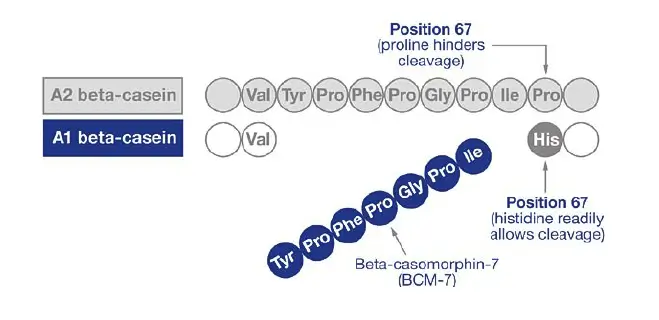
La bêta-caséine A1 du lait de vache est différente de celle de tous les autres mammifères, qui sont exclusivement de type A2, y compris les bovins A2 d'Inde et d'Afrique, les buffles, ainsi que les autres mammifères et le lait humain. Presque tous les bovins de type A1 sont apparentés aux vaches d'origine européenne de la sous-espèce d'origine de cette mutation, Bos Taurus.
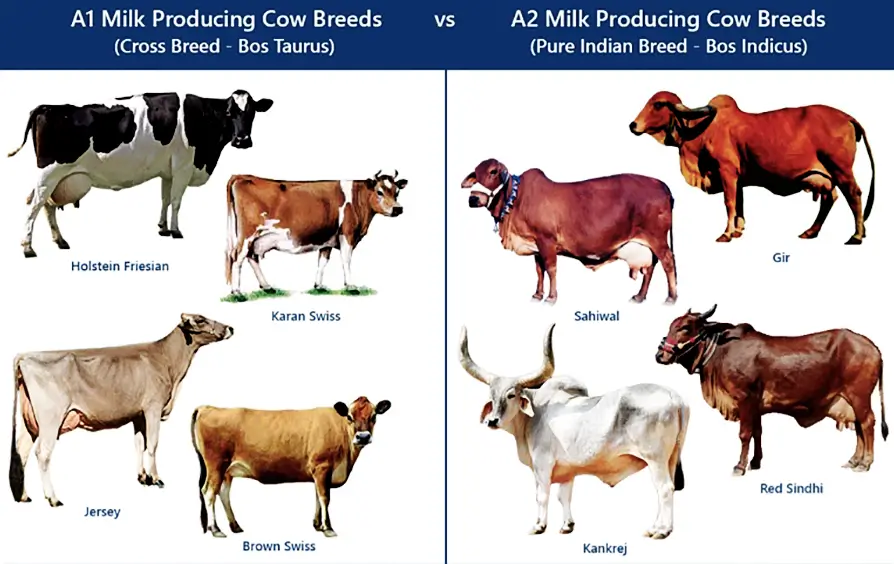
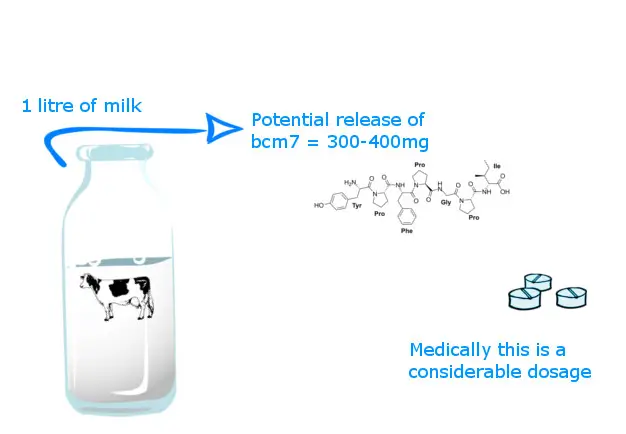
Elle résulte d'une mutation génétique des vaches en Europe, survenue il y a environ 8 000 ans. Aujourd'hui, les vaches laitières A1 sont élevées en Europe et en Amérique, et les espèces A2 sont élevées en Nouvelle-Zélande. Les vaches de la race Holstein ont des quantités presque égales de bêta-caséine A1 et A2. L'espèce Jersey possède généralement un peu plus de A2, mais elle est également considérée comme une espèce mixte. Les mêmes vaches Jersey sont porteuses d'une bêta-caséine "B" qui s'est avérée donner plus de BCM7. En raison d'une mauvaise fixation de l'histidine, la bêta-caséine A1 se décompose en peptides de 7 acides aminés appelés bêta-casomorphine 7 (BCM7) lorsqu'elle est consommée. La BCM7 est problématique parce que l'opiacé est au même niveau que les narcotiques comme la morphine et a des effets similaires. Il s'agit également d'un oxydant connu pour ses effets néfastes sur la santé. lipoprotéines de basse densité (LDL). Comme les liens entre les 7 acides aminés le rendent extrêmement solide, il est résistant à toute dégradation ultérieure. Lorsque le BCM7 pénètre dans la circulation sanguine, divers problèmes se posent.
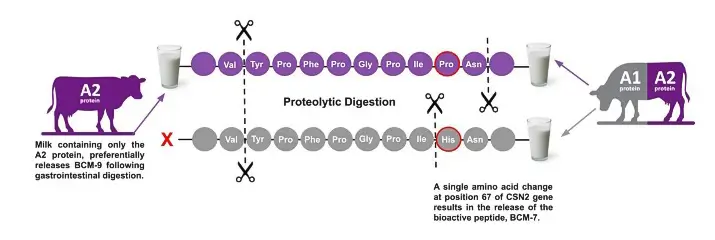
Cependant, le BCM 7 est trop volumineux pour être absorbé par un manteau sain dans l'intestin, ce qui signifie que le problème de santé associé à la bêta-caséine A1 est plus susceptible d'être affecté par des personnes ayant une santé digestive endommagée ou par des maladies telles que maladie coeliaque ou une maladie gastro-intestinale.
Si vous avez un intestin qui fuit, vous pouvez vous donner, à vous et à votre fœtus, si vous êtes enceinte, le diabète de type 1 en tant que maladie auto-immune. si vous consommez du lait et des produits laitiers, c'est-à-dire. Les personnes ayant l'une des conditions en vigueur sont plus appropriées pour l'abcès BCM7. Chez les bébés qui ont naturellement une perméabilité intestinale accrue afin d'améliorer l'absorption des nutriments, le risque est également plus élevé.
Une fois qu'il pénètre dans la circulation sanguine, le BCM7 peut facilement franchir la barrière hémato-encéphalique et pénétrer dans le cerveau, où la connexion aux récepteurs provoque les symptômes de l'autisme et de la schizophrénie.
Cette affirmation a été initiée par des recherches qui ont été diffusées sur des rats, où les rats ont montré des tendances similaires dans le comportement et la sympathie comme l'autisme et la schizophrénie après l'injection de BCM7. L'association de ces effets a également été confirmée par la capacité d'inverser l'état et les modifications du comportement de la naloxone antagoniste des opioïdes. Pour ajouter à cela, il est reconnu depuis longtemps que les opiacés ont un effet sur la fonction immunitaire, qui est la raison possible pour laquelle la bêta-caséine A1 et le BCM7 sont associés à des maladies auto-immunes.
Cardiopathie.
La première découverte a été faite par Alexandra Steinerovath qui a étudié les causes du stress oxydatif chez les nourrissons. Elle a découvert que les bébés nourris au lait maternisé présentaient un taux plus élevé d'anticorps contre les LDL oxydées (Steinerova et al, 1999). En 2004, Steinerova a lancé l'idée et réalisé une étude sur le BCM7 et l'augmentation des anticorps chez les nourrissons. Une étude a démontré que les nourrissons nourris avec des préparations pour bébés à base de bêta-caséine A1 développaient des niveaux significativement plus élevés de ces anticorps par rapport à ceux nourris avec de la bêta-caséine A2 (Steinerova et al., 2004).
Aujourd'hui, plus de recherches ont été effectuées et la communauté scientifique s'attend à ce que le BCM7 ait un effet pro-oxydant sur les LDL. Dans le cas des maladies cardiaques, des études supplémentaires ont permis de découvrir le mécanisme par lequel la bêta-caséine A1 va développer la maladie cardiaque. maladie cardiaque, et l'effet principal est un BCM7 qui oxyde le LDL qui transporte le cholestérol du foie vers les tissus (Chin-Dusting et al., 2006). Ceci est important car les LDL oxydées augmentent le risque de maladie cardiaque en raison de l'augmentation de l'incidence des artères et, par conséquent, de l'accumulation de la plaque, c'est-à-dire que les LDL oxydées rendent les artères collantes et conduisent à la formation de la plaque.
Diabète de type 1.
Le diabète de type 1 est classé comme un maladie auto-immune qui se produit en raison d'un assaut du système immunitaire sur les cellules qui produisent l'insuline dans le pancréas.
Et ce n'est pas génétique comme on pourrait le faire croire par la médecine conventionnelle. La prédisposition génétique joue un rôle, mais pour prouver qu'il ne s'agit que d'une maladaptation de plus, nous pouvons regarder des jumeaux identiques. La concordance du diabète de type 1 chez les vrais jumeaux n'est que de 50 %. Cela signifie que l'on comprend, on ne comprend pas. Si c'est génétique et que l'environnement ne joue pas un rôle, cela ne se produirait pas. C'est quelque chose que nous avons mangé ou pour être précis que les mères ont mangé ou donné aux bébés qui les amènent à développer cette maladie auto-immune.
Au Japon, le taux de diabète de type 1 est 18 fois moins élevé qu'aux États-Unis, mais lorsque les Japonais émigrent en Amérique et commencent à adopter le régime alimentaire occidental, ils développent le même taux de diabète que les Américains. Certains pays ont 100 fois moins de taux de diabète de type 1 que d'autres, en fonction principalement du régime alimentaire de la population. Le diabète de type 1 a commencé à augmenter après la Seconde Guerre mondiale, comme d'autres maladies, il n'est donc pas génétique. C'est une mauvaise adaptation, et nous savons maintenant ce qui en est la cause.
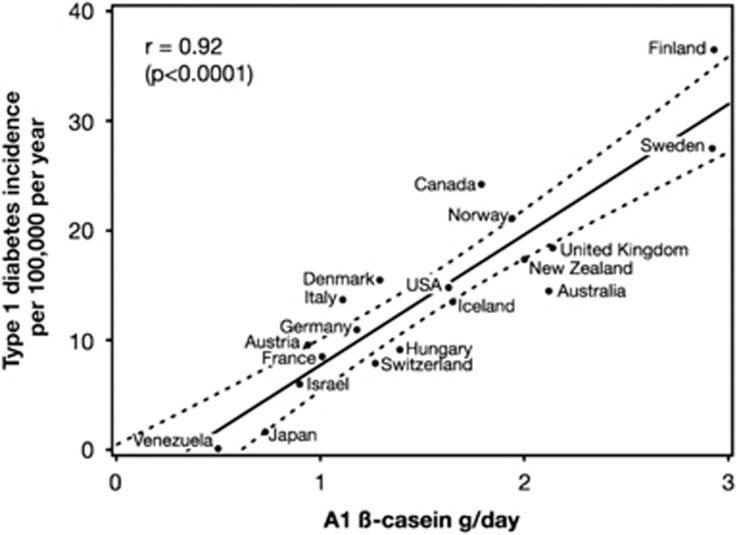
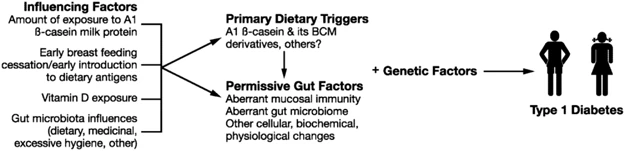
En 1999, les universitaires découvert en Allemagne qu'il existe une corrélation entre le diabète de type 1 et le niveau d'anticorps contre la bêta-caséine A1. On pense que ces anticorps sont, en fait, basés sur la séquence d'acides aminés de l'opioïde problématique BCM7, qui est dérivé de la bêta-caséine A1. Comme la séquence présente des similitudes avec la structure protéique des cellules qui produisent l'insuline dans le pancréas, les anticorps attaquent le pancréas en même temps que les peptides BCM7. Dans cette étude, tous les enfants présentaient des niveaux significatifs d'anticorps anti-bêta-caséine A1 dans leur sang, mais pas d'anticorps contre d'autres protéines du lait (Karjalainen et al., 1992). La conclusion est la suivante :
"Les patients atteints de diabète sucré insulino-dépendant sont immunisés contre l'albumine de lait de vache, avec des anticorps dirigés contre un peptide d'albumine capable de réagir avec une protéine de surface spécifique aux cellules bêta. De tels anticorps pourraient participer au développement du dysfonctionnement des îlots.
Karjalainen et al., 1992
Autisme, Schizophrénie, et Syndrome de mort subite du nourrisson.
De plus, certains opiacés traversent la barrière hémato-encéphalique. Parce que les opiacés BCM7 ne devraient pas être présents du tout et représentent une forme de mutation non naturelle chez les bovins, cela ne devrait pas être une grande surprise dans la relation entre la bêta-caséine A1 et la caséine en général à l'association avec l'autisme également.
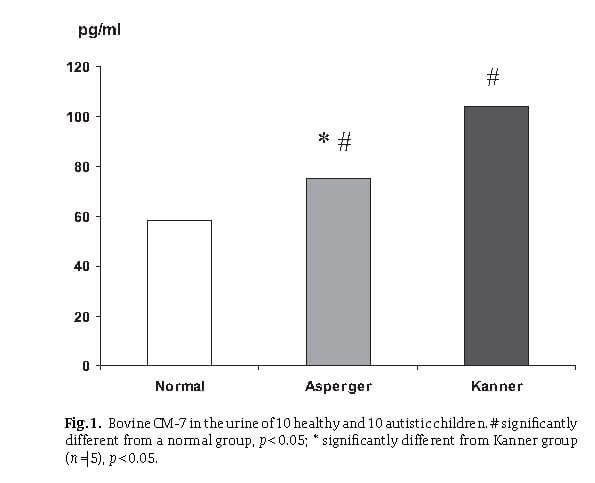
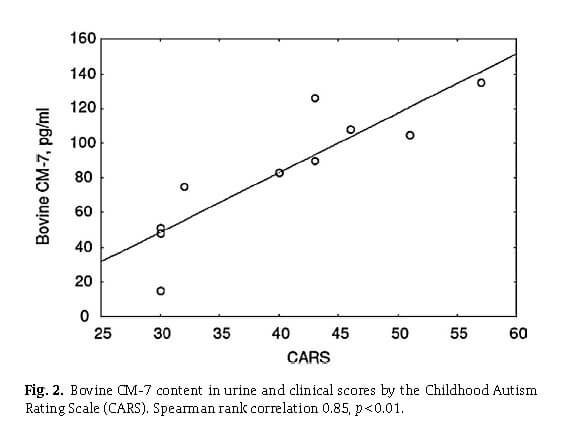
Le BCM 7 obtenu à partir de la bêta-caséine A1 et la glutéomorphine dérivée du gluten sont des opiacés qui peuvent être associés à ces symptômes. À cause de ce, un grand nombre d'enfants autistes montrent des améliorations significatives s'ils évitent le gluten et la caséine. La relation entre l'autisme et les opiacés n'est pas nouvelle. En 1979, Jaak Panksepp, un scientifique, a suggéré ce lien. En 2000, une équipe de chercheurs dirigée par Robert Cade a examiné les preuves existantes liant la caséine et gluten opiacés avec autisme et schizophrénie. Ils ont recueilli de nouvelles données auprès de 150 enfants autistes, 120 adultes schizophrènes, 43 enfants normaux et 76 adultes normaux (Cade et al., 2000). Les enfants autistes et les adultes schizophrènes ont montré une valeur anormale élevée constante des peptides opioïdes casomorphine et glutéomorphine obtenus à partir de la bêta-caséine et du gluten.
En fait, tous les adultes présentent des niveaux élevés de cette substance opioïde morphinique après avoir consommé du lait ou du yaourt, même l'adulte qui ne présente pas d'inflammation dans l'intestin, au moins pendant les 8 heures qui suivent la consommation (Chabance et al., 1998).
La théorie va quelque chose comme ça. Vous avez une prédisposition génétique pour des maladies telles que l'autisme ou la schizophrénie. C'est ce qu'on appelle "excès d'opioïdes" théorie. Vous avez une prédisposition génétique et vous êtes exposé très tôt à des facteurs de stress environnementaux qui endommagent votre intestin et le rendent perméable, ou bien vous êtes un bébé normal qui a naturellement un intestin perméable. Puis vient le lait ou les produits laitiers, avec toutes les casomorphines qui passent en excès dans le sang, puis dans le cerveau, ce qui déclenche l'apparition de la maladie. On pense que ces opioïdes pourraient jouer un rôle dans le développement de l'autisme et d'autres troubles neurologiques. Le problème avec ces casomorphines est aussi que lorsqu'on examine la barrière hémato-encéphalique des patients autistes, leur barrière hémato-encéphalique semble plus faible aussi.
Chez un individu normal, il y aura certains des effets sédatifs, mais chez quelqu'un avec un intestin qui fuit et une barrière hémato-encéphalique qui fuit, cela aura un effet beaucoup plus fort, et si cette personne a une prédisposition génétique ou une sensibilité à c'est alors que la vraie maladie peut se former. Par la théorie dite de «l'excès d'opioïdes» en tout cas.
Sur les soixante-dix enfants autistes soumis à un régime sans gluten et sans caséine, 81 % ont montré des améliorations significatives sur une période de 3 mois, et plus d'un tiers de ceux qui n'ont pas récupéré étaient encore riches en peptides opioïdes, ce qui indique qu'ils n'a pas suivi le régime alimentaire de l'enfant. Bien que seulement 40 % des adultes se soient améliorés, on pense que beaucoup d'entre eux n'utilisent pas le régime depuis assez longtemps pour fournir à leur corps la capacité d'éliminer les molécules BCM7 existantes dans le cerveau qui peuvent durer plus d'un an.
En 1999, Zhongjie Sun et Robert Cade ont injecté des dérivés opioïdes BCM7 de la bêta-caséine A1 à des rats pour déterminer s'ils pénètrent dans le cerveau (Cade et al., 1999). Ils ont découvert qu'il pénètre dans les différentes zones du cerveau qui ont été précédemment associées à l'autisme et à la schizophrénie. Par conséquent, ils ont pensé que le BCM7 pouvait franchir la barrière hémato-encéphalique et atteindre des parties du cerveau susceptibles d'être affectées par l'autisme et la schizophrénie. La même année, ils ont mené une expérience similaire et ont constaté que les rats auxquels on avait injecté le BCM7 présentaient plusieurs symptômes importants de l'autisme et de la schizophrénie, tels que l'intolérance, une sensibilité réduite à la douleur et l'absence de réaction aux stimuli externes.
En 2003, Sun et Cade ont poursuivi leurs recherches et découvert que les opioïdes glutéomorphine dérivés du gluten n'affectaient que trois régions du cerveau, tandis que les opioïdes BCM7 dérivés de la bêta-caséine A1 affectaient 45 régions. La circulation de ce peptide dans le système nerveux central immature du nourrisson pourrait également inhiber le centre respiratoire du tronc cérébral, ce qui entraînerait l'apnée et la mort (Sun et al, 2003). Les peptides opioïdes du lait ont longtemps été théorisés comme une cause possible de syndrome de mort subite du nourrisson (Ramabadran and Bansinath, 1988).
Cela a non seulement prouvé que BCM7 arrive au cerveau beaucoup plus facilement, mais c'est un facteur beaucoup plus important dans le développement de autisme et schizophrénie. Je ne sais pas si ces études vont permettre de mieux comprendre ou de mieux traiter ces personnes. Il pourrait y avoir des individus ayant une prédisposition génétique à ces maladies que ces protéines de mimétisme moléculaire ne font qu'aggraver. Je n'en sais rien. La science poursuit ses recherches, mais c'est un processus lent et qui aura intérêt à financer ces études ? Cela prendra du temps.
Casomorphines opioïdes et retard psychomoteur.
Le lait A1 contre le lait A2 a eu un gros problème politique en Australie et en Nouvelle-Zélande à un moment donné. Elle s'est terminée par l'étiquetage obligatoire du lait et de tous les produits laitiers. En Australie, vous ne pouvez pas acheter une bouteille de lait A1 ou tout autre produit laitier sans une étiquette visible indiquant si le lait contient une forme de protéine A1 ou A2.
Pourquoi ces opioïdes sont-ils dans le lait en premier lieu ? Et il y en a dans tout le lait existant, pas seulement la variante de lait A1. Le lait A1 est juste une variante plus puissante. Pour les bébés humains normaux ainsi que pour les veaux, ils sont là pour créer une envie ou pour les rendre dépendants comme le sont les toxicomanes réguliers, mais dans ce cas, la dépendance va déclencher la guérison du bébé aux opiacés, puis le bébé va obtenir toute la nutrition du lait dont il a besoin pour grandir. Tout est comme il se doit, mais maintenant nous avons changé d'espèce. Tout comme le profil d'acides aminés protéiques du lait humain et de vache n'est pas le même, le profil de ces casomorphines n'est pas le même.
Dans cette étude (Kost et al., 2009), les bébés nourris avec du lait de vache contenant un taux plus élevé de casomorphines bovines semblent souffrir d'un retard psychomoteur, mais c'est exactement l'inverse qui a été constaté pour les casomorphines humaines. Les casomorphines humaines semblent aider le cerveau des humains. La conclusion de l'étude est la suivante :
" La irHCM basale la plus élevée (casomorphines humaines) a été observée chez les nourrissons allaités avec un développement psychomoteur et un tonus musculaire normaux. En revanche, une irBCM basale élevée (casomorphines de bovins) a été trouvée chez les nourrissons nourris au lait maternisé montrant un retard dans le développement psychomoteur et un tonus musculaire accru. Parmi les nourrissons nourris au lait maternisé avec un développement normal, le taux de ce paramètre était directement corrélé à l'irBCM basal. Les données indiquent que l'allaitement a un avantage sur l'alimentation artificielle pour le développement des nourrissons au cours de la première année de vie et soutiennent l'hypothèse de la détérioration de l'élimination de la casomorphine bovine en tant que facteur de risque de retard du développement psychomoteur et d'autres maladies telles que l'autisme. "
(Kost et al., 2009)
La structure de la caséine dans le lait humain et dans le lait de vache est sensiblement différente, avec une différence de 47 % seulement, et surtout si nous avons de la caséine A1 mutée dans le mélange, nous avons une situation qui peut déclencher un diabète de type 1 chez le bébé. La casomorphine bovine est beaucoup plus puissante que la casomorphine humaine, et son effet est presque équivalent à celui de la morphine (Trivedi et al., 2015). Les casomorphines de vache se lient plus étroitement aux récepteurs de la sérotonine dans le cerveau que les casomorphines humaines. En outre, les casomorphines opioïdes ont été produites à la fois par le lait A1 et le lait A2, sans différence de puissance (Asledottir et al., 2017). En outre, le lait de vache contient beaucoup plus de caséine en général, 15 fois plus pour être précis que le lait humain. Vingt-et-un peptides et huit provenant de la bêta-caséine ont été trouvés dans le lait de vache, et seulement cinq peptides et un seul provenant de la bêta-caséine ont été trouvés dans le lait humain.
Faut-il passer au A2 qui est dix fois plus cher? Qu'en est-il de la pizza au fromage au lait A1 ou de tout autre produit laitier A1 commercial ? La plupart des chocolats sont fabriqués avec du lait en poudre A1. Le scénario le plus réaliste est que même si nous voulons passer à A2, il n'y a pas de lait A2 si vous vivez en dehors de la Nouvelle-Zélande. Et même en Nouvelle-Zélande, il y a le lait chipset poudre A1 fait pour le industrie alimentaire dans presque tout. De la glace au chocolat. Et même si nous pouvions dépenser de l'argent supplémentaire et avoir cette crème glacée A2, le lait est toujours corrélé, y compris A2, à un large éventail de problèmes de santé (Lait et produits laitiers - Corrélations des risques pour la santé).
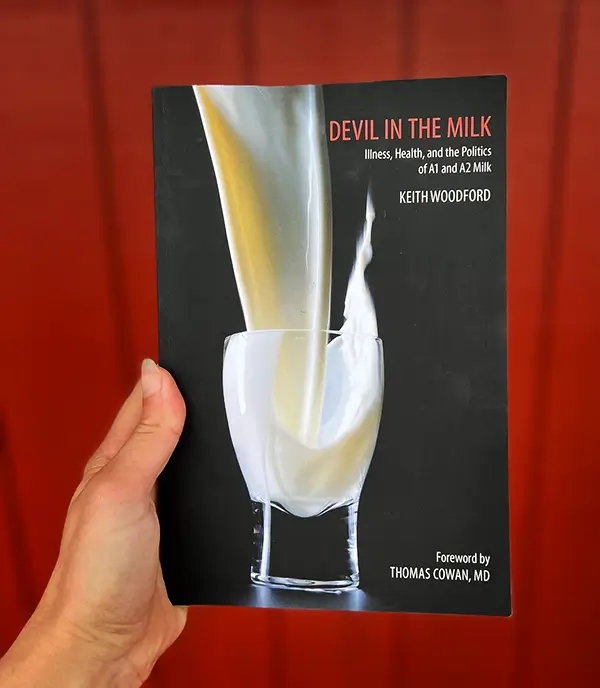
Le diable dans le lait, pourquoi ça peut être dangereux.
FAQ
Références :
- Karjalainen, J., Martin, JM, Knip, M., Ilonen, J., Robinson, BH, Savilahti, E., Akerblom, HK et Dosch, HM (1992). Un peptide d'albumine bovine comme déclencheur possible du diabète sucré insulino-dépendant. Le journal de médecine de la Nouvelle-Angleterre, 327(5), 302–307. https://doi.org/10.1056/NEJM199207303270502
- Chabance , B. , Marteau , P. , Rambaud , JC , Migliore-Samour , D. , Boynard , M. , Perrotin , P. , Guillet , R. , Jollès , P. , & Fiat , A. (1998). Libération de peptides de caséine et passage dans le sang chez l'homme lors de la digestion du lait ou du yaourt. Biochimie, 80(2), 155–165. https://doi.org/10.1016/s0300-9084(98)80022-9
- Kost, NV, Sokolov, OY, Kurasova, OB, Dmitriev, AD, Tarakanova, JN, Gabaeva, MV, Zolotarev, YA, Dadayan, AK, Grachev, SA, Korneeva, EV, Mikheeva, IG et Zozulya, AA (2009 ). Bêta-casomorphines-7 chez les nourrissons sous différents types d'alimentation et à différents niveaux de développement psychomoteur. Peptides, 30(10), 1854–1860. https://doi.org/10.1016/j.peptides.2009.06.025
- Trivedi, MS, Hodgson, N., Walker, SG, Trooskens, G., Nair, V. et Deth, RC (2015). Effets épigénétiques des peptides opioïdes dérivés de la caséine dans les cellules de neuroblastome humain SH-SY5Y. Nutrition & Métabolisme, 12(1). https://doi.org/10.1186/s12986-015-0050-1
- Asledottir, T., Le, TT, Petrat-Melin, B., Devold, TG, Larsen, LB et Vegarud, GE (2017). Identification de peptides bioactifs et quantification de la β-casomorphine-7 à partir de β-caséines bovines A1, A2 et I après digestion gastro-intestinale ex vivo. Journal laitier international, 71, 98-106. https://doi.org/10.1016/j.idairyj.2017.03.008
- Cade, R., Privette, M., Fregly, M., Rowland, N., Sun, Z., Zele, V., Wagemaker, H., & Edelstein, C. (2000). Autisme et schizophrénie : troubles intestinaux. Neurosciences nutritionnelles, 3(1), 57–72. https://doi.org/10.1080/1028415X.2000.11747303
- Pal , S. , Woodford , K. , Kukuljan , S. et Ho , S. (2015). Intolérance au lait, bêta-caséine et lactose. Nutriments, 7(9), 7285-7297. https://doi.org/10.3390/nu7095339
- Chia, JSJ, McRae, JL, Kukuljan, S., Woodford, K., Elliott, RB, Swinburn, B. et Dwyer, KM (2017). Protéine de lait bêta-caséine A1 et autres facteurs environnementaux prédisposant au diabète de type 1. Nutrition & diabète, 7(5), e274. https://doi.org/10.1038/nutd.2017.16
- Sun, Z., Zhang, Z., Wang, X., Cade, R., Elmir, Z. et Fregly, M. (2003). Relation de la bêta-casomorphine à l'apnée dans le syndrome de mort subite du nourrisson. Peptides, 24(6), 937–943. https://doi.org/10.1016/s0196-9781(03)00156-6
- Ramabadran, K., & Bansinath, M. (1988). Les peptides opioïdes du lait comme cause possible du syndrome de mort subite du nourrisson. Hypothèses médicales, 27(3), 181–187. https://doi.org/10.1016/0306-9877(88)90138-7
- Chin-Dusting, J., Shennan, J., Jones, E., Williams, C., Kingwell, B. et Dart, A. (2006). Effet d'une supplémentation alimentaire en bêta-caséine A1 ou A2 sur les marqueurs de développement de la maladie chez les personnes à haut risque de maladie cardiovasculaire. The British journal of nutrition, 95(1), 136–144. https://doi.org/10.1079/bjn20051599
- Steinerová, A., Racek, J., Stozický, F., Tatzber, F., & Lapin, A. (1999). Autoanticorps contre les LDL oxydées dans la première phase de la vie. Lipoprotéines de basse densité. Chimie clinique et médecine de laboratoire, 37(9), 913–917. https://doi.org/10.1515/CCLM.1999.135
- Steinerová, A., Korotvicka, M., Racek, J., Rajdl, D., Trefil, L., Stozický, F. et Rokyta, Z. (2004). Augmentation significative des anticorps dirigés contre les particules de LDL oxydées (IgoxLDL) chez les nourrissons de trois mois ayant reçu du lait maternisé. Athérosclérose, 173(1), 147–148. https://doi.org/10.1016/j.atherosclerosis.2003.12.006
- Laugesen, M., & Elliott, R. (2003). Cardiopathie ischémique, diabète de type 1 et bêta-caséine A1 du lait de vache. La revue médicale néo-zélandaise, 116(1168), U295. [PubMed]
Articles Similaires



Vous avez des questions sur la nutrition et la santé ?
Je serais ravie d'entendre vos commentaires et d'y répondre dans mon prochain message. J'apprécie votre contribution et votre opinion et j'espère avoir bientôt de vos nouvelles. Je vous invite également à nous suivre sur Facebook, Instagram et Pinterest pour plus de contenu sur l'alimentation, la nutrition et la santé. Vous pouvez y laisser un commentaire et entrer en contact avec d'autres passionnés de santé, partager vos conseils et expériences, et obtenir le soutien et les encouragements de notre équipe et de notre communauté.
J'espère que ce billet a été instructif et agréable pour vous et que vous êtes prêt à mettre en pratique les connaissances que vous avez acquises. Si vous avez trouvé ce billet utile, veuillez le partager à vos amis et à votre famille qui pourraient également en bénéficier. On ne sait jamais qui peut avoir besoin de conseils et de soutien dans son parcours de santé.
– Vous pourriez aussi aimer –
Protéine Complète : Signalisation de l'IGF-1 dans la Formation du Cancer

Carence en Vitamine D - Facteurs de Risque
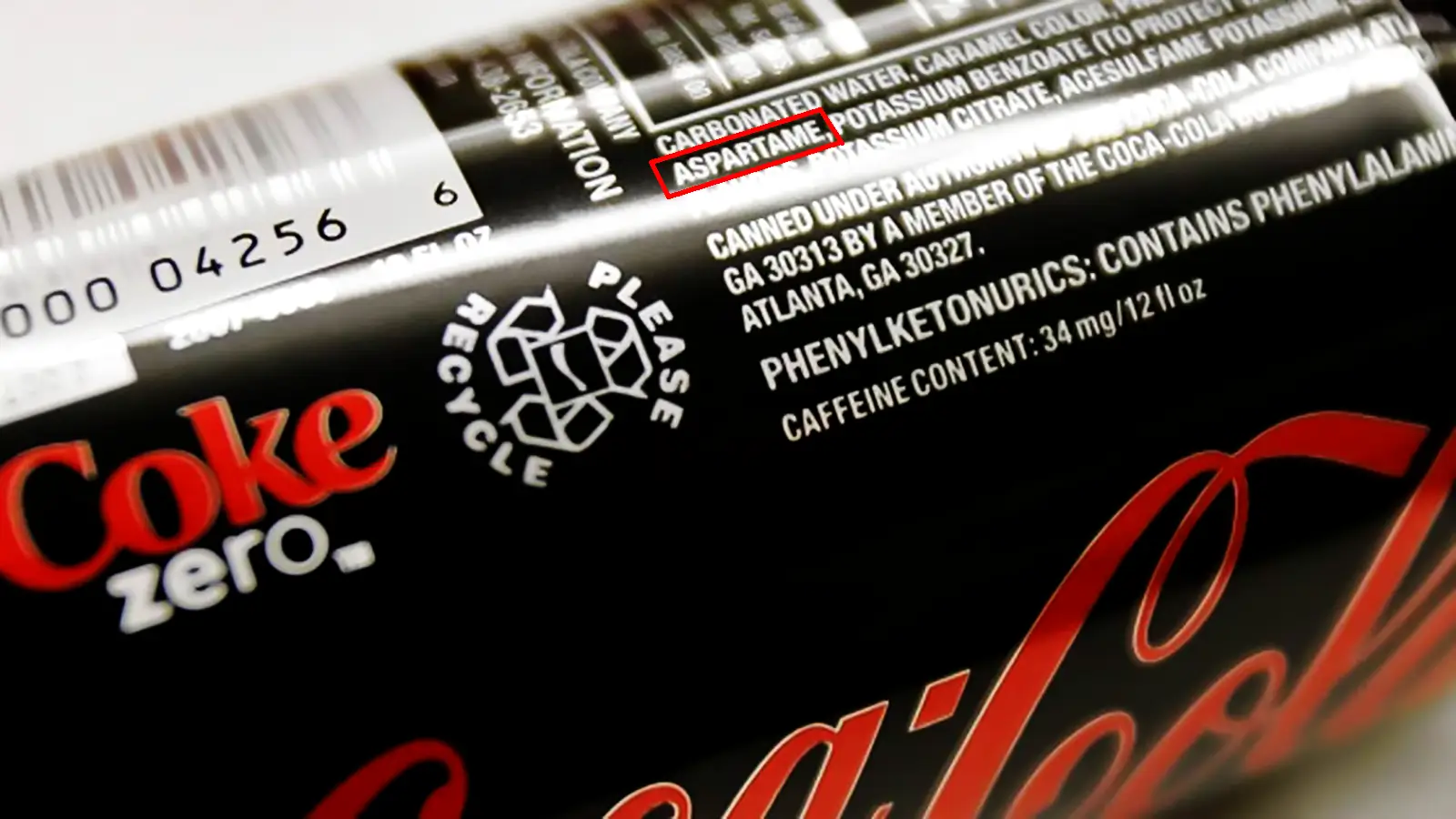
Aspartame : La Vérité sur les Risques et Dangers
Bienfaits de la Chlorella : Plante B12, Fer, Zinc & Détox
Viande Cuite- Le Mutagène Dans Une Bouchée, Exposition Aux Amines Hétérocycliques

Toxicité du Poisson - La Viande la Plus Toxique

Taille du Cerveau, Intelligence et Consommation de Viande- L'argument Végétalien

Avantages de l’Astaxanthine : L’Antioxydant Naturel le Plus Puissant au Monde

Apprendre la Nutrition

Milos Pokimica est docteur en médecine naturelle, nutritionniste clinique, rédacteur en santé médicale et nutrition et conseiller en sciences nutritionnelles. Auteur de la série de livres Devenir vegetarien ? Examen des sciences, il exploite également le site Web de santé naturelle GoVeganWay.com
Avis de non-responsabilité médicale
GoVeganWay.com vous propose des critiques des dernières recherches liées à la nutrition et à la santé. Les informations fournies représentent l'opinion personnelle de l'auteur et ne sont pas destinées ni implicites à se substituer à un avis médical professionnel, un diagnostic ou un traitement. Les informations fournies sont à titre informatif uniquement et ne sont pas destinées à remplacer la consultation, le diagnostic et/ou le traitement médical d'un médecin qualifié ou d'un prestataire de soins de santé.NE JAMAIS IGNORER LES CONSEILS MÉDICAUX PROFESSIONNELS OU RETARDER LA RECHERCHE DE SOINS MÉDICAUX EN RAISON DE QUELQUE CHOSE QUE VOUS AVEZ LU OU ACCÉDÉ SUR GoVeganWay.com
N'APPLIQUEZ JAMAIS DE CHANGEMENTS AU STYLE DE VIE OU TOUT CHANGEMENT À LA SUITE DE QUELQUE CHOSE QUE VOUS AVEZ LU SUR GoVeganWay.com AVANT DE CONSULTER UN PRATICIEN MÉDICAL AGRÉÉ.
En cas d'urgence médicale, appelez immédiatement un médecin ou le 911. GoVeganWay.com ne recommande ni n'approuve aucun groupe, organisation, test, médecin, produit, procédure, opinion ou autre information spécifique pouvant être mentionné à l'intérieur.
Choix de l'éditeur -
Cancer Choix de l'éditeur Phytochimiques
Pouvoir Anticancéreux des Fruits et Légumes : Preuves in Vivo et Cliniques
Certains extraits végétaux rivalisent avec les principaux médicaments de chimiothérapie et ciblent en même temps plusieurs types différents de cellules cancéreuses.
Antioxydants Choix de l'éditeur ORAC
Les Huiles Essentielles en Tant Que Compléments Antioxydants : Règles et Stratégies
Les huiles essentielles de qualité alimentaire peuvent constituer une stratégie pratique et conviviale pour optimiser la valeur antioxydante et les scores ORAC de notre alimentation.
Antioxydants Choix de l'éditeur ORAC
Régime Riche en Antioxydants : Règles Rénérales et Stratégies
Il existe des stratégies simples et rentables pour optimiser la valeur antioxydante de notre alimentation.
Antioxydants Choix de l'éditeur ORAC
Comprendre les Valeurs ORAC : La Teneur en Antioxydants des Aliments
Lorsque votre principale source d'antioxydants est le café, vous savez que vous avez un sérieux problème.

Antioxydants Choix de l'éditeur ORAC
Avantages de l’Astaxanthine : L’Antioxydant Naturel le Plus Puissant au Monde
L'astaxanthine est l'antioxydant naturel et universel le plus puissant (soluble dans l'huile et dans l'eau) connu de la science. Il s'accumule dans les tissus et ne peut jamais se transformer en pro-oxydant.
Antioxydants Choix de l'éditeur ORAC Phytochimiques
Les Antioxydants : Comprendre les Bases
Il n'y a pas de composés phytochimiques ou d'antioxydants dans les produits d'origine animale. En moyenne, les aliments végétaux contiennent plus de 60 fois plus d'antioxydants que les aliments d'origine animale.
Choix de l'éditeur Régime végétalien
Les Carences en Nutriments Dans le Régime Végétalien : Stratégies de Prévention
Il existe neuf carences nutritionnelles courantes à l'échelle de la population qui affectent les personnes qui suivent un régime à base de plantes. Si elles ne sont pas corrigées à temps, certaines déficiences ont des conséquences terribles et incurables.
Choix de l'éditeur Régime optimal
Déficience en Micronutriments Dans le Régime Alimentaire Américain Standard : Stratégies d'Optimisation
Le profil nutritionnel de notre régime moderne à base de viande, de sucre et d'aliments transformés est totalement incongru avec notre évolution, ce qui entraîne de graves carences en micronutriments.
Choix de l'éditeur Phytochimiques
Photochimie : Comprendre les Bases
Chaque phytochimique qui existe a une action biologique dans le corps humain. Chacun parmi des millions de composés phytochimiques différents.
Choix de l'éditeur Lait Régime optimal
Lait et Produits Laitiers : Corrélations Avec les Risques Pour la Santé
Les associations connues avec le lait et la consommation de produits laitiers sont l'infertilité, le cancer de l'ovaire et du sein, la leucémie, le diabète de type 1, l'autisme, l'artériosclérose, la cataracte, la polyarthrite rhumatoïde, la sclérose en plaques, l'hyperactivité, la congestion, les boutons, etc.
Cancer Choix de l'éditeur Protéine
Protéine Complète : Signalisation de l'IGF-1 dans la Formation du Cancer
Lorsque vous mangez des protéines animales, vous avez quatre fois plus de chances de développer tous les types de cancer. Lorsque vous fumez, vous avez quatre fois plus de chances de développer un cancer du poumon.

Cancer Choix de l'éditeur Protéine
Anatomie du Cancer - Corrélations Entre Les Risques Pour la Santé
Environ 2 % des cancers sont considérés par la médecine comme purement causés par des facteurs génétiques. La même gamme que dans le règne animal. On ne vous a pas dit toute la vérité.
Milos Pokimica est rédacteur spécialisé dans la santé et la nutrition et conseiller en sciences nutritionnelles. Auteur d'une série de livres Devenir vegetarien ? Examen des sciences, il exploite également le site Web de santé naturelle GoVeganWay.com
Derniers Articles –

Restriction calorique Longévité
Comment Jeûner : Les Aliments de Jeûne Qui N'interrompent Pas L'Autophagie
L'autophagie. Vous êtes-vous déjà demandé ce qu'il advient des cellules de votre corps lorsqu'elles meurent ou sont endommagées ? S'accumulent-elles et créent-elles des problèmes, ou sont-elles éliminées d'une manière ou d'une autre ? La réponse est que votre corps...

Santé Dentaire La prévention
Sensibilité et Douleur des Dents aux Sucreries : Solution Rapide et Durable
L'huile essentielle de clou de girofle est une solution rapide et facile pour soulager la douleur. C'est un antioxydant puissant et un analgésique qui peut aider à lutter contre les maladies des gencives et les maux de dents.

Les haricots
Haricots Verts : Nutrition et Bienfaits Pour La Santé
Les haricots verts sont pauvres en calories et riches en composés naturels qui peuvent vous aider à contrôler votre glycémie, à réduire votre taux de cholestérol et à lutter contre les radicaux libres.
Régime alimentaire cru Régime végétalien
Peut-on Manger des Champignons Crus : Risques pour la Santé, Nutrition et Sécurité
Les champignons contiennent des toxines sensibles à la chaleur, comme l'hydrazine ou l'agaritine, et des parois cellulaires composées de chitine qui ne peuvent pas être digérées correctement par l'homme.
Régime végétalien
Les Poissons Sont-ils Des Animaux ? Une Perspective Culturelle
Dans certaines cultures, la viande de poisson n'est pas considérée comme de la viande et le poisson est autorisé même pendant le jeûne.

Santé Dentaire La prévention
Rince-bouche Naturel Fait Maison : Éprouvé, Plus Fort et Moins Toxique
Le bain de bouche naturel fait maison est plus puissant que la chlorhexidine, moins toxique et, s'il est avalé, il peut donner des nausées, mais il a aussi une valeur ORAC élevée.
Santé Dentaire La prévention
Comment Arrêter les Caries Dentaires : Symptômes, Causes et Prévention
La consommation de sucre est la principale cause des caries dentaires, associée à des carences en minéraux, notamment en magnésium, zinc, cuivre et oligo-éléments.

Antioxydants Superaliments
Amla : Avantages Prouvés, Nutrition et Signification Clinique
L'amla est l'un des antioxydants les plus puissants au monde, avec un score ORAC de 261 530. Il s'agit d'une riche source de substances phytochimiques qui ont de nombreux effets bénéfiques sur la santé.
Top Des Nouvelles Sur la Santé - ScienceDaily
- Glucosamine, a popular joint supplement, linked to faster Alzheimer’s progressionle septembre 27, 2026
A large health-record analysis found that glucosamine use was associated with a 25% higher likelihood of mild cognitive impairment progressing to dementia. Lab experiments suggest the popular joint supplement may intensify an abnormal sugar-tagging process in the Alzheimer’s brain, although researchers say clinical trials are needed to determine whether it actually causes harm.
- Atrial fibrillation patients saw 69% lower risk with common blood thinnersle septembre 27, 2026
Direct oral anticoagulants cut the risk of serious clinical events by 69% in atrial fibrillation patients with an intermediate risk of stroke, according to the randomized SINGLE-AF trial. The benefit was driven mainly by fewer ischemic strokes, with no increase in major bleeding.
- One CRISPR treatment cut “bad” cholesterol in half for a full yearle septembre 27, 2026
A single dose of an experimental CRISPR therapy cut LDL cholesterol and triglycerides by about half in patients with difficult-to-treat lipid disorders. The reductions were still present one year later, with the highest dose lowering LDL by 52.5% and triglycerides by 47.8%.
- Why rheumatoid arthritis pain may persist even when inflammation is under controlle septembre 27, 2026
Pain and fatigue in rheumatoid arthritis can persist even after inflammation improves, with depression, poor sleep, obesity, smoking, and chronic pain potentially helping sustain symptoms. Researchers say identifying these hidden drivers could prevent unnecessary medication changes and lead to more personalized treatment.
- Scientists say house cats could help unlock better cancer treatments for humansle septembre 27, 2026
Scientists have mapped the genetics of cat cancer on an unprecedented scale and found surprising similarities with tumors in humans. The findings could help bring precision cancer treatments to cats while also revealing new clues about how human cancers develop and respond to drugs.
- A major risk of breast cancer screening may have been overestimated for decadesle septembre 26, 2026
A new analysis suggests mammograms may lead to far less breast cancer overdiagnosis than some earlier studies indicated. Researchers reexamined all eight major randomized screening trials and accounted for differences in follow-up time, screening frequency, and screening after trials ended. Their results were consistent with an overdiagnosis rate below 5%, rather than estimates approaching 30% to 50%.
- That fresh cleaning smell could be filling your home with nanoparticlesle septembre 26, 2026
Researchers found that scented cleaners can react with ozone indoors to create billions or trillions of invisible nanoparticles that can penetrate deep into the lungs. The pollution forms within minutes and, in some cases, may produce an inhaled particle dose comparable to or greater than standing near heavy traffic.
PubMed, #régime-vegan –
- Plant-Based Diets in Adolescence: Cardiometabolic Benefits, Developmental Risks, and the Role of Fortificationle septembre 26, 2026
Adolescence is a critical window in which dietary patterns stabilise while nutrient requirements remain high to support growth, bone accrual, and neurodevelopment. Plant-based diets are increasingly adopted by young people, yet paediatric evidence indicates that they should not be treated as a single exposure, because diet quality substantially modifies both benefits and risks. Healthy plant-based patterns-rich in whole grains, legumes, fruits, vegetables, nuts, and unsaturated fats-are…
- Plant-Based Functional Custard Enriched with Vitamin D3: Insight into Technological Properties, Nutrition and Bone Tissue Regenerationle septembre 26, 2026
A plant-based or vegan diet is considered one of the most important dietary patterns, often followed for religious or health reasons. It should contain vital nutrients such as protein, iron, zinc, calcium, vitamin D, and others. The objective of this study was to produce a plant-based food product with high nutritional value (vegan custard, VC) and fortify it with vitamin D(3) (vegan custard + D(3)). Thirty-five female albino rats, with an average body weight of 160 ± 5 g, were divided […]
- Dietary Patterns, Micronutrient Adequacy, and Metabolic Vulnerability in Alzheimer’s Disease: A Critical Narrative Reviewle septembre 26, 2026
Dietary factors may influence cognitive aging and Alzheimer’s disease (AD), but observational associations, mechanistic findings, and intervention effects should not be considered equivalent evidence. This critical narrative review examines how dietary patterns, micronutrient adequacy, and metabolic health may modify AD-related vulnerability. A targeted search of PubMed/MEDLINE, Scopus, and Web of Science through April 2026 prioritized systematic reviews, meta-analyses, randomized trials, and…
- A Structured Narrative Review of Contemporary Dietary Strategies Following Acute Coronary Syndromesle septembre 24, 2026
CONCLUSIONS: A Mediterranean-style diet remains the dietary pattern supported by the strongest evidence for secondary prevention following ACS. Until further pragmatic randomized trials are available, clinicians should continue recommending Mediterranean-style dietary patterns while individualising dietary advice according to patient preferences, cultural practices, and long-term adherence.
- Toward International Dietary Guidance: A Food Guide Pyramid for Human and Planetary Healthle septembre 23, 2026
Dietary guidelines shape food policy, education, and food systems worldwide. Recent controversies in dietary guideline development, together with rising burdens of diet-related chronic disease and increasing environmental pressures, highlight the need for globally relevant dietary guidance aligned with both human and planetary health. We developed an evidence-informed International Food Guide Pyramid emphasizing optimal carbohydrate-containing staple foods. The International Carbohydrate […]
Messages Aléatoires -

Médecine allopathique Choix de l'éditeur
Médecine Allopathique - L'essor d'Une Industrie
L'équilibre des branches médicales est resté égal au tournant du XXe siècle environ, lorsque de nouveaux traitements médicaux sont apparus, potentiellement très rentables.
Antioxydants Superaliments
Amla : Avantages Prouvés, Nutrition et Signification Clinique
L'amla est l'un des antioxydants les plus puissants au monde, avec un score ORAC de 261 530. Il s'agit d'une riche source de substances phytochimiques qui ont de nombreux effets bénéfiques sur la santé.

Choix de l'éditeur La prévention Toxicité
Toxicité Environnementale- C'est Juste Une Chaîne Alimentaire
La toxicité environnementale est la bioaccumulation de toxines. Les organismes sont des filtres. Mais il existe un autre processus encore pire appelé bioamplification dans la chaîne alimentaire.
Cancer La prévention Toxicité
Pesticides, OGM et Surcharge Toxique.
L'exposition aux pesticides provoque directement le cancer, des malformations congénitales, la stérilité et l'infertilité, des dommages au cerveau et au système nerveux, au foie, aux reins et à d'autres organes.
Cancer Inflammation Toxicité
Poisson d'Elevage - Paradis du "Cesspool"
Les poissons d'élevage contiennent jusqu'à dix fois plus de polluants. Après la vaccination, le poisson est toujours sous antibiotiques et pesticides.
Cancer Choix de l'éditeur Phytochimiques
Pouvoir Anticancéreux des Fruits et Légumes : Preuves in Vivo et Cliniques
Certains extraits végétaux rivalisent avec les principaux médicaments de chimiothérapie et ciblent en même temps plusieurs types différents de cellules cancéreuses.
Choix de l'éditeur Obésité
Stimuli Anormaux- Hyperphagie Boulimique et régulation de l'Appétit
Lorsque nous voyons un hamburger, ce sont des stimuli supranormaux. Les pulsions primordiales affectent notre comportement, nous forçant à avoir des troubles de l'hyperphagie boulimique.
Choix de l'éditeur Régime végétalien
Les Carences en Nutriments Dans le Régime Végétalien : Stratégies de Prévention
Il existe neuf carences nutritionnelles courantes à l'échelle de la population qui affectent les personnes qui suivent un régime à base de plantes. Si elles ne sont pas corrigées à temps, certaines déficiences ont des conséquences terribles et incurables.
Choix de l'éditeur Régime optimal
Aliments Transformés : Comprendre les Risques
Les aliments transformés signifient que l'on retire quelque chose de l'aliment entier, généralement des fibres, et que l'on ajoute quelque chose, généralement des matières grasses, du sucre, du sel et des glutamate monosodique.
Antioxydants Nootropiques
Bleu de Méthylène : Utilisations Thérapeutiques et Signification Clinique
Le Bleu de méthylène est un puissant antioxydant synthétique. Il améliore la fonction mitochondriale et la capacité de nos cellules à produire de l'énergie.

Postes en Vedette -

Choix de l'éditeur Obésité
Hyperphagie Boulimique - La Psychologie de la Faim
Dans la nature, il n'y a ni sucre raffiné ni graisse. Notre cerveau n'avait jamais été exposé à une combinaison des deux tout à la fois nous forçant à l'hyperphagie boulimique.

Médecine allopathique Choix de l'éditeur Régime optimal
Le Rapport McGovern - Intérêt Spécial et Suppression de la Science
En 1977, la pression pour un changement des directives diététiques (rapport McGovern) vers un végétalien plus végétal a été présentée au Congrès américain.
Choix de l'éditeur Obésité
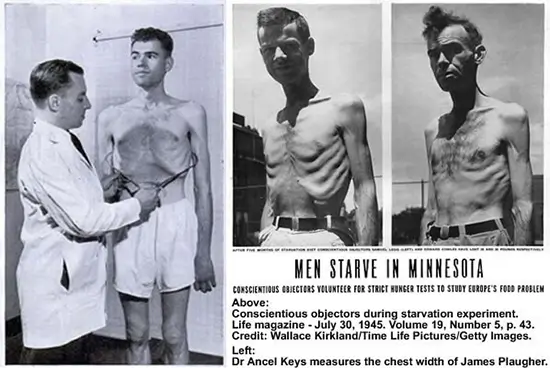
Expérience de Famine au Minnesota : Pourquoi les Régimes Nous Font Grossir. La Psychologie de la Faim.
L'une des premières études scientifiques sur les effets de la faim sur l'esprit a été observée dans une étude connue sous le nom de Minnesota Starvation Experiment réalisée par l'Université du Minnesota en 1944.
Choix de l'éditeur Régime optimal Régime végétalien
Directives Diététiques de l'OMS - Nouvelle Pyramide Alimentaire et Suppression de la Science
Les directives diététiques de l'OMS recommandent une alimentation pauvre en graisses saturées (protéines animales), en sucre et en sel et riche en fruits et légumes pour lutter contre l'augmentation épidémique des maladies chroniques dans le monde.
Diabète Choix de l'éditeur
Causes du Diabète et Glucides Raffinés- L'argument Végétalien
Les gens pensent que les glucides raffinés sont associés à des pics d'insuline et sont l'une des causes du diabète. Ils ont raison. Cependant, ils ont également tort.
Choix de l'éditeur Phytochimiques
Photochimie : Comprendre les Bases
Chaque phytochimique qui existe a une action biologique dans le corps humain. Chacun parmi des millions de composés phytochimiques différents.

Choix de l'éditeur La prévention Régime végétalien
Étude sur la Chine- L'argument Végétalien
Une étude chinoise a montré qu'il n'y a pas de maladie cardiaque, de cancer ou de diabète dans les communautés rurales sous-développées du monde avec des régimes végétaliens à base d'amidon.
Choix de l'éditeur La prévention Toxicité
Toxicité Environnementale- C'est Juste Une Chaîne Alimentaire
La toxicité environnementale est la bioaccumulation de toxines. Les organismes sont des filtres. Mais il existe un autre processus encore pire appelé bioamplification dans la chaîne alimentaire.
Choix de l'éditeur Inflammation
Le Dilemme des Humains Omnivores- Consommation de Viande, Bactéries Probiotiques, Inflammation et Intestin
Les humains sont-ils omnivores au sens propre de l'anatomie ? Il existe une différence fondamentale dans le fonctionnement du tube digestif entre les plantes et les espèces carnivores.
Antioxydants Choix de l'éditeur ORAC
Régime Riche en Antioxydants : Règles Rénérales et Stratégies
Il existe des stratégies simples et rentables pour optimiser la valeur antioxydante de notre alimentation.
Dernières Nouvelles de PubMed, #alimentation végétale –
- Long-Term Monitoring of Radioactive Cesium in Commercial Foods and Dietary Intake Estimated by Total Diet Studies in Japan after the Fukushima Daiichi Nuclear Power Plant Accidentpar Hiromi Nabeshi le septembre 27, 2026
Following the Fukushima Daiichi Nuclear Power Plant accident in 2011, Japan implemented extensive monitoring of radioactive materials in foods and established strict regulatory limits based on an annual effective dose of 1 mSv/year from artificial radionuclides. This review summarizes long-term surveillance data on radioactive cesium (r-Cs) in commercial foods and long-term assessments of dietary intake of r-Cs and strontium-90 (^(90)Sr) using the total diet study (TDS)/market basket (MB)…
- Nutrition and Endometriosis: Current Evidence on Dietary Risk Factors and Clinical Impact – A Narrative Reviewpar Christine Dawczynski le septembre 27, 2026
Endometriosis (EM) is a severe chronic inflammatory disease characterized by the presence of endometrium-like tissue outside the uterine cavity, causing pain and significantly reducing quality of life. Worldwide, around 10% of women of reproductive age are affected and there is no cure as of now. The limited treatment options focus on hormone therapy, surgery and pain management–without satisfactory long-term effects. Nutritional strategies might support the prevention and treatment of…
- North American and Andean Indigenous Plant-Based Foods and Their Contemporary Scientific Rationale for Health Improvementpar Lena Gálvez Ranilla le septembre 27, 2026
Plant-based food systems have been an integral part of human ecology since the dawn of domestication across all continents from over 12,000 y ago. This served the needs of human health and wellness from whole plant form to the use of parts in a range of water-based extracts to dry form or fermentation-based applications. This conference paper focuses on some examples of plant-based foods in the Americas that have been used since ancient times among indigenous North American and Andean […]
- Plant-Based Diets in Adolescence: Cardiometabolic Benefits, Developmental Risks, and the Role of Fortificationpar Bianca Simionescu le septembre 26, 2026
Adolescence is a critical window in which dietary patterns stabilise while nutrient requirements remain high to support growth, bone accrual, and neurodevelopment. Plant-based diets are increasingly adopted by young people, yet paediatric evidence indicates that they should not be treated as a single exposure, because diet quality substantially modifies both benefits and risks. Healthy plant-based patterns-rich in whole grains, legumes, fruits, vegetables, nuts, and unsaturated fats-are…
- Dietary Patterns, Micronutrient Adequacy, and Metabolic Vulnerability in Alzheimer’s Disease: A Critical Narrative Reviewpar Isidora Sierralta le septembre 26, 2026
Dietary factors may influence cognitive aging and Alzheimer’s disease (AD), but observational associations, mechanistic findings, and intervention effects should not be considered equivalent evidence. This critical narrative review examines how dietary patterns, micronutrient adequacy, and metabolic health may modify AD-related vulnerability. A targeted search of PubMed/MEDLINE, Scopus, and Web of Science through April 2026 prioritized systematic reviews, meta-analyses, randomized trials, and…
- Baseline Ferritin and Body Composition as Correlates of Longitudinal Metabolic Changes During an Energy-Restricted Mediterranean-Style Intervention Across Three Overweight Phlogistic-Related Clinical…par Begoña de Cuevillas le septembre 26, 2026
CONCLUSIONS: Baseline ferritin and body composition were correlates of heterogeneous inflammatory-metabolic profiles and ferritin changes. These hypothesis-generating associations do not establish causal or mechanistic effects and require controlled confirmation with comprehensive iron-status assessment.