


A1-Milch mit der a1-Beta-Casein-Variante ist ein möglicher Risikofaktor für die Entwicklung von Typ-1-Diabetes bei Kindern, Autismus und Herzerkrankungen bei Erwachsenen.
Milos Pokimica
Geschrieben von: Milos Pokimica
Medizinisch Begutachtet Von: Dr. Xiùying Wáng, M.D.
Aktualisiert am 10. Juni 2023Die zentralen Thesen:
– Beta-Casein ist ein Protein, das etwa 30 % des Proteins in Kuhmilch ausmacht. Es existiert in zwei genetischen Varianten: A1 und A2.
– A1-Beta-Kasein in Kuhmilch unterscheidet sich von allen anderen Säugetieren, die ausschließlich den A2-Typ haben, einschließlich A2-Rindern aus Indien und Afrika, Büffeln, genauso wie andere Säugetiere und genauso wie menschliche Milch. Fast alle Rinder des A1-Typs sind mit Kühen europäischen Ursprungs für die Unterart der ursprünglichen Art dieser Mutation Bos Taurus verwandt.
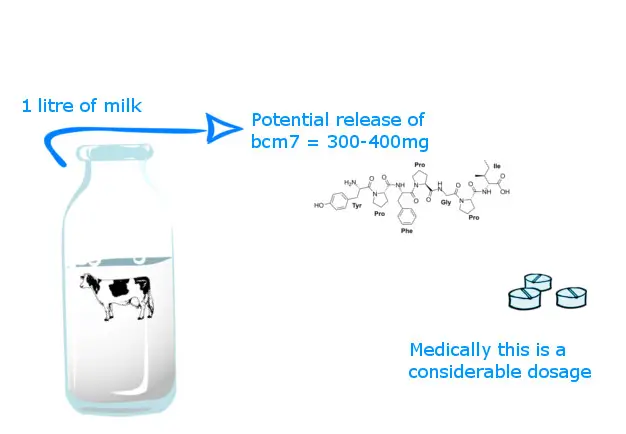
– BCM7 ist ein Peptid, das aus A1-Beta-Kasein in 7 Aminosäuren zerfällt. Es hat eine opiatähnliche Wirkung, die Narkotika wie Morphin ähnelt, und kann schädlich für Lipoproteine niedriger Dichte (LDL) sein.
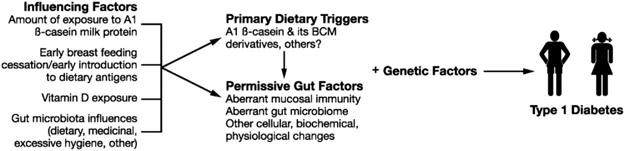
– Es besteht ein Zusammenhang zwischen Typ-1-Diabetes und Antikörpern gegen A1-Beta-Kasein. Aufgrund der Ähnlichkeit mit der Proteinstruktur von BCM7 wird angenommen, dass diese Antikörper die Zellen angreifen, die Insulin in der Bauchspeicheldrüse produzieren.
– Casomorphine sind Opioide, die in Milchprodukten vorkommen, insbesondere im A1-Beta-Kasein. Sie wurden durch die Theorie des „Opioidüberschusses“ mit Autismus und Schizophrenie in Verbindung gebracht
– Opioidpeptide aus Kuhmilch gelten seit langem als mögliche Ursache für den plötzlichen Kindstod (SIDS), da sie das Atmungszentrum im Hirnstamm hemmen und zu Apnoe und Tod führen können.
– Erhöhte basale irBCM (Kasomorphine vom Rind) wurden bei Säuglingen, die mit Säuglingsnahrung ernährt wurden, festgestellt, was eine Verzögerung der psychomotorischen Entwicklung und einen erhöhten Muskeltonus zeigte, während der höchste basale irHCM (humane Casomorphin) bei gestillten Säuglingen mit normaler psychomotorischer Entwicklung und normalem Muskeltonus beobachtet wurde.
A1 Beta-Kasein in Kuhmilch.
Beta-Casein macht etwa 30 % des Proteins in Kuhmilch aus. Beta-Kasein liegt in einer oder zwei genetischen Varianten vor; A1 oder A2. Die meiste Kuhmilch enthält eine Kombination aus A1- und A2-Beta-Kasein. In einigen Ländern ist jedoch Milch erhältlich, die nur den A2-Typ ohne A1-Beta-Kasein-Alpha enthält.
Die zweite Variante, A2-Beta-Kasein, ist nicht mit Diabetes Typ 1 verbunden.
Die nachgewiesene Beziehung dieses Zusammenhangs zwischen A1-Beta-Kasein und Typ-1-Diabetes sowie Herzerkrankungen liegt bei 0,982 und 0,76 (Laugesen und Elliott, 2003).
Dies ist ein sehr signifikanter Wert im Vergleich zu anderen epidemiologischen Gründen für diese Erkrankungen, wie z. B. Rauchen und Sterblichkeit durch Lungenkrebs (r = 0,73) oder der Wahrscheinlichkeit von Menschen in den 1960er Jahren und Herzerkrankungen zehn Jahre später (r = 0,85).
Der Unterschied zwischen A1- und A2-Beta-Kasein ist auf einen einzelnen Aminosäureaustausch an 67 der 209 Aminosäuren in der Kette zurückzuführen.
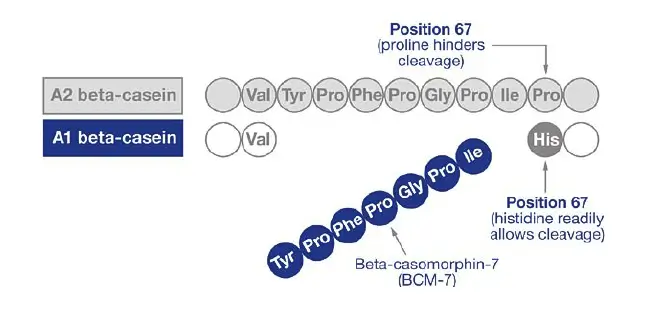
A1-Beta-Kasein in Kuhmilch unterscheidet sich von allen anderen Säugetieren, die ausschließlich den A2-Typ haben, einschließlich A2-Rindern aus Indien, Afrika und Büffeln, genauso wie andere Säugetiere und genauso wie menschliche Milch. Fast alle Rinder des A1-Typs sind mit Kühen europäischen Ursprungs für die Unterart der ursprünglichen Art dieser Mutation Bos Taurus verwandt.
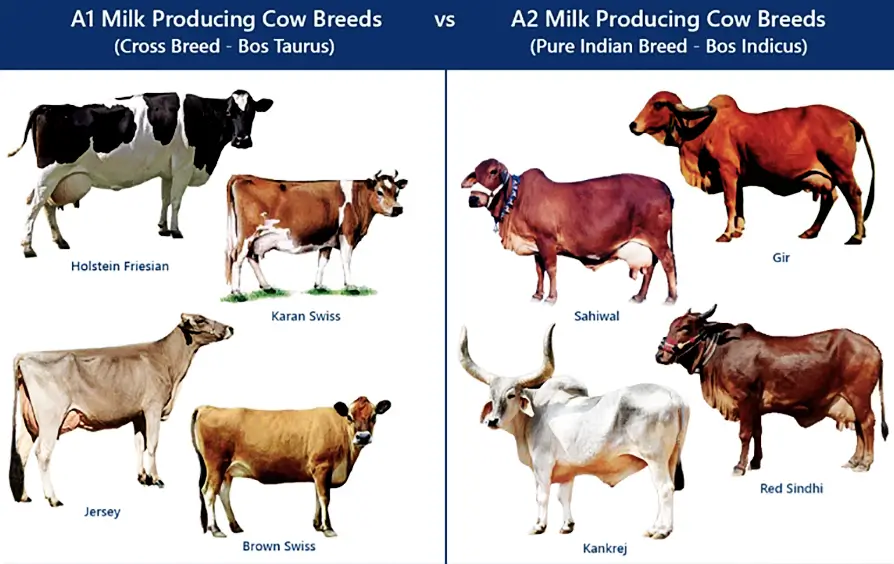
Es ist das Ergebnis einer genetischen Mutation bei Kühen in Europa, die vor etwa 8.000 Jahren auftrat. Heute werden A1-Milchkühe in Europa und Amerika und A2-Arten in Neuseeland gezüchtet. Holstein-Arten verfügen über A1- und A2-Beta-Kasein in nahezu gleichen Mengen. Die Jersey-Art hat typischerweise etwas mehr als A2, wird aber auch als Mischart betrachtet. Dieselben Jersey-Kühe tragen ein „B“-Beta-Kasein, das nachweislich mehr BCM7 liefert. Anzeichen einer schlechten Histidinbindung: A1-Beta-Casein zerfällt beim Verzehr in Peptide aus 7 Aminosäuren, die als Beta-Casomorphin 7 (BCM7) bezeichnet werden. BCM7 ist problematisch, da Opiat auf dem gleichen Niveau wie Betäubungsmittel wie Morphin liegt und ähnliche Wirkungen hat. Es ist auch ein Oxidationsmittel, von dem bekannt ist, dass es schädlich ist Lipoproteine niedriger Dichte (LDL). Da die Verbindungen zwischen 7 Aminosäuren es extrem stark machen, ist es resistent gegen weiteren Abbau. Wenn BCM7 in den Blutkreislauf gelangt, treten verschiedene Probleme auf.
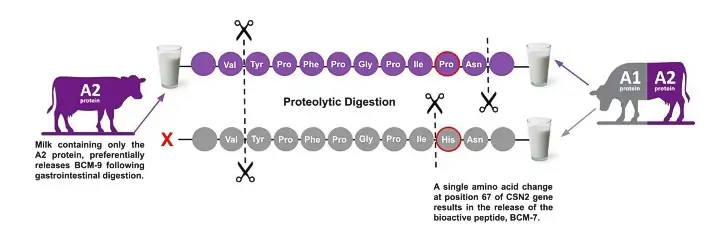
Allerdings ist BCM 7 zu groß, um von einer gesunden Hülle im Darm aufgenommen zu werden, was bedeutet, dass das mit A1-Beta-Casein verbundene Gesundheitsproblem eher bei Menschen mit geschädigter Verdauungsgesundheit oder durch Krankheiten wie z Zöliakie oder Magen-Darm-Erkrankungen.
Wenn Sie einen durchlässigen Darm haben, können Sie und Ihr Fötus, wenn Sie schwanger sind, Typ-1-Diabetes als Autoimmunerkrankung bekommen. wenn Sie Milch und Milchprodukte konsumieren. Personen mit einer der vorherrschenden Erkrankungen sind für Abszess BCM7 besser geeignet. Bei Babys, die von Natur aus über eine erhöhte Darmdurchlässigkeit verfügen, um die Aufnahme von Nährstoffen zu verbessern, besteht ebenfalls ein höheres Risiko.
Sobald es in den Blutkreislauf gelangt, kann BCM7 leicht die Blut-Hirn-Schranke durchbrechen und in das Gehirn gelangen, wo die Verbindung mit den Rezeptoren die Symptome von Autismus und Schizophrenie hervorruft.
Diese Behauptung wurde durch Untersuchungen an Ratten initiiert, bei denen Ratten nach der BCM7-Injektion ähnliche Verhaltens- und Sympathietendenzen wie Autismus und Schizophrenie zeigten. Der Zusammenhang dieser Effekte wurde auch durch die Fähigkeit, den Zustand umzukehren, und Veränderungen im Opioid-antagonistischen Naloxon-Verhalten bestätigt. Darüber hinaus ist seit langem bekannt, dass Opiate eine Wirkung haben Immunfunktion, was der mögliche Grund dafür ist, dass A1-Beta-Casein und BCM7 mit Autoimmunerkrankungen in Verbindung gebracht werden.
Herzkrankheit.
Die erste Entdeckung wurde von Alexandra Steinerova gemacht, die die Gründe für oxidativen Stress bei Säuglingen untersuchte. Sie entdeckte, dass Babys, die Milchnahrung erhielten, einen höheren Spiegel an Antikörpern gegen oxidiertes LDL aufwiesen (Steinerová et al., 1999). Im Jahr 2004 kam Steinerova auf die Idee und führte eine Studie zu BCM7 und dem Anstieg der Antikörper bei Säuglingen durch. Eine Studie zeigte, dass Säuglinge, denen A1-Beta-Kasein-Babynahrung verabreicht wurde, deutlich höhere Werte dieser Antikörper entwickelten als Säuglinge, denen A2-Beta-Kasein verabreicht wurde (Steinerová et al., 2004).
Heute wurden weitere Untersuchungen durchgeführt und in der wissenschaftlichen Gemeinschaft wird angenommen, dass BCM7 eine prooxidative Wirkung auf LDL hat. Im Falle von Herzerkrankungen haben zusätzliche Studien den Mechanismus aufgedeckt, durch den das A1-Beta-Kasein entsteht Herzerkrankung, und der primäre Effekt ist ein BCM7, das LDL oxidiert, das Cholesterin von der Leber zu den Geweben transportiert (Chin-Dusting et al., 2006). Dies ist wichtig, da das oxidierte LDL das Risiko einer Herzerkrankung aufgrund einer erhöhten Arterieninzidenz und infolgedessen einer erhöhten Plaqueansammlung erhöht, d. h. oxidiertes LDL verklebt die Arterien und führt zur Bildung von Plaque.
Diabetes Typ 1.
Typ-1-Diabetes wird als Diabetes klassifiziert Autoimmunerkrankung Dies geschieht aufgrund eines Angriffs des Immunsystems auf Zellen, die in der Bauchspeicheldrüse Insulin produzieren.
Und es ist nicht genetisch bedingt, wie die Schulmedizin vermuten lässt. Genetische Veranlagung spielt eine Rolle, aber um zu beweisen, dass es sich nur um eine weitere Fehlanpassung handelt, können wir uns eineiige Zwillinge ansehen. Die Übereinstimmung von Diabetes Typ 1 bei eineiigen Zwillingen beträgt nur 50 %. Das heißt, man bekommt es, man nicht. Wenn es genetisch bedingt ist und die Umwelt keine Rolle spielt, würde das nicht passieren. Es ist etwas, das wir gegessen haben, oder um genau zu sein, Mütter haben es gegessen oder den Babys gegeben, was dazu führt, dass sie diese Autoimmunerkrankung entwickeln.
In Japan ist Diabetes Typ 1 18-mal seltener als in den USA, aber wenn die Japaner nach Amerika auswandern und beginnen, die westliche Ernährung zu übernehmen, entwickeln sie die gleiche Diabetesrate wie die Amerikaner. In einigen Ländern ist die Rate an Typ-1-Diabetes 100-mal geringer als in anderen, was hauptsächlich von der Ernährung der Bevölkerung abhängt. Typ-1-Diabetes begann nach dem Zweiten Weltkrieg wie andere Krankheiten zuzunehmen, es ist also nicht genetisch bedingt. Es handelt sich um eine Fehlanpassung, und wir wissen jetzt, was sie verursacht.
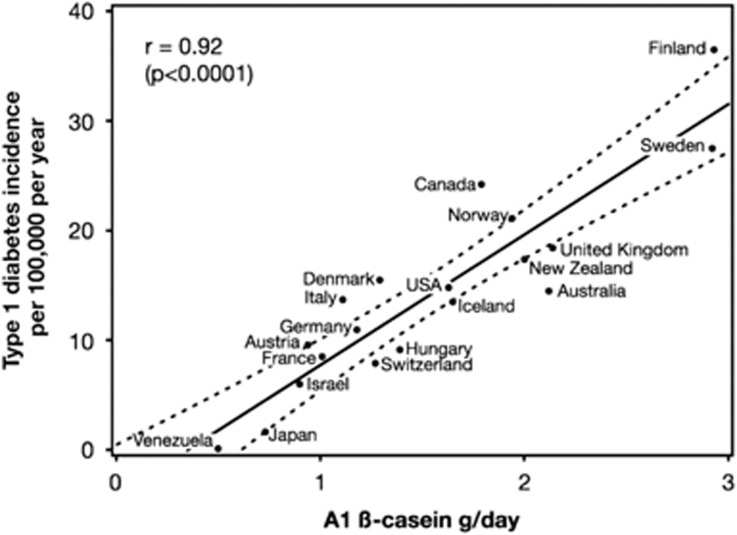
Im Jahr 1999 Wissenschaftler in Deutschland entdeckt dass es einen Zusammenhang zwischen Typ-1-Diabetes und der Menge an Antikörpern gegen A1-Beta-Kasein gibt. Es wird angenommen, dass diese Antikörper tatsächlich auf der Aminosäuresequenz des problematischen Opioids BCM7 basieren, das aus A1-Beta-Kasein abgeleitet ist. Da die Sequenz Ähnlichkeiten mit der Proteinstruktur der Zellen aufweist, die in der Bauchspeicheldrüse Insulin produzieren, greifen die Antikörper zusammen mit den BCM7-Peptiden die Bauchspeicheldrüse an. In dieser Studie hatte jedes einzelne Kind erhebliche Mengen an A1-Beta-Kasein-Antikörpern im Blut, jedoch keine Antikörper gegen andere Milchproteine (Karjalainen et al., 1992). Das Fazit lautete:
„Patienten mit insulinabhängigem Diabetes mellitus sind immun gegen Kuhmilchalbumin und verfügen über Antikörper gegen ein Albuminpeptid, das mit einem Betazell-spezifischen Oberflächenprotein reagieren kann. Solche Antikörper könnten an der Entstehung einer Inseldysfunktion beteiligt sein.“
Karjalainen et al., 1992
Autismus, Schizophrenie, Und Plötzlichen Kindstod.
Außerdem gibt es Opiate, die die Blut-Hirn-Schranke überwinden. Da BCM7-Opiate überhaupt nicht vorhanden sein sollten und eine Form unnatürlicher Mutation bei Rindern darstellen, sollte es keine große Überraschung sein, dass der Zusammenhang zwischen A1-Beta-Kasein und Kasein im Allgemeinen auch mit Autismus in Zusammenhang steht.
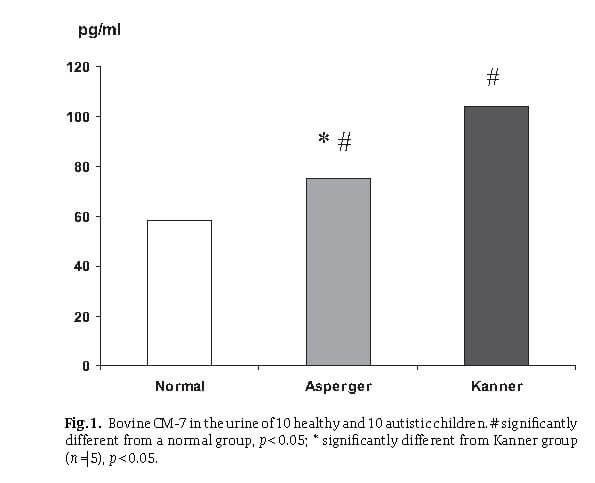
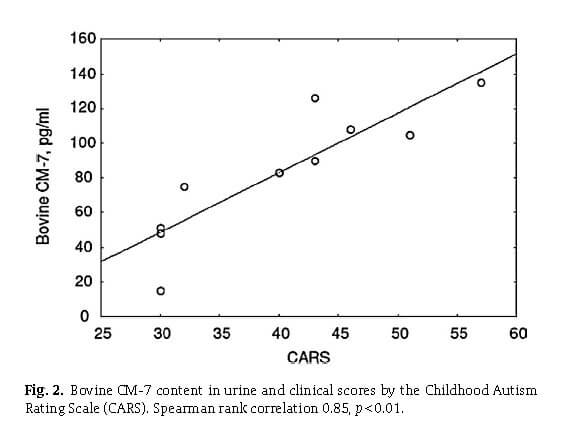
BCM 7, das aus A1-Beta-Kasein gewonnen wird, und Gluteomorphin, das aus Gluten gewonnen wird, sind beides Opiate, die mit diesen Symptomen in Verbindung gebracht werden können. Aus diesem Grund, Eine große Zahl autistischer Kinder zeigt deutliche Verbesserungen, wenn sie Gluten und Kasein meiden. Der Zusammenhang zwischen Autismus und Opiaten ist nichts Neues. Im Jahr 1979 Jaak Panksepp, Ein Wissenschaftler schlug diesen Zusammenhang vor. Im Jahr 2000 überprüfte ein Forscherteam unter der Leitung von Robert Cade die vorhandenen Beweise für einen Zusammenhang zwischen Kasein und Gluten Opiate bei Autismus und Schizophrenie. Sie sammelten neue Daten von 150 autistischen Kindern, 120 Erwachsenen mit Schizophrenie, 43 normalen Kindern und 76 normalen Erwachsenen (Cade et al., 2000). Autistische Kinder und schizophrene Erwachsene zeigten einen konstant erhöhten abnormalen Wert von Casomorphin- und Gluteomorphin-Opioidpeptiden, die aus Beta-Kasein und Gluten gewonnen wurden.
Tatsächlich weisen alle Erwachsenen nach dem Verzehr von Milch oder Joghurt erhöhte Werte dieser Morphin-Opioid-Substanz auf, selbst bei Erwachsenen, die mindestens 8 Stunden nach dem Verzehr keine Entzündung im Darm haben (Chabance et al., 1998).
Die Theorie geht ungefähr so. Sie haben eine genetische Veranlagung für Krankheiten wie Autismus oder Schizophrenie. Dies ist das sogenannte „Opioidüberschuss” Theorie. Sie haben eine genetische Veranlagung und sind dann schon früh Umweltstressfaktoren ausgesetzt, die Ihren Darm schädigen und ihn durchlässig machen, oder Sie sind einfach ein normales Baby, das von Natur aus einen durchlässigen Darm hat. Dann kommt die Milch oder die Milchprodukte, wobei alle Casomorphine im Übermaß ins Blut und dann ins Gehirn gelangen und so die Entstehung von Krankheiten auslösen. Es wird angenommen, dass diese Opioide eine Rolle bei der Entstehung von Autismus und anderen neurologischen Störungen spielen könnten. Das Problem mit diesen Casomorphinen besteht auch darin, dass bei der Untersuchung der Blut-Hirn-Schranke von Autismuspatienten deren Blut-Hirn-Schranke scheint auch schwächer zu sein.
Bei einem normalen Menschen wird es einige der sedierenden Wirkungen geben, aber bei jemandem mit einem durchlässigen Darm und einer durchlässigen Blut-Hirn-Schranke wird es eine viel stärkere Wirkung haben, und wenn diese Person eine genetische Veranlagung oder Empfindlichkeit dafür hat Dann kann sich die eigentliche Krankheit bilden. Jedenfalls nach der sogenannten „Opioid-Exzess“-Theorie.
Von den siebzig autistischen Kindern, die einer gluten- und kaseinfreien Diät unterzogen wurden, zeigten 81 % über einen Zeitraum von drei Monaten signifikante Verbesserungen, und mehr als ein Drittel derjenigen, die sich nicht erholten, hatten immer noch einen hohen Anteil an Opioidpeptiden, was darauf hindeutet, dass dies der Fall war hielt die Ernährung des Kindes nicht ein. Obwohl nur bei 40 % der Erwachsenen eine Besserung eingetreten ist, wird angenommen, dass viele von ihnen die Diät nicht lange genug angewendet haben, um ihrem Körper die Fähigkeit zu verleihen, vorhandene BCM7-Moleküle im Gehirn zu eliminieren, was länger als ein Jahr anhalten kann.
Im Jahr 1999 injizierten Zhongjie Sun und Robert Cade Ratten BCM7-Opioidderivate aus A1-Beta-Casein, um festzustellen, ob es ins Gehirn gelangt (Cade et al., 1999). Sie fanden heraus, dass es in verschiedene Bereiche des Gehirns eindringt, von denen zuvor nachgewiesen wurde, dass sie mit Autismus und Schizophrenie in Zusammenhang stehen. Infolgedessen wurde angenommen, dass BCM7 eine Blut-Hirn-Schranke durchbrechen und Teile des Gehirns treffen könnte, die für Autismus- und Schizophrenie-Betroffene anfällig sind. Im selben Jahr führten sie ein ähnliches Experiment durch und stellten fest, dass Ratten, denen BCM7 injiziert worden war, mehrere signifikante Symptome von Autismus und Schizophrenie aufwiesen, wie etwa Unverträglichkeit, verminderte Schmerzempfindlichkeit und fehlende Reaktion auf äußere Reize.
Im Jahr 2003 setzten Sun und Cade ihre Forschungen fort und entdeckten, dass aus Gluten gewonnene Gluteomorphin-Opioide nur drei Regionen des Gehirns beeinflussen, während aus A1-Beta-Kasein gewonnene BCM7-Opioide 45 Regionen betrafen und die Zirkulation dieses Peptids in das unreife Zentralnervensystem des Säuglings möglicherweise ebenfalls betroffen ist hemmen das Atmungszentrum im Hirnstamm, was zu Apnoe und Tod führt (Sun et al., 2003). Opioidpeptide aus Milch gelten seit langem als mögliche Ursache plötzlichen Kindstod (Ramabadran und Bansinath, 1988).
Dies bewies nicht nur, dass BCM7 viel leichter ins Gehirn gelangt, sondern es ist auch ein viel größerer Faktor bei der Entwicklung von Autismus Und Schizophrenie. Ob diese Studien zu einem besseren Verständnis oder einer besseren Behandlung dieser Personen führen werden, weiß ich nicht. Es könnte Personen mit einer genetischen Veranlagung für diese Krankheiten geben, die durch diese molekularen Mimikry-Proteine nur verschlimmert werden. Ich weiß nicht. Die Wissenschaft forscht immer noch, aber es ist ein langsamer Prozess, und wer wird Interesse haben, diese Studien zu finanzieren? Es wird einige Zeit in Anspruch nehmen.
Opoide Casomorphine und psychomotorische Verzögerung.
A1-Milch vs. A2-Milch war einst in Australien und Neuseeland ein großes politisches Thema. Es endete mit der obligatorischen Kennzeichnung von Milch und allen Milchprodukten. In Australien können Sie keine Flasche A1-Milch oder ein anderes Milchprodukt ohne ein sichtbares Etikett kaufen, aus dem hervorgeht, ob die Milch eine A1- oder A2-Proteinform enthält.
Warum sind diese Opioide überhaupt in der Milch? Und es gibt sie in allen Milchsorten, die es gibt, nicht nur in der A1-Milchvariante. A1-Milch ist einfach eine potentere Variante. Sowohl bei normalen Menschenbabys als auch bei Kälbern sind sie dazu da, ein Verlangen zu wecken oder sie abhängig zu machen, wie es bei normalen Drogenabhängigen der Fall ist, aber in diesem Fall wird die Sucht die Heilung des Babys von Opiaten auslösen, und dann wird das Baby es tun Holen Sie sich alle Nährstoffe aus der Milch, die es zum Wachsen benötigt. Es ist alles so, wie es sein sollte, aber jetzt haben wir die Art gewechselt. So wie das Protein-Aminosäureprofil von Menschen- und Kuhmilch nicht dasselbe ist, ist auch das Profil dieser Casomorphine nicht dasselbe.
In dieser Studie (Kost et al., 2009) scheinen die Babys, die mit Kuhmilch mit einem höheren Gehalt an Rinder-Casomorphinen gefüttert wurden, unter einer psychomotorischen Verzögerung zu leiden, bei menschlichen Casomorphinen wurde jedoch genau das Gegenteil festgestellt. Menschliche Casomorphine sollen dem menschlichen Gehirn helfen. Das Fazit der Studie lautete:
„Der höchste Basalwert für irHCM (humane Casomorphine) wurde bei gestillten Säuglingen mit normaler psychomotorischer Entwicklung und normalem Muskeltonus beobachtet. Im Gegensatz dazu wurde bei Säuglingen, die mit Säuglingsnahrung ernährt wurden, ein erhöhter basaler irBCM (Rinder-Casomorphin) gefunden, der eine Verzögerung der psychomotorischen Entwicklung und einen erhöhten Muskeltonus zeigte. Bei mit Säuglingsnahrung ernährten Säuglingen mit normaler Entwicklung korrelierte die Rate dieses Parameters direkt mit der basalen irBCM. Die Daten deuten darauf hin, dass Stillen einen Vorteil gegenüber künstlicher Ernährung für die Entwicklung von Säuglingen im ersten Lebensjahr hat und stützen die Hypothese, dass die Verschlechterung der Ausscheidung von bovinem Casomorphin einen Risikofaktor für eine Verzögerung der psychomotorischen Entwicklung und andere Krankheiten wie Autismus darstellt.“
(Kost et al., 2009)
Die Struktur des Kaseins in menschlicher und Kuhmilch unterscheidet sich deutlich und beträgt nur 47 %, und insbesondere wenn wir mutiertes A1-Kasein in der Mischung haben, dann haben wir eine Situation, die beim Baby Diabetes Typ 1 auslösen kann. Rindercasomorphin ist viel stärker als menschliches und hat in seiner Wirkung fast das Niveau von Morphin (Trivedi et al., 2015). Casomorphine von Rindern binden stärker an die Serotoninrezeptoren im Gehirn als Casomorphine von Menschen. Außerdem wurden Opioid-Casomorphine sowohl von A1- als auch von A2-Milch produziert, ohne dass es einen Unterschied in der Wirksamkeit gab (Asledottir et al., 2017). Außerdem ist in Kuhmilch im Allgemeinen viel mehr Kasein enthalten, genauer gesagt 15-mal mehr als in Menschenmilch. In Kuhmilch wurden einundzwanzig Peptide und acht aus Beta-Casein gefunden, und in der Muttermilch wurden nur fünf Peptide gefunden, davon nur eines aus Beta-Casein.
Sollten Sie auf A2 umsteigen, das zehnmal teurer ist? Wie wäre es mit Pizza mit A1-Milchkäse oder einem anderen handelsüblichen A1-Milchprodukt? Die meisten Pralinen werden mit A1-Milchpulver hergestellt. Das realistischste Szenario ist, dass selbst wenn wir auf A2 umsteigen wollen, es keine A2-Milch gibt, wenn Sie außerhalb Neuseelands leben. Und selbst in Neuseeland gibt es dafür das Chipset-Pulver A1-Milch Nahrungsmittelindustrie in fast allem. Von Eis bis Schokolade. Und selbst wenn wir mehr Geld ausgeben könnten und das A2-Eis hätten, wäre Milch, einschließlich A2, immer noch mit einer Vielzahl von Gesundheitsproblemen verbunden (Milch und Milchprodukte – Gesundheitsrisikokorrelationen).
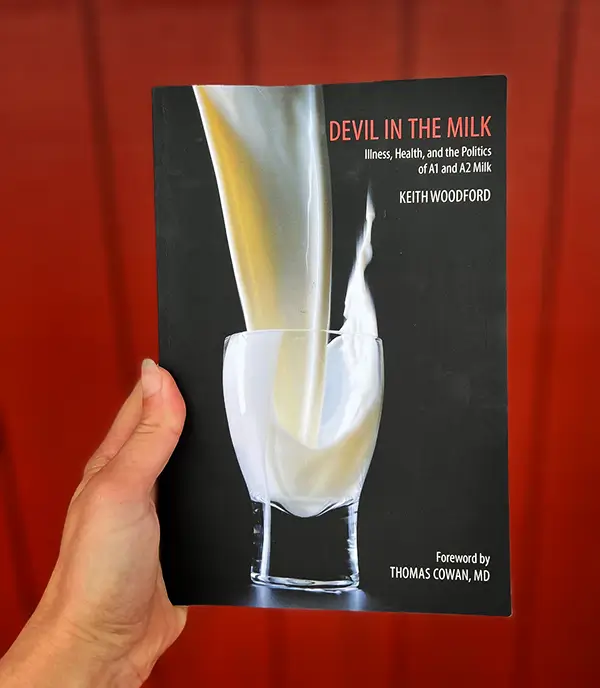
Der Teufel in der Milch, warum es gefährlich sein kann.
Häufig Gestellte Fragen
Verweise:
- Karjalainen, J., Martin, JM, Knip, M., Ilonen, J., Robinson, BH, Savilahti, E., Akerblom, HK und Dosch, HM (1992). Ein Rinderalbumin-Peptid als möglicher Auslöser des insulinabhängigen Diabetes mellitus. Das New England Journal of Medicine, 327(5), 302–307. https://doi.org/10.1056/NEJM199207303270502
- Chabance, B., Marteau, P., Rambaud, JC, Migliore-Samour, D., Boynard, M., Perrotin, P., Guillet, R., Jollès, P., & Fiat, A. (1998). Freisetzung und Übertritt von Kaseinpeptiden ins Blut beim Menschen während der Verdauung von Milch oder Joghurt. Biochemie, 80(2), 155–165. https://doi.org/10.1016/s0300-9084(98)80022-9
- Kost, NV, Sokolov, OY, Kurasova, OB, Dmitriev, AD, Tarakanova, JN, Gabaeva, MV, Zolotarev, YA, Dadayan, AK, Grachev, SA, Korneeva, EV, Mikheeva, IG, & Zozulya, AA (2009 ). Beta-Casomorphine-7 bei Säuglingen mit unterschiedlicher Ernährung und unterschiedlichem psychomotorischem Entwicklungsstand. Peptide, 30(10), 1854–1860. https://doi.org/10.1016/j.peptides.2009.06.025
- Trivedi, MS, Hodgson, N., Walker, SG, Trooskens, G., Nair, V. & Deth, RC (2015). Epigenetische Wirkungen von Kasein-abgeleiteten Opioidpeptiden in menschlichen SH-SY5Y-Neuroblastomzellen. Ernährung & Stoffwechsel, 12(1). https://doi.org/10.1186/s12986-015-0050-1
- Asledottir, T., Le, TT, Petrat-Melin, B., Devold, TG, Larsen, LB, & Vegarud, GE (2017). Identifizierung bioaktiver Peptide und Quantifizierung von β-Casomorphin-7 aus bovinem β-Casein A1, A2 und I nach ex vivo gastrointestinaler Verdauung. Internationales Milchjournal, 71, 98-106. https://doi.org/10.1016/j.idairyj.2017.03.008
- Cade, R., Privette, M., Fregly, M., Rowland, N., Sun, Z., Zele, V., Wagemaker, H. & Edelstein, C. (2000). Autismus und Schizophrenie: Darmerkrankungen. Ernährungsneurowissenschaften, 3(1), 57–72. https://doi.org/10.1080/1028415X.2000.11747303
- Pal, S., Woodford, K., Kukuljan, S., & Ho, S. (2015). Milchunverträglichkeit, Beta-Kasein und Laktose. Nährstoffe, 7(9), 7285-7297. https://doi.org/10.3390/nu7095339
- Chia, JSJ, McRae, JL, Kukuljan, S., Woodford, K., Elliott, RB, Swinburn, B. & Dwyer, KM (2017). A1-Beta-Kasein-Milchprotein und andere Umweltfaktoren, die die Entstehung von Typ-1-Diabetes begünstigen. Ernährung & Diabetes, 7(5), e274. https://doi.org/10.1038/nutd.2017.16
- Sun, Z., Zhang, Z., Wang, X., Cade, R., Elmir, Z. & Fregly, M. (2003). Zusammenhang von Beta-Casomorphin mit Apnoe beim plötzlichen Kindstod. Peptide, 24(6), 937–943. https://doi.org/10.1016/s0196-9781(03)00156-6
- Ramabadran, K. & Bansinath, M. (1988). Opioidpeptide aus Milch als mögliche Ursache für den plötzlichen Kindstod. Medizinische Hypothesen, 27(3), 181–187. https://doi.org/10.1016/0306-9877(88)90138-7
- Chin-Dusting, J., Shennan, J., Jones, E., Williams, C., Kingwell, B. & Dart, A. (2006). Wirkung einer Nahrungsergänzung mit Beta-Casein A1 oder A2 auf Marker der Krankheitsentwicklung bei Personen mit hohem Risiko für Herz-Kreislauf-Erkrankungen. Das britische Journal für Ernährung, 95(1), 136–144. https://doi.org/10.1079/bjn20051599
- Steinerová, A., Racek, J., Stozický, F., Tatzber, F. & Lapin, A. (1999). Autoantikörper gegen oxidiertes LDL in der ersten Lebensphase. Lipoproteine niedriger Dichte. Klinische Chemie und Labormedizin, 37(9), 913–917. https://doi.org/10.1515/CCLM.1999.135
- Steinerová, A., Korotvicka, M., Racek, J., Rajdl, D., Trefil, L., Stozický, F. & Rokyta, Z. (2004). Signifikanter Anstieg der Antikörper gegen oxidierte LDL-Partikel (IgoxLDL) bei drei Monate alten Säuglingen, die Milchnahrung erhielten. Arteriosklerose, 173(1), 147–148. https://doi.org/10.1016/j.atherosclerosis.2003.12.006
- Laugesen, M. & Elliott, R. (2003). Ischämische Herzkrankheit, Typ-1-Diabetes und Kuhmilch-A1-Beta-Kasein. Die neuseeländische medizinische Fachzeitschrift, 116(1168), U295. [PubMed]
Zusammenhängende Posts

Haben Sie Fragen zum Thema Ernährung und Gesundheit?
Ich würde gerne von Ihnen hören und sie in meinem nächsten Beitrag beantworten. Ich schätze Ihren Beitrag und Ihre Meinung und freue mich darauf, bald von Ihnen zu hören. Ich lade Sie auch ein zu Folgen Sie uns auf Facebook, Instagram und Pinterest für weitere Inhalte zu Ernährung und Gesundheit. Sie können dort einen Kommentar hinterlassen und sich mit anderen Gesundheitsbegeisterten austauschen, Ihre Tipps und Erfahrungen teilen und Unterstützung und Ermutigung von unserem Team und unserer Community erhalten.
Ich hoffe, dass dieser Beitrag für Sie informativ und unterhaltsam war und dass Sie bereit sind, die gewonnenen Erkenntnisse anzuwenden. Wenn Sie diesen Beitrag hilfreich fanden, dann es teilen mit Ihren Freunden und Familienangehörigen, die ebenfalls davon profitieren könnten. Man weiß nie, wer auf seinem Weg zur Gesundheit vielleicht etwas Anleitung und Unterstützung braucht.
– Das könnte Ihnen auch gefallen –
Antioxidantien: Die Grundlagen Verstehen

Zuchtfisch- „Cesspool“ Paradies
Vorteile von Kaffee- Nicht Ohne Risiken

China Studie- Das Vegane Argument
Phytochemikalien: Die Grundlagen Verstehen

Leitungswassertoxizität- Risikobewertung
Entzündung und Ernährung- Veganes Argument

Die Anatomie von Krebs - Gesundheitsrisikokorrelationen

Über Ernährung Lernen

Milos Pokimica ist Doktor der Naturheilkunde, klinischer Ernährungsberater, Autor für medizinische Gesundheit und Ernährung sowie Berater für Ernährungswissenschaften. Autor der Buchreihe Zum Veganer werden? Rückblick auf die Wissenschafter betreibt auch das Natürliche Gesundheit website GoVeganWay.com
Medizinischer Haftungsausschluss
GoVeganWay.com bietet Ihnen Rezensionen der neuesten Ernährungs- und Gesundheitsforschung. Die bereitgestellten Informationen stellen die persönliche Meinung des Autors dar und sind weder als Ersatz für eine professionelle medizinische Beratung, Diagnose oder Behandlung gedacht noch implizit. Die bereitgestellten Informationen dienen ausschließlich Informationszwecken und sollen nicht als Ersatz für die Beratung, Diagnose und/oder medizinische Behandlung durch einen qualifizierten Arzt oder Gesundheitsdienstleister dienen.Ignorieren Sie niemals professionellen medizinischen Rat oder verzögern Sie die Suche nach medizinischer Behandlung, weil Sie etwas auf GoVeganWay.com gelesen oder über GoVeganWay.com darauf zugegriffen haben
Nehmen Sie NIEMALS Änderungen im Lebensstil oder irgendwelche Änderungen vor, die eine Folge von etwas sind, das Sie auf GoVeganWay.com gelesen haben, bevor Sie einen zugelassenen Arzt konsultieren.
Bei einem medizinischen Notfall rufen Sie sofort einen Arzt oder die Notrufnummer 911 an. GoVeganWay.com empfiehlt oder unterstützt keine bestimmten Gruppen, Organisationen, Tests, Ärzte, Produkte, Verfahren, Meinungen oder andere Informationen, die darin erwähnt werden könnten.
Herausgeber-Tipps –
Krebs Auswahl des Herausgebers Phytochemikalien
Antikrebskraft von Obst und Gemüse: In Vivo und Klinische Beweise
Einige Pflanzenextrakte konkurrieren mit führenden Chemotherapeutika und wirken gleichzeitig auf mehrere verschiedene Arten von Krebszellen.
Antioxidantien Auswahl des Herausgebers ORAC
Ätherische Öle als Antioxidative Nahrungsergänzungsmittel: Regeln und Strategien
Ätherische Öle in Lebensmittelqualität können eine praktische und verbraucherfreundliche Strategie zur Optimierung des Antioxidantienwerts und der ORAC-Werte unserer Ernährung sein.
Antioxidantien Auswahl des Herausgebers ORAC
Antioxidantienreiche Ernährung: Allgemeine Regeln und Strategien
Es gibt einfache und kostengünstige Strategien zur Optimierung des antioxidativen Wertes unserer Ernährung.
Antioxidantien Auswahl des Herausgebers ORAC
ORAC-Werte Verstehen: Antioxidantienspiegel in Lebensmitteln
Wenn Ihre Hauptquelle für Antioxidantien Kaffee ist, wissen Sie, dass Sie ein ernstes Problem haben.

Antioxidantien Auswahl des Herausgebers ORAC
Astaxanthin Vorteile: Das Stärkste Natürliche Antioxidans der Welt
Astaxanthin ist das stärkste natürliche und universelle Antioxidans (sowohl öl- als auch wasserlöslich), das der Wissenschaft bekannt ist. Es reichert sich im Gewebe an und kann sich niemals in ein Prooxidans verwandeln.
Antioxidantien Auswahl des Herausgebers ORAC Phytochemikalien
Antioxidantien: Die Grundlagen Verstehen
Tierische Produkte enthalten keine sekundären Pflanzenstoffe oder Antioxidantien. Pflanzliche Lebensmittel enthalten im Durchschnitt mehr als 60-mal so viele Antioxidantien wie tierische Lebensmittel.
Auswahl des Herausgebers Vegane Diät
Nährstoffmangel Bei Veganer Ernährung: Präventionsstrategien
Es gibt neun bevölkerungsweit verbreitete Nährstoffmängel, die Menschen betreffen, die sich pflanzlich ernähren. Wenn einige Mängel nicht rechtzeitig behoben werden, haben sie schreckliche und nicht behandelbare Folgen.
Auswahl des Herausgebers Optimale Ernährung
Mikronährstoffmangel in der Amerikanischen Standardernährung: Strategien zur Optimierung
Das Nährstoffprofil unserer modernen Ernährung mit Fleisch, Zucker und verarbeiteten Lebensmitteln ist völlig unvereinbar mit unserer Evolution und führt zu schwerem Mikronährstoffmangel.
Auswahl des Herausgebers Phytochemikalien
Phytochemikalien: Die Grundlagen Verstehen
Jeder einzelne existierende sekundäre Pflanzenstoff hat eine biologische Wirkung im menschlichen Körper. Jedes einzelne aus Millionen verschiedener sekundärer Pflanzenstoffe.
Auswahl des Herausgebers Milch Optimale Ernährung
Milch und Milchprodukte: Gesundheitsrisikokorrelationen
Bekannte Zusammenhänge mit Milch und Milchkonsum sind Unfruchtbarkeit, Eierstock- und Brustkrebs, Leukämie, Diabetes Typ 1, Autismus, Arteriosklerose, Katarakt, rheumatoide Arthritis, Multiple Sklerose, Hyperaktivität, Stauung, Pickel und mehr …
Krebs Auswahl des Herausgebers Eiweiß
Komplettes Protein: IGF-1-Signalisierung bei der Krebsentstehung
Wenn Sie tierisches Eiweiß essen, ist die Wahrscheinlichkeit, an allen Krebsarten zu erkranken, viermal höher. Wenn Sie rauchen, besteht ein vierfach erhöhtes Risiko, an Lungenkrebs zu erkranken.

Krebs Auswahl des Herausgebers Eiweiß
Die Anatomie von Krebs - Gesundheitsrisikokorrelationen
Etwa 2 % der Krebserkrankungen werden in der Medizin als rein genetisch bedingt angesehen. Das gleiche Verbreitungsgebiet wie im Tierreich. Dir wurde nicht die ganze Wahrheit gesagt.
[rank_math_breadcrumb]
Milos Pokimica ist Autor für Gesundheit und Ernährung sowie Berater für Ernährungswissenschaften. Er ist Autor einer Buchreihe. Zum Veganer werden? Rückblick auf die Wissenschafter betreibt auch das Natürliche Gesundheit website GoVeganWay.com
Neueste Artikel –

Kalorienbeschränkung Langlebigkeit
Wie Man Fastet: Fasten-Lebensmittel, Die Die Autophagie Nicht Stören
Autophagie. Haben Sie sich jemals gefragt, was mit den Zellen in Ihrem Körper passiert, wenn sie sterben oder beschädigt werden? Häufen sie sich einfach an und verursachen Probleme, oder werden sie irgendwie entsorgt? Die Antwort ist, dass Ihr Körper...
Zahngesundheit Verhütung
Süßigkeiten Zahnempfindlichkeit & Schmerz: Schnelle Abhilfe & Dauerhafte Lösung
Eine schnelle und einfache Lösung zur Schmerzlinderung ist ätherisches Nelkenöl, ein starkes Antioxidans und Schmerzmittel, das bei Zahnfleischerkrankungen und Zahnschmerzen helfen kann.
Bohnen
Grüne Bohnen: Ernährung und Gesundheitliche Vorteile
Grüne Bohnen sind kalorienarm und reich an natürlichen Stoffen, die Ihnen helfen können, Ihren Blutzucker zu kontrollieren, Ihren Cholesterinspiegel zu senken und freie Radikale abzuwehren.
Rohkostdiät Vegane Diät
Kann Man Pilze Roh Essen: Gesundheitsrisiken, Ernährung und Sicherheit
Pilze enthalten hitzeempfindliche Giftstoffe wie Hydrazin oder Agaritin und Zellwände aus Chitin, die vom Menschen nicht gut verdaut werden können.
Vegane Diät
Sind Fische Tiere? Eine kulturelle Perspektive
In einigen Kulturen wird Fischfleisch nicht als Fleisch betrachtet, und Fisch ist sogar während des Fastens erlaubt.

Zahngesundheit Verhütung
Hausgemachte Natürliche Mundspülung: Bewährt, Stärker und Weniger Giftig
Selbstgemachtes natürliches Mundwasser ist stärker als Chlorhexidin, weniger giftig und kann beim Verschlucken zu Übelkeit führen, hat aber auch einen hohen ORAC-Wert.
Zahngesundheit Verhütung
Wie Man Karies Stoppt: Symptome, Ursachen und Prävention
Der Zuckerkonsum ist die Hauptursache für Karies und Zahnfäule, verbunden mit einem Mangel an Mineralien, insbesondere Magnesium, Zink, Kupfer und Spurenelementen.

Antioxidantien Superlebensmittel
Amla: Bewährte Vorteile, Ernährung und Klinische Bedeutung
Amla ist eines der stärksten Antioxidantien der Welt mit einem ORAC-Wert von 261.530. Sie ist eine reichhaltige Quelle von sekundären Pflanzenstoffen, die verschiedene gesundheitliche Vorteile haben.
Top-Gesundheitsnachrichten – ScienceDaily
- Exercise doesn’t just strengthen your heart. It rewires itam Oktober 26, 2026
Regular exercise does more than strengthen the heart. New research reveals that it actually reshapes the nerves controlling how the heart functions, and the changes are surprisingly different on the left and right sides of the body.
- AI detects “invisible” signs of pancreatic cancer years before diagnosisam Oktober 26, 2026
A powerful new AI system could help doctors detect pancreatic cancer years before it becomes visible on conventional scans. The technology, called REDMOD, identified hidden warning signs an average of 475 days before diagnosis and was nearly twice as sensitive as experienced radiologists. By spotting cancer-related changes at their earliest stages, it could dramatically improve the chances of successful treatment for one of the deadliest forms of cancer.
- A simple liquid can stop cavities without drilling, major study confirmsam Oktober 26, 2026
A simple liquid painted onto teeth in seconds can stop cavities without drilling, injections, or anesthesia, according to a major clinical trial involving young children. The inexpensive treatment could spare thousands of children painful dental procedures and surgery while paving the way for broader FDA-approved use.
- Scientists reveal the hidden danger of missing blood pressure medicationam Oktober 25, 2026
Missing blood pressure medication could mean losing much of its protection against heart attacks and strokes, according to an analysis of more than 91,000 people. Patients who consistently took their medication experienced an 11% reduction in major cardiovascular events, while those who missed too many doses saw little or no measurable benefit.
- Just two drinks a day may be far riskier than you thinkam Oktober 25, 2026
A major new study reveals that drinking just two alcoholic beverages a day is associated with a 1 in 25 lifetime risk of death from alcohol-related causes, challenging the idea that moderate drinking is harmless. Researchers also found no significant overall health benefits from alcohol, with risks rising as consumption increases.
- Scientists discover how pancreatic cancer rewrites its DNA to escape treatmentam Oktober 25, 2026
Scientists have discovered how pancreatic cancer cells continually reshape their genetic makeup to become more aggressive, spread, and evade treatment. In laboratory experiments, blocking a key gene reversed some of these dangerous changes, revealing a potential new way to fight the deadly disease.
- Low-dose aspirin linked to 70% lower dementia risk, but there’s a catcham Oktober 25, 2026
A common, inexpensive medication could hold an unexpected clue to preventing dementia. Researchers found that older adults with a specific genetic profile had a 70% lower relative risk of dementia when taking low-dose aspirin, even though previous studies found no overall protective effect. The discovery suggests that genetics could help explain why some people benefit while others do not.
PubMed, #Vegane Diät –
- Animal vs plant-based processed foods have different effects on body weight: a secondary analysis of a randomized, cross-over trialam Oktober 23, 2026
Mediterranean and vegan diets have been extensively studied for health effects. This secondary analysis assessed animal vs plant-based processed foods. We hypothesized that greater intake of minimally processed plant foods and lower intake of animal foods, particularly processed and ultraprocessed, would be associated with lower body weight. In this randomized crossover trial, 62 overweight adults were randomized to a Mediterranean or low-fat vegan diet for 16 weeks, separated by a 4-week…
- Exploring a positive screen for eating disorders among 7,993 elite sport pupils in Sweden and its association with everyday food practices, demographics, and sportsam Oktober 23, 2026
CONCLUSIONS: Our findings underscore the importance of better support to prevent, identify, and address problematic eating behaviours in the elite sport schools, as well as implementing time-saving efforts. Eating disorders can harm athletes’ health and their performance in sports. Negative effects can also come from not eating enough food because of poor eating habits or practical difficulties with food and meals. Up until now, no large studies focusing on eating and health among pupils at…
- Common questions and misconceptions about diets: what does the scientific evidence really show?am Oktober 15, 2026
The study of diet and nutrition is often filled with numerous myths and misconceptions. A Google Scholar search of “diets health” yields over 4 million results. This review examines frequently asked questions about diets and dietary habits. These questions include the following: 1) Is a caloric surplus necessary for building skeletal muscle? 2) Is it possible to lose body mass or fat mass without caloric restriction? 3) Is intermittent fasting better than chronic caloric restriction for […]
- Toward consensus on complementary feeding recommendations: findings from a national evidence-informed modified Delphi study in Türkiyeam Oktober 12, 2026
CONCLUSIONS: Integration of quantitative Delphi findings with qualitative thematic analysis revealed that non-consensus primarily stemmed from the practical nuances of clinical execution and contextual adaptation, rather than a fundamental skepticism toward the underlying scientific data. These findings provide an evidence-informed foundation for developing context-sensitive CF recommendations for clinical practice.
- Changes in ectopic lipids, insulin sensitivity, and beta cell function after a low-fat vegan diet in adults with type 2 diabetes: a 16-week single-arm clinical trialam Oktober 8, 2026
CONCLUSIONS: On an ad libitum low-fat plant-based (vegan) dietary intervention, the participants with type 2 diabetes experienced reductions in ectopic fat, particularly visceral and hepatocellular fat, improvements in insulin sensitivity, reductions in AGEs, and improvements in beta-cell function.
Zufällige Beiträge –
Auswahl des Herausgebers Fettleibigkeit
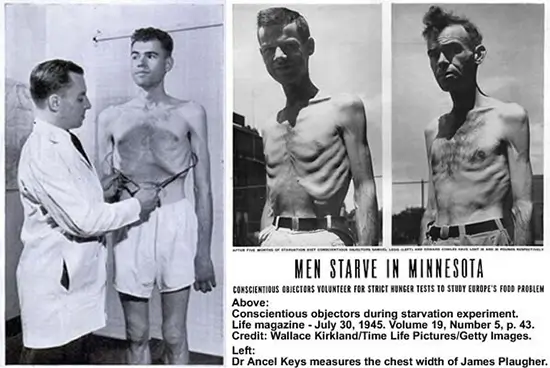
Das Minnesota Hunger Experiment: Warum Diäten dick machen. Die Psychologie des Hungers.
Eine der ersten wissenschaftlichen Studien darüber, welche Auswirkungen Hunger auf den Geist hat, wurde in einer Studie der University of Minnesota aus dem Jahr 1944 beobachtet, die als „Minnesota Starvation Experiment“ bekannt ist.
Krebs Optimale Ernährung
Genexpression und Epigenetik: Wie Ernährung und Umwelt Ihre Gesundheit Beeinflussen
Es kommt nicht auf die Gene an, sondern auf die Art und Weise, wie sie sich ausdrücken.
Vegane Diät
Sind Fische Tiere? Eine kulturelle Perspektive
In einigen Kulturen wird Fischfleisch nicht als Fleisch betrachtet, und Fisch ist sogar während des Fastens erlaubt.
Rohkostdiät Vegane Diät
Kann Man Pilze Roh Essen: Gesundheitsrisiken, Ernährung und Sicherheit
Pilze enthalten hitzeempfindliche Giftstoffe wie Hydrazin oder Agaritin und Zellwände aus Chitin, die vom Menschen nicht gut verdaut werden können.

Antioxidantien
Antioxidative Kraft von Vitamin C: Verbesserung der Gesundheit und Langlebigkeit
Vitamin C erfordert keine enzymatische Aktivität, um aus dem Körper entfernt zu werden, und wird nicht zu einem Prooxidans, sondern zu einer reduzierten Form eines schwächeren Antioxidans.
Zahngesundheit Verhütung
Hausgemachte Natürliche Mundspülung: Bewährt, Stärker und Weniger Giftig
Selbstgemachtes natürliches Mundwasser ist stärker als Chlorhexidin, weniger giftig und kann beim Verschlucken zu Übelkeit führen, hat aber auch einen hohen ORAC-Wert.
Zahngesundheit Verhütung
Wie Man Karies Stoppt: Symptome, Ursachen und Prävention
Der Zuckerkonsum ist die Hauptursache für Karies und Zahnfäule, verbunden mit einem Mangel an Mineralien, insbesondere Magnesium, Zink, Kupfer und Spurenelementen.
Auswahl des Herausgebers Entzündung
Das Allesfresser Dilemma des Menschen- Fleischkonsum, Probiotische Bakterien, Entzündungen und der Darm
Sind Menschen Allesfresser im eigentlichen anatomischen Sinne? Es gibt einen grundlegenden Unterschied in der Funktionsweise des Verdauungstrakts bei pflanzlichen und fleischfressenden Arten.
Krebs Entgiftung Entzündung
Sulforaphan Vorteile: Die Entgiftende Superkraft des Brokkoli
Sulforaphan ist das stärkste Natürliche phase-2-Enzym-Induktor wissen für die Wissenschaft. Es ist auch nachgewiesen, dass Sulforaphan ist eine dose-related inhibitor von Karzinogen-induzierten Tumorentstehung.
Bohnen
Grüne Bohnen: Ernährung und Gesundheitliche Vorteile
Grüne Bohnen sind kalorienarm und reich an natürlichen Stoffen, die Ihnen helfen können, Ihren Blutzucker zu kontrollieren, Ihren Cholesterinspiegel zu senken und freie Radikale abzuwehren.

Beliebte Beiträge -

Auswahl des Herausgebers Fettleibigkeit
Binge Eating Störung- Die Psychologie des Hungers
In der Natur gibt es weder raffinierten Zucker noch Fett. Unser Gehirn war noch nie einer Kombination aus beidem gleichzeitig ausgesetzt gewesen, die uns zu einer Essattacke zwang.
Auswahl des Herausgebers Phytochemikalien
Phytochemikalien: Die Grundlagen Verstehen
Jeder einzelne existierende sekundäre Pflanzenstoff hat eine biologische Wirkung im menschlichen Körper. Jedes einzelne aus Millionen verschiedener sekundärer Pflanzenstoffe.

Auswahl des Herausgebers Optimale Ernährung
Optimale Menschliche Ernährung - Chronische Krankheiten, Diätkriege und das Veganer-Argument
Unsere natürlichen optimale menschliche Ernährung eine Diät, die unsere hominin-Vorfahren aßen für die letzten 30 Millionen Jahren, nicht anatomisch modernen Menschen in der Steinzeit.

Auswahl des Herausgebers Optimale Ernährung Eiweiß
Proteinreiche Ernährung - Gesundheitsrisikokorrelationen
Knappheit ist in der Natur die Regel des Proteins. Evolutionsgeschichtlich gesehen haben Anthropologen bewiesen, dass Hominins durchschnittlich 15 bis 25 Gramm Protein pro Tag zu sich nahmen. In der modernen westlichen Art der proteinreichen Ernährung würden wir das zu uns nehmen …
Antioxidantien Auswahl des Herausgebers ORAC
Antioxidantienreiche Ernährung: Allgemeine Regeln und Strategien
Es gibt einfache und kostengünstige Strategien zur Optimierung des antioxidativen Wertes unserer Ernährung.

Diabetes Auswahl des Herausgebers Optimale Ernährung
Raffinierter Zucker: Die Risiken Verstehen
Kinder decken etwa ein Fünftel ihres Gesamtkalorienbedarfs allein aus raffiniertem Zucker. Wenn wir Fett und den Rest nährstoffarmer verarbeiteter Lebensmittel zur Liste hinzufügen, wird das zu einem kompletten Ernährungs-Albtraum.
Auswahl des Herausgebers Optimale Ernährung
Mikronährstoffmangel in der Amerikanischen Standardernährung: Strategien zur Optimierung
Das Nährstoffprofil unserer modernen Ernährung mit Fleisch, Zucker und verarbeiteten Lebensmitteln ist völlig unvereinbar mit unserer Evolution und führt zu schwerem Mikronährstoffmangel.
Auswahl des Herausgebers Fettleibigkeit
Das Minnesota Hunger Experiment: Warum Diäten dick machen. Die Psychologie des Hungers.
Eine der ersten wissenschaftlichen Studien darüber, welche Auswirkungen Hunger auf den Geist hat, wurde in einer Studie der University of Minnesota aus dem Jahr 1944 beobachtet, die als „Minnesota Starvation Experiment“ bekannt ist.
Diabetes Auswahl des Herausgebers
Diabetes Ursachen und Gesättigte Fettsäuren- Das Vegane Argument
Wenn der Fettgehalt im Blutkreislauf steigt, sinkt die Fähigkeit des Körpers, Zucker auszuscheiden. Eine der Ursachen für Diabetes ist unsere Fehlanpassung an eine große Fettaufnahme
Auswahl des Herausgebers Optimale Ernährung Eiweiß
Proteinbedarf - Unbequeme Wahrheit
Als anthropologische Studien zeigten, dass Hominins durchschnittlich 15 bis 20 Gramm Protein pro Tag zu sich nahmen, kam es in den 1970er Jahren zu einem sogenannten „großen Protein-Fiasko“.
Neuestes von PubMed, #pflanzliche Ernährung –
- Mineral sources in natural habitats for a leaf-eating primatevon John F Aristizabal am Oktober 24, 2026
Minerals are essential components of animal nutrition, playing a crucial role in health, reproduction, and survival. Studies show that mineral intake varies by species, habitat, and season. This study evaluates the mineral composition of food consumed by black howler monkeys (Alouatta pigra), an endangered primate in southeastern Mexico, considering differences among habitats (fragmented vs. conserved), strata (terrestrial vs. arboreal), seasons (rainy, dry, and Nortes), and food types. […]
- Workplace Health promotion and Mediterranean diet: a case seriesvon Carlo Scebba am Oktober 24, 2026
CONCLUSION: These cases suggest that an integrated pathway combining occupational health surveillance and nutritional counseling, embedded within workplace health services, may represent an effective, sustainable, and reproducible approach for preventing non-communicable chronic diseases, strengthening the role of the workplace as a key setting for health promotion.
- Opportunities and Challenges for Promoting Sustainable Diets within “Food is Medicine” Programs in the United States: A Qualitative Research Studyvon Katherine Consavage Stanley am Oktober 23, 2026
CONCLUSIONS: The FIM movement offers promising opportunities to promote collaboration among food and health system actors, but challenges require coordinated actions within and across sectors. Future FIM programs could identify potential areas of human and planetary health cobenefit and incorporate sustainable diet principles into program design and evaluation.
- Perspective: The Place of Milk, Yogurt, and Cheese in Sustainable Healthy Diets in Francevon Adam Drewnowski am Oktober 23, 2026
The 4 pillars of sustainable healthy diets are health, economics, society, and the environment. The place of milk, yogurt, and cheese in the sustainability framework was examined using publicly available government agency databases from France. Nutrient composition data came from CIQUAL (Centre d’Information sur la Qualité des Aliments). Data on greenhouse gas emissions (GHGE) and total environmental impact of foods came from Agribalyse. Data on food costs came from published reports. […]
- Generational differences in healthy and sustainable eating: the Doetinchem Cohort Studyvon Elma de Wolf am Oktober 23, 2026
Dutch dietary patterns are high in animal-based foods, contributing to non-communicable diseases and environmental pressures, but may vary across generations due to social and cultural factors. Therefore, this cross-sectional analysis examines generational differences in diet quality and environmental impacts among 2348 adults from the Doetinchem Cohort Study (2018-2023). Diet quality was assessed with the Dutch Healthy Diet (DHD15) index and the animal-to-plant protein ratio, and life-cycle…
- Nut Consumption, Kidney Function, Chronic Kidney Disease and Mortality: A Systematic Reviewvon Héctor Vázquez-Lorente am Oktober 23, 2026
PURPOSE OF REVIEW: This systematic review evaluates the association between nut consumption and kidney health outcomes, including kidney function markers and chronic kidney disease (CKD) incidence, prevalence, and mortality. Given the nutritional benefits of nuts and the growing burden of CKD, we aimed to assess whether nut consumption is associated with kidney-related outcomes and to assess the strength and consistency of the available evidence.