







Смањење Гликогена - Како не Треба Вежбати
Шта се дешава када вежбамо или идемо на рестриктивну дијету? Шта је смањење гликогена и да ли треба да га избегавамо? Да ли смањење гликогена има неке користи?
Милош Покимица
Написао/ла: Милош Покимица
Медицински прегледао: др Сјујинг Ванг
Updated мај 29, 2023Шта се дешава када вежбамо или идемо на рестриктивну дијету? Шта је смањење гликогена и да ли треба да га избегавамо? Да ли смањење гликогена има неке користи?
Оно што се дешава са телом јесте да прелазимо у режим поста (не режим гладовања). То је стање које је потпуно другачије од гладовања.
У првој фази, тело ће сагоревати лако доступне калорије у облику ускладиштеног шећера гликогена. Баш као и масти, наша тела имају залихе шећера (гликогена) спремног за употребу који се лако метаболише. То је брза енергија која је доступна у тренутку и за разлику од масти не захтева никакав метаболички пут. Наше ћелије директно користе гликоген.
Већина шећера се складишти првенствено у ћелијама јетре и мишића, хидрирани водом. Када почнемо да сагоревамо више енергије него што нам је доступно у крвотоку, наш ниво шећера у крви ће пасти. У првој фази, као контрамера, наше тело ће користити лако доступан извор складиштене енергије или другим речима, складиштени гликоген. Пошто је гликоген хидриран водом унутар ћелија када сагоревамо шећер, молекул воде је вишак или нуспроизвод метаболизма. Због тога ћемо изгубити део тежине воде у првој фази.
Ако ово не знате, можете се изненадити када кренете на дијету и изгубите воду, а будете срећни што ћете је потом вратити. Губитак воде ослобођене из гликогена и натријума је обично кривац за драматичан губитак тежине у првој недељи.
In the liver, glycogen reserves can build up to 5–6% of the organ’s flesh weight (100–120 grams in an adult). Muscles have a much lower concentration of glycogen, in the range of one to two percent of the total muscle mass.
Нетренирана особа обично поседује око 400 грама гликогена који је ускладиштен у целом телу, и у мишићима и у јетри. Тренирани професионални спортиста може да садржи двоструко већу количину. Ова количина гликогена је довољна да траје неколико сати интензивног вежбања без надокнађивања.
Када тренирамо, наше тело се прилагођава и стање се побољшава. Професионални спортисти такође раде нешто што се зове пуњење угљеним хидратима након вежби како би приморали своје тело да се прилагоди повећавајући капацитет складиштења интрамускуларних резерви гликогена. Постоје неке студије урађене на ову тему. Ако уносимо кофеин или пијемо кафу, резерве гликогена се брже обнављају.
Спортисти на дуге стазе често доживљавају смањење гликогена. То се назива „ударање у зид“. У професионалним спортовима то има снажан утицај јер након смањења резерви шећера следи умор, понекад до те мере да је тешко кретати се. То је разлог зашто видите спортисте како се „сналаже“. „Смањење гликогена“ није стање у којем се само осећате уморно. „Сналажење“ је када ваше резерве гликогена падну толико ниско да вашем мозгу почиње да понестаје енергије, а затим искључује ваше тело.
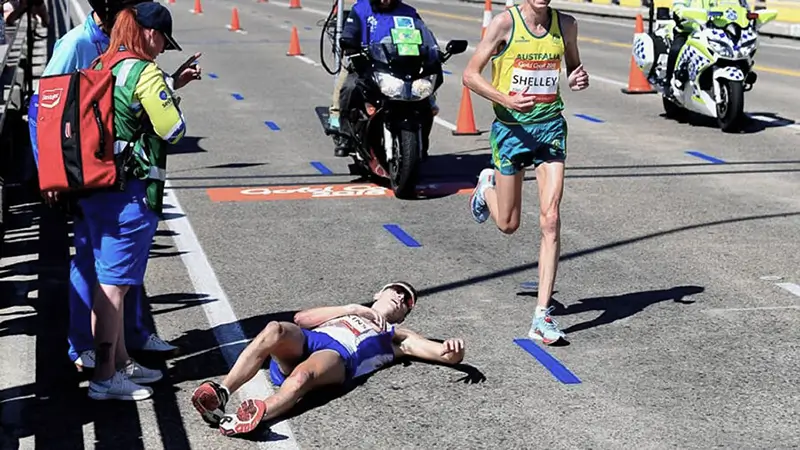
Након почетне фазе и метаболизма лако доступних резерви гликогена, јетра ће одмах почети да разграђује масти и протеине како би одмах формирала енергију. Проблем је што овај процес траје дуго и док глуконеогенеза не почне, спортиста може искусити симптоме хипогликемије. Ако се то деси, неће бити неуобичајено видети професионалне спортисте како колабирају од екстремног умора.
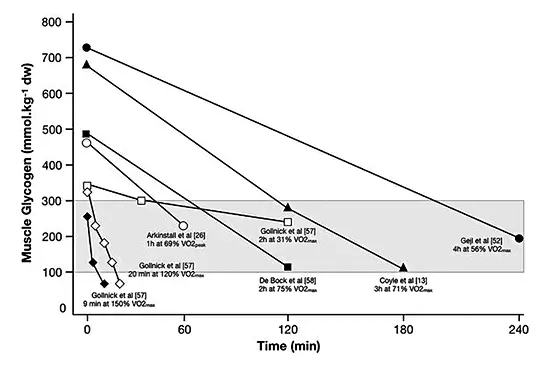
Хипогликемија прати вртоглавица, замагљен вид и халуцинације. Губитак свести се такође може јавити у овим условима. Комбинована употреба неколико различитих извора енергије који омогућавају продужени висок мишићни излаз који се може одржати током дужег периода је велика ствар у професионалном спорту и истраживањима. Такође, не, не можемо ићи на дијету пре маратона како бисмо искористили глуконеогенезу, а затим трчали. Трчање маратона користећи само масти као извор горива није изводљиво. Ако смо у стању да метаболизујемо масти већом брзином, онда се никада не бисмо уморили и могли бисмо трчати унедоглед. Енергетска ефикасност метаболизма масти, нажалост, није на том нивоу.
Moreover, our body can only process a limited amount of carbohydrates per hour also, around 30-60 grams depending on individual efficiency. You probably won’t race a marathon, but it is essential to understand how the body works if you want to exercise, you can potentially do yourself damage, or don’t get the desired results.

У бодибилдингу је то велика ствар и зато што катаболизам мишићне масе за енергију није жељени процес. Након исцрпљивања гликогена од 16 до 72 сата, тело ће се у великој мери ослањати на аминокиселине и катаболизам протеина за стварање енергије. Аминокиселине ће се користити, а део мишићне масе ће се изгубити током поста са или без вежбања. Можемо покушати да га минимизирамо, али неке аминокиселине ће се користити за енергију.
Губитак дела ткива није тако лош као што звучи. Има еволутивну сврху и користи за здравље ако се ради умерено. Нормално је да све животиње, укључујући и људе, периодично прелазе у режим поста. Наша тела су се током еволуције прилагодила посту на исти начин на који смо се ми прилагодили физичкој активности. Умерен периодични пост ће помоћи нашем телу да очисти своје мутиране и оштећене преканцерозне ћелије у процесу познатом као аутофагија (самостално једење). Када постоје две ћелије и једна је оштећена, а једна мора бити уништена за енергију, тело ће прво катаболисати оштећене ћелије и тако се у извесном смислу очистити. Имаћемо негативан утицај на своје здравље ако не укључимо вежбање и пост у наш редован живот.
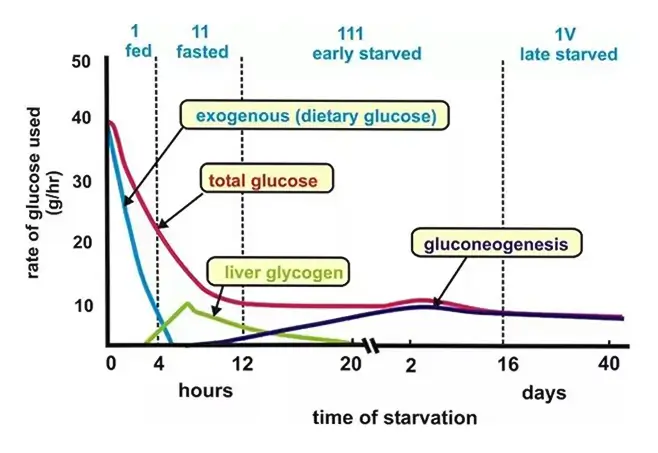
Након овог почетног периода, наш метаболизам ће прећи у кетозу где скоро сву енергију добија из кетонских тела из метаболизма масти. Базални метаболизам ће такође пасти, или другим речима, коришћење енергије ће постати ефикасније. Ако желите да држите дијету, ово је стање у којем бисте желели да будете. Трајни калоријски дефицит у количини коју можете да поднесете. Трчање маратона или интензивно вежбање у брзом стању можда неће бити толико корисно јер ће наш мозак остати без хране и биће приморан да користи сопствено мишићно ткиво за енергију. Ово није жељени исход.
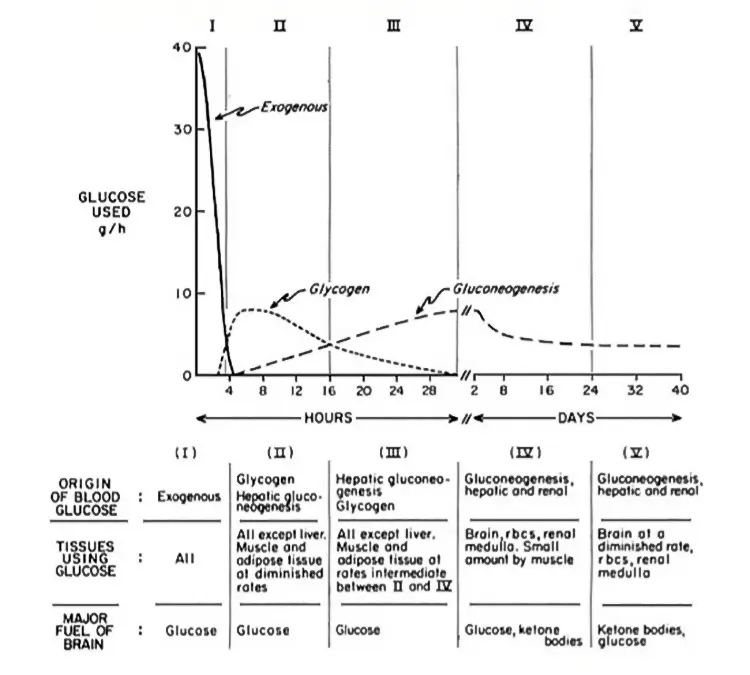
- Feeding – Insulin levels rise during meals. This allows glucose to be absorbed into tissues such as the muscle or brain and used directly for energy. Excess glucose is stored in the liver as glycogen.
- Пост-апсорпциона фаза се јавља 6-24 сата након почетка поста. Ниво инсулина почиње да опада. Разградња гликогена производи глукозу за енергију. Залихе гликогена трају око 24 сата.
- Gluconeogenesis can take anywhere from 24 hours to 2 days. In a process known as “gluconeogenesis,” the liver creates new glucose from amino acids. This literally translates as “creating new glucose.” Glucose levels in non-diabetics fall but remain within the normal range.
- Ketosis – 2-3 days after fasting begins – The low insulin levels reached during fasting promote lipolysis or the breakdown of fat for energy. Triglycerides, the fat storage form, are composed of a glycerol backbone and three fatty acid chains. Glycerol is used in the process of gluconeogenesis. Many tissues in the body can use fatty acids directly for energy, but not the brain. Ketone bodies, which can cross the blood-brain barrier, are synthesized from fatty acids and used by the brain. Ketones provide approximately 75% of the energy used by the brain after four days of fasting. The two major types of ketones produced are beta-hydroxybutyrate and acetoacetate, both of which can increase by more than 70 percent during fasting.
- Фаза очувања протеина. Висок ниво хормона раста помаже у контроли мишићне масе и мршавог ткива. Енергија потребна за одржавање базалног метаболизма готово у потпуности се обезбеђује слободним масним киселинама и кетонима. Повећани нивои норепинефрина (адреналина) спречавају смањење метаболизма.
The human body has well-developed mechanisms for dealing with hunger. In essence, what we are describing here is the process of transitioning from burning glucose to burning fat. That is it. Fat is simply stored food energy in the body. When there is a scarcity of food, stored food is naturally released to fill the void. So, no, the body does not ‘burn muscle’ to feed itself until all fat stores are depleted. There will be some catabolism at acceptable levels if you don’t have diabetes. In situations where there is hypoglycemia for survival, our body will burn everything to preserve brain cells from dying. If you don’t have hypoglycemia then no the body will not burn muscle but fat.
Можемо издржати 2,5 до 3 месеца пијући само воду, у зависности од тога колико масти имамо на почетку. Ако имамо велике количине масти, можемо издржати много дуже, али ће доћи до недостатка хранљивих материја. Због тога је храна са ниским садржајем калорија, богата хранљивим материјама и интегралним влакнима, основа сваке дијете.
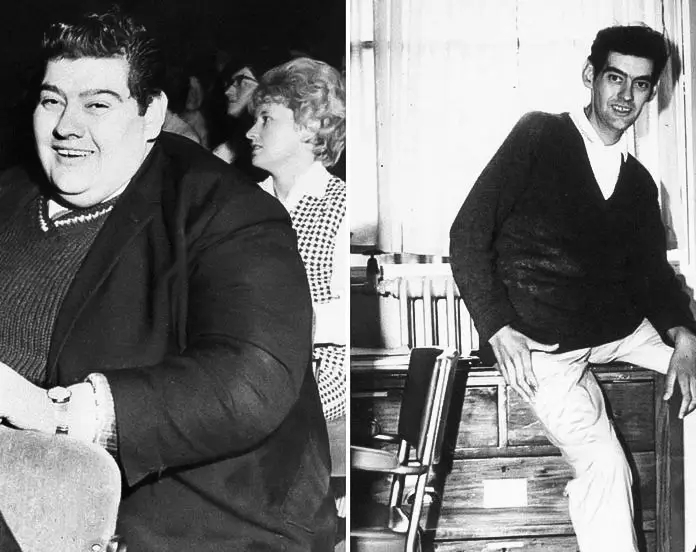
Добар пример за то је човек по имену Ангус Барбијери, који је постио на води целу годину под лекарским надзором студија (Стјуарт и др., 1973). Добијао је само витаминске суплементе. Без калорија, без протеина.
Референце:
- Мари, Б. и Розенблум, К. (2018). Основе метаболизма гликогена за тренере и спортисте. Прегледи исхране, 76(4), 243–259. https://doi.org/10.1093/nutrit/nuy001
- Импи, С. Г., Хирис, МА, Хамонд, К. М., Бартлет, Џ. В., Луис, Џ., Клоуз, Г. Л. и Мортон, Џ. П. (2018). Гориво за потребан рад: Теоријски оквир за периодизацију угљених хидрата и хипотезу о прагу гликогена. Спортска медицина, 48(5), 1031–1048. https://doi.org/10.1007/s40279-018-0867-7
- Stewart, W. K., & Fleming, L. W. (1973). Features of a successful therapeutic fast of 382 days’ duration. Постдипломски медицински часопис, 49(569), 203–209. https://doi.org/10.1136/pgmj.49.569.203
Повезани постови
Имате ли питања о исхрани и здрављу?
Волео бих да чујем ваше мишљење и да на њих одговорим у следећем посту. Ценим ваш допринос и мишљење и радујем се што ћу вас ускоро чути. Такође вас позивам да нас пратите на Фејсбуку, Инстаграму и Пинтересту за више садржаја о исхрани, исхрани и здрављу. Тамо можете оставити коментар и повезати се са другим ентузијастима за здравље, поделити своје савете и искуства и добити подршку и охрабрење од нашег тима и заједнице.
Надам се да вам је овај пост био информативан и пријатан и да сте спремни да примените сазнања која сте стекли. Ако вам је овај пост био од помоћи подели га са пријатељима и породицом којима би такође могло бити од користи. Никад се не зна коме би могло бити потребно вођство и подршка на њиховом здравственом путу.
– Можда ће вам се свидети и –
Етерична Уља као Антиоксидативни Додаци: Правила и Стратегије
Узрок Гојазности - Маладаптација или Зависност

Изложеност Пестицидима код Деце: Тестови Изложености у Стварном Животу

Лектини - Парадокс „Биљног Парадокса“
Величина Мозга, Интелигенција и Конзумација Меса - Вегански Аргумент
Предности Сулфорафана: Детоксикујућа Супермоћ Броколија
Рак, Забрањени Лекови - Рајфова Машина, Историјски Преглед

Дестилована Вода за Пиће - Помоћ у Детоксикацији или Смртоносни Отров?

Сазнајте више о исхрани

Милош Покимица је доктор природне медицине, клинички нутрициониста, писац о медицинском здрављу и исхрани и саветник за нутриционистичку науку. Аутор серије књига. Постаните Веган? Преглед Науке, он такође води веб страницу о природном здрављу GoVeganWay.com
Медицинска одрицање одговорности
GoVeganWay.com вам доноси прегледе најновијих истраживања везаних за исхрану и здравље. Информације које су дате представљају лично мишљење аутора и нису намењене нити се подразумевају као замена за професионални медицински савет, дијагнозу или лечење. Дате информације су само у информативне сврхе и нису намењене да служе као замена за консултације, дијагнозу и/или медицински третман квалификованог лекара или здравственог радника.НИКАДА НЕ ЗАНЕМАРУЈТЕ ПРОФЕСИОНАЛНИ МЕДИЦИНСКИ САВЕТИ ИЛИ НЕ ОДЛАЖИТЕ ТРАЖЕЊЕ МЕДИЦИНСКОГ ЛЕЧЕЊА ЗБОГ НЕЧЕГА ШТО СТЕ ПРОЧИТАЛИ НА ИЛИ ПРИСТУПИЛИ ПРЕКО GoVeganWay.com
НИКАДА НЕ ПРИМЕЊУЈТЕ ПРОМЕНЕ НАЧИНА ЖИВОТА ИЛИ БИЛО КАКВЕ ПРОМЕНЕ КАО ПОСЛЕДИЦУ НЕЧЕГА ШТО СТЕ ПРОЧИТАЛИ НА GoVeganWay.com ПРЕ НЕГО ШТО СЕ КОНСУЛТУЈЕТЕ СА ЛИЦЕНЦИРАНИМ ЛЕКАРЕМ.
У случају медицинске хитности, одмах позовите лекара или 911. GoVeganWay.com не препоручује нити подржава било које одређене групе, организације, тестове, лекаре, производе, процедуре, мишљења или друге информације које могу бити поменуте унутра.
Избор уредника –
Рак Избор уредника Фитохемикалије
Антиканцерогена Моћ Воћа и Поврћа: Ин Виво и Клинички Докази
Неки биљни екстракти могу се поредити са водећим лековима за хемотерапију, а истовремено циљају више различитих врста ћелија рака.
Антиоксиданси Избор уредника ORAC
Етерична Уља као Антиоксидативни Додаци: Правила и Стратегије
Етерична уља прехрамбене класе могу бити практична и потрошачима пријатна стратегија за оптимизацију антиоксидативне вредности и ORAC резултата наше исхране.
Антиоксиданси Избор уредника ORAC
Исхрана Богата Антиоксидансима: Општа Правила и Стратегије
Постоје једноставне и исплативе стратегије за оптимизацију антиоксидативне вредности наше исхране.
Антиоксиданси Избор уредника ORAC
Разумевање ORAC Вредности: Нивои Антиоксиданата у Храни
Када је ваш главни извор антиоксиданата кафа, знате да имате озбиљан проблем.

Антиоксиданси Избор уредника ORAC
Предности Астаксантина: Најмоћнијег Природног Антиоксиданса на Свету
Астаксантин је најмоћнији природни и универзални антиоксиданс (и уљани и водорастворљив) познат науци. Акумулира се у ткивима и никада се не може претворити у прооксиданс.
Антиоксиданси Избор уредника ORAC Фитохемикалије
Антиоксиданси: Разумевање Основа
У производима животињског порекла нема фитохемикалија нити антиоксиданата. У просеку, биљна храна садржи више од 60 пута више антиоксиданата него храна животињског порекла.
Избор уредника Веганска дијета
Недостаци Хранљивих Материја у Веганској Исхрани: Стратегије Превенције
Постоји девет уобичајених недостатака хранљивих материја на нивоу популације који погађају људе који једу биљну исхрану. Ако се не исправе на време, неки недостаци имају страшне и неизлечиве последице.
Избор уредника Оптимална дијета
Недостатак Нутријената у Стандардној Исхрани: Стратегије Оптимизације
Нутритивни профил наше модерне исхране засноване на месу, шећеру и прерађеној храни је потпуно неусклађен са нашом еволуцијом, што резултира озбиљним недостатком микронутријената.
Избор уредника Фитохемикалије
Фитохемикалије: Разумевање Основа
Свака фитохемикалија која постоји има биолошко дејство у људском телу. Свака од милиона различитих фитохемикалија.
Избор уредника Млеко Оптимална дијета
Млеко и Млечни Производи: Корелације Здравственог Ризика
Познате повезаности са конзумирањем млека и млечних производа су неплодност, рак јајника и дојке, леукемија, дијабетес типа 1, аутизам, артериосклероза, катаракта, реуматоидни артритис, мултипла склероза, хиперактивност, загушење, бубуљице и још много тога…
Рак Избор уредника Протеини
Комплетан Протеин: ИГФ-1 Сигнализација у Формирању Рака
Када једете животињске протеине, имате четири пута већу шансу да развијете све врсте рака. Када пушите, имате четири пута већу шансу да развијете рак плућа.

Рак Избор уредника Протеини
Анатомија Рака - Корелације Здравственог Ризика
Медицина сматра да је око 2% карцинома узроковано искључиво генетским факторима. Исти распон као и у животињском царству. Није вам речена цела истина.
Милош Покимица је писац о здрављу и исхрани и саветник за нутриционистичку науку. Аутор је серије књига. Постаните Веган? Преглед Науке, он такође води веб страницу о природном здрављу GoVeganWay.com
Најновији чланци –

Ограничење калорија Дуговечност
Како Постити: Храна за Пост Kоја Неће Прекинути Aутофагију
Аутофагија. Да ли сте се икада запитали шта се дешава са ћелијама у вашем телу када умру или се оштете? Да ли се само гомилају и стварају проблеме или се некако одлажу? Одговор је да ваше тело…

Здравље зуба Превенција
Осетљивост на Слаткише и Бол у Зубима: Брзо и Трајно Решење
Брзо и једноставно решење за ублажавање бола је етерично уље каранфилића, моћан антиоксиданс и средство против болова које може помоћи код болести десни и зубобоље.
Пасуљ
Зелени Пасуљ ( Боранија ): Нутритивне и Здравствене Користи
Зелени пасуљ ( Боранија ) има мало калорија и богат је једињењима која вам могу помоћи да контролишете шећер у крви, смањите холестерол и борите се против слободних радикала.
Исхрана са сировом храном Веганска дијета
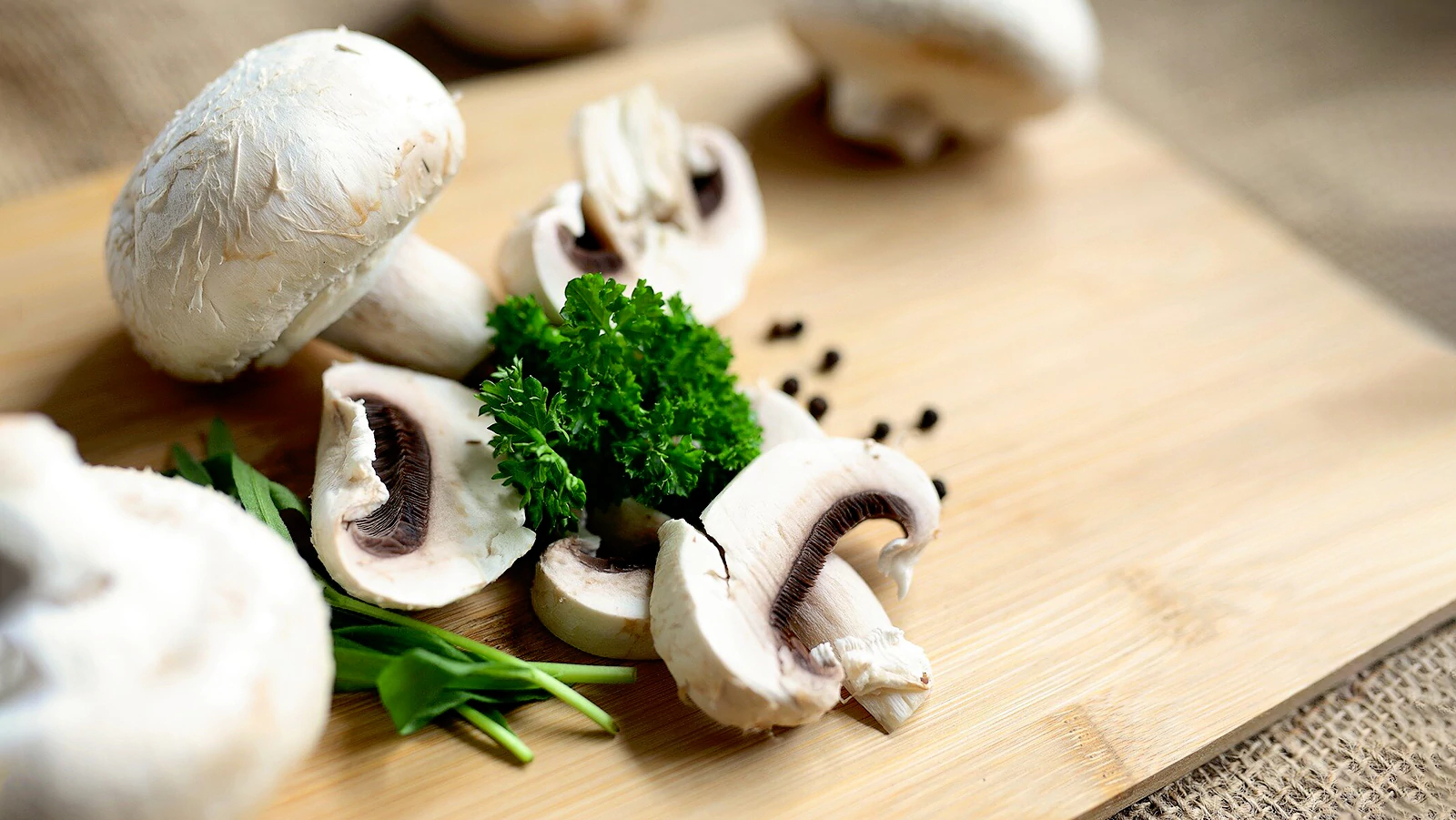
Можете ли Јести Сирове Печурке: Здравствени Ризици, Исхрана и Безбедност
Печурке садрже токсине осетљиве на топлоту попут хидразина или агаритина и ћелијске зидове направљене од хитина које људи не могу добро сварити.
Веганска дијета
Да ли су Рибе Животиње? Културна Перспектива
У неким културама, рибље месо се не сматра месом, а риба је дозвољена чак и током поста.

Здравље зуба Превенција
Домаћа Природна Течност за Испирање Уста: Доказана, Јача и Мање Токсична
Домаћа природна течност за испирање уста је јача од хлорхексидина, мање токсична и ако се прогута може изазвати мучнину, али и висок нагли пораст ORAC вредности.
Здравље зуба Превенција
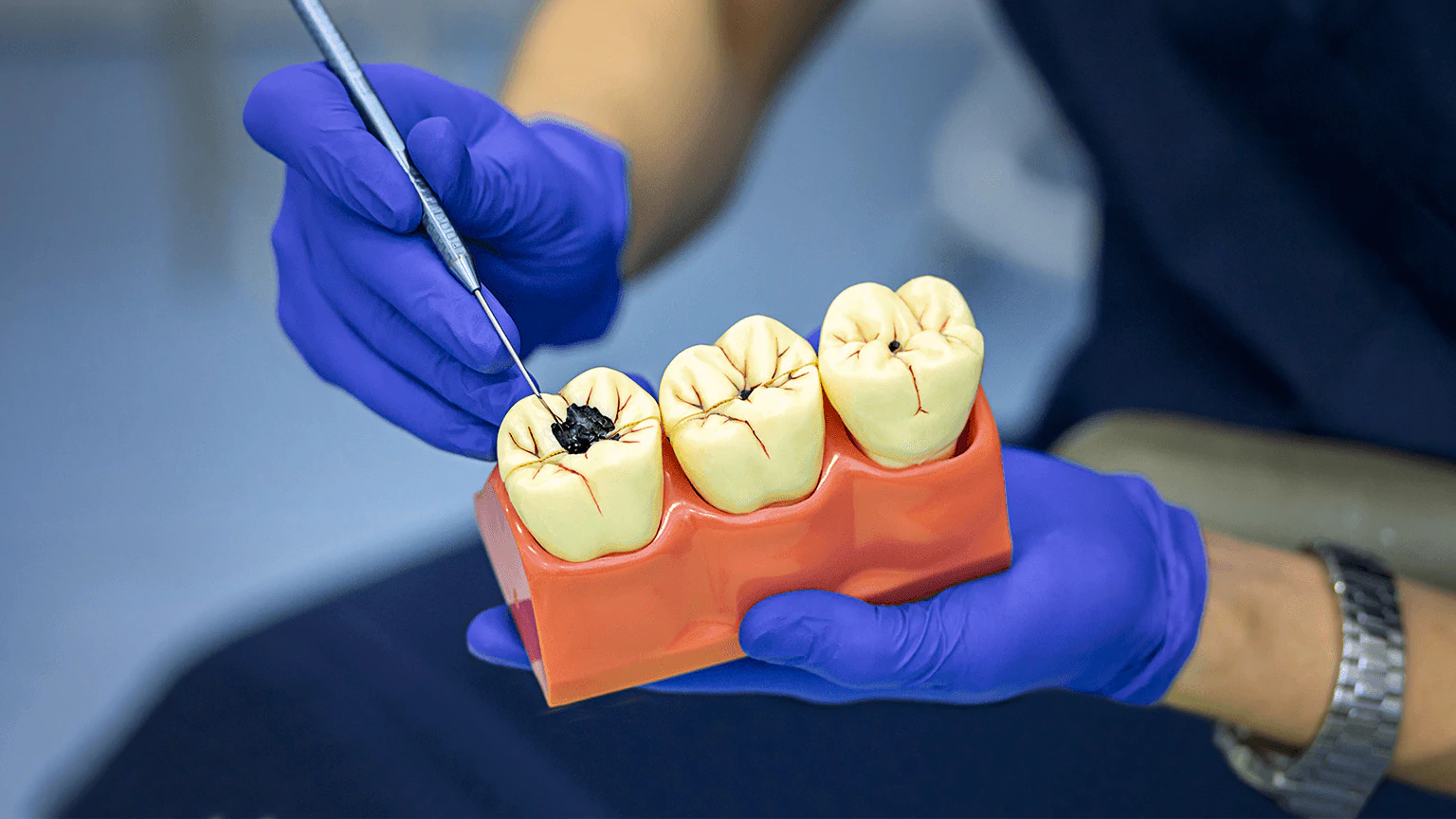
Како Зауставити Каријес: Симптоми, Узроци и Превенција
Конзумирање шећера је главни узрок каријеса и пропадања зуба, у комбинацији са недостатком минерала, посебно магнезијума, цинка, бакра и елемената у траговима.
Антиоксиданси Суперхрана
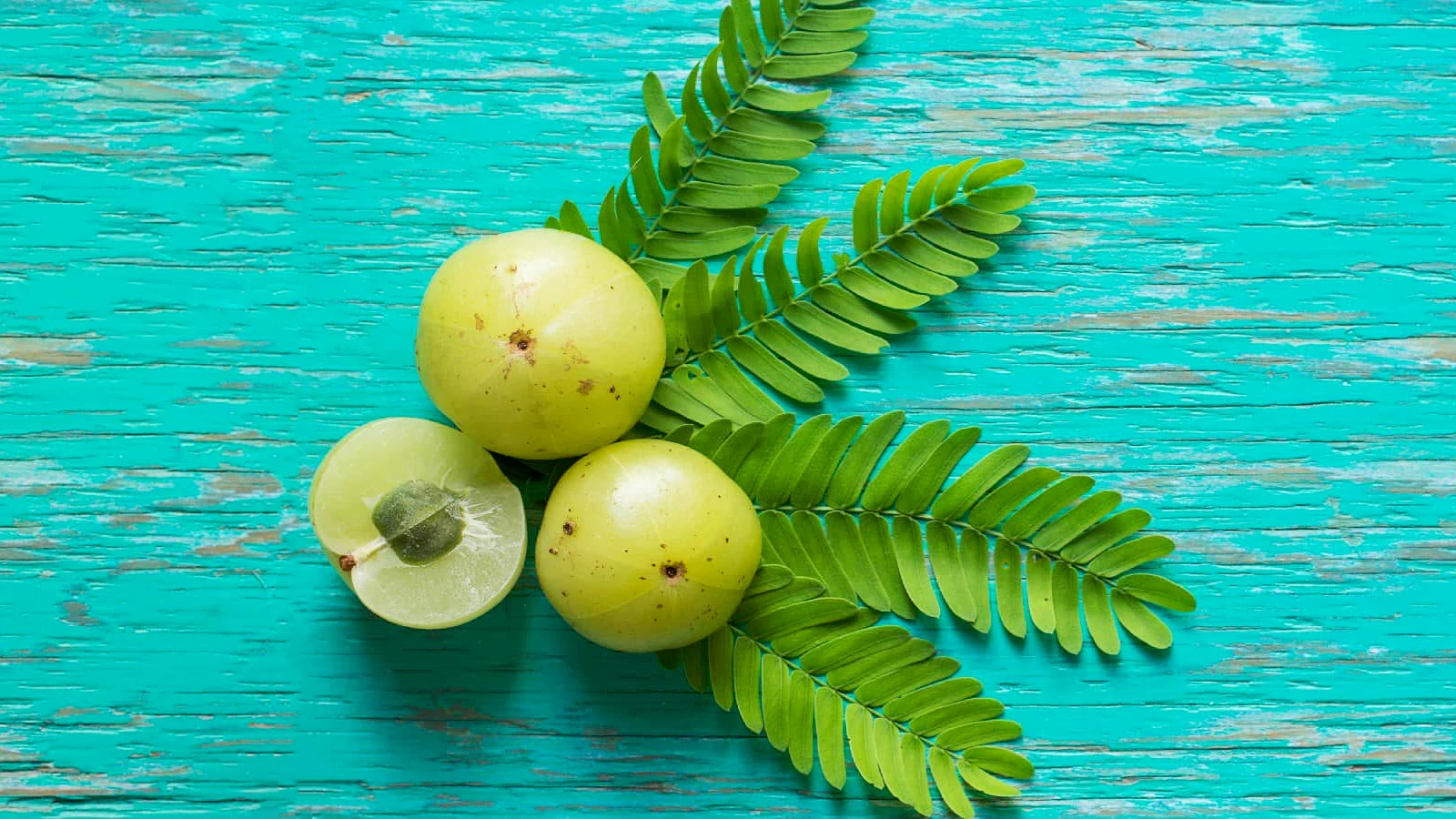
Амла: Доказане Користи, Исхрана и Клинички Значај
Амла (Индијски огрозд) је један од најмоћнијих антиоксиданата на свету са ORAC резултатом од 261.530. Богат је извор фитохемикалија које имају разне здравствене користи.
Најважније вести из здравља — ScienceDaily
- Diabetes study finds keeping blood sugar too steady may come at a priceon септембар 28, 2026
People with diabetes reported better quality of life after days when their glucose stayed largely within a healthy range, even when levels fluctuated more than usual. The unexpected finding suggests that pursuing extremely tight glucose control may sometimes come with a hidden lifestyle burden.
- Scientists just discovered what coffee really does to your gut and brainon септембар 28, 2026
A new study suggests coffee may influence mood and brain function by changing the activity of microbes in the gut. Both caffeinated and decaf coffee were linked to lower stress, depression, and impulsivity, while also producing measurable changes in gut bacteria and metabolites. Decaf was associated with better learning and memory, while caffeinated coffee appeared to reduce anxiety and improve attention.
- Blood tests reveal why astronauts get constipated in spaceon септембар 28, 2026
Spaceflight may dramatically change the gut within weeks, causing bacteria to break down more protein as food moves more slowly through the intestines. The shift could help explain astronaut constipation and may have wider effects on health, making it an important concern for future missions to Mars.
- Pomegranate compound improves heart function by up to 80% in studyon септембар 28, 2026
A compound the body can make after eating pomegranates, walnuts, and some berries improved measures of heart function by up to 80% in animal models of a difficult-to-treat form of heart failure. Urolithin A helped stiff heart tissue relax and reduced scarring and abnormal enlargement. It also improved relaxation in engineered human heart tissue.
- 160-million-year-old proteins show surprising power against superbugson септембар 28, 2026
Scientists resurrected antimicrobial peptides from mammals that lived millions of years ago and found that some were more potent against drug-resistant bacteria than modern human versions. These evolutionary relics could provide new clues for designing treatments as antibiotic resistance becomes an increasingly serious threat.
- Resetting the body clock could help the brain recover after strokeon септембар 28, 2026
Strengthening the body’s natural daily rhythms helped mice recover after stroke by improving the brain’s waste-clearing system and reducing lingering inflammation. The approach worked even when treatment began three days after the stroke, suggesting circadian-based therapies could eventually offer a new way to support long-term recovery.
- Scientists found a surprising driver of Alzheimer’s outside the brainon септембар 28, 2026
Scientists found that immune cells contributing to Alzheimer’s-related brain damage may be activated in lymph nodes outside the brain before traveling into the nervous system. Blocking this pathway in mice dramatically reduced neurodegeneration and preserved cognitive abilities, pointing to a potentially more accessible treatment target.
PubMed, #веганска-исхрана –
- Plant-Based Diets in Adolescence: Cardiometabolic Benefits, Developmental Risks, and the Role of Fortificationon септембар 26, 2026
Adolescence is a critical window in which dietary patterns stabilise while nutrient requirements remain high to support growth, bone accrual, and neurodevelopment. Plant-based diets are increasingly adopted by young people, yet paediatric evidence indicates that they should not be treated as a single exposure, because diet quality substantially modifies both benefits and risks. Healthy plant-based patterns-rich in whole grains, legumes, fruits, vegetables, nuts, and unsaturated fats-are…
- Plant-Based Functional Custard Enriched with Vitamin D3: Insight into Technological Properties, Nutrition and Bone Tissue Regenerationon септембар 26, 2026
A plant-based or vegan diet is considered one of the most important dietary patterns, often followed for religious or health reasons. It should contain vital nutrients such as protein, iron, zinc, calcium, vitamin D, and others. The objective of this study was to produce a plant-based food product with high nutritional value (vegan custard, VC) and fortify it with vitamin D(3) (vegan custard + D(3)). Thirty-five female albino rats, with an average body weight of 160 ± 5 g, were divided […]
- Dietary Patterns, Micronutrient Adequacy, and Metabolic Vulnerability in Alzheimer’s Disease: A Critical Narrative Reviewon септембар 26, 2026
Dietary factors may influence cognitive aging and Alzheimer’s disease (AD), but observational associations, mechanistic findings, and intervention effects should not be considered equivalent evidence. This critical narrative review examines how dietary patterns, micronutrient adequacy, and metabolic health may modify AD-related vulnerability. A targeted search of PubMed/MEDLINE, Scopus, and Web of Science through April 2026 prioritized systematic reviews, meta-analyses, randomized trials, and…
- A Structured Narrative Review of Contemporary Dietary Strategies Following Acute Coronary Syndromeson септембар 24, 2026
CONCLUSIONS: A Mediterranean-style diet remains the dietary pattern supported by the strongest evidence for secondary prevention following ACS. Until further pragmatic randomized trials are available, clinicians should continue recommending Mediterranean-style dietary patterns while individualising dietary advice according to patient preferences, cultural practices, and long-term adherence.
- Toward International Dietary Guidance: A Food Guide Pyramid for Human and Planetary Healthon септембар 23, 2026
Dietary guidelines shape food policy, education, and food systems worldwide. Recent controversies in dietary guideline development, together with rising burdens of diet-related chronic disease and increasing environmental pressures, highlight the need for globally relevant dietary guidance aligned with both human and planetary health. We developed an evidence-informed International Food Guide Pyramid emphasizing optimal carbohydrate-containing staple foods. The International Carbohydrate […]
Случајне објаве –

Физичка активност Превенција
Вежбање - Зашто Нам је Тачно Потребно?
У здравственој заједници, вежбање има готово митски статус као једна од најбољих ствари које можете учинити за себе, осим избегавања пушења.
Рак Исхрана са сировом храном
Изложеност Акриламиду - Чипс, Помфрит и Рак
Акриламид је класификован као канцероген за људе групе 2А. Године 2002. откривен је у изузетно високим концентрацијама у чипсу и помфриту.
Антиоксиданси ORAC
Оптимална Конзумација Антиоксиданата: Препоручени Унос ORAC Јединица
Оптимална потрошња антиоксиданата зависи од изложености токсичности. Минимални ORAC резултат је 8000 до 10000 дневно само да би се супротставио метаболизму.
Алопатска медицина Избор уредника Оптимална дијета
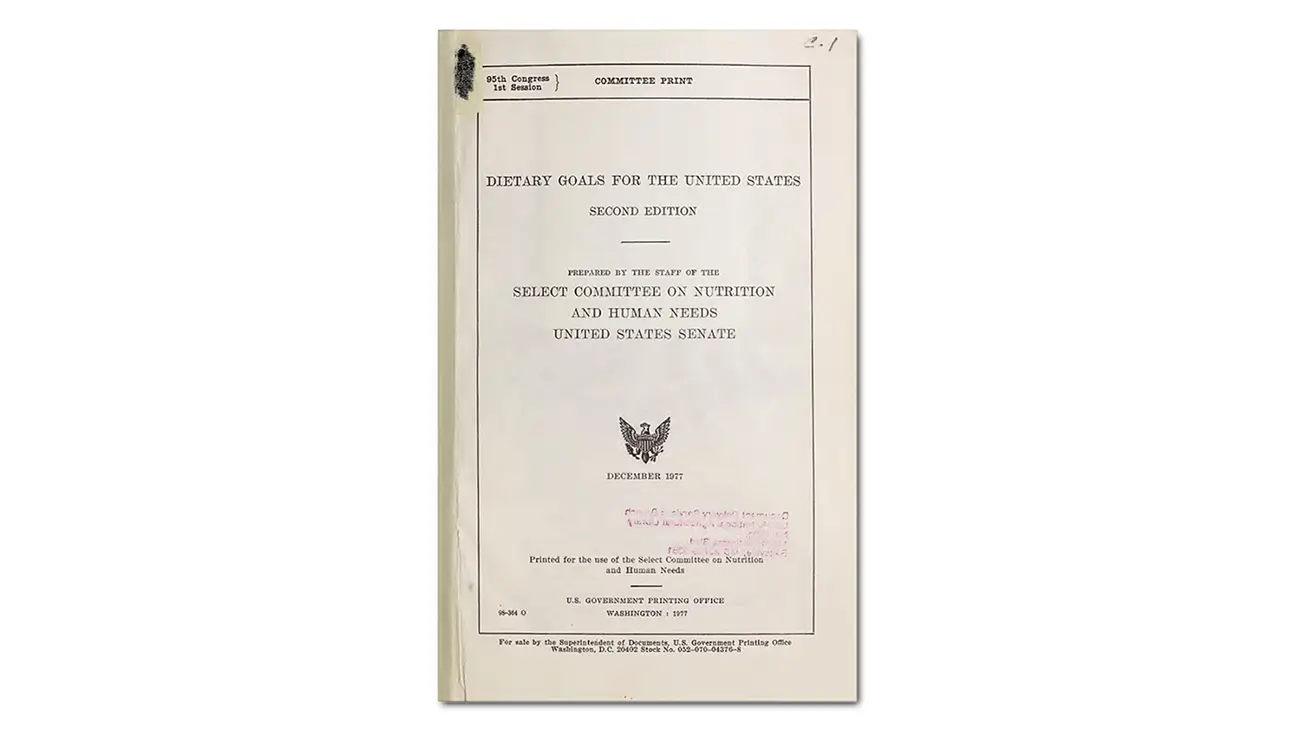
Мекгавернов Извештај - Специјални Интерес и Сузбијање Науке
Године 1977, Конгресу САД је представљен захтјев за промену дијететских смерница (извештај Мекгаверна) ка веганској исхрани заснованој на биљкама.
Исхрана са сировом храном
Исхрана Сировом Храном - Еволуциона Перспектива
Основно веровање у заједници заговорника сирове хране је да је исхрана сировом храном најприроднији и најздравији начин живота. Шта нам говори еволуциона биологија?
Избор уредника Оптимална дијета
Прерађена Храна: Разумевање Ризика
Прерађена храна значи да се нешто из целе хране уклања, обично влакна, а нешто се додаје, обично масти, шећер, со и мононатријум глутамат.
Дијабетес Млеко
А1 Млеко: Дијабетес, Аутизам и Срчана Обољења
Епидемиолошки докази указују на то да је млеко А1 са варијантом а1 бета-казеина могући фактор ризика у развоју дијабетеса типа 1 код деце, аутизма и срчаних обољења код одраслих.
Ограничење калорија Дуговечност
Како Постити: Храна за Пост Kоја Неће Прекинути Aутофагију
Аутофагија. Да ли сте се икада запитали шта се дешава са ћелијама у вашем телу када умру или се оштете? Да ли се само гомилају и стварају проблеме или се некако одлажу? Одговор је да ваше тело…
Антиоксиданси Рак Фитохемикалије
Куркума: Побољшање Здравља и Клиничке Користи
У куркуми је до сада идентификовано више од 300 активних фитохемикалија. Толико је моћна да чак може да промени експресију наших гена.
Ограничење калорија Дуговечност
Интермитентни Пост наспрам Ограничења Калорија - Постоји ли Разлика?
Постоји облик исхране који је првенствено дизајниран за коришћење аутофагије, а то је интермитентни пост. Придржавање дијете са пуним ограничењем калорија је тежак избор.
Истакнути чланци –

Избор уредника Гојазност
Поремећај Преједања - Психологија Глади
У природи нема рафинисаног шећера нити масти. Наш мозак никада није био изложен комбинацији та два одједном, што би нас довело до поремећаја преједања.
Избор уредника Млеко Оптимална дијета
Млеко и Млечни Производи: Корелације Здравственог Ризика
Познате повезаности са конзумирањем млека и млечних производа су неплодност, рак јајника и дојке, леукемија, дијабетес типа 1, аутизам, артериосклероза, катаракта, реуматоидни артритис, мултипла склероза, хиперактивност, загушење, бубуљице и још много тога…
Избор уредника Оптимална дијета
Прерађена Храна: Разумевање Ризика
Прерађена храна значи да се нешто из целе хране уклања, обично влакна, а нешто се додаје, обично масти, шећер, со и мононатријум глутамат.
Избор уредника Гојазност Оптимална дијета
Узрок Гојазности - Маладаптација или Зависност
Шта је узрок епидемије гојазности? За сав живот на Земљи, храна није избор. Најтеже за животиње у дивљини је да се угоје.
Алопатска медицина Избор уредника Оптимална дијета
Мекгавернов Извештај - Специјални Интерес и Сузбијање Науке
Године 1977, Конгресу САД је представљен захтјев за промену дијететских смерница (извештај Мекгаверна) ка веганској исхрани заснованој на биљкама.
Рак Избор уредника Фитохемикалије
Антиканцерогена Моћ Воћа и Поврћа: Ин Виво и Клинички Докази
Неки биљни екстракти могу се поредити са водећим лековима за хемотерапију, а истовремено циљају више различитих врста ћелија рака.
Избор уредника Оптимална дијета Протеини
Високо Протеинска Дијета: Корелације Здравственог Ризика
Несташица је правило протеина у природи. У еволуционом смислу, антрополози су доказали да су хоминини живели у просеку са 15 до 25 грама протеина дневно. У савременом западном типу исхране богате протеинима, конзумирали бисмо то...

Избор уредника Превенција Токсичност
Токсичност из Окружења- То је Само Ланац Исхране
Токсичност за животну средину је биоакумулација токсина. Организми су филтери. Али постоји још један, још гори процес који се зове биомагнификација у ланцу исхране.
Антиоксиданси Избор уредника ORAC
Разумевање ORAC Вредности: Нивои Антиоксиданата у Храни
Када је ваш главни извор антиоксиданата кафа, знате да имате озбиљан проблем.

Рак Избор уредника Токсичност
Изложеност Пестицидима код Деце: Тестови Изложености у Стварном Животу
Деца, а посебно труднице, су подложнија изложености пестицидима. Ако анализирамо нивое изложености у стварним сценаријима, какав би био резултат?
Најновије са PubMed-а, #исхрана на бази биљака –
- Lemongrass oil supplementation: buffalo-derived in vitro screening of ruminal fermentation and in vivo evaluation in growing beetal goatsby Pratik Sudan on септембар 28, 2026
The application of essential oils in ruminant diets presents challenges due to variability in their effects based on dose, diet composition and animal physiology. This study aimed to screen different supplementation levels of lemongrass oil (LGO) through in vitro evaluation for subsequent in vivo assessment of its effects on growth, nutrient digestibility and antioxidant status in Beetal goat kids. The in vitro trial used berseem fodder and concentrate mixture (60:40) incubated with LGO at 0,…
- Long-Term Monitoring of Radioactive Cesium in Commercial Foods and Dietary Intake Estimated by Total Diet Studies in Japan after the Fukushima Daiichi Nuclear Power Plant Accidentby Hiromi Nabeshi on септембар 27, 2026
Following the Fukushima Daiichi Nuclear Power Plant accident in 2011, Japan implemented extensive monitoring of radioactive materials in foods and established strict regulatory limits based on an annual effective dose of 1 mSv/year from artificial radionuclides. This review summarizes long-term surveillance data on radioactive cesium (r-Cs) in commercial foods and long-term assessments of dietary intake of r-Cs and strontium-90 (^(90)Sr) using the total diet study (TDS)/market basket (MB)…
- Nutrition and Endometriosis: Current Evidence on Dietary Risk Factors and Clinical Impact – A Narrative Reviewby Christine Dawczynski on септембар 27, 2026
Endometriosis (EM) is a severe chronic inflammatory disease characterized by the presence of endometrium-like tissue outside the uterine cavity, causing pain and significantly reducing quality of life. Worldwide, around 10% of women of reproductive age are affected and there is no cure as of now. The limited treatment options focus on hormone therapy, surgery and pain management–without satisfactory long-term effects. Nutritional strategies might support the prevention and treatment of…
- North American and Andean Indigenous Plant-Based Foods and Their Contemporary Scientific Rationale for Health Improvementby Lena Gálvez Ranilla on септембар 27, 2026
Plant-based food systems have been an integral part of human ecology since the dawn of domestication across all continents from over 12,000 y ago. This served the needs of human health and wellness from whole plant form to the use of parts in a range of water-based extracts to dry form or fermentation-based applications. This conference paper focuses on some examples of plant-based foods in the Americas that have been used since ancient times among indigenous North American and Andean […]
- Adherence to the Mediterranean Diet Is Associated With a Lower Risk of Obesity in Children Under 18 Years: A Comprehensive Systematic Review and Meta-Analysisby Maryam Gholami Shahrbabak on септембар 27, 2026
CONCLUSION: This meta-analysis highlights that greater adherence to the MedDiet was associated with lower odds of obesity among children and adolescents. However, these findings should be interpreted cautiously because the evidence was entirely cross-sectional, heterogeneity was substantial across several pooled analyses and some estimates were sensitive to exclusion of individual studies.
- Baseline Ferritin and Body Composition as Correlates of Longitudinal Metabolic Changes During an Energy-Restricted Mediterranean-Style Intervention Across Three Overweight Phlogistic-Related Clinical…by Begoña de Cuevillas on септембар 26, 2026
CONCLUSIONS: Baseline ferritin and body composition were correlates of heterogeneous inflammatory-metabolic profiles and ferritin changes. These hypothesis-generating associations do not establish causal or mechanistic effects and require controlled confirmation with comprehensive iron-status assessment.