






A1 milk with the a1 beta-casein variant is a possible risk factor in the development of type 1 diabetes in children, autism, and heart illnesses in adults.
Milos Pokimica
Written By: Milos Pokimica
Medically Reviewed by: Dr. Xiùying Wáng, M.D.
Updated June 10, 2023Key Takeaways:
– Beta-casein is a protein that makes up about 30% of the protein in cow’s milk. It exists in two genetic variants: A1 and A2.
– A1 beta-casein in cow milk is different from all other mammals, which exclusively have A2 type including A2 cattle from India, and Africa, Buffalo, as same as other mammals and the same as human milk. Almost all cattle of the A1 type are related to cows of European origin for the subspecies of the original species of this mutation Bos Taurus.
– BCM7 is a peptide that breaks down from A1 beta-casein into 7 amino acids. It has opiate-like effects similar to narcotics such as morphine and can be harmful to low-density lipoproteins (LDL).
– There is a correlation between type 1 diabetes and antibodies to A1 beta-casein. These antibodies are believed to attack the cells that produce insulin in the pancreas due to similarities with BCM7’s protein structure.
– Casomorphins are opioids that can be found in dairy products, specifically in A1 beta-casein. They have been linked to autism and schizophrenia through the “opioid excess” theory
– Opioid peptides from cows’ milk have long been theorized as a possible cause of sudden infant death syndrome (SIDS), as they may inhibit the respiratory center in the brainstem, leading to apnea and death.
– Elevated basal irBCM (cattle casomorphins) was found in formula-fed infants showing a delay in psychomotor development and heightened muscle tone while the highest basal irHCM (human casomorphins) was observed in breast-fed infants with normal psychomotor development and muscle tone.
A1 beta-casein in cow milk.
Beta-casein is about 30% of the protein in cow’s milk. Beta-casein is present as one or two genetic variants; A1 or A2. Most cow’s milk contains a combination of A1 and A2 beta-casein. However, milk that contains only the A2 type without A1 beta-casein alpha is available in some countries.
The second variant, A2 beta-casein, is not associated with diabetes type 1.
The established relationship of this link between A1 beta-casein and type 1 diabetes, and heart disease is 0.982 and 0.76 (Laugesen and Elliott, 2003).
This is a very significant level if compared with other epidemiological reasons for these conditions, such as smoking and mortality from lung cancer r = 0.73 or the likelihood of people in the 1960s and heart conditions ten years later where r = 0.85.
The difference between A1 and A2 beta-casein is present because of a single amino acid substitution at 67 line of amino acids of 209 that they have in the chain.
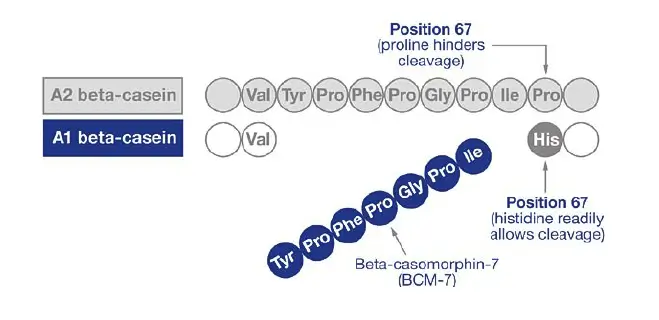
A1 beta-casein in cow milk is different from all other mammals, which exclusively have A2 type including A2 cattle from India, and Africa, Buffalo, as same as other mammals and the same as human milk. Almost all cattle of the A1 type are related to cows of European origin for the subspecies of the original species of this mutation Bos Taurus.
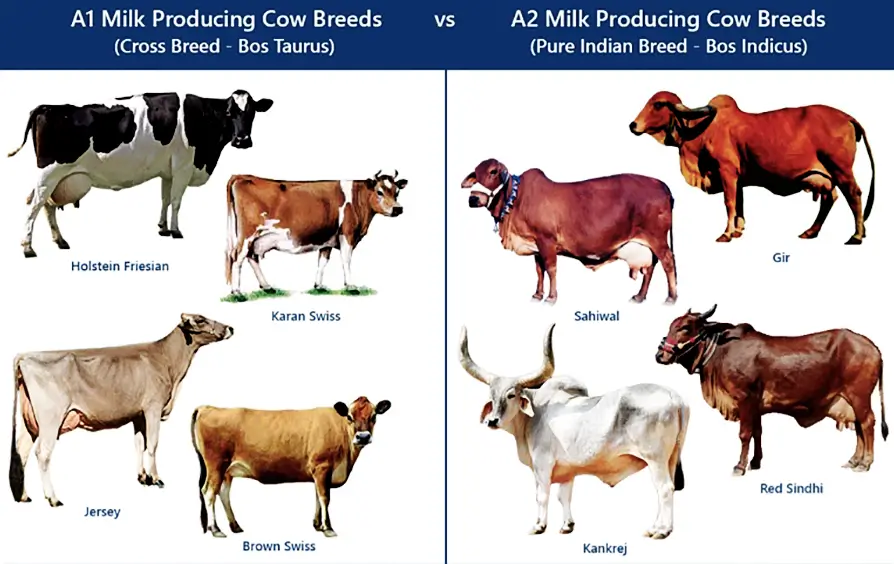
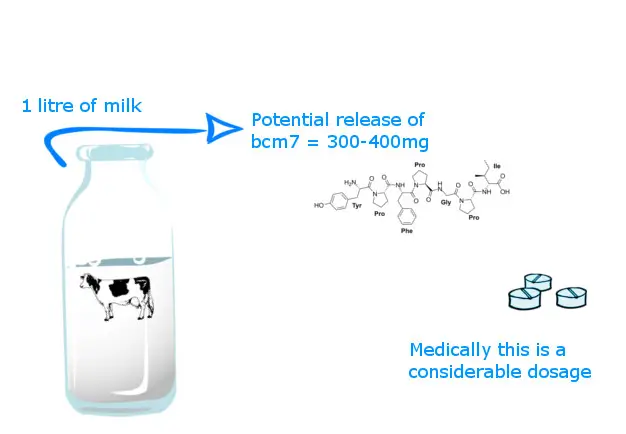
It is a result of a genetic mutation in cows in Europe that happened about 8,000 years ago. Today, A1 milk cows are bred in Europe and America, and A2 species are bred in New Zeeland. Holstein species have A1 and A2 beta-casein in almost equal amounts. The Jersey species typically has a little more than A2 but is also considered a mixed species. The same Jersey cows carry a “B” beta-casein that has proven to give more BCM7. Signs of poor histidine attachment, A1 beta-casein breaks down into peptides of 7 amino acids called beta casomorphin 7 (BCM7) when consumed. BCM7 is problematic because opiate is at the same level as narcotics like morphine and has similar effects. It is also an oxidant that is known to be detrimental to low-density lipoproteins (LDL). Because the links between 7 amino acids make it extremely strong, it is resistant to further degradation. When BCM7 enters the bloodstream, various problems arise.
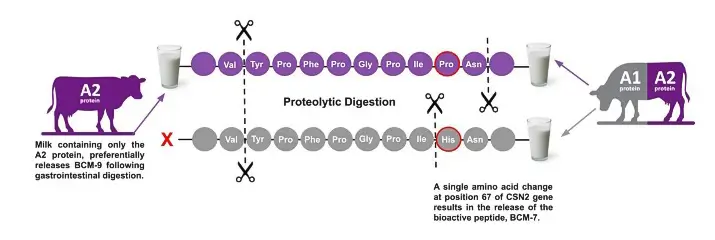
However, the BCM 7 is too large to be absorbed by a healthy coat in the intestine, which means that the health problem associated with A1 beta-casein is more likely to be affected by people with damaged digestive health or from diseases such as celiac disease or gastrointestinal disease.
If you have a leaky gut, then you can give yourself and your fetus if you are pregnant type 1 diabetes as an autoimmune disease. if you consume milk and dairy products, that is. Persons having any of the prevailing conditions are more suitable for abscess BCM7. In babies that naturally have increased intestinal permeability in order to improve the absorption of nutrients, there is a higher risk also.
Once it enters the bloodstream, BCM7 can easily break through the blood-brain barrier and enter the brain, where the connection to the receptors causes the symptoms of autism and schizophrenia.
This claim was initiated by research that was disseminated on rats, where rats showed similar tendencies in behavior and sympathy as autism and schizophrenia after BCM7 injection. The association of these effects was also confirmed by the ability to reverse the state and changes in opioid-antagonistic naloxone behavior. To add to that, it has long been recognized that opiates have an effect on immune function, which is the possible reason why A1 beta-casein and BCM7 are associated with autoimmune diseases.
Heart Disease.
The first discovery was made by Alexandra Steinerovathat have been investigating the reasons behind oxidative stress in infants. She discovered that babies who were fed milk formula had a higher level of antibodies to oxidized LDL (Steinerová et al, 1999). In 2004, Steinerova put forth the idea and did a study on BCM7 and the increase in antibodies in infants. A study demonstrated that infants fed A1 beta-casein baby formula developed significantly higher levels of these antibodies compared to that fed A2 beta-casein (Steinerová et al., 2004).
Today more research had been done and it is excepted in the scientific community that BCM7 has a pro-oxidative effect on LDL. In the case of cardiac diseases, additional studies have uncovered the mechanism by which the A1 beta-casein will develop the cardiac disease, and the primary effect is a BCM7 that oxidizes LDL that transports cholesterol from the liver to the tissues (Chin-Dusting et al., 2006). This is important because the oxidized LDL increases the risk of heart disease as a result of increased artery incidence and as a consequence increased plaque accumulation, ie. oxidized LDL makes arteries sticky and leads to the formation of plaque.
Type 1 Diabetes.
Type 1 diabetes, is classified as an autoimmune disease that occurs due to an immune system assault on cells that produce insulin in the pancreas.
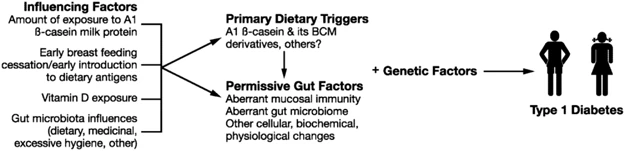
And it is not genetic as you might lead to believe by conventional medicine. Genetic predisposition plays a role but to prove the fact that it is just one more maladaptation we can look at identical twins. The concordance of diabetes type 1 in identical twins is only 50 %. Meaning one gets it one does not. If it is genetic and the environment does not play a role that would not happen. It is something we ate or to be precise mothers ate or give the babies that cause them to develop this autoimmune disease.
In Japan diabetes type 1 is 18 times lower than in the U.S., but when the Japanese migrate to America and start to adopt the Western diet, they develop the same rate of diabetes as Americans. Some countries have 100 times the less diabetes type 1 rates than others depending mostly on the diet the population eats. Type one diabetes started to rise after World War 2 as same as other diseases, so it is not genetics. It is maladaptation, and we now know what is causing it.
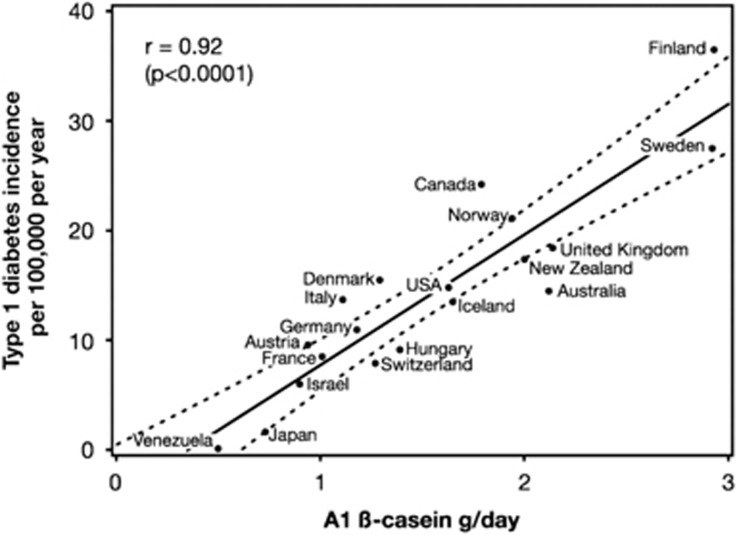
In 1999 scholars in Germany discovered that there is a correlation between type 1 diabetes and the level of antibodies to A1 beta-casein. It is believed that these antibodies are, in fact, based on the amino acid sequence of the problematic opioid BCM7, which is derived from A1 beta-casein. Because the sequence has similarities with the protein structure of the cells that produce insulin in the pancreas, the antibodies attack the pancreas together with the BCM7 peptides. In this study, every single kid had significant levels of A1 beta-casein antibodies in their blood but not of antibodies to other milk proteins (Karjalainen et al., 1992). The conclusion was:
“Patients with insulin-dependent diabetes mellitus have immunity to cows milk albumin, with antibodies to an albumin peptide that is capable of reacting with a beta-cell-specific surface protein. Such antibodies could participate in the development of islet dysfunction.”
Karjalainen et al., 1992
Autism, Schizophrenia, and Sudden Infant Death Syndrome.
Also, there are opiates that cross the blood-brain barrier. Because BCM7 opiates should not be present at all and represent a form of unnatural mutation in cattle it should not be a great surprise in the relationship between A1 beta-casein and casein in general to association with autism also.
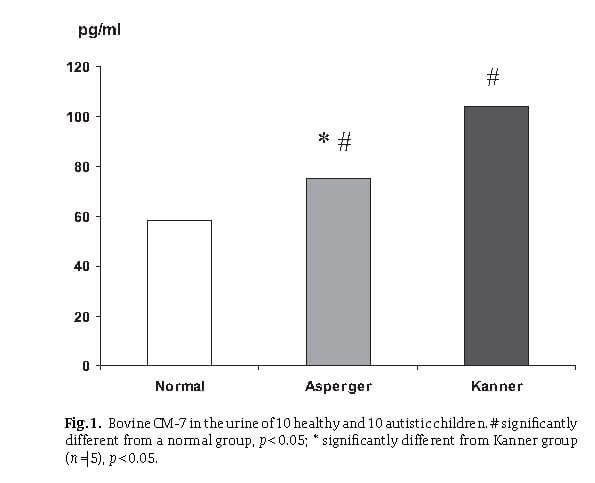
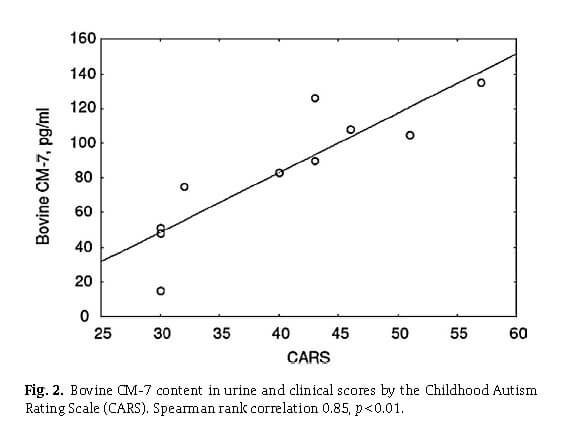
BCM 7 obtained from A1 beta-casein and gluteomorphin derived from gluten are both opiates that can be associated with these symptoms. Because of this, a huge number of children with autism show significant improvements if they avoid gluten and casein. The relationship between autism and opiates is nothing new. In 1979, Jaak Panksepp, a scientist, suggested that connection. In 2000, a team of researchers led by Robert Cade reviewed the existing evidence linking the casein and gluten opiates with autism and schizophrenia. They collected new data from 150 autistic children, 120 schizophrenia adults, 43 normal children, and 76 normal adults (Cade et al., 2000). Autistic children and schizophrenia adults showed a constant elevated abnormal value of casomorphin and gluteomorphin opioid peptides obtained from beta-casein and gluten.
Actually, all adults show elevated levels of this morphine opioid substance after consumption of milk or yogurt, even the adult that does not have inflammation in the gut at least for 8 hours after consumption (Chabance et al., 1998).
The theory goes something like this. You have a genetic predisposition for diseases such as autism or schizophrenia. This is the so-called “opioid excess” theory. You have a genetic predisposition and then have some early exposure to environmental stressors that damage your gut and make it leaky or you are just a regular baby that naturally has a leaky gut. Then comes the milk or dairy products with all of the casomorphins leaking into the blood in excess and then into the brain triggering disease to form. These opioids are thought that could play one of the roles in the development of autism and other neurological disorders. The problem with these casomorphins is also that when you examine the blood-brain barrier of autism patients, their blood-brain barrier seems weaker too.
In a normal individual, there are going to be some of the sedative effects but in someone with a leaky gut and a leaky blood-brain barrier it is going to have a much stronger effect, and if that person has a genetic predisposition or sensitivity to it then the real disease can form. By the so-called “opioid excess” theory anyway.
Of the seventy autistic children placed on a gluten-free and casein-free diet, 81% showed significant improvements over a period of 3 months, and more than a third of those who did not recover were still high in opioid peptides, indicating that they did not keep the child’s diet. Although only 40% of adults have improved, it is believed that many of them have not been using the diet for long enough to provide their bodies with the ability to eliminate existing BCM7 molecules in the brain that can last for more than a year.
In 1999, Zhongjie Sun and Robert Cade injected BCM7 opioid derivatives from A1 beta-casein into rats to determine if it enters the brain (Cade et al., 1999). They found out that it will enter the various areas of the brain that were previously proven to be associated with autism and schizophrenia. As a consequence, it was reasoned that the BCM7 could break through a blood-brain barrier and hit parts of the brain that are susceptible to those affected by autism and schizophrenia. In the same year, they conducted a similar experiment and found that rats injected with BCM7 exhibited several significant symptoms of autism and schizophrenia such as intolerance, reduced pain sensitivity, and lack of response to external stimuli.
In 2003, Sun and Cade continued their research and discovered that gluteomorphin opioids derived from gluten affect only three regions of the brain while BCM7 opioids derived from A1 beta-casein affected 45 regions and circulation of this peptide into the infant’s immature central nervous system might also inhibit the respiratory center in the brainstem leading to apnea and death (Sun et al, 2003). Opioid peptides from milk have long been theorized as a possible cause of sudden infant death syndrome (Ramabadran and Bansinath, 1988).
This not only proved that BCM7 comes to the brain much more easily but it is a much larger factor in the development of autism and schizophrenia. Are these studies going to lead to more understanding or better treatment of these individuals I do not know. There could be individuals with a genetic predisposition to these diseases that these molecular mimicry proteins only aggravate. I don’t know. Science still doing research but it is a slow process and who will have the interest to finance these studies? It will take some time.
Opoid casomorphins and psychomotor delay.
A1 milk vs A2 milk got a big political issue in Australia and New Zeeland at one point. It ended with obligatory labeling of milk and all dairy products. In Australia, you cannot buy a bottle of A1 milk or any other dairy product without a visible label that shows does the milk contain an A1 or A2 form of protein.
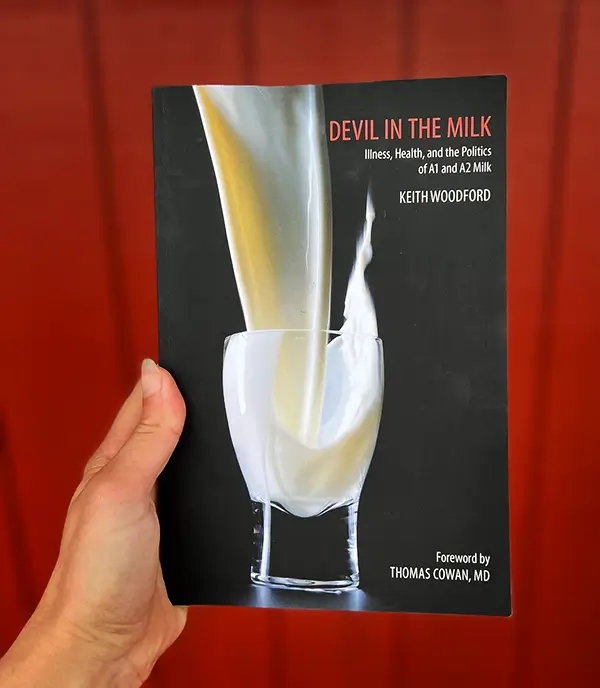
Why are these opioids in the milk in the first place? And there are in all of the milk in existence, not just the A1 milk variant. A1 milk is just a more potent variant. For normal human babies as well as calves, they are there to create a craving or to get them addicted like regular drug addicts are, but in this case, the addiction is going to trigger the baby’s curing for opiates and then the baby is going to get all the nutrition from milk that it needs to grow. It is all as it should be but now we have switched species. Just like the protein amino acid profile of human and cow milk is not the same so the profile of these casomorphins is not the same.
In this study (Kost et al., 2009) the babies fed on cow’s milk with a higher level of bovine casomorphins seem to suffer from psychomotor delay but exactly the reverse was found for human casomorphins. Human casomorphins seams to help the brain of humans. The conclusion of the study was:
“The highest basal irHCM (human casomorphins) was observed in breast-fed infants with normal psychomotor development and muscle tone. In contrast, elevated basal irBCM (cattle casomorphins) was found in formula-fed infants showing a delay in psychomotor development and heightened muscle tone. Among formula-fed infants with normal development, the rate of this parameter directly correlated to basal irBCM. The data indicate that breastfeeding has an advantage over artificial feeding for infants development during the first year of life and support the hypothesis for the deterioration of bovine casomorphin elimination as a risk factor for delay in psychomotor development and other diseases such as autism.”
(Kost et al., 2009)
The structure of casein in human and cow milk is significantly different matching only by 47%, and especially if we have mutated A1 casein in the mix, then we have a situation that can trigger diabetes type 1 in the baby. Bovine casomorphin is much stronger than human one, and it is almost at the level of morphine in its effect (Trivedi et al., 2015). Cow casomorphins bind tighter to the serotonin receptors in the brain than human one does. Also, opioid casomorphins were produced by both A1 and A2 milk with no difference in potency (Asledottir et al., 2017). Also, there is much more casein in general in cow’s milk, 15 times more to be precise than in human’s milk. Twenty-one peptides and eight from beta-casein were found in cow milk, and only five peptides with only one from beta-casein were found in human milk.
Should you switch to A2 which is ten times more expensive? What about pizza with A1 milk cheese or any other commercial A1 milk product? Most of the chocolates are made with A1 milk powder. The most realistic scenario is that even if we want to switch to A2 there is no A2 milk around if you live outside of New Zeeland. And even in New Zeeland, there is the chipset powder A1 milk made for the food industry in almost everything. From ice cream to chocolate. And even if we could spend additional money and have that A2 ice cream, milk is still correlated including A2 to a wide range of health issues (Milk and dairy- Health risk correlations).
The Devil in Milk, Why It Can be Dangerous.
FAQ
References:
- Karjalainen, J., Martin, J. M., Knip, M., Ilonen, J., Robinson, B. H., Savilahti, E., Akerblom, H. K., & Dosch, H. M. (1992). A bovine albumin peptide as a possible trigger of insulin-dependent diabetes mellitus. The New England journal of medicine, 327(5), 302–307. https://doi.org/10.1056/NEJM199207303270502
- Chabance, B., Marteau, P., Rambaud, J. C., Migliore-Samour, D., Boynard, M., Perrotin, P., Guillet, R., Jollès, P., & Fiat, A. M. (1998). Casein peptide release and passage to the blood in humans during digestion of milk or yogurt. Biochimie, 80(2), 155–165. https://doi.org/10.1016/s0300-9084(98)80022-9
- Kost, N. V., Sokolov, O. Y., Kurasova, O. B., Dmitriev, A. D., Tarakanova, J. N., Gabaeva, M. V., Zolotarev, Y. A., Dadayan, A. K., Grachev, S. A., Korneeva, E. V., Mikheeva, I. G., & Zozulya, A. A. (2009). Beta-casomorphins-7 in infants on different type of feeding and different levels of psychomotor development. Peptides, 30(10), 1854–1860. https://doi.org/10.1016/j.peptides.2009.06.025
- Trivedi, M. S., Hodgson, N., Walker, S. G., Trooskens, G., Nair, V., & Deth, R. C. (2015). Epigenetic effects of casein-derived opioid peptides in SH-SY5Y human neuroblastoma cells. Nutrition & Metabolism, 12(1). https://doi.org/10.1186/s12986-015-0050-1
- Asledottir, T., Le, T. T., Petrat-Melin, B., Devold, T. G., Larsen, L. B., & Vegarud, G. E. (2017). Identification of bioactive peptides and quantification of β-casomorphin-7 from bovine β-casein A1, A2 and I after ex vivo gastrointestinal digestion. International Dairy Journal, 71, 98-106. https://doi.org/10.1016/j.idairyj.2017.03.008
- Cade, R., Privette, M., Fregly, M., Rowland, N., Sun, Z., Zele, V., Wagemaker, H., & Edelstein, C. (2000). Autism and Schizophrenia: Intestinal Disorders. Nutritional neuroscience, 3(1), 57–72. https://doi.org/10.1080/1028415X.2000.11747303
- Pal, S., Woodford, K., Kukuljan, S., & Ho, S. (2015). Milk Intolerance, Beta-Casein and Lactose. Nutrients, 7(9), 7285-7297. https://doi.org/10.3390/nu7095339
- Chia, J. S. J., McRae, J. L., Kukuljan, S., Woodford, K., Elliott, R. B., Swinburn, B., & Dwyer, K. M. (2017). A1 beta-casein milk protein and other environmental pre-disposing factors for type 1 diabetes. Nutrition & diabetes, 7(5), e274. https://doi.org/10.1038/nutd.2017.16
- Sun, Z., Zhang, Z., Wang, X., Cade, R., Elmir, Z., & Fregly, M. (2003). Relation of beta-casomorphin to apnea in sudden infant death syndrome. Peptides, 24(6), 937–943. https://doi.org/10.1016/s0196-9781(03)00156-6
- Ramabadran, K., & Bansinath, M. (1988). Opioid peptides from milk as a possible cause of sudden infant death syndrome. Medical hypotheses, 27(3), 181–187. https://doi.org/10.1016/0306-9877(88)90138-7
- Chin-Dusting, J., Shennan, J., Jones, E., Williams, C., Kingwell, B., & Dart, A. (2006). Effect of dietary supplementation with beta-casein A1 or A2 on markers of disease development in individuals at high risk of cardiovascular disease. The British journal of nutrition, 95(1), 136–144. https://doi.org/10.1079/bjn20051599
- Steinerová, A., Racek, J., Stozický, F., Tatzber, F., & Lapin, A. (1999). Autoantibodies against oxidized LDL in the first phase of life. Low density lipoproteins. Clinical chemistry and laboratory medicine, 37(9), 913–917. https://doi.org/10.1515/CCLM.1999.135
- Steinerová, A., Korotvicka, M., Racek, J., Rajdl, D., Trefil, L., Stozický, F., & Rokyta, Z. (2004). Significant increase in antibodies against oxidized LDL particles (IgoxLDL) in three-month old infants who received milk formula. Atherosclerosis, 173(1), 147–148. https://doi.org/10.1016/j.atherosclerosis.2003.12.006
- Laugesen, M., & Elliott, R. (2003). Ischaemic heart disease, Type 1 diabetes, and cow milk A1 beta-casein. The New Zealand medical journal, 116(1168), U295. [PubMed]
Related Posts



Do you have any questions about nutrition and health?
I would love to hear from you and answer them in my next post. I appreciate your input and opinion and I look forward to hearing from you soon. I also invite you to follow us on Facebook, Instagram, and Pinterest for more diet, nutrition, and health content. You can leave a comment there and connect with other health enthusiasts, share your tips and experiences, and get support and encouragement from our team and community.
I hope that this post was informative and enjoyable for you and that you are prepared to apply the insights you learned. If you found this post helpful, please share it with your friends and family who might also benefit from it. You never know who might need some guidance and support on their health journey.
– You Might Also Like –
Methylene Blue: Therapeutic Uses and Clinical Significance

Mercury- Neurotoxin from the fish

The tale of Big Pharma- IG Farben
High Protein Diet and Metabolic Acidosis: Health Risks Correlations
Theobromine Benefits: Brain Boosting Without Anxiety
WHO dietary guidelines- New food pyramid and suppression of science

Pesticides, GMO’s, and toxic overload.

Humane meat or humane myth?- The animal cognition

Learn About Nutrition

Milos Pokimica is a doctor of natural medicine, clinical nutritionist, medical health and nutrition writer, and nutritional science advisor. Author of the book series Go Vegan? Review of Science, he also operates the natural health website GoVeganWay.com
Medical Disclaimer
GoVeganWay.com brings you reviews of the latest nutrition and health-related research. The information provided represents the personal opinion of the author and is not intended nor implied to be a substitute for professional medical advice, diagnosis, or treatment. The information provided is for informational purposes only and is not intended to serve as a substitute for the consultation, diagnosis, and/or medical treatment of a qualified physician or healthcare provider.NEVER DISREGARD PROFESSIONAL MEDICAL ADVICE OR DELAY SEEKING MEDICAL TREATMENT BECAUSE OF SOMETHING YOU HAVE READ ON OR ACCESSED THROUGH GoVeganWay.com
NEVER APPLY ANY LIFESTYLE CHANGES OR ANY CHANGES AT ALL AS A CONSEQUENCE OF SOMETHING YOU HAVE READ IN GoVeganWay.com BEFORE CONSULTING LICENCED MEDICAL PRACTITIONER.
In the event of a medical emergency, call a doctor or 911 immediately. GoVeganWay.com does not recommend or endorse any specific groups, organizations, tests, physicians, products, procedures, opinions, or other information that may be mentioned inside.
Editor Picks –
Cancer Editor Picks Phytochemicals
Anticancer Power of Fruits and Vegetables: In Vivo and Clinical Evidence
Some vegetable extracts rival leading chemotherapy drugs and at the same time target multiple different types of cancer cells.
Antioxidants Editor Picks ORAC
Essential Oils as Antioxidant Supplements: Rules and Strategies
Food-grade essential oils can be a convenient and consumer-friendly strategy for optimizing the antioxidant value and ORAC scores of our diet.
Antioxidants Editor Picks ORAC
Antioxidant-Rich Diet: General Rules and Strategies
There are easy and cost-effective strategies for optimizing the antioxidant value of our diet.
Antioxidants Editor Picks ORAC
Understanding ORAC Values: Antioxidant Levels in Foods
When your main source of antioxidants is coffee, you know that you have a serious problem.

Antioxidants Editor Picks ORAC
Astaxanthin Benefits: World’s Most Powerful Natural Antioxidant
Astaxanthin is the most powerful natural and universal antioxidant (both oil and water-soluble) known to science. It accumulates in tissues and It can never turn itself into a pro-oxidant.
Antioxidants Editor Picks ORAC Phytochemicals
Antioxidants: Understanding the Basics
There are no phytochemicals or antioxidants in animal products. On average, plant foods contain more than 60 times as many antioxidants as animal-based foods.
Editor Picks Vegan Diet
Nutrient Deficiencies in Vegan Diet: Prevention Strategies
There are nine common nutrient deficiencies on the population scale affecting people eating a plant-based diet. If not corrected on time some deficiencies have terrible and non-treatable consequences.
Editor Picks Optimal Diet
Micronutrient Deficiency in Standard American Diet: Optimization Strategies
Nutrition profile of our modern meat, sugar, processed food diet is completely incongruent with our evolution resulting in severe micronutrient deficiency.
Editor Picks Phytochemicals
Phytochemicals: Understanding the Basics
Every single phytochemical that exists has a biological action in the human body. Every single one from millions of different phytochemicals.
Editor Picks Milk Optimal Diet
Milk and Dairy: Health Risk Correlations
Known associations with milk and dairy consumption are infertility, ovarian and breast cancer, leukemia, diabetes type 1, autism, arteriosclerosis, cataract, rheumatoid arthritis, multiple sclerosis, hyperactivity, congestion, pimples, and more…
Cancer Editor Picks Protein
Complete Protein: IGF-1 Signaling in Cancer Formation
When you eat animal protein you have four times the chance to develop all types of cancer. When you smoke you have a four-time chance to develop lung cancer.

Cancer Editor Picks Protein
The Anatomy of Cancer- Health risk correlations
About 2% of cancers are by medicine considered to be purely caused by genetic factors. The same range as within the animal kingdom. You haven’t been told the whole truth.
Milos Pokimica is a health and nutrition writer and nutritional science advisor. Author of the book series Go Vegan? Review of Science, he also operates the natural health website GoVeganWay.com
Latest Articles –

Calorie Restriction Longevity
How to Fast: Fasting Foods That Won’t Break Autophagy
Autophagy. Have you ever wondered what happens to the cells in your body when they die or get damaged? Do they just pile up and create problems, or do they get disposed of somehow? The answer is that your body…
Dental Health Prevention
Sweets Teeth Sensitivity & Pain: Quick Fix & Lasting Solution
A quick and easy fix for pain relief is clove essential oil, a powerful antioxidant and pain reliever that can help with gum disease and toothache.
Beans
Green Beans: Nutrition and Health Benefits
Green beans are low in calories and rich in natural compounds that can help you control your blood sugar, lower your cholesterol, and fight off free radicals.
Raw food diet Vegan Diet
Can You Eat Mushrooms Raw: Health Risks, Nutrition & Safety
Mushrooms have heat-sensitive toxins like hydrazine or agaritine, and cell walls made out of chitin that cannot be digested well by humans.

Vegan Diet
Are Fish Animals? A Cultural Perspective
In some cultures, fish meat is not considered to be meat, and fish is allowed even during fast.

Dental Health Prevention
Homemade Natural Mouthwash: Proven, Stronger & Less Toxic
Homemade natural mouthwash is stronger than chlorhexidine, less toxic and if swallowed might give you some nausea but also a high burst in ORAC value.
Dental Health Prevention
How to Stop Tooth Decay: Symptoms, Causes & Prevention
Sugar consumption is the main cause of cavities and tooth decay, combined with mineral deficiencies especially magnesium, zinc, copper and trace elements.
Antioxidants Superfoods
Amla: Proven Benefits, Nutrition And Clinical Significance
Amla is one of the world’s most powerful antioxidants with a ORAC score of 261,530. It is a rich source of phytochemicals that have various health benefits.
Top Health News — ScienceDaily
- Scientists find dark chocolate ingredient that slows agingon December 12, 2025
Scientists have uncovered a surprising link between dark chocolate and slower aging. A natural cocoa compound called theobromine was found in higher levels among people who appeared biologically younger than their real age.
- Nerve injuries can trigger hidden immune changes throughout the entire bodyon December 12, 2025
Researchers discovered that nerve injuries can alter the immune system throughout the body, and males and females react very differently. Male mice showed strong inflammatory responses, while females showed none, yet both transmitted pain-inducing signals through their blood. These findings reveal previously unknown pathways driving pain, especially in females. The work points toward new opportunities for personalized chronic pain therapies.
- NAD+ supplement shows early promise for long COVID fatigue and brain fogon December 12, 2025
Long COVID still affects people worldwide with stubborn symptoms like fatigue and cognitive issues. A clinical trial tested whether boosting NAD+ using nicotinamide riboside could help. Although overall group differences were limited, many participants showed encouraging improvements after taking NR for at least 10 weeks. The findings suggest NAD+ enhancement may offer symptom relief for some individuals.
- Stressed rats keep returning to cannabis and scientists know whyon December 11, 2025
Rats with naturally high stress levels were far more likely to self-administer cannabis when given access. Behavioral testing showed that baseline stress hormones were the strongest predictor of cannabis-seeking behavior. Lower cognitive flexibility and low endocannabinoid levels also contributed to increased use. The results hint at possible early indicators of vulnerability to drug misuse.
- Even moderate drinking carries a bigger cancer risk than you thinkon December 11, 2025
Researchers found that both how often and how much someone drinks significantly shape their cancer risk, even at moderate levels. Vulnerability varies across groups, with genetics, socioeconomic status, obesity, and lifestyle behaviors amplifying harm. The review also uncovered gender differences, beverage-specific risks, and biological pathways that intensify cancer development.
- Scientists uncover a hidden protein behind deadly mystery diseaseson December 11, 2025
Scientists discovered that the protein RPA plays a critical and previously unconfirmed role in stimulating telomerase to maintain long, healthy telomeres. When RPA malfunctions, telomeres can shorten dangerously, leading to serious diseases.
- Gene-edited CAR-T cells erase aggressive T-cell leukemiaon December 11, 2025
A cutting-edge therapy using base-edited immune cells is offering a major breakthrough for patients with one of the toughest forms of blood cancer, T-cell acute lymphoblastic leukaemia. By precisely rewriting tiny sections of DNA, scientists at UCL and Great Ormond Street Hospital created universal CAR T-cells capable of targeting the cancer without harming themselves—a long-standing challenge in T-cell–based therapies. Early trial results show deep, long-lasting remissions, including in […]
PubMed, #vegan-diet –
- Healthful and Unhealthful Plant-Based Diets and Their Association with Cardiometabolic Targets in Women Diagnosed with Breast Cancer: A Cross-Sectional Analysis of a Lifestyle Trialon December 11, 2025
CONCLUSIONS: Maintaining cardiometabolic risk factors within normal ranges is clinically relevant in BCS, and this may be more likely when a plant-based diet is consumed, especially if low in unhealthy plant foods.
- Dietary and Lifestyle Patterns and Their Associations with Cardiovascular and Inflammatory Biomarkers in Vegans, Vegetarians, Pescatarians, and Omnivores: A Cross-Sectional Studyon December 11, 2025
Background: Plant-based diets are associated with reduced cardiometabolic risk, yet the influence of lifestyle behaviors on these benefits remains insufficiently understood. Objective: To assess the combined impact of dietary patterns and lifestyle behaviors on body composition, lipid profiles, and inflammatory biomarkers in healthy young adults. Methods: In this cross-sectional study, 155 participants aged 18-39 years were categorized into four dietary groups: vegans (n = 48), vegetarians (n […]
- Functional and Nutritional Properties of Lion’s Mane Mushrooms in Oat-Based Desserts for Dysphagia and Healthy Ageingon December 11, 2025
Hericium erinaceus (Lion’s Mane mushroom) is a medicinal species recognised for its neuroprotective and antioxidant properties. This study investigated its potential as a functional ingredient in oat milk-based desserts formulated for individuals with dysphagia. Freeze-dried Lion’s Mane powder (LMP), containing high-quality protein (~16%, amino acid score 88%), dietary fibre (~31%), and phenolic compounds (72.15 mg GAE/g), was incorporated at varying levels using gelatin or iota-carrageenan […]
- “A football team with no midfield”: A qualitative analysis of anti-vegan stigma in Italyon December 7, 2025
A growing body of research has demonstrated the prevalence of unfavourable attitudes towards individuals who adhere to a vegan diet and has provided empirical evidence to support the existence of an anti-vegan ideology. The present study aims to contribute to extant knowledge by examining the social perception of veganism and vegans in Italy. Italy is a nation characterised by a traditional culture of food that serves as a significant catalyst for collective identification and national pride….
- Plant-based dietary index on the Mediterranean and a vegan diet: a secondary analysis of a randomized, cross-over trialon December 5, 2025
CONCLUSION: These findings suggest that, replacing animal products even with the “unhealthful” plant-based foods on a vegan diet was associated with weight loss.
Random Posts –

Optimal Diet Prevention
Chronic diseases and mortality- The real numbers
In the top 10 leading causes of death, this includes chronic diseases, most are caused by a non-evolutionary congruent diet (high amounts of animal products).
Cancer Editor Picks Phytochemicals
Anticancer Power of Fruits and Vegetables: In Vivo and Clinical Evidence
Some vegetable extracts rival leading chemotherapy drugs and at the same time target multiple different types of cancer cells.
Antioxidants Cancer Phytochemicals
Turmeric: Enhancing Health and Clinical Benefits
In turmeric, there are more than 300 active phytochemicals so far identified. It is so powerful that it can even alter our gene expression.

Editor Picks Food Industry
Food Industry- Historical review
Food industry cartel have complete control over the entire world grain trade and also controls dairy, oil, meat, fruits and vegetables, sugar, and all forms of spices.
Editor Picks Milk Optimal Diet
Milk and Dairy: Health Risk Correlations
Known associations with milk and dairy consumption are infertility, ovarian and breast cancer, leukemia, diabetes type 1, autism, arteriosclerosis, cataract, rheumatoid arthritis, multiple sclerosis, hyperactivity, congestion, pimples, and more…
Inflammation
Low Histamine Diet and Histamine Intolerance: Complete Gide
One way to manage histamine intolerance is to follow a low histamine diet. This means avoiding foods that are high in histamine or that can trigger its release.

Allopathic Medicine
The tale of Big Pharma- Rockefeller monopoly
Rockefeller monopoly on medicine and chemical industries came into fulfillment after WW2. Plan was to make medicine mandatory and use the state as an enforcer.

Calorie Restriction Cancer Longevity
Calorie restriction, Autophagy, Longevity, and Muscle loss
We all want a substantial amount of muscle mass and fast metabolism so that we can eat more but autophagy is what is in line with evolutionary biology.
Vitamin D
Vitamin D deficiency- The optimization strategies
With vitamin D deficiency we will suffer from a wide range of health issues even if we don’t have a directly visible bone disease.
Antioxidants ORAC
Antioxidant Power of Spices: In Vivo Results with Realistic Dosages
Cloves, ginger, rosemary, and turmeric significantly stifle inflammation while black pepper, cayenne, cinnamon, cumin, oregano, paprika, sage, and heated turmeric do nothing.

Featured Posts –
Antioxidants Editor Picks ORAC Phytochemicals
Antioxidants: Understanding the Basics
There are no phytochemicals or antioxidants in animal products. On average, plant foods contain more than 60 times as many antioxidants as animal-based foods.
Editor Picks Vegan Diet
Nutrient Deficiencies in Vegan Diet: Prevention Strategies
There are nine common nutrient deficiencies on the population scale affecting people eating a plant-based diet. If not corrected on time some deficiencies have terrible and non-treatable consequences.
Editor Picks Prevention Toxicity
Environmental toxicity- It is just a food chain
Environmental toxicity is the bioaccumulation of toxins. Organisms are filters. But there is one more even worse process called biomagnification in food chain.
Diabetes Editor Picks
Diabetes causes and refined carbohydrates- The vegan argument
People believe that refined carbohydrates are associated with insulin spikes and are one of the diabetes causes. They are right. However, they are also wrong.

Editor Picks Obesity
Binge eating disorder- The psychology of hunger
In nature, there is no refined sugar or fat. Our brain had never been exposed to a combination of the two all at once forcing us into binge eating disorder.
Antioxidants Editor Picks ORAC
Understanding ORAC Values: Antioxidant Levels in Foods
When your main source of antioxidants is coffee, you know that you have a serious problem.

Allopathic Medicine Editor Picks
The tale of Big Pharma- IG Farben
The part of Rockefeller monopoly on chemical and medicine industries came into fulfillment after WW2. Standard Oil and IG Farben cooperation made this into reality.
Editor Picks Optimal Diet
Processed Food: Understanding the Risks
Processed food means that something from whole food is removed, usually fiber and something is added, usually fat, sugar, salt, and msg.
Antioxidants Editor Picks ORAC
Antioxidant-Rich Diet: General Rules and Strategies
There are easy and cost-effective strategies for optimizing the antioxidant value of our diet.
Diabetes Editor Picks
Diabetes causes and saturated fat- The vegan argument
As the level of fat in the bloodstream rises the ability of the body to clear sugar drops. One of the diabetes causes is our maladaptation to a large fat intake

Latest from PubMed, #plant-based diet –
- Bioactive Nutritional Components Within the Planetary Health Diet for Preventing Sarcopenic Obesity and Diabetic Sarcopenia: A Systematic Reviewby Lia Elvina on December 11, 2025
CONCLUSIONS: PHD-aligned foods combining plant proteins, polyphenols, and fermented products strengthen nutrient sensing, mitochondrial efficiency, and cellular resilience, representing a sustainable nutritional framework for preventing and managing SO and DS.
- Ultra-Processed Foods Consumption, Mediterranean Diet Adherence and Sociodemographic Correlates in an Italian Adult Population: The UFO Surveyby Emilia Ruggiero on December 11, 2025
Background: Although national surveys report increasing ultra-processed foods (UPFs) consumption, updated estimates for Italy are lacking. Given the central role of the Mediterranean Diet (MD), understanding how UPFs contribute to the contemporary Italian diet is essential. This study quantified UPF intake in a convenience sample of Italian adults and examined its main sociodemographic correlates, including MD adherence. Methods: A web-based cross-sectional survey was conducted among Italian…
- High-Salt Diets, Intestinal Barrier, and Hypertension: A Mechanistic Review and the Promise of Dietary Therapyby Wenhao Si on December 11, 2025
Hypertension is a major public health problem worldwide, and high-salt diets are one of the main causes of hypertension. The intestinal mucosal immune system is the largest immune organ in vertebrates. Hypertension was associated with increased intestinal permeability and an inflammatory state. The bacterial communities attached to the intestinal mucosa played a significant role in the development and maturation of the autoimmune system, as well as inflammation and immunity to disease. In […]
- Health-Promoting Potential of the Mediterranean Diet and Challenges for Its Application in Aging Populationsby Marta Cianciabella on December 11, 2025
The Mediterranean Diet (MD) is a lifestyle that involves not only dietary habits, well known for their effectiveness in preventing health risks by supplying well-balanced foods rich in bioactive compounds, but also daily habits that improve the quality of life. Older adults represent a segment of the population that can particularly benefit from this dietary pattern. However, the specific characteristics and needs of older individuals require a critical analysis of aspects that may limit…
- Association of Mediterranean Diet Scores with Psychological Distress in Pregnancy: The Japan Environment and Children’s Studyby Yuri Takahashi on December 11, 2025
Background/Objectives: Perinatal mental disorders are important health issues that affect both mothers and their children. The Mediterranean diet (MD) is one of the most well-recognized healthy dietary patterns worldwide. Recent evidence suggests that MD may prevent or reduce the risk of perinatal mental disorders. This study investigated the association between MD adherence during pregnancy and psychological distress in a large cohort of Japanese births. Methods: Data were obtained from […]
- Protective Role of Ginsenoside F1-Enriched Extract (SGB121) in Metabolic Dysfunction-Associated Fatty Liver Disease (MAFLD)by Bo Yoon Chang on December 11, 2025
Introduction/Objectives: Ginsenoside F1, a pharmacologically active saponin derived from Panax ginseng, exhibits diverse bioactivities, but its use is limited because it is difficult to purify and has high production costs. To overcome these challenges, a ginsenoside F1-enriched extract named SGB121 was developed. This study aimed to evaluate the therapeutic efficacy of SGB121 in a high-fat, high-carbohydrate (HFHC) diet-induced metabolic dysfunction-associated fatty liver disease (MAFLD) […]