







Рак, Забрањени Лекови - ESSIAC
Есијак је јефтин. Есијак је нетоксичан. Есијак је ефикасан. Есијак се не може патентирати.
Милош Покимица
Написао/ла: Милош Покимица
Медицински прегледао: др Сјујинг Ванг
Updated мај 28, 2023Истина је лаж. То је орвеловски двосмислен говор. Везе између фармацеутске индустрије, елитиста банкарских картела који поседују ту индустрију, медицинских установа и влада промовисале су агенду не само да би се зарадило више новца већ и да би се владало људским стањем у целини. Данас је то отишло толико далеко да је гурнуто под кишобран УН.
Један од приземних и не баш „филозофских“ аспеката агенде јесте систематско уништавање индустрије природне здравствене заштите и приступ природним суплементима као завршни ударац у рату против биљака који траје више од 100 година. И нису само биљке проблем зато што се не могу патентирати. Није ствар у новцу. То је више од тога. Сваки прави лек који уништава болест у корену није нешто што индустрија жели, чак и ако се може патентирати. Они не желе лекове, већ само третмане који могу мало продужити живот. Погледајмо примере из стварног живота.
In a small town in Northern Ontario, back in 1922, rumors began circulating of some cancer-curing tea that was originating from the forests of Ontario. The Canadian Ojibwa tribe originally used a mixture. Indians called this mixture the “tea of life.” On a fateful day in 1922 Canadian cancer nurse, Rene Caisse noticed scar tissue on the breast of an elderly English woman.
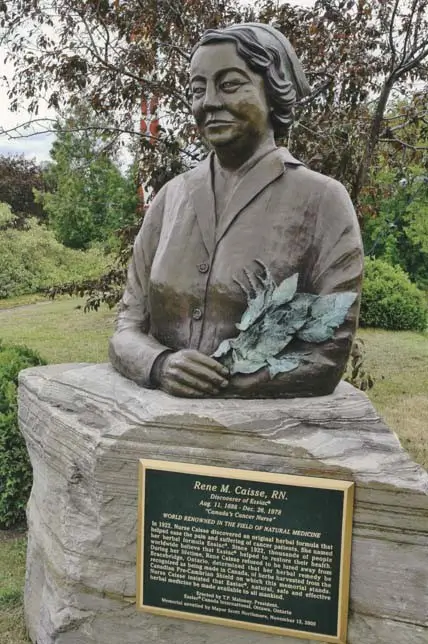
She was diagnosed with breast cancer 30 years before and she cured it naturally without surgery, and that should not be possible, not even today. The woman just did not have the money for it. She met an Indian medicine man who told her that in his tribe’s tradition they are able to cure the disease with some tea.
Па, жена није имала шта да изгуби. Зато је пробала чај и деловао је. Била је још увек жива 30 година касније када ју је прегледала медицинска сестра Кеси.
She also told the ingredients of the herbal remedy to the nurse. One year after that, nurse Caissie still didn’t do anything about the tea she had her about, but some local doctor in a walk told her that if the world uses some weed they just had walked by there, there will be no more breast cancer. It was one of the weeds in herbal remedy in that Indian medicine man tea.
The “weed” was sheep sorrel.
In 1924 she decided to test the tea on her aunt. Her aunt had nothing to lose because she had cancer of the stomach and conventional medicine at the time was given her about six months to live. She lived for another 21 years, cancer free. Rene Caisse (pronounced “Reen Case”) later gave the tea to her 72-year-old mother who was diagnosed with inoperable cancer of the liver, with only weeks to live. Her own mother healed and lived without cancer for another 18 years. After these events, Nurse Caisse decided to quit the hospital and began curing people with a mixture of herbs that would become known as Essiac which is her last name spelled backward.
Убрзо се глас проширио и број пацијената је почео да расте. Када је др Бестида из Брејсбриџа, Онтарио, послала Каси свог пацијента Берта Розина, она га је излечила, а др Бестида је отишла пред градско веће и градоначелника и убедила их да сестри Кеси дају зграду као клинику. Тако су основали клинику јер је Каси направила велико откриће и желели су да је њен родни град подржи.
She treated for eight and a half years there with patients flocking in from all directions. She treated around six hundred patients a week, and the only way she was allowed to do this was free of charge and she needed to have a doctor’s diagnosis for every case she treated. Now just imagine if we impose the same rules on the cancer industry of today.
However, it was one Dr. Leonardo from Buffalo who had immediately recognized the potential of this cancer cure that warned her of what is going to happen. He was a cancer surgeon, and he asked if he can go to the clinic and examine patients to see for himself. After he had seen for himself, he said to Cassie that she has it (the cure), but the medical profession will never be going to let her do this. After a while of his visit, a small group of mysterious “entrepreneurs” showed up offering Cassie a small sum of one million dollars for the secret formula. At that time one million was a big sum of money. The equivalent of 20 million today. Now we can think of this as a bribe to keep her quiet and go some place warm and nice to retire. What these people would not prepare to guarantee was that her cure would be made available for free or available at all to people that needed it. They just wanted the formula and her to go away. The only reason why we know about this today and you can read about it is because she refused. She was emotional and not pragmatic. She treated people for free in the clinic. Would you have refused such an offer? Who in her right mind would? How many other cures have been suppressed by this form of bribe that we do not know about, and we would never know?
In 1938 her case was called before the legislature to determent the Essiac legal status. She was trying to legalize her treatment. Her patients gathered 55,000 signatures for a petition. A bill was introduced in the Ontario legislature to (allegedly) “authorize Rene Caisse to practice medicine in the Province of Ontario in the treatment of cancer and conditions therein.” Bill failed to pass. Public anger forced the establishment of a Cancer commission to investigate her remedies, but it was all rejected. Rene Caisse treated her patients under the supervision of many doctors. Some of those doctors saw with their own eyes what this tea could do, and eight of them signed a petition to the Department of National Health and Welfare at Ottawa, asking that Nurse Caisse be given facilities to do independent research on her discovery. Initially, Rene was not acquainted with the control that the medical/pharmaceutical industry had over governments. After the petition was delivered, she was continually threatened with arrest until she finally withdrew from public view. She kept on her clinic as long as she could until they stopped the doctors from giving the diagnosis and then she was forced to stop. Patients were still coming and in some cases begging her to treat them, but she was not able to do so without a diagnosis because she would be thrown in jail for a long time. She had a nervous breakdown and closed the clinic.
Essiac was cheap. Essiac is non-toxic. Essiac cannot be patented.
Одбила је мито.
У нормалном свету, такво откриће би било дочекано отворених руку и спровела би се опсежна истраживања како би се видело који је начин сузбијања рака. У овом свету пуном корупције, овакве ствари се означавају као лажне и опасне, а у овом случају, масовни медији у власништву корпорација нису могли да демонизују медицинску сестру Кеси јер није наплаћивала новац за лечење. Зато су једноставно тихо уништили клинику и означили је као лажни лек за рак који људи треба да избегавају без икаквог истраживања. У то време, имала је дијагнозу од стране редовних лекара. Имала је патолошке налазе и хиљаде живих пацијената који су отпуштени из редовних болница и послати кући да умру. Ишли су код ње у последњим фазама рака и живели су након што је медицинска струка одустала од њих. А ипак су одбили да чак и признају било какве користи од чаја Есијак без иједног истраживања.
Америчко друштво за борбу против рака до данас наводи да:
“Reviews of medical records of people who have been treated with Essiac do not support claims that this product helps people with cancer live longer or that it relieves their symptoms” and the FDA described Essiac as a “Fake Cancer ‘Cure’ Consumers Should Avoid.”
Истраживање рака у Великој Британији такође напомиње да:
” There is no scientific evidence that Essiac can help to treat cancer or control its symptoms” and even warns that: “Essiac may interact with some types of cancer treatment, so it is very important to tell your doctor if you are thinking of taking Essiac.”
After she recovered from the breakdown, she started again from scratch brewing the herbal mixture in her own basement and curing a small number of patients. Soon government began harassing her again and having her arrested more than once. But the story broke out, and JFK’s personal physician, Dr. Charles Brusch who was also his close friend and who treated himself with Essiac when he battled cancer sent her an invitation to test Essiac scientifically. Caisse gave some samples of Essiac to Dr. Charles Brusch, who was also the founder of the Brusch Medical Center in Cambridge, Massachusetts, where tests were done. These first scientific tests showed that Essiac is not toxic and did have positive effects a cancer suppression. At that time Dr. Brusch recommended that Essiac should be tested for toxicity in order to be approved by the FDA as a possible cancer treatment.
Када је тај чај стигао у Центар за рак Слоун-Кетеринг, процес је некако заглавио. Лабораторија у Меморијалном центру за рак Слоун-Кетеринг тестирала је узорке Есијака (које је обезбедио Кејс) на мишевима током 1970-их. Ова студија никада није званично објављена. Постоје контроверзе у вези са резултатима. Било је необјашњивих кашњења, а још више кашњења и процеса никада није доведено до било каквог закључка. Центар за рак Слоун-Кетеринг је наводно један од најважнијих центара за истраживање рака у САД. Честер Сток, кодиректор Слоун-Кетеринга, када је дао интервју новинској агенцији, рекао је да резултати које је објавио показују да је постојао веома мали проценат у малој групи регресија, али никада нису имали прилику да то потврде и да виде да ли могу добити боље резултате.
Тако на крају, ФДА није одобрила Есијак. Кејс је одбио понуде истраживача са Меморијалног центра Слоун-Кетеринг и Националног института за рак САД за приступ рецепту. Стигло је толико далеко да су се сами пацијенти у неколико наврата организовали да туже владу и ФДА. Веровали су да по уставу могу да уносе у себе било коју супстанцу коју желе све док не представљају опасност за друге и да нико ФДА или било ко други не може да им каже шта могу или не могу да користе у свом телу, па су се разне групе пацијената организовале и тужиле ФДА због ускраћивања могућег излечења.
Судска саслушања нису довела до ничега, и да, уставна права су им била ускраћена.
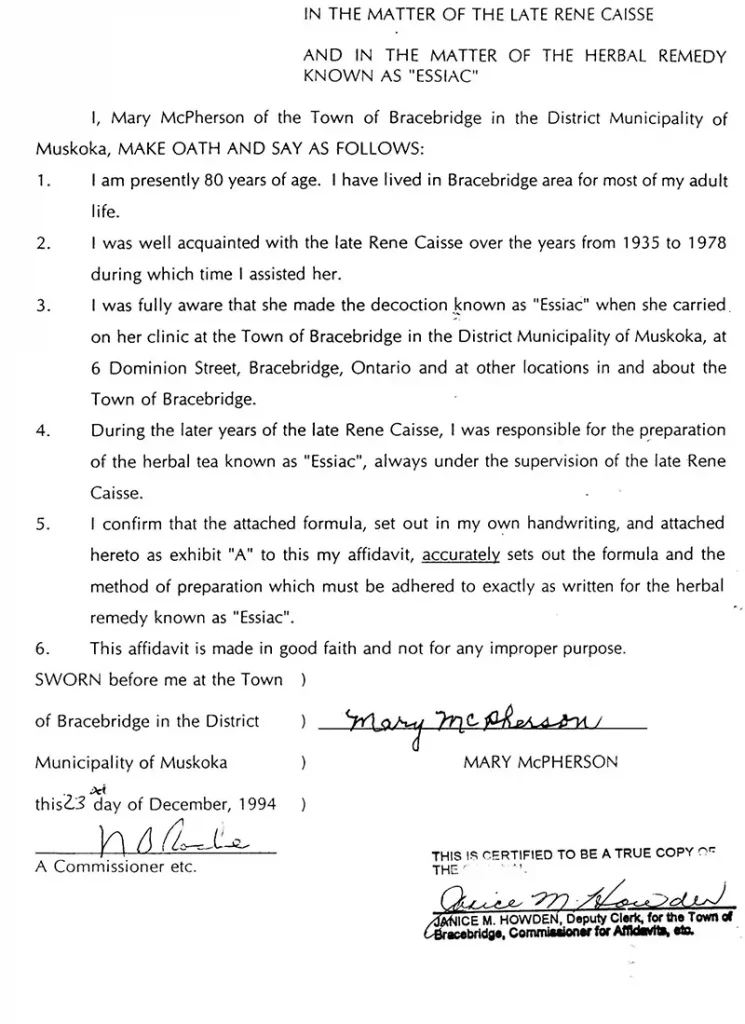
Dr. Frederick Banting, the co-discoverer of insulin became interested in Essiac and even offered Nurse Caisse research facilities to test it further, but by this time Rene had already lost her will to fight. The single woman Rene Caisse trusted to help her make Essiac tea was her best friend, Mary McPherson According to Dr. Gary Glum, Mary had promised Rene never to share the recipe with anyone. It was one Dr. Glum that in 1985 purchased the formula for $120,000 from one of Rene’s former patients. Dr. Glum could have kept the formula secret and become very wealthy selling bottles of Essiac. However, he unselfishly released the formula into the public domain in 1988. At first, he offered the formula on a videotape that he advertised in his book, but the feds unlawfully seized the tapes before he could sell very many of them. Dr. Glum gave out the Essiac formula and recipe free of charge to anyone who mailed him a request for the Essiac formula. When Dr. Glum met Mary McPherson in Bracebridge, Ontario, and told her what the Essiac formula was, she was more than a little surprised. According to Dr. Glum, Mary eventually revealed the formula in 1994 because it was no longer a secret, and she wanted to end the controversy over the Essiac formula before she died.
Therefore, on December 23, 1994, the “Essiac” formula & recipe was officially entered into the public domain with the recording of Mary McPherson’s affidavit.
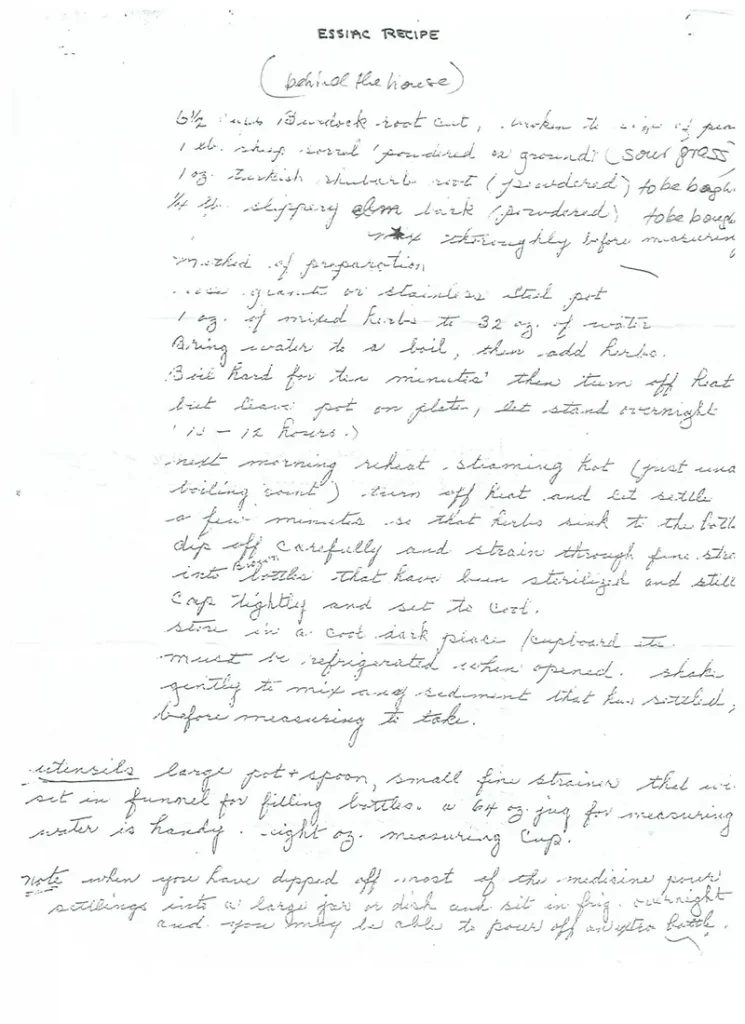
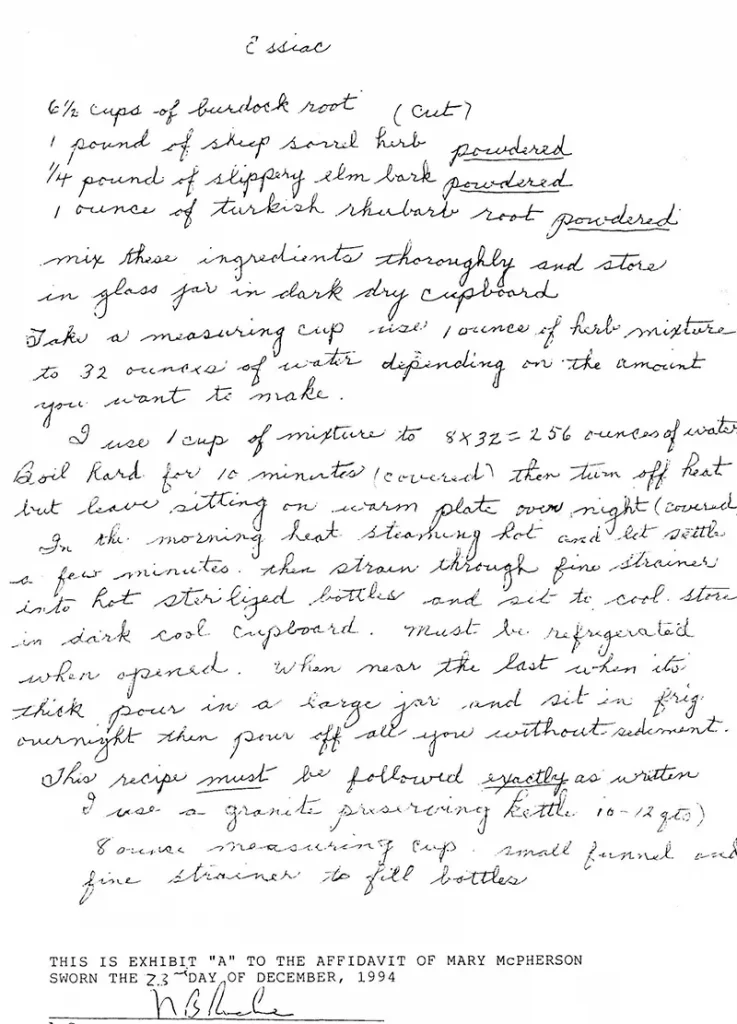
Есијак садржи мешавину различитих биљака, укључујући овчију киселку (Rumex acetosella), која се касније показала као најјача. Затим, унутрашњу кору клизавог бреста (Ulmus fulva), корен чичка (Arctium lappa) и турску рабарбару (Rheum palmatum).
Slippery elm is the only Essiac herb native to North America. Turkey rhubarb (Rheum palmatum) is native to China and Tibet, not northern Ontario, so it appears unlikely that it was a part of the original medicine man’s formula of indigenous herbs in the late 1800s. It appears that both burdock and sheep sorrel were brought to this continent from Europe by early settlers who then passed on their knowledge of these two herbs to the local tribes. Burdock and sheep sorrel eventually spread throughout North America where water was sufficient. Rene Caisse indicated that sheep sorrel was one of the original herbs, so it appears that sheep sorrel had migrated to “the wilds of Northern Ontario” before the 1890s. Burdock could have also established itself in Northern Ontario by then. René Caisse felt sheep sorrel was the most active cancer fighter among all the herbs present in her formula. Dr. Chester Stock shared that viewpoint at Sloan-Kettering. Dr. Stock conducted some studies on sheep sorrel benefits for over three years in the mid-seventies.
Запремина биља Тежина Форма Рецепт %
Корен чичка величине грашка, исечен 53%.
Овчија кисеља у праху са 36%.
Прашкаста кора клизавог бреста 9%.
Прашак од корена ћуреће рабарбаре 2%.
Године 2012, у Мађарској је спроведена једна студија. Резултати једне студије из Мађарске су објављени и показали су да је биљка овчија киселица, и бројни њени сродници киселици, показала значајну инхибиторну активност на раст ћелија (најмање 50% инхибиције ћелијске пролиферације) против једне или више канцерогених ћелијских линија.
Једна поена за траваре.
A survey carried out in the year 2000 found approximately 15% of Canadian women with breast cancer to be using Essiac. It has also become popular in people with immune diseases such as HIV and diabetes and as a regular herbal tea as well. Some preventative measures in health-oriented individuals. Research conducted since Caisse’s death provided some insight.
Биљке које се користе у прављењу Есијака поседују антиоксиданс и антиканцерогена својства, према истраживању спроведеном на Европском институту за онкологију. Резултати су објављени у мартовском издању часописа Journal of Ethnopharmacology из 2006. године. Истраживачи су открили да четири биљке у Есијаку показују природне моћи заштите од рака.
Коначно, брза претрага PubMed архиве може нам дати неколико студија попут (Отенвелер и др., 2004). Они су ин витро испитали ћелијску линију канцерогених ћелија и ћелије слезине које су изоловане од мишева како би испитали пролиферативне одговоре посредоване додатком Есијака. Открили су смањену пролиферацију и неканцерозних трансформисаних и канцерогених ћелијских линија простате када је Есијак био присутан у медијуму за култивацију, што значи да је чај зауставио деобу свих ћелија, али је проценат инхибиције ћелија рака био већи од процента инхибиције регуларних ћелија, што имплицира да Есијак може имати додатни селективни ефекат на ћелије рака. Поред тога, ефекти Есијака су мерени у тесту пролиферације имунских Т-лимфоцита. При ниским дозама Есијака, показано је повећање пролиферације ових Т ћелија, али при вишим дозама, Есијак је био инхибиторан за пролиферацију Т-ћелија. То значи да Есијак може бити у стању да инхибира раст ћелија тумора, а истовремено побољшава имуни одговор. Ово може бити посебно важно код особа са ослабљеним имунитетом. Као код ХИВ-а.
У овој студији (Сили и др., 2007). Есијак је показао значајно антиоксиданс активност, показао је значајне имуномодулаторне ефекте, посебно кроз стимулацију фагоцитозе гранулоцита и умерено инхибирање инфламаторних путева. Есијак је показао значајну ћелијски специфичну цитотоксичност према ћелијама карцинома епитела јајника (што значи да убија рак). Закључили су да је ова студија била прво свеобухватно истраживање ин витро ефеката Есијака и да ин витро анализа Есијака указује значајна антиоксидативна и имуномодулаторна својства, као и специфичну цитотоксичност неопластичних ћелија (ћелија која је део тумора) (специфичну за убијање само ћелија рака) што је у складу са историјским својствима која се приписују овом једињењу. Постоје и друге студије које нису пронашле ништа, па чак и једна студија која открива повећан ризик од рака дојке (Кулп и др., 2006).
Дакле, поново имамо супротстављене научне резултате. Сто година од појаве Есијака, још увек немамо јасну слику. У свету у коме се наводно годишње троше стотине милиона долара на истраживање рака (разлог зашто сви ови лекови против рака наводно толико коштају), некако је тешко спровести једноставан преглед и истраживање. Или било који други преглед „алтернативних“ лекова.
The FDA response is that the reason why they do not test these is that they do not want to give quacks credibility. And they are lying. They do not want to give the “alternatives” any chance to prove their efficacy because they are not there to protect you or heal you.
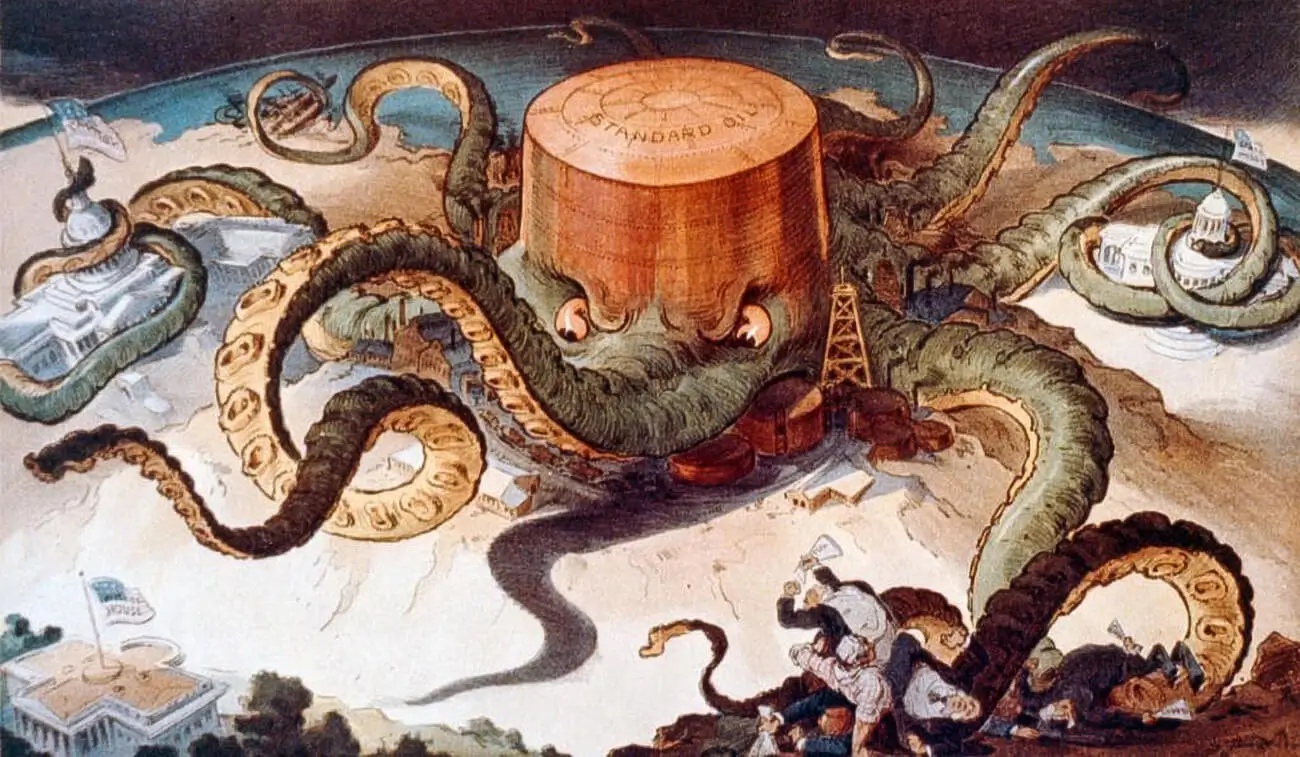
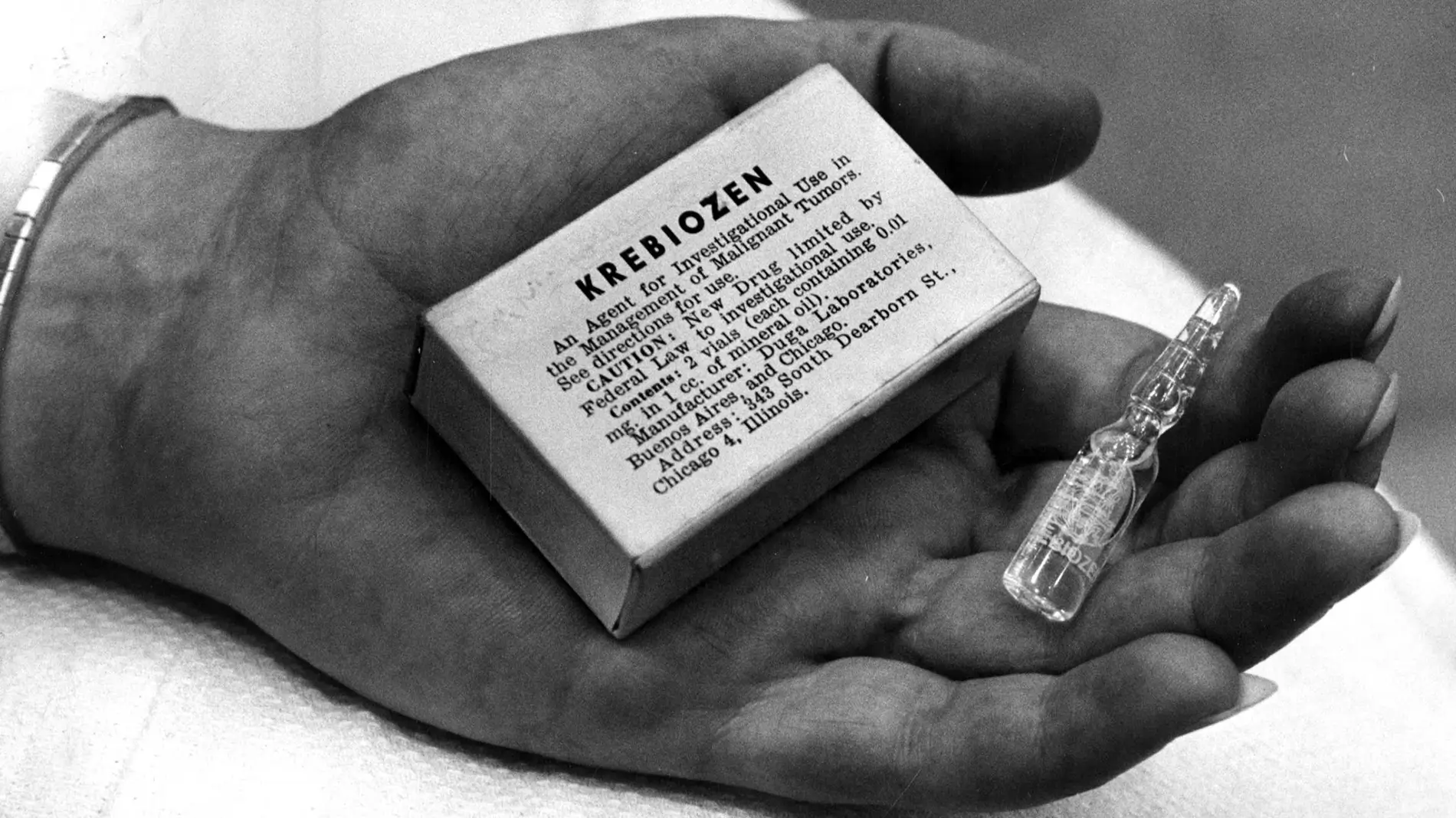
They are there to protect Rockefeller’s big pharma business. There are many cases to be cited concerning congressional investigations I just used Essiac as one example. If you want you can go and read 1963 hearings of Senator Paul Douglas of Illinois on Krebiozen.
Референце:
- Отенвелер, Ј., Пут, К., Блументал, ЕЈ, Давале, С. и Давале, СВ (2004). Инхибиција пролиферације ћелија рака простате помоћу Есијака. Часопис за алтернативну и комплементарну медицину (Њујорк, Њујорк), 10(4), 687–691. https://doi.org/10.1089/acm.2004.10.687
- Сили, Д., Кенеди, ДА, Мајерс, СП, Черас, ПА, Лин, Д., Ли, Р., Кетли, Т., Брент, ПА, Милс, Е., и Леонард, БЈ (2007). Ин витро анализа биљног једињења Есијак. Истраживање против рака, 27(6Б), 3875–3882. [PubMed]
- Кулп, КС, Монтгомери, ЈЛ, Нелсон, ДО, Катер, Б., Латам, ЕР, Шатак, ДЛ, Клоц, ДМ и Бенет, ЛМ (2006). Биљни тоници Есијак и Флор-Есенс стимулишу раст ћелија рака дојке код људи ин витро. Истраживање и лечење рака дојке, 98(3), 249–259. https://doi.org/10.1007/s10549-005-9156-x
Повезани постови



Имате ли питања о исхрани и здрављу?
Волео бих да чујем ваше мишљење и да на њих одговорим у следећем посту. Ценим ваш допринос и мишљење и радујем се што ћу вас ускоро чути. Такође вас позивам да нас пратите на Фејсбуку, Инстаграму и Пинтересту за више садржаја о исхрани, исхрани и здрављу. Тамо можете оставити коментар и повезати се са другим ентузијастима за здравље, поделити своје савете и искуства и добити подршку и охрабрење од нашег тима и заједнице.
Надам се да вам је овај пост био информативан и пријатан и да сте спремни да примените сазнања која сте стекли. Ако вам је овај пост био од помоћи подели га са пријатељима и породицом којима би такође могло бити од користи. Никад се не зна коме би могло бити потребно вођство и подршка на њиховом здравственом путу.
– Можда ће вам се свидети и –
Предности Спирулине: Суперхрана Богата Фикоцијанином

Узроци Дијабетеса и Рафинисани Угљени Хидрати - Вегански Аргумент
Прерађена Храна: Разумевање Ризика

Кинеска Студија - Вегански Аргумент
Користи Хлореле: Витамин Б12, Гвожђе, Цинк и Петоксикација Биљног Порекла
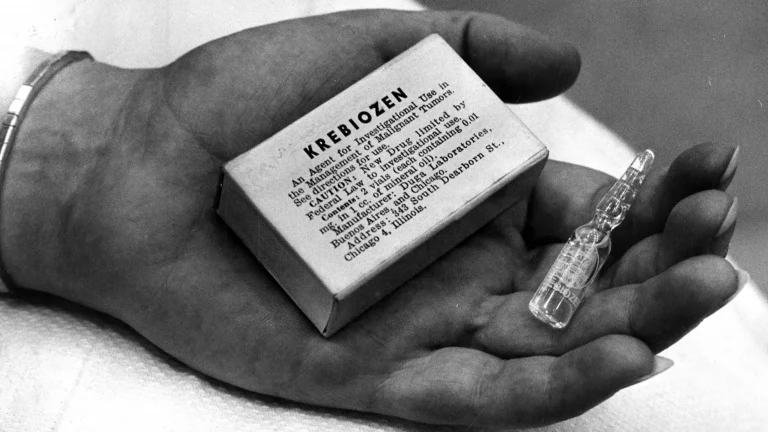
Рак, Забрањени Лекови - Кребиозен

Улога Антиоксиданата код Депресије и Анксиозности: Недостајући Део
Пестициди, ГМО и Преоптерећење Токсичним Материјама

Сазнајте више о исхрани

Милош Покимица је доктор природне медицине, клинички нутрициониста, писац о медицинском здрављу и исхрани и саветник за нутриционистичку науку. Аутор серије књига. Постаните Веган? Преглед Науке, он такође води веб страницу о природном здрављу GoVeganWay.com
Медицинска одрицање одговорности
GoVeganWay.com вам доноси прегледе најновијих истраживања везаних за исхрану и здравље. Информације које су дате представљају лично мишљење аутора и нису намењене нити се подразумевају као замена за професионални медицински савет, дијагнозу или лечење. Дате информације су само у информативне сврхе и нису намењене да служе као замена за консултације, дијагнозу и/или медицински третман квалификованог лекара или здравственог радника.НИКАДА НЕ ЗАНЕМАРУЈТЕ ПРОФЕСИОНАЛНИ МЕДИЦИНСКИ САВЕТИ ИЛИ НЕ ОДЛАЖИТЕ ТРАЖЕЊЕ МЕДИЦИНСКОГ ЛЕЧЕЊА ЗБОГ НЕЧЕГА ШТО СТЕ ПРОЧИТАЛИ НА ИЛИ ПРИСТУПИЛИ ПРЕКО GoVeganWay.com
НИКАДА НЕ ПРИМЕЊУЈТЕ ПРОМЕНЕ НАЧИНА ЖИВОТА ИЛИ БИЛО КАКВЕ ПРОМЕНЕ КАО ПОСЛЕДИЦУ НЕЧЕГА ШТО СТЕ ПРОЧИТАЛИ НА GoVeganWay.com ПРЕ НЕГО ШТО СЕ КОНСУЛТУЈЕТЕ СА ЛИЦЕНЦИРАНИМ ЛЕКАРЕМ.
У случају медицинске хитности, одмах позовите лекара или 911. GoVeganWay.com не препоручује нити подржава било које одређене групе, организације, тестове, лекаре, производе, процедуре, мишљења или друге информације које могу бити поменуте унутра.
Избор уредника –
Рак Избор уредника Фитохемикалије
Антиканцерогена Моћ Воћа и Поврћа: Ин Виво и Клинички Докази
Неки биљни екстракти могу се поредити са водећим лековима за хемотерапију, а истовремено циљају више различитих врста ћелија рака.
Антиоксиданси Избор уредника ORAC
Етерична Уља као Антиоксидативни Додаци: Правила и Стратегије
Етерична уља прехрамбене класе могу бити практична и потрошачима пријатна стратегија за оптимизацију антиоксидативне вредности и ORAC резултата наше исхране.
Антиоксиданси Избор уредника ORAC
Исхрана Богата Антиоксидансима: Општа Правила и Стратегије
Постоје једноставне и исплативе стратегије за оптимизацију антиоксидативне вредности наше исхране.
Антиоксиданси Избор уредника ORAC
Разумевање ORAC Вредности: Нивои Антиоксиданата у Храни
Када је ваш главни извор антиоксиданата кафа, знате да имате озбиљан проблем.

Антиоксиданси Избор уредника ORAC
Предности Астаксантина: Најмоћнијег Природног Антиоксиданса на Свету
Астаксантин је најмоћнији природни и универзални антиоксиданс (и уљани и водорастворљив) познат науци. Акумулира се у ткивима и никада се не може претворити у прооксиданс.
Антиоксиданси Избор уредника ORAC Фитохемикалије
Антиоксиданси: Разумевање Основа
У производима животињског порекла нема фитохемикалија нити антиоксиданата. У просеку, биљна храна садржи више од 60 пута више антиоксиданата него храна животињског порекла.
Избор уредника Веганска дијета
Недостаци Хранљивих Материја у Веганској Исхрани: Стратегије Превенције
Постоји девет уобичајених недостатака хранљивих материја на нивоу популације који погађају људе који једу биљну исхрану. Ако се не исправе на време, неки недостаци имају страшне и неизлечиве последице.
Избор уредника Оптимална дијета
Недостатак Нутријената у Стандардној Исхрани: Стратегије Оптимизације
Нутритивни профил наше модерне исхране засноване на месу, шећеру и прерађеној храни је потпуно неусклађен са нашом еволуцијом, што резултира озбиљним недостатком микронутријената.
Избор уредника Фитохемикалије
Фитохемикалије: Разумевање Основа
Свака фитохемикалија која постоји има биолошко дејство у људском телу. Свака од милиона различитих фитохемикалија.
Избор уредника Млеко Оптимална дијета
Млеко и Млечни Производи: Корелације Здравственог Ризика
Познате повезаности са конзумирањем млека и млечних производа су неплодност, рак јајника и дојке, леукемија, дијабетес типа 1, аутизам, артериосклероза, катаракта, реуматоидни артритис, мултипла склероза, хиперактивност, загушење, бубуљице и још много тога…
Рак Избор уредника Протеини
Комплетан Протеин: ИГФ-1 Сигнализација у Формирању Рака
Када једете животињске протеине, имате четири пута већу шансу да развијете све врсте рака. Када пушите, имате четири пута већу шансу да развијете рак плућа.

Рак Избор уредника Протеини
Анатомија Рака - Корелације Здравственог Ризика
Медицина сматра да је око 2% карцинома узроковано искључиво генетским факторима. Исти распон као и у животињском царству. Није вам речена цела истина.
Милош Покимица је писац о здрављу и исхрани и саветник за нутриционистичку науку. Аутор је серије књига. Постаните Веган? Преглед Науке, он такође води веб страницу о природном здрављу GoVeganWay.com
Најновији чланци –

Ограничење калорија Дуговечност
Како Постити: Храна за Пост Kоја Неће Прекинути Aутофагију
Аутофагија. Да ли сте се икада запитали шта се дешава са ћелијама у вашем телу када умру или се оштете? Да ли се само гомилају и стварају проблеме или се некако одлажу? Одговор је да ваше тело…

Здравље зуба Превенција
Осетљивост на Слаткише и Бол у Зубима: Брзо и Трајно Решење
Брзо и једноставно решење за ублажавање бола је етерично уље каранфилића, моћан антиоксиданс и средство против болова које може помоћи код болести десни и зубобоље.
Пасуљ
Зелени Пасуљ ( Боранија ): Нутритивне и Здравствене Користи
Зелени пасуљ ( Боранија ) има мало калорија и богат је једињењима која вам могу помоћи да контролишете шећер у крви, смањите холестерол и борите се против слободних радикала.
Исхрана са сировом храном Веганска дијета
Можете ли Јести Сирове Печурке: Здравствени Ризици, Исхрана и Безбедност
Печурке садрже токсине осетљиве на топлоту попут хидразина или агаритина и ћелијске зидове направљене од хитина које људи не могу добро сварити.

Веганска дијета
Да ли су Рибе Животиње? Културна Перспектива
У неким културама, рибље месо се не сматра месом, а риба је дозвољена чак и током поста.
Здравље зуба Превенција
Домаћа Природна Течност за Испирање Уста: Доказана, Јача и Мање Токсична
Домаћа природна течност за испирање уста је јача од хлорхексидина, мање токсична и ако се прогута може изазвати мучнину, али и висок нагли пораст ORAC вредности.
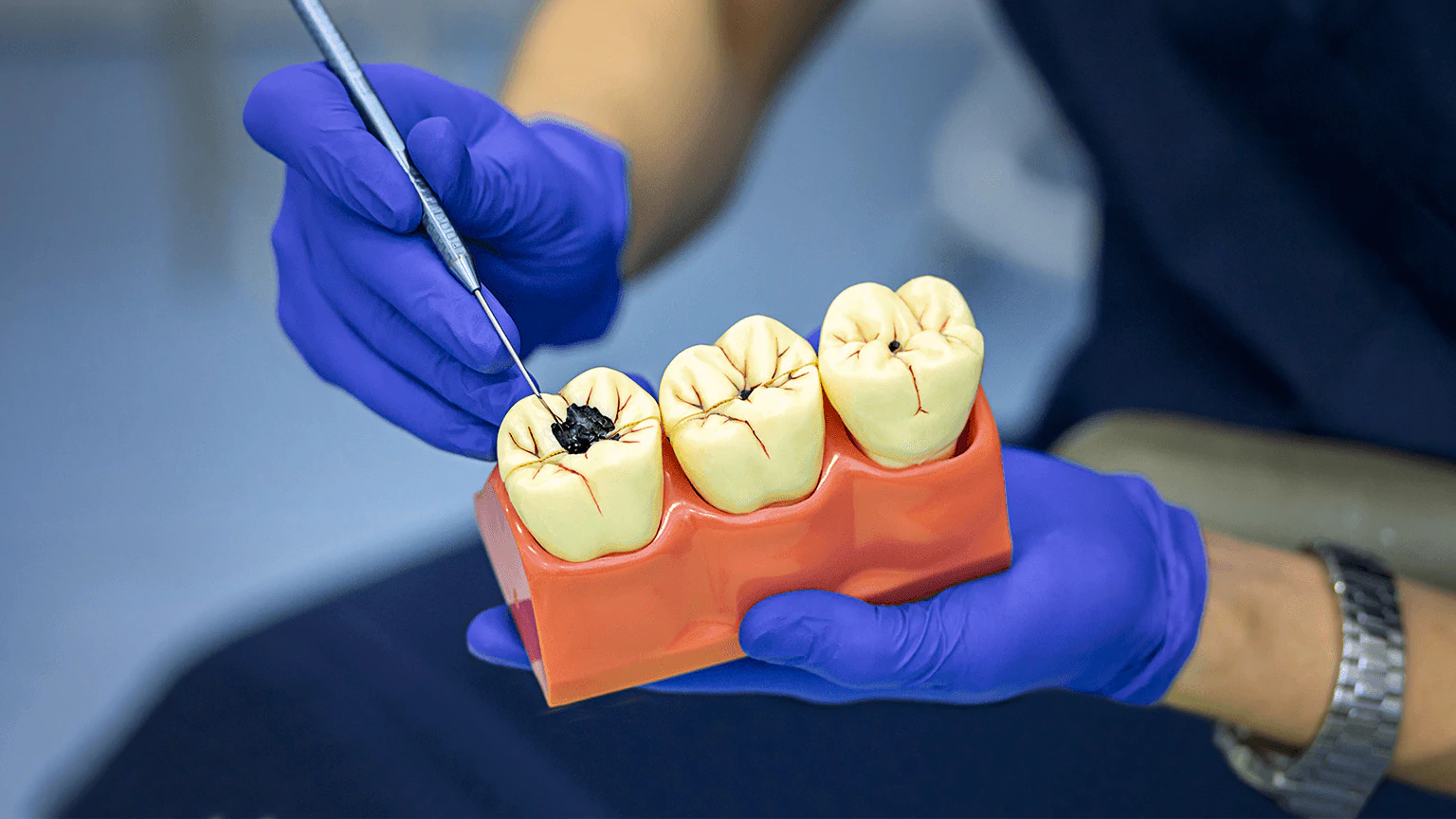
Здравље зуба Превенција
Како Зауставити Каријес: Симптоми, Узроци и Превенција
Конзумирање шећера је главни узрок каријеса и пропадања зуба, у комбинацији са недостатком минерала, посебно магнезијума, цинка, бакра и елемената у траговима.
Антиоксиданси Суперхрана
Амла: Доказане Користи, Исхрана и Клинички Значај
Амла (Индијски огрозд) је један од најмоћнијих антиоксиданата на свету са ORAC резултатом од 261.530. Богат је извор фитохемикалија које имају разне здравствене користи.
Најважније вести из здравља — ScienceDaily
- A single dose reversed autism-like symptoms in adult mice within hourson јул 25, 2026
Even mild inflammation during pregnancy led mouse offspring to develop persistent brain overactivity, sensory sensitivity, repetitive behaviors, and increased seizure risk. Remarkably, one dose of rapamycin improved nearly all of these problems within about two hours. The benefits were temporary, but they suggest that adult brain circuits may remain far more adaptable than previously believed.
- Superagers keep youthful memories but their DNA does not explain whyon јул 25, 2026
Scientists expected SuperAgers might simply inherit fewer Alzheimer’s-related risks, but their genes looked much like those of typical older adults. Their extraordinary memories may instead come from still-unknown protective forces involving the brain, body, lifestyle, and environment.
- Coffee may help shield the liver from fat, scarring, and canceron јул 25, 2026
A major long-term study linked coffee consumption with lower risks of cirrhosis, liver cancer, and death from liver disease. Coffee drinkers also showed healthier liver scans and blood protein patterns, with less fat, inflammation, and scarring. Benefits appeared even at one or two cups daily and were strongest around three to four cups.
- Oral GLP-1 drugs may quiet the brain’s food craving circuiton јул 25, 2026
Newer oral drugs related to semaglutide medications such as Ozempic reduced pleasure-driven eating in mice by quieting a deep brain reward circuit. The finding could open new avenues for understanding food cravings and potentially treating substance use disorder.
- A daily fiber supplement reduced knee arthritis pain and improved strengthon јул 25, 2026
A prebiotic fiber supplement reduced knee osteoarthritis pain while also improving grip strength and pain sensitivity in a six-week trial. The results hint at a fascinating gut-muscle-pain connection and suggest that a simple daily supplement may be easier to maintain than digital physiotherapy.
- AI helps Stanford scientists discover “natural Ozempic” without the usual side effectson јул 24, 2026
Stanford Medicine researchers have discovered a naturally occurring molecule that may suppress appetite and reduce body weight much like Ozempic, but without several of its common side effects. The molecule, called BRP, acts on a more targeted region of the brain involved in hunger and metabolism rather than affecting tissues throughout the body.
- Scientists discover a compound that could supercharge aging muscle repairon јул 24, 2026
A sulfur-based compound called LASSS appears to protect and supercharge a key protein involved in repairing damaged muscle. The discovery could eventually lead to new ways to slow muscle loss and preserve strength as people age.
PubMed, #веганска-исхрана –
- Long-Term Dietary Changes and Mortality among Participants of a Whole Food Plant-Based Pilot Study for Metastatic Breast Canceron јул 20, 2026
CONCLUSIONS: In this small, exploratory, long-term follow-up, research participants maintained selective dietary changes 5 y after completing an 8-wk intervention. Although mortality differences require cautious interpretation, these descriptive findings suggest that longer, adequately powered studies are warranted.This trial was registered at clinicaltrials.gov as NCT03045289 on 7 February 2017.
- Dietary patterns and mortality in clinical obesity: comparative risks of meat-based, pescatarian, and vegetarian dietson јул 17, 2026
CONCLUSIONS: Among individuals with clinical obesity, a pescatarian diet was associated with better survival outcomes, whereas vegetarian and vegan diets did not show similar benefits. This finding provides epidemiological evidence for future research and dietary counselling in populations with clinical obesity.
- Interpreting Lower HDL-C in Plant-Based Diets: Mechanisms and Clinical Implicationson јул 17, 2026
Plant-based dietary patterns are associated with improved cardiometabolic health, including lower levels of serum low-density lipoprotein cholesterol (LDL-C), blood pressure, adiposity, inflammation, and lower risk of cardiovascular disease (CVD). However, some studies report modestly reduced high-density lipoprotein cholesterol (HDL-C) concentrations in populations following plant-based diets (e.g., vegan or vegetarian), while other studies show null associations. This has created […]
- Sustained Type 2 Diabetes Remission and Metabolic Health Through Intensive Lifestyle Intervention: A Case Report With a Nine-Year Follow-Upon јул 16, 2026
A 61-year-old man with newly diagnosed type 2 diabetes (T2D), obesity by Asian-specific body mass index (BMI) criteria (28.8 kg/m²), dyslipidemia, and hypertension enrolled in a three-month intensive lifestyle intervention (ILI) at the Freedom from Diabetes Clinic, India. The ILI comprised a whole-food, plant-based, vegan diet, daily structured exercise (aerobic, resistance, and yoga), and stress reduction through meditation and journaling. At the four-month assessment following completion […]
- IMPACT OF PLANT-BASED DIETARY PATTERNS ON OBESITY-RELATED CANCERS: THE SEGUIMIENTO UNIVERSITY OF NAVARRA (SUN) PROSPECTIVE COHORTon јул 16, 2026
Evidence suggests that plant-based dietary patterns -favoring plant-based foods without being strictly vegetarian or vegan – may prevent obesity and offer health benefits. Since not all plant-based foods are equally healthy, it is essential to distinguish between healthful and unhealthful plant-based options. Objective: This study aimed to analyze the associations between different plant-based dietary patterns and the incidence of obesity-related cancers. We followed-up 16,256 participants […]
Случајне објаве –
Здравље зуба Превенција
Осетљивост на Слаткише и Бол у Зубима: Брзо и Трајно Решење
Брзо и једноставно решење за ублажавање бола је етерично уље каранфилића, моћан антиоксиданс и средство против болова које може помоћи код болести десни и зубобоље.
Веганска дијета
Да ли су Рибе Животиње? Културна Перспектива
У неким културама, рибље месо се не сматра месом, а риба је дозвољена чак и током поста.
Токсичност
Жива - Неуротоксин из Рибе
Жива је индустријски токсин и најнеуротоксичнија позната супстанца. Планктон ће је апсорбовати из морске воде и покренути биоакумулацију у ланцу исхране.
Детоксикација Вода за пиће Токсичност
Дестилована Вода за Пиће - Помоћ у Детоксикацији или Смртоносни Отров?
Постоји много погрешних информација о детоксикационим својствима воде, а посебно дестиловане воде. Пречишћавање воде је велики посао. Шта наука има да каже о томе?
Избор уредника Прехрамбена индустрија
Кока-Кола Компанија - Историјски Преглед
Ако желите да знате који је тајни састојак Кока-Кола сирупа, то су нацистичка Немачка, гватемалски одреди смрти, неуромаркетинг и дечји рад.
Детоксикација Токсичност
Детоксикација – научни преглед
Постоје програми дијета осмишљени да помогну у смањењу упале и укупне токсичности тела и повећању детоксикације, а који су поткрепљени науком.

Алопатска медицина Избор уредника
Прича о Великој Фарми - Иг Фарбен
Део Рокфелеровог монопола на хемијску и медицинску индустрију испуњен је након Другог светског рата. Сарадња Стандард Оила и ИГ Фарбена је ово учинила стварношћу.
Пасуљ
Зелени Пасуљ ( Боранија ): Нутритивне и Здравствене Користи
Зелени пасуљ ( Боранија ) има мало калорија и богат је једињењима која вам могу помоћи да контролишете шећер у крви, смањите холестерол и борите се против слободних радикала.

Избор уредника Оптимална дијета Витамин Д
Витамин Д и Здравље- Више од Кости
Витамин Д није витамин. То је прохормон, стероид са хормонским дејством који регулише око 3% људског генома.

Рак Избор уредника Токсичност
Пестициди у Храни, Изложеност у Стандардној Исхрани - 80% из Меса
Већину пестицида, а посебно тешких метала и других токсичних загађивача које добијамо, добијамо из меса. Више од 80 процената изложености пестицидима у стандардној америчкој исхрани долази од животињских производа, а не од воћа или поврћа.
Истакнути чланци –

Избор уредника Оптимална дијета Протеини
Високо Протеинска Дијета: Корелације Здравственог Ризика
Несташица је правило протеина у природи. У еволуционом смислу, антрополози су доказали да су хоминини живели у просеку са 15 до 25 грама протеина дневно. У савременом западном типу исхране богате протеинима, конзумирали бисмо то...
Избор уредника Фитохемикалије
Фитохемикалије: Разумевање Основа
Свака фитохемикалија која постоји има биолошко дејство у људском телу. Свака од милиона различитих фитохемикалија.

Избор уредника Гојазност
Поремећај Преједања - Психологија Глади
У природи нема рафинисаног шећера нити масти. Наш мозак никада није био изложен комбинацији та два одједном, што би нас довело до поремећаја преједања.
Избор уредника Гојазност
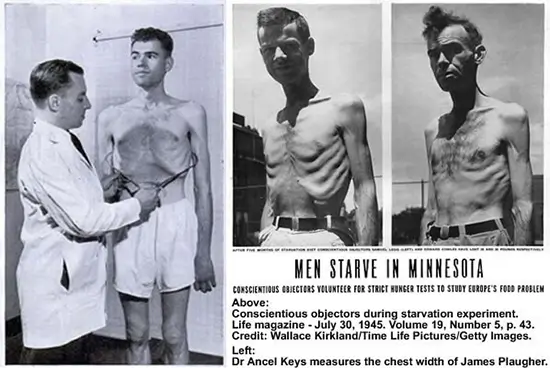
Експеримент Гладовања у Минесоти: Зашто нас Дијете Чине Дебљима. Психологија Глади
Једна од првих научних студија о томе шта глад ради уму примећена је у студији запамћеној као Експеримент гладовања у Минесоти, који је спровео Универзитет у Минесоти давне 1944. године.
Избор уредника Оптимална дијета
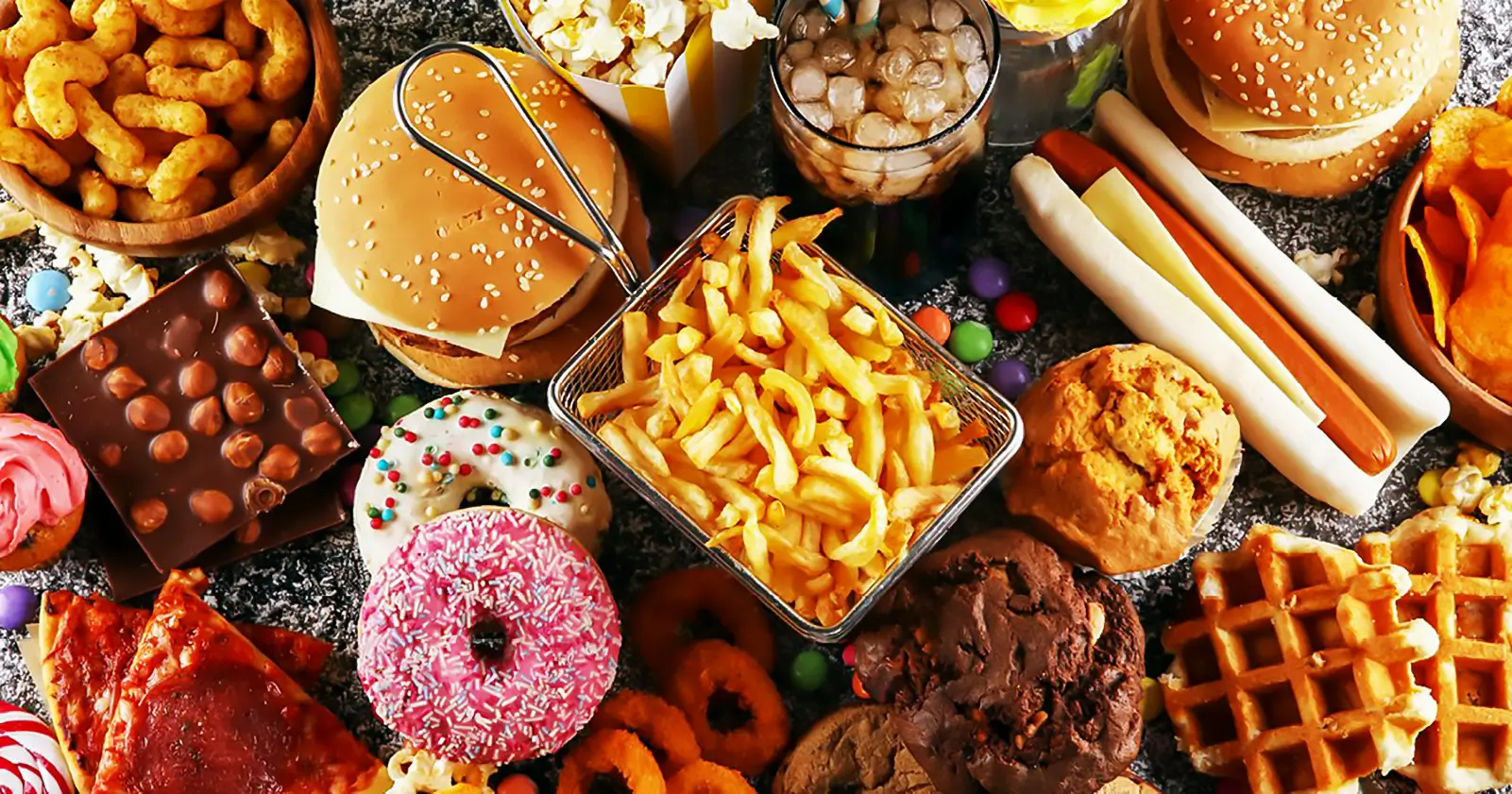
Прерађена Храна: Разумевање Ризика
Прерађена храна значи да се нешто из целе хране уклања, обично влакна, а нешто се додаје, обично масти, шећер, со и мононатријум глутамат.

Избор уредника Оптимална дијета Веганска дијета
Смернице СЗО за Исхрану - Нова Пирамида Исхране и Потискивање Науке
Смернице СЗО за исхрану препоручују исхрану са ниским садржајем засићених масти (животинских протеина), шећера и соли, а са високим садржајем воћа и поврћа као услов за сузбијање епидемијског пораста хроничних болести широм света.
Избор уредника Веганска дијета
Недостаци Хранљивих Материја у Веганској Исхрани: Стратегије Превенције
Постоји девет уобичајених недостатака хранљивих материја на нивоу популације који погађају људе који једу биљну исхрану. Ако се не исправе на време, неки недостаци имају страшне и неизлечиве последице.

Избор уредника Превенција Токсичност
Токсичност из Окружења- То је Само Ланац Исхране
Токсичност за животну средину је биоакумулација токсина. Организми су филтери. Али постоји још један, још гори процес који се зове биомагнификација у ланцу исхране.
Избор уредника Оптимална дијета
Недостатак Нутријената у Стандардној Исхрани: Стратегије Оптимизације
Нутритивни профил наше модерне исхране засноване на месу, шећеру и прерађеној храни је потпуно неусклађен са нашом еволуцијом, што резултира озбиљним недостатком микронутријената.
Избор уредника Млеко Оптимална дијета
Млеко и Млечни Производи: Корелације Здравственог Ризика
Познате повезаности са конзумирањем млека и млечних производа су неплодност, рак јајника и дојке, леукемија, дијабетес типа 1, аутизам, артериосклероза, катаракта, реуматоидни артритис, мултипла склероза, хиперактивност, загушење, бубуљице и још много тога…
Најновије са PubMed-а, #исхрана на бази биљака –
- How diet therapy affects obesity-associated depressive symptoms: from mechanism to therapeuticsby Ruiqing Wang on јул 25, 2026
Obesity stands as a formidable 21st-century public health crisis, with its capacity to aggravate depressive symptoms gaining increasing clinical attention. Traditional treatment models often treat these two conditions separately. However, recent research evidence suggests a complex network linking obesity and depressive symptoms across metabolism, behavior, and mental health, with dietary patterns proposed as a key upstream modulator of both metabolic and psychological pathways. The specific…
- Physiologically mediated responses in gilthead sea bream (Sparus aurata) fed sustainable diets: seasonal growth under warming conditionsby Paul George Holhorea on јул 24, 2026
CONCLUSION: Overall, these findings suggest that alternative and low-trophic feed ingredients following circular economy principles can sustain growth and tissue health even under atypically warm conditions, while also modulating stress physiology in ways that may enhance robustness in a rapidly warming Mediterranean. By identifying diet-specific physiological signatures, this study provides actionable insights for the design of aquafeeds better adapted to warming conditions, supporting the…
- Interpenetrating network emulsion gels prepared from polysaccharides and pea proteins: effect of polysaccharide charge on rheology, freeze-thaw stability, and dysphagia characteristicsby Yuehan Shan on јул 24, 2026
Interpenetrating network emulsion gels were fabricated from pea protein isolate (PPI) and polysaccharides with different charges: anionic Artemisia sphaerocephala Krasch gum (ASKG) or neutral curdlan (CURD). Microstructure, molecular interactions, rheology, texture, water holding capacity (WHC), cooking properties, and freeze-thaw stability were characterized. PPI-ASKG reduced oil droplet size compared to PPI-CURD. Polysaccharides modulated protein secondary structure, with hydrophobic…
- Perspectives on the Protein Recommendations in the 2025-2030 Dietary Guidelines for Americansby Stefan M Pasiakos on јул 24, 2026
The 2025-2030 Dietary Guidelines for Americans (DGA) introduced substantial controversy by diverging from long-standing practices and many scientific recommendations of the 2025 Dietary Guidelines Advisory Committee (DGAC). The final guidelines promote dietary protein intakes of 1.2-1.6 grams per kilogram of body weight per day (g/kg/d). These recommendations rely on a rapid systematic review of randomized controlled trials focused on weight-management outcomes and, to a lesser extent, a…
- Impacts of large herbivores on savanna plant communities: Predictive models of herbivore selectivity and plant responseby Joel O Abraham on јул 23, 2026
Large herbivores are among the most ecologically influential and extinction-prone animals. Megaherbivores, in particular, radically alter vegetation. Yet, few studies have tried to predict the impacts of herbivores-or their extinction-on plant species composition and community structure. First principles suggest that preferred food plants should be most strongly suppressed by herbivores and released by herbivore loss, but this intuition may be misleading if plant responses are strongly…
- A 10-month cluster-randomized trial to shift towards plant-forward meals in early childhood education and care centres: effects on bone and mineral metabolism in Finnish childrenby Suvi T Itkonen on јул 23, 2026
CONCLUSIONS: The clinical relevance of the results indicating accelerated bone turnover without observing any effects on the intakes of critical nutrients requires further investigations to avoid potential harmful consequences for long-term bone health with the shift to plant-forward diets.