







Cancer, The Forbidden Cures-Rife machine, Historical review
The recovery rate for patients that have non-treatable cancer and were declared terminally ill by utilizing Rife Machine resonant technology was 100%.
Milos Pokimica
Written By: Milos Pokimica
Medically Reviewed by: Dr. Xiùying Wáng, M.D.
Updated December 22, 2025Royal Raymond Rife developed technology that is still commonly used today in the fields of optics, microscopy, electronics, radiochemistry, biochemistry, ballistics, and aviation and particularly in imaging and medical microscopy. Royal Raymond Rife also developed technology (Rife Machine) that was surprised that you probably don’t know about. In life, he was awarded 14 different rewards. Rife attended Heidelberg University in Germany. He received an honorary Doctor of Parasitology degree there. Rife also received an honorary Doctor of Science degree from the University of Southern California in 1936.
Rifle’s inventions include the heterodyning ultraviolet microscope, a micro dissector, and a micromanipulator.
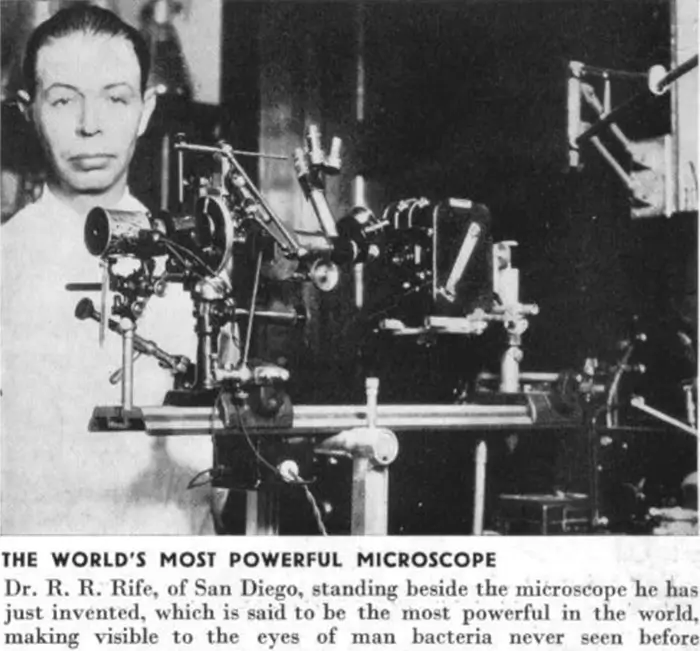
He was not just some quack like most of the “educated” people in the field of medicine will like you to believe. His original business while still attending the university was with the firm of Carl Zeiss, at their New York City offices, and later at their offices in Germany where he worked directly with Carl Zeiss, Hans Luckel, and other scientists in the research, design, and production of excellent microscopes. He spent five years working with that group while he was attending the University of Heidelberg. It is stated that Rife worked with the United States Navy before and during World War One and that he was commissioned as a Lt. Commander USNR. During the years just before the great depression, Dr. Rife worked for both the United States Government and the Carl Zeiss Optics firm. At one period, his monetary base dissolved and he took a job as a chauffeur for multimillionaire Henry Timkin. Dr. Rife’s association with Henry Timkin served well for both of them. Timkin fabricated roller bearings. Some of the bearings were crumbling down due to imperfections in the steel used to create the bearings. Rife designed and built an X-ray device that monitored every bearing getting out and discarded every faulty one before it could be sent out as a finished product. He saved the company millions. Timkin was so satisfied that he established a monthly lifetime payment to Rife for providing the specialized X-ray machine for his production environment.
Henry Timkin and his partner, Bridges remained so fascinated with Dr. Rife and his work that they set up a fund to finance a wholly equipped laboratory at Point Loma, California, and to carry the expenses of a research program in the laboratory that was created. In the laboratory mentioned above, he performed most of his experiments. At one point, Rife had as many as twelve laboratory assistants working for him. In 1916 most powerful microscopes could reach a magnification of 2500 diameters. With this instrument, a scientist could see parasites, mold, and many bacteria, but no one had seen a virus.
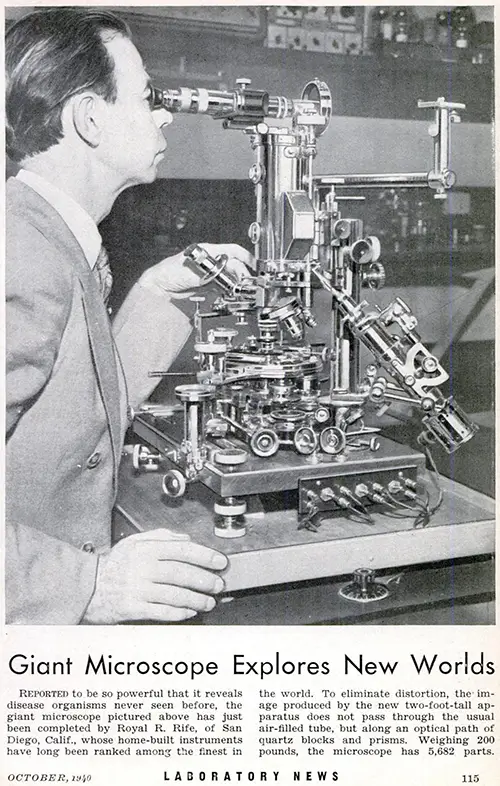
Rife built a magnifying instrument that worked on a different principle than the existing microscopes of his day. The first microscope that enabled him to see a virus was built in 1920. Rife was the creator of the Universal Microscope which he introduced to the world in 1933 as the world’s most powerful microscope. One of the various attractive characteristics of this microscope is that, in contrast to the Electron Microscope, the Universal Microscope does not kill the specimens under observation and allows observation of actual living specimens in all conditions, indicating it does not rely on fixing or staining to render visibility or definition. With his microscope, Rife became the first human being actually to see a live virus, and until quite recently, the Universal Microscope was the only one who was able to observe living viruses. Modern electron microscopes instantly kill everything. The rife microscope can see the bustling activity of living viruses as they change form to accommodate changes in an environment, replicate rapidly in response to carcinogens, and transform normal cells into tumor cells. Rife managed this by utilizing various forms of lighting to bring the virus within visibility. He first used the technique of using light to stain the subjects because he understood that the particles of the chemical stains were much too large to enter into the structures he attempted to visualize.
Furthermore, stains used in microscopy are often lethal to the specimens. One factor allowing these original images was Rife’s use of a tool called a Risley counter-rotating prism. The refracted and polarized ray will normally hidden organism that is invisible and would become visible in color peculiar to their structure or chemical make-up. All optical elements were made of block quartz, which permits the passage of ultraviolet rays. By this means Rife found out that different bacteria and viruses glow at different frequencies. This proved that organisms could be classified by their index of refraction or in other words their resonance frequency. In other words, he found out that they vibrate under different frequencies. Rife slowly classified the unique spectroscopic signature of each microbe, using a slit spectroscope attachment. Then, he gradually twisted prisms to focus light of an individual wavelength upon the microorganism he was examining. Then it resonated with the spectroscopic signature frequency of the microbe based on the now-established fact that every molecule oscillates at its distinct frequency.
Utilizing a resonant wavelength micro-organisms that cannot be seen in white light suddenly become visible as a flash of light when they are exposed to the color frequency that resonates with their distinct spectroscopic signature. Rife was capable of seeing those otherwise invisible organisms and watch them how they behave. He could view organisms that no one else could see with ordinary microscopes.
Rife was so far ahead of his co-workers in the 1930s that it was hard for them to understand what he was actually doing without traveling directly to San Diego to Rife’s laboratory to look for themselves through his Virus Microscope. And several did precisely that. One was Virginia Livingston. She ultimately went from New Jersey to Rife’s Point Loma (San Diego) neighborhood to live and became a regular visitor to his lab. Virginia Livingston is now given credit for identifying the organism which causes human cancer, based on research papers she published in 1948. The real truth is that Rife had identified the human cancer virus in 1920. He called the cancer virus ‘Cryptocides primordiales.’ Virginia Livingston renamed it to ‘Progenitor Cryptocides.’ Royal Rife was never even stated in her papers.
In fact, Rife rarely got credit for his monumental discoveries. He was a modest, humble scientist, committed to expanding his discoveries rather than to ambition, fame, and glory. He started research work on tuberculosis in 1920. In a short time, it became clear to Rife there was more involved in this disease than a bacterium. This encouraged him to develop “virus” microscopes, of which two preceded the Universal. Rife was the first scientist to isolate and photographed active tuberculosis as well as many other viruses. Rife also worked in isolating a virus specific to cancer, seeing it gave off a unique purple-red emanation. There was no success until Rife by mistake left a tube in the light of an ionizing lamp. He noticed the tube became clouded, registering activity.
Their work leads to the first successful culturing of the virus outside a living host. Rife extracted the cancer virus from a ” human breast mass.” He filtered, cultured, and re-cultured these over ten times over a two hundred and forty-hour period. They inserted the last-generation culture into the live rat. The rat would inevitably develop cancer. Rife would then extract cancer, extract the virus, and repeat the process. He did this procedure over four hundred times.
He established categorically that the virus-induced cancerous tumors in every instance. After Dr. Rife know how to see a virus, the next logical step became to devise a method to kill the virus or microbe without damage to the host. Since the days of Nikola Tesla and his work, men of science had known of the connection of frequencies with the operation of the human body, so Rife turned to electromagnetic frequencies because he could detect bacteria and viruses to unique frequencies and then expose them and watch the effects. He found that each microorganism had a distinct frequency to which it resonates and was defenseless. Rife termed this the “mortal oscillatory rate.”
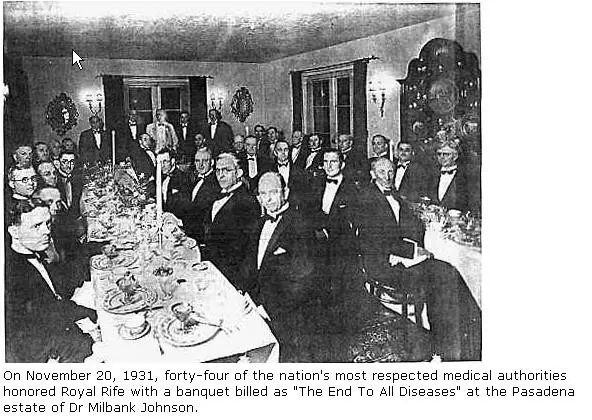
Over and over again he would observe the virus absorbing energy and dying when a certain frequency was applied. Sometimes they even exploded. He created charts revealing which frequency settings would kill which microbe or virus. If he did not invent his microscope, there would have been no treatment based on resonance. Numerous reports and news stories emerged concerning these extraordinary achievements. His work became known to many physicians in the Southern California area. Some of them even came from all over the United States to observe what he was doing and verify his results. In November 1931, Dr. Milbank Johnson called forty-four Los Angeles area doctors to his home in Pasadena, California to acknowledge Rife for the work he was performing. Dr. Royal Rife was acknowledged as the man who ended all diseases that ever existed. Well, at least the ones that are infectious and can be bombarded with resonance. The banquet was even called “The End of All Disease.”
In 1934, a group of physicians led by Dr. Milbank Johnson of Pasadena, California, in an experiment that was sponsored by the University of California brought sixteen terminally ill patients from a hospital in San Diego. They were radiated with the frequencies recommended by Dr. Royal Rife for ninety days to activate resonance and destroy cancer.
It was the first time in history that terminally ill cancer patients were healed completely.
Read this sentence again.
It was the first time in history that terminally ill cancer patients were healed completely.
Fourteen of the patients became completely free of any cancer at that time. The therapy was then adjusted, meaning the resonant frequency and the remaining two patients also responded.
The recovery rate for patients that have non-treatable cancer and were declared terminally ill by the accepted medical industry by utilizing Rife’s resonant technology was 100%.
Read this sentence again.
The recovery rate for patients that have non-treatable cancer and were declared terminally ill by the accepted medical industry by utilizing Rife’s resonant technology was 100%.
Through 1939 Dr. Rife was formally summoned to address the Royal Society of Medicine in London, England, which had verified his findings. He further received invitations to lecture in France and Germany. Dr. R. Seidel described and formally published the Rife Ray Tube system therapy for the treatment of cancer in the journal of the Franklin Institute in February 1944. Dr. Rife’s treatments of the virus and bacterial infections and his microscopes were described and praised by the Smithsonian Institute in an article published in the Institute publication during 1944. A report from the Smithsonian Institution confirms Rife’s work. Titled “The New Microscope” by Dr. R.E. Seidel (report #3781) it states:
“Under the Universal Microscope disease organisms such as those of cancer … and another disease may be observed to succumb when exposed to certain lethal frequencies…”
It took a Rife long time, years of his life, working 48 hours at a time until he detected the frequencies which explicitly destroyed herpes, polio, spinal meningitis, tetanus, influenza, and an immense number of other dangerous diseases organisms.
At first, an attempt was made to buy out Rife. Morris Fishbein, a physician who became the editor of the Journal of the American Medical Association, sent an attorney to Rife with “an offer he can’t refuse.”
Rife refused.
We will never know the exact terms of this offer but it is highly likely they did not want his machine to become commercially available. They probably tried to bribe him to destroy his invention. For example, when Fishbein made a similar offer to Hoxsey, he declined. Fishbein used his immensely strong governmental associations to have Hoxsey arrested 125 times in 16 months. The charges were always thrown out of court, but the harassment continued. It became so bad that AMA posted flyers in every post office in the entire country for scaring people of using Hoxsey and any other alternative cancer treatments. However, what we need to understand is that he did not act alone. He was just an AMA frontman at the time. Later in 1961, he became the founding Editor of Medical World News, a magazine for doctors. In 1970 he endowed the Morris Fishbein Center for the study of the history of science and medicine at the University of Chicago.
However, Fishbein and the AMA must have recognized that this approach would backfire if used on Rife. They could not arrest Rife as they could Hoxsey for practicing medicine without the license. Also, the trial that was compiled on trumped-up charges would mean that prominent medical authorities working with Rife would introduce their testimony supporting Rife and the word of his invention would come out to the general public. The defense would surely introduce evidence such as the 1934 medical study done with USC. If they have a public trial about a painless therapy that cured 100% of terminal cancer patients with medical proof and also cost nothing to use but a little electricity. Well, that was not what the powers at be wanted. Rife didn’t just show himself from nowhere. He was a well-known scientist that had spent decades collecting precise evidence of his work. He had film and stop-motion photographs that could be released to the public and so on.
They had to use different tactics and they were utilized.
The first incident was the gradual disappearance of film, photographs, components, written records, and other evidence from Rife’s lab. The culprit was never caught.
Then, while Rife tried to replicate his missing data (when computers were not available), someone vandalized his expensive virus microscopes.
Then the entire laboratory “mysteriously” burned at the time when the men running the laboratory were visiting Rife in San Diego.
Then the papers in Rife’s laboratory in San Diego “mysteriously” disappeared, as did parts of his microscopes.
The final blow happened later when police illegally seized the rest of Rife’s 50 years of research.
Then the physician who helped the most Dr. Royal Rife to receive recognition for his work was Dr. Milbank Johnson. One day he was taken to the hospital for what was thought to be a minor problem by attending physicians in 1944 but he “mysteriously” died there of food poisoning.
Rife and partners had set up a company called the Ray Beam Tube Corporation to build the Rife Machine. He had given employment and a contract to an engineer to handle production. Fishbein supposedly supported the engineer to bring suit against Rife. The suit was long and expensive. Rife won, but the cost of the suit caused the financial destruction of the company and in time of the great depression end of production. A huge pile of cash was spent to ensure that doctors who had seen Rife’s therapy and knew about his work would forget everything or else were threatened by the American Medical Association and the State of California with the loss of their licenses if they continued on the program. Arthur Kendall, who worked with Rife on the cancer virus, accepted almost a quarter of a million dollars to suddenly ‘retire’ in Mexico. Dr. George Dock, who collaborated with Rife, was silenced with an enormous grant, along with the highest honors the AMA could bestow. Dr. Couche and Dr. Milbank Johnson also gave up Rife’s work and went back to prescribing drugs.
This treatment emotionally destroyed Rife himself and his entire program dissolved. The loss of his lab and the mental and emotional results of the lawsuit was enough to make Rife become an alcoholic. During 1950 Rife worked to improve energy instruments with John Crane. John Crane ended up with the right to the microscopes. In 1960 Medical officials invaded Crane’s lab and confiscated all of the devices and records. That was not enough, so he was also charged by the State of California for committing fraud and sent to prison.
Rife is said to have escaped to Mexico at this time. He did not work with anyone after that last incident. Rife died in 1971, at Grossman Hospital in El Cajon, California of a heart attack after spending the last years of his life in an El Cajon nursing home. He was without friends or funds. He discovered an incredibly simple, electronic approach to curing all diseases. He made the low-cost discovery that could end the suffering of countless millions. It would have changed life on Earth forever. Surely, the medical world would rush to embrace it with every imaginable accolade and financial reward imaginable. You have contracted a universal cure that makes drugs obsolete, and the only cost of using it is electricity so the pharmaceutical industry might be thrilled to hear about your work. Of course, some of you may regard this as just an amusing piece of fiction. Do your own research and believe whatever you want. In reality, this technology could have great potential if properly developed. The only question here is could you target all of the viruses or just some of them? We know he cured cancer in the 100 percent range. However, if the resonance of microbes is too close to the rest of the human cells radiation would transfer some of the energy to them burning regular tissue, but if the frequency is distinctive, then this might work. Today, for example, there are thousands of people who have a Lyme Disease diagnosis, but antibiotic treatment is not producing long-term relief. Rife machine therapy is turning out to be valuable and the only available long-term therapy in existence for Lyme Disease. But we would never really know. There is no data that is original that is left from Rife work. No science after him has ever been done.
The magnitude of this insane crime eclipses every mass murder in history.
References:
Passages selected from a book: Pokimica, Milos. Go Vegan? Review of Science Part 2. Kindle ed., Amazon, 2018.
Related Posts

Do you have any questions about nutrition and health?
I would love to hear from you and answer them in my next post. I appreciate your input and opinion and I look forward to hearing from you soon. I also invite you to follow us on Facebook, Instagram, and Pinterest for more diet, nutrition, and health content. You can leave a comment there and connect with other health enthusiasts, share your tips and experiences, and get support and encouragement from our team and community.
I hope that this post was informative and enjoyable for you and that you are prepared to apply the insights you learned. If you found this post helpful, please share it with your friends and family who might also benefit from it. You never know who might need some guidance and support on their health journey.
– You Might Also Like –

Binge eating disorder- The psychology of hunger

Arsenic exposure and rice consumption- The most toxic grain of them all
Distilled Water for Drinking- Detoxification Aid or a Deadly Poison?
Pesticides, GMO’s, and toxic overload.

EMF radiation (electromagnetic radiation) exposure- Does 5G pose health risks?
Protein Requirements- Inconvenient truth
Acrylamide exposure- Chips, fries, and cancer

Amyotrophic Lateral Sclerosis- Cyanobacteria algal blooms and dietary BMAA exposure

Learn About Nutrition

Milos Pokimica is a doctor of natural medicine, clinical nutritionist, medical health and nutrition writer, and nutritional science advisor. Author of the book series Go Vegan? Review of Science, he also operates the natural health website GoVeganWay.com
Medical Disclaimer
GoVeganWay.com brings you reviews of the latest nutrition and health-related research. The information provided represents the personal opinion of the author and is not intended nor implied to be a substitute for professional medical advice, diagnosis, or treatment. The information provided is for informational purposes only and is not intended to serve as a substitute for the consultation, diagnosis, and/or medical treatment of a qualified physician or healthcare provider.NEVER DISREGARD PROFESSIONAL MEDICAL ADVICE OR DELAY SEEKING MEDICAL TREATMENT BECAUSE OF SOMETHING YOU HAVE READ ON OR ACCESSED THROUGH GoVeganWay.com
NEVER APPLY ANY LIFESTYLE CHANGES OR ANY CHANGES AT ALL AS A CONSEQUENCE OF SOMETHING YOU HAVE READ IN GoVeganWay.com BEFORE CONSULTING LICENCED MEDICAL PRACTITIONER.
In the event of a medical emergency, call a doctor or 911 immediately. GoVeganWay.com does not recommend or endorse any specific groups, organizations, tests, physicians, products, procedures, opinions, or other information that may be mentioned inside.
Editor Picks –
Cancer Editor Picks Phytochemicals
Anticancer Power of Fruits and Vegetables: In Vivo and Clinical Evidence
Some vegetable extracts rival leading chemotherapy drugs and at the same time target multiple different types of cancer cells.

Antioxidants Editor Picks ORAC
Essential Oils as Antioxidant Supplements: Rules and Strategies
Food-grade essential oils can be a convenient and consumer-friendly strategy for optimizing the antioxidant value and ORAC scores of our diet.

Antioxidants Editor Picks ORAC
Antioxidant-Rich Diet: General Rules and Strategies
There are easy and cost-effective strategies for optimizing the antioxidant value of our diet.
Antioxidants Editor Picks ORAC
Understanding ORAC Values: Antioxidant Levels in Foods
When your main source of antioxidants is coffee, you know that you have a serious problem.

Antioxidants Editor Picks ORAC
Astaxanthin Benefits: World’s Most Powerful Natural Antioxidant
Astaxanthin is the most powerful natural and universal antioxidant (both oil and water-soluble) known to science. It accumulates in tissues and It can never turn itself into a pro-oxidant.

Antioxidants Editor Picks ORAC Phytochemicals
Antioxidants: Understanding the Basics
There are no phytochemicals or antioxidants in animal products. On average, plant foods contain more than 60 times as many antioxidants as animal-based foods.
Editor Picks Vegan Diet
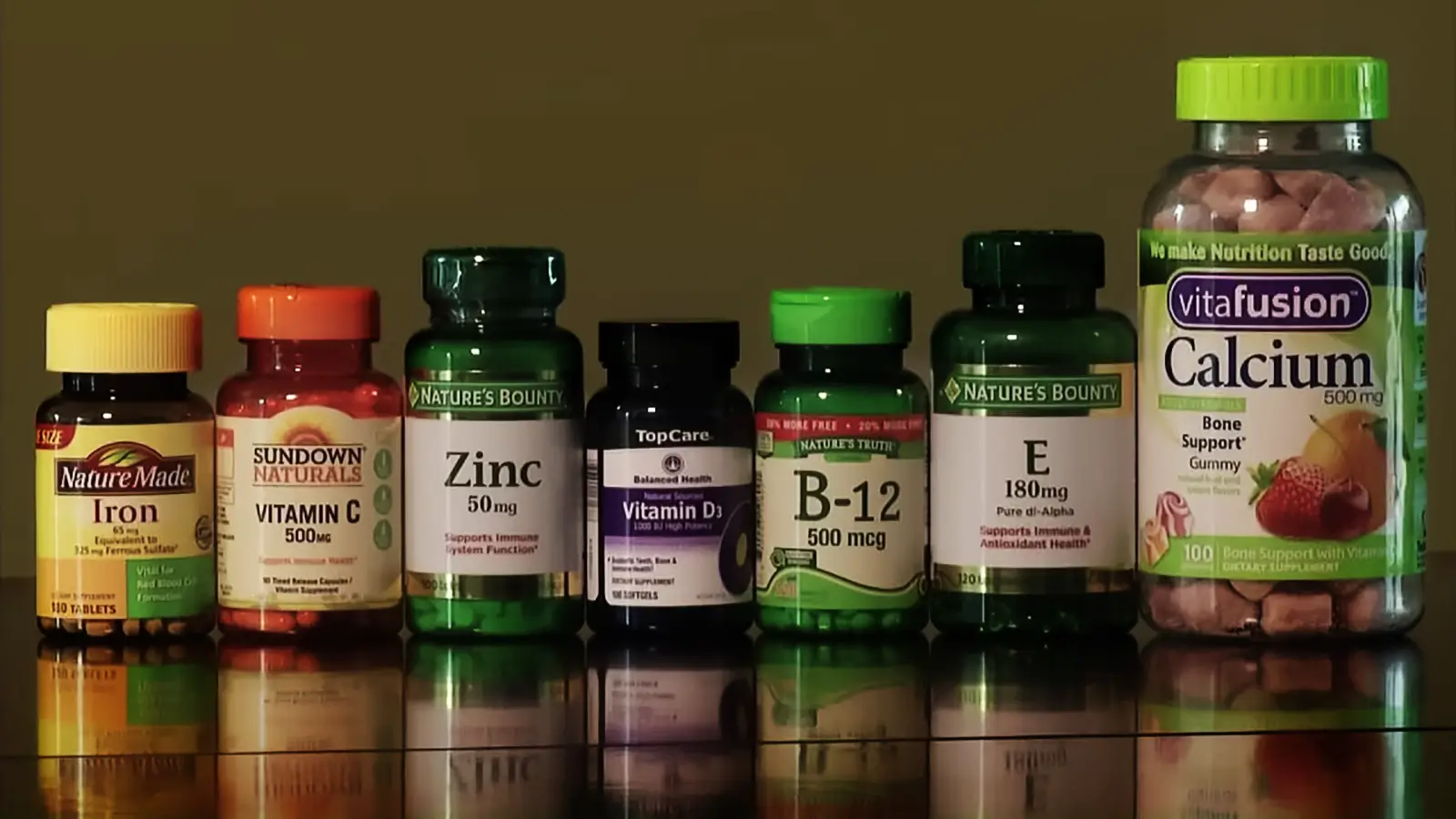
Nutrient Deficiencies in Vegan Diet: Prevention Strategies
There are nine common nutrient deficiencies on the population scale affecting people eating a plant-based diet. If not corrected on time some deficiencies have terrible and non-treatable consequences.

Editor Picks Optimal Diet
Micronutrient Deficiency in Standard American Diet: Optimization Strategies
Nutrition profile of our modern meat, sugar, processed food diet is completely incongruent with our evolution resulting in severe micronutrient deficiency.

Editor Picks Phytochemicals
Phytochemicals: Understanding the Basics
Every single phytochemical that exists has a biological action in the human body. Every single one from millions of different phytochemicals.
Editor Picks Milk Optimal Diet
Milk and Dairy: Health Risk Correlations
Known associations with milk and dairy consumption are infertility, ovarian and breast cancer, leukemia, diabetes type 1, autism, arteriosclerosis, cataract, rheumatoid arthritis, multiple sclerosis, hyperactivity, congestion, pimples, and more…
Cancer Editor Picks Protein
Complete Protein: IGF-1 Signaling in Cancer Formation
When you eat animal protein you have four times the chance to develop all types of cancer. When you smoke you have a four-time chance to develop lung cancer.
Cancer Editor Picks Protein
The Anatomy of Cancer- Health risk correlations
About 2% of cancers are by medicine considered to be purely caused by genetic factors. The same range as within the animal kingdom. You haven’t been told the whole truth.
Milos Pokimica is a health and nutrition writer and nutritional science advisor. Author of the book series Go Vegan? Review of Science, he also operates the natural health website GoVeganWay.com
Latest Articles –

Calorie Restriction Longevity
How to Fast: Fasting Foods That Won’t Break Autophagy
Autophagy. Have you ever wondered what happens to the cells in your body when they die or get damaged? Do they just pile up and create problems, or do they get disposed of somehow? The answer is that your body…
Dental Health Prevention
Sweets Teeth Sensitivity & Pain: Quick Fix & Lasting Solution
A quick and easy fix for pain relief is clove essential oil, a powerful antioxidant and pain reliever that can help with gum disease and toothache.

Beans
Green Beans: Nutrition and Health Benefits
Green beans are low in calories and rich in natural compounds that can help you control your blood sugar, lower your cholesterol, and fight off free radicals.

Raw food diet Vegan Diet
Can You Eat Mushrooms Raw: Health Risks, Nutrition & Safety
Mushrooms have heat-sensitive toxins like hydrazine or agaritine, and cell walls made out of chitin that cannot be digested well by humans.
Vegan Diet
Are Fish Animals? A Cultural Perspective
In some cultures, fish meat is not considered to be meat, and fish is allowed even during fast.

Dental Health Prevention
Homemade Natural Mouthwash: Proven, Stronger & Less Toxic
Homemade natural mouthwash is stronger than chlorhexidine, less toxic and if swallowed might give you some nausea but also a high burst in ORAC value.
Dental Health Prevention
How to Stop Tooth Decay: Symptoms, Causes & Prevention
Sugar consumption is the main cause of cavities and tooth decay, combined with mineral deficiencies especially magnesium, zinc, copper and trace elements.

Antioxidants Superfoods
Amla: Proven Benefits, Nutrition And Clinical Significance
Amla is one of the world’s most powerful antioxidants with a ORAC score of 261,530. It is a rich source of phytochemicals that have various health benefits.
Top Health News — ScienceDaily
- FDA-approved epilepsy drug may help reverse osteoarthritis damageon October 8, 2026
Researchers at Yale have identified a promising new approach to osteoarthritis that could do more than simply ease pain. The epilepsy drug lacosamide appears to block a protein involved in both pain signaling and cartilage destruction, helping damaged joints shift back toward repair in preclinical studies.
- Just 7 days of strength training started shrinking fat cells in miceon October 8, 2026
Just seven strength-training sessions helped obese mice shrink visceral fat cells and reactivate molecular pathways involved in burning stored fat, despite no change in overall body weight. The findings suggest some benefits of resistance exercise may begin long before weight loss becomes visible, though the results still need to be confirmed in humans.
- Scientists warn a popular vitamin D supplement may have a hidden downsideon October 8, 2026
Not all vitamin D supplements are created equal, and new research suggests that one popular form may have an unexpected downside. Scientists found that taking vitamin D2 can actually lower the body’s levels of vitamin D3, the form naturally produced by sunlight and more effective at boosting overall vitamin D. Previous studies also suggest that vitamin D3 may provide stronger immune protection against viruses and bacteria.
- Not all trans fats are bad, major review findson October 8, 2026
A large analysis of 22 studies found that the trans fats naturally present in dairy foods such as milk, butter, yogurt, and cheese do not appear to raise the risk of heart disease or type 2 diabetes. Unlike industrial trans fats from partially hydrogenated oils, dairy trans fats showed no meaningful harmful effects on blood fats in controlled trials and were not linked to higher rates of heart disease, stroke, cardiovascular death, or diabetes in long-term studies.
- Dads are dying after their kids are born, and almost no one is tracking iton October 8, 2026
A study of more than 130,000 babies born in Georgia found that hundreds of fathers died within the first five years of their child’s life, and about 60% of those deaths were potentially preventable. Homicide, accidental injuries, suicide, and drug overdoses accounted for most of the preventable deaths, highlighting what researchers call a major blind spot in public health.
- Stanford scientists turn a cancer driver into a kill switchon October 8, 2026
A Stanford-designed molecule turns a major lymphoma-promoting protein against cancer cells, activating their own self-destruct machinery instead of simply blocking tumor growth. In mice, the treatment completely eliminated aggressive human lymphoma tumors within 11 days, although much more testing is needed before it could reach patients.
- Taking antibiotics? Sugar may be making the damage worseon October 7, 2026
Eating more sugar while taking antibiotics was linked to greater disruption of the gut microbiome and increased growth of potentially harmful bacteria. Researchers say temporarily cutting back on sweets during and after antibiotic treatment could be a simple way to reduce this damage, though clinical trials are still needed.
PubMed, #vegan-diet –
- Sustained Regression of Parotid Mucosa-Associated Lymphoid Tissue (MALT) Lymphoma After Nutritional and Nutraceutical Intervention Without Chemoimmunotherapy: A Case Reporton October 5, 2026
Extranodal marginal zone lymphoma of mucosa-associated lymphoid tissue (MALT) in the setting of Sjögren’s syndrome (SS) is a well-recognized complication of chronic autoimmune salivary gland inflammation. Standard management options include radiotherapy, immunotherapy, and combination chemoimmunotherapy, with active surveillance reserved for stable, low-burden disease. The potential role of structured nutritional and nutraceutical intervention in this setting has not been previously […]
- Plant-Based Diets in Adolescence: Cardiometabolic Benefits, Developmental Risks, and the Role of Fortificationon September 26, 2026
Adolescence is a critical window in which dietary patterns stabilise while nutrient requirements remain high to support growth, bone accrual, and neurodevelopment. Plant-based diets are increasingly adopted by young people, yet paediatric evidence indicates that they should not be treated as a single exposure, because diet quality substantially modifies both benefits and risks. Healthy plant-based patterns-rich in whole grains, legumes, fruits, vegetables, nuts, and unsaturated fats-are…
- Dietary Patterns, Micronutrient Adequacy, and Metabolic Vulnerability in Alzheimer’s Disease: A Critical Narrative Reviewon September 26, 2026
Dietary factors may influence cognitive aging and Alzheimer’s disease (AD), but observational associations, mechanistic findings, and intervention effects should not be considered equivalent evidence. This critical narrative review examines how dietary patterns, micronutrient adequacy, and metabolic health may modify AD-related vulnerability. A targeted search of PubMed/MEDLINE, Scopus, and Web of Science through April 2026 prioritized systematic reviews, meta-analyses, randomized trials, and…
Random Posts –
Dental Health Prevention
Homemade Natural Mouthwash: Proven, Stronger & Less Toxic
Homemade natural mouthwash is stronger than chlorhexidine, less toxic and if swallowed might give you some nausea but also a high burst in ORAC value.

Allopathic Medicine Cancer Editor Picks
Cancer, The Forbidden Cures-Rife machine, Historical review
The recovery rate for patients that have non-treatable cancer and were declared terminally ill by utilizing Rife Machine resonant technology was 100%.
Cancer
Cooked Meat- The Mutagen in a Bite, Heterocyclic Amine Exposure
Heating of amino acids in the presence of creatine (cooked meat) creates mutagens known as Heterocyclic Amines (HCA).

Antioxidants Inflammation
Antioxidant Role in Depression and Anxiety: The Missing Piece
Oxidative stress with chronic inflammation in the brain is associated with the development of neuropsychiatric disorders including major depression and anxiety.
Editor Picks Prevention Toxicity
Environmental toxicity- It is just a food chain
Environmental toxicity is the bioaccumulation of toxins. Organisms are filters. But there is one more even worse process called biomagnification in food chain.
Antioxidants Superfoods
Amla: Proven Benefits, Nutrition And Clinical Significance
Amla is one of the world’s most powerful antioxidants with a ORAC score of 261,530. It is a rich source of phytochemicals that have various health benefits.
Antioxidants Superfoods
Spirulina Benefits: Phycocyanin Rich Superfood
Spirulina has strong antioxidant, anticancer, antiviral, and immunomodulatory properties as ell as a capacity to combat obesity, diabetes, and cholesterol.

Editor Picks Obesity
Binge Eating and Hormonal Regulation: Emotional Hunger
Our entire evolution, we were like any other species on this planet, in constant hunger and in search of food. Overeating is an example of maladaptation.
Cancer Inflammation Toxicity
Farmed fish- “Cesspool” paradise
Farmed fish have up to ten times more pollutants. After vaccination fish is always on antibiotics and pesticides.

Physical Activity Prevention
Exercise- Why exactly do we need it?
In the health community, exercise has almost a mythical status as one of the best things you can do for yourself except for avoidance of smoking.
Featured Posts –
Editor Picks Obesity Optimal Diet
Cause of Obesity- Maladaptation or addiction
What is the cause of obesity epidemic? For all life on Earth, food is not a choice. The hardest thing for the animal in the wilderness is to gain weight.
Cancer Editor Picks Phytochemicals
Anticancer Power of Fruits and Vegetables: In Vivo and Clinical Evidence
Some vegetable extracts rival leading chemotherapy drugs and at the same time target multiple different types of cancer cells.
Editor Picks Optimal Diet Protein
High Protein Diet- Health Risk Correlations
Scarcity is the rule of protein in nature. In evolutionary terms, anthropologists have proven that hominins lived an average of 15 to 25 grams of protein a day. In the modern western type of high-protein diet we would consume that…
Editor Picks Milk Optimal Diet
Milk and Dairy: Health Risk Correlations
Known associations with milk and dairy consumption are infertility, ovarian and breast cancer, leukemia, diabetes type 1, autism, arteriosclerosis, cataract, rheumatoid arthritis, multiple sclerosis, hyperactivity, congestion, pimples, and more…
Antioxidants Editor Picks ORAC
Antioxidant-Rich Diet: General Rules and Strategies
There are easy and cost-effective strategies for optimizing the antioxidant value of our diet.
Cancer Editor Picks Protein
The Anatomy of Cancer- Health risk correlations
About 2% of cancers are by medicine considered to be purely caused by genetic factors. The same range as within the animal kingdom. You haven’t been told the whole truth.

Editor Picks Prevention Vegan Diet
China study- The vegan argument
China study showed that there is no heart disease or cancer or diabetes in undeveloped rural communities in the world with starch-based vegan diets.
Antioxidants Editor Picks ORAC
Understanding ORAC Values: Antioxidant Levels in Foods
When your main source of antioxidants is coffee, you know that you have a serious problem.

Allopathic Medicine Editor Picks
The tale of Big Pharma- IG Farben
The part of Rockefeller monopoly on chemical and medicine industries came into fulfillment after WW2. Standard Oil and IG Farben cooperation made this into reality.
Editor Picks Optimal Diet Vegan Diet
WHO dietary guidelines- New food pyramid and suppression of science
WHO dietary guidelines recommend a diet low in saturated fat (animal protein), sugar, and salt and high in fruit and vegetables as a requirement to tackle the epidemic rise of chronic diseases worldwide.
Latest from PubMed, #plant-based diet –
- Analysis of the Provision of Plant-Based, Vegetarian and Omnivorous Meals in UK Care Homes for Older Peopleby Saffron Whyton on October 8, 2026
CONCLUSION: Even though the National Health Service recommends reductions in consumption of red and processed meats with increased consumption of plant-based proteins, this transition is yet to be implemented in care homes. This study suggests that there is potential to improve the health and sustainability of meals provided in care home by increasing the availability of plant-based options, especially those rich in plant-based proteins.
- Weight loss-independent associations of body composition changes with device-derived metabolic age during Mediterranean diet follow-upby Ahmet Emre Hatır on October 8, 2026
CONCLUSION: Favorable changes in Tanita-derived metabolic age were observed during follow-up. The associated body composition changes may partly reflect shared components of the device algorithm because metabolic age is a composite surrogate rather than a direct measure of biological aging. Given the retrospective uncontrolled design, causal effects of the Mediterranean diet cannot be established.
- Connecting digital food literacy and sustainable eating in children and adolescents: a focused mini review of evidence gaps and educational prioritiesby Lu Xing on October 7, 2026
Children and adolescents learn about food through digital and physical environments while developing an understanding of dietary effects on human and planetary health. Digital healthy-eating education, food-literacy education, and sustainable-diet education have nevertheless developed along largely separate trajectories. This focused Mini Review examines interventions that combine a substantive digital educational mechanism, a food-literacy capacity, and an explicit sustainability target in…
- The gut microbiota-inflammageing axis in cardiometabolic health of older adults and dietary intervention strategiesby Xin Liu on October 7, 2026
Rapid global population ageing is accelerating the burden of cardiometabolic disease, and inflammageing-the chronic, low-grade, sterile inflammation that accompanies advancing age-has emerged as a shared pathological substrate linking cardiovascular disease, metabolic syndrome, and type 2 diabetes mellitus in older adults. Increasing evidence identifies the gut microbiota as an upstream driver of this process, forming a modifiable feedback loop with the intestinal barrier, the immune system, […]
- Effects of High-Phenolic Extra Virgin Olive Oil on Sensory Processing in Children With Autism Spectrum Disorder: A Pilot Studyby Despoina Papastavridou on October 7, 2026
No approved treatments currently exist for the core symptoms of autism spectrum disorder (ASD), prompting clinicians and families to seek alternative approaches, including dietary and nutritional interventions. The Mediterranean diet (MeDi), characterized by a high intake of antioxidant and anti-inflammatory components, is associated with improved health outcomes and reduced risk of chronic diseases. A key element of the MeDi is extra virgin olive oil (EVOO), which is rich in bioactive…
- Plant-based diet quality and risk of giant cell arteritis and polymyalgia rheumatica: findings from the E3N prospective cohort studyby Lucas Pacoureau on October 7, 2026
CONCLUSION: Adherence to a healthful plant-based diet was inversely associated with GCA risk but not PMR, suggesting disease-specific environmental pathways. These findings provide the first prospective evidence linking dietary quality to GCA risk, supporting further investigation of dietary exposures in inflammatory rheumatic diseases.