







Les Poissons Sont-ils Des Animaux ? Une Perspective Culturelle
Dans certaines cultures, la viande de poisson n'est pas considérée comme de la viande et le poisson est autorisé même pendant le jeûne.
Milos Pokimica
Écrit par : Milos Pokimica
Examiné Médicalement Par : Dr. Xiùying Wáng, M.D.
Mise à jour 20 septembre 2023Principaux Enseignements :
- Les poissons sont-ils des animaux ? Selon toutes les définitions scientifiques, oui, mais les poissons ne sont pas considérés comme de la viande par certaines personnes.
- Les juifs et les musulmans suivent des règles kasher ou halal qui interdisent de manger la chair de mammifères ou d'oiseaux qui n'ont pas de sabots fendus ou qui ne ruminent pas. En revanche, les poissons sont autorisés, à condition qu'ils aient des nageoires et des écailles.
- Les hindous et les bouddhistes pratiquent le végétarisme ou le végétalisme pour éviter de nuire aux êtres vivants. Mais ils peuvent considérer que les poissons sont moins sensibles que les autres animaux et qu'il est donc acceptable de les manger.
- Jésus a déclaré que tous les aliments sont propres et que ce qui compte, ce n'est pas ce qui entre dans la bouche, mais ce qui en sort. Il mangeait lui-même du poisson et utilisait des poissons pour nourrir les foules et pour symboliser sa résurrection.
- Le terme "poisson" n'est pas un terme scientifique qui décrit un groupe spécifique d'animaux.
- Certains animaux ressemblent à des poissons mais sont en fait des mammifères. Il s'agit des baleines, des dauphins, des marsouins, des phoques, des otaries et des lamantins. Ces animaux sont appelés mammifères marins parce qu'ils se sont adaptés à la vie dans l'eau, mais ils ont les mêmes caractéristiques que les autres mammifères.
- Selon une étude de la Wildlife Conservation Society, des personnes dans au moins 114 pays ont consommé une ou plusieurs espèces d'au moins 87 mammifères marins depuis 1990.
- Le néocortex du globicéphale noir contient environ 37,2 milliards de neurones et 228,1 milliards de cellules gliales, alors que notre néocortex ne compte que 16,3 milliards de neurones et 84,6 milliards de cellules gliales (Mortensen et al., 2014).
- Les poissons peuvent détecter la peur chez d'autres poissons et prendre peur à leur tour. Cette capacité est régulée par l'ocytocine, la même substance chimique du cerveau qui sous-tend la capacité d'empathie chez les humains (Akinrinade et al, 2023).
- Les poissons sont émotionnellement attachés à leurs partenaires et peuvent devenir pessimistes lorsqu'ils les perdent. Les scientifiques ont constaté que les cichlidés femelles séparés de leur partenaire préféré présentaient un état affectif négatif (Laubu et al, 2019).
- Les poissons ont des sens et des capacités complexes qui ont évolué au cours de millions d'années. Ils peuvent communiquer, coopérer, apprendre, se souvenir et résoudre des problèmes. Certains poissons utilisent même des outils, construisent des nids et se reconnaissent dans les miroirs (Kohda et al, 2019).
- Les poissons possèdent des nocicepteurs, des cellules nerveuses spécialisées qui détectent les stimuli nocifs et envoient des signaux au cerveau. Les poissons possèdent également des récepteurs opioïdes, des molécules qui se lient à des substances naturelles ou synthétiques qui réduisent la sensation de douleur.
- Les poissons présentent des changements dans leur comportement, leur physiologie et leur activité cérébrale lorsqu'ils sont exposés à des stimuli douloureux, tels que des chocs électriques, de la chaleur ou des produits chimiques (Brown, 2014).
- Manger du poisson va à l'encontre du principe végétarien qui consiste à éviter la souffrance et l'exploitation des animaux.
- Manger du poisson n'est pas nécessaire pour votre santé si vous êtes végétarien ou végétalien. Vous pouvez obtenir tous les nutriments essentiels dont vous avez besoin à partir de plantes ou de suppléments.
- Si vous suivez un régime à base de plantes pour des raisons de santé, il peut être bénéfique d'ajouter du poisson dont la teneur en acide aminé est faible. chaîne alimentaire une fois par semaine pour éviter les carences en oméga 3 si vous ne voulez pas prendre de suppléments. Le régime Seagan est bien meilleur que le régime standard américain régime alimentaire.
- Le poisson est de la viande et toute viande contient du cholestérol. La raison pour laquelle les médecins ne conseillent généralement pas de réduire la consommation de poisson est que le poisson contient des acides gras oméga-3.
- Vous devez éviter de frire ou d'ajouter du beurre ou des sauces à la crème à votre poisson ou à votre huile de palme ou à toute autre source de graisses saturées, car ces méthodes peuvent augmenter la teneur en graisses saturées du repas, ce qui rendra votre poisson aussi mauvais que la viande de porc pour le taux de cholestérol.
- Même si les niveaux de polluants sont minuscules lorsqu'ils sont mesurés directement dans l'eau de mer, ils peuvent être gravement toxiques lorsqu'ils sont mesurés chez les principaux prédateurs de l'océan. La consommation de ces types de poissons peut avoir des effets dévastateurs sur notre santé, tels que des inflammations, des lésions nerveuses, des cancers, etc.
- La pollution d'origine humaine est à elle seule une raison suffisante pour ne jamais toucher quoi que ce soit qui sorte de l'océan, surtout si vous êtes enceinte ou si vous êtes un enfant.
Qu'est-ce qu'un Poisson ?
Vous aimez manger du poisson ? Ou l'évitez-vous pour des raisons éthiques ou religieuses ?
Vous serez peut-être surpris d'apprendre que le poisson est un animal, mais que certaines personnes ne le considèrent pas comme de la viande.
Les poissons font partie du groupe des vertébrés, ce qui signifie qu'ils ont une colonne vertébrale, comme vous et moi. Mais tout le monde ne considère pas les poissons comme des animaux, ni même comme de la viande.
L'une des raisons en est que les poissons sont très différents des autres animaux. Ils ont le sang froid, ce qui signifie qu'ils ne régulent pas leur température corporelle comme nous le faisons. Ils ont des écailles, qui recouvrent leur peau et les protègent des parasites et des infections. Ils vivent dans l'eau, ce qui leur permet de s'adapter à un environnement différent de celui des animaux terrestres.
Une autre raison est que certaines personnes ont des croyances religieuses ou personnelles qui les poussent à éviter de manger certains types de viande, comme le porc, le bœuf ou le poulet. Mais elles n'ont pas forcément les mêmes restrictions pour le poisson.
Par exemple, certains juifs et musulmans suivent des règles kasher ou halal qui interdisent de manger la chair de mammifères ou d'oiseaux qui n'ont pas de sabots fendus ou qui ne ruminent pas. En revanche, les poissons sont autorisés, à condition qu'ils aient des nageoires et des écailles. De même, certains hindous et bouddhistes pratiquent le végétarisme ou le végétalisme pour éviter de nuire aux êtres vivants. Mais ils peuvent considérer que les poissons sont moins sensibles que les autres animaux et qu'il est donc acceptable de les manger.
Une autre raison pour laquelle certaines personnes ne considèrent pas les poissons comme des animaux est qu'ils n'expriment pas leurs émotions et leur douleur de la même manière que les mammifères ou les oiseaux. Les poissons n'ont pas d'expressions faciales ou de vocalisations que les humains peuvent facilement reconnaître ou auxquelles ils peuvent s'identifier. Toutefois, cela ne signifie pas que les poissons ne ressentent rien ou qu'ils n'ont pas d'intelligence. Les poissons possèdent des systèmes nerveux et des organes sensoriels complexes qui leur permettent de réagir aux stimuli et d'interagir avec leur environnement. Les poissons peuvent également apprendre, se souvenir, communiquer, coopérer et résoudre des problèmes.
La Bible, par exemple, explique de différentes manières pourquoi Dieu autorise ou non la consommation de poisson. Dans l'Ancien Testament, Dieu a donné aux Israélites des lois alimentaires qui leur interdisaient de manger toute créature marine dépourvue de nageoires ou d'écailles, comme les crustacés ou les poissons-chats.
Dans le Nouveau Testament, Jésus a déclaré que tous les aliments sont propres et que ce qui compte, ce n'est pas ce qui entre dans la bouche, mais ce qui en sort. Il mangeait lui-même du poisson et utilisait des poissons pour nourrir les foules et symboliser sa résurrection.
Certains catholiques évitent de manger de la viande le vendredi pendant le carême, mais ils peuvent manger du poisson, des œufs, des produits laitiers et d'autres fruits de mer. Dans l'orthodoxie orientale, les œufs, les produits laitiers et la viande sont interdits pendant le carême, mais le poisson est autorisé. En effet, le poisson est considéré comme une chair différente de celle des animaux terrestres interdits par la Bible. Certains juifs jeûnent également plusieurs jours au cours de l'année et s'abstiennent de toute nourriture et de toute boisson, mais ils peuvent manger du poisson les autres jours lorsqu'ils observent un jeûne partiel.
Par conséquent, la Bible n'a pas d'explication unique ou simple pour la consommation de poisson. Cela dépend du contexte, de l'interprétation et du choix personnel de chaque individu.
Cependant, d'un point de vue biologique, les poissons sont bel et bien des animaux. Ils appartiennent au règne animal, qui comprend tous les organismes vivants capables de se déplacer, de se nourrir, de grandir et de se reproduire. Les poissons ont également un cerveau, des branchies, des nageoires et d'autres organes qui les rendent uniques et diversifiés. Il existe plus de 30 000 espèces de poissons dans le monde, de toutes formes, tailles et couleurs.
En Quoi Les Poissons Sont-ils différents des Autres Animaux ?
Le terme "poisson" n'est pas un terme scientifique qui décrit un groupe spécifique d'animaux.
Il s'agit d'un nom commun que nous utilisons pour désigner diverses créatures aquatiques qui présentent certaines similitudes, mais aussi de nombreuses différences.
Par exemple, il existe des poissons osseux, comme le saumon et le thon, dont le squelette est constitué d'os. Les poissons cartilagineux, comme les requins et les raies, ont un squelette fait de cartilage. Enfin, les poissons sans mâchoires, comme les lamproies et les anguilles, n'ont ni mâchoires ni os.
Ces différents types de poissons ont des histoires évolutives et des relations avec d'autres animaux différentes. Par exemple, les requins et les raies sont plus proches de l'homme que de la lamproie ou de l'anguille. En effet, les requins et les raies appartiennent à la même classe que les humains : Les Chondrichthyes. Les lamproies et les anguilles appartiennent à une classe différente : Agnatha. Par conséquent, le terme "poisson" est un terme pratique pour désigner divers organismes aquatiques, mais il ne s'agit pas d'un groupe taxonomique qui serait utilisé dans un système de classification phylogénétique.
Qu'est-ce que cela signifie pour vous ? Tout dépend de la façon dont vous considérez les poissons. Sont-ils des animaux ? De la viande ? De la nourriture ? Des amis ?
La réponse peut varier en fonction de votre culture, de votre religion, de votre éthique, de vos préférences et de vos connaissances. Mais une chose est sûre :
Les poissons sont scientifiquement définis comme des animaux, ils ont un cerveau et ressentent la douleur.
Existe-t-il des Poissons-Mammifères ?
Certains des animaux qui vivent dans l'eau sont en fait des mammifères, tout comme nous. Mais comment faire la différence entre les poissons et les mammifères ? Et pourquoi est-ce important ?
Les poissons et les mammifères sont deux types d'animaux dotés d'une colonne vertébrale, ce qui en fait des vertébrés. Mais ils appartiennent à des classes de vertébrés différentes : les poissons font partie des classes Agnatha, Chondrichthyes et Osteichthyes, tandis que les mammifères font partie de la classe Mammalia. Ces classes présentent des caractéristiques différentes qui les rendent uniques.
Par exemple, les poissons ont des branchies, qui leur permettent de respirer sous l'eau. Ils ont également des écailles, qui recouvrent leur peau et les protègent des parasites et des infections. Les poissons ont le sang froid, ce qui signifie qu'ils ne régulent pas leur température corporelle comme nous le faisons. Ils pondent également des œufs, qui donnent naissance à des bébés poissons.
En revanche, les mammifères ont des poumons et des glandes mammaires, qui produisent des lait pour nourrir leurs petits. Les mammifères ont le sang chaud, ce qui signifie qu'ils peuvent maintenir une température corporelle constante quel que soit l'environnement. Ils donnent également naissance à des petits vivants, qui sont généralement complètement développés et prêts à survivre.
Certains animaux ressemblent à des poissons mais sont en fait des mammifères. Il s'agit des baleines, des dauphins, des marsouins, des phoques, des otaries et des lamantins. Ces animaux sont appelés mammifères marins parce qu'ils se sont adaptés à la vie dans l'eau, mais ils ont les mêmes caractéristiques que les autres mammifères.
Par exemple, les mammifères marins respirent l'air par les poumons et non par les branchies. Leur corps est recouvert de poils ou de fourrure, et non d'écailles. Ils produisent du lait pour nourrir leurs petits, et non des œufs. Les mammifères marins ont également le sang chaud et donnent naissance à des petits vivants. Certains d'entre eux ont même des pattes ou des nageoires qui les aident à se déplacer sur terre ou dans l'eau.
Pourquoi est-il important de connaître la différence entre les poissons et les mammifères ?
Imaginez que vous êtes au restaurant et que vous voyez un menu avec des plats comme le steak de baleine, la soupe de phoque ou le sushi de dauphin. Seriez-vous curieux de les goûter ?
Certaines personnes mangent des mammifères marins pour diverses raisons, telles que l'alimentation, la tradition, la religion ou la préférence. Pour certains, les mammifères marins sont une source d'alimentation et de revenus. Pour d'autres, ils sont un symbole d'identité culturelle et d'héritage. Et pour d'autres encore, c'est une question de goût et de choix. Cependant, la consommation de mammifères marins peut également avoir des effets négatifs sur l'environnement, le bien-être des animaux et la santé humaine.
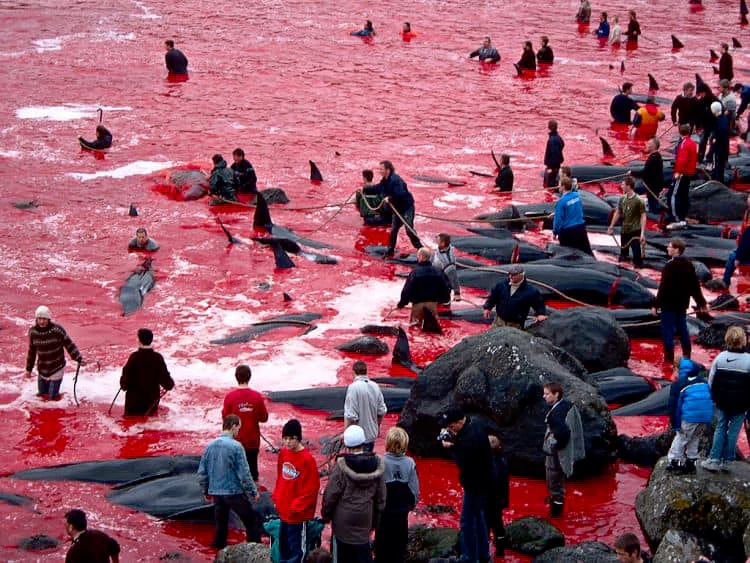
Selon une étude de la Wildlife Conservation Society, des personnes dans au moins 114 pays ont consommé une ou plusieurs espèces d'au moins 87 mammifères marins depuis 1990.
Les petits cétacés comme les dauphins et les marsouins figurent parmi les animaux les plus consommés. L'étude a également révélé que la consommation de mammifères marins augmente dans certaines régions, notamment en Asie et en Afrique.
Voici quelques-uns des lieux ou des cultures qui consomment des mammifères marins :
- Japon: Le Japon est l'un des plus grands consommateurs de mammifères marins au monde. Il a une longue histoire de chasse à la baleine et au dauphin, qui sont considérées comme faisant partie de son patrimoine culturel et de sa tradition culinaire. Le Japon prétend également mener des recherches scientifiques sur les baleines, mais de nombreux critiques affirment qu'il s'agit d'une couverture pour la chasse commerciale à la baleine. Le Japon consomme principalement des petits rorquals, des rorquals communs et des dauphins.
- Arctique: Les peuples de l'Arctique, tels que les Inuits, les Yupiks et les Tchouktches, dépendent de la viande et de la graisse de baleine depuis des milliers d'années. Ils chassent la baleine, le phoque, le morse et l'ours polaire pour se nourrir, se vêtir, fabriquer des outils et du combustible. Ils ont également un lien spirituel avec ces animaux et les respectent comme faisant partie de leur culture et de leur identité. Ils se nourrissent principalement de baleines boréales, de bélugas, de narvals, de phoques annelés, de phoques barbus et de phoques du Groenland.
- Canada: Le Canada autorise la chasse aux phoques à des fins de subsistance et à des fins commerciales. La chasse au phoque est principalement pratiquée par les habitants de Terre-Neuve et du Labrador, qui la considèrent comme une source vitale de revenus et de nourriture. Ils affirment également que la population de phoques est abondante et qu'elle doit être contrôlée pour protéger les stocks de poissons. Le Canada consomme principalement des phoques du Groenland, des phoques à capuchon et des phoques gris.
- Mozambique: Le Mozambique est l'un des pays où les gens ont récemment commencé à manger des mammifères marins en raison de la pauvreté et de l'insécurité alimentaire. En avril 2019, plus de 100 personnes sont mortes après avoir mangé une baleine morte qui s'était échouée sur le rivage dans la province de Cabo Delgado. La baleine était contaminée par la saxitoxine, une toxine marine mortelle qui provoque l'intoxication paralysante par les crustacés. Au Mozambique, les gens mangent principalement des baleines à bosse.
Cognition des Mammifères Marins.
Qui est, selon vous, l'animal le plus intelligent de la planète ? On pourrait dire que c'est nous, les humains. Nous avons fait tellement de choses avec notre cerveau, qui est plus grand et plus avancé que celui de la plupart des autres animaux.
Et si je vous disais qu'il existe un autre animal qui a un cerveau plus grand et plus évolué que le nôtre ? Un animal qui vit dans l'eau et non sur terre. Un animal dont vous ne savez peut-être pas grand-chose. Il s'agit du globicéphale noir.
Le globicéphale noir est un type de dauphin qui peut atteindre 6,5 mètres de long et peser jusqu'à 2,3 tonnes. Il vit en grands groupes appelés "pods", qui peuvent compter jusqu'à 150 membres. Ils communiquent entre eux à l'aide d'une variété de sons, tels que des clics, des sifflements et des bourdonnements. Il se nourrit de poissons, de calmars et de pieuvres, et utilise l'écholocation pour trouver ses proies.
Mais ce qui rend le globicéphale à longues nageoires si spécial, c'est son cerveau. Son cerveau est énorme : il pèse environ 5,7 kilogrammes, soit plus du double du nôtre. Son cerveau est également complexe : il compte plus de neurones et de cellules gliales que celui de tout autre mammifère, y compris le nôtre. Les neurones sont les cellules qui transmettent les informations dans le cerveau, tandis que les cellules gliales sont les cellules qui soutiennent et protègent les neurones. Le néocortex est la partie du cerveau responsable des fonctions cognitives supérieures, telles que l'apprentissage, la mémoire, le raisonnement et le langage.
Le néocortex du globicéphale noir contient environ 37,2 milliards de neurones et 228,1 milliards de cellules gliales, alors que notre néocortex ne compte que 16,3 milliards de neurones et 84,6 milliards de cellules gliales (Mortensen et al., 2014).
Qu'est-ce que cela signifie pour l'intelligence du globicéphale noir ? Nous n'en sommes pas certains, car nous ne disposons pas d'une méthode claire et universelle pour mesurer l'intelligence chez les différentes espèces. Toutefois, nous pouvons supposer que le fait d'avoir plus de cellules cérébrales signifie que la puissance de traitement et le potentiel d'apprentissage et de résolution de problèmes sont plus importants. Nous pouvons également observer certains comportements du globicéphale à longues nageoires, qui suggèrent qu'il est très intelligent et social.
Par exemple, le globicéphale à longues nageoires peut apprendre de nouvelles compétences auprès d'autres baleines, comme la manière d'attraper certains types de poissons ou d'éviter les prédateurs. Il peut également coopérer avec d'autres baleines pour chasser ou se défendre contre des menaces. Il peut même faire preuve d'empathie et d'altruisme envers d'autres baleines ou dauphins blessés ou échoués, en les aidant ou en restant avec eux jusqu'à ce qu'ils se rétablissent ou meurent.
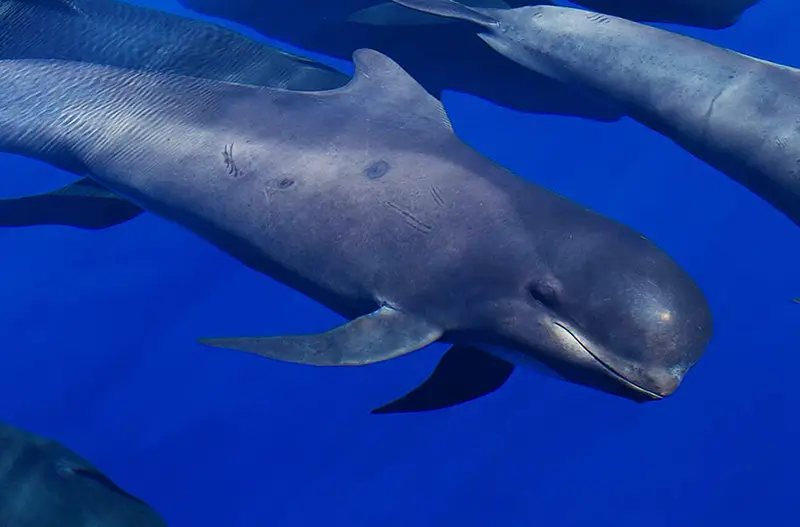
Ainsi, la prochaine fois que vous vous demanderez quel est l'animal le plus intelligent de la planète, n'oubliez pas le globicéphale à longues nageoires. Il n'a peut-être pas de bras, de jambes ou de langage comme nous, mais il a un cerveau plus grand et plus complexe que le nôtre. Elle n'a peut-être pas de technologie comme nous, mais elle a une culture et une société comme nous. Elle n'est peut-être pas du tout comme nous, mais elle reste un être intelligent et sensible qui mérite notre respect et notre protection.
Les Poissons Ont-ils des Emotions ?
Les scientifiques sont généralement réticents à l'idée d'attribuer aux animaux des sentiments semblables à ceux de l'homme. Mais il est généralement admis que de nombreux animaux ont des états d'âme, y compris les poissons.
Selon des études récentes, les poissons ont des émotions et peuvent même éprouver de l'empathie pour leurs congénères. Ils peuvent également montrer des signes d'humeur, d'intelligence et de besoins sociaux. Voici quelques-unes des principales conclusions de ces études :
- Les poissons peuvent détecter la peur chez d'autres poissons et prendre peur à leur tour. Cette capacité est régulée par l'ocytocine, la même substance chimique du cerveau qui sous-tend la capacité d'empathie chez les humains (Akinrinade et al, 2023).
- Les poissons sont émotionnellement attachés à leurs partenaires et peuvent devenir pessimistes lorsqu'ils les perdent. Les scientifiques ont constaté que les cichlidés femelles séparés de leur partenaire préféré présentaient un état affectif négatif (Laubu et al, 2019).
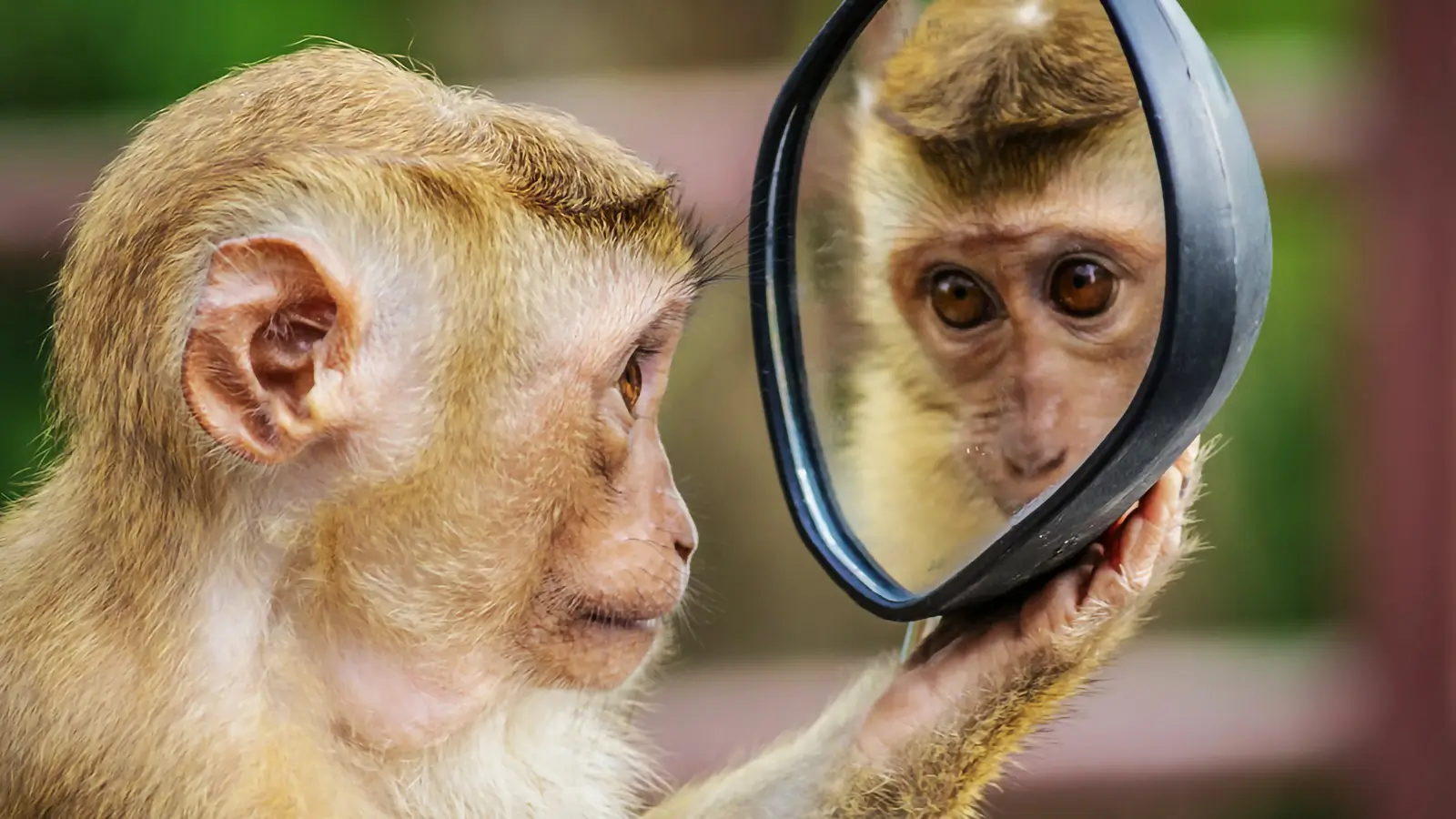
- Les poissons ont des sens et des capacités complexes qui ont évolué au cours de millions d'années. Ils peuvent communiquer, coopérer, apprendre, se souvenir et résoudre des problèmes. Certains poissons utilisent même des outils, construisent des nids et se reconnaissent dans les miroirs (Kohda et al, 2019).
Cette capacité à se reconnaître dans le miroir s'appelle l'autoreconnaissance dans le miroir (ARM), et c'est un signe de cognition de haut niveau. Elle signifie que vous avez un sens de soi, que vous pouvez vous distinguer des autres et que vous êtes capable d'évaluer votre propre état. Peu d'animaux en sont capables. Seuls certains mammifères et oiseaux, comme les chimpanzés, les dauphins, les éléphants et les pies, ont fait preuve de RSM.
Mais qu'en est-il des autres animaux ? Ont-ils eux aussi un sens du soi ? Comment pouvons-nous les tester ?
La méthode habituelle pour tester la RSM est le test de la marque. Ce test consiste à apposer sur le corps de l'animal une marque qu'il ne peut pas voir sans miroir, puis à observer s'il essaie de l'enlever ou de la toucher lorsqu'il voit son reflet. Cela indiquerait qu'il reconnaît la marque comme quelque chose d'anormal sur lui-même, et non sur un autre animal.
Toutefois, ce test présente certaines limites. Il suppose que l'animal peut adopter certains comportements, comme le test de contingence et le comportement autodirigé. Le test de contingence signifie que l'animal peut comprendre que le miroir reflète ses propres mouvements et actions, et non ceux de quelqu'un d'autre. Le comportement autonome signifie que l'animal peut diriger son attention ou ses actions vers lui-même, et pas seulement vers les autres. Ces comportements peuvent être difficiles à détecter ou à interpréter chez des animaux très différents de nous, en particulier ceux qui n'ont pas de membres ou de mains pour se toucher.
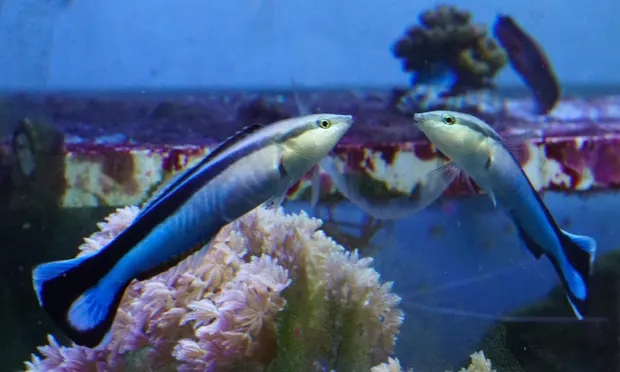
C'est ici que (Kohda et al, 2019). Les scientifiques ont testé un poisson, le poisson nettoyeur, qui est une espèce monogame et coopérative vivant dans les récifs coralliens. Ce poisson présente un comportement qui pourrait être interprété comme une réussite au test de la marque.
Ils réagissent à leur reflet comme s'il s'agissait d'un autre poisson, ils effectuent des mouvements inhabituels devant le miroir et ils regardent fréquemment leur reflet. Lorsque les scientifiques ont placé une étiquette colorée sur leur corps et leur ont donné un miroir, ils ont essayé de gratter l'étiquette en frottant leur corps contre le miroir ou d'autres objets. Ils ne le faisaient pas lorsque l'étiquette était transparente ou qu'il n'y avait pas de miroir.
Cette découverte est étonnante car elle suggère que les poissons peuvent également avoir une RSM. Mais elle soulève également des questions. Acceptons-nous que ces poissons soient conscients d'eux-mêmes, sur la base de leur comportement lors du test de marquage ? Ou pensons-nous que leur comportement est motivé par autre chose, comme la curiosité ou la confusion, et qu'ils n'ont pas de RSM ? Si nous répondons par l'affirmative à la première question, qu'est-ce que cela signifie pour notre conception de l'intelligence animale ? Si nous répondons non à la deuxième question, quelles sont les conséquences sur la façon dont nous utilisons et comprenons le test de la marque en tant que mesure de l'intelligence animale ? cognition animale?
Contagion Émotionnelle.
La contagion émotionnelle est la forme la plus élémentaire de l'empathie, qui est la capacité de comprendre les sentiments d'autrui et de s'en préoccuper.
Vous est-il déjà arrivé d'être triste en voyant quelqu'un pleurer ou d'avoir peur en entendant quelqu'un crier ? Si c'est le cas, vous avez fait l'expérience de la contagion émotionnelle, c'est-à-dire de la capacité à partager et à ressentir les émotions des autres.
Dans l'étude sur le poisson zèbre (Akinrinade et al, 2023), qui sont de petits poissons colorés vivant en eau douce, les scientifiques ont voulu savoir ce qui permettait au poisson-zèbre de ressentir et de manifester une contagion émotionnelle. Ils se sont intéressés à une hormone appelée ocytocine, connue pour réguler l'empathie et les liens sociaux chez les mammifères, tels que l'homme, le chien et la souris. L'ocytocine est produite par des cellules spéciales du cerveau et libérée dans la circulation sanguine ou directement dans d'autres régions du cerveau. L'ocytocine peut influencer notre comportement et nos sentiments dans différentes situations, telles que les étreintes, les baisers ou l'aide.
Le poisson zèbre est un animal très social qui peut former des groupes et communiquer entre eux. Ils peuvent également faire preuve de contagion émotionnelle, notamment lorsqu'ils voient leurs amis en danger. Par exemple, lorsqu'un poisson-zèbre est exposé à un prédateur ou à un choc, les autres poissons-zèbre à proximité montreront également des signes de peur et de stress, tels que la congélation, le plongeon ou le changement de couleur.
Nous avons constaté que l'ocytocine est à la fois nécessaire et suffisante pour que le poisson-zèbre observateur imite le comportement de détresse des démonstrateurs conspécifiques. Cela signifie qu'en l'absence d'ocytocine ou de son récepteur, le poisson-zèbre observateur ne présente pas de contagion émotionnelle.
Nous avons également étudié les régions du cerveau impliquées dans la contagion émotionnelle chez le poisson zèbre. Nous avons constaté qu'elles sont similaires à celles impliquées dans le même processus chez les rongeurs, tels que les souris et les rats.
Cela signifie que la contagion émotionnelle est un phénomène conservé au cours de l'évolution, présent depuis l'origine des vertébrés. Cela signifie également que la contagion émotionnelle n'est pas propre aux humains ou aux mammifères, mais qu'elle est partagée par de nombreux autres animaux, tels que les poissons.
Les Séparations Font Mal, Même si l'on Est un Poisson.
Vous êtes-vous déjà demandé quel rôle jouent les émotions dans les relations amoureuses ? Pour l'être humain, les sentiments jouent un rôle crucial dans la recherche et la conservation d'un partenaire, en particulier au début d'une relation. Lorsque nous nous mettons en couple avec une personne qui nous plaît vraiment, nous nous sentons heureux et satisfaits, ce qui nous rend plus confiants et plus engagés dans notre choix. Les émotions peuvent faire ou défaire une relation et influer sur sa réussite à long terme.
Mais les humains sont-ils les seuls à éprouver des émotions dans leurs relations ? Qu'en est-il des autres animaux qui nouent des liens durables et élèvent leur progéniture ensemble ?
Les émotions sont également importantes pour ces animaux, en particulier lorsque leur survie et leur reproduction dépendent de leur capacité à coopérer avec leurs partenaires.
Pour tester cette idée, les scientifiques ont étudié un poisson appelé le cichlidé de bagnard, connu pour sa monogamie et ses soins parentaux (Laubu et al, 2019). Ces poissons forment des couples stables qui travaillent ensemble pour défendre leurs œufs et leurs alevins contre les prédateurs. Les scientifiques ont voulu voir comment la qualité de leur partenaire affecte leur état émotionnel et comment cela influe sur leur succès reproductif.
Ils ont donné aux femelles le choix entre deux mâles et, une fois que les femelles avaient fait leur choix, les scientifiques leur ont attribué le partenaire qu'elles préféraient ou celui qu'elles ne préféraient pas. Dans certains cas, les chercheurs les ont séparées et ont associé les femelles aux mâles qu'elles avaient rejetés.
Ils ont constaté que les femelles qui avaient leur partenaire préféré avaient plus d'œufs et d'alevins que celles qui avaient leur partenaire non préféré. Cela montre que la qualité du partenaire est importante pour ces poissons.
Mais qu'en pensent-ils ? Pour mesurer leur état émotionnel, nous avons utilisé une méthode appelée "paradigme du biais de jugement", qui a déjà été utilisée chez d'autres animaux comme les oiseaux et les mammifères. Cette méthode consiste à entraîner les animaux à associer différents indices à différents résultats, puis à tester leur réaction face à des indices ambigus.
Par exemple, si un poisson apprend qu'une lumière bleue signifie de la nourriture et qu'une lumière rouge ne signifie rien, comment réagira-t-il à une lumière violette ? Un poisson optimiste s'attendra à recevoir de la nourriture et s'approchera de la lumière violette, tandis qu'un poisson pessimiste ne s'attendra à rien et évitera la lumière violette.
Ils ont constaté que les femmes qui ont obtenu leur partenaire non préféré étaient plus pessimistes que celles qui ont obtenu leur partenaire préféré. En revanche, les femmes qui ont obtenu leur partenaire préféré n'ont pas montré de changement dans leur état émotionnel, ce qui suggère qu'elles sont satisfaites de leur situation.
Les résultats de cette étude montrent que les liens de couple peuvent affecter les émotions non seulement chez les humains, mais aussi chez d'autres animaux comme les poissons. Cela implique que les émotions sont une adaptation évolutive qui aide les animaux à trouver et à garder de bons partenaires, et à coopérer avec eux pour un meilleur succès reproductif.
Les émotions ne sont pas seulement humaines, elles sont universelles.
Les Poissons Peuvent-ils Ressentir la Douleur ?
Les poissons constituent l'un des groupes d'animaux les plus diversifiés et les plus utilisés par l'homme. Nous les pêchons dans les océans, les rivières et les lacs pour l'alimentation et le commerce. Nous les élevons dans des fermes et des bassins pour la consommation et le divertissement. Nous les étudions dans des laboratoires et des aquariums pour la connaissance et l'innovation.
Malheureusement, de nombreuses personnes ont tendance à sous-estimer l'intelligence et la sensibilité des poissons. Ils pensent que les poissons sont des êtres à sang froid, sans cerveau et sans émotion, qui ne peuvent pas ressentir la douleur ou la souffrance. Ils pensent que les poissons sont si différents de nous qu'ils n'ont pas d'importance morale ou éthique. Mais est-ce vraiment vrai ? Ou s'agit-il simplement d'un moyen commode de justifier notre exploitation et notre négligence à l'égard de ces animaux étonnants ?
En réalité, les poissons sont bien plus que ce que l'on croit. Ils disposent d'un monde sensoriel riche qui leur permet de voir, d'entendre, de sentir, de goûter et de toucher leur environnement. Ils ont une capacité cognitive remarquable qui leur permet d'apprendre, de se souvenir, de communiquer et de coopérer les uns avec les autres. Ils ont un système émotionnel sophistiqué qui leur permet d'éprouver de la joie, de la peur, du stress et de la douleur. Ils ont une personnalité unique qui les rend particuliers et distinctifs.
En fait, de nombreuses études ont montré que la perception et la cognition des poissons égalent ou dépassent souvent celles des autres vertébrés, y compris les mammifères et les oiseaux. Par exemple, certains poissons peuvent utiliser des outils, tels que des pierres ou des coquillages, pour ouvrir des proies dures, ce qui nécessite de résoudre des problèmes et d'innover. Certains poissons peuvent compter, catégoriser, planifier et tromper, des capacités qui témoignent d'une pensée et d'un raisonnement de haut niveau.
Mais qu'en est-il de la douleur ? Les poissons ressentent-ils la douleur comme nous ? Cette question controversée est débattue depuis des décennies par les scientifiques, les philosophes et les défenseurs des animaux. Certains affirment que les poissons ne disposent pas des structures cérébrales ou des terminaisons nerveuses nécessaires pour ressentir la douleur. D'autres affirment que les poissons ont des réactions physiologiques et comportementales qui indiquent la douleur. Les preuves en faveur des deux camps sont complexes et peu concluantes.
Cependant, l'examen des données disponibles suggère fortement que les poissons ressentent la douleur de la même manière que les autres vertébrés (Brown, 2014).
L'étude a révélé que les poissons possèdent des nocicepteurs, des cellules nerveuses spécialisées qui détectent les stimuli nocifs et envoient des signaux au cerveau. L'étude a également montré que les poissons possèdent des récepteurs opioïdes, des molécules qui se lient à des substances naturelles ou synthétiques qui réduisent la sensation de douleur. L'étude a également montré que les poissons présentent des changements dans leur comportement, leur physiologie et leur activité cérébrale lorsqu'ils sont exposés à des stimuli douloureux, tels que des chocs électriques, de la chaleur ou des produits chimiques.
Ces résultats impliquent que les poissons sont non seulement conscients de la douleur, mais qu'ils en souffrent également. Cela signifie que les poissons sont des êtres sensibles qui ont une expérience subjective de leur existence. Cela signifie également que les poissons méritent notre considération morale et notre traitement éthique.
Malheureusement, les lois et les politiques actuelles ne reflètent pas cette réalité. Les poissons sont souvent exclus de la protection juridique et des normes de bien-être qui s'appliquent aux autres vertébrés. Les poissons sont souvent soumis à des pratiques cruelles et inhumaines dans les secteurs de la pêche, de l'aquaculture, de la recherche et du divertissement. Les poissons sont souvent tués sans étourdissement ni anesthésie, ce qui leur cause une agonie et une détresse inutiles.
Ce n'est pas seulement contraire à l'éthique, c'est aussi une pratique non durable. La surpêche et la pollution menacent la survie de nombreuses espèces de poissons et d'écosystèmes. Le changement climatique et la perte d'habitat modifient l'équilibre naturel de l'environnement aquatique. La santé et le bien-être de l'homme sont également menacés par la consommation de produits de la pêche contaminés ou malades.
Les Végétariens Peuvent-ils Manger Du Poisson ?
La réponse courte est non.
Les végétariens ne mangent aucune chair animale, qu'elle provienne de la terre ou de l'eau. Les poissons sont aussi des animaux et ils ont des sentiments, tout comme les vaches, les cochons et les poulets.
Manger du poisson va à l'encontre du principe végétarien qui consiste à éviter la souffrance et l'exploitation des animaux.
Mais attendez, direz-vous, qu'en est-il des personnes qui mangent du poisson mais pas de viande ? Ne sont-elles pas végétariennes elles aussi ? En fait, ce n'est pas le cas.
Ils portent un autre nom : les pescatariens.
Les pescatariens sont des personnes qui suivent un régime essentiellement végétarien mais qui consomment occasionnellement du poisson et des fruits de mer. Ils peuvent avoir différentes raisons de le faire, comme le goût ou les bienfaits pour la santé.
Cependant, manger du poisson n'est pas nécessaire pour votre santé si vous êtes végétarien ou végétalien. Vous pouvez obtenir tous les nutriments essentiels dont vous avez besoin à partir de plantes ou de suppléments.
Par exemple, le poisson et les fruits de mer sont connus pour leur teneur élevée en protéines, en acides gras oméga-3, en zinc, et en la vitamine B12.
Vous pouvez également obtenir des oméga-3 à partir de sources végétales, comme les suppléments de DHA à base d'algues, et la chlorelle est une excellente source de zinc et de B12. Pour en savoir plus sur la chlorelle, consultez cet article. Chlorella Avantages : Guide Essentiel.
Seagan Vs Pescatarian.
Le terme "seaganisme" a été inventé par Sana, nutritionniste et experte en bien-être, qui explique qu'il s'agit de "l'association d'un régime végétalien avec du poisson et des fruits de mer". Ce régime est devenu particulièrement populaire à la suite de l'essor du véganisme, qui a attiré de nombreuses personnes en raison de son attrait pour l'environnement et l'éthique.
Cependant, le végétalisme n'est pas sans poser de problèmes, notamment lorsqu'il s'agit de consommer suffisamment de protéines et d'acides gras oméga-3, qui sont essentiels pour notre santé.
Vous vous demandez peut-être en quoi le régime païen diffère du régime pescatarien, qui est un autre mode d'alimentation populaire qui inclut le poisson et les fruits de mer, mais pas la viande ni la volaille. La principale différence est que le seaganisme ne comporte pas de produits laitiers - les œufs, le lait et le fromage sont donc à proscrire de la liste des courses.
Cela signifie que les marins s'appuient sur des sources de calcium d'origine végétale, telles que les légumes verts à feuilles, les noix, les graines et le lait végétal enrichi. Ils évitent également les produits d'origine animale tels que le miel, la gélatine et le cuir.
Une autre différence réside dans le fait que les marins sont très attentifs à choisir des poissons et des fruits de mer issus de l'agriculture durable, afin de minimiser leur impact sur l'environnement et de garantir le bien-être des animaux. Ils évitent les espèces surexploitées, comme le cabillaud, le thon et l'espadon, et optent pour des poissons plus petits, situés plus bas dans la chaîne alimentaire, comme les sardines, les anchois et les maquereaux.
Quels sont les avantages du régime païen pour la santé ? L'une des principales raisons pour lesquelles les gens choisissent le régime païen est qu'il est bénéfique pour la santé. En adoptant un régime à base de plantes et en consommant du poisson et des fruits de mer quelques fois par semaine, les adeptes du régime païen peuvent profiter du meilleur des deux mondes : les vitamines, les minéraux, les antioxydants et les fibres des plantes, ainsi que les protéines et les oméga-3, la vitamine B-12, et la vitamine D du poisson.
L'autre option consiste à utiliser des compléments alimentaires. Toutefois, ce type de régime est plus acceptable pour les personnes qui ne veulent pas suivre un régime végétalien complet et qui n'adhèrent pas au végétalisme pour des raisons philosophiques, mais plutôt pour des raisons de santé.
Si vous suivez un régime à base de plantes pour des raisons de santé, il peut être bénéfique d'ajouter une fois par semaine du poisson situé en bas de la chaîne alimentaire pour éviter une carence en oméga 3 si vous ne voulez pas prendre de suppléments. Ce régime est bien meilleur que le régime américain standard.
Les marins peuvent bénéficier d'un apport plus faible en graisses saturées et en cholestérol en évitant la viande et les produits laitiers. Cela peut contribuer à réduire la tension artérielle et le taux de cholestérol, et à améliorer le contrôle de la glycémie.
Mais il y a un gros bémol. Il est préférable pour votre santé de ne pas manger de poisson plus d'une fois par semaine. Manger du poisson tous les jours annule la plupart des avantages d'un régime à base de plantes.
Poisson et Cholestérol.
Le poisson est de la viande et toute viande contient du cholestérol. La raison pour laquelle les médecins ne conseillent généralement pas de réduire la consommation de poisson est que le poisson contient des acides gras oméga-3.
L'argument est que, bien que tous les poissons contiennent du cholestérol, ils sont pauvres en graisses saturées, qui sont les principaux responsables de l'augmentation du taux de cholestérol LDL (mauvais cholestérol). Certains poissons contiennent également des acides gras oméga-3, qui peuvent contribuer à réduire le taux de triglycérides et à augmenter le taux de cholestérol HDL (bon cholestérol). Les oméga-3 sont essentiels à la santé et peuvent vous protéger contre les maladies cardiovasculaires. Le problème est que vous pouvez obtenir des oméga-3 à partir de suppléments de DHA à base d'algues et que vous n'avez pas besoin de poisson.
Les quantités de cholestérol et d'oméga-3 varient selon les espèces de poisson. Par exemple, le saumon, le hareng, le maquereau et les sardines sont riches en oméga-3 et pauvres en cholestérol. Les crustacés tels que les crevettes, le homard, le crabe et les huîtres sont riches en cholestérol mais contiennent également des oméga-3. Le calmar est le fruit de mer le plus riche en cholestérol.
Vous devez éviter de frire ou d'ajouter du beurre ou des sauces à la crème à votre poisson ou à votre huile de palme ou à toute autre source de graisses saturées, car ces méthodes peuvent augmenter la teneur en graisses saturées du repas, ce qui rendra votre poisson aussi mauvais que le porc pour le taux de cholestérol. Cela ajouterait des graisses saturées au cholestérol déjà présent dans le poisson. Au lieu de cela, vous pouvez griller, cuire au four ou à la vapeur votre poisson et l'assaisonner avec des herbes, des épices, du jus de citron ou du vinaigre.
| Fruits de mer (crus, portions de 3,5 oz) | Cholestérol total (mg) | Acides gras oméga-3 (grammes) |
| Homard | 71-95 | 0.1 |
| Saumon | 63-74 | 2.6 |
| Huîtres | 55 | 0.7 |
| Crabe | 52 | 0.4 |
| Flétan | 41 | 0.6 |
| Thon | 30-48 | 0.2-1.5 |
| Sardines | 142 | 1.2 |
| Calmar | 231 | 0.4 |
| Crevettes | 194 | 0.32 |
Toxicité Pour les Poissons.
Imaginez un verre d'eau contenant une goutte de poison. Le boiriez-vous ? Probablement pas. Imaginez maintenant que cette même goutte de poison soit diluée dans un grand seau d'eau. La boiriez-vous alors ? Peut-être que vous le feriez, pensant que le poison est trop dilué pour vous nuire. Mais que se passerait-il si vous n'étiez pas le seul à boire dans ce seau ? Et s'il y avait des millions de créatures minuscules qui buvaient également de l'eau et qui devenaient ensuite votre nourriture ? C'est ce qui se passe actuellement dans nos océans.
Chaque jour, des tonnes de pollution provenant d'usines, d'exploitations agricoles, de villes et d'autres sources sont emportées par la pluie et les rivières et finissent dans l'océan. Certains de ces polluants sont biodégradables, c'est-à-dire qu'ils peuvent être décomposés par des processus naturels. Mais d'autres sont persistants, c'est-à-dire qu'ils restent longtemps dans l'océan, créant un grave problème pour la vie marine.
En effet, même si la concentration de ces polluants dans l'océan est faible, ils ne disparaissent pas. Ils sont absorbés par le plancton et les algues, les minuscules organismes qui forment la base de la chaîne alimentaire marine. Ces organismes filtrent l'eau pour obtenir leurs nutriments, mais ils finissent aussi par ingérer les polluants en même temps qu'eux. C'est ce qu'on appelle la bioaccumulation, le processus par lequel les toxines s'accumulent dans les organismes vivants.
Mais cela ne s'arrête pas là. Lorsque des animaux plus gros, comme les poissons, mangent ce plancton et ces algues, ils mangent également les toxines qu'ils ont accumulées. Et lorsque des animaux encore plus gros, tels que les requins, les dauphins ou les humains, mangent ces poissons, ils mangent également les toxines qu'ils ont accumulées. C'est ce qu'on appelle la bioamplification, le processus par lequel les toxines augmentent en concentration au fur et à mesure qu'elles remontent la chaîne alimentaire.
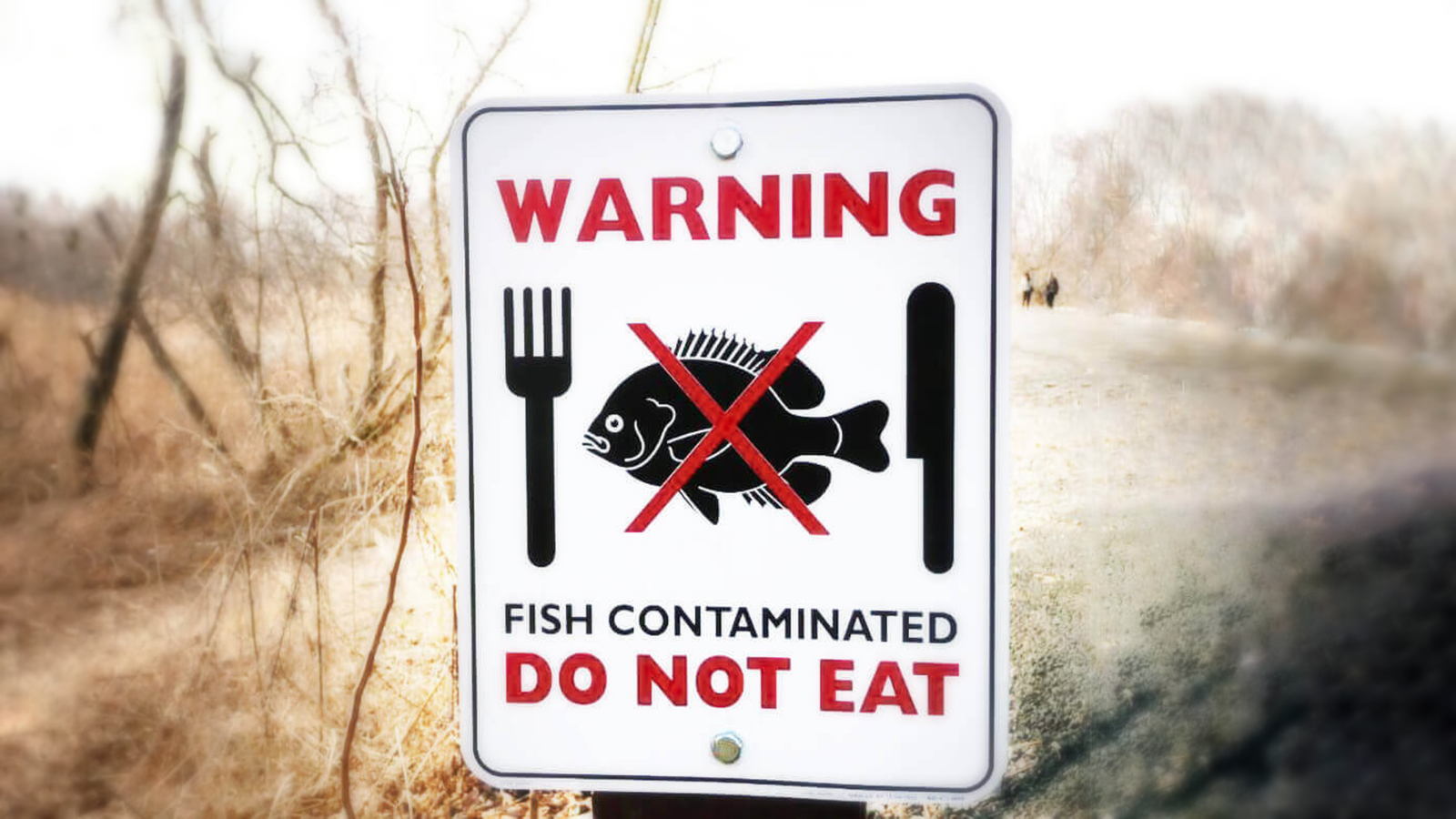
Par conséquent, même si les niveaux de polluants sont minuscules lorsqu'ils sont mesurés directement dans l'eau de mer, ils peuvent être gravement toxiques lorsqu'ils sont mesurés chez les principaux prédateurs de l'océan. La consommation de ces types de poissons peut avoir des effets dévastateurs sur notre santé, tels que inflammationlésions nerveuses, canceret bien d'autres choses encore.
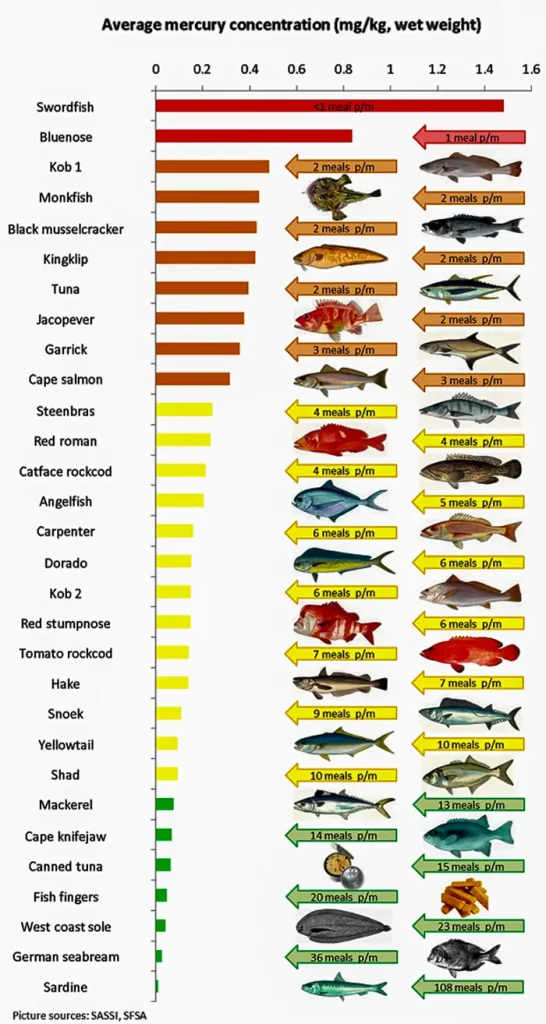
Vous pensez peut-être que le poisson est une source de viande saine, riche en protéines et des acides gras oméga-3. Mais en réalité, le poisson est tout sauf bon pour la santé. Les la pollution aujourd'hui est si importante que même si nous ignorons tous les autres effets néfastes de la consommation de viande que j'ai analysés dans d'autres articles, livres et sujets, la pollution d'origine humaine est à elle seule une raison suffisante pour ne jamais toucher quoi que ce soit qui sorte de l'océan, en particulier si vous êtes enceinte ou si vous êtes un enfant.
Que pouvons-nous donc faire pour nous protéger et protéger nos océans de cette menace ? Nous pouvons commencer par réduire notre consommation de poissons et de fruits de mer, voire les éviter complètement. Nous pouvons également choisir des poissons qui se trouvent plus bas dans la chaîne alimentaire et qui sont moins susceptibles d'être contaminés, comme les sardines ou les anchois. Nous pouvons également soutenir les organisations environnementales qui œuvrent à la prévention et à la dépollution des océans. Enfin, nous pouvons nous informer et informer les autres sur les dangers de la pollution des océans et sur les moyens de la prévenir.
Pour en savoir plus sur la toxicité des poissons, consultez les articles suivants Toxicité du poisson - La viande la plus toxique et Poissons d'élevage - Le paradis des cloaques.
FAQ
Références :
- Akinrinade, I., Kareklas, K., Teles, M., Reis, T. K., Gliksberg, M., Petri, G., Levkowitz, G. et Oliveira, R. F. (2023). Evolutionarily conserved role of oxytocin in social fear contagion in zebrafish. Science, 379(6638), 1232-1237. https://doi.org/10.1126/science.abq5158
- Laubu, C., Louâpre, P., & Dechaume-Moncharmont, F. (2019b). Le pair-bonding influence l'état affectif chez une espèce de poisson monogame. Proceedings of the Royal Society B : Biological Sciences, 286(1904), 20190760. https://doi.org/10.1098/rspb.2019.0760
- Kohda, M., Hotta, T., Takeyama, T., Awata, S., Tanaka, H., Asai, J. et Jordan, L. A. (2019). Si un poisson peut passer le test de la marque, quelles sont les implications pour les tests de conscience et de conscience de soi chez les animaux ? PLOS Biology, 17(2), e3000021. https://doi.org/10.1371/journal.pbio.3000021
- Brown, C. (2014). Intelligence des poissons, sensibilité et éthique. Animal Cognition, 18(1), 1-17. https://doi.org/10.1007/s10071-014-0761-0
- Mortensen, HS, Pakkenberg, B., Dam, M., Dietz, R., Sonne, C., Mikkelsen, B. et Eriksen, N. (2014). Relations quantitatives dans le néocortex des delphinides. Frontières en neuroanatomie, 8, 132. https://doi.org/10.3389/fnana.2014.00132
Articles Similaires
Vous avez des questions sur la nutrition et la santé ?
J'aimerais avoir de vos nouvelles et y répondre dans mon prochain post. J'apprécie votre contribution et votre opinion et j'ai hâte d'avoir de vos nouvelles bientôt. Je vous invite également à nous suivre sur Facebook, Instagram et Pinterest pour plus de contenu sur l'alimentation, la nutrition et la santé. Vous pouvez y laisser un commentaire et entrer en contact avec d'autres passionnés de santé, partager vos conseils et expériences, et obtenir le soutien et les encouragements de notre équipe et de notre communauté.
J'espère que ce billet a été instructif et agréable pour vous et que vous êtes prêt à mettre en pratique les connaissances que vous avez acquises. Si vous avez trouvé ce billet utile, veuillez le partager à vos amis et à votre famille qui pourraient également en bénéficier. On ne sait jamais qui peut avoir besoin de conseils et de soutien dans son parcours de santé.
– Vous pourriez aussi aimer –

Expositions à la Pollution Atmosphérique - Risques Pour la Santé et Stratégies de Prévention

Les Lectines- Paradoxe du "Paradoxe Végétal"
Exposition à l'Arsenic et Consommation de Viande - The "Poison-Free" Poultry Act

Protéine Complète : Signalisation de l'IGF-1 dans la Formation du Cancer

Intolérance au Lactose - 65 % de Chances Que Vous l'ayez
Facteurs de Risque d'Obésité
Pouvoir Anticancéreux des Fruits et Légumes : Preuves in Vivo et Cliniques

Sensibilité et Douleur des Dents aux Sucreries : Solution Rapide et Durable

Apprendre la Nutrition

Milos Pokimica est docteur en médecine naturelle, nutritionniste clinique, rédacteur en santé médicale et nutrition et conseiller en sciences nutritionnelles. Auteur de la série de livres Devenir vegetarien ? Examen des sciences, il exploite également le site Web de santé naturelle GoVeganWay.com
Avis de non-responsabilité médicale
GoVeganWay.com vous propose des critiques des dernières recherches liées à la nutrition et à la santé. Les informations fournies représentent l'opinion personnelle de l'auteur et ne sont pas destinées ni implicitement à remplacer un avis médical professionnel, un diagnostic ou un traitement. Les informations fournies sont fournies à titre informatif uniquement et ne sont pas destinées à remplacer la consultation, le diagnostic et/ou le traitement médical d'un médecin ou d'un prestataire de soins de santé qualifié.NE JAMAIS IGNORER LES CONSEILS MÉDICAUX PROFESSIONNELS OU RETARDER LA RECHERCHE DE SOINS MÉDICAUX EN RAISON DE QUELQUE CHOSE QUE VOUS AVEZ LU OU ACCÉDÉ SUR GoVeganWay.com
N'APPLIQUEZ JAMAIS DE CHANGEMENTS AU STYLE DE VIE OU TOUT CHANGEMENT À LA SUITE DE QUELQUE CHOSE QUE VOUS AVEZ LU SUR GoVeganWay.com AVANT DE CONSULTER UN PRATICIEN MÉDICAL AGRÉÉ.
En cas d'urgence médicale, appelez immédiatement un médecin ou le 911. GoVeganWay.com ne recommande ni n'approuve aucun groupe, organisation, test, médecin, produit, procédure, opinion ou autre information spécifique pouvant être mentionné à l'intérieur.
Choix de l'éditeur -

Cancer Choix de l'éditeur Phytochimiques
Pouvoir Anticancéreux des Fruits et Légumes : Preuves in Vivo et Cliniques
Certains extraits végétaux rivalisent avec les principaux médicaments de chimiothérapie et ciblent en même temps plusieurs types différents de cellules cancéreuses.

Antioxydants Choix de l'éditeur ORAC
Les Huiles Essentielles en Tant Que Compléments Antioxydants : Règles et Stratégies
Les huiles essentielles de qualité alimentaire peuvent constituer une stratégie pratique et conviviale pour optimiser la valeur antioxydante et les scores ORAC de notre alimentation.
Antioxydants Choix de l'éditeur ORAC
Régime Riche en Antioxydants : Règles Rénérales et Stratégies
Il existe des stratégies simples et rentables pour optimiser la valeur antioxydante de notre alimentation.
Antioxydants Choix de l'éditeur ORAC
Comprendre les Valeurs ORAC : La Teneur en Antioxydants des Aliments
Lorsque votre principale source d'antioxydants est le café, vous savez que vous avez un sérieux problème.
Antioxydants Choix de l'éditeur ORAC
Avantages de l’Astaxanthine : L’Antioxydant Naturel le Plus Puissant au Monde
L'astaxanthine est l'antioxydant naturel et universel le plus puissant (soluble dans l'huile et dans l'eau) connu de la science. Il s'accumule dans les tissus et ne peut jamais se transformer en pro-oxydant.
Antioxydants Choix de l'éditeur ORAC Phytochimiques
Les Antioxydants : Comprendre les Bases
Il n'y a pas de composés phytochimiques ou d'antioxydants dans les produits d'origine animale. En moyenne, les aliments végétaux contiennent plus de 60 fois plus d'antioxydants que les aliments d'origine animale.

Choix de l'éditeur Régime végétalien
Les Carences en Nutriments Dans le Régime Végétalien : Stratégies de Prévention
Il existe neuf carences nutritionnelles courantes à l'échelle de la population qui affectent les personnes qui suivent un régime à base de plantes. Si elles ne sont pas corrigées à temps, certaines déficiences ont des conséquences terribles et incurables.

Choix de l'éditeur Régime optimal
Déficience en Micronutriments Dans le Régime Alimentaire Américain Standard : Stratégies d'Optimisation
Le profil nutritionnel de notre régime moderne à base de viande, de sucre et d'aliments transformés est totalement incongru avec notre évolution, ce qui entraîne de graves carences en micronutriments.

Choix de l'éditeur Phytochimiques
Photochimie : Comprendre les Bases
Chaque phytochimique qui existe a une action biologique dans le corps humain. Chacun parmi des millions de composés phytochimiques différents.
Choix de l'éditeur Lait Régime optimal
Lait et Produits Laitiers : Corrélations Avec les Risques Pour la Santé
Les associations connues avec la consommation de lait et de produits laitiers sont l'infertilité, le cancer des ovaires et du sein, la leucémie, le diabète de type 1, l'autisme, l'artériosclérose, la cataracte, la polyarthrite rhumatoïde, la sclérose en plaques, l'hyperactivité, la congestion, les boutons, etc.

Cancer Choix de l'éditeur Protéine
Protéine Complète : Signalisation de l'IGF-1 dans la Formation du Cancer
Lorsque vous mangez des protéines animales, vous avez quatre fois plus de chances de développer tous les types de cancer. Lorsque vous fumez, vous avez quatre fois plus de chances de développer un cancer du poumon.

Cancer Choix de l'éditeur Protéine
Anatomie du Cancer - Corrélations Entre Les Risques Pour la Santé
Environ 2 % des cancers sont considérés par la médecine comme étant purement causés par des facteurs génétiques. La même gamme que dans le règne animal. On ne vous a pas dit toute la vérité.
Milos Pokimica est rédacteur spécialisé dans la santé et la nutrition et conseiller en sciences nutritionnelles. Auteur d'une série de livres Devenir vegetarien ? Examen des sciences, il exploite également le site Web de santé naturelle GoVeganWay.com
Derniers articles –

Restriction calorique Longévité
Comment Jeûner : Les Aliments de Jeûne Qui N'interrompent Pas L'Autophagie
Autophagie. Vous êtes-vous déjà demandé ce qui arrive aux cellules de votre corps lorsqu’elles meurent ou sont endommagées ? Est-ce qu'ils s'accumulent et créent des problèmes, ou sont-ils éliminés d'une manière ou d'une autre ? La réponse est que votre corps…

Santé Dentaire La prévention
Sensibilité et Douleur des Dents aux Sucreries : Solution Rapide et Durable
L'huile essentielle de clou de girofle est une solution rapide et facile pour soulager la douleur. C'est un antioxydant puissant et un analgésique qui peut aider à lutter contre les maladies des gencives et les maux de dents.

Les haricots
Haricots Verts : Nutrition et Bienfaits Pour La Santé
Les haricots verts sont pauvres en calories et riches en composés naturels qui peuvent vous aider à contrôler votre glycémie, à réduire votre taux de cholestérol et à lutter contre les radicaux libres.
Régime alimentaire cru Régime végétalien
Peut-on Manger des Champignons Crus : Risques pour la Santé, Nutrition et Sécurité
Les champignons contiennent des toxines sensibles à la chaleur, comme l'hydrazine ou l'agaritine, et des parois cellulaires composées de chitine qui ne peuvent pas être digérées correctement par l'homme.
Régime végétalien
Les Poissons Sont-ils Des Animaux ? Une Perspective Culturelle
Dans certaines cultures, la viande de poisson n'est pas considérée comme de la viande et le poisson est autorisé même pendant le jeûne.

Santé Dentaire La prévention
Rince-bouche naturel fait maison : éprouvé, plus fort et moins toxique
Le bain de bouche naturel fait maison est plus puissant que la chlorhexidine, moins toxique et, s'il est avalé, il peut donner des nausées, mais il a aussi une valeur ORAC élevée.
Santé Dentaire La prévention
Comment Arrêter les Caries Dentaires : Symptômes, Causes et Prévention
La consommation de sucre est la principale cause des caries dentaires, associée à des carences en minéraux, notamment en magnésium, zinc, cuivre et oligo-éléments.

Antioxydants Superaliments
Amla : Avantages Prouvés, Nutrition et Signification Clinique
L'amla est l'un des antioxydants les plus puissants au monde, avec un score ORAC de 261 530. Il s'agit d'une riche source de substances phytochimiques qui ont de nombreux effets bénéfiques sur la santé.
Top Des Nouvelles Sur la Santé - ScienceDaily
- Women over 50 lost 35% more weight with this surprising combole mars 24, 2026
Postmenopausal women may have a powerful new edge in the battle against weight gain. A Mayo Clinic study found that those using menopausal hormone therapy while taking the obesity drug tirzepatide lost about 35% more weight than those on the drug alone. The findings hint at a surprising synergy between hormones and cutting-edge weight-loss medications, potentially opening the door to more effective, personalized treatments for millions of women facing increased cardiometabolic risks after […]
- This new tooth powder whitens teeth without damagele mars 24, 2026
Researchers have developed a teeth-whitening powder that works with the vibrations of an electric toothbrush to safely remove stains. Unlike traditional whiteners, it not only brightens teeth but also repairs enamel and supports healthy oral bacteria. Lab tests showed dramatic whitening effects, while animal studies revealed reduced harmful microbes and inflammation. This could pave the way for a new generation of at-home dental care.
- Scientists discover Alzheimer’s hidden “death switch” in the brainle mars 23, 2026
Scientists have uncovered a hidden “death switch” in the brain that may be driving Alzheimer’s disease—and even found a way to turn it off in mice. The culprit is a toxic pairing of two proteins that, when combined, triggers the destruction of brain cells and fuels memory loss. By using a new compound to break apart this deadly duo, researchers were able to slow disease progression, protect brain cells, and even reduce hallmark amyloid buildup.
- New blood test could catch pancreatic cancer before it’s too latele mars 23, 2026
A new blood test could change the outlook for one of the deadliest cancers—pancreatic cancer—by catching it much earlier than ever before. Researchers identified two previously unknown proteins in the blood that, when combined with existing markers, dramatically improved detection accuracy. The four-marker test was able to spot pancreatic cancer in over 90% of cases and performed especially well even in early stages, when treatment has the best chance of success.
- A promising fatty liver treatment may raise cancer riskle mars 23, 2026
A surprising new study reveals that blocking a supposedly protective enzyme, Caspase-2, could actually backfire—raising the risk of chronic liver damage and cancer over time. Researchers found that without this enzyme, liver cells grow abnormally large and accumulate genetic damage, leading to inflammation, scarring, and eventually tumors, especially with age. While inhibiting Caspase-2 may offer short-term benefits, such as reducing fatty liver disease, the long-term consequences appear […]
- Scientists discover surprising brain trigger behind high blood pressurele mars 23, 2026
Scientists have uncovered a surprising brain-based trigger for high blood pressure, tracing it to a small region in the brainstem that normally controls breathing. This area, which kicks in during forceful exhalations like coughing, laughing, or exercise, also appears to activate nerves that tighten blood vessels—raising blood pressure. When researchers switched off this region in experiments, blood pressure dropped back to normal, suggesting it plays a direct role in hypertension.
- Weight loss drug Ozempic cuts depression, anxiety, and addiction riskle mars 22, 2026
GLP-1 medications like semaglutide (Ozempic) may offer unexpected mental health benefits alongside weight loss. A large study found major drops in depression, anxiety, and psychiatric-related hospital visits among users. Even substance use disorders were significantly lower during treatment. Researchers suspect both lifestyle improvements and direct brain effects could be at play.
PubMed, #régime-vegan –
- Plant-Based Dietary Patterns and Neuroimaging Biomarkers of Brain Health: A Scoping Review of Observational and Interventional Evidencele mars 23, 2026
Healthy dietary interventions are well established in cardiovascular disease prevention, but their effects on the brain remain underexplored. This scoping review aims to investigate how adherence to core components of a whole-food plant-based diet (WFPBD) may impact neuroimaging outcomes across different brain conditions. We searched PubMed and MEDLINE for studies published in the past 20 years evaluating the effects of a predominantly or exclusively WFPBD, alone or combined with other […]
- Environmental and economic impact of a vegan versus traditional mediterranean diet: OMNIVEG studyle mars 17, 2026
CONCLUSIONS: Replacing animal products with plant-based foods in a Mediterranean dietary framework can enhance environmental sustainability and reduce food costs. These findings support the promotion of whole plant-based diets as a viable strategy for sustainable and affordable nutrition.
- Consumption Habits and Perception of Plant-Based Milk and Dairy Alternatives Among Vegetarians and Omnivores: A Case Study of Consumers in Sloveniale mars 14, 2026
CONCLUSIONS: PBMDA perceptions in Slovenia are strongly segmented by dietary pattern and socio-demographics, supporting the need for clearer nutrition communication.
- Culinary Nutrition Programming for Members of a Community-Based Cancer Programle mars 14, 2026
(1) Background: Nutrition research in cancer care has largely focused on disease prevention and management, overlooking the importance of food literacy. Culinary cancer care programs may address this gap by facilitating the practical application of nutrition through culinary skills, fostering social connections over nutrient-dense meals, and supporting individuals during periods of physical and social vulnerability. The Not-Just-Supper Club (NJSC) at Gilda’s Club Toronto (GT) is a…
- Fatty acid composition of ground-beef products and their plant-based meat substitutes available in Hungaryle mars 13, 2026
CONCLUSION: The findings indicate that plant-based meat alternatives (except those containing coconut oil) have lower saturated and higher polyunsaturated fatty acid compositions than beef-based products, leading to more beneficial nutritional value. Further analytical and clinical studies are necessary to provide a more comprehensive understanding of the long-term health effects of these foods.
Messages aléatoires –
Régime alimentaire cru
Alimentation Crue - La Perspective Evolutive
La croyance de base dans la communauté des aliments crus est qu'un régime alimentaire cru est le mode de vie le plus naturel et le plus sain. Que nous dit la biologie évolutive?

Choix de l'éditeur La prévention Régime végétalien
Étude sur la Chine- L'argument Végétalien
Une étude chinoise a montré qu'il n'y a pas de maladie cardiaque, de cancer ou de diabète dans les communautés rurales sous-développées du monde avec des régimes végétaliens à base d'amidon.
Cancer Grossesse Toxicité
Aspartame : La Vérité sur les Risques et Dangers
L'une des excitotoxines qui a rendu l'industrie si heureuse est le produit chimique qui fait tout ce que font les excitotoxines, mais contrairement au MSG, il est doux au goût. Il est chimiquement connu sous le nom d'aspartame (Nutra Sweet).

La sclérose latérale amyotrophique La prévention Toxicité
Sclérose Latérale Amyotrophique - Floraison d'Algues Cyanobactériennes et Exposition Alimentaire aux BMAA
Une abondance de nutriments dans les zones côtières créée par le ruissellement rempli d'engrais synthétiques provenant des terres agricoles entraîne une prolifération excessive d'algues. Les proliférations d'algues sont dangereuses. Les microalgues créent et excrètent certaines des neurotoxines les plus puissantes connues de l'homme.
Antioxydants Choix de l'éditeur ORAC Phytochimiques
Les Antioxydants : Comprendre les Bases
Il n'y a pas de composés phytochimiques ou d'antioxydants dans les produits d'origine animale. En moyenne, les aliments végétaux contiennent plus de 60 fois plus d'antioxydants que les aliments d'origine animale.
Restriction calorique Longévité
Comment Jeûner : Les Aliments de Jeûne Qui N'interrompent Pas L'Autophagie
Autophagie. Vous êtes-vous déjà demandé ce qui arrive aux cellules de votre corps lorsqu’elles meurent ou sont endommagées ? Est-ce qu'ils s'accumulent et créent des problèmes, ou sont-ils éliminés d'une manière ou d'une autre ? La réponse est que votre corps…
Choix de l'éditeur Régime paléo Régime végétalien
Taille du Cerveau, Intelligence et Consommation de Viande- L'argument Végétalien
La combinaison d'une certaine quantité de viande fourragée au régime à prédominance végétalienne n'est pas devenue une force pivot dans l'émergence de l'intelligence humaine et de la taille du cerveau.

Antioxydants
Le Pouvoir Antioxydant de la Vitamine C : Améliorer la Santé et la Longévité
La vitamine C ne nécessite pas d'activité enzymatique pour être éliminée de l'organisme et ne devient pas pro-oxydant mais une forme réduite d'antioxydant plus faible.
Diabète Régime optimal
Édulcorants Artificiels- Comprendre les Bases
Les édulcorants artificiels sont des produits chimiques synthétiques non naturels, nous devons donc examiner la science disponible pour comprendre les effets potentiels sur la santé que ces produits chimiques pourraient avoir.
Cancer Désintoxication Inflammation
Les Bienfaits du Sulforaphane : Le Pouvoir Détoxifiant du Brocoli
Le sulforaphane est le plus puissant inducteur naturel d'enzymes de phase 2 connu de la science. Il a également été démontré que le sulforaphane est un inhibiteur proportionnel à la dose de la tumorigénèse induite par les carcinogènes.

Postes en vedette -
Choix de l'éditeur Lait Régime optimal
Lait et Produits Laitiers : Corrélations Avec les Risques Pour la Santé
Les associations connues avec la consommation de lait et de produits laitiers sont l'infertilité, le cancer des ovaires et du sein, la leucémie, le diabète de type 1, l'autisme, l'artériosclérose, la cataracte, la polyarthrite rhumatoïde, la sclérose en plaques, l'hyperactivité, la congestion, les boutons, etc.

Choix de l'éditeur Obésité Régime optimal
Cause de l'obésité - Maladaptation ou Dépendance
Quelle est la cause de l'épidémie d'obésité? Pour toute vie sur Terre, la nourriture n'est pas un choix. La chose la plus difficile pour l'animal dans le désert est de prendre du poids.
Choix de l'éditeur Régime optimal
Déficience en Micronutriments Dans le Régime Alimentaire Américain Standard : Stratégies d'Optimisation
Le profil nutritionnel de notre régime moderne à base de viande, de sucre et d'aliments transformés est totalement incongru avec notre évolution, ce qui entraîne de graves carences en micronutriments.
Choix de l'éditeur Régime végétalien
Les Carences en Nutriments Dans le Régime Végétalien : Stratégies de Prévention
Il existe neuf carences nutritionnelles courantes à l'échelle de la population qui affectent les personnes qui suivent un régime à base de plantes. Si elles ne sont pas corrigées à temps, certaines déficiences ont des conséquences terribles et incurables.
Antioxydants Choix de l'éditeur ORAC
Comprendre les Valeurs ORAC : La Teneur en Antioxydants des Aliments
Lorsque votre principale source d'antioxydants est le café, vous savez que vous avez un sérieux problème.

Choix de l'éditeur Régime optimal Régime végétalien
Directives Diététiques de l'OMS - Nouvelle Pyramide Alimentaire et Suppression de la Science
Les directives diététiques de l'OMS recommandent une alimentation pauvre en graisses saturées (protéines animales), en sucre et en sel et riche en fruits et légumes pour lutter contre l'augmentation épidémique des maladies chroniques dans le monde.
Choix de l'éditeur La prévention Toxicité
Toxicité Environnementale- C'est Juste Une Chaîne Alimentaire
La toxicité environnementale est la bioaccumulation de toxines. Les organismes sont des filtres. Mais il existe un autre processus encore pire appelé bioamplification dans la chaîne alimentaire.
Antioxydants Choix de l'éditeur ORAC Phytochimiques
Les Antioxydants : Comprendre les Bases
Il n'y a pas de composés phytochimiques ou d'antioxydants dans les produits d'origine animale. En moyenne, les aliments végétaux contiennent plus de 60 fois plus d'antioxydants que les aliments d'origine animale.

Choix de l'éditeur Régime optimal Protéine
Régime Riche en Protéines- Corrélations des Risques Pour la Santé
La rareté est la règle des protéines dans la nature. En termes d’évolution, les anthropologues ont prouvé que les hominidés vivaient en moyenne de 15 à 25 grammes de protéines par jour. Dans le type occidental moderne de régime riche en protéines, nous consommerions cela…
Cancer Choix de l'éditeur Protéine
Anatomie du Cancer - Corrélations Entre Les Risques Pour la Santé
Environ 2 % des cancers sont considérés par la médecine comme étant purement causés par des facteurs génétiques. La même gamme que dans le règne animal. On ne vous a pas dit toute la vérité.
Dernières Nouvelles de PubMed, #alimentation végétale –
- From cow to crop: motives and barriers for plant-based dairy alternative consumption across three European countriespar Dominika Maison le mars 23, 2026
Currently, alternative sources of protein are being sought to replace not only meat but also dairy products in the diet. From this perspective, it is worth examining how consumers perceive these products, what motivates them to choose them and what barriers they encounter, especially with regard to attitudes towards dairy products. The present study aimed to compare attitudes towards plant-based dairy alternatives (PBDAs) in three European countries – Poland, Germany and the UK. Furthermore, […]
- Energy and macronutrient intakes of Montenegrin adults: insights from the EFSA EU Menu National Survey (2017-2022)par Amil Orahovac le mars 23, 2026
INTRODUCTION: Understanding population-level dietary intakes is essential for preventing diet-related non-communicable diseases (NCDs) and informing evidence-based nutrition policies. Until recently, Montenegro lacked nationally representative data on food and nutrient intake aligned with European Food Safety Authority (EFSA) standards. This study provides the first comprehensive analysis of energy and macronutrient intake among Montenegrin adults within the EFSA EU Menu framework.
- Plant-Based Dietary Patterns and Neuroimaging Biomarkers of Brain Health: A Scoping Review of Observational and Interventional Evidencepar Lydia Viviana Falsitta le mars 23, 2026
Healthy dietary interventions are well established in cardiovascular disease prevention, but their effects on the brain remain underexplored. This scoping review aims to investigate how adherence to core components of a whole-food plant-based diet (WFPBD) may impact neuroimaging outcomes across different brain conditions. We searched PubMed and MEDLINE for studies published in the past 20 years evaluating the effects of a predominantly or exclusively WFPBD, alone or combined with other […]
- Performance of Amblyseius swirskii (Acari: Phytoseiidae) on different astigmatid prey: life history traits and multi-generational stabilitypar Marziye Jahanbazi le mars 22, 2026
Optimizing trophic interactions within factitious prey chains is critical for the sustainable mass production of biological control agents. We investigated the developmental and demographic performance of Amblyseius swirskii (Athias-Henriot) (Acari: Phytoseiidae) when fed on four storage mite species, Tyrophagus putrescentiae (Schrank) (Acari: Acaridae), Carpoglyphus lactis L. (Acari: Carpoglyphidae), Lepidoglyphus destructor (Schrank) (Acari: Glycyphagidae), Rhizoglyphus robini Claparede…
- Association Between Healthy Eating Patterns and Prevalence of Suspected Polycystic Ovary Syndrome: A Cross Sectional Studypar Lingling Huang le mars 20, 2026
The diet-PCOS relationship remains complex and requires further investigation. Among 1424 participants (12.3% suspected PCOS), dietary patterns were evaluated using NIH criteria via FFQ: exploratory factor analysis (EFA), EAT-Lancet dietary pattern (EAT-LDP), Mediterranean, plant-based indices. EFA identified four patterns: plant-forward (PFD), animal-protein (APD), red and organ meat (ROM), and fast-food (FFD). Multivariable logistic regression, adjusted for age, BMI, education attainment,…
- A systematic evaluation of online guidance for managing hyperkalemia through dietary approaches in individuals with chronic kidney diseasepar Masuda Akter le mars 20, 2026
CONCLUSION: Dietary guidance online for managing hyperkalemia risk did not reflect recent shifts in the literature, and primarily consisted of complicated food lists that lacked consistency. Research is needed to standardize, and evaluate the efficacy of the food list based approach to practice.