







Consommation Optimale d'Antioxydants : Apports Recommandés en Unités ORAC
La consommation optimale d'antioxydants dépend de l'exposition à la toxicité. Le score d'unité ORAC minimum est de 8 000 à 10 000 par jour juste pour contrecarrer le métabolisme.
Milos Pokimica
Écrit par : Milos Pokimica
Examiné Médicalement Par : Dr. Xiùying Wáng, M.D.
Mis à jour le 7 janvier 2024Principaux Enseignements :
- Une alimentation riche en antioxydants (fruits, légumes, épices, herbes, noix) peut réduire le risque de maladies chroniques (Sharifi-Rad et al., 2020).
- Même un régime alimentaire riche en antioxydants de courte durée améliore de manière significative la fonction endothéliale chez les volontaires à faible risque cardiovasculaire. À long terme, une alimentation riche en antioxydants peut réduire davantage le risque de maladie cardiovasculaire (Franzini et al., 2012).
- L'alimentation moderne, riche en sucre raffiné, en huile et en produits d'origine animale, manque de sources naturelles d'antioxydants (Yang et al., 2011).
- Pour contrebalancer les effets négatifs du métabolisme, la consommation régulière d'aliments riches en phénols, tels que les fruits, pendant les repas est recommandée pour maintenir l'équilibre oxydatif et la santé (Burton-Freeman et al., 2010).
- La prise d'un total de pas moins de 25 000 unités ORAC réparties en cinq à sept fois par jour est une stratégie optimale pour l'apport d'antioxydants.
– Prendre 25 000 unités ORAC à la fois est moins bénéfique que de prendre 5 000 unités ORAC cinq fois par jour car l'excès d'antioxydants peut être excrété après plusieurs heures. Il est recommandé de prendre 5 000 unités cinq fois par jour ou mieux, en prenant 25 000 unités cinq fois par jour pour une stratégie optimale.
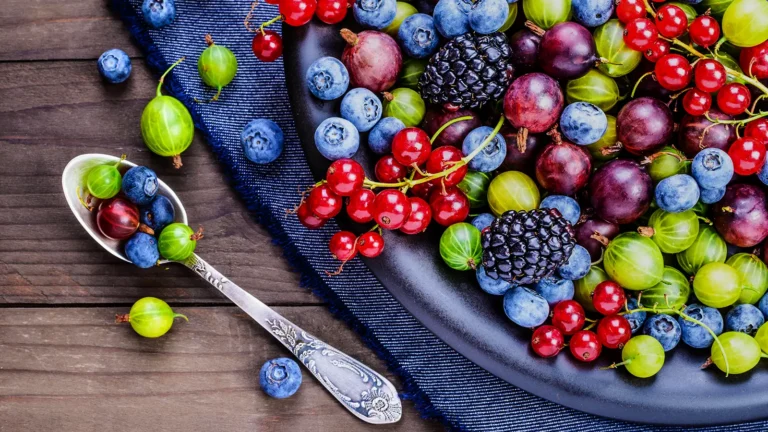
- La consommation de fruits et de baies à forte teneur en antioxydants, comme les myrtilles, les raisins et les kiwis, à chaque repas ou en dessert, est recommandée pour prévenir le stress oxydatif postprandial et la lipémie (Prior et al., 2007).
– Notre corps a besoin de 8 000 à 10 000 unités ORAC par jour pour contrer l'oxydation métabolique, et davantage si nous consommons des produits animaux, avons de mauvaises habitudes, souffrons d'infections ou sommes exposés à des toxines environnementales. (Prior et al., 2007).
– L'apport RDA antioxydant optimal se situe entre 30 000 et 40 000 unités ORAC selon le mode de vie individuel. La recommandation actuelle de la FDA de 3 000 unités n'est pas suffisante et est une manipulation de la science médicale pour le maintien du statu quo.
- La FDA recommande seulement 3 000 unités ORAC parce que c'est un chiffre que la plupart des gens peuvent atteindre avec quelques portions de fruits et légumes. Toutefois, cette quantité n'est pas suffisante pour assurer une santé et un bien-être optimaux, selon plusieurs études en science nutritionnelle.
- Une faible consommation d'antioxydants peut augmenter le risque de plusieurs maladies chroniques causées par le stress oxydatif, telles que le diabète, les maladies cardiovasculaires, le cancer et la maladie d'Alzheimer.
- Le régime alimentaire américain standard manque d'antioxydants, l'Américain moyen ne consommant que 2 000 unités ORAC par jour (Yang et al., 2011).
- Seuls 5 % de la population américaine consomment 5 fruits et légumes par jour.
– Le gouvernement a supprimé la base de données ORAC et a minimisé l'importance des antioxydants pour la santé humaine, affirmant que leurs avantages ne sont pas prouvés. Cependant, des études suggèrent que les régimes riches en antioxydants peuvent améliorer la fonction endothéliale et diminuer l'inflammation. Il est recommandé de choisir des aliments riches en antioxydants pour améliorer la santé globale.
– Officiellement, la base de données ORAC a été supprimée par le gouvernement car elle était utilisée à mauvais escient par les entreprises de fabrication d'aliments et de compléments alimentaires pour promouvoir leurs produits. De plus, la base de données ORAC a commencé à influencer les consommateurs et a commencé à guider leurs choix d'achat, mais les données sur la capacité antioxydante ont été générées par des méthodes in vitro (tube à essai) de sorte qu'elles ne peuvent pas être extrapolées aux effets in vivo (humains).
Métabolisme.
Avez-vous déjà remarqué comment une pomme devient brune lorsque vous la coupez en deux et la laissez exposée à l'air ? C'est à cause de l'oxydation, une réaction chimique qui endommage les cellules et les tissus des organismes vivants. Les antioxydants sont des composés qui peuvent empêcher ou ralentir l'oxydation en neutralisant les radicaux libres qui la provoquent. En mangeant des aliments riches en antioxydants, vous pouvez protéger vos cellules du stress oxydatif qui fait partie du métabolisme normal et ralentir ses effets néfastes sur votre santé et votre vieillissement.
Nous utilisons du glucose et de l'oxygène pour créer de l'énergie pour l'existence, ce qui signifie que nous avons un besoin calorique de base juste pour un métabolisme régulier. Brûler de l'énergie pour se nourrir sans autre stress ou toxine supplémentaire crée des radicaux libres tout seul. Oxyder le glucose pour produire de l'énergie n'est pas parfait et certains radicaux libres se formeront quoi qu'il arrive.
Pour cette raison, chaque fois que nous mangeons quelque chose pendant le métabolisme normal, il y aura une augmentation du niveau d'oxydation dans notre circulation sanguine au cours des prochaines heures, car notre corps métabolise le glucose en énergie.
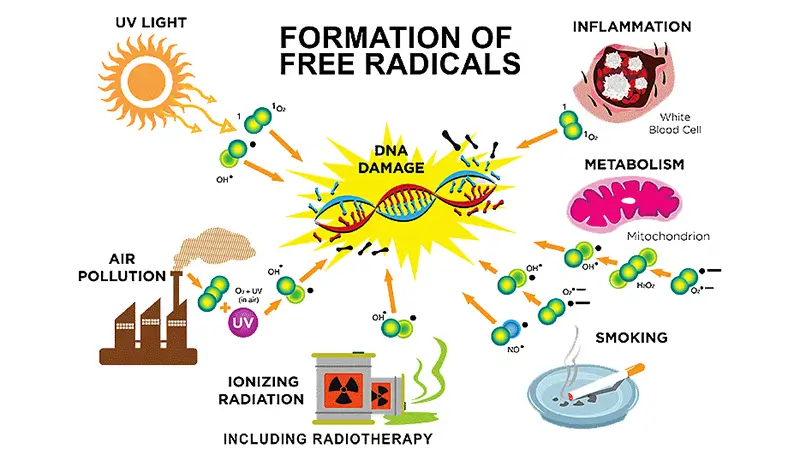
C'est une réaction tout à fait normale. Non seulement le métabolisme régulier, mais de nombreux autres processus créeront également un épuisement de notre réserve antioxydante. Par exemple, les événements stressants, les infections, l'exercice, les toxines et de nombreux autres facteurs de stress.
Résumé:
Alors que le métabolisme régulier crée des radicaux libres, les aliments riches en antioxydants aident à protéger vos cellules de ce stress oxydatif, ralentissant ainsi ses effets nocifs sur la santé et le vieillissement. Adoptez une alimentation diversifiée et riche en antioxydants pour lutter contre ce processus naturel mais nocif.
Maladaptation.
En termes d'évolution, nous n'avons jamais mangé de viande et de produits d'origine animale en quantité significative. Au cours des 60 derniers millions d'années d'évolution, nous nous sommes nourris d'aliments à base de plantes entières et nous avons maintenant un problème. Nous avons perdu la capacité de produire de la vitamine C dans notre foie. La plupart des autres espèces et tous les carnivores et omnivores produisent leur propre vitamine C.
Dans la nature, le sucre est toujours accompagné de phytonutriments. Nous avons évolué pour nous attendre à une explosion d'antioxydants alimentaires à chaque fois que nous mangeons.
Mais que se passe-t-il quand nous mangeons sucre rafiné, huile et produits animaux? Dans le monde développé, la plupart des calories proviennent de ce type d'aliments. Où sont les antioxydants attendus pour prévenir l'inflammation et les dommages à l'ADN?
Si nous ne mangeons pas d'aliments végétaux riches en phytonutriments à chaque repas, alors pendant des heures après avoir mangé, notre corps est déséquilibré dans un état pro-oxydant, ce qui peut nous préparer à des maladies de stress oxydant et augmentera un taux des dommages à l'ADN, ce qui signifie que nous vieillirons plus rapidement.
L'état postprandial (nourri) est un état pro-oxydant.
C'est pourquoi nous devons idéalement consommer des aliments riches en antioxydants à chaque repas et tout au long de la journée afin de maintenir nos niveaux d'antioxydants dans un équilibre positif autant que possible. Voici, par exemple, ce qu'en dit le British Journal of Nutrition (Burton-Freeman et al., 2010).
"L'état postprandial (nourri) est un état pro-oxydant. La période postprandiale est une période de métabolisme oxydatif actif et de formation de ROS (radicaux libres). Il est de plus en plus évident que l'état postprandial est un important facteur contributif aux maladies chroniques. Deux questions principales sont posées : premièrement, quel est le rôle des aliments végétaux, en particulier les fruits riches en composés phénoliques complexes et simples, dans la gestion métabolique postprandiale ; et deuxièmement, les preuves soutiennent-elles la consommation de ces fruits avec les repas comme stratégie pratique pour préserver la santé et réduire le risque de maladie ? Les données recueillies suggèrent que la consommation de fruits riches en composés phénoliques augmente la capacité antioxydante du sang, et lorsqu'ils sont consommés avec des repas «pro-oxydants et pro-inflammatoires» riches en graisses et en glucides, ils peuvent contrebalancer leurs effets négatifs."
(Burton-Freeman et al., 2010)
Dans une certaine mesure, le Dr Ronald avait raison. Prendre 25 000 unités ORAC à la fois ne serait pas plus bénéfique que de prendre 5000 unités ORAC cinq fois par jour, car en sept ou huit heures, l'excédent pourrait être excrété. Nous ne pouvons pas simplement manger 10 portions de myrtilles au petit-déjeuner et manger du bacon le reste de la journée. Prendre 5000 unités cinq fois par jour est une stratégie optimale. Ou mieux encore, prendre 25 000 unités cinq fois par jour.
Résumé:
Combattez le stress oxydatif post-repas, un contributeur clé aux maladies chroniques, en donnant la priorité aux aliments riches en antioxydants à chaque repas de la journée, plutôt que de compter sur des méga-doses occasionnelles. La diversité et la fréquence l’emportent sur les crises de boulimie à haute dose.
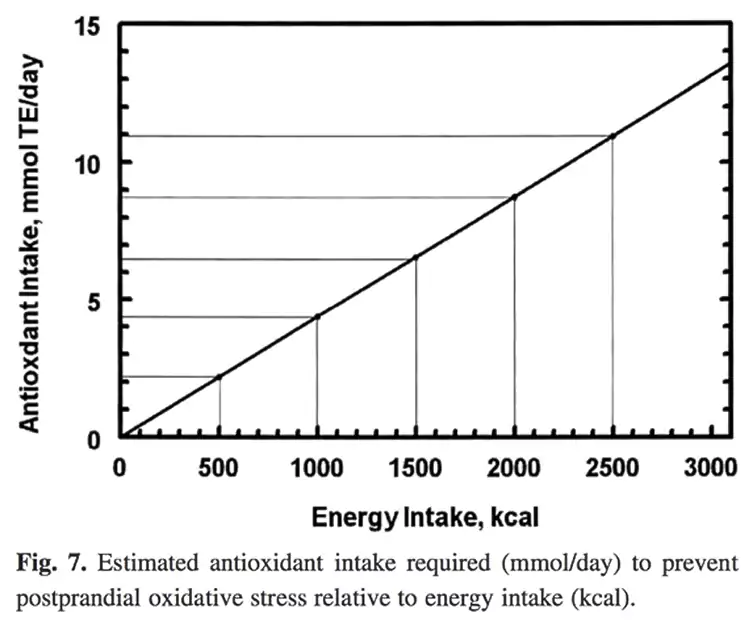
Estimation de l'apport en antioxydants requis pour prévenir l'état pro-oxydant postprandial (nourri).
Une série d'études a été réalisée sur ce sujet au cours des 10 à 15 dernières années. Cette étude (Prior et al., 2007) a examiné différentes études qui ont analysé l'influence de différents fruits sur l'état oxydatif postprandial. Les prunes séchées ou le jus de prune séché, par exemple, n'ont pas modifié la capacité antioxydante hydrophile (soluble dans l'eau) ou lipophile (soluble dans l'huile), ce qui m'a surpris. Les prunes sont l'une des sources les plus riches en antioxydants et ont une valeur ORAC élevée, mais il semble que leurs antioxydants ne soient pas biodisponibles in vivo. Les myrtilles augmentent la capacité antioxydante hydrophile et lipophile et les cerises augmentent la capacité antioxydante lipophile du plasma mais pas la capacité antioxydante hydrophile. La conclusion est la suivante :
"Nous avons démontré que la consommation de certaines baies et fruits tels que les myrtilles, les raisins mélangés et les kiwis, était associée à une augmentation de l'AOC plasmatique (capacité antioxydante) à l'état postprandial et la consommation d'une source d'énergie de macronutriments ne contenant pas d'antioxydants était associée à une diminution de l'AOC plasmatique. La consommation d'aliments riches en antioxydants à chaque repas est recommandée afin de prévenir les périodes de stress oxydatif postprandial.“
(Prior et al., 2007)
Parce qu'ils croyaient qu'éviter les repas riches en graisses était inévitable pour la plupart de la population, ce qui signifie que les gens mangeront des produits d'origine animale et des aliments raffinés quoi qu'il arrive, l'implication pratique de cette étude dans leur esprit était de promouvoir la consommation de fruits à haute teneur en polyphénols. à chaque repas ou en dessert pour prévenir les dommages oxydatifs corrélés à l'état oxydatif postprandial et à la lipémie postprandiale (niveaux élevés de graisses dans le sang). Si nous ne mangeons pas suffisamment d'aliments végétaux riches en phytonutriments pendant la journée, comme la plupart des gens sur le régime américain standard, notre corps sera dans un état pro-oxydant constant qui créera à long terme de nombreuses maladies. Et quand je dis maladies, je veux dire de vraies maladies potentiellement mortelles comme cancer Par exemple. La plupart des maladies de la richesse sont causées par une mauvaise alimentation. Les radicaux libres oxyderont les graisses et le cholestérol dans notre circulation sanguine et cela augmentera considérablement le risque de maladies cardiovasculaires.
Résumé:
Le nombre d'antioxydants varie également en fonction des calories dont nous avons besoin. Pour les hommes, si vous avez besoin de 2 500 calories pour votre métabolisme de base, vous aurez besoin de 11 000 unités ORAC par jour. Si votre métabolisme de base est de 1800 calories, vous aurez besoin de 8000 unités ORAC. Si vous brûlez plus de calories, vous aurez besoin de plus d'unités ORAC. Il s'agit simplement de contrecarrer l'oxydation métabolique (Prior et al., 2007).
Si vous mangez des produits d'origine animale, les protéines animales ont des propriétés pro-oxydantes à elles seules, vous en aurez besoin de plus.
L'alcool est fortement pro-inflammatoire et toxique pour l'organisme. Si vous buvez ou fumez, vous en aurez besoin de plus.
Si vous avez une infection ou une maladie, vous aurez besoin de plus.
En plus de cela, nous sommes tous exposés à des toxines environnementales, donc en fonction de votre charge toxique individuelle, vous aurez besoin de plus.
En vieillissant, vous en aurez besoin de plus.
Il existe un concept connu sous le nom de vieillissement enflammé. En vieillissant, nous avons un déclin de la fonction immunitaire mais aussi les cellules immunitaires des personnes âgées produisent beaucoup plus de cytokines pro-inflammatoires. La réponse est davantage de sources alimentaires anti-inflammatoires dans notre alimentation. Idéalement, nous devrions consommer toutes nos unités ORAC d'aliments à base de plantes entières pendant toute la journée.
Résumé:
Your daily antioxidant needs aren’t one-size-fits-all! They depend on factors like your calorie intake, animal product consumption, toxins, infections, age, and even lifestyle habits like smoking and drinking.
Apport RDA antioxydant optimal estimé.
Notre maximum quotidien n'est pas de 3 000 unités ou de 5 000 unités. Notre minimum quotidien est de 8 000 à 10 000 juste pour contrecarrer le métabolisme. En plus de cela, nous devrions ajouter 5 000 à 10 000 unités de plus à cause de la surcharge toxique, et si vous êtes fumeur ou buvez de l'alcool ou avez d'autres mauvaises habitudes, vous devriez en ajouter au moins 5 000 à 10 000 de plus. Si vous avez la grippe ou une infection ou toute autre maladie, vous devez en ajouter beaucoup plus et si vous êtes stressé ou en manque de sommeil, vous devez en ajouter également. Si vous voulez lutter contre les dommages à l'ADN à des fins de longévité et de protection de l'ADN, vous devez en ajouter 5 000 à 10 000 de plus.
Ma recommandation pour antioxydant optimal RDA se situe entre 30 000 et 40 000 unités ORAC selon le mode de vie individuel.
Pas 3 000 à 5 000 valeur de recommandation actuellement acceptée par la FDA. En réalité, même 3 000 unités est un nombre que la plupart des personnes suivant un régime américain standard auront du mal à atteindre et ce n'est pas suffisant, même pas proche. La raison pour laquelle le gouvernement recommande 3 000 unités est que, dans leurs recherches, ce sera le nombre que la plupart des gens accepteront, car les gens peuvent atteindre cela avec quelques portions de fruits et légumes et nous ne voulons pas que les gens changent leurs véritables habitudes alimentaires. Ce n'est pas bon pour l'entreprise. Le slogan du gouvernement "5 par jour" est pour la consommation constante de cinq fruits et légumes par jour fournissant une valeur ORAC moyenne de 2 500 unités ORAC. Ce n'est qu'une manipulation de la science médicale pour le maintien du statu quo. Si la FDA recommandait des valeurs réelles, cela détruirait complètement le courant pyramide alimentaire et tout ce que le gouvernement prêche depuis un siècle.
Résumé:
Forget the “5 a Day” slogan! The true minimum antioxidant intake to counteract everyday stress and toxins is much higher than official recommendations, requiring a diet rich in fruits, veggies, and potentially supplementation, depending on lifestyle factors. Aim for 30,000-40,000 ORAC units daily for optimal health and longevity.
Estimation de l'apport en antioxydants dans le régime américain standard (SAD).
Mais même cette valeur minuscule que vous pouvez atteindre avec une pincée de cannelle est, en réalité, un nombre que la plupart des gens n'atteindront même pas. La triste réalité est que seulement 5 % de la population américaine consomme 5 fruits et légumes par jour. L'Institut national du cancer a constaté que 42 % de la population consomme moins de 2 portions par jour. L'Américain moyen ne consomme que 2 000 unités ORAC par jour (Yang et al., 2011). De plus, lorsque vous mangez des fruits, vous devez vous rappeler que certains composés phytochimiques ne résistent pas à la chaleur et qu'avec le temps, leur valeur antioxydante diminue en raison de l'exposition à l'air. Par exemple, il est bien préférable d'acheter des graines de lin entières, puis de les broyer vous-même et de les manger immédiatement que d'acheter des graines de lin moulues dans un magasin. Tous les nutriments antioxydants qui traversent la récolte sont ensuite diminués dans une certaine mesure en raison de la cuisson, de la transformation, de la conservation, de l'emballage ou simplement de l'exposition à l'air.
Lorsque nous avons une alimentation tellement dépourvue de composés phytochimiques et un gouvernement qui veut cacher cette connaissance au grand public, nous avons une situation où le café est devenu la première source d'antioxydants. Je ne veux pas minimiser les bienfaits du café, mais ce n'est pas la raison pour laquelle la plupart des gens en boivent. Ils veulent juste de la caféine. Certaines des boissons les plus riches en antioxydants sont celles que les gens consomment régulièrement comme le café, le thé et le vin rouge. Le problème est que la consommation de ces boissons contribue de manière significative à la quantité totale d'antioxydants consommés car le nombre d'antioxydants consommés est infime. Ces boissons sont loin d'être de puissantes sources d'antioxydants.
Si vous voulez boire un verre, le cacao sera un meilleur choix. Le cacao est le produit le plus équilibré en termes d'antioxydants car il contient à la fois des antioxydants hydrosolubles et liposolubles et il est très puissant. Combien y a-t-il dans le café ? La valeur antioxydante du café Arabica infusé, moyennement torréfié est de 2 780. Cette valeur est pour 100 ml de liquide (3,38 onces). C'est une bonne source car vous pouvez facilement boire 200 ml de café par jour si vous êtes un buveur de café. Une tasse de café peut contenir plus d'antioxydants qu'un petit-déjeuner complet. Le vin rouge donnera une valeur de 3 607, le thé vert de 1 253 et la poudre de cacao 55 653 pour 100 grammes. La poudre de cacao "brut" peut atteindre 80 000 unités. Si vous voulez boire un café, l'espresso est un meilleur choix. Espresso en aura 12, 640 unités sur une échelle ORAC, mais encore une fois, c'est pour 100 ml et vous en boirez un tiers dans un seul expresso. Lorsque vous commencez à lire et à comprendre une partie de la science derrière les antioxydants et que vous commencez à en apprendre davantage sur les valeurs ORAC, cela pourrait, et dans la plupart des situations, avoir un impact sur vos décisions d'épicerie quotidiennes. La plupart des gens ne veulent pas mourir d'un cancer ou souffrir de maladies chroniques débilitantes. Vous pourriez, par exemple, substituer un aliment à un autre plus nutritif ou Dieu nous en préserve, vous pourriez décider de manger une belle salade de fruits au lieu de la crème glacée et du Coca-Cola. C'est ce qui a rendu l'industrie si en colère. La plupart des gens ne veulent pas mourir d'un cancer ou souffrir de maladies chroniques débilitantes. Vous pourriez, par exemple, substituer un aliment à un autre plus nutritif ou Dieu nous en préserve, vous pourriez décider de manger une belle salade de fruits au lieu de la crème glacée et du Coca-Cola. C'est ce qui a rendu l'industrie si en colère. La plupart des gens ne veulent pas mourir d'un cancer ou souffrir de maladies chroniques débilitantes. Vous pourriez, par exemple, substituer un aliment à un autre plus nutritif ou Dieu nous en préserve, vous pourriez décider de manger une belle salade de fruits au lieu de la crème glacée et du Coca-Cola. C'est ce qui a rendu l'industrie si en colère.
Résumé:
La plupart des Américains consomment beaucoup moins d’antioxydants que ce qui est recommandé, même si les boissons courantes comme le café et le thé en offrent. Pensez à passer au cacao ou à l’espresso pour un apport antioxydant plus puissant et donnez la priorité aux fruits et légumes dans votre alimentation.
Recommandation officielle d'apport d'antioxydants.
En conséquence de cela, le gouvernement américain a décidé de supprimer discrètement la base de données ORAC et de minimiser toute la science qui la sous-tend. Peu de temps après sa publication, l'USDA a supprimé la base de données et la ligne acceptée de "5 par jour" a été adoptée à la place. Officiellement la base de données ORAC précédemment disponible sur le site de l'USDA a été retirée pour les deux raisons principales suivantes:
1. "Les valeurs ORAC sont régulièrement utilisées à mauvais escient par les entreprises de fabrication d'aliments et de compléments alimentaires pour promouvoir leurs produits et par les consommateurs pour guider leurs choix d'aliments et de compléments alimentaires.
2. "Les données sur la capacité antioxydante des aliments générées par des méthodes in vitro (en éprouvette) ne peuvent pas être extrapolées aux effets in vivo (humains) et les essais cliniques pour tester les avantages des antioxydants alimentaires ont produit des résultats mitigés. Nous savons maintenant que les molécules antioxydantes dans les aliments ont un large éventail de fonctions, dont beaucoup ne sont pas liées à la capacité d'absorber les radicaux libres.
Il y a une vérité partielle dans certaines des affirmations de l'USDA, mais la décision était moins motivée par la science que par le désir de protéger les intérêts de l'industrie, à la fois alimentaire et pharmaceutique. Il est vrai que certains fabricants de produits alimentaires ont commencé à étiqueter leurs produits avec des allégations de santé et qu'il n'y a pas de science pour chaque aliment répertorié dans la base de données, mais la science n'est pas la raison pour laquelle la base de données est retirée. Il est exact que ces mesures in vitro ne peuvent pas être directement transportées sur des sujets in vivo. Il y a un problème de biodisponibilité et de puissance. Les composés phytochimiques de certains aliments peuvent avoir un taux d'ORAC beaucoup plus élevé dans le tube à essai, mais une faible absorption, de sorte que leur valeur réelle est diminuée et certains autres composés phytochimiques peuvent être très puissants, mais causer d'autres problèmes graves dans le corps. Mais encore une fois, au bout du fil,
L'USDA est allé jusqu'à affirmer que les antioxydants eux-mêmes ne sont pas prouvés comme étant bénéfiques pour un organisme humain et vous pouvez maintenant comprendre que ce n'est qu'une autre demi-vérité..
L'un des mensonges qu'ils ne cessent de répéter est :
"Les valeurs ORAC ont été exagérées et incorrectement liées à des allégations de santé non étayées."
Toute la science et les citations que j'ai dans ce chapitre sont bien connues et il y a des dizaines de milliers d'études à ce jour la science est là mais seulement pour l'utilisation dans la recherche pour la médecine brevetée nouvelle et améliorée. Les bases de données accessibles au public et la sensibilisation ne sont pas dans l'intérêt principal du gouvernement américain. Malheureusement, la plupart d'entre nous devront s'éduquer et les conseils que nous obtiendrons seront conçus pour nous embrouiller.
Mon conseil que je pratique aussi dans ma vie est d'avoir au moins 30 000 unités par jour à partir de sources d'aliments entiers. Mais je ne fume pas et je fais de l'exercice presque tous les jours et je mange principalement des aliments végétaux entiers, donc je n'ai pas de problème à consommer cette quantité. De plus, je prends certains des mélanges à base de plantes que je fais moi-même qui me donneront environ 20 000 unités dans une cuillère à soupe et je prends des suppléments comme l'astaxanthine. Je consommerai 20 à 30 fois la quantité de valeur recommandée par la FDA. La plupart des gens, d'autre part, n'ont pas conscience de ce problème. Ils savent qu'ils doivent manger des fruits et des légumes parce qu'ils sont en bonne santé, mais c'est aussi loin que la sensibilisation va. Et cela est fait délibérément. Lorsque je recommande quelque chose qui ne correspond pas aux recommandations acceptées de la FDA, je le fais sur la base de données scientifiques reconnues et les gens ont généralement du mal à croire que la FDA fera le contraire.
Résumé:
The US government removed the ORAC database, a tool for measuring food’s antioxidant capacity, due to concerns about misuse and the limitations of in-vitro testing, but i will argue the decision was driven by protecting industry interests rather than science. Though the database isn’t perfect, it provided valuable information for further research and public awareness, which some say is being intentionally suppressed.
Études sur les choix alimentaires in vivo.
Par exemple, une étude a été menée sur ce sujet précis (Franzini et al., 2012). Des chercheurs ont voulu voir l'impact d'une alimentation riche en antioxydants sur la fonction endothéliale. Ils ont réalisé une étude scientifique sur les choix alimentaires. C'est exactement ce dont j'ai parlé dans ce chapitre : il s'agit d'une étude bien faite que les responsables de l'USDA auraient dû lire avant de supprimer la base de données ORAC. Ils ont constitué deux groupes de personnes. Tous deux ont suivi un régime alimentaire comportant la même quantité de fruits et de légumes. La différence était que le premier groupe consommait des produits de haute qualité riches en antioxydants, comme les baies, et que l'autre groupe avait un régime composé de choix de mauvaise qualité, comme la laitue, les concombres et les bananes. Les quantités de fibres, de protéines, de minéraux, de vitamines et de tous les autres nutriments étaient les mêmes dans les deux groupes et étaient toutes supérieures aux AJR recommandés.
La seule différence était dans les valeurs ORAC des régimes. Le résultat était comme prévu. La protéine C-réactive (un marqueur de l'inflammation dans le corps) a augmenté de 40 % dans le groupe à faible teneur en antioxydants par rapport au groupe témoin et a diminué de 14 % dans le groupe à forte teneur en antioxydants. Cela peut ensuite être traduit dans toutes les autres maladies où l'inflammation chronique joue un rôle comme les maladies cardiovasculaires. La conclusion était :
"Un régime HT (riche en antioxydants) à court terme améliore la fonction endothéliale chez les volontaires à faible risque cardiovasculaire, ce qui peut réduire davantage leur risque de MCV (maladie cardiovasculaire).“
(Franzini et al., 2012)
Ma recommandation sera de choisir des aliments riches en antioxydants si vous le pouvez. Si vous voulez manger de la salade, mangez du chou frisé au lieu de la laitue. Si vous voulez manger des fruits, mangez des baies plutôt que des bananes. Si vous voulez une boisson, buvez du thé à l'hibiscus au lieu du coca. Si vous souffrez d'une maladie pro-inflammatoire, cela améliorera considérablement votre santé. Il existe de nombreuses maladies causées par l'inflammation, mais beaucoup de gens ne savent pas qu'elles sont causées par une mauvaise alimentation pro-inflammatoire.
Résumé:
Donner la priorité aux aliments riches en antioxydants comme les baies et le chou frisé plutôt qu’aux options faibles en antioxydants comme la laitue et les bananes peut réduire considérablement l’inflammation et améliorer la santé globale, en particulier pour les personnes souffrant de maladies pro-inflammatoires.
Conclusion :
- Brûler de l'énergie pour se nourrir sans autre stress ou toxine supplémentaire crée des radicaux libres tout seul.
- Chaque fois que nous mangeons quelque chose pendant le métabolisme normal, il y aura une augmentation du niveau d'oxydation dans notre circulation sanguine au cours des prochaines heures.
- Dans la nature, le sucre est toujours accompagné de phytonutriments. Nous avons évolué pour nous attendre à une explosion d'antioxydants alimentaires à chaque fois que nous mangeons.
- Si nous ne mangeons pas d'aliments végétaux riches en phytonutriments à chaque repas, pendant des heures après avoir mangé, notre corps est déséquilibré dans un état pro-oxydant.
- La consommation d'aliments riches en antioxydants à chaque repas est recommandée pour prévenir les périodes de stress oxydatif postprandial.
- Même si nous ne mangeons pas une abondance d'aliments riches en composés phytochimiques de haute qualité, nous devrions au moins manger suffisamment d'antioxydants pour contrecarrer l'oxydation de la digestion des calories.
- Si vous avez besoin de 2 500 calories pour votre taux métabolique de base, vous aurez besoin de 11 000 unités ORAC par jour. Si votre métabolisme basal est de 1 800 calories, vous aurez besoin de 8 000 unités ORAC juste pour contrecarrer l'oxydation métabolique.
- Si vous mangez des produits d'origine animale, les protéines animales ont des propriétés pro-oxydantes à elles seules, vous en aurez besoin de plus.
- L'alcool est fortement pro-inflammatoire et toxique pour l'organisme. Si vous buvez ou fumez, vous en aurez besoin de plus.
- Si vous avez une infection ou une maladie, vous aurez besoin de plus.
- En plus de cela, nous sommes tous exposés à des toxines environnementales, donc en fonction de votre charge toxique individuelle, vous aurez besoin de plus.
- En vieillissant, vous en aurez besoin de plus.
- Si vous voulez lutter contre les dommages à l'ADN à des fins de longévité et de protection de l'ADN, vous devez en ajouter 5 000 à 10 000 de plus.
- L'USDA est allé jusqu'à affirmer que les antioxydants eux-mêmes ne sont pas prouvés comme étant bénéfiques pour un organisme humain
- Seulement 5 % de la population américaine consomme 5 fruits et légumes par jour. L'Institut national du cancer a constaté que 42 % de la population mange moins de 2 portions par jour.
- Ma recommandation pour un RDA antioxydant optimal se situe entre 30 000 et 40 000 unités ORAC selon le mode de vie individuel.
FAQ
Les références:
Passages choisis d'un livre : Passages choisis d'un livre : Pokimica, Milos. Devenir vegetarien? Examen de la science, partie 3. Kindle ed., Amazon, 2020.
- En ligneBurton-Freeman B. (2010). Événements métaboliques postprandiaux et composés phénoliques dérivés de fruits : une revue de la science. The British journal of nutrition, 104 Supplément 3, S1–S14. https://doi.org/10.1017/S0007114510003909
- Prior, RL, Gu, L., Wu, X., Jacob, RA, Sotoudeh, G., Kader, AA et Cook, RA (2007). La capacité antioxydante du plasma change après un repas en tant que mesure de la capacité d'un aliment à modifier le statut antioxydant in vivo. Journal de l'American College of Nutrition, 26(2), 170–181. https://doi.org/10.1080/07315724.2007.10719599
- Franzini, L., Ardigò, D., Valtueña, S., Pellegrini, N., Del Rio, D., Bianchi, MA, Scazzina, F., Piatti, PM, Brighenti, F., & Zavaroni, I. ( 2012). La sélection d'aliments basée sur une capacité antioxydante totale élevée améliore la fonction endothéliale dans une population à faible risque cardiovasculaire. Nutrition, métabolisme et maladies cardiovasculaires : NMCD, 22(1), 50–57. https://doi.org/10.1016/j.numecd.2010.04.001
- Yang, S., & Lian, G. (2020). ROS et maladies : rôle dans le métabolisme et l'approvisionnement énergétique. Biochimie moléculaire et cellulaire, 467(1-2), 1–12. https://doi.org/10.1007/s11010-019-03667-9
- Sharifi-Rad , M. , Anil Kumar , NV , Zucca , P. , Varoni , EM , Dini , L. , Panzarini , E. , Rajkovic , J. , Tsouh Fokou , PV , Azzini , E. , Peluso , I . , Prakash Mishra , A. , Nigam , M. , El Rayess , Y. , Beyrouthy , ME , Polito , L. , Iriti , M. , Martins , N. , Martorell , M. , Docea , AO , Setzer , WN , ... Sharifi-Rad, J. (2020). Mode de vie, stress oxydatif et antioxydants : va-et-vient dans la physiopathologie des maladies chroniques. Frontières en physiologie, 11, 694. https://doi.org/10.3389/fphys.2020.00694
- Yang, M., Chung, SJ, Chung, CE, Kim, DO, Song, WO, Koo, SI et Chun, OK (2011). Estimation de la capacité antioxydante totale de l'alimentation et des suppléments chez les adultes américains. The British journal of nutrition, 106(2), 254–263. https://doi.org/10.1017/S0007114511000109
Articles Similaires
Vous avez des questions sur la nutrition et la santé ?
Je serais ravie d'entendre vos commentaires et d'y répondre dans mon prochain message. J'apprécie votre contribution et votre opinion et j'espère avoir bientôt de vos nouvelles. Je vous invite également à nous suivre sur Facebook, Instagram et Pinterest pour plus de contenu sur l'alimentation, la nutrition et la santé. Vous pouvez y laisser un commentaire et entrer en contact avec d'autres passionnés de santé, partager vos conseils et expériences, et obtenir le soutien et les encouragements de notre équipe et de notre communauté.
J'espère que ce billet a été instructif et agréable pour vous et que vous êtes prêt à mettre en pratique les connaissances que vous avez acquises. Si vous avez trouvé ce billet utile, veuillez le partager à vos amis et à votre famille qui pourraient également en bénéficier. On ne sait jamais qui peut avoir besoin de conseils et de soutien dans son parcours de santé.
– Vous pourriez aussi aimer –
Les Huiles Essentielles en Tant Que Compléments Antioxydants : Règles et Stratégies

Carnisme- La Psychologie de la Consommation de Viande
L'eau Distillée à Boire - Aide à la Désintoxication ou Poison Mortel ?
Exposition à l'Arsenic et Consommation de Riz - Le Grain le Plus Toxique de Tous
Suppléments d'Antioxydants Contre Aliments Complets - Payer Pour Vivre Moins Longtemps
Régime Pauvre en Histamine et Intolérance à l'Histamine : Guide Complet
Rince-bouche Naturel Fait Maison : Éprouvé, Plus Fort et Moins Toxique
Consommation Optimale d'Antioxydants : Apports Recommandés en Unités ORAC

Apprendre la Nutrition

Milos Pokimica est docteur en médecine naturelle, nutritionniste clinique, rédacteur en santé médicale et nutrition et conseiller en sciences nutritionnelles. Auteur de la série de livres Devenir vegetarien ? Examen des sciences, il exploite également le site Web de santé naturelle GoVeganWay.com
Avis de non-responsabilité médicale
GoVeganWay.com vous propose des critiques des dernières recherches liées à la nutrition et à la santé. Les informations fournies représentent l'opinion personnelle de l'auteur et ne sont pas destinées ni implicites à se substituer à un avis médical professionnel, un diagnostic ou un traitement. Les informations fournies sont à titre informatif uniquement et ne sont pas destinées à remplacer la consultation, le diagnostic et/ou le traitement médical d'un médecin qualifié ou d'un prestataire de soins de santé.NE JAMAIS IGNORER LES CONSEILS MÉDICAUX PROFESSIONNELS OU RETARDER LA RECHERCHE DE SOINS MÉDICAUX EN RAISON DE QUELQUE CHOSE QUE VOUS AVEZ LU OU ACCÉDÉ SUR GoVeganWay.com
N'APPLIQUEZ JAMAIS DE CHANGEMENTS AU STYLE DE VIE OU TOUT CHANGEMENT À LA SUITE DE QUELQUE CHOSE QUE VOUS AVEZ LU SUR GoVeganWay.com AVANT DE CONSULTER UN PRATICIEN MÉDICAL AGRÉÉ.
En cas d'urgence médicale, appelez immédiatement un médecin ou le 911. GoVeganWay.com ne recommande ni n'approuve aucun groupe, organisation, test, médecin, produit, procédure, opinion ou autre information spécifique pouvant être mentionné à l'intérieur.
Choix de l'éditeur -
Cancer Choix de l'éditeur Phytochimiques
Pouvoir Anticancéreux des Fruits et Légumes : Preuves in Vivo et Cliniques
Certains extraits végétaux rivalisent avec les principaux médicaments de chimiothérapie et ciblent en même temps plusieurs types différents de cellules cancéreuses.
Antioxydants Choix de l'éditeur ORAC
Les Huiles Essentielles en Tant Que Compléments Antioxydants : Règles et Stratégies
Les huiles essentielles de qualité alimentaire peuvent constituer une stratégie pratique et conviviale pour optimiser la valeur antioxydante et les scores ORAC de notre alimentation.
Antioxydants Choix de l'éditeur ORAC
Régime Riche en Antioxydants : Règles Rénérales et Stratégies
Il existe des stratégies simples et rentables pour optimiser la valeur antioxydante de notre alimentation.
Antioxydants Choix de l'éditeur ORAC
Comprendre les Valeurs ORAC : La Teneur en Antioxydants des Aliments
Lorsque votre principale source d'antioxydants est le café, vous savez que vous avez un sérieux problème.

Antioxydants Choix de l'éditeur ORAC
Avantages de l’Astaxanthine : L’Antioxydant Naturel le Plus Puissant au Monde
L'astaxanthine est l'antioxydant naturel et universel le plus puissant (soluble dans l'huile et dans l'eau) connu de la science. Il s'accumule dans les tissus et ne peut jamais se transformer en pro-oxydant.
Antioxydants Choix de l'éditeur ORAC Phytochimiques
Les Antioxydants : Comprendre les Bases
Il n'y a pas de composés phytochimiques ou d'antioxydants dans les produits d'origine animale. En moyenne, les aliments végétaux contiennent plus de 60 fois plus d'antioxydants que les aliments d'origine animale.
Choix de l'éditeur Régime végétalien
Les Carences en Nutriments Dans le Régime Végétalien : Stratégies de Prévention
Il existe neuf carences nutritionnelles courantes à l'échelle de la population qui affectent les personnes qui suivent un régime à base de plantes. Si elles ne sont pas corrigées à temps, certaines déficiences ont des conséquences terribles et incurables.
Choix de l'éditeur Régime optimal
Déficience en Micronutriments Dans le Régime Alimentaire Américain Standard : Stratégies d'Optimisation
Le profil nutritionnel de notre régime moderne à base de viande, de sucre et d'aliments transformés est totalement incongru avec notre évolution, ce qui entraîne de graves carences en micronutriments.
Choix de l'éditeur Phytochimiques
Photochimie : Comprendre les Bases
Chaque phytochimique qui existe a une action biologique dans le corps humain. Chacun parmi des millions de composés phytochimiques différents.
Choix de l'éditeur Lait Régime optimal
Lait et Produits Laitiers : Corrélations Avec les Risques Pour la Santé
Les associations connues avec le lait et la consommation de produits laitiers sont l'infertilité, le cancer de l'ovaire et du sein, la leucémie, le diabète de type 1, l'autisme, l'artériosclérose, la cataracte, la polyarthrite rhumatoïde, la sclérose en plaques, l'hyperactivité, la congestion, les boutons, etc.
Cancer Choix de l'éditeur Protéine
Protéine Complète : Signalisation de l'IGF-1 dans la Formation du Cancer
Lorsque vous mangez des protéines animales, vous avez quatre fois plus de chances de développer tous les types de cancer. Lorsque vous fumez, vous avez quatre fois plus de chances de développer un cancer du poumon.

Cancer Choix de l'éditeur Protéine
Anatomie du Cancer - Corrélations Entre Les Risques Pour la Santé
Environ 2 % des cancers sont considérés par la médecine comme purement causés par des facteurs génétiques. La même gamme que dans le règne animal. On ne vous a pas dit toute la vérité.
Milos Pokimica est rédacteur spécialisé dans la santé et la nutrition et conseiller en sciences nutritionnelles. Auteur d'une série de livres Devenir vegetarien ? Examen des sciences, il exploite également le site Web de santé naturelle GoVeganWay.com
Derniers Articles –
Restriction calorique Longévité
Comment Jeûner : Les Aliments de Jeûne Qui N'interrompent Pas L'Autophagie
L'autophagie. Vous êtes-vous déjà demandé ce qu'il advient des cellules de votre corps lorsqu'elles meurent ou sont endommagées ? S'accumulent-elles et créent-elles des problèmes, ou sont-elles éliminées d'une manière ou d'une autre ? La réponse est que votre corps...
Santé Dentaire La prévention
Sensibilité et Douleur des Dents aux Sucreries : Solution Rapide et Durable
L'huile essentielle de clou de girofle est une solution rapide et facile pour soulager la douleur. C'est un antioxydant puissant et un analgésique qui peut aider à lutter contre les maladies des gencives et les maux de dents.
Les haricots
Haricots Verts : Nutrition et Bienfaits Pour La Santé
Les haricots verts sont pauvres en calories et riches en composés naturels qui peuvent vous aider à contrôler votre glycémie, à réduire votre taux de cholestérol et à lutter contre les radicaux libres.
Régime alimentaire cru Régime végétalien
Peut-on Manger des Champignons Crus : Risques pour la Santé, Nutrition et Sécurité
Les champignons contiennent des toxines sensibles à la chaleur, comme l'hydrazine ou l'agaritine, et des parois cellulaires composées de chitine qui ne peuvent pas être digérées correctement par l'homme.

Régime végétalien
Les Poissons Sont-ils Des Animaux ? Une Perspective Culturelle
Dans certaines cultures, la viande de poisson n'est pas considérée comme de la viande et le poisson est autorisé même pendant le jeûne.
Santé Dentaire La prévention
Rince-bouche Naturel Fait Maison : Éprouvé, Plus Fort et Moins Toxique
Le bain de bouche naturel fait maison est plus puissant que la chlorhexidine, moins toxique et, s'il est avalé, il peut donner des nausées, mais il a aussi une valeur ORAC élevée.
Santé Dentaire La prévention
Comment Arrêter les Caries Dentaires : Symptômes, Causes et Prévention
La consommation de sucre est la principale cause des caries dentaires, associée à des carences en minéraux, notamment en magnésium, zinc, cuivre et oligo-éléments.
Antioxydants Superaliments
Amla : Avantages Prouvés, Nutrition et Signification Clinique
L'amla est l'un des antioxydants les plus puissants au monde, avec un score ORAC de 261 530. Il s'agit d'une riche source de substances phytochimiques qui ont de nombreux effets bénéfiques sur la santé.
Top Des Nouvelles Sur la Santé - ScienceDaily
- Only one workout helped older adults lose fat and keep musclele octobre 9, 2026
A six-month study suggests that high-intensity interval training (HIIT) may offer older adults a powerful advantage: losing body fat while keeping their muscle. Unlike moderate-intensity workouts, which led to a small loss of lean muscle, HIIT preserved it while also improving body composition around the waist.
- Bacteria turn a virus’ own weapon against itle octobre 9, 2026
Researchers have uncovered a new way bacteria detect viral attacks: a virus-produced enzyme cuts a bacterial sensor protein, triggering a self-destructing immune response. The discovery could lead to more effective phage therapies against antibiotic-resistant bacteria and provide insight into ancient immune mechanisms shared with humans.
- Nearly 30,000 people tested quit-smoking methods. One stood outle octobre 9, 2026
Nicotine e-cigarettes appear to help more smokers quit than patches, gum, and several other common approaches, according to a major review of 80 clinical trials. Researchers say regulated vaping products are not risk-free, but may be a significantly less harmful alternative for people who would otherwise continue smoking.
- Scientists tested 5 natural compounds on cancer cells. One stood outle octobre 9, 2026
Five natural compounds, including curcumin and berberine, were tested for their effects on cancer cells and healthy muscle cells. All disrupted cancer cell energy production and pushed many of the cells into a non-dividing state, with curcumin producing the strongest overall effect. Curcumin also showed a relatively favorable safety profile, while some other compounds caused more toxicity.
- FDA-approved epilepsy drug may help reverse osteoarthritis damagele octobre 8, 2026
Researchers at Yale have identified a promising new approach to osteoarthritis that could do more than simply ease pain. The epilepsy drug lacosamide appears to block a protein involved in both pain signaling and cartilage destruction, helping damaged joints shift back toward repair in preclinical studies.
- Just 7 days of strength training started shrinking fat cells in micele octobre 8, 2026
Just seven strength-training sessions helped obese mice shrink visceral fat cells and reactivate molecular pathways involved in burning stored fat, despite no change in overall body weight. The findings suggest some benefits of resistance exercise may begin long before weight loss becomes visible, though the results still need to be confirmed in humans.
- Scientists warn a popular vitamin D supplement may have a hidden downsidele octobre 8, 2026
Not all vitamin D supplements are created equal, and new research suggests that one popular form may have an unexpected downside. Scientists found that taking vitamin D2 can actually lower the body’s levels of vitamin D3, the form naturally produced by sunlight and more effective at boosting overall vitamin D. Previous studies also suggest that vitamin D3 may provide stronger immune protection against viruses and bacteria.
PubMed, #régime-vegan –
- Characterization of Nutritional Intake in Vegan Pregnant Women and its Association on Birth Weightle octobre 8, 2026
CONCLUSIONS: Vegan women had a higher rate of SGA than non-vegan women, and this increased risk may be partly related to differences in maternal protein intake and composition. In addition, vegan women had lower dietary intakes of calcium, vitamin B12, vitamin D, DHA, and choline, highlighting these nutrients as important considerations in the nutritional assessment and counseling of pregnant women adhering to a strictly vegan diet.
- Changes in ectopic lipids, insulin sensitivity, and beta cell function after a low-fat vegan diet in adults with type 2 diabetes: a 16-week single-arm clinical trialle octobre 8, 2026
CONCLUSIONS: On an ad libitum low-fat plant-based (vegan) dietary intervention, the participants with type 2 diabetes experienced reductions in ectopic fat, particularly visceral and hepatocellular fat, improvements in insulin sensitivity, reductions in AGEs, and improvements in beta-cell function.
- Sustained Regression of Parotid Mucosa-Associated Lymphoid Tissue (MALT) Lymphoma After Nutritional and Nutraceutical Intervention Without Chemoimmunotherapy: A Case Reportle octobre 5, 2026
Extranodal marginal zone lymphoma of mucosa-associated lymphoid tissue (MALT) in the setting of Sjögren’s syndrome (SS) is a well-recognized complication of chronic autoimmune salivary gland inflammation. Standard management options include radiotherapy, immunotherapy, and combination chemoimmunotherapy, with active surveillance reserved for stable, low-burden disease. The potential role of structured nutritional and nutraceutical intervention in this setting has not been previously […]
Messages Aléatoires -
Choix de l'éditeur Régime optimal
Aliments Transformés : Comprendre les Risques
Les aliments transformés signifient que l'on retire quelque chose de l'aliment entier, généralement des fibres, et que l'on ajoute quelque chose, généralement des matières grasses, du sucre, du sel et des glutamate monosodique.

Choix de l'éditeur Régime paléo Régime végétalien
Taille du Cerveau, Intelligence et Consommation de Viande- L'argument Végétalien
La combinaison d'une certaine quantité de viande fourragée au régime à prédominance végétalienne n'est pas devenue une force pivot dans l'émergence de l'intelligence humaine et de la taille du cerveau.
Industrie alimentaire Grossesse Toxicité
Excitotoxicité du MSG (glutamate monosodique) - Examen scientifique
La découverte la plus importante de toute l'histoire de l'industrie alimentaire est une branche particulière de neurotoxines appelées excitotoxines.
Café Toxicité
Avantages du Café – Pas Sans Risques
Pensons-nous que la caféine est bonne pour notre cerveau ou mauvaise ou neutre ?
Que fait la caféine réelle?

Choix de l'éditeur Industrie alimentaire
Coca-Cola Company- Revue Historique
Si vous voulez savoir quel est l'ingrédient secret du sirop de Coca-Cola. C'est l'Allemagne nazie, les escadrons de la mort guatémaltèques, le neuromarketing et le travail des enfants.

Lait
Intolérance au Lactose - 65 % de Chances Que Vous l'ayez
Les personnes d'origine européenne peuvent boire du lait, contrairement au reste du monde. Il y a cependant beaucoup de substances dans le lait en plus du lactose qu'aucun d'entre nous ne peut tolérer.
Restriction calorique Longévité
Jeûne Intermittent vs Restriction Calorique - Y a-t-il Une Différence ?
Il existe une forme de régime qui est principalement conçue pour utiliser l'autophagie appelée jeûne intermittent. Faire un régime de restriction calorique complet est un choix difficile.

Longévité Régime optimal Régime végétalien
Carence en B12 et Déclin Cognitif : Stratégies d'Optimisation de l'Homocystéine
Les vitamines qui régulent les niveaux d'homocystéine sont la B12, le folate et la B6. La plupart des non-végétaliens obtiennent suffisamment de B12 mais pas assez de folate tandis que les végétaliens obtiennent plus de folate mais n'ont pas de B12 s'ils ne sont pas supplémentés.
Choix de l'éditeur Lait Régime optimal
Lait et Produits Laitiers : Corrélations Avec les Risques Pour la Santé
Les associations connues avec le lait et la consommation de produits laitiers sont l'infertilité, le cancer de l'ovaire et du sein, la leucémie, le diabète de type 1, l'autisme, l'artériosclérose, la cataracte, la polyarthrite rhumatoïde, la sclérose en plaques, l'hyperactivité, la congestion, les boutons, etc.

Toxicité
Mercure - Neurotoxine du Poisson
Le mercure est une toxine industrielle et la substance la plus neurotoxique connue. Le plancton l'absorbera de l'eau de mer et initiera la bioaccumulation dans la chaîne alimentaire.

Postes en Vedette -

Choix de l'éditeur Obésité
Hyperphagie Boulimique - La Psychologie de la Faim
Dans la nature, il n'y a ni sucre raffiné ni graisse. Notre cerveau n'avait jamais été exposé à une combinaison des deux tout à la fois nous forçant à l'hyperphagie boulimique.
Diabète Choix de l'éditeur
Causes du Diabète et Graisses Saturées- L'argument Végétalien
À mesure que le niveau de graisse dans le sang augmente, la capacité du corps à éliminer les gouttes de sucre. L'une des causes du diabète est notre mauvaise adaptation à un apport important en matières grasses

Choix de l'éditeur Régime optimal
Régime Alimentaire Humain Optimal- Maladies Chroniques, Guerre des Régimes Alimentaires et Arguments des Végétaliens
Notre naturelle optimale de l'homme est un régime que nos ancêtres hominiens ont mangé au cours des 30 derniers millions d'années, et non pas l'homme anatomiquement moderne dans l'âge de Pierre.
Choix de l'éditeur Régime optimal
Déficience en Micronutriments Dans le Régime Alimentaire Américain Standard : Stratégies d'Optimisation
Le profil nutritionnel de notre régime moderne à base de viande, de sucre et d'aliments transformés est totalement incongru avec notre évolution, ce qui entraîne de graves carences en micronutriments.

Médecine allopathique Choix de l'éditeur Régime optimal
Le Rapport McGovern - Intérêt Spécial et Suppression de la Science
En 1977, la pression pour un changement des directives diététiques (rapport McGovern) vers un végétalien plus végétal a été présentée au Congrès américain.
Choix de l'éditeur Régime optimal Protéine
Besoins en Protéines - Une Vérité Qui Dérange
Lorsque des études anthropologiques ont montré que les hominines vivaient en moyenne de 15 à 20 grammes de protéines par jour, il y a eu un soi-disant « grand fiasco des protéines » dans les années 1970.
Choix de l'éditeur Obésité
Expérience de Famine au Minnesota : Pourquoi les Régimes Nous Font Grossir. La Psychologie de la Faim.
L'une des premières études scientifiques sur les effets de la faim sur l'esprit a été observée dans une étude connue sous le nom de Minnesota Starvation Experiment réalisée par l'Université du Minnesota en 1944.

Médecine allopathique Choix de l'éditeur
L'histoire de Big Pharma - IG Farben
La partie du monopole des Rockefeller sur les industries chimiques et médicales est entrée en vigueur après la Seconde Guerre mondiale. La coopération entre Standard Oil et IG Farben en a fait une réalité.

Choix de l'éditeur La prévention Régime végétalien
Étude sur la Chine- L'argument Végétalien
Une étude chinoise a montré qu'il n'y a pas de maladie cardiaque, de cancer ou de diabète dans les communautés rurales sous-développées du monde avec des régimes végétaliens à base d'amidon.
Choix de l'éditeur Phytochimiques
Photochimie : Comprendre les Bases
Chaque phytochimique qui existe a une action biologique dans le corps humain. Chacun parmi des millions de composés phytochimiques différents.
Dernières Nouvelles de PubMed, #alimentation végétale –
- MIND diet-related plasma proteins are associated with Alzheimer’s disease riskpar Shane Fernandez le octobre 9, 2026
INTRODUCTION: Adherence to the Mediterranean-Dietary Approaches to Stop Hypertension Intervention for Neurodegenerative Delay (MIND) diet is associated with reduced dementia risk, but underlying mechanisms remain unclear.
- Nutritional strategies in kidney transplantation: optimising outcomes beyond surgerypar Lara Caldiroli le octobre 9, 2026
Although kidney transplantation (KTx) remains the optimal therapy for end-stage kidney disease, long-term graft survival and patient outcomes continue to be limited by cardiometabolic complications and chronic allograft dysfunction. Nutritional management has evolved from supportive care to a core component of post-transplant follow-up. The early post-transplant phase is marked by catabolism, high-dose immunosuppression, and metabolic instability, leading to increased protein requirements but…
- Analysis of the Provision of Plant-Based, Vegetarian and Omnivorous Meals in UK Care Homes for Older Peoplepar Saffron Whyton le octobre 8, 2026
CONCLUSION: Even though the National Health Service recommends reductions in consumption of red and processed meats with increased consumption of plant-based proteins, this transition is yet to be implemented in care homes. This study suggests that there is potential to improve the health and sustainability of meals provided in care home by increasing the availability of plant-based options, especially those rich in plant-based proteins.
- Weight loss-independent associations of body composition changes with device-derived metabolic age during Mediterranean diet follow-uppar Ahmet Emre Hatır le octobre 8, 2026
CONCLUSION: Favorable changes in Tanita-derived metabolic age were observed during follow-up. The associated body composition changes may partly reflect shared components of the device algorithm because metabolic age is a composite surrogate rather than a direct measure of biological aging. Given the retrospective uncontrolled design, causal effects of the Mediterranean diet cannot be established.
- Changes in ectopic lipids, insulin sensitivity, and beta cell function after a low-fat vegan diet in adults with type 2 diabetes: a 16-week single-arm clinical trialpar Hana Kahleova le octobre 8, 2026
CONCLUSIONS: On an ad libitum low-fat plant-based (vegan) dietary intervention, the participants with type 2 diabetes experienced reductions in ectopic fat, particularly visceral and hepatocellular fat, improvements in insulin sensitivity, reductions in AGEs, and improvements in beta-cell function.
- Connecting digital food literacy and sustainable eating in children and adolescents: a focused mini review of evidence gaps and educational prioritiespar Lu Xing le octobre 7, 2026
Children and adolescents learn about food through digital and physical environments while developing an understanding of dietary effects on human and planetary health. Digital healthy-eating education, food-literacy education, and sustainable-diet education have nevertheless developed along largely separate trajectories. This focused Mini Review examines interventions that combine a substantive digital educational mechanism, a food-literacy capacity, and an explicit sustainability target in…