







Grüne Bohnen: Ernährung und Gesundheitliche Vorteile
Grüne Bohnen sind kalorienarm und reich an natürlichen Stoffen, die Ihnen helfen können, Ihren Blutzucker zu kontrollieren, Ihren Cholesterinspiegel zu senken und freie Radikale abzuwehren.
Milos Pokimica
Geschrieben von: Milos Pokimica
Medizinisch Begutachtet Von: Dr. Xiùying Wáng, M.D.
Aktualisiert 25. September 2023Die zentralen Thesen:
- Grüne Bohnen werden geerntet, bevor die Hülsen eintrocknen und aufbrechen.
- Einige Studien haben gezeigt, dass grüne Bohnen das Risiko von Brust-, Dickdarm- und Prostatakrebs verringern können, da sie große Mengen an Chlorophyll, resistenter Stärke, löslichen und unlöslichen Ballaststoffen und phenolischen Verbindungen enthalten (Aquino-Bolaños et al., 2021).
- Ein weiterer Vorteil von grünen Bohnen ist, dass sie zur Kontrolle von Diabetes beitragen können, indem sie die Insulinproduktion und den Blutzuckerspiegel senken.
- Grüne Bohnen können auch zur Verbesserung Ihrer kardiovaskulären Gesundheit beitragen, indem sie Ihren Cholesterin- und Triglyceridspiegel senken.
- Eine Tasse grüne Bohnen hat nur 31 Kalorien, das sind weniger als 2% der täglichen Kalorienzufuhr. Von diesen Kalorien stammen 77% aus Kohlenhydraten, 19% aus Eiweiß und 5% aus Fett.
- Grüne Bohnen können eine gute Wahl für eine Diät sein, da sie dazu beitragen können, dass Sie sich mit weniger Kalorien satt und zufrieden fühlen.
- Sie enthalten eine gute Menge an Vitamin K, einem fettlöslichen Vitamin, das die Blutgerinnung und die Knochengesundheit fördert. Sie enthalten auch etwas Vitamin C, das jedoch hitzeempfindlich ist. Nach dem Kochen ist die verbleibende Menge an Vitamin C vernachlässigbar.
- Grüne Bohnen enthalten etwa 4 Gramm Ballaststoffe pro Tasse, was etwa 16% der empfohlenen Tagesdosis entspricht.
- Der glykämische Index (GI) von grünen Bohnen liegt bei 32, was nach den Standards der American Diabetes Association als niedrig gilt.
- Das Kochen erhöhte den Gehalt an Carotinoiden (β-Carotin, Lutein und Zeaxanthin) in allen Arten von grünen Bohnen.
- Grüne Bohnen sind im Allgemeinen FODMAP-arm.
- Grüne Bohnen enthalten weniger Ballaststoffe und Kohlenhydrate, was bedeutet, dass sie weniger wahrscheinlich Gärung und Blähungen im Dickdarm verursachen.
- Vermeiden Sie es, Hülsenfrüchte roh zu essen, auch wenn es sich um unreife Sorten wie grüne Bohnen handelt.
- Sie können alle Antinährstoffe reduzieren oder ganz entfernen, indem Sie die Bohnen zuerst einweichen oder keimen lassen und sie dann vor dem Verzehr kochen. Durch diese Methoden können die meisten Phytate, alle Lektine und die meisten Enzyminhibitoren in Bohnen deaktiviert oder entfernt werden, so dass sie besser verdaulich und nahrhafter werden.
Grüne Bohnen.
Hülsenfrüchte sind erstaunliche Pflanzen, die Millionen von Menschen auf der ganzen Welt ernähren können. Sie sind nicht nur köstlich, sondern auch nahrhaft, da sie reich an Eiweiß, Ballaststoffen, Vitaminen und Mineralien sind. Hülsenfrüchte können auch dazu beitragen, den Mangel an bestimmten Getreidesorten auszugleichen, da sie essenzielle Aminosäuren enthalten, die im Getreide fehlen. Deshalb sind viele Menschen in Entwicklungsländern auf Hülsenfrüchte als Hauptnahrungsquelle angewiesen. Eiweiß.
Eine der wichtigsten Hülsenfrüchte der Welt ist die Bohne. Es gibt viele Arten von Bohnen, aber sie gehören alle zur Gattung Phaseolus, die bis zu 117 Arten umfasst. Die meisten dieser Arten stammen aus dem mesoamerikanischen Raum, d. h. dem Gebiet zwischen Mexiko und Mittelamerika. Zu den bekanntesten Bohnenarten gehören P. vulgaris und P. coccineus L., die zuerst im westlichen Mexiko domestiziert wurden. Diese Bohnen gehören zu den fünf meist angebauten und verzehrten Arten in Mexiko und auch zu den drei beliebtesten weltweit.
Bohnen sind aber nicht nur wegen ihrer Samen gut. Sie haben auch essbare Schoten, die als grüne Bohnen bekannt sind.
Grüne Bohnen werden geerntet, bevor die Hülsen vertrocknen und aufbrechen.
Sie können je nach Sorte verschiedene Farben haben, von gelb und grün bis rot und lila. Grüne Bohnen sind sehr saftig, weil sie sehr viel Wasser enthalten. Außerdem enthalten sie Mineralien, Vitamin A, etwas Eiweiß und Ballaststoffe. Grüne Bohnen zählen zu den Gemüsesorten und gehören für viele Menschen zum täglichen Speiseplan. Sie sind außerdem reich an AntioxidantienDas sind Stoffe, die Ihre Zellen vor Schäden schützen können. Einige der Antioxidantien in grünen Bohnen sind Phenolsäuren, Flavonoide, Lignane und andere Verbindungen, deren Namen schwer auszusprechen sind.
Gesundheitliche Vorteile.
Diese Antioxidantien können Erstaunliches für Ihre Gesundheit tun. Zum Beispiel können sie helfen, das Wachstum von Bakterien zu verhindern oder zu verlangsamen. Krebs Zellen in Ihrem Körper. Sie können auch gegen Bakterien, Viren, Krämpfe und Entzündungen kämpfen.
Einige Studien haben gezeigt, dass grüne Bohnen das Risiko von Brust-, Dickdarm- und Prostatakrebs verringern können, da sie große Mengen an Chlorophyll, resistenter Stärke, löslichen und unlöslichen Ballaststoffen und phenolischen Verbindungen enthalten (Aquino-Bolaños et al., 2021).
Chlorophyll ist ein Pigment, das den Pflanzen ihre grüne Farbe verleiht und ihnen hilft, Sauerstoff zu produzieren. Chlorophyll kann Karzinogene, d. h. krebserregende Stoffe, binden und verhindern, dass sie in die Zellen gelangen. Es wird verwendet in Entgiftung protokolle als eine der wichtigsten Nahrungsergänzungen. Sie enthalten auch Flavonoide, eine Art von Phenolverbindungen, die entzündungshemmende und krebshemmende Eigenschaften haben. Flavonoide können die Aktivität von Enzymen und Hormonen modulieren, die an der Entstehung und dem Fortschreiten von Krebs beteiligt sind.
Ein weiterer Vorteil von grünen Bohnen ist, dass sie zur Kontrolle von Diabetes beitragen können, indem sie die Insulinproduktion und den Blutzuckerspiegel senken.
Das liegt daran, dass sie viele Ballaststoffe enthalten, die die Verdauung von Kohlenhydraten verlangsamen. Manche Diabetiker können ihren Insulinbedarf sogar um bis zu 40% senken, wenn sie regelmäßig grüne Bohnen essen.
Grüne Bohnen können zur Vorbeugung und Behandlung von Diabetes beitragen, indem sie den Blutzuckerspiegel regulieren. Sie enthalten resistente Stärke sowie lösliche und unlösliche Ballaststoffe, die die Verdauung und Aufnahme von Kohlenhydraten verlangsamen und den Anstieg von Insulin und Glukose im Blut verringern können. Außerdem enthalten sie phenolische Verbindungen, die als Antioxidantien die Zellen vor oxidativem Stress und Entzündungen, die durch hohen Blutzucker verursacht werden, schützen können.
Grüne Bohnen können auch zur Verbesserung Ihrer kardiovaskulären Gesundheit beitragen, indem sie Ihren Cholesterin- und Triglyceridspiegel senken.
Sie enthalten Carotinoide, das sind Pigmente, die ihnen ihre gelbe oder orange Farbe verleihen und sie vor Sonnenschäden schützen. Carotinoide können als Antioxidantien und entzündungshemmende Wirkstoffe wirken, die die Oxidation und Anhäufung von LDL-Cholesterin verhindern können. Sie enthalten auch Polyamine, Moleküle, die das Wachstum und die Reparatur der Zellen unterstützen. Polyamine können die Fettsynthese und den Fettabbau in der Leber regulieren und die Erhöhung der Triglyceride verhindern, also der Fette, die das Risiko von Herzerkrankungen erhöhen können.
Nährwertprofil von Grünen Bohnen.
| Nährstoffgehalt (100-Gramm-Portion) | Amount | Täglicher Wert |
| Energie | 31 kcal | 1.5% |
| Eiweiß | 1.83 g | 3% |
| Gesamtfettgehalt (Fett) | 0.22 g | 1% |
| Kohlenhydrate, nach Differenz | 6.97 g | 5.4% |
| Ballaststoffe, gesamte Ernährung | 2.7 g | 8% |
| Zucker, insgesamt einschließlich NLEA | 3.26 g | – |
| Mineralien | ||
| Kalzium, Ca | 37 mg | 3% |
| Eisen, Fe | 1,03 mg | 6% |
| Magnesium, Mg | 25 mg | 6% |
| Phosphor, P | 38 mg | 3% |
| Kalium, K | 211 mg | 4% |
| Natrium, Na | 6 mg | 0.4% |
| Zink, Zn | 0,24 mg | 2% |
| Kupfer, Cu | 0,069 mg | 6% |
| Mangan, Mn | 0,216 mg | 9% |
| Selen, Se | 0,6 µg | – |
| Vitamine | ||
| Vitamin CGesamte Ascorbinsäure | 12,2 mg | 14% |
| Thiamin | 0,082 mg | 7% |
| Riboflavin | 0,104 mg | 8% |
| Niacin | 0,734 mg | 5% |
| Pantothensäure | 0,225 mg | 5% |
| Vitamin B-6 | 0,141 mg | 8% |
| Folsäure, gesamt | 33 µg | 8% |
| Cholin, gesamt | 15,3 mg | |
| Vitamin A, RAE | 35 µg | 4% |
| Karotin, Beta | 379 µg | 3% |
| Vitamin A, IU | 690 IU | |
| Vitamin E (Alpha-Tocopherol) | 0,41 mg | 3% |
| Vitamin K (Phylochinon) | 43 µg | 36% |
| Antioxidantien | ||
| Lutein + Zeaxanthin | 640 µg | |
| Kaempferol | 0,5 mg | |
| Myricetin | 0,1 mg | |
| Quercetin | 2,7 mg |
Grüne Bohnen sind eine gute Quelle für komplexe Kohlenhydrate. Eine Tasse grüne Bohnen enthält vier Gramm Stärke, die Ihnen schnell Energie liefert. Außerdem enthalten sie fast drei Gramm Ballaststoffe, die den Blutzuckerspiegel kontrollieren, länger satt halten und die Darmgesundheit unterstützen.
Grüne Bohnen sind von Natur aus fettfrei, was sie zu einer guten Wahl für das Gewichtsmanagement macht. Eine Tasse grüne Bohnen enthält nur 0,2 Gramm Fett, was vernachlässigbar ist.
Eine Tasse grüne Bohnen hat nur 31 Kalorien, das sind weniger als 2% der täglichen Kalorienzufuhr. Von diesen Kalorien stammen 77% aus Kohlenhydraten, 19% aus Eiweiß und 5% aus Fett.
Achten Sie jedoch darauf, wie Sie die grünen Bohnen zubereiten und servieren, denn einige Methoden können ihnen zusätzliches Fett hinzufügen. Wenn Sie sie beispielsweise mit Butter oder Käse überbacken oder einen Auflauf mit Sahne und gebratenen Zwiebeln zubereiten, können Sie den Fett- und Kaloriengehalt erheblich steigern.
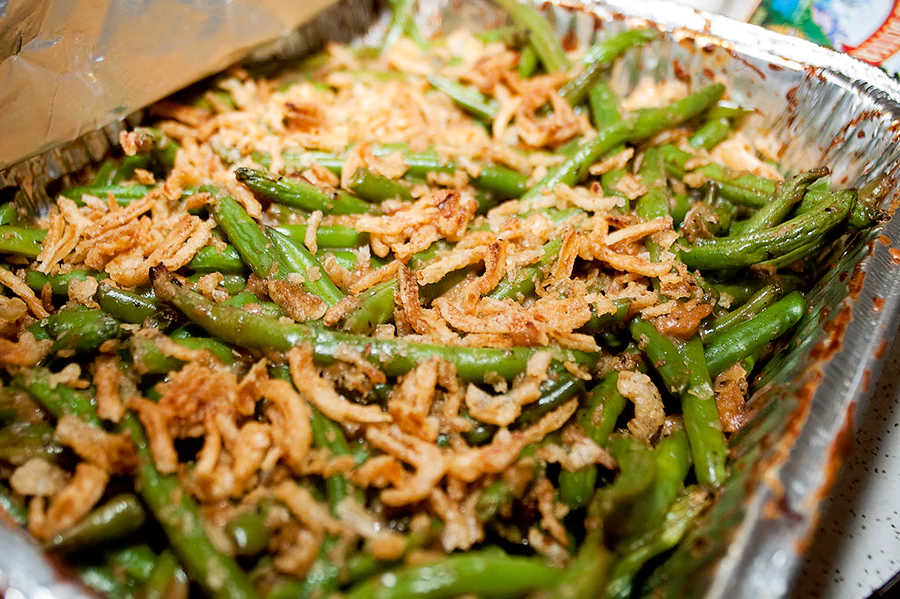
Grüne Bohnen können eine gute Wahl für eine Diät sein, da sie dazu beitragen können, dass Sie sich mit weniger Kalorien satt und zufrieden fühlen. Sie liefern auch wichtige Nährstoffe, die Ihr Körper braucht, um gut zu funktionieren. Allerdings sollten Sie darauf achten, wie Sie grüne Bohnen zubereiten und verzehren, denn einige Methoden können ihnen zusätzliches Fett, Natrium oder Zucker zufügen.
Grüne Bohnen aus der Dose können zum Beispiel viel Natrium enthalten, daher sollten Sie sie vor dem Verzehr abspülen und abtropfen lassen.
Vermeiden Sie auch die Zugabe von Butter, Käse, Sahne oder gebratenen Zwiebeln zu Ihren grünen Bohnen, da diese den Kalorien- und Fettgehalt erhöhen können. Stattdessen können Sie Ihre grünen Bohnen dämpfen, kochen oder mit etwas Knoblauch, Zitronensaft oder Kräutern anbraten, um eine gesunde und schmackhafte Beilage zu erhalten.
Grüne Bohnen enthalten etwas Eiweiß. Eine Tasse grüne Bohnen enthält fast zwei Gramm Eiweiß, was zwar nicht viel ist, aber dennoch zum täglichen Bedarf beiträgt.
Sie enthalten eine gute Menge an Vitamin K, einem fettlöslichen Vitamin, das die Blutgerinnung und die Knochengesundheit fördert. Sie enthalten auch etwas Vitamin C, das jedoch hitzeempfindlich ist. Nach dem Kochen ist die verbleibende Menge an Vitamin C vernachlässigbar.
Zusammenfassung.Grüne Bohnen sind eine gute Quelle für Vitamin K und komplexe Kohlenhydrate, enthalten etwas Eiweiß und sind sehr fett- und kalorienarm.Diabetes.
Wenn Sie Diabetes haben, wissen Sie, wie wichtig es ist, auf Ihre Ernährung zu achten. Sie müssen Ihren Blutzuckerspiegel unter Kontrolle halten und Lebensmittel vermeiden, die ihn in die Höhe treiben können. Einige Gemüsesorten können sogar dazu beitragen, dass Sie Ihren Diabetes besser in den Griff bekommen. Eines davon sind grüne Bohnen.
Grüne Bohnen gehören zu den besten Gemüsesorten bei Diabetes, weil sie viele Vorteile für die Gesundheit haben.
Sie enthalten wenig Kalorien, Fett und Kohlenhydrate, aber viele Ballaststoffe, Antioxidantien, Vitamine und Mineralien. Sie können beim Abnehmen helfen, Herzkrankheiten vorbeugen, Krebs bekämpfen und den Blutzuckerspiegel senken.
Zunächst einmal enthalten grüne Bohnen wenig Kohlenhydrate, was bedeutet, dass sie den Blutzuckerspiegel nicht so stark ansteigen lassen wie andere stärkehaltige Gemüse wie Kartoffeln oder Mais. Grüne Bohnen haben nur etwa 7 Gramm Kohlenhydrate pro Tasse, verglichen mit 37 Gramm bei Kartoffeln und 29 Gramm bei Mais. Das ist ein großer Unterschied!
Zweitens enthalten grüne Bohnen viele Ballaststoffe, die sich positiv auf die Verdauung und die Blutzuckerkontrolle auswirken. Ballaststoffe verlangsamen die Aufnahme des Zuckers aus der Nahrung in den Blutkreislauf, was dazu beiträgt, Spitzen und Abstürze zu vermeiden. Ballaststoffe sorgen auch für ein längeres Sättigungsgefühl, was dazu beiträgt, dass Sie weniger essen und abnehmen.
Grüne Bohnen enthalten etwa 4 Gramm Ballaststoffe pro Tasse, was etwa 16% der empfohlenen Tagesdosis entspricht.
Drittens sind grüne Bohnen reich an Antioxidantien, d. h. an natürlichen Substanzen, die die Zellen vor Schäden durch freie Radikale schützen. Freie Radikale sind instabile Moleküle, die Entzündungen, Alterung und Krankheiten wie Krebs und Diabetes verursachen können. Antioxidantien können freie Radikale neutralisieren und ihre schädlichen Auswirkungen verringern. Grüne Bohnen enthalten viele Arten von Antioxidantien, wie Phenolsäuren, Flavonoide, Lignane und andere Verbindungen, deren Namen schwer auszusprechen sind.
Diese Antioxidantien können Erstaunliches für Ihre Gesundheit bewirken. Zum Beispiel können sie helfen, das Wachstum von Krebszellen in Ihrem Körper zu verhindern oder zu verlangsamen. Sie können auch Bakterien, Viren, Krämpfe und Entzündungen bekämpfen. Einige Studien haben gezeigt, dass grüne Bohnen das Risiko von Brust-, Dickdarm- und Prostatakrebs verringern können, weil sie große Mengen an Chlorophyll, resistenter Stärke, löslichen und unlöslichen Ballaststoffen und phenolischen Verbindungen enthalten.
Diese Bohnen haben auch einen niedrigen glykämischen Index. Der glykämische Index (GI) von grünen Bohnen liegt bei 32, was nach den Standards der American Diabetes Association als niedrig gilt. Als Richtwert gelten Lebensmittel mit einem GI von 55 oder weniger als niedrig glykämisch. Die glykämische Last (GL) von grünen Bohnen ist ebenfalls niedrig und beträgt 2,1. Lebensmittel mit niedrigem glykämischen Index und niedriger glykämischer Last können Diabetikern helfen, ihren Blutzuckerspiegel zu kontrollieren und Spitzen und Abstürze zu vermeiden.
In dieser Studie (Ezzat et al., 2022) untersuchten Wissenschaftler, wie grüne Bohnen die Gesundheit von diabetischen Ratten verbessern können. Sie untersuchten auch, wie grüne Bohnen zusammen mit Stammzellen die Bauchspeicheldrüse, das Organ, das Insulin produziert, regenerieren können. Sie injizierten einigen diabetischen Ratten Stammzellen, d. h. Zellen, die sich in verschiedene Zelltypen im Körper verwandeln können.
Sie extrahierten die natürlichen Verbindungen aus grünen Bohnen mit Ethanol. Sie fanden heraus, dass die grünen Bohnenverbindungen den Insulinspiegel im Blut um das 4,4-fache erhöhten, wenn sie mit Stammzellen kombiniert wurden. Das bedeutet, dass die Verbindungen der grünen Bohnen den Stammzellen geholfen haben, sich in der Bauchspeicheldrüse anzusiedeln und sich in insulinproduzierende Zellen zu verwandeln.
Die Verbindungen der grünen Bohne verringerten auch den Gehalt an Malondialdehyd, Stickoxid, Cholesterin und Triglyceriden im Blut, die Indikatoren für oxidativen Stress und kardiovaskuläre Risiken sind. Grüne Bohnenverbindungen erhöhen auch den HDL-Spiegel, also das gute Cholesterin, das die Arterien schützt.
Sie testeten ihre Auswirkungen auf zwei Enzyme, die an der Verdauung beteiligt sind: Pankreaslipase und α-Amylase. Die Bauchspeicheldrüsenlipase spaltet Fette, während die α-Amylase Stärke abbaut.
Sie fanden heraus, dass die Verbindungen der grünen Bohnen beide Enzyme hemmten, jedoch stärker die Pankreaslipase. Das bedeutet, dass grüne Bohnen beim Abnehmen helfen könnten, indem sie die Aufnahme von Fetten und Kohlenhydraten verringern.
Kochmethode.
Die Art und Weise, wie die grünen Bohnen angebaut und gekocht werden, kann ihren Nährwert und ihre antioxidative Kapazität beeinflussen. In dieser Studie (Lima et al., 2017) verglichen Wissenschaftler ökologische und konventionelle grüne Bohnen und wie sie sich nach verschiedenen Kochmethoden veränderten.
Sie stellten fest, dass ökologische und konventionelle grüne Bohnen einige Unterschiede in ihrem ursprünglichen Rohzustand aufwiesen. Konventionelle grüne Bohnen hatten mehr Chlorophyll und Gesamtphenole als ökologische grüne Bohnen. Grüne Bohnen aus biologischem Anbau haben mehr Flavonoide als konventionelle grüne Bohnen, eine Art von Polyphenolen, die entzündungshemmende und krebshemmende Eigenschaften haben. Der Gehalt an Polyaminen und Carotinoiden war bei beiden Arten von grünen Bohnen ähnlich.
Grüne Bohnen aus biologischem Anbau hatten auch eine höhere antioxidative Kapazität als konventionelle grüne Bohnen, was bedeutet, dass sie mehr freie Radikale abfangen konnten.
Die Studie untersuchte auch, wie verschiedene Kochmethoden die Gehalt an diesen Nährstoffen und Antioxidantien. Sie verwendeten drei Methoden: Kochen, Erhitzen in der Mikrowelle und Druckgaren.
Das Kochen erhöhte den Gehalt an Carotinoiden (β-Carotin, Lutein und Zeaxanthin) in allen Arten von grünen Bohnen.
Das Erhitzen in der Mikrowelle förderte einige polare Verbindungen, d. h. Moleküle, die sich in Wasser auflösen, etwas stärker, während das Druckgaren die Carotinoide verbesserte. Diese Ergebnisse deuten darauf hin, dass unterschiedliche Kochmethoden die Farbe und Qualität von grünen Bohnen beeinflussen können.
Aber wie sieht es mit der antioxidativen Kapazität von grünen Bohnen aus?
Sie stellten fest, dass alle Extrakte aus grünen Bohnen die freien Radikale reduzierten, unabhängig von der Anbaumethode oder der Kochmethode. Beim Kochen in der Mikrowelle wurde jedoch sowohl bei biologischen als auch bei konventionellen grünen Bohnen die höchste Reduktion festgestellt, was auf eine höhere Verfügbarkeit von Antioxidantien bei dieser Art der Wärmebehandlung hinweist.
FODMAP-arme Lebensmittel.
Der niedrige FODMAP Diät ist Teil der Therapie für Menschen mit RDS Und SIBO. Wenn du eine FODMAP-arme Diät machst, fragst du dich vielleicht, ob sie auch gut für deinen Darm sind. Einige Gemüsesorten können nämlich heikel sein, wenn es um FODMAPs geht, und man möchte keine unangenehmen Symptome auslösen.
Sind grüne Bohnen also FODMAP-arm? Die Antwort lautet: Ja, solange man sich an die empfohlene Portionsgröße hält. Sie können bis zu 100 Gramm grüne Bohnen genießen, ohne sich Gedanken über FODMAPs zu machen. Das entspricht etwa einer Handvoll oder einer kleinen Tasse dieser köstlichen Bohnen.
Grüne Bohnen enthalten geringe Mengen an Fruktane und GOS, zwei Arten von FODMAPs, die bei manchen Menschen Blähungen, Blähungen und Schmerzen verursachen können. Wenn du mehr als 100 Gramm grüne Bohnen isst, kann es sein, dass du mehr FODMAPs zu dir nimmst, als dein Körper vertragen kann.
Obwohl grüne Bohnen im Allgemeinen FODMAP-arm sind, gibt es einige Dinge, auf die man beim Verzehr achten sollte.
- Vermeiden Sie es, zu viele grüne Bohnen auf einmal zu essen. Wie bereits erwähnt, enthalten grüne Bohnen einige FODMAPs, die sich summieren können, wenn Sie mehr als 100 Gramm essen. Um dies zu vermeiden, sollten Sie die Größe Ihrer Portion vor dem Verzehr abmessen und keinen Nachschlag nehmen.
- Vermeiden Sie den Verzehr von grünen Bohnen, die mit Zutaten mit hohem FODMAP-Anteil gekocht wurden. Einige häufige Übeltäter sind Knoblauch, Zwiebeln, Sahne, Käse, Honig oder Trockenfrüchte. Diese Zutaten können den FODMAP-Gehalt der grünen Bohnen erhöhen und Verdauungsbeschwerden verursachen. Wenn Sie auswärts oder bei jemandem zu Hause essen, fragen Sie, wie die grünen Bohnen zubereitet wurden, und meiden Sie sie, wenn sie FODMAP-reiche Zutaten enthalten.
- Vermeiden Sie den Verzehr von grünen Bohnen in Dosen oder tiefgekühlt, denen Zucker oder Konservierungsstoffe zugesetzt wurden. Diese Zusatzstoffe können auch den FODMAP-Gehalt der grünen Bohnen erhöhen und sie weniger gesund machen. Prüfen Sie immer das Etikett, bevor Sie grüne Bohnen in Dosen oder tiefgekühlt kaufen, und achten Sie darauf, dass die Zutaten nur grüne Bohnen und Wasser sind.
Blähungen und Völlegefühl.
Grüne Bohnen gehören zu den Hülsenfrüchten, unterscheiden sich aber von anderen Bohnen durch ihre Gasproduktion. Grüne Bohnen sind nicht voll ausgereift und enthalten weniger resistente Stärke als voll ausgereifte Bohnen.
Resistente Stärke ist eine Art von Stärke, die der Verdauung im Dünndarm entgeht und in den Dickdarm gelangt, wo sie die nützlichen Bakterien ernähren kann. Resistente Stärke kann viele gesundheitliche Vorteile haben, z. B. die Senkung des Blutzucker- und Cholesterinspiegels, die Verbesserung der Insulinsensitivität, die Erhöhung des Sättigungsgefühls und die Gewichtskontrolle. Als Nebeneffekt führt sie auch zu Blähungen und Völlegefühl.
Grüne Bohnen enthalten weniger Ballaststoffe und Kohlenhydrate, was bedeutet, dass sie weniger wahrscheinlich Gärung und Blähungen im Dickdarm verursachen.
Das bedeutet jedoch nicht, dass grüne Bohnen völlig gasfrei sind.
Grüne Bohnen enthalten noch einige Ballaststoffe und Lektinedas sind Proteine, die sich an Kohlenhydrate binden und die Verdauung erschweren können. Daher kann es bei manchen Menschen nach dem Verzehr von grünen Bohnen zu Blähungen und Völlegefühl kommen, insbesondere wenn sie zu viel davon essen oder einen empfindlichen Darm haben.
Um die durch grüne Bohnen verursachten Blähungen zu reduzieren, können Sie einige der folgenden Tipps ausprobieren:
- Weichen Sie die grünen Bohnen vor dem Kochen 4-6 Stunden in Wasser ein. Dadurch wird ein Keimungsprozess in Gang gesetzt, der einen Teil der Antinährstoffe wie Lektine entfernt und die Bohnen leichter verdaulich macht.
- Kochen Sie die grünen Bohnen gründlich, bis sie weich und zart sind. Dies kann auch dazu beitragen, einige der Lektine und Ballaststoffe abzubauen.
- Kauen Sie die grünen Bohnen gut, bevor Sie sie herunterschlucken. Dadurch können Ihr Speichel und Ihre Verdauungsenzyme den Verdauungsprozess in Gang setzen und Ihren Darm entlasten.
- Vermeiden Sie den Verzehr von grünen Bohnen zusammen mit Lebensmitteln, die die Gasproduktion erhöhen können, wie Knoblauch, Zwiebeln, Brokkoli, Blumenkohl, Kohl oder Milchprodukte.
Wenn Sie zu Blähungen und Völlegefühl neigen, sollten Sie den Verzehr von grünen Bohnen einschränken oder die oben genannten Tipps befolgen, um Beschwerden zu vermeiden.
Viele Menschen bevorzugen die knackige Textur frischer Bohnen, insbesondere in Salaten, gegenüber den weichen, gekochten Bohnen aus der Dose. Ganz zu schweigen davon, dass grüne Bohnen in Dosen oft ihre leuchtend grüne Farbe verlieren und stumpf und gräulich aussehen. Grüne Bohnen sind aber immer noch Bohnen.
Vermeiden Sie es, Hülsenfrüchte roh zu essen, auch wenn es sich um unreife Sorten wie grüne Bohnen handelt.
Was Sind Die Nebenwirkungen Von Grünen Bohnen?
Bohnen enthalten einige Verbindungen, die die Verdauung und den Stoffwechsel beeinträchtigen oder Entzündungen verursachen können. Diese Verbindungen werden als Enzyminhibitoren, Lektine, Phytate und Oligosaccharide bezeichnet. Sie können sowohl positive als auch negative Auswirkungen auf Ihren Körper haben, je nachdem, wie viel Sie davon essen und wie Sie sie zubereiten. Lassen Sie mich das erklären.
Enzyminhibitoren sind Substanzen, die die Aktivität von Enzymen blockieren oder verlangsamen können, d. h. von Proteinen, die bei der Verdauung und Verwertung der Nahrung helfen.
Diese Enzyminhibitoren können Ihnen helfen, Ihren Blutzucker- und Insulinspiegel zu senken, indem sie den Abbau und die Aufnahme von Kohlenhydraten verzögern. Sie können auch dazu beitragen, dass Sie sich satter fühlen und weniger essen, indem sie Ihr Sättigungsgefühl und Ihre Sättigung erhöhen. Sie können auch dazu beitragen, Fettleibigkeit, Diabetes und das metabolische Syndrom zu verhindern oder in den Griff zu bekommen, indem sie die Insulinempfindlichkeit und die Glukosetoleranz verbessern.
Andererseits können sie auch die Verdauung und Aufnahme von Eiweiß und anderen Nährstoffen beeinträchtigen, indem sie die Enzyme blockieren, die diese abbauen.
Lektine sind Proteine, die sich an Kohlenhydrate auf der Oberfläche von Zellen heften und deren Funktion beeinträchtigen können. Einige Bohnen enthalten Lektine, die sich an Zellen in den Blutgefäßen, im Darm oder im Immunsystem binden können.
Diese Lektine können gut oder schlecht für Sie sein. Einerseits können sie zur Senkung des Blutdrucks und des Cholesterinspiegels beitragen, indem sie an Rezeptoren an den Wänden der Blutgefäße binden und deren Elastizität und Durchlässigkeit verbessern. Sie können Ihnen auch helfen, Infektionen zu bekämpfen, indem sie sich an Krankheitserreger (wie Bakterien oder Viren) binden und sie daran hindern, sich an Ihren Zellen festzusetzen. Sie können auch dazu beitragen, Ihr Immunsystem zu regulieren, indem sie die Aktivität bestimmter Immunzellen stimulieren oder unterdrücken.
Andererseits können sie auch die Aufnahme von Nährstoffen beeinträchtigen, indem sie sich an diese binden und verhindern, dass sie in Ihre Zellen gelangen. Sie können auch Darmprobleme wie Übelkeit, Erbrechen, Durchfall oder Blutungen verursachen, indem sie die Magen- oder Darmschleimhaut beschädigen. Sie können auch allergische Reaktionen oder Entzündungen hervorrufen, indem sie Ihr Immunsystem aktivieren oder die Freisetzung von Zytokinen auslösen.
Phytate sind Verbindungen, die sich an Mineralien (wie Kalzium, Eisen, Zink, Magnesium usw.) binden und unlösliche Komplexe bilden können, die vom Körper nicht aufgenommen werden können. Einige Bohnen enthalten Phytate, die die Verfügbarkeit von Mineralien in Ihrer Ernährung verringern können.
Diese Phytate können gut oder schlecht für Sie sein. Einerseits können sie zur Vorbeugung oder Behandlung von Nierensteinen, Osteoporose und Krebs beitragen, indem sie die Bildung von Kristallen verringern, Knochenschwund verhindern und das Tumorwachstum hemmen.
Andererseits können sie auch die Aufnahme von Mineralien beeinträchtigen, indem sie sich an diese binden und verhindern, dass sie in die Zellen gelangen.
Sie können all diese Antinährstoffe reduzieren oder ganz loswerden, indem Sie die Bohnen zuerst einweichen oder keimen lassen und dann vor dem Verzehr kochen. Durch diese Methoden können die meisten Phytate, alle Lektine und die meisten Enzyminhibitoren in Bohnen deaktiviert oder entfernt werden, so dass sie besser verdaulich und nahrhafter werden.
Eine weitere Nebenwirkung, die ich erwähnen muss, sind Allergien. Allergien gegen Hülsenfrüchte, zu denen Bohnen, Erbsen und Linsen gehören, sind zwar nicht sehr häufig, aber es gibt sie. Und unter den Hülsenfrüchten verursachen Erbsen und Linsen eher allergische Reaktionen als grüne Bohnen. Das heißt aber nicht, dass grüne Bohnen völlig ungefährlich sind. Ärzte haben einige Fälle von Allergien auf grüne Bohnen gemeldet. Wissenschaftler haben sogar eines der Proteine in grünen Bohnen gefunden, das eine allergische Reaktion auslösen kann (Zoccatelli et al., 2010).
Aber machen Sie sich nicht zu viele Sorgen. Eine Allergie gegen grüne Bohnen ist sehr selten, und die meisten Menschen können dieses gesunde und köstliche Gemüse ohne Probleme genießen.
Häufig Gestellte Fragen
Verweise:
- Cisneros-Zevallos, L., & Minatel, I. O. (2017). Cooking processes increase bioactive compounds in organic and conventional green beans. International Journal of Food Sciences and Nutrition, 68(8), 919-930. https://doi.org/10.1080/09637486.2017.1324563
- Ezzat, S. M., Abdel Rahman, M. F., Salama, M. M., Mahrous, E. A., & El Bariary, A. (2022). Unpolare Metaboliten von grünen Bohnen (Phaseolus vulgaris L.) verstärken die antidiabetische Aktivität von mesenchymalen Stammzellen bei Streptozotocin-induziertem Diabetes bei Ratten. Zeitschrift für Lebensmittelbiochemie, 46(2), e14083. https://doi.org/10.1111/jfbc.14083
- Zoccatelli, G., Pokoj, S., Foetisch, K., Bartra, J., Valero, A., Del Mar San Miguel-Moncín, M., Vieths, S., & Scheurer, S. (2010). Identifizierung und Charakterisierung des Hauptallergens der grünen Bohne (Phaseolus vulgaris) als unspezifisches Lipidtransferprotein (Pha v 3). Molecular Immunology, 47(7-8), 1561-1568. https://doi.org/10.1016/j.molimm.2010.01.009
- Chaurasia, S. (2020). Grüne Bohnen. In Elsevier eBooks (S. 289-300). https://doi.org/10.1016/b978-0-12-812780-3.00017-9
- Aquino-Bolaños, E. N., Garzón-García, A. K., Alba-Jiménez, J. E., Chávez-Servia, J. L., Vera-Guzmán, A. M., Carrillo-Rodríguez, J. C., & Santos-Basurto, M. A. (2021). Physikalisch-chemische Charakterisierung und funktionelles Potenzial von Phaseolus vulgaris L. und Phaseolus coccineus L. Landrasse Grüne Bohnen. Agronomy, 11(4), 803. https://doi.org/10.3390/agronomy11040803
Zusammenhängende Posts


Haben Sie Fragen zum Thema Ernährung und Gesundheit?
Ich würde gerne von Ihnen hören und sie in meinem nächsten Beitrag beantworten. Ich freue mich über Ihren Beitrag und Ihre Meinung und freue mich darauf, bald von Ihnen zu hören. Ich lade Sie auch dazu ein Folgen Sie uns auf Facebook, Instagram und Pinterest für weitere Inhalte zu Ernährung und Gesundheit. Sie können dort einen Kommentar hinterlassen und sich mit anderen Gesundheitsbegeisterten austauschen, Ihre Tipps und Erfahrungen teilen und Unterstützung und Ermutigung von unserem Team und unserer Community erhalten.
Ich hoffe, dass dieser Beitrag für Sie informativ und unterhaltsam war und dass Sie bereit sind, die gewonnenen Erkenntnisse anzuwenden. Wenn Sie diesen Beitrag hilfreich fanden, dann es teilen mit Ihren Freunden und Familienangehörigen, die ebenfalls davon profitieren könnten. Man weiß nie, wer auf seinem Weg zur Gesundheit vielleicht etwas Anleitung und Unterstützung braucht.
– Das könnte Ihnen auch gefallen –
A1-Milch: Diabetes, Autismus und Herzerkrankungen

Pestizide in Lebensmitteln, Exposition in der Amerikanischen Standardnahrung - 80 Prozent aus Fleisch

Essattacken und Hormonregulation: Emotionaler Hunger

Humanes Fleisch Oder Humaner Mythos?- Die Tierische Erkenntnis
Proteinreiche Ernährung und Metabolische Azidose: Korrelationen Zwischen Gesundheitsrisiken
Antioxidative Rolle bei Depressionen und Angstzuständen: Das Fehlende Stück

Übung- Warum Genau Brauchen Wir Es?
Antioxidantienreiche Ernährung: Allgemeine Regeln und Strategien

Über Ernährung Lernen

Milos Pokimica ist Doktor der Naturheilkunde, klinischer Ernährungsberater, Autor für medizinische Gesundheit und Ernährung sowie Berater für Ernährungswissenschaften. Autor der Buchreihe Zum Veganer werden? Rückblick auf die Wissenschafter betreibt auch das Natürliche Gesundheit website GoVeganWay.com
Medizinischer Haftungsausschluss
GoVeganWay.com bietet Ihnen Rezensionen der neuesten Ernährungs- und Gesundheitsforschung. Die bereitgestellten Informationen stellen die persönliche Meinung des Autors dar und sind weder als Ersatz für professionelle medizinische Beratung, Diagnose oder Behandlung gedacht noch impliziert. Die bereitgestellten Informationen dienen ausschließlich Informationszwecken und sollen nicht als Ersatz für die Beratung, Diagnose und/oder medizinische Behandlung durch einen qualifizierten Arzt oder Gesundheitsdienstleister dienen.Ignorieren Sie niemals professionellen medizinischen Rat oder verzögern Sie die Suche nach medizinischer Behandlung, weil Sie etwas auf GoVeganWay.com gelesen oder über GoVeganWay.com darauf zugegriffen haben
Nehmen Sie NIEMALS Änderungen im Lebensstil oder irgendwelche Änderungen vor, die eine Folge von etwas sind, das Sie auf GoVeganWay.com gelesen haben, bevor Sie einen zugelassenen Arzt konsultieren.
Bei einem medizinischen Notfall rufen Sie sofort einen Arzt oder die Notrufnummer 911 an. GoVeganWay.com empfiehlt oder unterstützt keine bestimmten Gruppen, Organisationen, Tests, Ärzte, Produkte, Verfahren, Meinungen oder andere Informationen, die darin erwähnt werden könnten.
Herausgeber-Tipps –
Krebs Auswahl des Herausgebers Phytochemikalien
Antikrebskraft von Obst und Gemüse: In Vivo und Klinische Beweise
Einige Pflanzenextrakte konkurrieren mit führenden Chemotherapeutika und wirken gleichzeitig auf mehrere verschiedene Arten von Krebszellen.
Antioxidantien Auswahl des Herausgebers ORAC
Ätherische Öle als Antioxidative Nahrungsergänzungsmittel: Regeln und Strategien
Ätherische Öle in Lebensmittelqualität können eine praktische und verbraucherfreundliche Strategie zur Optimierung des Antioxidantienwerts und der ORAC-Werte unserer Ernährung sein.
Antioxidantien Auswahl des Herausgebers ORAC
Antioxidantienreiche Ernährung: Allgemeine Regeln und Strategien
Es gibt einfache und kostengünstige Strategien zur Optimierung des antioxidativen Wertes unserer Ernährung.
Antioxidantien Auswahl des Herausgebers ORAC
ORAC-Werte Verstehen: Antioxidantienspiegel in Lebensmitteln
Wenn Ihre Hauptquelle für Antioxidantien Kaffee ist, wissen Sie, dass Sie ein ernstes Problem haben.

Antioxidantien Auswahl des Herausgebers ORAC
Astaxanthin Vorteile: Das Stärkste Natürliche Antioxidans der Welt
Astaxanthin ist das stärkste natürliche und universelle Antioxidans (sowohl öl- als auch wasserlöslich), das der Wissenschaft bekannt ist. Es reichert sich im Gewebe an und kann sich niemals in ein Prooxidans verwandeln.
Antioxidantien Auswahl des Herausgebers ORAC Phytochemikalien
Antioxidantien: Die Grundlagen Verstehen
Tierische Produkte enthalten keine sekundären Pflanzenstoffe oder Antioxidantien. Pflanzliche Lebensmittel enthalten im Durchschnitt mehr als 60-mal so viele Antioxidantien wie tierische Lebensmittel.
Auswahl des Herausgebers Vegane Diät
Nährstoffmangel Bei Veganer Ernährung: Präventionsstrategien
Es gibt neun bevölkerungsweit verbreitete Nährstoffmängel, die Menschen betreffen, die sich pflanzlich ernähren. Wenn einige Mängel nicht rechtzeitig behoben werden, haben sie schreckliche und nicht behandelbare Folgen.
Auswahl des Herausgebers Optimale Ernährung
Mikronährstoffmangel in der Amerikanischen Standardernährung: Strategien zur Optimierung
Das Nährstoffprofil unserer modernen Ernährung mit Fleisch, Zucker und verarbeiteten Lebensmitteln ist völlig unvereinbar mit unserer Evolution und führt zu schwerem Mikronährstoffmangel.
Auswahl des Herausgebers Phytochemikalien
Phytochemikalien: Die Grundlagen Verstehen
Jeder einzelne existierende sekundäre Pflanzenstoff hat eine biologische Wirkung im menschlichen Körper. Jedes einzelne aus Millionen verschiedener sekundärer Pflanzenstoffe.

Auswahl des Herausgebers Milch Optimale Ernährung
Milch und Milchprodukte: Gesundheitsrisikokorrelationen
Bekannte Zusammenhänge mit Milch und Milchkonsum sind Unfruchtbarkeit, Eierstock- und Brustkrebs, Leukämie, Diabetes Typ 1, Autismus, Arteriosklerose, Katarakt, rheumatoide Arthritis, Multiple Sklerose, Hyperaktivität, Stauung, Pickel und mehr …
Krebs Auswahl des Herausgebers Eiweiß
Komplettes Protein: IGF-1-Signalisierung bei der Krebsentstehung
Wenn Sie tierisches Eiweiß essen, ist die Wahrscheinlichkeit, an allen Krebsarten zu erkranken, viermal höher. Wenn Sie rauchen, besteht ein vierfach erhöhtes Risiko, an Lungenkrebs zu erkranken.

Krebs Auswahl des Herausgebers Eiweiß
Die Anatomie von Krebs - Gesundheitsrisikokorrelationen
Etwa 2 % der Krebserkrankungen werden in der Medizin als rein genetisch bedingt angesehen. Das gleiche Verbreitungsgebiet wie im Tierreich. Dir wurde nicht die ganze Wahrheit gesagt.
Milos Pokimica ist Autor für Gesundheit und Ernährung sowie Berater für Ernährungswissenschaften. Er ist Autor einer Buchreihe. Zum Veganer werden? Rückblick auf die Wissenschafter betreibt auch das Natürliche Gesundheit website GoVeganWay.com
Neueste Artikel –

Kalorienbeschränkung Langlebigkeit
Wie Man Fastet: Fasten-Lebensmittel, Die Die Autophagie Nicht Stören
Autophagie. Haben Sie sich jemals gefragt, was mit den Zellen in Ihrem Körper passiert, wenn sie absterben oder beschädigt werden? Stapeln sie sich einfach und verursachen Probleme, oder werden sie irgendwie entsorgt? Die Antwort ist, dass Ihr Körper…

Zahngesundheit Verhütung
Süßigkeiten Zahnempfindlichkeit & Schmerz: Schnelle Abhilfe & Dauerhafte Lösung
Eine schnelle und einfache Lösung zur Schmerzlinderung ist ätherisches Nelkenöl, ein starkes Antioxidans und Schmerzmittel, das bei Zahnfleischerkrankungen und Zahnschmerzen helfen kann.

Bohnen
Grüne Bohnen: Ernährung und Gesundheitliche Vorteile
Grüne Bohnen sind kalorienarm und reich an natürlichen Stoffen, die Ihnen helfen können, Ihren Blutzucker zu kontrollieren, Ihren Cholesterinspiegel zu senken und freie Radikale abzuwehren.
Rohkostdiät Vegane Diät
Kann Man Pilze Roh Essen: Gesundheitsrisiken, Ernährung und Sicherheit
Pilze enthalten hitzeempfindliche Giftstoffe wie Hydrazin oder Agaritin und Zellwände aus Chitin, die vom Menschen nicht gut verdaut werden können.

Vegane Diät
Sind Fische Tiere? Eine kulturelle Perspektive
In einigen Kulturen wird Fischfleisch nicht als Fleisch betrachtet, und Fisch ist sogar während des Fastens erlaubt.

Zahngesundheit Verhütung
Selbstgemachtes natürliches Mundwasser: Bewährt, stärker und weniger giftig
Selbstgemachtes natürliches Mundwasser ist stärker als Chlorhexidin, weniger giftig und kann beim Verschlucken zu Übelkeit führen, hat aber auch einen hohen ORAC-Wert.
Zahngesundheit Verhütung
Wie Man Karies Stoppt: Symptome, Ursachen und Prävention
Der Zuckerkonsum ist die Hauptursache für Karies und Zahnfäule, verbunden mit einem Mangel an Mineralien, insbesondere Magnesium, Zink, Kupfer und Spurenelementen.
Antioxidantien Superlebensmittel
Amla: Bewährte Vorteile, Ernährung und Klinische Bedeutung
Amla ist eines der stärksten Antioxidantien der Welt mit einem ORAC-Wert von 261.530. Sie ist eine reichhaltige Quelle von sekundären Pflanzenstoffen, die verschiedene gesundheitliche Vorteile haben.
Top-Gesundheitsnachrichten – ScienceDaily
- New microwave frying technique could make french fries much healthieram April 2, 2026
Scientists have discovered a way to make French fries less greasy without ruining their taste. By combining regular frying with microwave heating, they reduce the amount of oil absorbed during cooking. The key lies in pressure inside the food—microwaves help push oil out instead of letting it seep in. The result: faster cooking, lower fat, and fries that can still stay crispy.
- Eating more meat may lower Alzheimer’s risk for some peopleam April 2, 2026
A surprising new study suggests that genetics may change how diet affects brain health—especially when it comes to Alzheimer’s risk. Researchers found that older adults carrying high-risk APOE gene variants didn’t show the expected cognitive decline if they ate relatively high amounts of meat. In fact, those with these genes who consumed the most meat had slower cognitive decline and lower dementia risk, challenging conventional dietary advice.
- Breakthrough could protect the vision cells that let you see faces and colorsam April 2, 2026
Scientists have taken a major step toward protecting the very cells that make sharp, colorful vision possible. By testing more than 2,700 compounds in thousands of lab-grown human retinal models, researchers uncovered several molecules that can shield cone photoreceptors—the cells responsible for reading, recognizing faces, and seeing color—from degeneration. They also identified a key protective mechanism involving casein kinase 1, offering a promising new target for treatment.
- This simple Japanese eating habit could help you live longer without dietingam April 2, 2026
Hara hachi bu, a traditional Japanese practice of eating until you’re about 80% full, is gaining attention as a simple yet powerful way to improve health and reshape our relationship with food. Rather than promoting strict dieting, it encourages slowing down, tuning into hunger cues, and eating with awareness and gratitude. Research suggests it may help reduce calorie intake, support healthier food choices, and prevent long-term weight gain.
- Scientists discover “molecular shredder” that helps deadly parasite evade the immune systemam April 2, 2026
A deadly parasite responsible for sleeping sickness has been found using a surprisingly precise trick to stay hidden in the human bloodstream. Scientists discovered a protein called ESB2 that acts like a “molecular shredder,” cutting up specific genetic instructions as they are produced. This allows the parasite to flood its surface with protective proteins while suppressing other signals that might give it away.
- What’s hiding inside colon cancer could change treatmentam April 2, 2026
Colorectal cancer may carry a unique microbial “fingerprint,” setting it apart from other cancers and opening a new frontier in diagnosis and treatment. By analyzing DNA from over 9,000 patients, researchers discovered that only colorectal tumors consistently host distinct microbial communities—challenging the long-held belief that all cancers have their own microbial signatures.
- Millions start work too early. This drug helps them stay awakeam April 1, 2026
Millions of people start work before sunrise—but their brains aren’t ready for it. A new clinical trial has found that the wake-promoting drug solriamfetol can significantly boost alertness in early-morning shift workers struggling with shift work disorder. Participants who took the drug were able to stay awake and function better throughout full shifts, with improvements in productivity, safety, and daily performance.
PubMed, #Vegane Diät –
- Nutritional lifestyle and «production animal» tracking during veterinary curriculumam März 31, 2026
Veterinary medicine students are confronted with choosing a specialty track after completing their bachelor›s degree. They can choose between clinical (Livestock (NT), Equine (EQ), Small Animal (KT)) and non-clinical track (Pathobiology, Biomedical Research or Veterinary Public Health (VPH)). Overall, the proportion of vegetarians and vegans in the population has increased in the last few decades. An even higher percentage of vegetarian and vegan lifestyles could be observed among […]
- Comparative cross-sectional study of vegan and omnivorous diets and their impact on cardiac function among endurance athletesam März 30, 2026
Vegan and omnivorous diets are both common in endurance sport; however, the chronic effects of these diets on cardiac function remain uncertain. Therefore, it is of interest to compare echocardiographic, vascular and exercise performance between endurance athletes on vegan or omnivorous diets. Data shows there is comparable systolic function; however, vegans displayed superior diastolic function and arterial compliance; whilst omnivores maintained higher hemoglobin and ferritin levels. Thus, […]
- Environmental Sustainability and Chronic Disease Outcomes Across Four Sustainable Dietary Patternsam März 29, 2026
Global food consumption patterns have undergone substantial transformation in recent decades, driven by rapid population growth and the consequent intensification of agricultural production. This growth, however, has come at significant environmental cost. As food consumption practices play a central role in shaping these impacts, shifts toward environmentally sustainable diets-typically characterized by greater reliance on plant-based foods-have been proposed as a viable mitigation strategy….
- Plant-Based Dietary Patterns and Neuroimaging Biomarkers of Brain Health: A Scoping Review of Observational and Interventional Evidenceam März 23, 2026
Healthy dietary interventions are well established in cardiovascular disease prevention, but their effects on the brain remain underexplored. This scoping review aims to investigate how adherence to core components of a whole-food plant-based diet (WFPBD) may impact neuroimaging outcomes across different brain conditions. We searched PubMed and MEDLINE for studies published in the past 20 years evaluating the effects of a predominantly or exclusively WFPBD, alone or combined with other […]
- Environmental and economic impact of a vegan versus traditional mediterranean diet: OMNIVEG studyam März 17, 2026
CONCLUSIONS: Replacing animal products with plant-based foods in a Mediterranean dietary framework can enhance environmental sustainability and reduce food costs. These findings support the promotion of whole plant-based diets as a viable strategy for sustainable and affordable nutrition.
Zufällige Beiträge –

Krebs Verhütung Strahlung
Belastung Durch EMF Strahlung (Elektromagnetische Strahlung)- Stellt 5G Gesundheitliche Risiken Dar?
Vom Menschen geschaffene EMF-Strahlungsquellen sorgen für eine kontinuierliche Strahlung geringer Intensität. Die Situation kann nur noch schlimmer werden.

Krebs Entzündung Toxizität
Gesundheitsrisiken Durch Alkohol- Das „französische Paradoxon“, „der Wein“ und „in Maßen“
Irgendwie glauben wir, dass ein Glas Wein nicht so schlimm ist, oder noch schlimmer, wir glauben an den gesundheitsfördernden Mythos des Alkohols aufgrund der Antioxidantien in der Traube.

Antioxidantien
Intravenöses Vitamin C bei der Behandlung von Influenza: Lebende Beweise aus der Klinischen Praxis
Wenn Sie sich im Krankenhaus intravenös Vitamin C verabreichen lassen möchten, sagen Sie es Ihrem Arzt nicht. Stattdessen fordern Sie Ihren Anwalt auf, dies Ihrem Arzt schriftlich mitzuteilen.
Nootropika Phytochemikalien
Theobromin Vorteile: Brain Boosting Ohne Angstzustände
Theobromin ist das Geheimnis hinter der Wirkung von Schokolade auf Ihren Geist und Ihre Gefühle. Es kann Ihre Wahrnehmung verbessern und im Gegensatz zu Koffein Ihren Stresspegel senken.
Auswahl des Herausgebers Optimale Ernährung Vegane Diät
Ernährungsrichtlinien der WHO- Neue Ernährungspyramide und Unterdrückung der Wissenschaft
Die Ernährungsrichtlinien der WHO empfehlen eine Ernährung mit wenig gesättigten Fettsäuren (tierischem Eiweiß), Zucker und Salz sowie viel Obst und Gemüse als Voraussetzung, um den epidemischen Anstieg chronischer Krankheiten weltweit zu bekämpfen.

Diabetes Auswahl des Herausgebers Optimale Ernährung
Raffinierter Zucker: Die Risiken Verstehen
Kinder decken etwa ein Fünftel ihres Gesamtkalorienbedarfs allein aus raffiniertem Zucker. Wenn wir Fett und den Rest nährstoffarmer verarbeiteter Lebensmittel zur Liste hinzufügen, wird das zu einem kompletten Ernährungs-Albtraum.

Toxizität
Quecksilber- Neurotoxin aus dem Fisch
Quecksilber ist ein Industriegift und die neurotoxischste bekannte Substanz. Plankton nimmt es aus dem Meerwasser auf und initiiert eine Bioakkumulation in der Nahrungskette.
Antioxidantien ORAC
Optimaler Antioxidantienverbrauch: Empfohlene Einnahme von ORAC-Einheiten
Der optimale Verbrauch von Antioxidantien hängt von der Toxizitätsexposition ab. Der minimale ORAC-Einheitswert beträgt 8.000 bis 10.000 täglich, nur um dem Stoffwechsel entgegenzuwirken.
Entzündung Toxizität
Endotoxämie Durch Bakterien in Gekochtem Fleisch- Entzündung und Ernährung
Sind Menschen Allesfresser im eigentlichen anatomischen Sinne? Es gibt einen grundlegenden Unterschied in der Funktionsweise des Verdauungstrakts bei pflanzlichen und fleischfressenden Arten.

Auswahl des Herausgebers Paläo-Diät Vegane Diät
Vegane Neandertaler? Die Wahrheit Uber die Echte Neandertaler Diät
Eine typische Darstellung von Neandertalern zeigt, wie sie das Wollhaarmammut töten. Ein Zahnbelag erzählt jedoch eine andere Geschichte über die Ernährung der Neandertaler

Beliebte Beiträge -
Diabetes Auswahl des Herausgebers
Diabetes Ursachen und Gesättigte Fettsäuren- Das Vegane Argument
Wenn der Fettgehalt im Blutkreislauf steigt, sinkt die Fähigkeit des Körpers, Zucker auszuscheiden. Eine der Ursachen für Diabetes ist unsere Fehlanpassung an eine große Fettaufnahme
Auswahl des Herausgebers Verhütung Toxizität
Umwelttoxizität- Es Ist Nur Eine Nahrungskette
Unter Umwelttoxizität versteht man die Bioakkumulation von Toxinen. Organismen sind Filter. Aber es gibt noch einen noch schlimmeren Prozess namens Biomagnifikation in der Nahrungskette.

Allopathische Medizin Krebs Auswahl des Herausgebers
Krebs, The Forbidden Cures- Rife Machine, Historischer Rückblick
Die Genesungsrate für Patienten, die an nicht behandelbarem Krebs litten und durch den Einsatz der Rife Machine-Resonanztechnologie für unheilbar krank erklärt wurden, betrug 100 %.

Krebs Auswahl des Herausgebers Toxizität
Pestizide in Lebensmitteln, Exposition in der Amerikanischen Standardnahrung - 80 Prozent aus Fleisch
Die meisten Pestizide und insbesondere Schwermetalle und andere giftige Schadstoffe, die wir aufnehmen, stammen aus Fleisch. Mehr als 80 Prozent der Pestizidbelastung in der amerikanischen Standardernährung stammt aus tierischen Produkten, nicht aus Obst oder Gemüse.
Diabetes Auswahl des Herausgebers Optimale Ernährung
Raffinierter Zucker: Die Risiken Verstehen
Kinder decken etwa ein Fünftel ihres Gesamtkalorienbedarfs allein aus raffiniertem Zucker. Wenn wir Fett und den Rest nährstoffarmer verarbeiteter Lebensmittel zur Liste hinzufügen, wird das zu einem kompletten Ernährungs-Albtraum.
Antioxidantien Auswahl des Herausgebers ORAC Phytochemikalien
Antioxidantien: Die Grundlagen Verstehen
Tierische Produkte enthalten keine sekundären Pflanzenstoffe oder Antioxidantien. Pflanzliche Lebensmittel enthalten im Durchschnitt mehr als 60-mal so viele Antioxidantien wie tierische Lebensmittel.
Auswahl des Herausgebers Optimale Ernährung Eiweiß
Proteinbedarf - Unbequeme Wahrheit
Als Anthropologenstudien zeigten, dass Hominins durchschnittlich 15 bis 20 Gramm Protein pro Tag zu sich nahmen, kam es in den 1970er Jahren zu einem sogenannten „großen Protein-Fiasko“.

Auswahl des Herausgebers Optimale Ernährung
Optimale Menschliche Ernährung - Chronische Krankheiten, Diätkriege und das Veganer-Argument
Unsere natürlichen optimale menschliche Ernährung eine Diät, die unsere hominin-Vorfahren aßen für die letzten 30 Millionen Jahren, nicht anatomisch modernen Menschen in der Steinzeit.

Auswahl des Herausgebers Optimale Ernährung Eiweiß
Proteinreiche Ernährung - Gesundheitsrisikokorrelationen
Knappheit ist in der Natur die Regel des Proteins. Evolutionsgeschichtlich gesehen haben Anthropologen bewiesen, dass Hominins durchschnittlich 15 bis 25 Gramm Protein pro Tag zu sich nahmen. In der modernen westlichen Art der proteinreichen Ernährung würden wir das zu uns nehmen …
Auswahl des Herausgebers Milch Optimale Ernährung
Milch und Milchprodukte: Gesundheitsrisikokorrelationen
Bekannte Zusammenhänge mit Milch und Milchkonsum sind Unfruchtbarkeit, Eierstock- und Brustkrebs, Leukämie, Diabetes Typ 1, Autismus, Arteriosklerose, Katarakt, rheumatoide Arthritis, Multiple Sklerose, Hyperaktivität, Stauung, Pickel und mehr …
Neuestes von PubMed, #pflanzliche Ernährung –
- Genetically Modified Foods: Have They Reduced Cardiovascular Risk?von Michael E Kaiser am April 2, 2026
Genetically modified organisms (GMOs) have been the subject of much debate due to their potential impact on human health, and in particular cardiovascular disease (CVD), the leading contributor to death worldwide. Although GMOs are used to improve agricultural properties, emerging nutritional engineering focuses on modifying food composition to produce foods high in polyunsaturated fatty acids, with the potential to correct an imbalance between omega-6 and omega-3 fatty acids and decrease the…
- Associations between source-specific nitrate and nitrite intakes and metabolic dysfunction-associated steatotic liver disease in two prospective cohortsvon Nicola P Bondonno am April 2, 2026
CONCLUSION: The health impact of nitrate and nitrite depends on source: moderate plant-sourced intakes (∼1 cup baby spinach/day) were linked to lower MASLD rates, while higher intakes from animal and additive sources were associated with higher rates.
- Environmental and dietary triggers of hyperuricemia in chronic kidney disease: A cardiovascular perspectivevon Mohammed AbuBaha am April 1, 2026
CONCLUSIONS: An integrated approach is required to manage hyperuricemia in CKD. Lifestyle strategies, including reducing dietary fructose, limiting alcohol, and adopting plant-forward diets, may lower serum urate, while mitigating environmental exposures may help preserve renal function. Pharmacotherapy should be individualized based on comorbidities and risk profiles. Despite supportive mechanistic and observational evidence, randomized trials remain inconclusive, highlighting the need for…
- Moderate Wine Consumption, Defined by the Mediterranean Diet, Is Associated With Delayed Biological Aging in Men From the Moli-sani Studyvon Simona Esposito am April 1, 2026
CONCLUSION: Moderate wine consumption, but not overall ethanol intake, may contribute to slower biological aging in men.
- Microbiota-accessible carbohydrates enhance gut microbiota stability and antibiotic resilience through production of quorum sensing molecule AI-2von Robert Keskey am April 1, 2026
Dietary fiber and fat shape the gut microbiota and human health, yet their role in modulating the response of the microbiota to antibiotics remains underexplored. We hypothesized that dietary fiber, independent of fat content, mitigates antibiotic-induced weight loss and diarrhea in a microbiota-dependent manner. Mice were fed refined diets varying in fat and fiber contents for 6 weeks, compared to a standard plant-based chow diet. Following antibiotic administration, fiber consumption…
- Sociodemographic disparities in adherence to the Planetary Health Diet Index in Peru: Evidence from the National Food and Nutrition Survey 2017-2018von Katherine Curi-Quinto am April 1, 2026
CONCLUSIONS: Peruvian adults’ diets showed low adherence to the PHDI and characterized by pronounced subnational disparities, underscoring the need for food system transformation toward equitable, healthy, sustainable, and nutritionally adequate diets.